

Beyond The Hype: The Unspoken Truth Of Self Watering Hanging Baskets

What Everyone Gets Wrong About Convenience
You want people to think you have a green thumb without actually tending plants every day. Here’s what the marketing won’t say: self-watering hanging baskets don’t eliminate watering. They redistribute it. The mechanism is a reservoir below the soil that wicks water upward through capillary action, triggered by soil dryness. The system moves your labor from daily attention to weekly or bi-weekly checks. That’s the actual trade.
Most guides frame self-watering baskets as “set it and forget it.” They’re not. They shift responsibility to understanding how much water sits in the reservoir, how fast your specific soil dries based on light exposure and humidity, and how plant roots actually access stored water. You’re not removing work. You’re changing when and how often you do it. The convenience is real but conditional, not absolute.
The Real Win: Autopilot Within Boundaries
The actual advantage has nothing to do with effort. It’s about consistency. A self-watering hanging basket maintains moisture levels within a predictable range, which means your plants survive your inconsistency and travel. Economics calls this “smoothing volatility.” Your plant doesn’t spike between bone dry and waterlogged anymore. That stability matters more than the time saved.
This consistency works because the capillary system equalizes soil moisture across the root zone automatically. You still need to refill the reservoir before it empties completely, and you still need to monitor for root rot if drainage fails. But between refills, the plant gets steady access to water. The real protocol: fill the reservoir once weekly, check soil moisture by touching it, and empty standing water if the drainage hole clogs. That’s the full system.
The Hydroponic Mimicry Protocol: How Plants Actually Drink

Capillary Action Nature’s Pump In Design
You want this to work without thinking about it. That’s the real reason you’re reading this section. The mechanism that makes self-watering baskets function is capillary action, borrowed directly from physics, where a liquid moves through a porous material against gravity. In hanging baskets, the soil or growing medium acts as that porous material, pulling water upward from the reservoir below through tiny spaces between soil particles. This isn’t magic. It’s pressure differential doing the work.
Most advice about self-watering baskets glosses over this part. They’ll tell you “water wicks up” and call it done. That misses the entire design requirement. The soil must have the right density and texture for capillary action to work at all. Too loose and water falls straight down. Too dense and water moves so slowly the plant dries out between cycles. The medium needs to hold water in the pore spaces without crushing them, maintaining the capillary pathway from reservoir to root zone consistently.
Root Respiration Drowning Versus Drinking
Roots need oxygen. This is where most self-watering systems fail silently. If your reservoir keeps soil saturated constantly, roots suffocate even though water surrounds them. The plant drowns. This happens because standing water displaces oxygen, and roots cannot extract it from waterlogged soil the way they pull it from air pockets in dry soil.
Self-watering baskets solve this through a float mechanism that stops water flow once the reservoir reaches a certain level. The soil then dries slightly from the top down, allowing air pockets to reform. This cycle of wet and partial dry is what keeps roots alive. The basket must have adequate drainage holes or a wick system that prevents the soil from staying saturated longer than 24 hours after the reservoir empties. Without this cycle, you’re not watering plants—you’re preserving them in formaldehyde.
Deconstructing The Ultimate Self Watering Hanging Basket

Plastic Versus Terra Cotta For Sustained Moisture
You want the material that makes you look thoughtful while doing less work. Here’s what actually matters: this is a capillary action problem, borrowed straight from soil physics. Capillary action is how water moves against gravity through soil pores. Plastic blocks it. Terra cotta accelerates it. Plastic planters create a sealed system where water moves only where you direct it through the wick mechanism. Terra cotta’s porous walls wick moisture outward and upward, which evaporates and cools the soil but steals water from your reservoir faster.
The common advice says terra cotta looks better and breathes. That’s incomplete. Terra cotta in a hanging basket loses 30 to 50 percent more water through wall evaporation than plastic does, which means your reservoir empties sooner and your plants risk drying out between refills. Plastic holds moisture predictably. If consistency and longer intervals between refills matter to you, plastic outperforms terra cotta every time. Choose plastic for the mechanism, not the aesthetics.
Reservoir Reality And Refill Frequency
Reservoir size determines how often you actually maintain the system, which determines whether you abandon it. Most people buy small self watering baskets because they look proportional to the hanging space, then wonder why they’re refilling every three days. A hanging basket’s water demand depends on three factors: soil volume, plant transpiration rate, and ambient temperature. Double the reservoir capacity and you halve your refill frequency. A six-inch hanging basket with a one-liter reservoir dries out in five to seven days in warm conditions. The same basket with a two-liter reservoir extends that to ten to fourteen days.
Design matters more than size alone. Wicks that sit in the reservoir water must reach the soil consistently or the system fails silently. Check that the wick sits submerged at least one inch below the soil line and runs through a drainage port. Refill frequency should match your schedule, not your basket’s size. If you travel or forget routine tasks, buy a larger reservoir or add a second wick. The protocol is simple: measure your refill interval weekly for the first month, then adjust reservoir size or plant species accordingly.
The Neglect Proof Plant Selection Strategy For Hanging Planters

Water Wise Wonders That Thrive On Calculated Indifference
You want plants that won’t die while you’re busy pretending you’re more responsible than you actually are. The mechanism is simple: drought-tolerant plants have adapted to store water in leaves or roots, so they don’t need constant feeding from the reservoir. This trait makes them compatible with self-watering baskets, which deliver water on a schedule, not on demand. Pick plants engineered for survival, not fussiness.
Self-watering baskets operate on a capillary action principle borrowed from soil science. The wick system acts like a regulator that feeds water upward only when the soil dries enough to create a pressure differential. Plants that evolved in arid environments expect this pattern. They won’t rot from occasional access to moisture, and they won’t wilt from gaps between waterings.
- Sedums: Succulent genus with fleshy leaves that store water. Requires minimal feeding from the reservoir. Handles temperature swings and direct sun exposure without complaint.
- Dichondra Silver Falls: Trailing plant with thick waxy leaves. Tolerates irregular watering and thrives in partial shade to full sun. Hardy in most climates.
- Petunias: Annual flowers that prefer drying out between waterings. Self-watering baskets prevent the waterlogging that causes root disease. Long bloom cycle with minimal intervention.
- Calibrachoa: Similar growth pattern to petunias but with smaller flowers. Handles moisture swings and produces continuous color throughout the season without deadheading.
- Heuchera (Coral Bells): Decorative foliage plant with moderate drought tolerance. Works in shade where baskets often sit. Survives regular watering without rot issues.
The real advantage isn’t that these plants are forgiving. It’s that they match the water delivery pattern of the system itself. You stop fighting against the mechanism. You work inside it.
Spider Plants Exception: Why Some Defy The Rules
Spider plants don’t belong in self-watering baskets, yet people keep putting them there and reporting success. The reason isn’t contradictory. Spider plants have aggressive root systems that prefer cycles of wet and dry soil. The constant moisture a self-watering basket provides doesn’t kill them immediately, but it stresses them and slows their growth trajectory compared to traditional hanging planters with drainage holes.
What actually happens: Spider plant roots stay perpetually moist, which reduces their ability to access oxygen in the soil. The plant compensates by developing shallow root networks instead of deep ones. It survives, but it doesn’t perform. The baby plantlets emerge thinner, the leaves show subtle discoloration, and the whole system produces less vigor. If you need spider plants in a basket, use a self-watering model with a larger air gap between the soil and water level to allow periodic drying cycles.
Installation As An Investment: Setting Up For Permanent Automation

Hanging System: Choosing Structural Integrity Over Aesthetics
You want this to look good. That’s the real reason you’re reading this section. But a self watering hanging basket that fails structurally becomes a liability, not an asset. Think of load-bearing capacity the way civil engineers think about it: the maximum weight a system can support without failure. Your hanging system’s load rating must exceed the basket’s total weight when fully saturated, not when dry.
Most people check the hook’s rating but ignore the mounting surface. Drywall anchors fail. Ceiling joists don’t. If you’re mounting into drywall, use toggle bolts or molly bolts rated for at least three times the basket’s saturated weight. A full self watering hanging basket weighs twelve to eighteen pounds wet. Your hardware needs to handle that without compromise. Install into wood studs, concrete, or metal when possible. Test the mount before filling the basket completely.
Initial Saturation: Calibrating Your Self Watering Hanging Basket
The reservoir doesn’t work if you don’t prime it correctly. Most owners fill the basket from the top and assume the system is ready. That’s incomplete. Water the soil until excess drains from the bottom, then fill the reservoir to capacity. This saturates the wicking mechanism and establishes the capillary connection between the reservoir and the soil column.
Wait forty-eight hours before adjusting anything. The soil continues absorbing water from the reservoir as gravity and capillary action work. Check the soil moisture at the surface. If it’s still wet, the system is functioning. If it’s dry within twenty-four hours, the wick isn’t drawing water properly. Reposition the basket, ensure the wick sits fully in the reservoir, or check for algae blocking the wick. The reservoir should never sit empty during active growing season.
Beyond Watering: The Neglected Maintenance Loop For Hanging Pots
Nutrient Delivery Without The Mineral Graveyard
You want the system to work on its own so you stop thinking about it. That’s the real reason you’re reading this. But self-watering baskets create a stagnation problem that kills plants faster than neglect does. The mechanism is simple: constant moisture + slow water movement through soil = salt and mineral accumulation. Tap water contains dissolved minerals. Every watering cycle deposits them. They don’t leave. They concentrate until roots can’t absorb water anymore, even when soil stays wet.
The standard advice is to flush the soil occasionally. That’s incomplete. Flushing works, but it doesn’t address the root cause: self-watering systems need periodic nutrient resets because they violate the natural dry-wet cycle that pushes mineral salts deeper into the soil profile. Every two weeks, water the basket from the top until water drains from the bottom. This flushes the upper soil layer where salt accumulates and where roots actually feed. Skip this step and you’ll watch a thriving plant decline while the reservoir stays full.
Static Moisture Creates The Pest Breeding Ground
Pest prevention isn’t about sprays or vigilance. It’s about habitat design. Borrow from epidemiology: a vector is an organism that transmits disease. In self-watering baskets, static moisture is your vector for fungus gnats, spider mites, and root rot pathogens. The reservoir stays wet constantly. The soil above it stays consistently damp. Insects and fungal spores thrive in this environment. Most hanging basket owners never connect the pest outbreak to the watering system itself.
The soil surface is where gnats breed. In traditional watering, this area dries between waterings. In self-watering systems, it doesn’t. Break this cycle by allowing the soil surface to dry slightly between reservoir refills. If the basket has a capillary mat or wick system, remove it for two days every ten days and let gravity work against moisture. You’ll see pest pressure drop dramatically because you’ve disrupted the breeding cycle, not because you sprayed something.
DIY Hanging Baskets: The Cost Of Convenience Versus True Control
When DIY Costs More Than It Saves
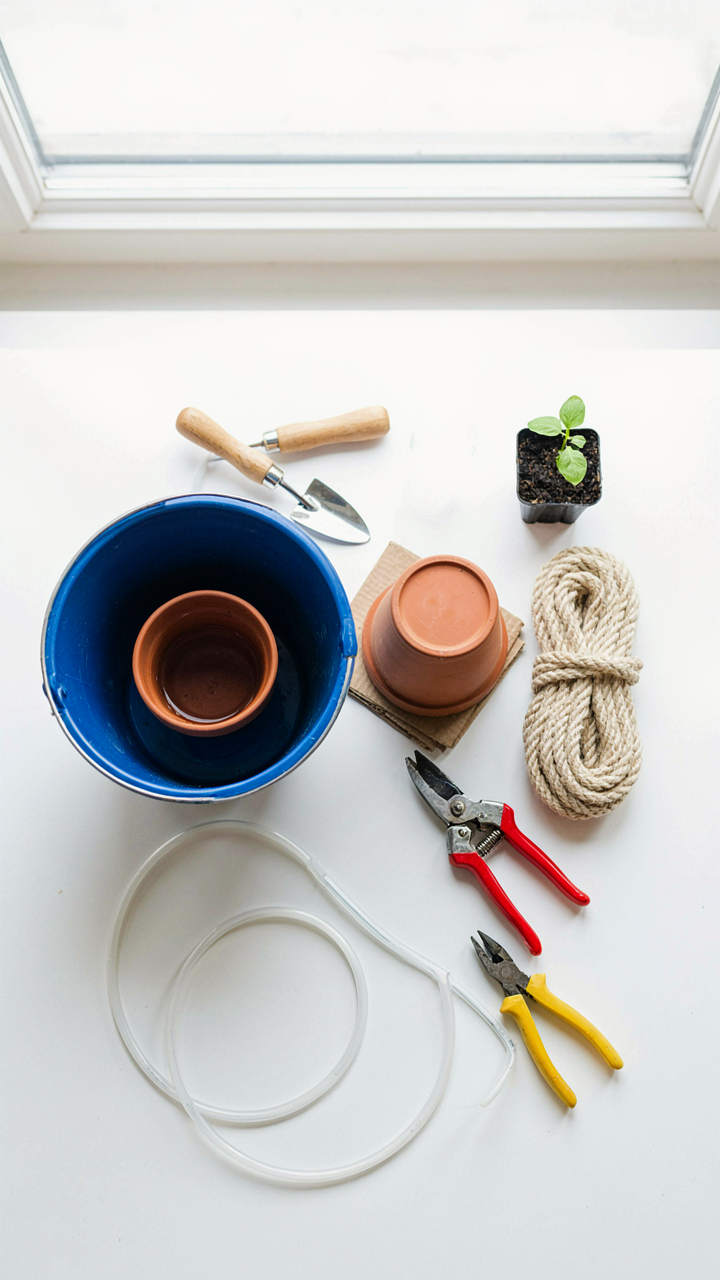
You want to feel resourceful. You want to believe you’re outsmarting the system by building your own self-watering hanging basket instead of buying one. The real mechanism at work here is substitution bias: you calculate the cost of materials but never account for the time sink or the failure tax. A homemade reservoir system takes hours to assemble, test, and troubleshoot. Most collapse within a season because the seal fails or the wicking material degrades. You end up buying a commercial unit anyway, having lost both money and the growing season.
The math breaks only one way: DIY makes sense if you’re building dozens of units for scale, not one or two for your patio. Commercial self-watering baskets use injection-molded plastics and proven wicking fabrics that cost pennies per unit in volume. A single DIY build wastes time on precision fitting and material sourcing that manufacturers solved decades ago. The decision point is simple: if you’re not planning production runs, buy the product and spend your energy on what actually matters, which is the planting and maintenance protocol, not reinventing the container.
Materials And Methods That Actually Last
Longevity isn’t about choosing expensive components. It’s about understanding failure modes. The weakest point in any self-watering hanging basket is the junction between the reservoir and the soil chamber, where pressure and moisture create rot and material breakdown. Rigid plastic containers outlast fabric or woven options by 3 to 5 seasons because they don’t absorb water, don’t degrade from constant saturation, and don’t invite mold colonization. If you build or upgrade a system, seal every internal seam with food-grade silicone. Don’t skip this step.
The wicking material determines everything else. Fibrous materials like coir rope or cotton felt wick water but also retain pathogens and salt deposits that kill the wicking action over time. Capillary matting designed for horticultural use lasts longer because it’s engineered to resist degradation and can be rinsed clean. Replace the wicking material annually if the basket stays in service year-round. Check the reservoir seal quarterly. This single protocol extends the life of any self-watering system by 50 percent.
The Unseen Advantages Of The Self Watering System
Humidity And Temperature Regulation
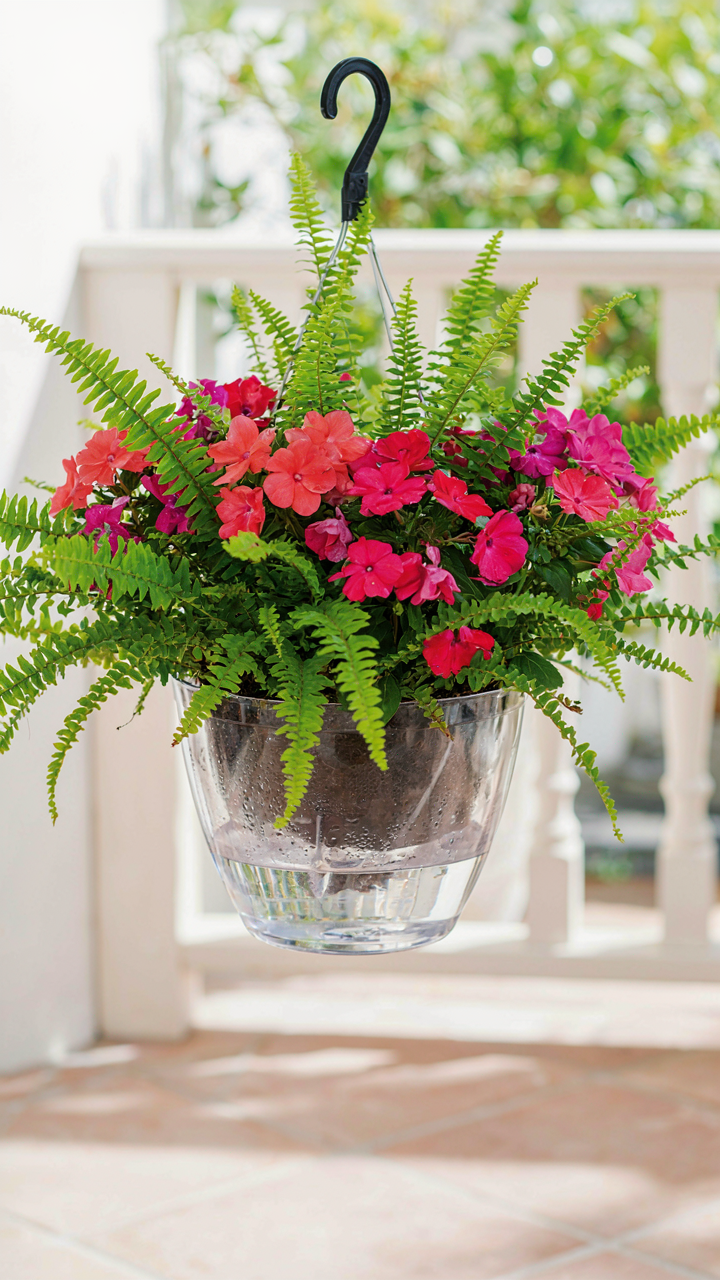
You want to feel like you’ve outsmarted nature. The real mechanism here comes from fluid dynamics: a self-watering basket functions as a passive humidity buffer, the same principle engineers use in climate control systems. The reservoir sits below the soil, maintaining consistent moisture that moderates temperature swings. Evaporation from the soil surface creates a microclimate around the plant that doesn’t spike or crash with outdoor conditions. Your hanging basket becomes thermally stable.
This stability matters because plants don’t respond to average temperatures. They respond to fluctuation. A ten-degree swing between morning and evening stresses roots more than a steady sixty-five degrees. The self-watering system dampens that swing. Moisture in soil has high thermal mass, meaning it absorbs heat slowly and releases it slowly. Your plant stays in a narrower band, which cuts stress responses and frees energy for growth instead of survival mode.
Vacation Proof Plants
Everyone sells this as convenience. That’s not the real story. The real story is that inconsistent watering kills more plants than any other single factor because you’re either drowning roots or suffocating them. A self-watering basket removes you from the equation. The wick or capillary action pulls water up only when soil dries to a specific moisture level. There’s no guessing, no overcompensation, no guilt-watering when you return from a week away.
The mechanism is capillary rise: water moves upward through soil against gravity because soil particles attract water molecules more than water molecules attract each other. This happens passively until the soil reaches saturation, then stops. No human emotion involved. You can leave for two weeks and return to plants that watered themselves on schedule. The plant doesn’t know you’re gone because the water supply never interrupts.
The Real Obstacle Isn’t Your Plants, It’s Your System-dependent Thinking

You don’t need a perfect hanging basket. You need to stop treating plant care like a problem that requires more gear. Self-watering baskets work because they remove the decision-making, not because they’re magic. The real shift happens when you realize you’ve been overcomplicating something simple. Pick one basket today, fill the reservoir, and watch what happens when you stop micromanaging. Your plants don’t want your attention, they want your absence.



