

The Seasonal Wildflower Bouquets Fallacy: Why “Anytime” Is A Lie

The Supply Chain Deceit
You want to believe wildflowers are available year-round because that means you’re not constrained by nature. You want convenience without consequence. The mechanism is simple: floristry borrowed supply chain economics and inverted seasonality itself. Wholesalers now force blooms in controlled environments, then market them as “seasonal” to justify premium pricing. The term loses meaning when a ranunculus from a heated greenhouse in January costs twice what a field-grown specimen does in spring. Retailers profit from your desire to ignore the calendar.
The language matters here. When a florist says a bouquet is “seasonal,” they’re not telling you when that flower actually grows. They’re telling you when demand peaks and margins widen. Spring wildflowers sell in January at luxury prices because people associate them with renewal and rebirth—emotions drive the markup, not availability. The bloom sits in cold storage for weeks before reaching you, its vase life already compromised. Real seasonal wildflower bouquets don’t work this way because real seasons create natural scarcity that can’t be manufactured or delayed without destroying the product.
The Ecological Extraction
Forced blooms require constant energy input, and that cost appears nowhere on your receipt. Greenhouse operations in winter run heating systems 24/7, burning fuel to recreate conditions that nature provides free for six months a year. The water demand rivals agriculture. Pesticide use intensifies when flowers grow outside their native climate window, making them vulnerable to pests that wouldn’t touch them in their actual season. Every off-season wildflower bouquet you buy funds infrastructure that extracts more from the system than seasonal picking ever would.
Growers in regions with ideal wildflower seasons operate for half the year, then shut down. This matches ecological rhythm. Forced production tries to eliminate downtime, which eliminates the recovery period ecosystems need. The soil depletes faster. Irrigation systems run at unsustainable rates. When you buy a “year-round” wildflower bouquet, you’re paying for someone to tell nature it’s the wrong time—and nature charges interest. Check your florist’s sourcing: if they source locally in true season, your bouquet lasts longer and costs less.
The Forager’s Manifesto: Your Local Landscape As A Wildflower Bouquet Supply
Knowing What Actually Grows Where You Live
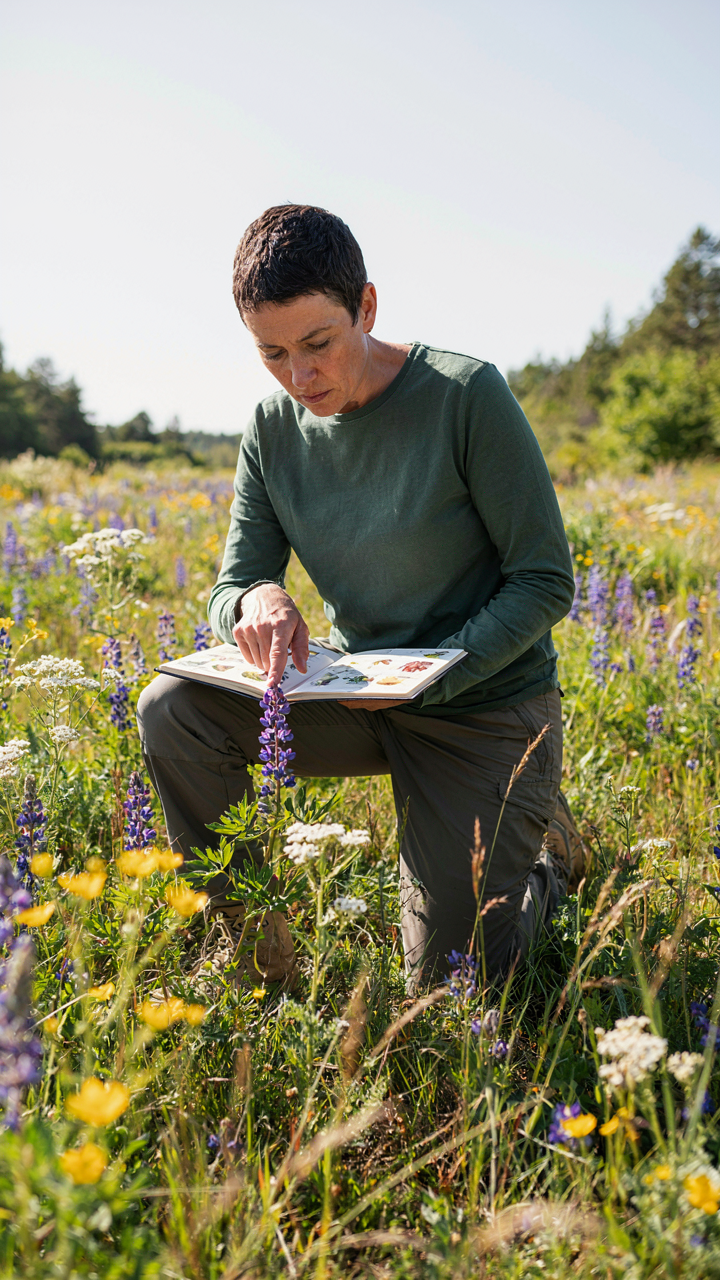
You want to feel like you’re doing something authentic without the work of actually learning your region. Here’s the mechanism: native species are wildflowers that evolved in your specific climate, soil type, and precipitation pattern over centuries. They survive there without intervention. Non-native plants look similar but demand different conditions and often fail or require constant fussing. Identify natives by cross-referencing your USDA hardiness zone, local soil composition, and regional field guides specific to your state or province, not generic wildflower books.
The common mistake is treating all wildflowers as interchangeable. They aren’t. A species thriving in Colorado’s high desert won’t perform the same in Georgia’s humidity. Use your state’s native plant society website or university extension service as your primary source, not Instagram. These institutions maintain curated lists based on actual botanical data, not aesthetic preference. Verification takes thirty minutes and determines whether your bouquet lasts or wilts.
Harvesting Without Killing The Source
Ecology borrowed a concept from forestry called sustainable yield: take only what regrows faster than you remove it. Apply this directly to wildflower harvesting. Never harvest from a patch smaller than ten feet in any direction. Never take more than one stem per plant, and never harvest more than twenty-five percent of flowers in a single location. This ensures root systems stay intact and seed production continues uninterrupted.
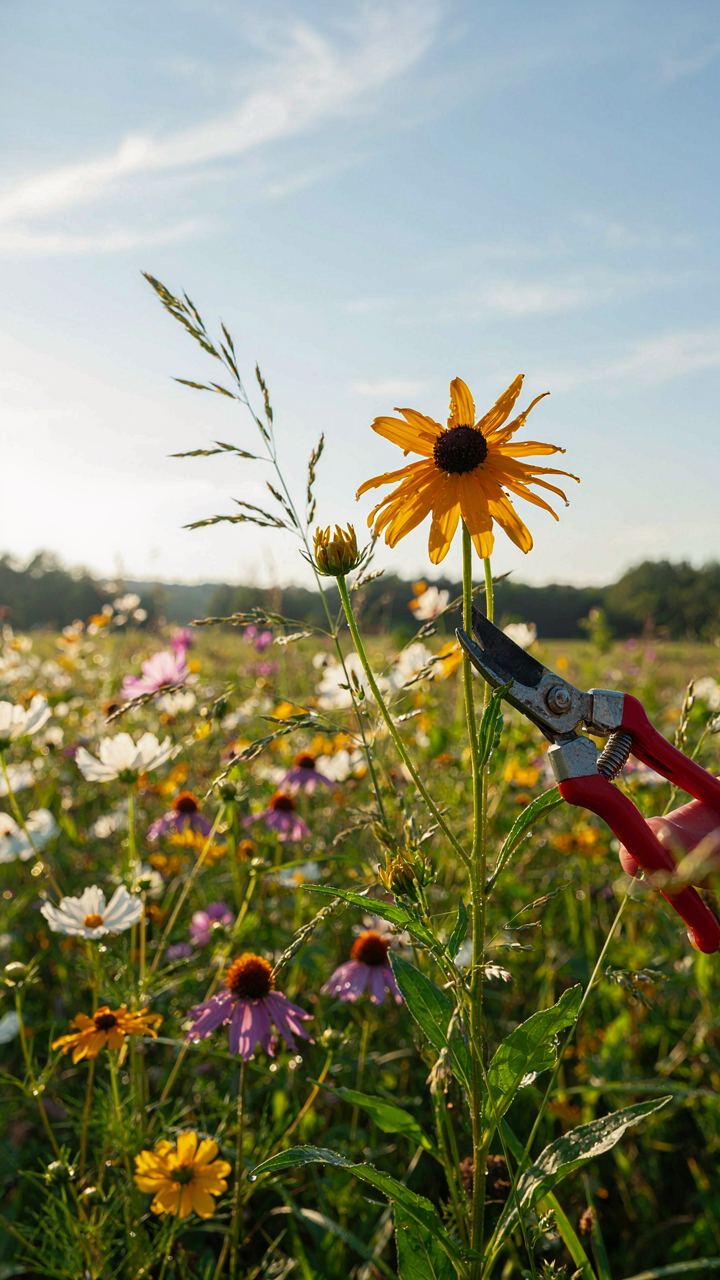
The ethical harvesting protocols exist because depleting wildflowers on public land is illegal in most jurisdictions, and on private land it degrades the ecosystem you’re drawing from. Scout your location across multiple seasons to understand bloom timing and density before you harvest. Harvest in early morning after dew dries but before heat stress. Cut stems at a forty-five-degree angle using clean shears two inches above soil level, leaving the root system undisturbed and ready for next year’s growth.
The Temporal Advantage: Capitalizing On Peak Bloom Cycles
Micro Seasonal Mapping For Optimal Foraging
You want to look like you have access to rare flowers without the work. The real mechanism is phenology—the study of seasonal timing in plants—applied to your specific geography. Wildflowers don’t bloom on a calendar. They bloom when soil temperature, day length, and moisture hit a threshold. Map these thresholds in your region and you move before everyone else. Early spring ephemerals like bloodroot and trillium vanish in weeks. Summer bloomers like black-eyed Susan peak for months. Fall asters extend through frost. Knowing which phase your zone occupies right now determines what you can actually harvest at full strength.
Ground truth beats guessing. Scout your foraging area every 7 to 10 days during transition seasons. Note what’s in tight bud, what’s peaked, what’s fading. Record the date. After two seasons, you have a usable map. Don’t rely on regional bloom charts from distant zones. Your microclimate matters more than general USDA data. Higher elevation, shaded woodland, or wet meadow each runs 2 to 4 weeks behind open fields. Adjust your timing by location, not by what someone on the internet says blooms in your state.
Anticipating Succession, Not Fighting It
Most people pick wildflowers and wonder why their bouquets collapse in three days. They’re fighting ecological succession instead of riding it. Succession is the predictable replacement of plant communities over time. Early colonizers like poppies and lupines burn bright and fast. Mid-stage bloomers like coneflowers hold steady longer. Late bloomers like Joe-Pye weed last through drought. A durable bouquet doesn’t mix stages. It matches them. If you harvest early bloomers at peak, pair them only with other early bloomers scheduled to fade in the same window. If you want longevity, build the bouquet from mid to late succession plants that actually peak together.
Water stress accelerates succession. Flowers shift resources to seed production instead of petal maintenance. Harvest bouquets in early morning after a rain for maximum cell turgidity and slowest fade. Condition them immediately in water treated with floral preservative, not plain water. Place them in a cool space away from ethylene-producing fruit. This isn’t romantic advice. It’s physiology. The bouquet lasts as long as you slow the transition to the next stage of the plant’s life cycle.
Deconstructing The “Wildflower Bouquet Colorful” Myth: The Power Of Monochromatic Purity

Natural Gradients Beat Random Color Mixing
You want the bouquet to look intentional because you’re afraid it looks like you grabbed whatever bloomed first. Here’s the mechanism: wildflowers in nature don’t scatter color randomly across a meadow. They cluster by species, which means they cluster by hue. When you build a bouquet using flowers that share a base color but vary in tone and saturation, you’re copying what actually grows together, not fighting against it.
This is borrowed from how ecologists map plant communities. In botany, we call this “niche clustering”—organisms that thrive in the same conditions occupy the same space. Apply this to wildflower bouquets: select five to seven species that exist in the same seasonal window and share a color family, whether that’s purples, yellows, or soft whites. Your eye reads this as coherent. It reads as real. The bouquet doesn’t need chaos to feel alive.
Constraint Creates The Illusion Of Abundance
The common advice is wrong: more colors make a wildflower bouquet “pop.” Wrong. Fewer colors create contrast through value and texture instead of competing hues, which actually exhausts the eye. When you eliminate color variety and keep only one primary hue plus whites or near-neutrals, each flower’s form becomes visible. You see the shape of the petals, the depth of the bloom, the architectural weight of each stem.
A monochromatic or analogous palette forces you to source better specimens because you can’t hide weak flowers behind visual noise. You’re now judging each stem on structure and condition alone. The result feels curated because it is. The mechanism is simple: remove the option to distract with color, and suddenly quality becomes the only variable that matters. This is why a single-color wildflower bouquet from a disciplined hand stops people mid-conversation.
The Impermanence Protocol: Maximizing The Short Life Of A Wild Bouquet

Water Uptake Before Wilting Starts
You want your bouquet to last because throwing away dead flowers feels like money wasted. The mechanism that matters is this: wildflowers don’t have a grace period. The moment you cut them, they stop accessing soil moisture, and their vascular system begins closing off. You have roughly two to four hours before the cut stem seals itself with air bubbles and bacteria, blocking water transport entirely.
Recut stems at a 45-degree angle under running water immediately before placing them in a vase. This angle increases surface area and removes the sealed tissue layer that formed during transport. Skip the folk remedy of crushing stems or using flower food additives first—those don’t address the real problem, which is air embolism in the xylem. Strip all foliage below the waterline to prevent bacterial decay that clogs the vascular tissue faster than anything else will.
Temperature Calibration For Extended Vase Life
Thermodynamics governs how fast cellular respiration burns through a wildflower’s stored energy, and temperature is the single control you actually have. Every 10-degree Celsius increase roughly doubles the respiration rate, meaning a bouquet in a warm room dies twice as fast as one kept cool. Most people keep cut flowers at room temperature out of habit, not strategy. Moving them to 50-65 degrees Fahrenheit cuts respiration in half and extends vase life by three to five days on average.
Place your bouquet in a cool spot away from direct sunlight, heating vents, and ripening fruit that releases ethylene gas. Change water every two days in cool conditions, every single day in warm ones. Cool water also slows bacterial growth and fungal development in the vase. The protocol is simple: cool location, fresh water on schedule, zero excuses about forgetting.
Beyond The “Wildflower Wedding Theme”: Integrating Bouquets Into Broader Aesthetics
When Raw Nature Meets Refined Spaces
You want the bouquet to signal that you have taste without trying. That’s the real problem here. Most people treat wildflower bouquets as decoration, not as a design element that either conflicts with or anchors everything else in the room. The mechanism is simple: wildflowers work in refined spaces because they introduce visual weight through irregularity. A structured room full of symmetry and control needs that counterbalance. Without it, the space feels sterile. With it, it feels intentional.
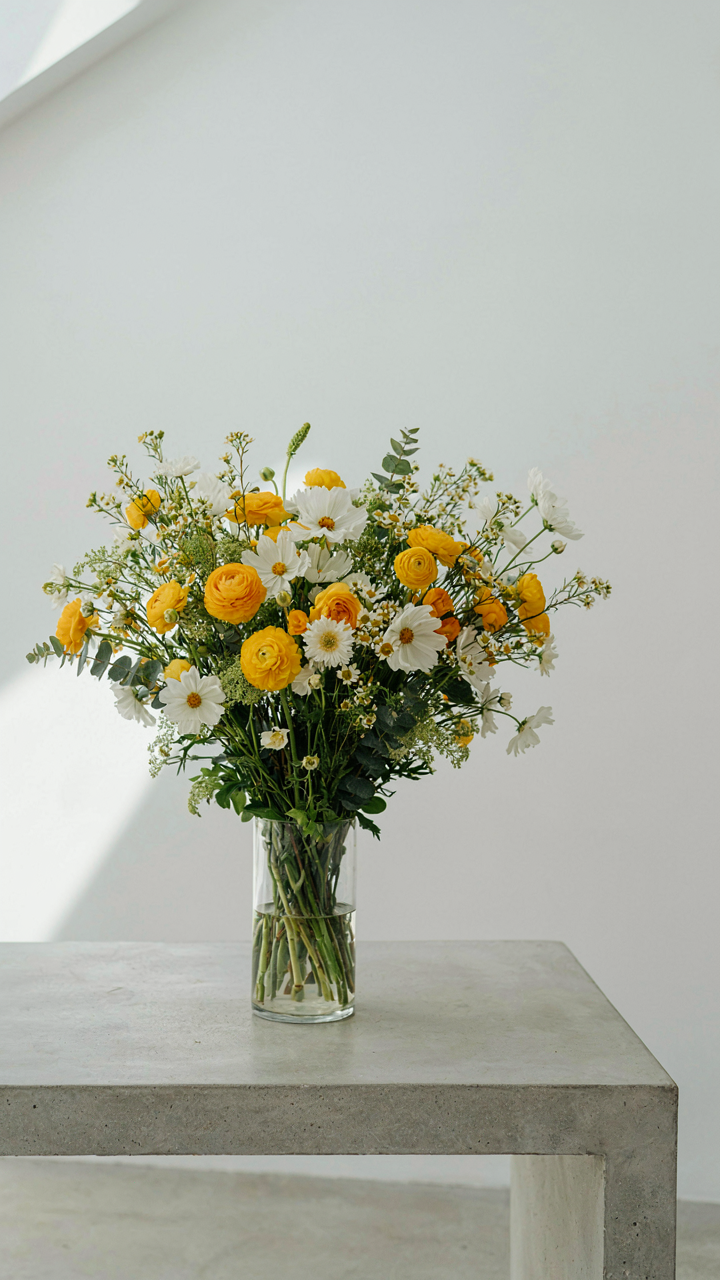
The mistake is assuming wildflowers belong only in rustic or casual settings. They don’t. A minimalist living room with concrete floors, white walls, and clean lines becomes more sophisticated when a wildflower arrangement sits on a simple wooden table. The rawness of the flowers makes the refinement of everything else sharper by contrast. The key is scale and placement. A small arrangement feels accidental. A deliberate, full bouquet in a considered location signals design confidence. Place it where it commands attention without dominating the room.
Tension Is The Real Design Tool
Design borrows from physics: you need opposing forces to create stability. A wildflower bouquet in a formal dining room creates the same tension that makes a composition interesting. The matte, organic texture of wildflowers pushes against polished surfaces, clean lines, and controlled color palettes. This tension is not a problem to solve. It’s the entire point. Most advice tells you to match your bouquet to your decor. That’s advice for people who want their spaces to feel safe and forgettable.
The real skill is knowing how much discord a space can absorb before it tips from interesting into chaotic. A room with existing visual noise needs subtle wildflower colors like pale yellows and soft purples. A minimal room can handle bolder combinations without fracturing. Start with one dominant wildflower color, then add a secondary element that contrasts without clashing. Test the arrangement for three days in the space. If your eye lands on the bouquet naturally and then moves through the room, the tension is working. If your eye gets stuck on the flowers, you’ve introduced too much friction.
The “Wildflower Bride Bouquet” Rebellion: Rejecting Convention For Authenticity

Your Story Matters More Than The Rules
You want people to remember your wedding day as yours, not as a flawless execution of someone else’s vision. That’s the real motive here. The mechanism is simple: wildflower bouquets work because they’re built on constraint rather than abundance. You’re not choosing from infinite options. You’re working with what grows in a specific season and place, which forces authenticity into the design whether you plan for it or not.
The narrative you embed in a wildflower bouquet is autobiographical by default. If you marry in spring in the Southwest, your bouquet holds phlox and lupine. If you marry in late summer in the Northeast, it holds black-eyed Susans and ironweed. The flowers aren’t decoration. They’re evidence of where you are and when you chose to commit. That specificity is what makes people actually remember the bouquet instead of confusing it with five others from the same vendor.
- Regional wildflower identity: Choose species native to your wedding location or your family’s origin. The bouquet becomes a map of meaning, not a generic arrangement.
- Seasonal timing as constraint: Commit to the flowers available in your chosen month. This removes decision paralysis and grounds the design in reality, not Pinterest.
- Personal flower history: Include a species from your childhood, a place you lived, or a landscape that shaped you. The bouquet carries your biography.
- Structural honesty: Let the natural height and stem variation of wildflowers determine the silhouette. Don’t force everything to a uniform dome shape.
- Preservation through documentation: Photograph the arrangement in natural light before the ceremony. The image becomes the lasting record, separate from what wilts.
You’re not creating a bouquet to match an aesthetic. You’re creating evidence of a decision made at a specific moment in a specific place with specific plants. That’s why people ask about it years later. That’s why it becomes a story instead of a detail.
Perfect Is The Trap, Not The Goal
The consensus says your wildflower bouquet should look “effortlessly natural” but still be coordinated, balanced, and visually polished. That’s a contradiction dressed up as advice. What it actually means is: make wild flowers look controlled. That defeats the entire point of using them.
Memorable bouquets violate visual expectations. A stem bends at an odd angle. The color progression isn’t symmetrical. Some flowers are past peak bloom. This imperfection is what makes the eye stay on it. Perfection is forgettable because the brain processes it fast and moves on. Asymmetry, variation, and slight deterioration require the viewer to actually look. That’s where memory lives.
The real work isn’t in making wildflowers look tame. It’s in knowing which imperfections to keep and which structural failures to edit out. You’re not aiming for Instagram polish. You’re aiming for the kind of beauty that reads as true. Start by gathering your flowers 24 hours before the event, conditioning them in deep water, then assembling without a grid or floral foam. Build the structure by layering stems at varied heights, allowing the natural curve of each stem to dictate its position rather than forcing it into a predetermined shape.
The Un Arrangement Method: Letting The Wild Flower Bouquet Dictate Design

Stop Fighting The Stems
You want permission to make something that looks “easy.” That’s the real reason you’re reading this. Here’s the mechanism: wildflowers have evolved stem angles, leaf placement, and bloom weight distribution over centuries. They’re not random. When you force them into tight geometry, you’re fighting physics. The stems want to spread at specific angles based on how they grew. A lupine doesn’t bend the same way a cosmos does. Observe the natural angle each flower creates when you hold it loosely. That’s your starting constraint, not a problem to solve.
The industry teaches you to create a “base” and then insert stems at precise depths. This is control masquerading as design. Real wildflower bouquets work in reverse. You build around how each stem naturally wants to sit. A yarrow cluster naturally fans. Queen Anne’s lace wants to curve slightly forward. Tight packing kills this. Instead, leave air between stems and let the asymmetrical weight distribution do the actual work. The bouquet holds because the stems lean into each other at their natural angles, not because you engineered it.
The Fake Casualness That Actually Works
Everyone thinks effortless design means you didn’t try. The opposite is true. Effortlessness requires you to see what’s already there and refuse to override it. Take a seasonal wildflower bouquet that looks “thrown together.” The arranger didn’t ignore the structure. They read it first. A cornflower bloom sits naturally toward the perimeter because its stem can’t support weight at the center. Daisies cluster because their stems are thin and they stabilize each other that way. Poppies droop slightly forward because their heavy heads pull them there.
The illusion works because you stopped imposing and started observing. When you see a wildflower bouquet that feels alive instead of constructed, the arranger made invisible choices about what to keep and what to remove. They edited ruthlessly. Every stem in the bouquet earned its place by either supporting the structure or by having a visual reason to exist there. The protocol: hold the bundle loosely, remove any stem that creates visual strain, then tighten the binding only enough to keep the chosen stems in their natural positions.
The Multi Species Dividend Why Diversity Outperforms Monoculture In Wildflower Bouquets
When Single Species Fails You Know It
You want the bouquet to last. That’s the real reason you’re reading this. A single species arrangement dies on a predictable timeline, and you look negligent. Ecology teaches us about system stability, and a wildflower bouquet mirrors this principle directly: monoculture arrangements collapse because they share identical water demands, pest vulnerabilities, and senescence rates. When one stem weakens, the entire visual architecture fails simultaneously. Diverse species arrangements stretch longevity because each species ages independently, masking decline and extending perceived freshness across seven to ten days instead of four or five.
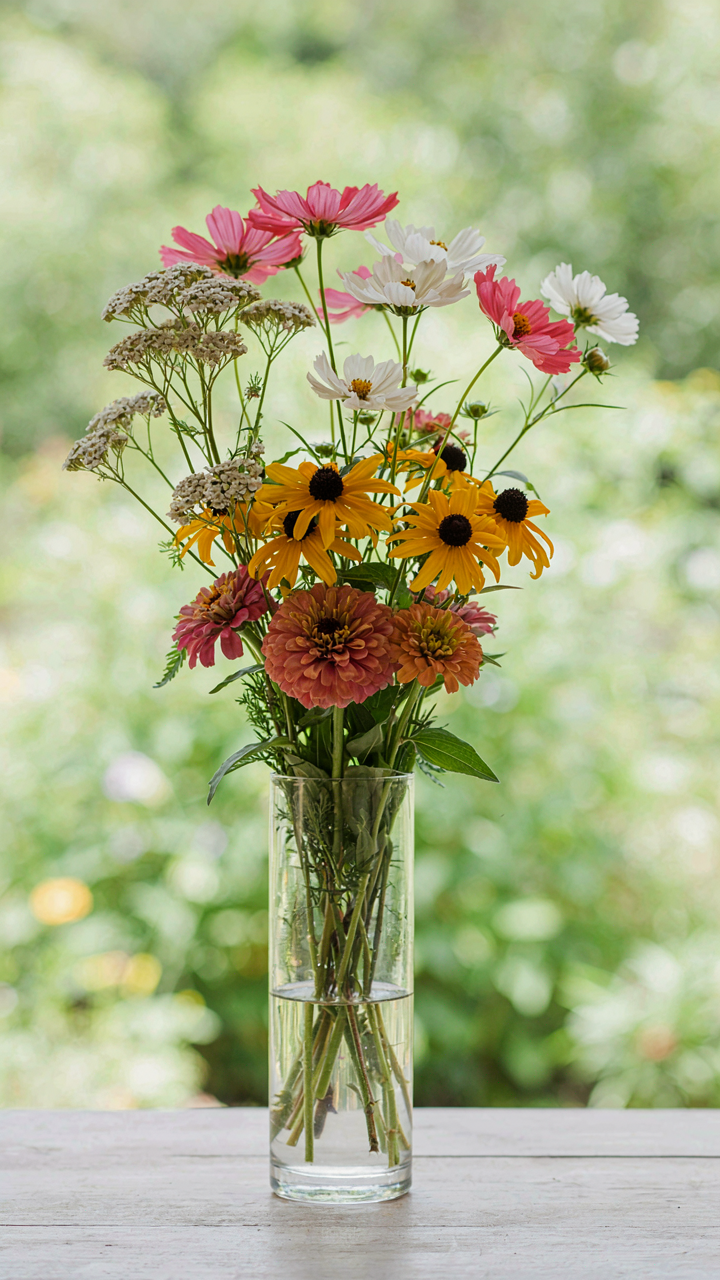
The mechanism is simple. Yarrow, cosmos, black-eyed Susans, and zinnias don’t compete for the same resources in a vase. They hydrate at different rates. They wilt on different schedules. One species can be past peak while another reaches it, creating a continuous visual reset that keeps the arrangement looking intentional rather than dying. This isn’t aesthetics masquerading as science. It’s the difference between a bouquet that holds its shape and one that collapses into an obvious decline.
Visual Complexity Through Layered Texture
Multiple species force you to solve an actual design problem instead of relying on quantity. A bouquet of fifty identical wildflowers reads as volume, not arrangement. Five different species at varying quantities creates visual weight distribution that works because your eye can’t settle on repetition. Larkspur provides vertical thrust. Blanket flower adds geometric density. Baby’s breath creates negative space. Queen Anne’s lace breaks up solid masses. Each species has a distinct silhouette, and the interaction between them becomes the real content of the arrangement, not the individual blooms.
The common advice here is backward. Florists often say “add filler to break things up.” Wrong move. Filler obscures the wildflowers you selected. Diversity among primary species does the work without addition. Choose five wildflower types native to your season, vary their stem heights by three to five inches, and adjust quantities by species structure. Spiky flowers need fewer stems. Airy flowers need more. The visual complexity emerges from how different forms occupy space together, not from padding.
Your Pursuit Of Perfection Is The Real Obstacle To Authentic Beauty

Most people kill seasonal wildflower bouquets before they even start. They obsess over matching colors, symmetrical arrangements, Instagram-ready presentations. They miss the point entirely. A wildflower bouquet works because it looks like you didn’t try. Grab whatever blooms speak to you today, throw them together, and call it done. Stop waiting for the perfect moment or the perfect stems. Walk outside right now and pick three flowers you actually like. Authenticity beats perfection every single time.



