
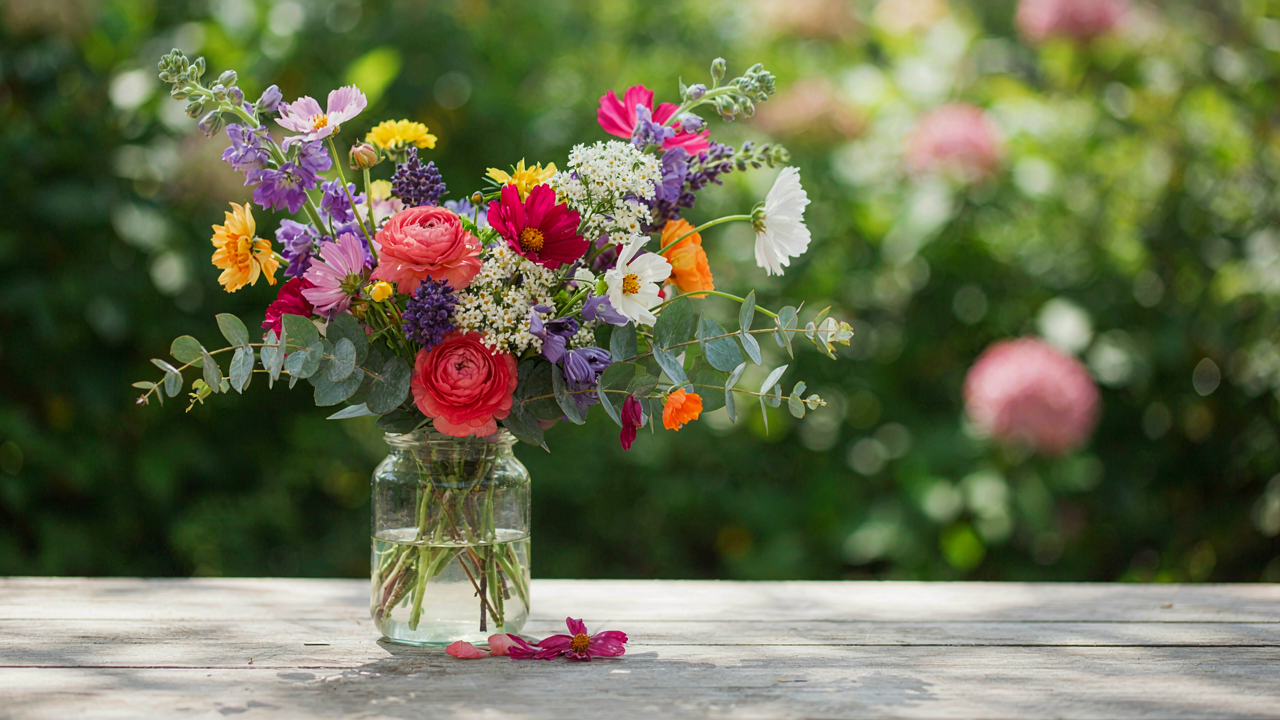
The Wildflower Fallacy: Why “Easy” Kills Authentic Rustic Wildflower Bouquets
What Beginners Actually Do Wrong
You want to believe rustic wildflower bouquets are effortless because that fantasy lets you avoid admitting you lack the botanical knowledge most florists spend years building. The mechanism is simple: beginners grab whatever blooms look good in the grocery store and jam them together without understanding stem structure, water absorption rates, or longevity differences between species. They confuse “unstructured” with “thoughtless.” A wildflower bouquet that reads as intentional requires you to know which flowers actually last, how their stems behave in water, and why certain combinations hold their form while others collapse within two days. Most beginners skip this layer entirely and wonder why their arrangement dies faster than cut grocery store flowers.
The real cost of skipping fundamentals shows up in vase life. Zinnias wilt faster than sunflowers. Cosmos need stem conditioning or they absorb air pockets instead of water. Queen Anne’s lace holds moisture differently than solidago. You can’t build visual coherence if half your stems are dead before day three. The difference between a bouquet that looks professionally rustic and one that looks like you grabbed wilting stems from a meadow is the invisible work of species selection and stem preparation that happens before you ever arrange anything.
The Effort Hiding Inside “Effortless”
Economics calls this the principal-agent problem: when someone makes hard work invisible, observers mistake the output for natural ease. Rustic wildflower bouquets function exactly this way. A florist who delivers an arrangement that looks carelessly tossed has actually invested time in sourcing compatible stems, conditioning them properly, understanding their growth patterns, and selecting a vase that won’t fight the arrangement’s natural weight distribution. The rustic aesthetic specifically demands this hidden effort because the visual style itself punishes poor mechanics. A structured rose arrangement can hide weak stem work. A wildflower bouquet cannot.
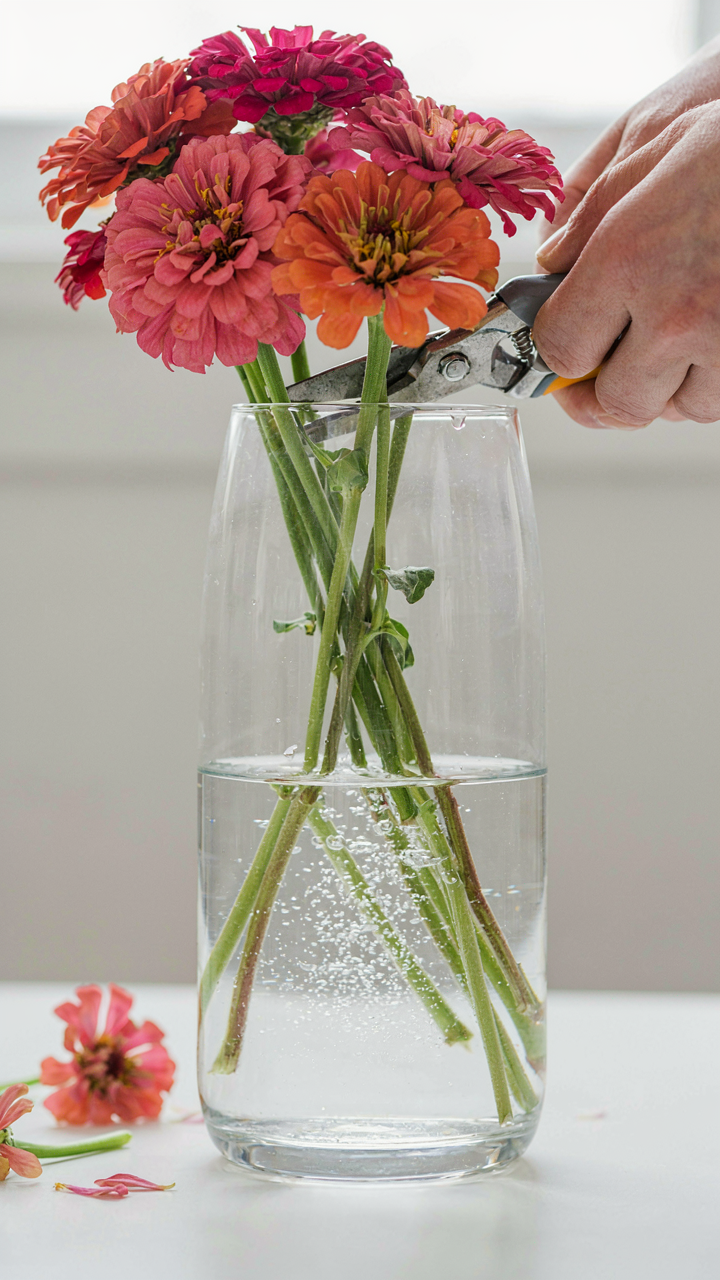
The conditioning phase determines whether your bouquet reads authentic or amateur. Strip leaves below the waterline to prevent bacterial growth that collapses stems. Re-cut stems at a forty-five degree angle underwater to maximize absorption. Remove protective guard petals on outer blooms to reveal fresh color. Let conditioned stems sit in water for two hours before arranging. This protocol takes fifteen to twenty minutes and feels invisible to anyone looking at the final result. Skip it, and your bouquet deteriorates in four days instead of holding for ten. That gap between mediocre and memorable lives entirely in preparation work you do alone before anyone sees the arrangement.
Deconstructing “Rustic”: More Than Just Unkempt Wildflower Bouquets
The Difference Between Lazy And Intentional
You want rustic because it signals you don’t try too hard, which paradoxically requires trying harder than anyone else. The mechanism is constraint: true rustic wildflower bouquets operate under strict rules about proportion, color harmony, and stem selection that make them appear effortless. The illusion of casualness demands precision.
Rustic isn’t the absence of design—it’s design that hides itself. A genuine rustic bouquet follows the same compositional principles as formal arrangements: focal flowers anchor the piece, secondary blooms create depth, and filler material establishes rhythm. The difference is material selection, not structure. You’re choosing native or naturalized wildflowers over cultivated hybrids and respecting how those flowers actually grow in nature rather than forcing them into geometric shapes.
What Makes Wildness Real, Not Performed
Authenticity in wildflower arrangements comes from understanding which species actually coexist in the same habitat and bloom in the same season. You can’t pair spring ephemeral wildflowers with late-summer bloomers without signaling you assembled this from a grocery store. Real wildness respects ecological timing.
Stem length variation matters tactically. Cultivated flowers get pruned uniformly for commercial display. Natural wildflowers have irregular heights, and your arrangement captures that by preserving stems at their found lengths rather than cutting everything to match. Leave the imperfect stems. Leave the leaves that angle awkwardly. That’s where authenticity lives—not in pretending disorder is design, but in honoring how disorder actually functions inside real growing systems.
The Biomimicry Protocol: Engineering Your Wildflower Bouquets
How Plants Organize Themselves Over Time
You want this to look effortless. That’s the real fear underneath the question. Ecology—the study of how organisms interact with their environment—has a principle called succession. Early colonizers move in first, then mid-stage plants, then climax species that stabilize. Your bouquet needs the same structure. Start with filler species that establish visual foundation, then layer in focal flowers that command attention, then add accent blooms that complete the composition. This isn’t decoration. It’s a sequence that mirrors how nature actually builds stable plant communities.
The mistake most people make is treating wildflower bouquets like formal arrangements where every stem gets equal visual weight. That creates visual chaos. Real meadows don’t work that way. You layer by function, not by aesthetic whim. Begin with delicate filler plants like baby’s breath or Queen Anne’s lace to create density and visual rest. Then position your primary flowers—coneflowers, black-eyed Susans, cosmos—where they naturally want to be seen. Finally, slot in accent flowers and foliage to bridge gaps. The sequence matters more than the individual choices.
How Natural Plant Communities Actually Cluster
Plants don’t grow in random mixes. They form communities based on growing conditions, soil type, and competition for resources. When you build a wildflower bouquet, mimic that clustering principle instead of scattering species evenly throughout. Group three to five stems of the same species together. This creates visual pods that read as intentional rather than scattered. The mechanism is simple: repetition reduces cognitive load. Your eye processes grouped elements as a single unit, making the whole arrangement feel cohesive and less chaotic.
Observe an actual wildflower meadow and you’ll notice plants cluster by height, bloom time, and root depth. Tall flowers lean toward the back or center. Low growers occupy the perimeter. Mid-height bloomers fill transitions. Copy this spatial hierarchy in your bouquet. Use odd numbers within each cluster—three cosmos stems here, five black-eyed Susans there—because odd groupings feel natural, not arranged. This approach eliminates the need for complex design knowledge. You’re simply replicating the structure that evolution already perfected. Build clusters first, then weave them together with foliage.
Beyond The Garden: Foraging For Simple Wildflower Bouquet Materials
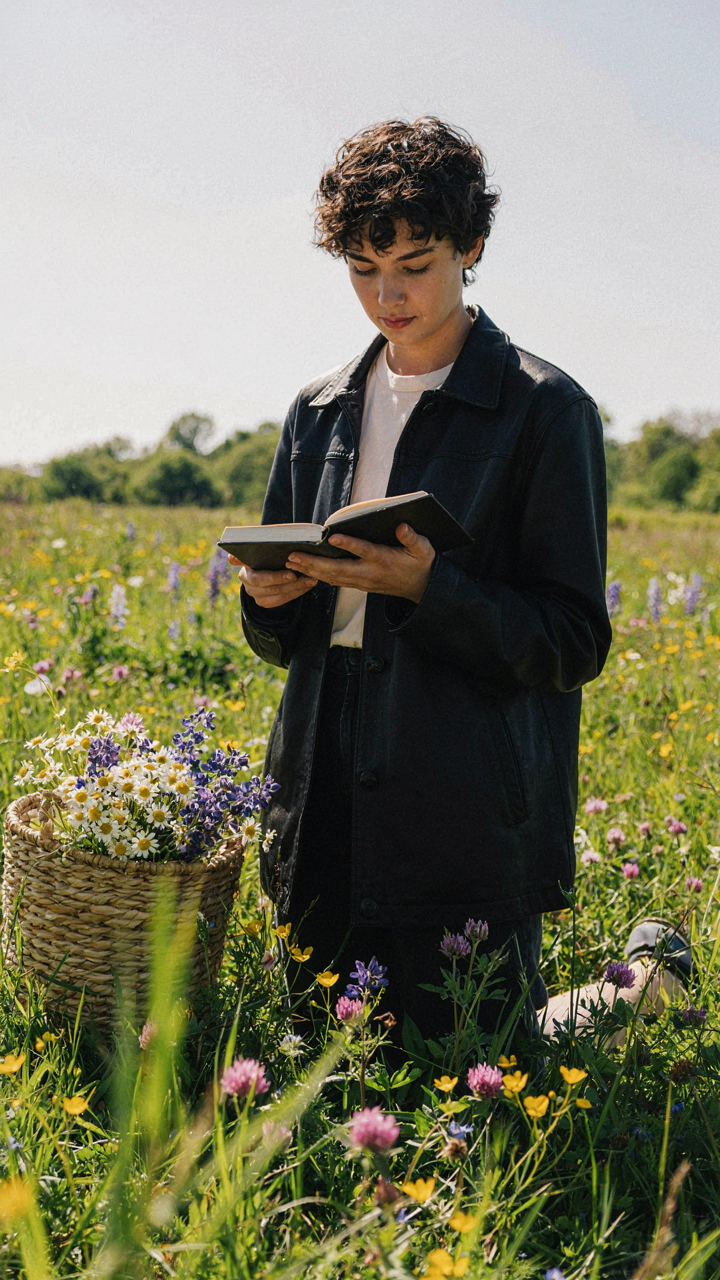
The Forager’s Code
You want free flowers because you think it makes the bouquet more authentic. Here’s what actually matters: foraging is a permission problem, not a resource problem. Ecology borrows the concept of carrying capacity from population biology, and wildflower populations have one too. You can’t harvest without reducing the colony’s ability to reproduce and spread.
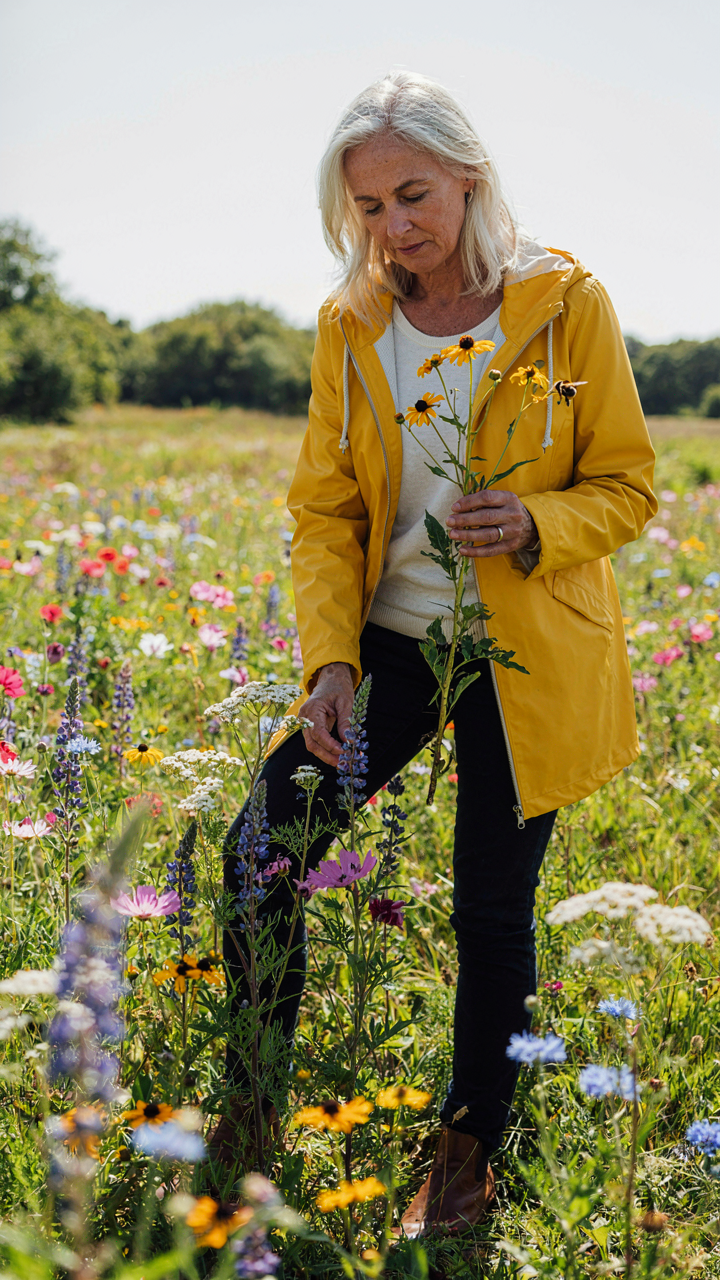
The real mechanism is this: take no more than a third of any patch, leave the roots intact, and never harvest from endangered species or protected land. Most foragers fail because they don’t check local regulations first. Get written permission from landowners. Photograph locations so you don’t strip the same area twice in one season. The goal is a bouquet that doesn’t deplete the source.
- Check Local Regulations: Contact your state’s native plant society or agricultural extension office to confirm what you can harvest legally in your region.
- Get Written Permission: Never forage on private land without explicit consent from the owner, even if it appears abandoned.
- The One Third Rule: Remove no more than one third of flowers from any population in a single harvest to ensure regeneration.
- Harvest Correctly: Cut stems at an angle with pruners or a knife, never pull from the root. Leave the base intact to allow regrowth.
- Avoid Endangered Species: Research your region’s protected wildflowers and skip them entirely, even if they’re abundant in your area.
Rotation matters more than most people admit. If you forage the same meadow every week, you’re mining it. Scout multiple locations and alternate your harvest sites seasonally. This extends your access indefinitely instead of burning out one patch by August.
Flora Recognition Without Guessing
Most guides tell you to “learn the flowers” as if that’s advice. It isn’t. You need a systematic identification method because misidentifying a toxic plant into your bouquet creates liability you don’t need.
Start with flower structure, not color. Count the petals, note whether they’re arranged in a spike, a cluster, or a flat-topped formation. Check the leaf pattern and stem texture. Use a field guide specific to your region and photograph specimens before cutting anything. Cross reference with at least two sources. Toxins hide in common-looking plants like poison hemlock, which resembles wild carrot. The stems tell the story: poison hemlock has purple blotches and a musty smell when crushed.
Stick to flowers you’ve verified in person with an experienced forager or a botanist from your local extension office. Don’t rely on app identifications alone. Once you’ve handled a plant three times and matched it against written documentation, you own that identification. Bring a notebook and record location, date, and conditions each time you harvest. Build a personal reference library through repetition, not assumption.
The Unconventional Color Palette: Fall Wedding Flowers Wildflowers
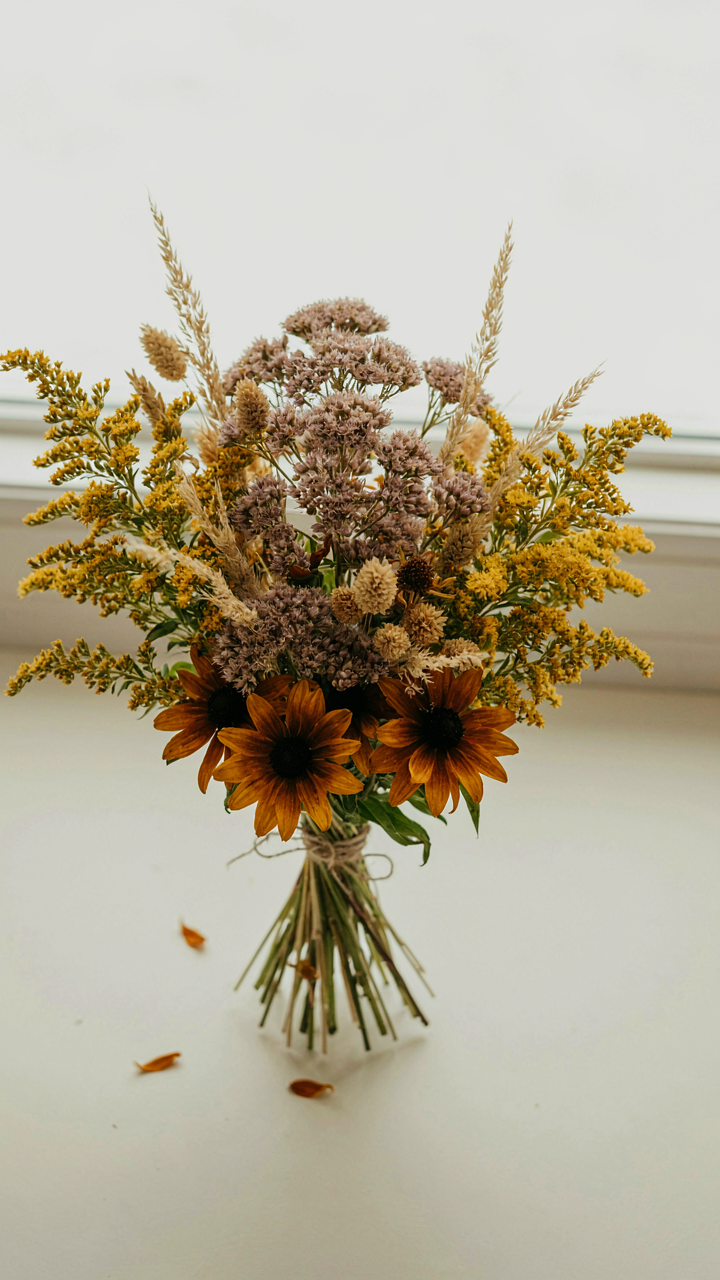
Muted Tones That Actually Work
You want this to look expensive without trying. That’s the real reason you care about color restraint. The mechanism is contrast: your eye reads muted tones as intentional because they violate expectation. Most people default to bright reds and yellows. You go the opposite direction, and suddenly the arrangement reads as curated instead of random.
Fall wildflowers deliver muted palettes naturally. Goldenrod shifts from pure yellow into ochre and tan as seasons change. Joe-Pye weed ranges from dusty mauve to deep burgundy depending on soil and moisture. Black-eyed Susans fade to warm bronze in late September. The constraint isn’t artificial—it’s built into the plant’s lifecycle. Work with that instead of fighting it.
Texture As The Real Anchor
Texture does the work that color usually gets credit for. When your palette is muted, surface variation becomes the visual hook that stops someone mid-conversation. Dried grasses, seed heads, and woody stems create dimension that flat petals cannot match. This is basic visual hierarchy from design: when saturation drops, contrast through form rises to compensate.
Pair delicate Queen Anne’s lace against coarse ironweed stems. Layer feathery asters with the solid geometry of teasels. Stack seed pods from milkweed or rudbeckia at different heights so light hits them at angles. The color stays restrained, but the bouquet commands attention through structural variety. This is the protocol: choose three texture types minimum, vary their scale, then build everything else around that framework.
Wildflower Bride Bouquet: Cultivating Controlled Chaos

The Tension Between Constraint And Growth
You want people to think you didn’t try too hard. That’s the real reason this section matters. The mechanism is borrowed from botany: apical dominance. One stem grows stronger and directs the shape of everything around it. Your bouquet needs the same hierarchy. Pick your anchor flower, the tallest or most visually heavy stem. Everything else radiates from that decision point, not randomly scattered. The anchor gives your chaos permission to exist.
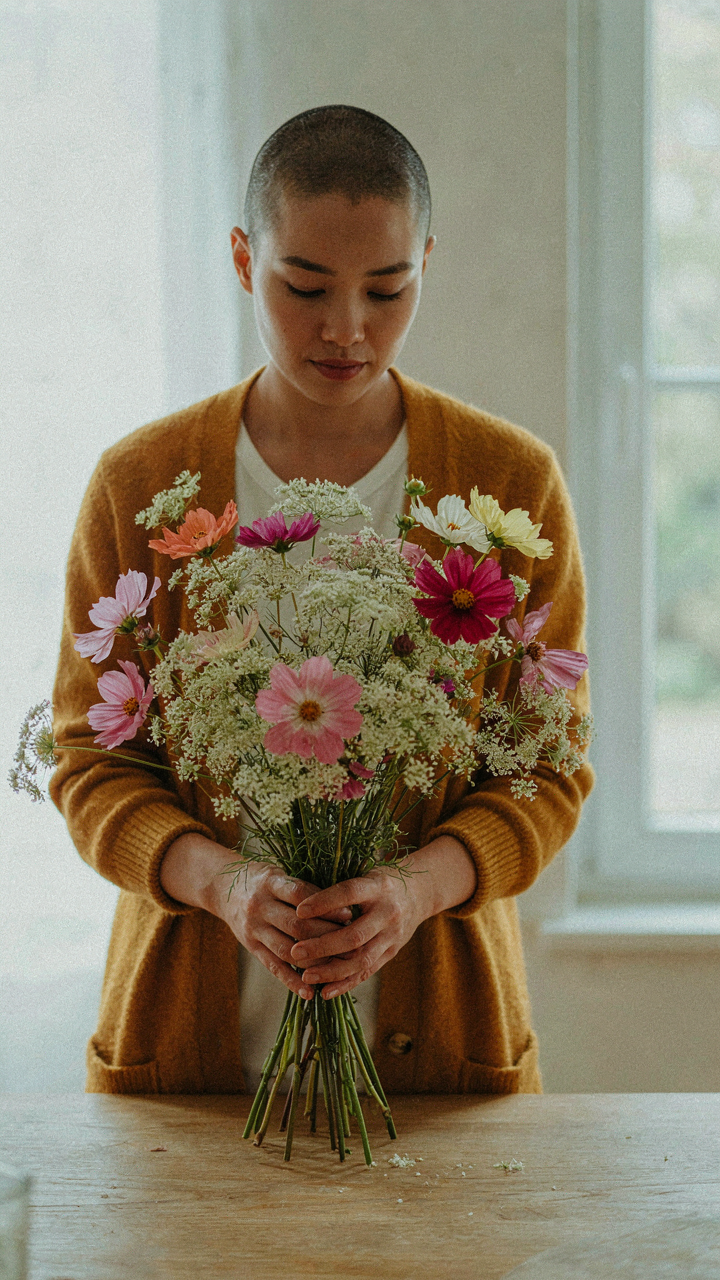
Most advice says just cram flowers together and call it organic. That’s incomplete. True wildflower bouquets require a central vertical axis with secondary stems spiraling outward at calculated angles. Your hand rotates the bouquet as you add stems, not your eyes. Each new stem lands at approximately 45 degrees to the previous layer. This method prevents gaps and keeps the structure intact while maintaining visual movement. The bouquet holds its shape because you built it, not because the flowers cooperated.
Holding Power That Actually Endures
Florist foam is the standard suggestion, and it fails wildflower work consistently. Foam crushes delicate stems and doesn’t breathe like meadow flowers need. Use the grid method instead: create a framework with sturdy stems like hypericum or thin branches, bound tightly with floral tape at the base. This grid becomes your internal scaffold. Delicate wildflowers thread through existing gaps, not into suffocating foam. The bouquet flexes slightly with water uptake instead of drying out from compression.
Secure the bundle at the natural binding point where stems cluster together, roughly two inches from the cut ends. Wrap floral tape three times around this zone, then spiral down to cover all exposed stem tissue. Wrap back up and tape over the top layer. This creates redundancy. A single wrap fails under the weight of fresh water and flower mass. Test the hold by gently pulling the bouquet at its widest point. If it shifts, add another tape layer. Your bride carries this for hours. Durability here isn’t optional.
The Impermanence Principle: Embracing The Fleeting Beauty Of Wedding Flowers
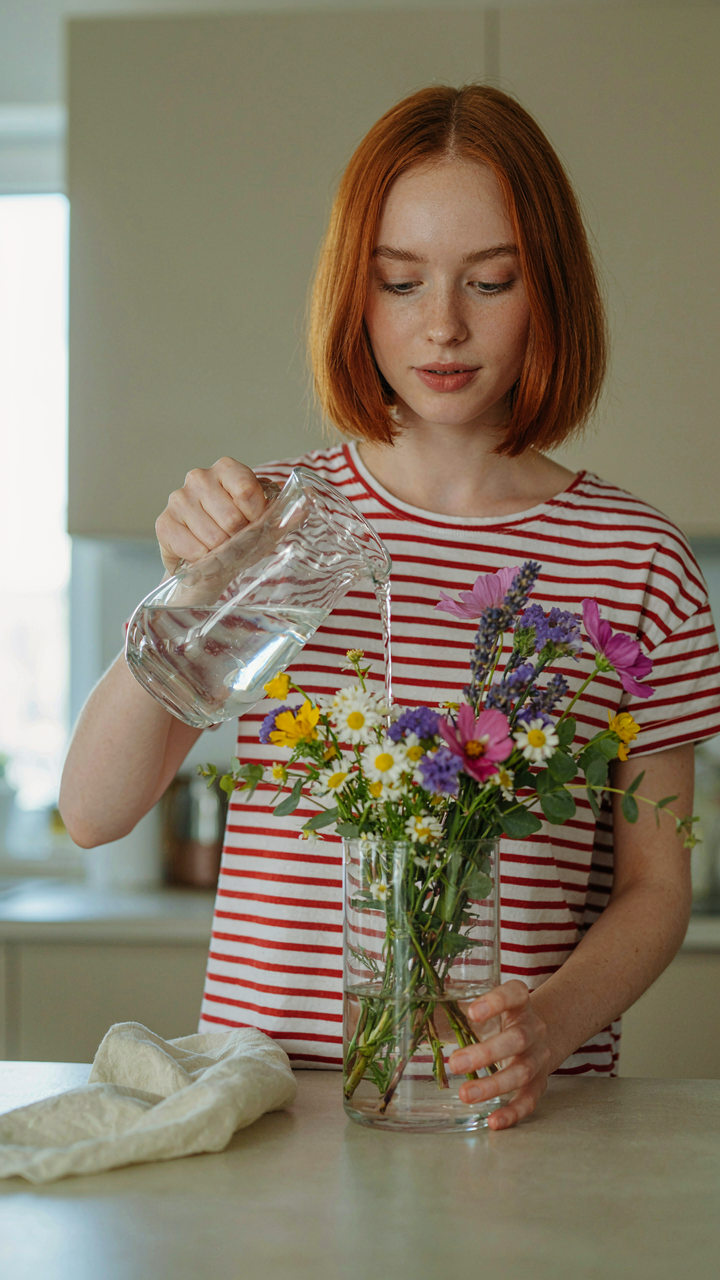
Why Wildflowers Die Faster Than You Think
You want the bouquet to last through the ceremony and photos without looking spent. That’s the real fear here. Wildflowers senesce faster than commercial hybrids because they’ve evolved to reproduce and scatter seed, not sit in water for a week. Understanding this biology changes how you build and condition them. Most florists ignore this mechanism entirely and wonder why their rustic arrangements collapse by evening.
Senescence is the plant’s programmed shutdown. Ethylene gas triggers it. Wildflowers produce ethylene as part of their natural ripening cycle, and once it starts, the process accelerates. Stems stop pulling water. Petals thin and wilt. The tighter your arrangement at the start, the longer ethylene concentrations stay low in the center flowers. Loose, open arrangements expose more flowers to ethylene saturation, which is why dense rustic bouquets outlast airy ones under identical conditions.
Conditioning Cuts Through The Weak Advice
Every guide says “cut stems at an angle and remove lower leaves.” That’s incomplete theater. The real work happens in the first hour after cutting. Wildflower stems have narrower vascular channels than roses, so they clog faster. Cut each stem under running water to prevent air embolism from forming in the xylem. Use a sharp knife, not scissors, which crush cells and block water uptake. Strip leaves below the waterline within 30 minutes of arranging, then place the entire bouquet in deep, cool water with a floral preservative packet for two to four hours before the event. This rehydration window determines whether your arrangement stays firm or droops by the vows.
The preservative packet isn’t optional decoration. It contains sugar for energy, biocide to prevent bacterial growth in the stem ends, and citric acid to lower water pH so flowers absorb it faster. Without it, bacteria bloom in the vase water and create blockages. For rustic wildflower bouquets specifically, change the water daily if the bouquet needs to hold beyond 24 hours. Refreshing water every morning removes bacterial buildup and introduces oxygen. Recut the bottom half inch of each stem when you change the water to open fresh vascular channels. This single protocol extends vase life by three to five days.
Dispelling The “Fake Wildflower Wedding Bouquet” Myth: Why Authenticity Wins
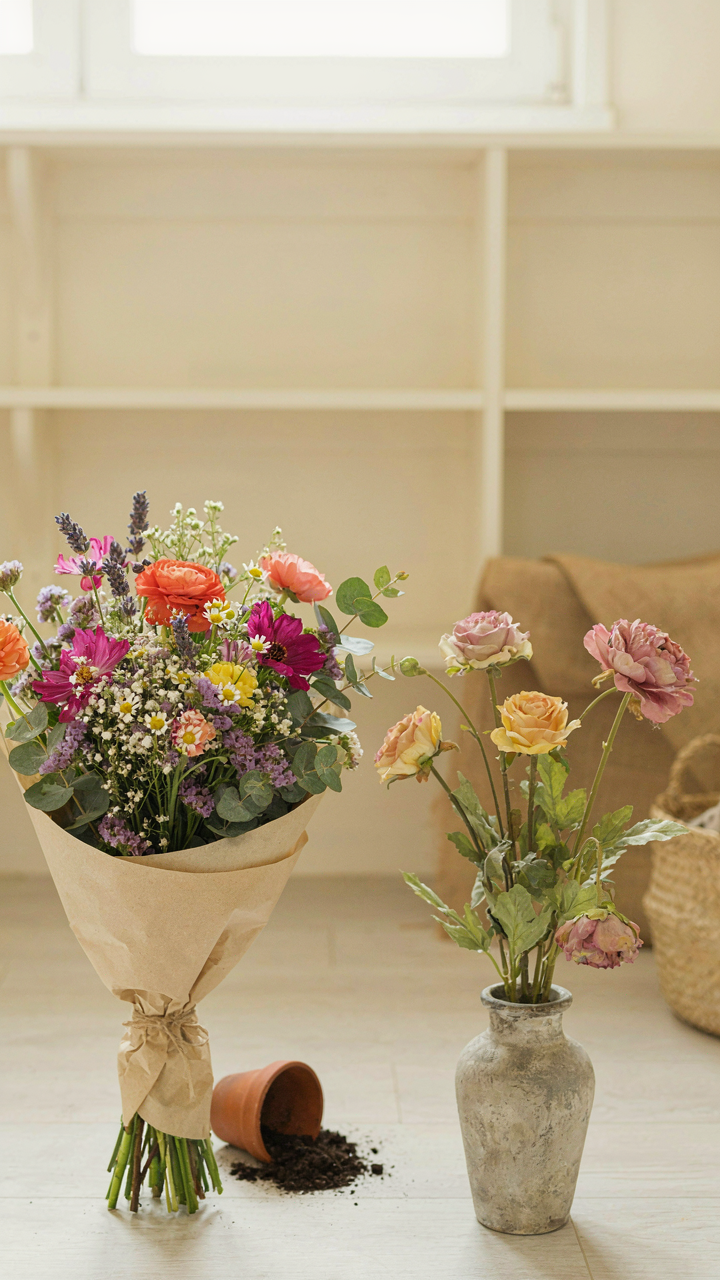
The True Cost Of Artificial Substitutes
You want the aesthetic without the risk of wilting before the ceremony. Here’s the mechanism: artificial flowers operate under the economics of perceived value, not actual use value. You pay upfront for permanence that you’ll discard after one event. A silk wildflower bouquet costs $80-$200 and sits in a closet or trash bin. Real wildflowers cost $40-$80, last 5-7 days, and decompose into soil. The math looks good on paper until you factor in storage, replacement for follow-up events, and the psychological cost of explaining why your bouquet looks plastic in photos you’ll keep for a decade.
Artificial flowers also require maintenance most people skip. Dust accumulates in the petals. UV light fades the colors. You’re not gaining preservation, you’re gaining obligation. Real wildflowers require water and a vase. That’s it. One action per day for less than a week. Artificial flowers demand decisions about climate control, storage space, and whether the investment justified itself. Most people get this wrong because they conflate “lasts longer” with “costs less over time.” It doesn’t.
Investing In The Real Wild Flower Bouquet
Real wildflower bouquets demand you trust a primary market. You source from florists who gather or contract with farmers. You pay for freshness, not inventory holding costs. A florist who sources real wildflowers moves stock fast because it expires. This creates pressure to keep quality high and prices honest. Artificial suppliers hold inventory for months, absorbing carrying costs you subsidize through markup. The structural incentive is different. Real wildflower economics reward speed and quality. Artificial economics reward volume and margin.
When you buy a rustic wildflower bouquet, you’re betting on a specific moment in time. That’s not a weakness, it’s the entire point. A wedding bouquet serves one purpose over three to five hours of actual use. Real wildflowers excel at that job. They photograph accurately. They feel substantial in your hand. They won’t trigger questions about why your wedding looked like a craft store display. After the event, you compost them or press them for keepsakes. Artificial bouquets become a storage problem with no dignified exit.
Your Pursuit Of Easy Rustic Isn’t About Flowers; It’s About Control. Relinquish It, And True Beauty Emerges
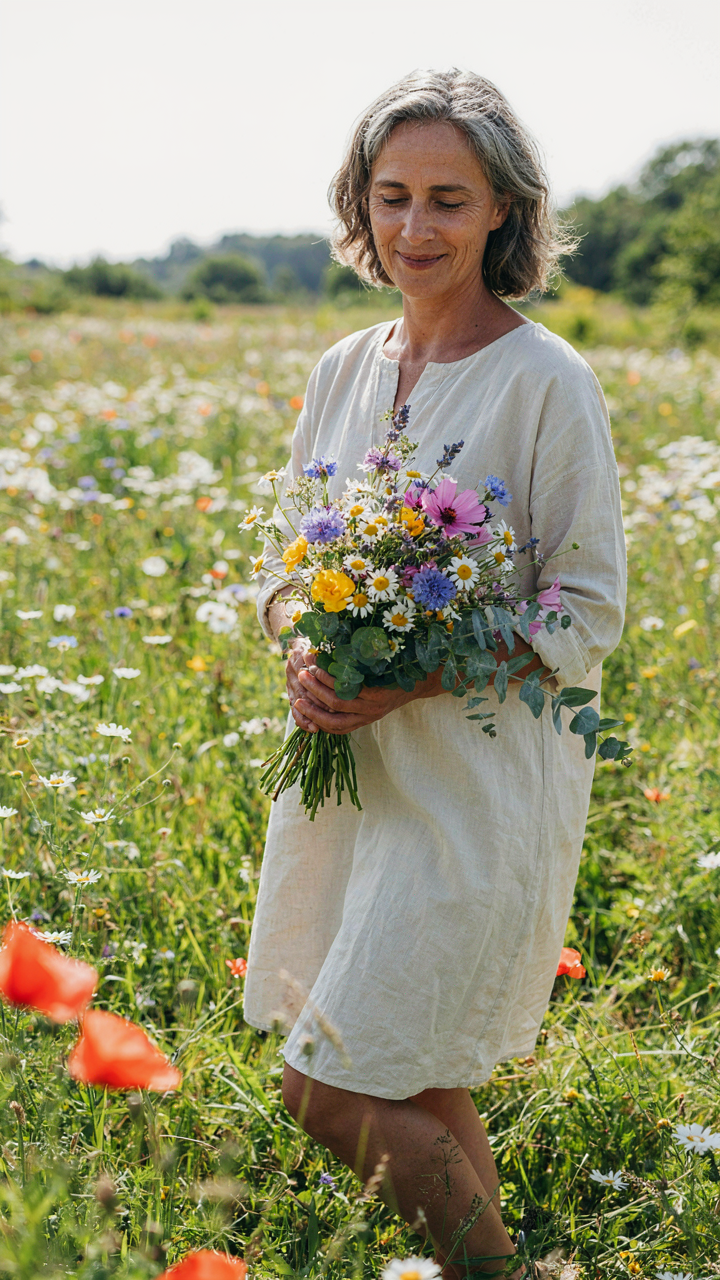
Most people fail at rustic wildflower bouquets because they obsess over perfection. You don’t need the “right” stems or the “ideal” color palette. You need permission to let asymmetry win. Go outside today and grab whatever flowers call to you, not what some aesthetic demands. Imperfection isn’t a flaw you fix. It’s the entire point.



