
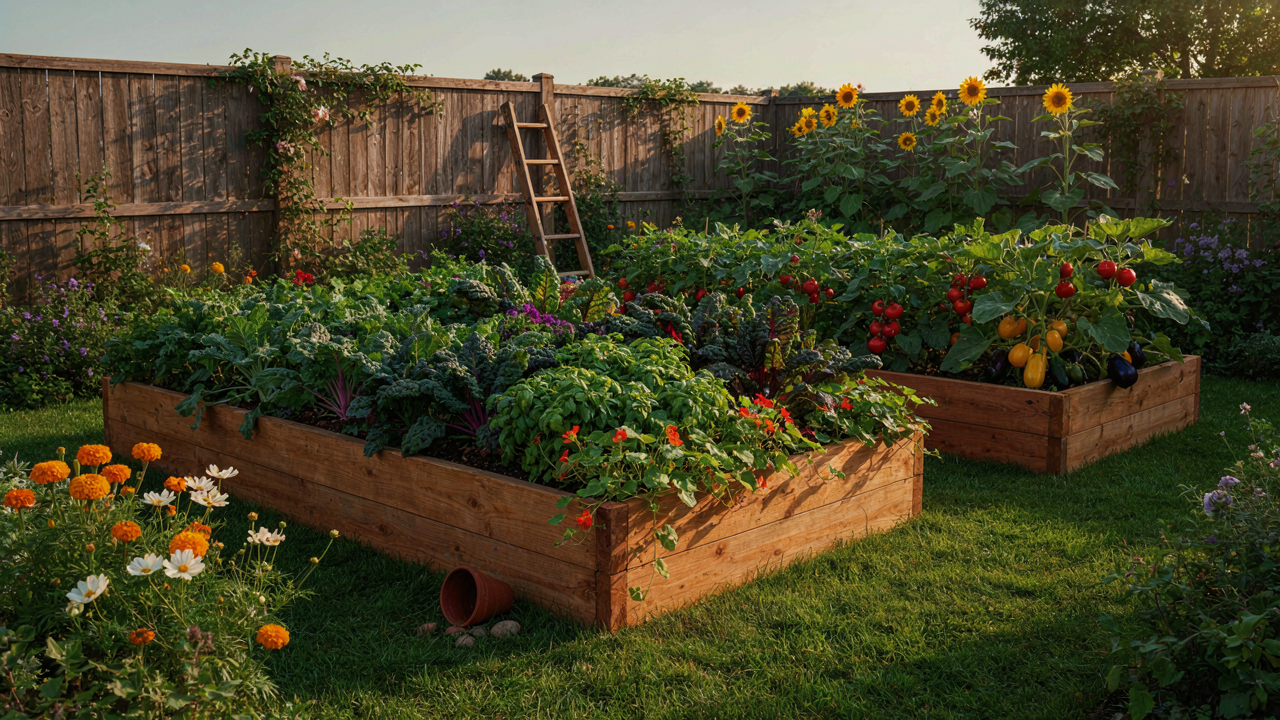
The Illusion Of Optimal Raised Bed Garden Dimensions

Why Generic Advice Fails Real World Ambition
You want permission to build something that looks intentional. The real mechanism at work is constraint avoidance. Everyone online tells you 4×8 feet or 3×6 feet because those dimensions fit standard lumber lengths and standard thinking. This advice isn’t wrong, it’s just protective. It protects against the one thing that matters: the decision you actually need to make based on your specific plot, your soil depth requirements, your access patterns, and what you’re growing.
Generic dimensions fail because they ignore load bearing. Think of a raised bed like structural engineering. A 4×8 bed holding 24 inches of soil exerts outward force on all four walls. The wider your bed, the more pressure each side wall absorbs. A 2×4 board can handle certain dimensions comfortably but fail at others depending on soil type, moisture, and material grade. Your actual dimensions must account for the physics of what’s inside, not just what looks proportional on a garden blog.
Beyond Aesthetics Functionality Over Fleeting Trends
Everyone building for Instagram builds for scale, not for use. The actual constraint is labor efficiency. A 5-foot-wide bed means you can’t reach the center without stepping into the soil or stretching past ergonomic reach. Most gardeners max out at 30 inches of comfortable width. A 2-foot-wide bed by 12 feet long performs radically different work than a 4×4 square, even though both hold similar volume. The length changes your workflow, your watering pattern, and your harvesting rhythm.
Functionality demands you measure your actual reach first. Stand at the bed edge and stretch forward without stepping across. Mark that distance. That becomes your maximum working width. Then match your length to your space and crop rotation schedule, not to lumber pricing or aesthetic balance. Most serious growers abandon “optimal” dimensions after their first season because they discover their actual needs through repetition. Build your first bed 2 feet by 8 feet. You’ll redesign everything you build after based on what you learn.
The Resource Allocation Method For DIY Garden Bed Success

Where Your Space Actually Stands
You want to know if your garden idea will work because you’re afraid it won’t, and you’d rather optimize before you fail. That’s the real question behind every dimension choice. Here’s the mechanism: space availability isn’t about the total square footage of your property. It’s about three competing demands on that specific patch—sunlight duration, water drainage flow, and your physical access to maintain it without destroying surrounding areas.
Most vegetables need six to eight hours of direct sunlight daily. This isn’t negotiable; it’s biology. Before you measure bed dimensions, map your property’s shadow patterns across the seasons. Morning sun orientation matters more than afternoon sun because morning light dries dew faster and reduces fungal pressure. If your chosen location gets four hours of sun, you’ll either grow shade-tolerant crops like leafy greens, or you’re building in the wrong spot. Water access determines whether you haul buckets or run drip lines. A raised bed twelve feet from a water source costs differently than one adjacent to a spigot. Measure the actual walking path you’ll take during watering and harvesting. That path should never require you to step over or around other structures.
The Economics Of Material Longevity
Wood costs less upfront than composite materials, but this comparison is where conventional advice breaks down completely. Pressure-treated lumber ($2-4 per linear foot) lasts seven to ten years before rot penetrates deeply enough to compromise structural integrity. Cedar ($4-7 per linear foot) extends that to fifteen years, sometimes longer in dry climates. Composite materials ($8-15 per linear foot) last twenty-five years or more, absorbing the higher initial cost across a longer timeline.
The real calculation isn’t price per bed. It’s cost per year of usable life. A four-by-eight-foot bed built from pressure-treated wood costs roughly $80-120 to construct and lasts eight years, splitting to $10-15 annually. The same bed in composite materials costs $400-600 but runs $16-24 annually over twenty-five years. Calculate backwards from your timeline: if you’re building for a specific event or a five-year commitment, cheap materials win. If you’re building something permanent, the expensive material wins on total cost. Your material choice depends entirely on your commitment duration, not on what sounds better or lasts longest in theory.
Precision Raised Bed Garden Dimensions For High Yield Garden Layouts

The Width That Stops Your Back From Breaking
You want to look like someone who gardens without pain. That’s the real reason you’re reading this. The mechanism is biomechanics: your arm reach determines how much bed you can actually work without stepping inside it. Most people build beds too wide, then spend summers contorting their spine to reach the center. A 3 to 4 foot width lets you access the middle from either side without stepping on soil that took months to condition. Stepping compacts the bed and undoes your work.
The standard 4 foot width exists because that’s roughly twice the comfortable one-armed reach from a standing position. Your shoulders sit about 18 inches from your torso, your arm extends another 20 to 24 inches. That math doesn’t change. If you’re older or have mobility limits, drop to 3 feet. If you’re tall and flexible, 4 feet works. Never exceed 4 feet unless you plan to stand inside the bed, which means constant compaction and diminishing returns on soil quality.
Root Depth Matched To What You’re Growing
The mistake everyone makes is building uniform depth. You don’t need 24 inches everywhere. Soil depth is a root system problem, and roots solve it through physics: they follow least resistance. Carrots, parsnips, and salsify need 12 to 14 inches minimum to avoid forking and deformation. Lettuce, spinach, and shallow herbs need 6 to 8 inches. Tomatoes and peppers need 10 to 12 inches. The depth you choose determines which crops pay for the bed.
Most guides skip this and say “just build it 12 inches deep and grow everything.” That’s incomplete. A tiered bed system solves this faster: build one section 18 inches deep for root crops, another 10 inches deep for nightshades, and 6 inches for greens. You’re not building five different beds, you’re building one bed with internal partition walls that change depth based on planting zones. This approach eliminates the guesswork and matches supply to demand instead of forcing compromise depths that underperform every crop category.
The Systems Thinking Approach To Raised Beds

Stacking Plants For Mutual Gain
You want permission to garden without guilt—to believe your raised bed design is doing something noble. Here’s the mechanism: biology operates on trade, not charity. Companion planting works because plants exchange resources underground and above ground in ways that reduce pest pressure and nutrient competition when you dimension your bed correctly.
A 4-by-8-foot raised bed at 12 inches deep creates the horizontal space needed to separate root zones. Nitrogen-fixing legumes (beans, peas) placed along one edge feed heavy feeders (tomatoes, peppers) positioned at the opposite end. The 8-foot length matters because it prevents root systems from occupying the same soil volume simultaneously, which is where most companion planting guidance fails. Spacing isn’t decorative—it’s structural. Your bed dimensions determine whether companion relationships actually function or just exist on paper.
Capturing Sun While Fighting Wind
Wind destroys moisture retention and stalls growth. Microclimate design borrows from physics: a raised bed operates as a thermal mass that either stores or loses heat depending on its orientation and barriers. A 3-foot-tall bed on the north side of a structure acts as a windbreak while casting minimal shade on southern beds. Dimension matters here because a bed taller than 24 inches but shorter than 36 inches captures updrafts instead of blocking them.
Water retention follows bed width directly. Narrower beds (2 to 3 feet) dry faster because soil volume is smaller and surface-area-to-volume ratio increases. A 4-foot width with 18-inch depth holds moisture longer in the root zone, which matters if you’re gardening during drought or special events where you can’t water daily. Position your tallest beds to the west or northwest to block afternoon wind, then arrange shorter beds to their south to maximize sun exposure without competition for light.
The Unconventional Guide To Raised Garden Bed Plans And Ideas

Stack Vertically, Not Horizontally
You want people to think you’re maximizing your garden, but you’re really just maximizing your Instagram footprint. The real mechanism is volumetric capacity. Physics demands it: a garden bed 4 feet by 8 feet by 2 feet deep holds 64 cubic feet of soil. A bed 4 feet by 8 feet by 4 feet deep holds 128 cubic feet. Depth compounds your growing power faster than length ever will. Most gardeners ignore this because surface area is visible and feels tangible.
Stacking beds vertically solves a buried problem: soil quality degrades at the bottom of shallow beds due to compaction and poor drainage. A tiered system forces you to refresh soil in upper tiers separately, preventing the whole structure from becoming a clay trap. Stack three 2-foot-deep beds on top of each other and you’ve created a 6-foot tower with independent drainage paths and the ability to rotate soil amendments seasonally without excavating the entire footprint.
- Three-Tier Stack With Offset Corners: Stagger each bed so water drains to one side, creating a natural cascade that prevents pooling while maximizing the footprint’s cubic volume by 300 percent compared to a single 6-foot-deep bed.
- Tiered Pyramid Design: Build beds in descending widths from base to top, starting at 6 feet wide and tapering to 2 feet. This increases usable soil volume while reducing structural load on lower tiers and improving accessibility.
- Modular Cube System: Construct uniform 2-foot cubes that stack and interlock. Each cube holds 8 cubic feet of soil and can be repositioned independently, letting you experiment with heights without committing to permanent depth.
- Sloped Platform Bed: Build a single bed on a slant, creating 18 inches of depth on one end and 42 inches on the other. This maximizes cubic footage while using a single structure and improving drainage toward the shallow end.
- Double-Wall Insulated Frame: Construct beds with 4-inch air gaps between outer and inner walls. This doubles the soil volume in the same footprint while providing thermal mass that moderates soil temperature for season extension.
This approach forces a decision: are you gardening for show or for yield? Vertical integration answers that question in cubic feet, not Instagram stories.
Portable Beds Follow The Sun, Not The Calendar
Most gardeners treat their beds like they’re bolted to concrete. They’re not. The mechanism is simple: the sun moves 47 degrees across the sky between winter and summer solstice in the Northern Hemisphere. A fixed bed location captures six months of ideal light and six months of partial shade. A mobile bed chases the optimal 6-8 hours of direct light year-round and captures 40 percent more usable photosynthesis in shoulder seasons.
Build your bed on a wheeled base or use four metal corner posts with handles. Use lightweight materials: composite wood or recycled plastic, not cedar or treated lumber. The total weight should not exceed 150 pounds when filled with soil. Calculate your sun path before the season starts. Mark the ground every two weeks with chalk where the bed should sit. Move it once weekly minimum or after every three days of cloud cover. This solves what fixed beds hide: most residential plots have shadow drift from trees and structures that invisible to the eye but lethal to productivity. Repositioning compensates.
The Iterative Design Protocol For Creative Raised Garden Beds

Start Small, Then Expand Based On Reality
You want to impress people with an ambitious garden design. That’s the real reason you’re reading this. Here’s what actually works: begin with a single 4×8 bed or two 4×4 beds. This isn’t timidity. It’s data collection. You learn soil behavior, water retention, sunlight patterns, and your own maintenance capacity without sinking money into a design that fails at scale. The minimum viable garden removes all the variables that kill elaborate plans.
A 4×4 bed requires roughly 16 cubic feet of soil. That’s manageable to amend, monitor, and troubleshoot. You see results in one season. You document what grows, what doesn’t, and where your microclimates actually sit. Most people skip this phase and build a 20×30 garden based on Pinterest. Then they abandon it by July. Your first bed teaches you the mechanism: soil depth determines root access, width determines reach, and length determines your willingness to maintain it.
Observe The System, Then Adjust The Dimensions
Cybernetics teaches feedback loops: a system that measures its own output and corrects itself survives. Your raised bed garden works the same way. After your first season, measure what happened. Did the 4×4 produce enough, or did you need more square footage? Did the 12-inch depth work for your crops, or did roots hit clay underneath? Did the 3-foot reach from the edge make maintenance tedious? These aren’t abstract questions. They’re the real data points most gardeners ignore.
The second iteration changes dimensions based on what you observed. If a 4×4 bed thrived but you wanted double the yield, build 4×8 instead of another 4×4. If 12-inch depth wasn’t deep enough for root crops, go 18 inches. If you couldn’t reach the center, narrow the bed to 3 feet instead of 4. Each adjustment is targeted, not random. Document the change and watch the outcome. Refinement compounds across seasons. After two or three cycles, your raised bed dimensions match your actual needs, not your original assumptions.
Beyond Standard Raised Garden Bed Dimensions: Breaking The Mold
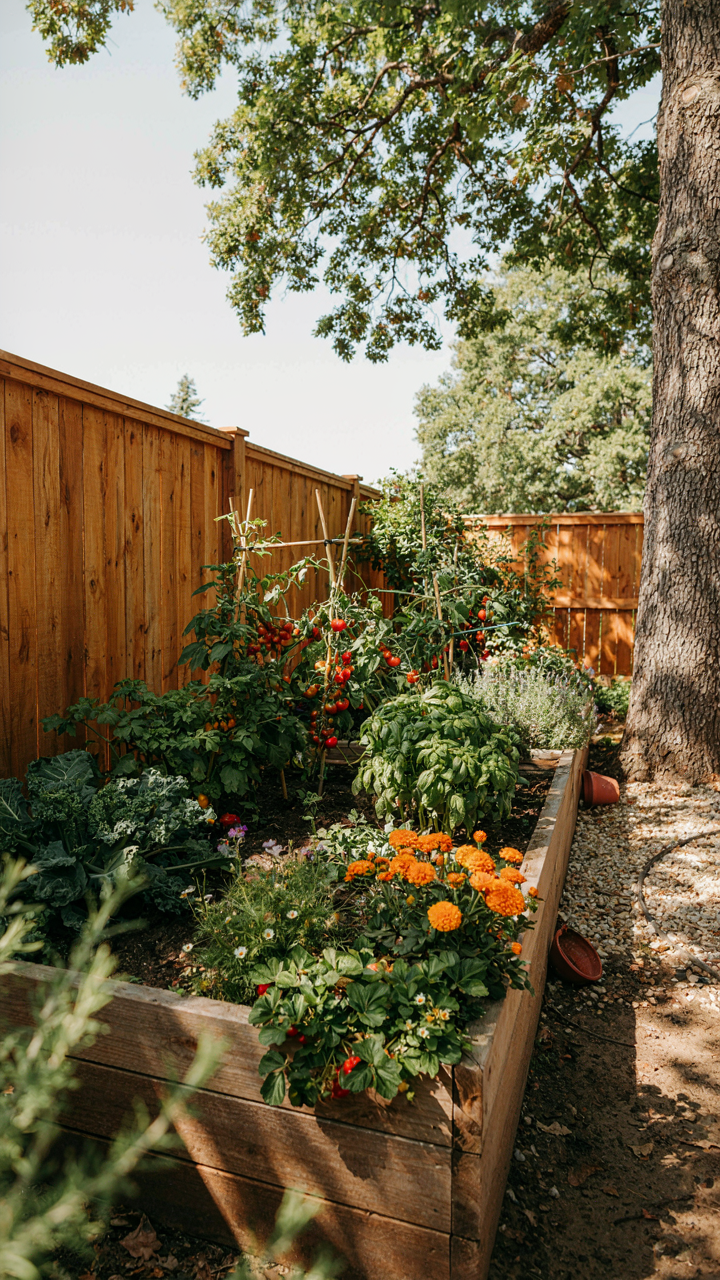
Fitting Gardens Into Difficult Spaces
You want your garden to look intentional, not like you settled for what wouldn’t sell. The real mechanism is simple: standard rectangular dimensions exist because they’re easy to manufacture and market, not because they solve problems. Geometry from landscape architecture teaches us about “adaptive fit”—the principle that a structure’s dimensions should match the constraints of its environment, not the other way around. Corners, slopes, and odd angles aren’t obstacles. They’re information about what your space actually needs.
Trapezoid and L-shaped beds work in corners because they eliminate dead zones where plants languish and water pools unevenly. A 3-foot by 6-foot rectangle won’t fit a triangular wedge between a fence and a tree line. You measure the actual angle, the actual width, then scale the depth to match standard soil depth requirements: 12 inches minimum for shallow-root crops, 18 inches for most vegetables, 24 inches for root crops. The dimensions follow the constraint, not consensus.
Growing Space That Doubles As Infrastructure
This isn’t decoration masquerading as function. Raised beds with built-in seating or storage solve a real problem: most home gardeners lack adjacent workspace. A 4-foot by 8-foot bed with a 16-inch-high bench seat on one long side gives you growing space plus a place to organize tools without bending. The mechanism borrowed from industrial design is “form follows failure.” You build a second function only after identifying what the first function failed to provide. A garden that gives you nowhere to sit or store supplies creates friction. You stop using it.
Dimensions here matter tactically. A bench seat needs 18 inches of depth to be usable. That means your growing bed on the opposite side becomes 24 to 30 inches deep—still reachable from both directions, still standard soil depth. Storage compartments built into the frame’s base require 12 to 15 inches of clearance for access. Design the function first, then measure backward to the bed dimensions. Never design the bed, then force a secondary function into the leftover space.
Cultivating Autonomy: Your Raised Garden, Your Rules

The Garden You Actually Need
You want permission to build something that doesn’t match the Pinterest standard, and you’re looking for validation that your unconventional dimensions won’t sabotage the whole operation. Here’s the mechanism: raised bed dimensions are constraints you choose, not laws you obey. A 2-foot-by-8-foot bed isn’t objectively better than a 3-foot-by-6-foot bed—it’s just what works for someone else’s space and schedule. Your actual life determines what works. If you have thirty minutes on Saturday morning, a 4-foot-by-4-foot bed at waist height beats a sprawling 4-foot-by-16-foot bed you’ll ignore by July.
The common advice treats raised bed dimensions as a technical problem with a correct answer. It’s not. It’s a design problem with multiple valid answers depending on your constraints. Access matters. Soil volume matters. Climate matters. Your physical ability matters most. A 12-inch-deep bed works in clay soil where drainage is critical. A 24-inch-deep bed works if you’re growing root crops or have sandy soil. Neither is wrong. The mechanism is simple: match your bed dimensions to the crops you’ll actually grow and the maintenance schedule you’ll actually follow, not to some standardized template.
Measuring What Actually Counts
Harvest weight is the metric people default to because it’s easy to count. It’s also the wrong north star for most home gardeners. The real mechanism here borrows from systems thinking in ecology—resilience, not yield, determines whether a system survives repeated stress. Your raised garden’s resilience lives in three places: the knowledge you extract from failure, the soil structure you build, and the momentum you maintain across seasons.
A single exceptional harvest followed by abandonment produces zero compounding value. A modest harvest you repeat consistently builds soil, deepens your understanding of microclimates and timing, and creates the behavioral foundation for scaling later. The metric to track isn’t pounds per square foot—it’s whether you planted again next season, whether the soil improved, and whether you solved a problem you couldn’t solve last year. Measure these three things every quarter and you’ve got a system that actually evolves.
The Obstacle Isn’t The Dirt; It’s Your Unexamined Adherence To Convention

You’ve been conditioned to think raised bed dimensions come from gardening magazines, not from what your specific occasion demands. Stop copying templates. Start asking what you actually need to grow, who you’re feeding, and how much space you have. Measure your yard today. Sketch one non-standard dimension. You’ll realize the real constraint was never your dirt. It was your willingness to question what everyone else does.



