
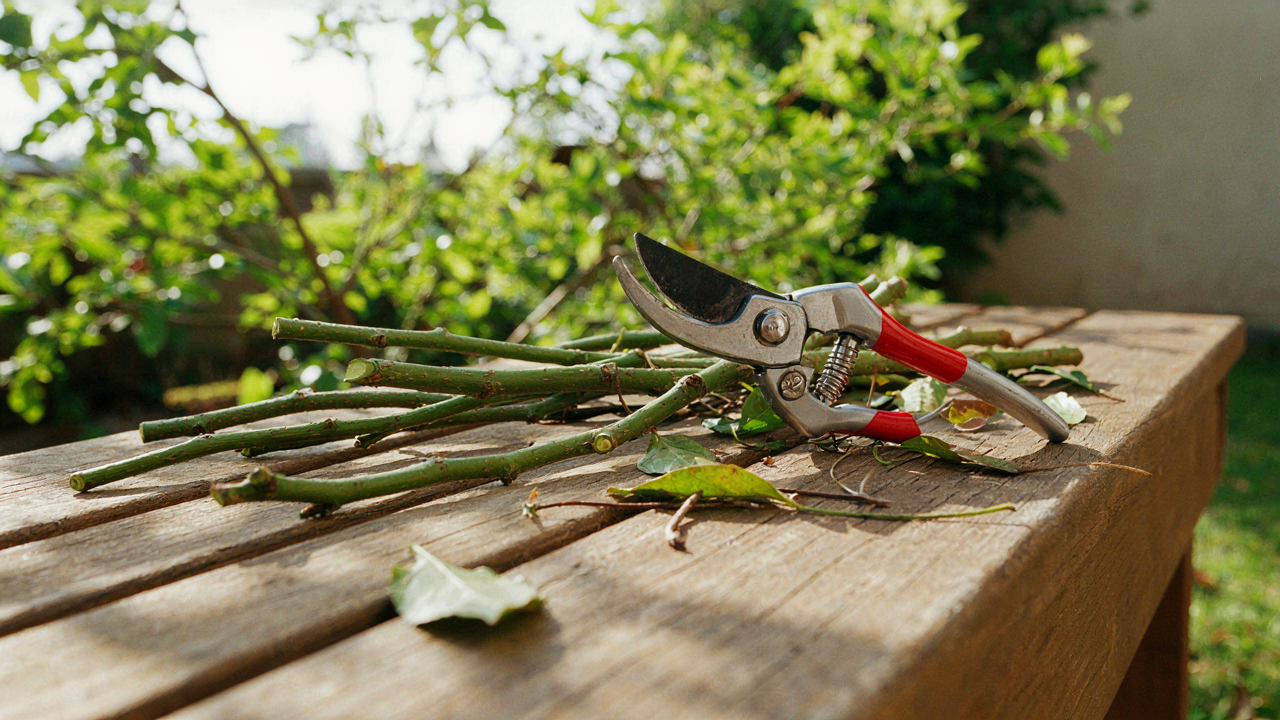
Beyond The Blade: Pruning Shears As Energy Directors

Redirecting Resources, Not Just Removing Bulk
You want to believe pruning is simple removal. It isn’t. Pruning is resource allocation. When you cut a branch, you’re not deleting plant material—you’re redirecting carbohydrates, nitrogen, and water toward the branches you left behind. The plant has finite energy. Every cut forces a choice about where that energy flows next.
The mechanism is hydraulic. A plant’s vascular system moves resources based on branch structure. Remove a branch, and the plant reroutes its flow. Cut strategically, and you starve weak growth while feeding strong growth. This is why amateur pruners create dense, twiggy mess—they cut randomly, so the plant spreads its resources evenly across everything. Precision shears let you concentrate energy where it matters.
Manipulating Growth Through Hormonal Triggers
Most people think hormones are mysterious plant magic. They’re not. Hormones are chemical signals. Auxin, the primary growth hormone, concentrates at branch tips and tells the plant where to grow. When you remove a branch tip with pruning shears, you remove the auxin source. The plant responds by activating dormant buds below the cut, creating branching.
The pattern is predictable. Prune above an outward-facing bud, and growth heads outward. Prune above an inward-facing bud, and you create crowding. This isn’t luck. Cut one-quarter inch above the bud, at a forty-five-degree angle away from it. The plant will push new growth from that bud in the direction it faces. Repeat this cut across the plant and you’ve essentially reprogrammed its shape without chemicals or waiting.
The Botanical Leverage Protocol: Maximizing Growth With Pruning Shears
Where Plants Bend Under Force
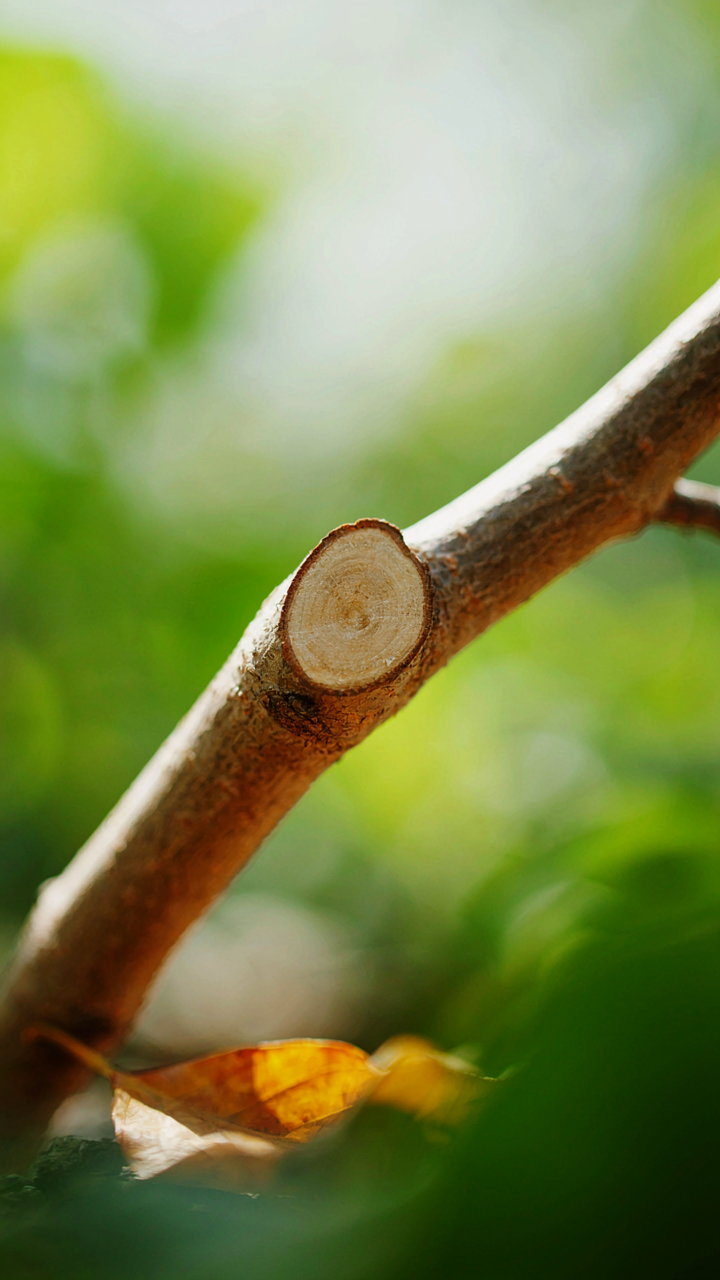
You want to prune efficiently without wasting motion or damaging wood. That’s the real concern here. Leverage comes from physics, where mechanical advantage multiplies force through distance. In pruning, leverage means positioning your cut at the optimal point on the branch where plant anatomy creates the least resistance. The collar, lateral bud, and branch angle aren’t random features—they’re load-bearing structures. Cut at these points and the plant heals cleanly. Cut anywhere else and you create a wound that invites disease.
The mechanism is structural. Plants compartmentalize damage through callus formation, a biological wall that seals wounds. This process fails when you cut flush against the trunk or leave a stub. The plant cannot close what you’ve left hanging. Position your blade just outside the branch collar—that small ridge of bark and wood where the branch meets the trunk—and the tree’s own chemistry handles the rest. This isn’t theory. It’s how trees survive in nature without a landscaper managing every wound.
Cutting For Outcome, Not Just Removal
Most advice says “cut above a bud” and calls it a day. That’s incomplete. The bud’s position, direction, and health determine what grows back, which determines whether you get density, flowers, or fruit. Inward-facing buds create compact growth. Outward-facing buds open the canopy. Dormant buds wake when you remove the apical bud above them, a process called apical dominance suppression. You’re not just removing wood. You’re redirecting the plant’s growth hormone distribution.
Strategic cutting means matching your cut angle and location to your end goal. For flowering plants, remove growth above the last set of flower buds if you want the plant to redirect energy upward into blooms instead of leaves. For fruit trees, thin competing branches to force the tree to invest in fewer, larger fruits rather than many small ones. For dense shrubs, cut to lateral buds at varying heights so new shoots emerge at different points on the branch. The cut itself is a command to the plant’s endocrine system, and the plant obeys when you cut at the right place.
Debunking The “Dead Wood” Myth: When To Truly Prune
Timing For Active Growth Versus Dormancy Cuts
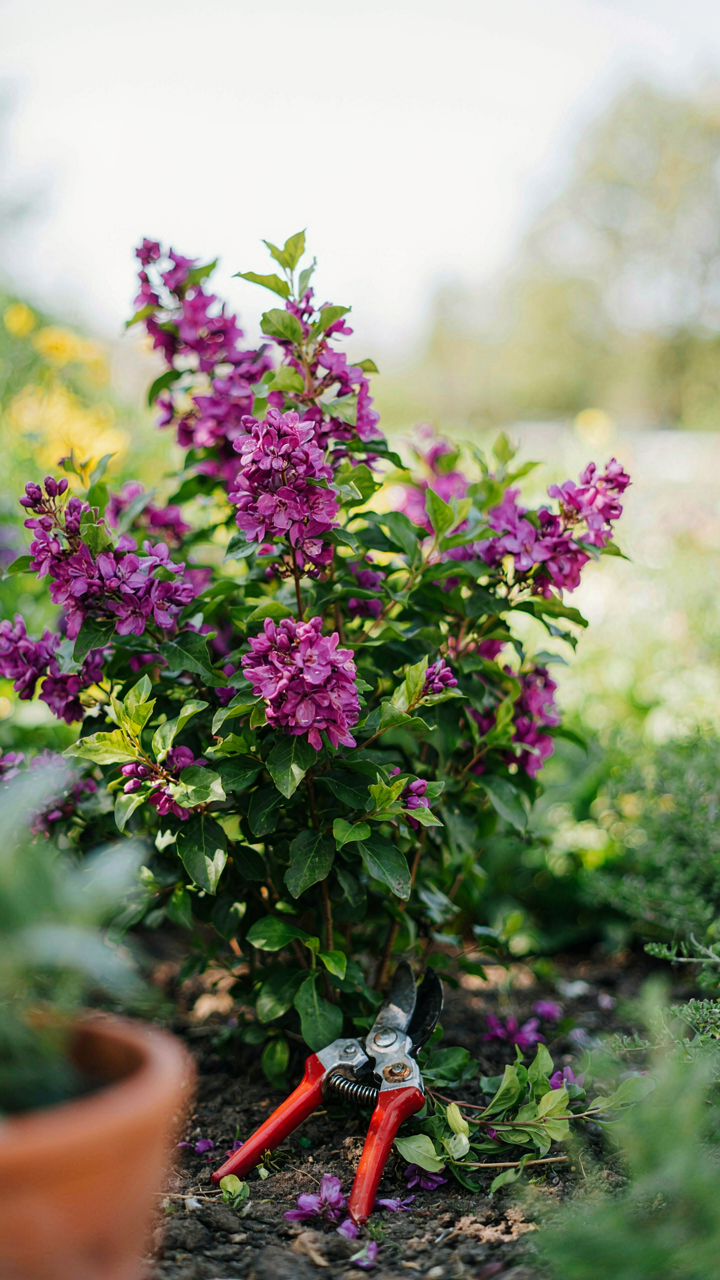
You want permission to prune whenever it’s convenient, but the plant doesn’t care about your schedule. The real mechanism is this: plants either build or repair, never both simultaneously. During dormancy, a plant directs energy inward. During active growth, it pushes outward. Cut during dormancy and you’re asking the plant to heal a wound while it’s already shut down for winter. Cut during growth and the plant seals the wound while momentum is still there.
The common advice says “prune in late winter.” That’s incomplete. What matters is understanding the plant’s growth cycle in your specific climate. A spring-blooming shrub needs pruning right after it flowers, not before. A summer-bloomer gets cut in late winter while dormant. Evergreens tolerate cuts year-round because they never fully shut down. The mechanism is simple: prune when the plant has the energy reserves to compartmentalize the wound. Check your plant species and your local frost dates. Then cut accordingly.
Wounds That Never Close
The mistake everyone makes is cutting too close to the branch collar. You see bare wood and think clean is better. It’s not. The branch collar is a swollen ring where the branch meets the trunk. Cut flush against the trunk and you remove this protective zone entirely. The plant cannot seal that wound. Decay travels straight into the main structure.
Cut a quarter inch outside the branch collar and the plant mobilizes chemical walls within days. The wound still remains, but the plant controls what enters it. This isn’t theory. It’s biology. Arborists learned this by watching what actually happens to trees over decades, not by guessing. Leave the collar intact and let the plant do its job. That single cut angle change determines whether a branch heals or rots into the trunk.
Precision Tools For Plant Architects: Types Of Pruning Shears

Bypass Vs. Anvil Shears: Choosing The Right Instrument
You want to buy the “right” tool because you fear wasting money on the wrong one. The real mechanism is this: bypass and anvil shears work on opposite principles, and one destroys plant tissue while the other cuts clean. Bypass shears use two curved blades that pass each other like scissors. One blade is sharp, one is flat. The sharp blade slices through the stem while the flat blade supports it. Anvil shears press a sharp blade down onto a flat anvil base, crushing the stem between them. The crush matters because it damages cells beyond the cut line, which invites disease and slow healing.
Bypass shears cut living wood. Anvil shears should only touch dead wood or thick branches where crushing does less harm. If you use anvil shears on green stems, you’re not saving time or money. You’re breeding infection into every cut. Bypass shears cost more because they require tighter tolerances to maintain that passing-blade geometry. Most gardeners buy anvil shears because they’re cheaper, then wonder why their plants get sick. The choice isn’t about preference. It’s about whether you want your plant to recover or deteriorate after you cut it.
Tool Maintenance And Sharpening: Extending Longevity
Maintenance is not about keeping your shears pretty. It’s about preserving the blade angle and preventing cross-contamination of disease between plants. A dull blade doesn’t cut cleanly on either bypass or anvil shears. It crushes tissue the way an anvil does, even if you’re using bypass shears. Dullness is the same mechanism as the wrong tool type. You restore sharpness by maintaining the original blade angle, typically between 12 and 15 degrees on the cutting edge. Most people sharpen at random angles and wonder why the blade never feels sharp again.
Clean your shears between plants, not just at the end of the day. Sterilize with a 10 percent bleach solution or 70 percent isopropyl alcohol to kill fungal spores and bacteria living on the blade. Oil the pivot point monthly to prevent rust and friction buildup. When you sharpen, use a whetstone or honing steel and match the factory angle. Disassemble the shears if possible to sharpen both blades properly. If the pivot becomes loose or blades misalign, the cut will suffer and no amount of sharpening fixes it. Replace the shears when the frame bends or when you can no longer adjust the blade tension tight enough to eliminate play.
Pruning Shears In The Garden: Cultivating Landscaping Plants
Shaping Ornamental Plants For Form And Structure
You want your yard to look intentional because chaos reads as neglect, and neglect signals you don’t maintain things. The mechanism is this: ornamental plants grow according to their genetics, but pruning redirects that growth into a shape you choose. This is applied biology, not art. Your cuts determine which buds receive light and nutrients, forcing the plant to branch where you want density and height where you want it sparse.
Most advice skips the actual rule. Cut just above a bud that faces outward, at a 45-degree angle. This matters because inward-facing buds grow toward the plant’s center, creating congestion and weak structure. Outward-facing buds grow away from the center, building an open framework that sheds water and resists disease. The angle prevents water from pooling on the cut and rotting the stem. This is not opinion. It’s how plant physiology works.
Maintaining Hedges And Shrubs For Optimal Form
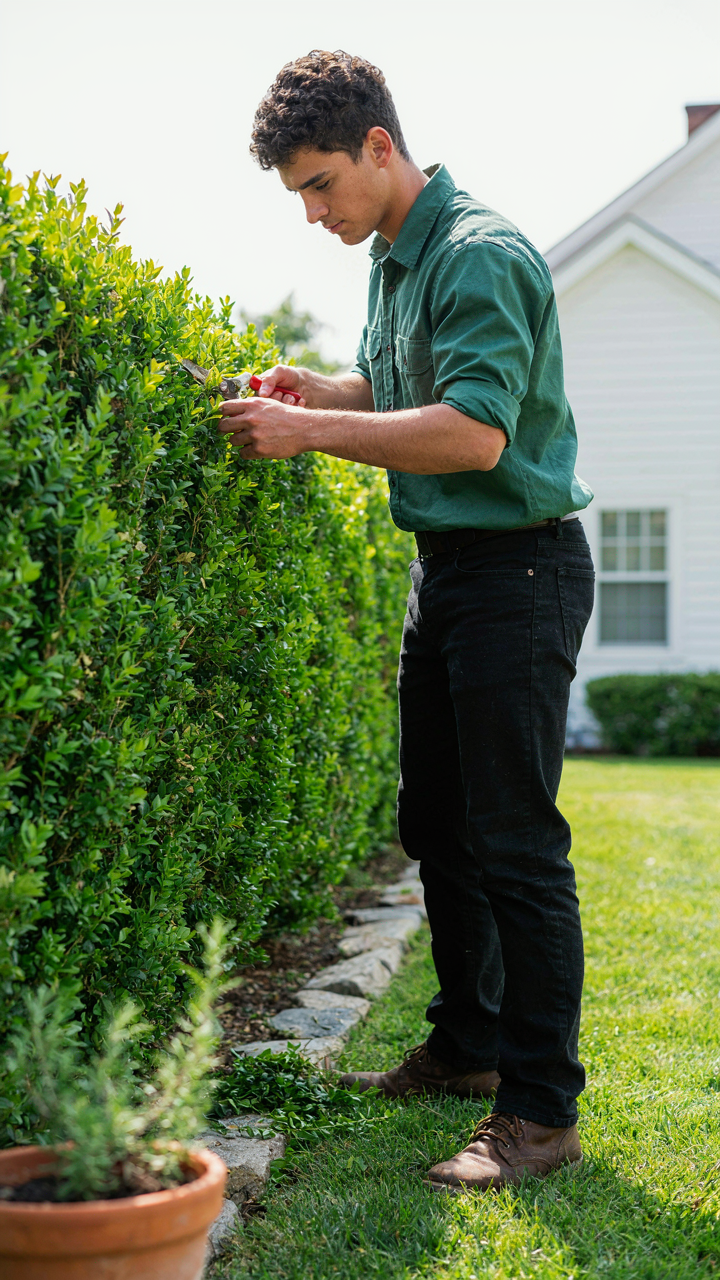
Hedges and shrubs fail because people prune the same way every year without understanding what changes. A hedge is a compressed wall of growth, and each cut triggers the plant to branch at that point. If you cut flat every season, you’re forcing all new growth from that flat plane, narrowing the base and widening the top. Eventually the bottom starves from shade, and your hedge becomes a bare-legged problem.
The correct protocol is this: start with a slight taper from bottom to top. Cut the sides at an angle so the base stays wider than the crown. Do this from year one. The geometry ensures light reaches every layer of foliage. Cut during active growth when the plant has energy to respond, never when it’s stressed. For most plants, this means late spring or early summer. Maintain this taper every pruning cycle to keep structural integrity and density across the entire hedge.
The Fruit Tree Optimization Method: Pruning For Abundance
Open Canopy Structure Beats Density
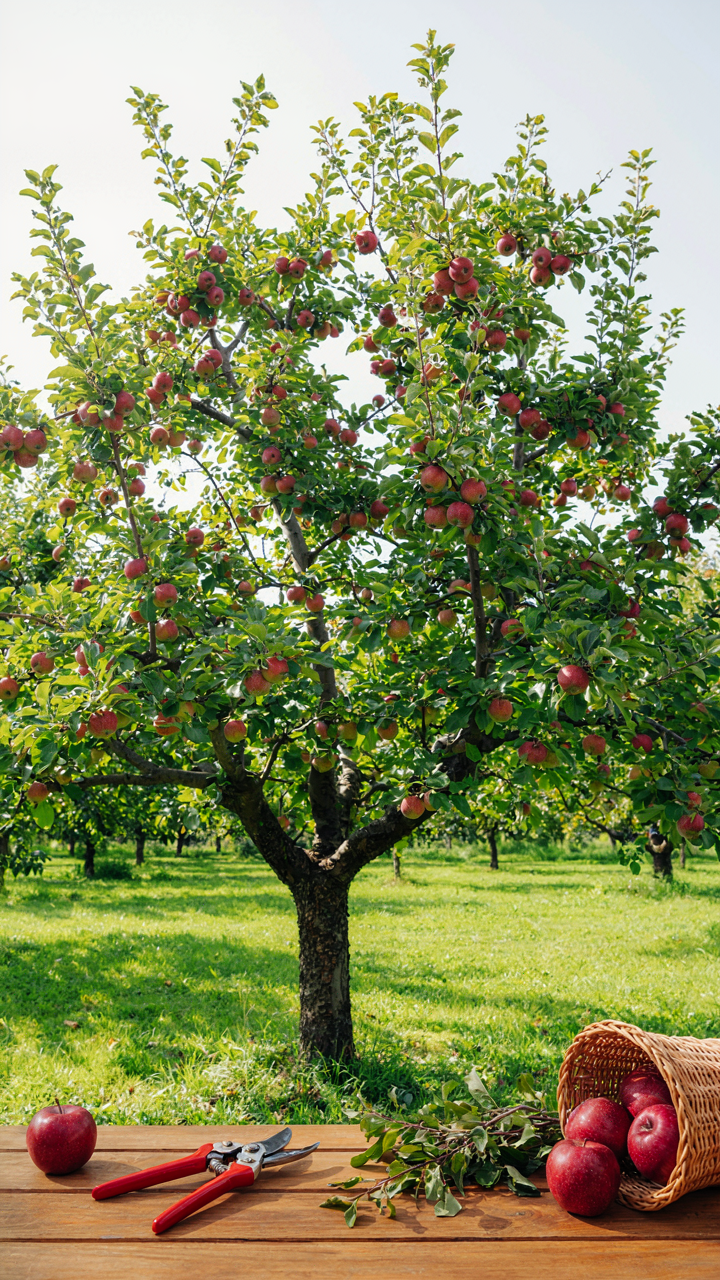
You want dense foliage because it looks healthy. It isn’t. Borrowing from botany: light penetration works like nutrient flow in the vascular system—blocked channels starve the fruit. Most growers prune the exterior and leave the interior packed. This kills productivity at the branch tips where fruit actually develops.
Open canopy pruning removes competing vertical shoots and crossing branches to create sight lines through the tree. Prune out roughly 25 to 30 percent of total wood volume, targeting interior growth first. Space remaining primary branches so light reaches the canopy floor. Air circulation prevents fungal pressure and reduces pest habitat. The mechanism is simple: fruit develops on well-lit branches, and well-lit branches require removal of everything shading them.
Renewal Cycles Lock In Consistent Yields
Pruning the same wood year after year produces smaller fruit and thinner branches. Renewal pruning means systematically removing old canes and branches on a predictable schedule so younger wood gets dominance. For stone fruits and apples, this typically means removing one or two of the oldest primary branches annually and training new growth to replace them.
The protocol: identify the three to five oldest primary branches, remove them completely at the base, then select vigorous young shoots to fill the gap. Repeat this cut every year on the same schedule. Consistent removal prevents wood aging and maintains the tree’s fruiting capacity across decades. Execute this cut in dormancy, never mid-season.
Backyard Vegetable Gardens: Pruning For Yield And Vigor

Pruning Tomatoes, Peppers, And Fruiting Vegetables
You want the Instagram-worthy harvest without understanding why plants actually produce it. Here’s the mechanism: fruiting vegetables allocate energy between vegetative growth and fruit production. Prune aggressively and you starve fruit development. Leave it wild and you get foliage that shades ripening. The pruning shears guide cuts sucker growth (those shoots between the main stem and branches on tomatoes) to redirect sugars directly into fruit sites instead of wasting them on dead-end stems.
Tomatoes respond predictably to sucker removal because each cut eliminates a competing energy sink. Peppers tolerate less pruning than tomatoes and need only the lowest leaves removed for airflow. Eggplants rarely need pruning if spaced correctly. The error most gardeners make is timing: remove suckers when they’re 2-3 inches long, not when they’re woody. Wait too long and you’ve already burned calories the plant won’t recover from. Cut flush to the main stem with your pruning shears guide, leaving no stub that invites disease.
Targeted Leaf And Stem Removal For Maximum Harvest
Most advice says “remove lower leaves for air circulation” without naming what you’re actually solving: fungal pressure and light penetration to ripening fruit. Remove leaves selectively, not in a panic. The pruning shears guide works here as a precision tool, not a hedge trimmer. Strip only the bottom 6-8 inches of foliage once fruit is set, leaving enough canopy to prevent sunscald on exposed peppers and tomatoes.
Stem removal follows a different logic: thin crossing branches and those growing inward to open the plant’s interior to light and airflow. Remove no more than 20 percent of total leaf mass in a single session or you trigger stress responses that halt fruiting. After your final cut with the pruning shears guide, wait 48 hours before the next pruning session. This spacing lets the plant reset its resource allocation without shock. Time pruning for early morning when stems are hydrated and less likely to tear.
The Bio Feedback Loop: Pruning As A Dialogue With Your Plants

Reading Plant Response To Your Cuts
You want to believe pruning is a one-time decision. It isn’t. Cybernetics—the study of feedback systems and control—applies directly here: you cut, the plant responds, you adjust. Most pruning guides treat this as linear. They’re wrong. The real work happens in the loop between action and observation.
After you prune, the plant signals its stress level through growth pattern, leaf color, and branch vigor. Weak regrowth means you cut too aggressively or at the wrong time. Dense, angled growth means the plant accepted the cut and redirected energy efficiently. You calibrate your next cut based on this signal. This isn’t intuition. It’s data collection on a living system.
Understanding What Plants Actually Signal
Plant communication operates through hormonal shifts and visible structural changes, not emotion. Abscission layers form where branches meet the trunk, and a plant either seals that wound efficiently or leaves it vulnerable. Callus tissue growth speed tells you whether the plant recovered or struggled. Apical dominance shifts when you remove the main terminal—the plant either produces one strong replacement or multiple weaker ones.
Track these signals across seasons. Faster callus formation in spring versus fall reveals the plant’s metabolic state. Uniform branch spacing after pruning indicates proper cut placement. Sparse or clustered regrowth signals poor timing or angle. Document what you observe before you prune the same species again. The plant tells you exactly what worked.
Advanced Garden Pruning Tips: Beyond The Basics
Espalier And Cordon Training Methods
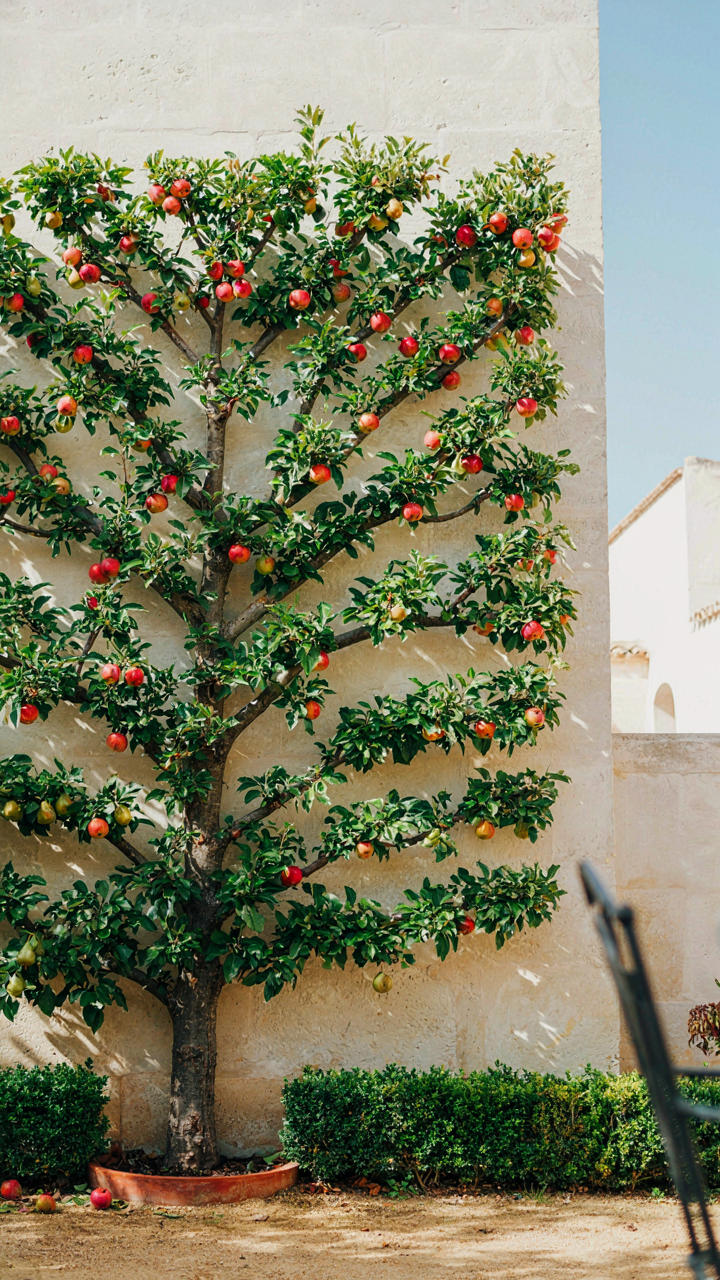
You want this section because it promises to make your garden look intentional and expensive without admitting you’re chasing status. The mechanism is simple: espalier and cordon training use the same principle as architecture—constraint forces growth into predetermined patterns. By limiting the plant’s natural sprawl, you redirect energy into fewer, denser fruiting branches. This isn’t aesthetic excess. It’s applied physics. Restricted growth means concentrated productivity in half the space.
Espalier and cordon training separate amateurs from people who understand that plants respond to boundaries. Traditional espalier creates flat, geometric fruit trees against walls or trellises. Cordon training produces a single main stem with lateral fruiting spurs, used heavily in European orchards for centuries. Both methods require pruning discipline and timing. You remove competing shoots, redirect main stems along supports, and maintain spur systems year after year. The payoff is density and yield that standard open-center trees cannot match.
- Horizontal Espalier: Train multiple tiers of branches parallel to the ground on a rigid frame. Branches fill space horizontally while the vertical trunk remains minimal. This maximizes light exposure on all fruiting surfaces.
- Diagonal Cordon: Angle the main stem at 45 degrees along a support wire or rail. This moderate angle slows sap flow compared to vertical growth, encouraging more lateral spur formation along the stem.
- U-Cordon: Split the main stem into two parallel vertical stems tied to supports. This doubles fruiting surface area while maintaining compact overall footprint and easier maintenance pruning.
- Belgian Fence: Create an interlocking diagonal lattice of four stems from a single plant base. Each stem angles outward then upward, producing a dense, productive wall that tolerates partial shade better than flat espaliers.
- Summer Spur Pruning: Cut lateral shoots to five to six leaves in June or July while growth is active. This hardens off spurs before dormancy and prevents regrowth that wastes energy on non-fruiting wood.
Success depends on starting young plants with flexible stems and committing to the pruning schedule for three to five years before the architecture stabilizes. Most people abandon cordon systems because they demand consistency. You cut summer shoots, you cut winter shoots, and you tie down branches on schedule or the plant reverts to wild growth. The moment you stop is the moment the structure collapses.
Root Pruning For Vigor And Size Control
Root pruning works because it mimics the stress response that signals a plant to consolidate resources rather than expand. When you prune roots, you trigger the plant to produce denser root systems closer to the trunk while simultaneously reducing its access to water and nutrients. This physiological brake slows vegetative growth and forces energy into flowering and fruiting instead. Nurseries use this on dwarf rootstocks intentionally. You can apply it to any tree or shrub that has outgrown its space or refuses to fruit.
The actual process demands precision and timing. Dig a circle around the plant trunk in early spring before growth accelerates, typically two to three feet from the trunk depending on the plant’s age. Cut major roots cleanly with a sharp spade or pruning saw. Leave feeder roots intact where possible. The objective is to remove enough root mass to reduce vigor by 20 to 30 percent without killing the tree. Water immediately after cutting and repeat the process annually or every other year until the plant reaches your target size and productivity level.
The Pruning Shears Misconception: Why Most Advice Fails
Species Demands Override Generic Rules
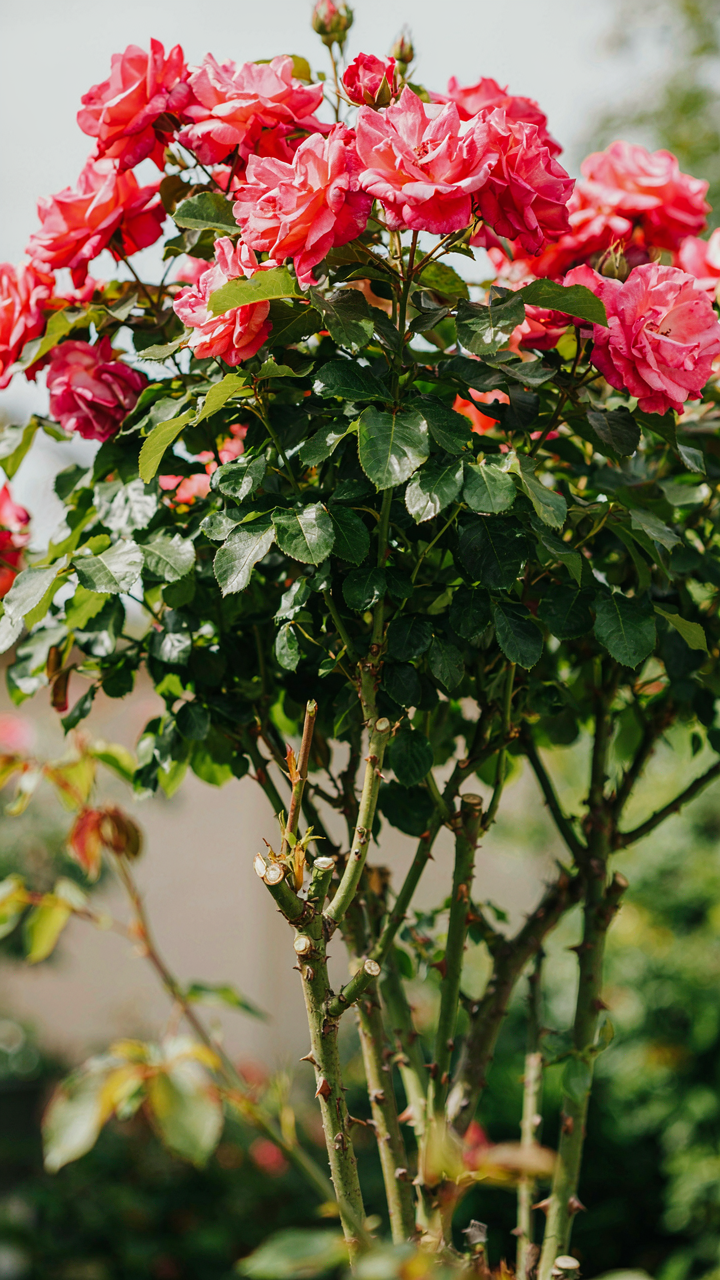
You want a pruning shears guide so you stop killing plants and feel competent again. The mechanism is this: most advice treats pruning as one universal skill, when plant biology demands the opposite. A rose and a pine tree live by completely different growth patterns. Cut a rose at the wrong angle and it recovers. Butcher a conifer’s structure and you’ve wasted years.
The real work is matching your cut to how each species actually grows. Deciduous trees compartmentalize wounds differently than evergreens. Fruit trees need angle cuts to shed water. Ornamentals need clean perpendicular cuts. Your pruning shears guide must specify species constraints before it teaches technique. Generic advice is a time tax disguised as wisdom.
Cutting Is Not The Outcome
Most pruning shears guidance obsesses over blade mechanics: angle, pressure, timing. That’s not the outcome. The outcome is what the plant becomes after it heals. You’re not pruning for the cut itself. You’re pruning for the branch structure, the vigor, the shape that emerges six months later.
This flips the entire approach. Instead of asking “How do I use these shears?”, ask “What do I want this plant to look like, and which cuts create that future?” Understand how the plant responds to cutting, then work backward to your technique. Your shears are just the tool. The real decision happens in the outcome you’ve already decided you want.
The Only Barrier To Masterful Pruning: Your Ignorance Of Plant Psychology

Most people buy pruning shears and hack away like they’re angry at the plant. Wrong move. Plants aren’t just objects to cut. They’re living systems responding to your every slice. You cut wrong, the plant bleeds resources and dies slow. You cut right, it explodes with new growth. Stop thinking like a tool owner and start thinking like a plant strategist. Pick one plant in your yard today. Study it for ten minutes before you touch it. Learn what it wants to become, then cut accordingly. Master pruning isn’t about sharp blades or perfect angles—it’s about reading what the plant is actually trying to do.



