
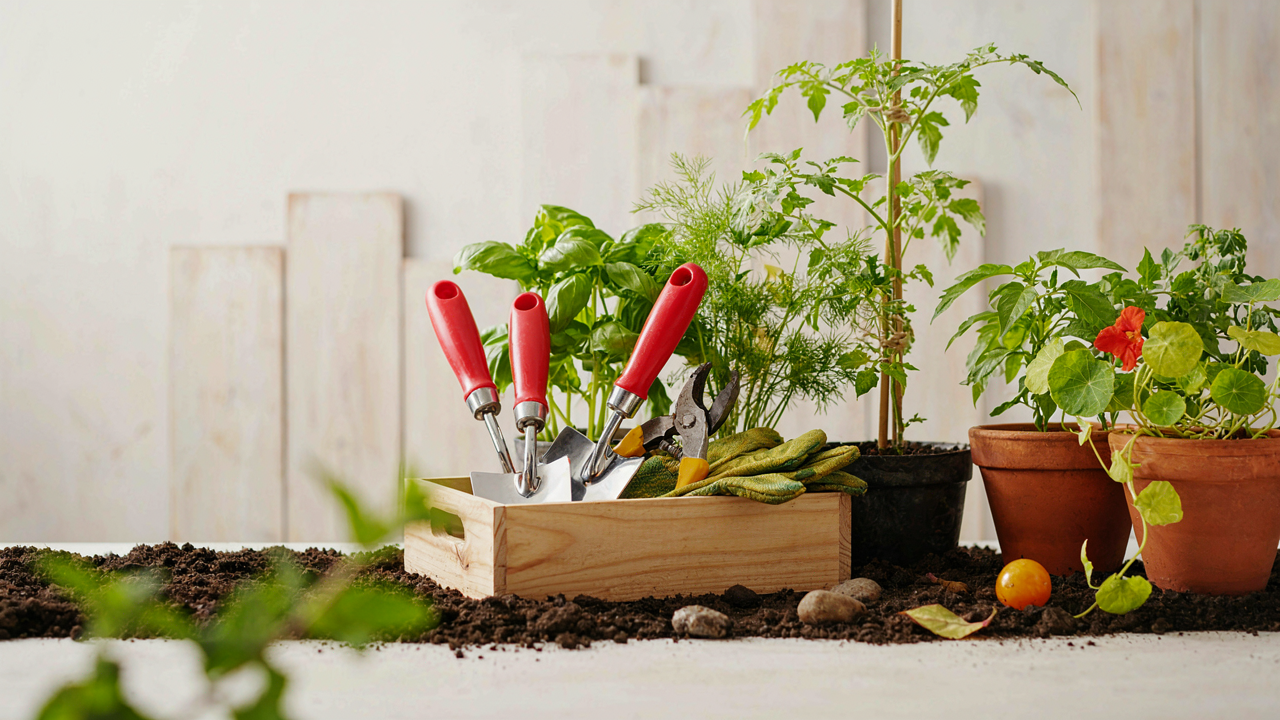
The Tool Belt Fallacy: Why “Convenience” Is Sabotaging Your Garden Flow

The Myth Of One Stop Storage
You want a tool belt because you think it signals you’re organized. The reality is simpler and uglier: standard garden tool belts create friction, not flow. Every pocket and loop forces you to hunt for what you need instead of reaching for it. The belt distributes weight unevenly across your hips, fatiguing your lower back on jobs longer than thirty minutes. You end up removing it halfway through, which defeats the entire premise of convenience.
The cognitive load of “which pocket has the pruners” burns mental energy you should spend on the actual work. Belts designed for carpentry or masonry don’t translate to garden work because garden tasks demand different tool sequences and frequencies. You grab the spade first, then soil amendments, then the hand rake. A belt optimized for simultaneous access creates dead weight in pockets you never touch during that job. The assumption that all tools need to travel with you at once is the original error.
The Hidden Cost Of Constant Retrieval
Tool misplacement costs more time than walking to a central station. Think about inventory management as the mechanism here: every tool has a carrying cost, a searching cost, and a replacement cost. When tools live in a belt, you stop seeing them as a system. You lose track of what you own. You buy duplicates of hedge shears you already have. You leave pruners in the shed for two weeks because they’re not in your visual field during setup.
The real expense surfaces when you’re mid-task and reach for a tool that isn’t there. You stop work. You backtrack. You waste five to ten minutes per occurrence. On a two-hour garden project, that compounds into thirty minutes of pure lost time. Belts also create a false sense of preparedness that makes you carry tools you won’t use, adding dead weight and decision fatigue. The solution is task-specific staging: pre-position tools where you’ll use them, not where you think you might.
The “Gardener’s Uniform” Protocol: Curating Your Garden Tool Belt Identity

Leather Tool Belt Versus Modern Synthetics
You want people to see you as competent before you’ve said a word. That’s why this choice matters. Material selection works like brand positioning in economics: it signals durability, investment, and taste to anyone watching you work. Leather wears visibly. It develops patina. Synthetics hide their age. The mechanism is visibility of commitment.
Leather tool belts demand maintenance. They crack in dry climates, absorb water, and require conditioning to stay supple. Synthetics offer consistency: nylon and canvas resist weather, dry fast, and demand almost nothing. Neither is objectively better. Choose leather if you want aesthetics that deepen with use and don’t mind upkeep. Choose synthetics if you need predictable performance in variable conditions and value function over story.
Green Tool Belt Pouch For Aesthetic Cohesion
Most gardeners buy what fits, then suffer clashing colors for years. A green tool belt pouch works because it echoes the environment you’re already in, which means your belt recedes instead of shouting for attention. This is visual hierarchy: the garden stays the subject, not your gear. One unified color scheme across pouch, belt, and handles eliminates cognitive friction every time you work.
Green comes in versions. Olive reads serious and practical. Sage blends softer. Forest absorbs light and hides soil stains. The real protocol is this: buy your pouch first, then select the belt to match it. This reverses the typical mistake of choosing the belt and hunting for pouches that fit. Your tool belt becomes intentional, not accidental.
Ergonomics Of The Harvest: The Unseen Advantage Of A Tailored Utility Belt

How Your Spine Actually Fails
You want a tool belt that looks deliberate, not like you raided a hardware store. Here’s what you won’t admit: most people ignore load distribution entirely until their lower back reminds them why that matters. Biomechanics is the study of force and movement in bodies. A garden tool belt is a load distribution system. The moment you hang ten pounds off one hip instead of balancing across your core, you create mechanical advantage for injury, not efficiency.
The human spine tolerates symmetric load far better than asymmetric load. A belt that clusters weight to one side forces your body to compensate with muscle tension and postural shift. Heavy tools on the right require constant micro-adjustments on the left. Over two hours of weeding or planting, this becomes chronic strain. The fix is straightforward: distribute weight across the front and both sides of your hips, not just the dominant side. Your kidneys and vertebrae will function normally again.
Reach Patterns Trump Pocket Count
Pocket placement isn’t about maximizing storage. It’s about minimizing the reach required for your most frequent tasks. Most tool belts fail because they treat all pockets equally. They don’t. You use pruners or your hand spade roughly four times for every single dig into a back pocket. Front pockets and hip pockets should hold your high-frequency tools. Deep back pockets bury tools you grab once per session.
Map your actual gardening motion before buying. Pruners, dibber, and gloves go in the front. Spare twine and small items go in side pockets where your arm naturally swings. Reserve back pockets for occasional tools like measuring tape. The goal is this: your most-used tool should require a hand movement under six inches. Anything longer than that is wasted motion repeated hundreds of times per session. Test the belt with actual tools before committing to it.
The Ecosystem Of Access: How A Tool Belt Pouch Transforms Garden Tool Organization

Building Your System Around Movement Patterns
You want a tool belt that makes you look capable. That’s the real motive here, and it’s fine. But the mechanism that actually delivers that is constraint, not collection. Borrow from systems thinking in manufacturing: a tool belt is a supply chain. Just as factories optimize for “just in time” delivery, your belt optimizes for “just in reach” access. You don’t organize around what you own. You organize around what you use in sequence.
Start by tracking a single gardening task for two weeks. Pruning roses, transplanting seedlings, weeding beds, whatever. Write down every tool you touch and the order you touch it. You’ll see patterns emerge that contradict how you currently arrange your belt. Most people load their belts by tool category or size. That’s wrong. Load them by the workflow. The first tool you grab goes in the dominant-side front pocket. The second goes adjacent. This reduces reaching time and eliminates the cognitive load of remembering where something lives.
Compartments That Prevent Damage And Cut Wasted Motion
The common advice is to use “whatever pockets fit your tools.” That’s lazy. Dedicated compartments aren’t luxuries. They’re damage prevention and speed amplification combined.
- Blade-specific slots: Sharp tools stored blade-down in reinforced fabric prevent dulling from friction and eliminate fumbling to grip handles correctly. This adds two minutes per hour back to actual work.
- Moisture-sealed pockets: Leather or coated nylon compartments keep soil off smaller tools like dibbers and pruners, reducing corrosion and the mental friction of grabbing a dirty tool.
- Weight-distributed main pouch: Heavier items like hand forks and cultivators sit center-back to prevent belt tilt, which causes muscle strain and shifts tool positions throughout the day.
- Quick-release loops: Bypass pouches entirely for frequently swapped items like pruning shears. Carabiners or magnetic strips let you swap without reaching across your body.
- Twine and tie storage: Dedicated narrow slots for garden twine, stakes, and labels prevent tangling and keep high-frequency items from dominating prime real estate.
The real return comes from this: if every tool occupies a specific spot and that spot matches your workflow sequence, you stop thinking about where things are. Your hands move on autopilot. You spend mental energy on the actual gardening, not inventory management. Set up your compartments, then don’t change them for at least three weeks. Your muscle memory needs that consistency to calibrate.
Beyond The Dirt: The Garden Belt As A Statement Of Intent
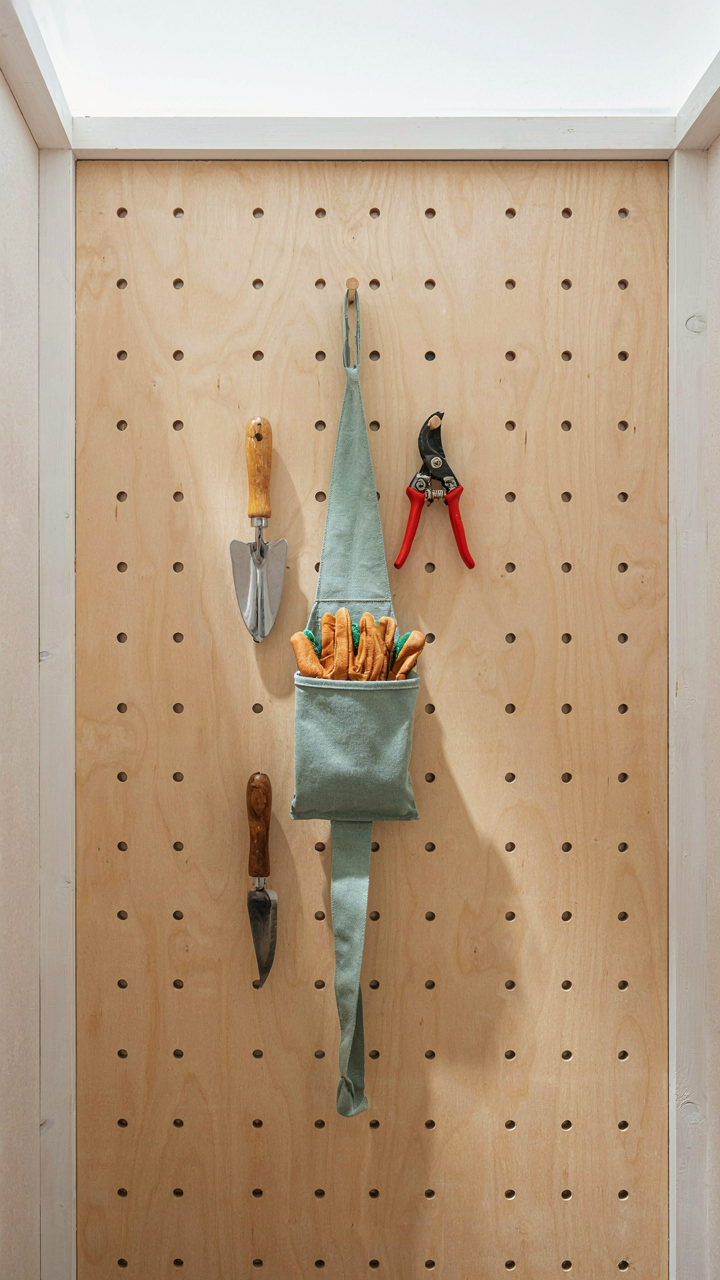
Carrying Only What Matters
You want people to see you as someone who has her life together. The real mechanism: constraint creates credibility. In economics, this is called signaling through limitation. A gardener with fifteen tools stuffed into a belt signals chaos. A gardener with four perfect tools signals mastery. The minimalist belt works because it forces you to choose. You eliminate the backup pruners, the duplicate trowels, the gadgets you convinced yourself you’d use. What remains is intention.
The minimalist approach means one cutting tool, one digging tool, one carrying vessel, one pruning implement. Not arbitrary restriction but deliberate selection based on what you actually use in a week. Most gardeners own double what they need. They carry the extras hoping the right moment arrives. It never does. Strip the belt down to what makes contact with soil weekly. The belt becomes lighter, faster, and paradoxically more impressive because anyone watching can see you move without hesitation.
What Your Belt Says Before You Speak
Your belt is a manifestation of your values. Canvas or leather tells a different story than nylon. Vintage brass tells a different story than plastic. Someone choosing a leather belt with brass buckles and oiled canvas pockets is saying something specific: I invest in durability, I expect to use these tools for years, I notice details. Someone grabbing a plastic-handled belt from a big-box store is saying something too: function over form, temporary engagement, good enough. Neither is wrong. Both communicate accurately.
The mechanism works through consistency. Your belt choice aligns with or contradicts other choices you make in the garden and beyond. If your raised beds are untidy but your tool belt is organized, observers notice the mismatch. If your plants are thriving and your belt is worn but well-maintained, the message coheres: you prioritize function and longevity. The belt becomes evidence of your actual gardening philosophy, not the one you claim. Pick tools and materials that match how you actually work, not how you think you should work.
The “Flow State” Harness: Engineering Your Garden For Uninterrupted Work

Minimize Transitions Between Tasks
You want to feel productive without actually stopping work. The real issue is that every time you put down a tool and walk to fetch another, you break focus. Cybernetics calls this “transition cost” – the energy tax of switching between states. Your tool belt’s job is to collapse those transitions to near-zero by keeping every tool you need within arm’s reach, eliminating the walk.
Most gardeners load their belts wrong: they pack for a hypothetical job instead of the actual sequence they perform. Watch yourself work for one session. Note which tools you use back-to-back. Your belt should mirror that exact order. If you always deadhead, then prune, then tie up vines, your belt positions those tools in sequence. You’re not choosing tools anymore – you’re reaching in rhythm.
Offload Memory To Physical Organization
Cognitive load kills rhythm faster than fatigue. Every time you pause mid-work to remember where you put the pruning shears or which pouch holds the twine, you’ve already lost. Your belt becomes an external memory system – the same principle architects use with tool organization on job sites.
Design your belt so the wrong tool is impossible to grab by mistake. Dedicated pouches for specific tasks, consistent placement every time you wear it. Heavy tools like hand cultivators sit low and centered. Lightweight items like plant ties go at eye level near your dominant hand. Your hands should know the location without your brain computing it. This is the difference between thinking about gardening and simply gardening.
Durability As An Investment: Why Cheap Tool Belts Cost You More
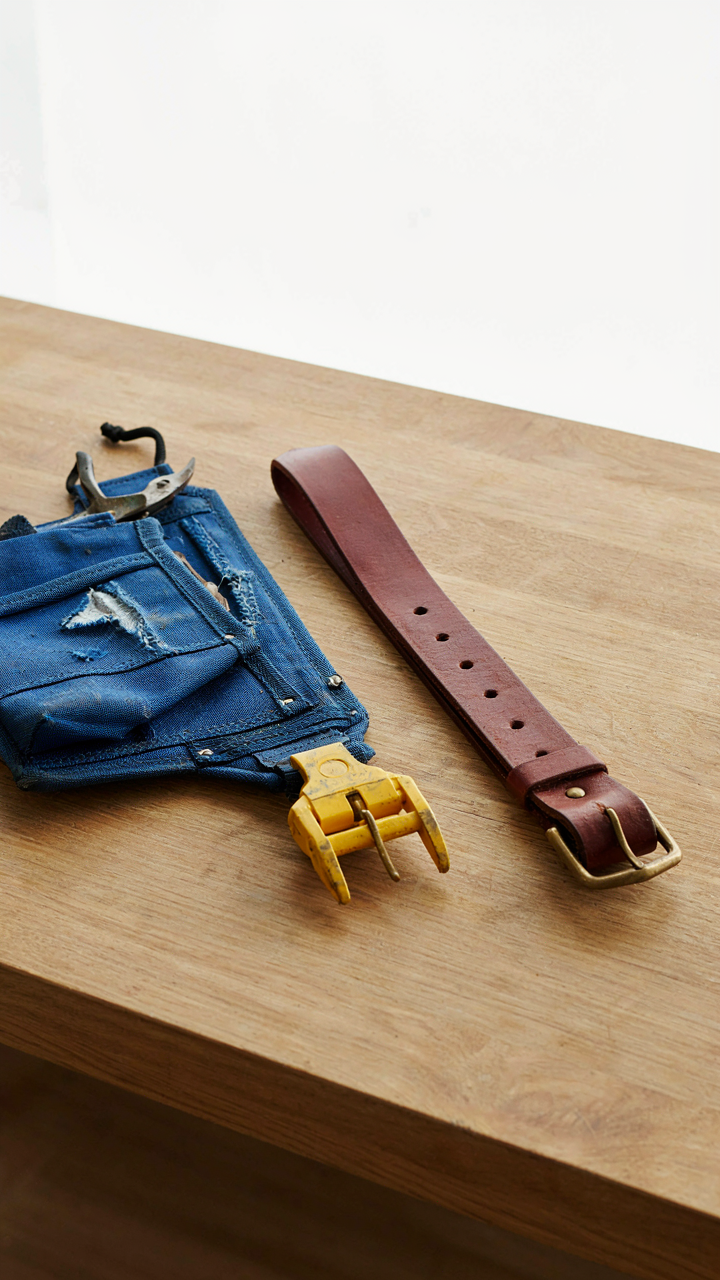
Material Science Reveals Why Your Belt Dies First
You’re really asking whether spending more now saves you from the shame of replacing gear that broke too soon. Here’s what matters: material science breaks down into stress tolerance and fatigue resistance, and cheap tool belts fail at both. Canvas degrades under UV exposure and repeated flexing. Synthetic webbing stretches permanently after a season of weight. Stitching on budget belts uses thread that snaps under tension, not reinforced nylon that holds. The mechanism is simple: materials with lower tensile strength fracture faster when stress concentrates at stress points like buckles and attachment loops.
Real tool belts use full-grain leather or heavy-duty canvas blended with polyester, materials engineered to distribute load across their structure rather than concentrate it. This isn’t marketing language—it’s physics. A quality belt spreads the weight of your tools across its entire width using proper backing and reinforcement at high-stress zones. Cheap belts skimp on backing material, so the load hammers the same fibers repeatedly until they snap. The difference in lifespan between a $30 belt and a $120 belt isn’t two versus ten years—it’s one season versus five to seven seasons of actual use.
When Repair Works, When Replacement Wins
The common advice says “buy once, cry once,” which misses the actual decision tree. You repair when the failure is isolated—a broken buckle, torn stitching, a single weakened loop. You replace when the belt material itself has fatigued across its structure, because repairing a compromised base is throwing money at a failing system. Sustainable choice means understanding what you’re actually fixing. A $40 belt with a snapped buckle might warrant a $15 repair. A $40 belt with stretched webbing throughout and multiple stress cracks does not.
Before you repair, assess the failure pattern. Single point failures—broken D-rings, separated seams on one edge, damaged clips—these respond to targeted repair. Distributed failures—material degradation, widespread stretching, multiple weak spots across different sections—signal that repair extends the problem rather than solving it. Order replacement parts from the manufacturer when available; this costs 10-20% of a new belt and extends functional life when damage is contained. When the belt body itself has failed, buy the next tier up in construction quality and treat the old one as a sunk cost lesson.
The “Legacy” Belt: Passing Down A System, Not Just Tools

Patina And Purpose
You want to believe your tools matter because it justifies the money spent and makes you feel like you’re building something. The real mechanism here is transfer of knowledge encoded in physical objects. A worn leather tool belt isn’t sentimental furniture. It’s a system.
Leather tool belts from manufacturers like Occidental Leather or Klein Tools develop specific wear patterns that communicate how a job gets done. The creasing shows pocket hierarchy. The faded spots reveal frequency of use. A tradesperson who inherits a well-used belt inherits the implicit knowledge of tool organization that took years to optimize. This beats generic advice every time.
Teaching Through Deliberate Tool Use
Common advice says “lead by example” and leaves it there. That’s incomplete. You need to narrate the system while you work.
Show which tools get fastest access and why. Explain why you position the hammer here, not there. Point out which pockets wear first because they’re reached for constantly. Walk through the decision tree of when to grab which tool. Let your apprentice wear the belt while you watch and correct their grip and reach. The muscle memory gets built before they touch a project alone.
The Real Obstacle Isn’t Finding The Right Belt; It’s Your Unconscious Belief That Gardening Must Be A Disorganized Struggle
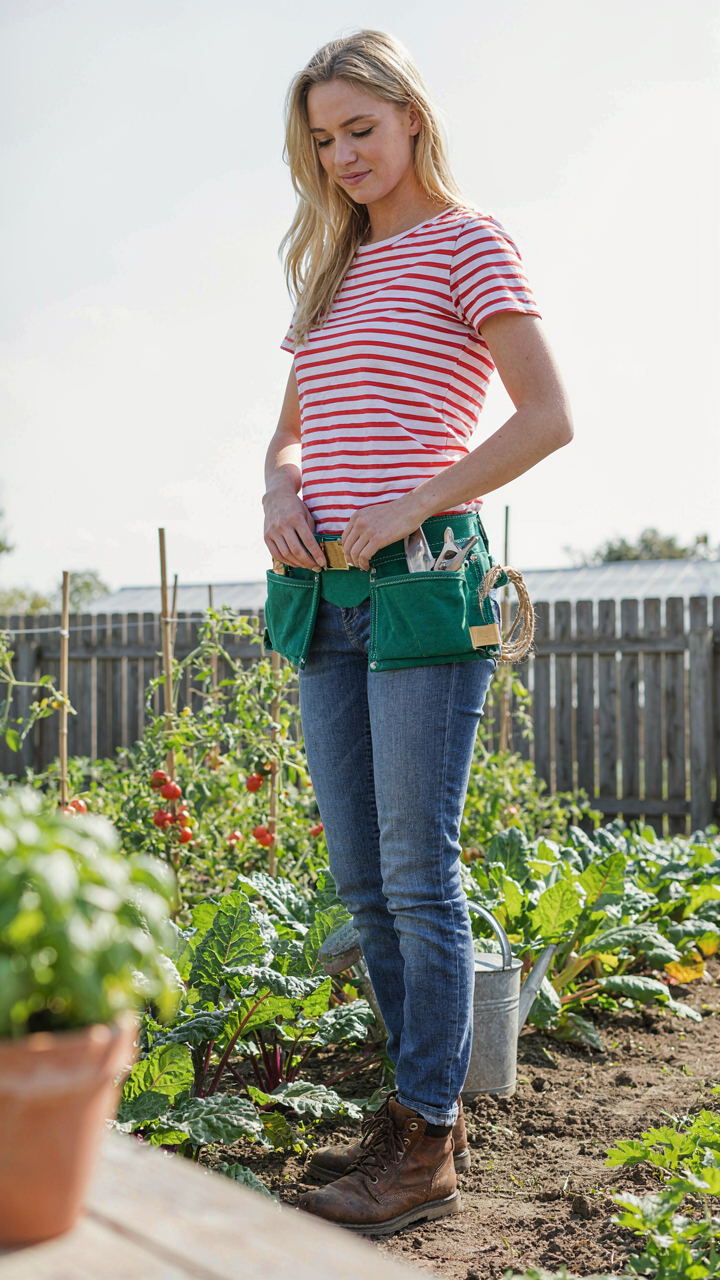
Most people don’t buy a tool belt because they think organizing their gardening proves they’re uptight. That’s the actual enemy. You’re not choosing between belts. You’re choosing between staying frustrated or owning your space with intention. Buy one belt today. Just one. Wear it for a week. You’ll realize that control isn’t boring, it’s freedom.



