
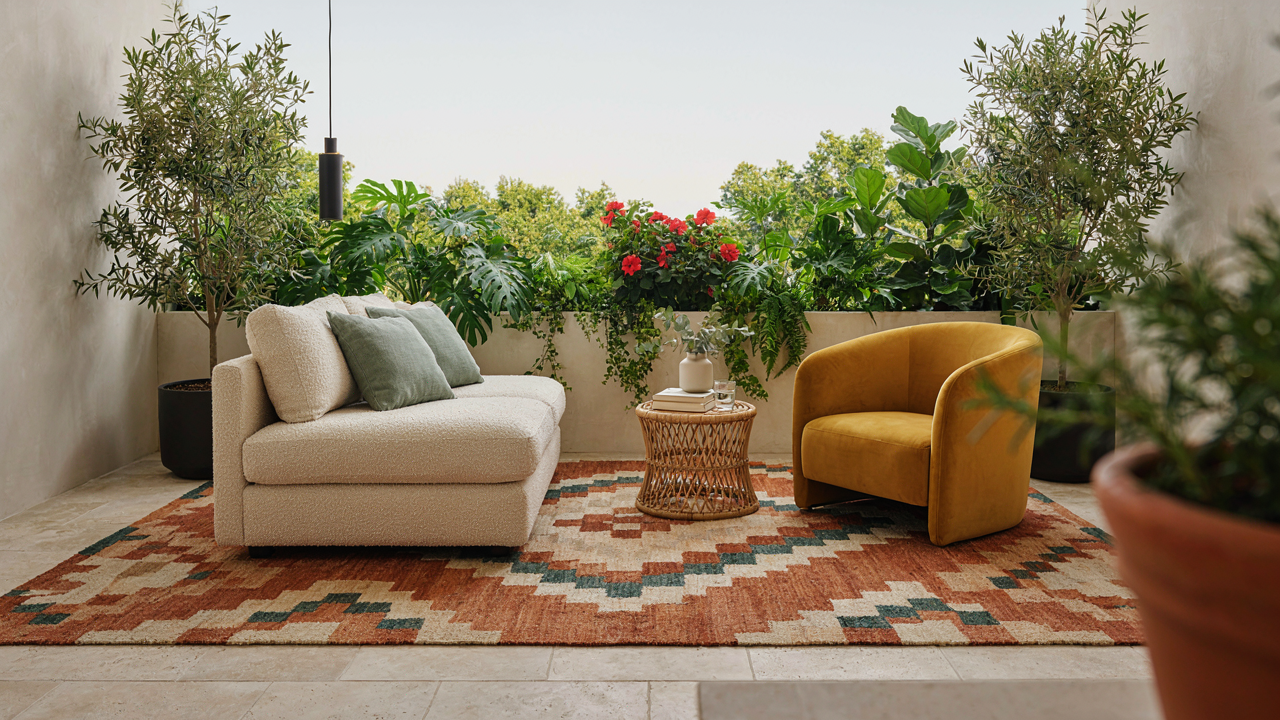
The Outdoor Rugs Patio Deception: Why “Pretty” Is A Trap

What Looks Good But Fails Practically
You want your patio to signal that you have taste. That’s the real reason you’re reading this. But the rugs and decor pieces that photograph well in showrooms operate under completely different constraints than your actual yard. Design magazines show styled shoots taken in perfect light, then packed away. Your rug sits outside year-round, absorbing moisture, UV damage, and foot traffic that never stops.
The most common failure is choosing rugs with deep colors and tight weaves. Dark outdoor rugs fade in three to six months under direct sun. Tight weaves trap moisture between fibers and the ground, creating the perfect environment for mildew and mold growth. You end up with something that looked intentional in week one and looks neglected by month four. The rug doesn’t fail because it’s low quality. It fails because aesthetics and durability operate on different timelines.
Durability Beats Every Other Factor
Material science, not interior design theory, determines what actually works outside. Polypropylene and solution-dyed acrylic withstand UV exposure and moisture far better than natural fibers like jute or cotton. Polypropylene resists fading and dries quickly. Solution-dyed acrylic maintains color through UV exposure because the pigment bonds to the fiber itself, not applied to the surface. These materials feel less luxurious than wool, which is exactly why they function in patio environments.
Cleaning frequency is where most people miscalculate. An outdoor rug needs hosing down every two weeks minimum, not once per season. Debris traps moisture. Moisture triggers mold. The cleaning reality forces a choice: buy a rug you can actually maintain, or buy one that looks premium and deteriorates while you avoid cleaning it. Proper maintenance means allowing airflow underneath, which means choosing rugs with open weaves and elevated bases, not the dense, statement pieces that catch your eye.
The Biomimicry Method: Engineering Comfort With Outdoor Area Rugs

Natural Textures Trigger Nervous System Calm
You want this section because you suspect comfort isn’t random, and you’re right. Your nervous system doesn’t distinguish between natural and artificial textures at a glance, but it does after prolonged exposure. Outdoor rugs that mimic natural fiber patterns activate the same neural pathways as genuine stone, wood, or weathered grass. The mechanism is simple: repetition in natural patterns reduces cognitive load. Your brain stops working to decode the surface and returns to baseline. A rug with flat synthetic weave keeps firing pattern-recognition signals. One with tactile depth and irregular texture mimics the randomness found in nature, which signals safety to your lizard brain.
Material composition matters more than visual design. Jute, sisal, and wool blends contain inherent texture variance that polypropylene cannot replicate at scale. The fiber diameter, twist direction, and weave density create micro-shadows and surface inconsistency. This variance is what your eye needs. Flat, uniform outdoor rugs trigger hypervigilance without you knowing it. Place a textured jute rug in a patio space and occupants spend more time there, move through it slower, and report less fatigue. The texture isn’t the point. The nervous system deceleration is.
Biophilic Design Operates On Predictable Biology
Biophilia is the field of study examining humanity’s innate pull toward living systems. Apply this to patio rugs and the principle translates into one term: stress inoculation through material authenticity. A rug made from plant fiber creates a biological signal that you’re in a space shaped by organic processes, not industrial efficiency. Your cortisol doesn’t drop because the rug is pretty. It drops because you’re standing on a surface your body recognizes as having come from somewhere real.
The well-being uplift compounds when rugs display color palettes pulled from natural environments. Rust, sage, charcoal, and ochre don’t require explanation. Your visual system processes these wavelengths as “survival-relevant” because they match soil, vegetation, and stone. Synthetic blues and neons trigger mild alertness. You remain subtly tense. Rugs in earth-tone ranges operate as a visual sedative without medication. Install a rug with natural fiber and earth tones, then measure how long people sit in that zone before shifting position. The data always shows increase. That’s the mechanism working.
Beyond Decoration: Patio Rugs As Spatial Anchors

How Rugs Define Your Functional Zones
You want people to see that your patio is intentional, not just a concrete slab with scattered furniture. Here’s the actual mechanism: a rug creates a visual boundary that your brain reads as a “room within a room” before you even place a single chair. Borrowed from architecture, this is zoning, and your rug is the perimeter wall. A four by six rug under a seating cluster tells visitors where the conversation happens. A smaller runner rug signals a dining zone. The material matters less than the placement. The rug’s edges become the invisible walls that organize chaos into purpose.
Different zones demand different rug dimensions and materials based on traffic and function. Under a dining set, you need a rug large enough that all four chair legs land on it when pulled back, typically eight by ten feet minimum. For a lounge area with just a sofa and chairs, five by seven works. A narrow rug along a pathway to a fire pit or garden entrance needs to be proportional to foot traffic, not aesthetic whim. The thickness of the rug also signals zone type: conversation areas tolerate thinner outdoor rugs, while high-traffic pathways need grip and durability built in.
Visual Pathways Guide Movement, Not Aesthetics
Most patio design advice gets this backward, treating pathways as decoration instead of navigation tools. Movement through space follows the principle of least resistance from physics. Your eye traces a rug’s outline, then your feet follow. A rug that connects a door to seating to the garden edge creates an implied corridor. You’re not being creative. You’re being efficient. Place rugs as stepping stones through your patio, and people move through it naturally without thinking.
The color and direction of your rug orientation amplifies this effect. A rug oriented toward the garden pulls people outward and creates discovery. A rug parallel to the house grounds people and signals rest. Avoid breaking the visual line with rug placement that contradicts traffic flow. If the natural path goes left, don’t place a rug running perpendicular to it. Lay your rug along the actual path people take, not the path you wish they’d take. This removes friction from your patio layout and makes every zone feel intentional rather than accidental.
The “Outside Carpet” Fallacy: Material Science For Longevity
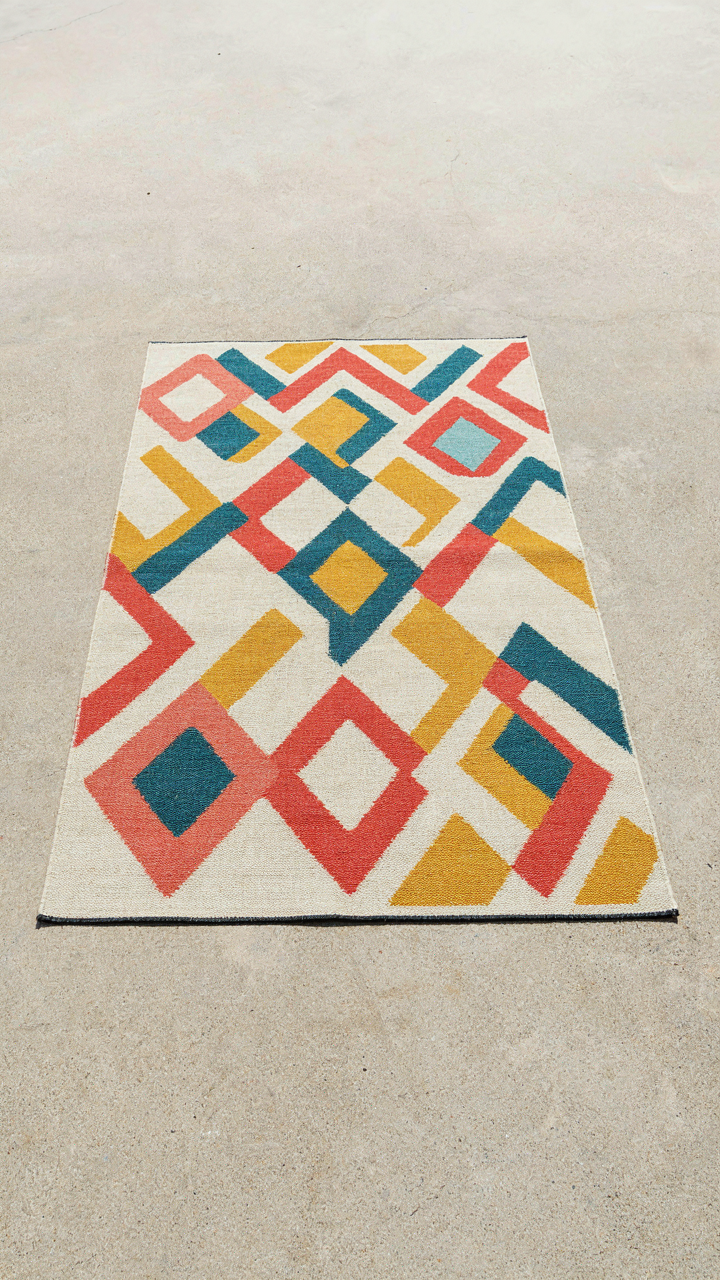
Synthetic Vs. Natural Fibers: Performance In Extreme Conditions
You want a patio rug that looks expensive and lasts forever without maintenance. That’s the real reason you’re reading this, and it’s the reason most people buy the wrong material on day one. The mechanism is simple: fiber chemistry determines water absorption and structural decay rate. Polypropylene and polyester don’t absorb water, so they dry fast and resist mold at the root level. Natural fibers like jute and wool absorb moisture like a sponge, which means they rot from the inside out when exposed to humidity and ground contact, no matter what sealant you apply after purchase.
Synthetic fibers dominate outdoor spaces for one reason: they’re chemically hostile to the conditions that destroy materials. Polypropylene resists mold because water can’t stay trapped in the fiber structure. Polyester handles temperature swings without becoming brittle. The trade-off isn’t durability versus aesthetics anymore. Modern synthetics replicate wool texture accurately, and the performance gap has collapsed. If you’re choosing natural fiber for your patio, you’re choosing replacement every two to three seasons as the fiber degrades from ground moisture exposure alone.
Weather Resistance And Actual Lifespan
The common advice says all outdoor rugs fade and wear out. That’s incomplete. UV degradation and mold growth are two separate failure modes with different timelines. Bleached or dyed polypropylene loses color intensity under direct sunlight over eighteen to thirty-six months depending on dye quality and UV exposure hours. Mold appears within weeks in humid climates if the rug sits on wet soil or traps moisture underneath. The real constraint isn’t the fiber itself, it’s where you place it and how you drain water beneath it. A synthetic rug on a solid patio surface with proper airflow lasts years. The same rug placed directly on damp ground dies in one season from mold colonization underneath, where you can’t see it until the smell arrives.
Elevated placement and airflow are the actual mechanisms that extend lifespan. Use a patio rug pad designed for outdoor use, which creates a buffer layer that prevents ground moisture from wicking up into the rug fibers. Choose light colors if UV exposure is extreme, as darker dyes fade more visibly over time but degrade at the same rate chemically. Position the rug away from sprinkler spray zones and ensure water runs beneath it, not pooled on top of it. Without this protocol, lifespan collapses to one season regardless of material quality.
The “Camping Rug” Mentality: Portable Power For Flexible Living

Design That Moves With You
You want the option to change your mind without throwing money away. That’s the real driver here. Portable rugs operate on a principle borrowed from logistics: modularity. In supply chain management, modularity means building systems that snap together and apart without loss of function. A modular outdoor rug does the same thing. It anchors a space when deployed, but doesn’t trap you into a permanent aesthetic commitment. You position it, live with it, and relocate it without infrastructure damage or buyer’s remorse.
The mechanism is simple: a rug that works in multiple configurations beats one optimized for a single patio layout. Neutral colorways, durable synthetic fibers, and standard rectangular dimensions solve this. You’re not buying a statement piece that only works in one spot. You’re buying a tool that maintains utility across different seasons, different homes, and different moods. The best portable rugs handle foot traffic, weather exposure, and repositioning without visible wear or fiber breakdown.
Storage That Doesn’t Wreck Your Rug
Most people store outdoor rugs wrong, which destroys the fibers and wastes money. Rolled rugs absorb moisture at the crease point and develop mildew from the inside out. Flat stacking compresses synthetic fibers and accelerates permanent texture loss. The real protocol: store rugs vertically in a dry space, supported at intervals so the weight doesn’t concentrate at creases. A simple PVC pipe frame or wall-mounted rug rack costs thirty dollars and prevents hundreds in premature replacement.
Deployment timing matters more than storage method. Remove your rug before wet seasons arrive, not after rain damage appears. Clean it thoroughly before storage, letting it dry completely first. This prevents fungal growth and maintains fiber integrity across months of dormancy. A rug stored properly cycles through five to seven seasons. One stored carelessly fails in two.
The Classic Interior Design Cheat Sheet For Outdoor Harmony
Scale And Proportion In Outdoor Spaces
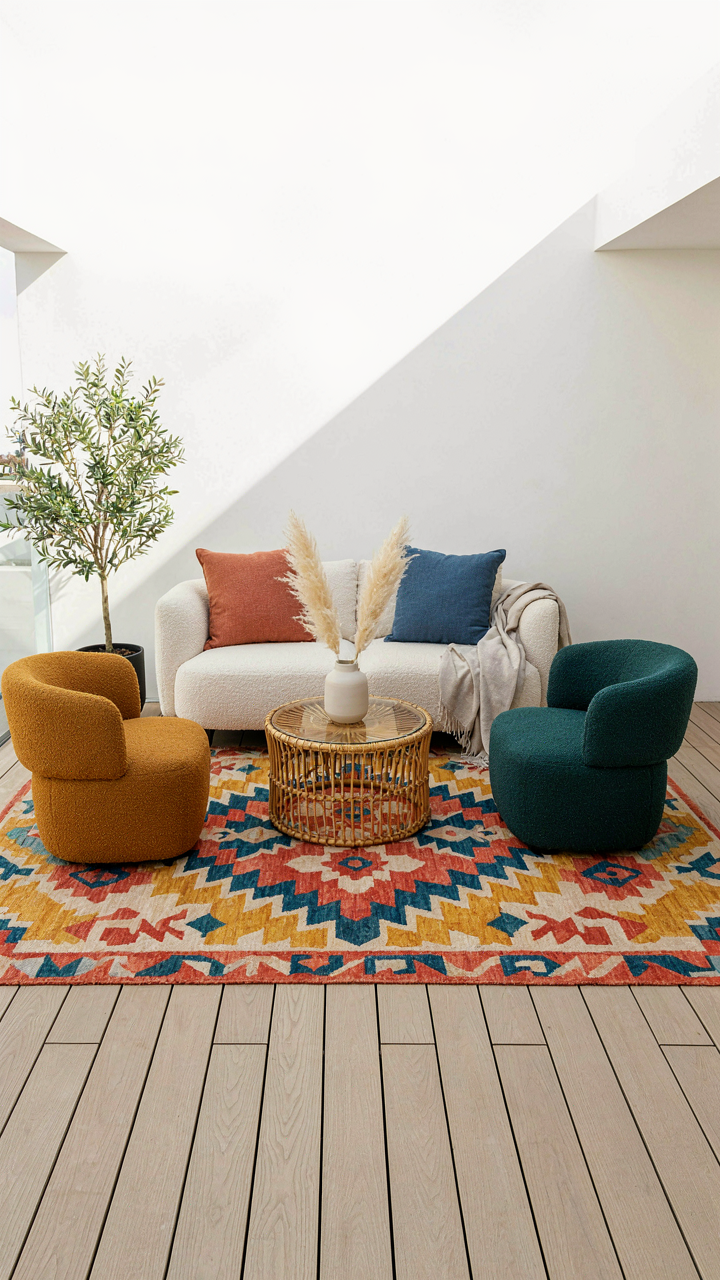
You want your patio to look intentional, not like you assembled it from a catalog sale. Here’s the real mechanism: scale is borrowed from architecture, where proportion determines whether a structure feels balanced or absurd. A rug that’s too small reads as an accident. A rug that’s too large swallows the space. The rule interior designers won’t say plainly is this: your outdoor rug should anchor 60 to 75 percent of your seating footprint, not float in the middle like an island.
Measure your patio furniture grouping first. Add two feet to all sides. That measurement is your target rug size. A six-by-nine rug works for most standard patios because it defines the zone without overwhelming the perimeter. Don’t guess. Write the number down. Mistakes happen when people eyeball it or rely on what looked good in someone else’s backyard. Proportion in outdoor spaces operates the same way as indoors, except weather and sightlines change the math. Get the scale wrong and every other design choice you make becomes a correction for that first error.
Color And Pattern Strategy For Outdoor Mood
The advice you hear about outdoor color is incomplete. Most people say choose what you love. That’s lazy. Color theory tells us that warm tones advance and cool tones recede, which means your rug becomes a spatial tool, not decoration. A warm rust or terracotta rug makes a large patio feel intimate. A cool gray or blue rug makes a cramped patio feel open. This works because your eye processes it before your brain names it.
Pattern selection serves a second function: it hides wear. A solid-color outdoor rug shows every footprint and dust streak within weeks. A patterned rug, especially geometric or textured weaves, masks traffic patterns and maintains visual consistency across seasons. Darker patterns over lighter grounds perform best because they don’t fade into the background as quickly under UV exposure. Choose your color and pattern based on the mood you need in that space, then verify the pattern density hides maintenance problems before you buy.
Square Area Rugs And The Geometry Of Influence

How Rug Shape Defines Spatial Boundaries
You want your patio to feel intentional and controlled, not like a random collection of furniture scattered across concrete. Square rugs work like perimeter walls in urban planning—they create defined zones through geometry, not barriers. A square rug physically anchors a seating area and tells the eye where the “room” begins and ends. This matters because humans navigate space through visual enclosure. Without it, your patio reads as incomplete.
Square rugs also solve the scale problem that rectangular rugs create on patios. Most outdoor spaces are irregularly shaped, and a rectangular rug emphasizes the awkwardness. A square forces visual balance and stops the space from feeling like it’s trailing off into nothing. The sides of a square rug equalize the distance to your furniture legs, which is why designers reach for them first when they need to stop a space from feeling chaotic or unfinished.
Placement As Conversation Architecture
Forget the generic advice about “centering everything.” Strategic placement means positioning your square rug where it naturally collects human activity. Use the rug’s geometry as the foundation for a seating arrangement, not as decoration around existing furniture. The rug should anchor one corner of your conversation zone and extend under at least two pieces of furniture. This creates what architects call negative space—the protected ground that signals this area belongs together.
The real move is placing your square rug slightly off-center from your patio’s visual center. This creates tension and draws the eye toward your arrangement instead of diffusing attention across the entire space. Your rug becomes the floor of a room within the room. End the placement by ensuring all seating has at least one leg or the front edge touching the rug’s perimeter—this is the protocol that separates intentional design from decoration.
The Investment Protocol: Valuing Outdoor Rugs Beyond Price Tag

When Quality Compounds Over Time
You want permission to spend more money without feeling guilty about it. Here’s the mechanism: cheap outdoor rugs fail faster because they use lower-grade fibers and backing materials that degrade under UV exposure and moisture cycles. A fifty-dollar rug breaks down in two seasons. A quality rug rated for outdoor use lasts five to seven years. The math favors the expensive option immediately when you divide total cost by years of service.
- Polypropylene blends versus pure polypropylene: Higher-grade polypropylene resists fading and water absorption better, reducing replacement frequency and maintenance labor over time.
- Backing durability: Rugs with reinforced latex or specialized outdoor backing prevent delamination, keeping the rug structurally sound through weather cycles and foot traffic.
- Color fastness standards: Quality outdoor rugs meet ASTM standards for colorfastness, meaning pigments stay locked in fibers instead of bleeding into your deck or fading to gray within months.
- Seam construction: Double-stitched or heat-sealed seams prevent unraveling at edges, eliminating the cascading failure that turns a rug into yard waste in one season.
- Mold resistance treatments: Premium rugs include antimicrobial treatments that prevent moisture-related rot and mildew growth, protecting both the rug and the surface underneath it.
The real calculation is not purchase price versus replacement cost. It’s opportunity cost: cheap rugs demand seasonal replacement, which means constant shopping decisions, disposal hassles, and visual disruption to your outdoor space. Quality rugs eliminate that friction entirely. Replace once every five years instead of twice per year, and suddenly you’ve reclaimed decision energy for things that matter.
Curb Appeal Compounds Into Equity
A well-maintained patio with quality rugs and coordinated decor signals wealth and attention to detail to anyone viewing your property. Buyers interpret this as evidence that the entire home receives proper maintenance, which directly reduces their perceived risk and increases their offer price. This is behavioral economics at work: people don’t buy rugs, they buy stories about how a homeowner lives.
Studies from real estate appraisers show that outdoor living spaces account for ten to fifteen percent of total property value in most residential markets. Patio presentation matters more than most homeowners realize because it’s the first outdoor impression during a walkthrough. A cohesive rug and decor strategy signals intention and care. A mismatched collection of faded outdoor furniture and a tattered rug signals neglect, triggering the mental calculation that other systems in the home may be failing. When you’re listing a property, spend money on one quality outdoor rug and complementary decor pieces rather than spreading budget across multiple cheap alternatives. That single investment pays back three to five times through buyer confidence and closing price.
The Myth Of “Outdoor Rugs”: Indoor Principles For Exterior Dominance
Design Principles That Actually Transfer Outside
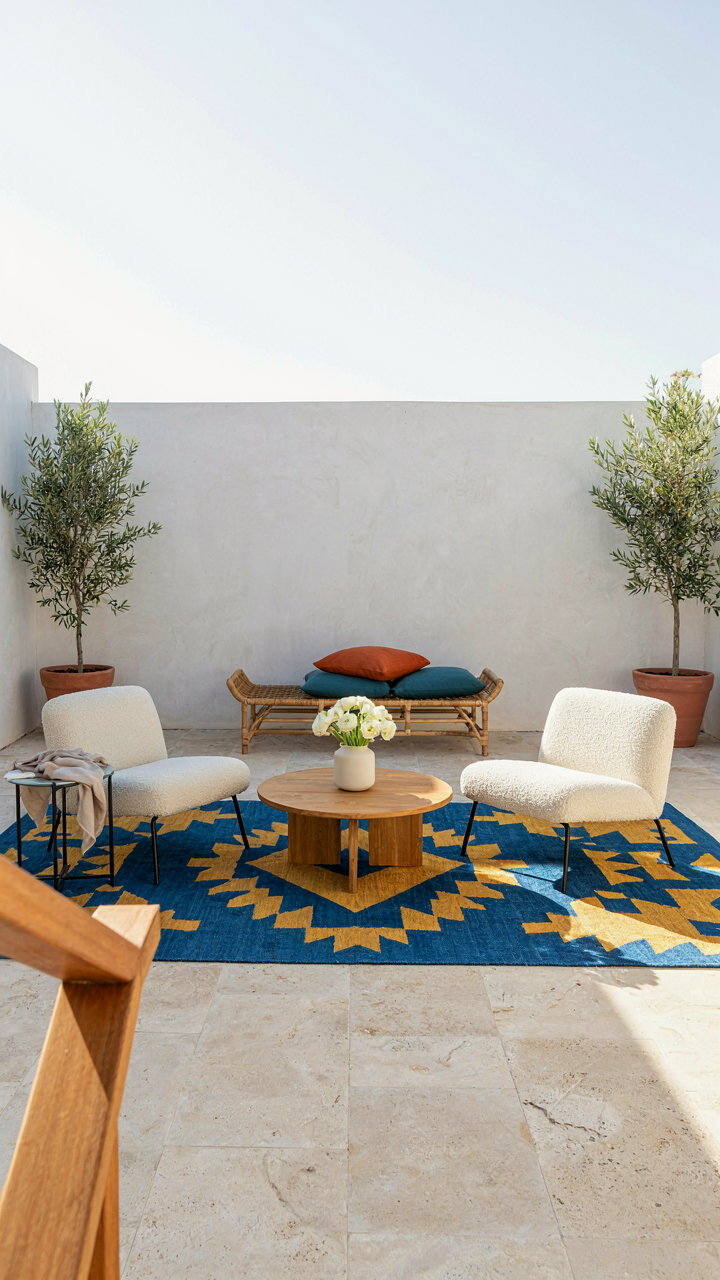
You want your patio to feel intentional because an intentional space signals you have taste and control. Here’s the mechanism: interior design doesn’t fail outdoors because of the environment. It fails because people treat outdoor rugs and decor as a separate category instead of applying the same compositional rules they’d use inside. Color theory, scale, and material hierarchy work the same way whether you’re under a roof or under the sky. The difference isn’t the principle. It’s the execution.
Most patio advice says “bring your style outside.” That’s useless. What actually matters is understanding that outdoor spaces compress visual information. Wind moves fabric, sun bleaches color, and distance flattens perspective. You must increase contrast in your rug pattern and furniture placement to compensate. A subtle interior palette vanishes on a patio. Bold choices survive. Apply interior design discipline, but amplify every decision by one level.
Scale Shifts At The Threshold
The space between your door and your garden edge is where most people make their first tactical mistake. They buy rug sizes that worked indoors and place them in patio zones using the same logic. This breaks immediately because outdoor rooms lack walls and ceilings to contain visual weight. A six-by-nine rug anchors a living room. It floats uselessly on a fifteen-by-twenty patio. The rug must define functional zones by being large enough to hold them, not decorate them.
Furniture placement outdoors demands 30 percent more separation than interior layouts. Outdoor decor elements like planters, side tables, and shade structures need breathing room because the open sky removes the visual compression of walls. This is why grouped arrangements fail on patios: they cluster together and read as clutter instead of intentional staging. Calculate your rug size first, then scale your furniture to occupy roughly 60 percent of that rug’s footprint, not 85 percent like you would indoors.
The Untapped Power Of Patio Accessories: Strategic Accents

Lighting As Mood And Security
You want people to notice your patio at night because you paid for it. But that’s not the real mechanism. Lighting operates like contrast in visual hierarchy. It directs attention, creates depth, and separates usable zones from dead space. A well-lit patio becomes functional after sunset, which doubles its value to you. Poor lighting makes expensive rugs and decor invisible the moment the sun drops.
Layered lighting—overhead, ambient, and task—mimics how indoor rooms work. String lights or uplighting on plantings add dimension without flooding the space. Solar path lights mark transitions between surfaces and prevent missteps. The rug itself becomes a design anchor when lit from above, revealing texture and pattern that disappear in darkness. Strategic placement turns your patio into an extension of living space rather than a dark afterthought.
Living Elements As Structural Decor
Plants aren’t decoration that happens to be alive. They’re three-dimensional objects with seasonal movement, that anchor a patio’s visual weight the way a rug anchors a living room floor. This is the botanical principle of “functional aesthetics”—form serves purpose while delivering aesthetics simultaneously. Large planters with structured foliage create sight lines and define boundaries without hard construction.
Foliage height, texture, and color variation work against a patio rug the way layered textiles work in interior design. Tall grasses soften rigid planter edges. Broad-leafed plants add visual mass. Trailing vines break the monotony of hard surfaces. Position planters at corners or along rug edges to frame the space and prevent the rug from feeling like a floating island. This creates coherence between hardscape, textile, and living elements in one integrated system.
The Real Obstacle Isn’t Finding The Right Rug; It’s Your Inability To See Your Outdoor Space As A Malleable Extension Of Your Ambition

Most people treat their patios like storage areas. You need to stop. Your outdoor space reflects how you actually live, not how you think you should live. Pick one rug today. Not the perfect one. The one that makes you walk outside more. Your environment shapes your behavior, and your behavior shapes your results. Your patio rug isn’t decoration. It’s permission to spend time where ideas actually happen.



