

The Myth Of The Perfect Milkweed Garden

Why Monoculture Fails Before You Plant
You want a garden that looks intentional, controlled, impressive to neighbors. That desire makes you vulnerable to the monoculture pitch. The mechanism is simple: one milkweed species planted densely appears cleaner, more designed, easier to manage. It fails because milkweed gardens operate under ecological resilience principles borrowed from systems biology, where redundancy is survival. A single species creates a single point of failure.
Planting only one milkweed variety leaves your garden defenseless against pest outbreaks, disease pressure, and seasonal variability. Asclepias syriaca thrives in wet years but drowns in drought. Asclepias incarnata handles moisture but struggles in poor soil. When one species collapses, the whole structure collapses. Real milkweed gardens work because they stack species across different soil types, moisture levels, and bloom windows. This isn’t aesthetic preference. It’s structural engineering applied to plants.
What Milkweed Actually Does In An Ecosystem
The common advice treats milkweed as a monarch butterfly accessory, a feel-good plant you add for conservation points. That’s incomplete. Milkweed feeds specific species of milkweed beetles, parasitic wasps, and native bees. It accumulates cardenolides, toxic compounds that monarch caterpillars sequester for their own defense. The plant doesn’t exist to serve monarchs. Monarchs exploit what the plant already does biochemically.
Understanding this shift changes how you garden. You stop asking what milkweed will do for monarchs and start asking what milkweed demands from the ecosystem to sustain itself. Different species need different companions, different soil microbes, different pruning responses. Asclepias tuberosa requires well-draining conditions and tolerates mowing. Asclepias amplexicaulis needs consistent moisture. Your garden design follows the plant’s actual requirements, not the story you want to tell about it. Match species to site conditions first, and the ecology builds itself.
Native Milkweed: The Unsexy, Undeniable Truth

Why Non Native Varieties Fail
You want the exotic species because it looks different and makes you feel like you did something special. Here’s what actually happens: non-native milkweed varieties lack the evolutionary alignment with local monarch populations and soil conditions that native species have built over thousands of years. Think of it in ecological terms as a supply chain problem. Your imported plant becomes a dead node in a food web designed to exclude it.
Non-native milkweed attracts monarchs but doesn’t sustain their lifecycle because the plant’s toxin profile, leaf texture, and emergence timing don’t match what caterpillars evolved to process. The plant also competes poorly against native soil microbes and insects that ignore unfamiliar chemical signals. You end up with a photogenic failure that looks fine until the season ends and you realize nothing reproduced.
Matching Species To Your Growing Zone
Start by identifying your USDA hardiness zone and the native milkweed species that historically grew within fifty miles of your property. This determines which varieties will survive winter dormancy without constant intervention. Common milkweed, swamp milkweed, butterfly milkweed, showy milkweed, and asclepias incarnata each occupy specific moisture and temperature niches that non-natives can’t fill.
- Common Milkweed (Asclepias syriaca): Thrives in zones 3-8, prefers well-drained soil, spreads via rhizomes, establishes quickly in disturbed areas.
- Swamp Milkweed (Asclepias incarnata): Zones 3-6, tolerates wet soils and standing water, blooms pink to red, supports late-season monarchs.
- Butterfly Milkweed (Asclepias tuberosa): Zones 3-9, requires excellent drainage, delivers orange flowers, performs best in sandy or rocky soil.
- Showy Milkweed (Asclepias speciosa): Zones 5-10, western species, drought tolerant once established, produces large pink flower clusters.
- Sullivant’s Milkweed (Asclepias sullivantii): Zones 4-7, prairies and meadows, narrow leaves, smaller stature, moderate moisture needs.
Check your state’s native plant society or extension office for the exact species list for your region. Regional specificity matters because a plant thriving in zone 5 might perish fifty miles north in zone 4. When you match your milkweed to local conditions, you remove the need to manage the plant constantly and monarchs do their job without your intervention.
The Monarch Butterfly Flywheel Effect
Plant Density Determines Caterpillar Survival
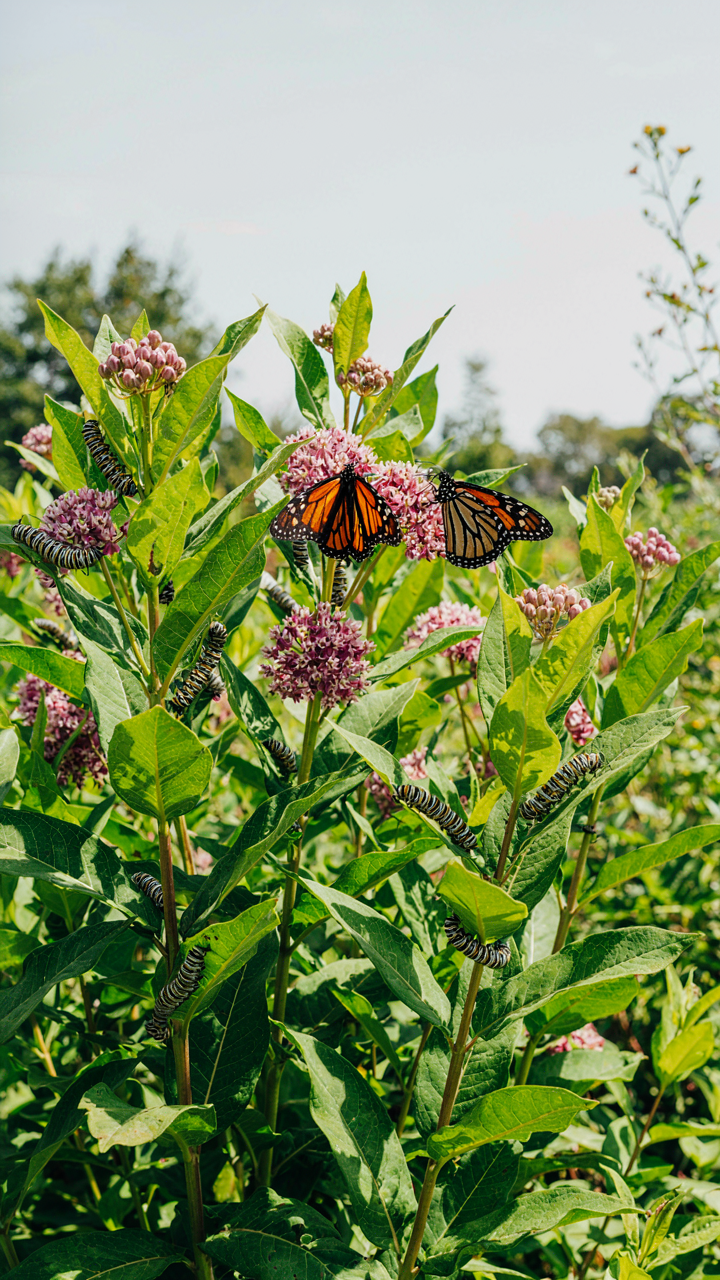
You want Monarchs in your garden because they signal ecological competence. Here’s what nobody tells you: the mechanism is brutally simple. Milkweed density directly controls caterpillar survival rate because Monarchs lay eggs exclusively on milkweed species, and caterpillar mortality skyrockets when plants are sparse. Using population ecology’s carrying capacity model, your garden’s milkweed acts as the hard ceiling on how many caterpillars can develop. One isolated plant starves larvae before they reach chrysalis.
A single mature milkweed supports roughly 3 to 5 caterpillars before resource depletion becomes critical. Plant spacing matters more than plant variety. Clusters of 15 to 20 plants within 50 feet create the density threshold where survival odds shift dramatically upward. Below that density, you’re running a butterfly trap with no food source. This isn’t theory. Field observation confirms it consistently across climate zones and soil types.
Habitat Architecture Beyond The Host Plant
The common advice stops at “plant milkweed and Monarchs arrive.” That’s incomplete. Monarchs require three distinct habitat layers: the host plant for egg deposition and caterpillar feeding, nectar sources for adult butterflies to fuel migration, and shelter from wind and predators during vulnerable life stages. Each layer operates independently but compounds the survival outcome.
Adult Monarchs migrate through your garden burning stored energy. They need dense nectar access within 100 yards of milkweed clusters to refuel without abandoning the breeding site. Predation pressure peaks during the chrysalis stage, so dense plant cover including native shrubs and grasses reduces exposure. When you design for all three layers simultaneously, you accelerate the population cycle. When you optimize one layer in isolation, you create bottlenecks that look like failure.
Designing For Resilience: The Permaculture Parallel
Copying Nature’s Structure, Not Its Chaos
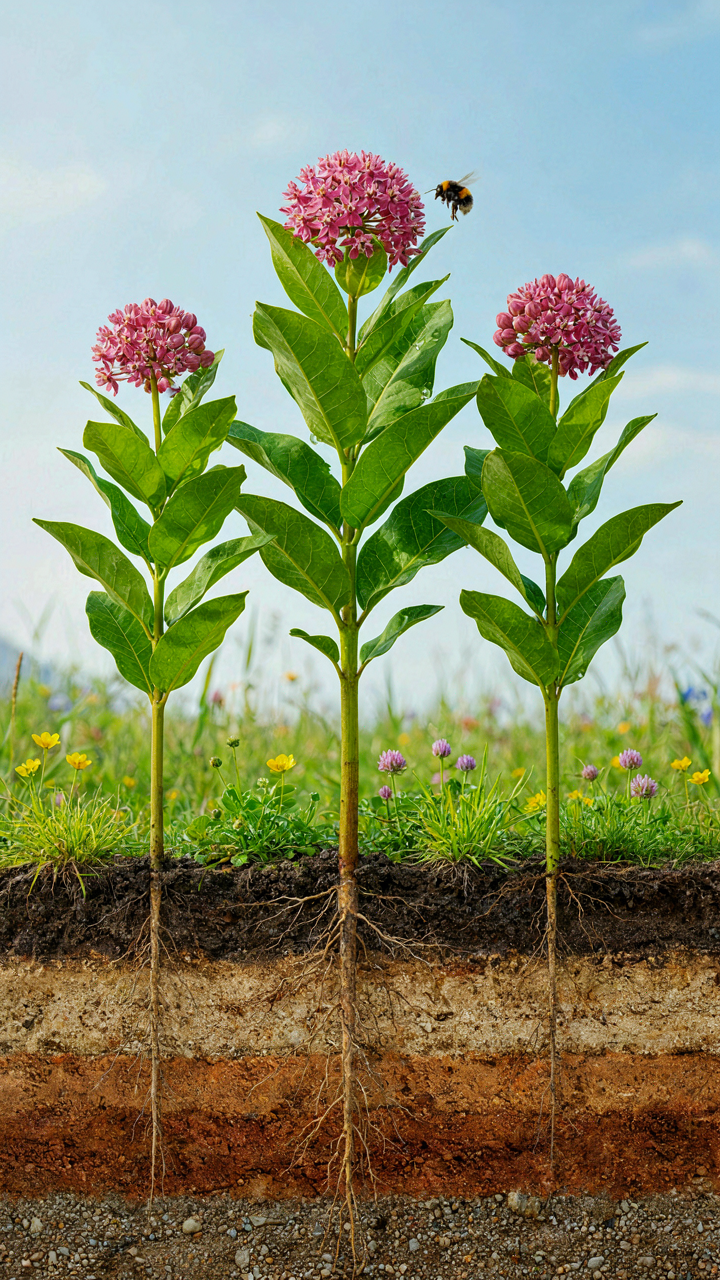
You want this section to validate that your garden can run itself. That’s not how it works. The mechanism here is observation. Permaculture copied how natural ecosystems distribute resources and recycle waste, then removed the randomness. Milkweed gardens benefit from this same principle. You stack species by function, not by aesthetic. Native milkweed colonies in wild prairies succeed because they occupy specific niches and suppress competition through density and root architecture.
Study how milkweed establishes in native ranges. It grows alongside asters, blazing star, and prairie coneflowers because those plants share moisture and soil depth preferences. In cultivation, recreate that layering. Use shallow-rooted annuals as ground cover, mid-depth milkweed as the structural layer, and deeper-rooted perennials to break compaction. You’re not mimicking nature randomly. You’re copying the stacking system that prevents any single species from consuming all available resources.
Energy Flow And Diminishing Input
Thermodynamics teaches that any system wastes energy at every transfer point. Apply this to your milkweed garden: each watering, fertilizer application, and pest intervention is energy you input that could instead come from system design. Mature milkweed stands generate their own mulch, fix nitrogen through associated organisms, and attract pollinators that handle pest pressure. The payoff compounds over years, not seasons. Milkweed gardens deliver maximum output only when you stop treating them like annuals requiring constant intervention.
Most gardeners water milkweed weekly during establishment, then wonder why mature plants fail during drought. The real mechanism is root development timing. Established milkweed reaches moisture at 18 to 24 inches deep. Initial establishment demands regular water to force deep root formation. After year two, cut watering by 80 percent. The plant no longer needs you. This is the efficiency swap: frontload labor during years one and two to eliminate it permanently. Design for this transition at planting.
Seed To Success: The Milkweed Seeds Protocol

Cold Treatment Unlocks Dormancy
You want milkweed to germinate on your timeline, not nature’s. That’s the real reason you care about stratification. Milkweed seeds evolved under winter conditions, which means they won’t sprout without a cold period that signals seasonal passage. This is basic plant biology: dormancy is a survival mechanism, not a bug.
Stratification mimics winter. Place seeds in moist sand or peat moss inside a refrigerator at 35-40°F for 30 days minimum. Some species like Asclepias incarnata need only two weeks, while Asclepias syriaca benefits from a full month or longer. After cold exposure, move seeds to warmth and light. Without this protocol, you waste seeds on failed germination attempts.
Species Specific Propagation Methods
Different milkweed species respond to different triggers, so one approach guarantees failure at scale. You need species-specific protocols because viability depends on matching propagation to evolutionary history.
- Asclepias incarnata (Swamp Milkweed): Tolerates shorter stratification windows (14-21 days) and germinates reliably in warm soil after cold treatment. Direct seed or indoor start both work effectively.
- Asclepias syriaca (Common Milkweed): Requires full 30-day stratification. Seed coats are tough; some growers lightly scarify with sandpaper before cold treatment to accelerate germination.
- Asclepias tuberosa (Butterfly Weed): Demands 30+ days cold stratification and prefers well-draining sandy soil. Germinates slower than other species. Plan extra time before spring planting.
- Asclepias verticillata (Whorled Milkweed): Benefits from warm stratification (room temperature) for 5-7 days before cold stratification to break seed coat resistance.
- Asclepias purpurascens (Purple Milkweed): Responds well to stratification combined with light exposure during germination. Sow on soil surface rather than buried to maximize light contact.
Stratification timing matters for outdoor success. Cold-treat seeds 6-8 weeks before your last spring frost so they’re primed and ready to grow the moment soil temperature climbs. Start indoors 8-10 weeks before transplant to control the cold cycle completely.
Beyond The Bloom: The Full Life Cycle Of Milkweed Flower

Why Seed Pods Matter More Than The Flower
You’re reading this because you want monarchs in your garden and think that makes you an environmentalist. The real mechanism is simpler: seed pods are the actual currency of milkweed survival, not the bloom. Monarchs lay eggs on leaves, yes, but the entire plant’s evolutionary payoff lives in the pod. Without pods reaching maturity, you have decoration, not a functional milkweed system.
Seed pods take 30 to 60 days to mature after pollination ends. During this window, monarchs enter their larval stage and strip leaves for food. The plant doesn’t care about the flower’s beauty or longevity. It cares about completing the pod cycle so seeds disperse and create next year’s population. If you deadhead flowers for aesthetic reasons, you eliminate the mechanism that keeps monarchs returning. Leave the pods on the plant until they turn brown and papery, then collect seeds or let them split naturally.
Seasonal Shifts In Plant Structure
Milkweed doesn’t perform the same way across months, yet most gardeners treat it as static. Think of the plant’s annual cycle like a supply chain in logistics, where each phase requires different conditions and yields different outputs. Spring emergence demands soil warmth and moisture. Summer requires full sun and established root depth. Fall is when the plant converts resources into seed dispersal, not growth.
Early spring growth runs from soil temperature hitting 50 degrees Fahrenheit until mid-June. Stems elongate, leaves expand, and the plant invests heavily in upward development. Summer sustains flower production and monarch egg-laying through August. By September, the focus shifts completely: flowers stop, seed pods dominate the plant’s physical structure, and leaves begin yellowing as the plant pulls nutrients downward. Late fall sees stems dry and pods split, releasing fluffy seeds on silk threads. Winter kills the above-ground structure, but roots persist underground on most species, ready to emerge the following spring.
The “Patience Over Panic” Principle For Milkweed

Stop Waiting For Instant Results
You want proof that your milkweed investment is working right now. That’s the real fear here. But the mechanism is simple: milkweed species operate on a two to three year establishment timeline before they reach full vigor. Most gardeners treat this like a failure and abandon the plants. It’s not failure. It’s biology. Native milkweed develops deep taproots that take time to anchor into soil structure, and this root depth directly determines drought resilience and long-term survival rates.
The common advice says just water consistently and wait. That’s incomplete. You need to actively prevent the premature failure triggers during establishment. Remove competing weeds aggressively in year one around each plant. Reduce watering frequency once plants send up new growth in spring of year two, signaling root depth expansion. Most gardeners kill milkweed through overwatering in years two and three, treating establishment like it never ended. Stop treating year two like year one.
Build The Systems That Outlast You
Sustained milkweed health requires documented maintenance intervals, not feelings about when the garden needs attention. Set a specific calendar reminder for late fall to cut back dried stems to ground level on species like common milkweed and showy milkweed. This prevents fungal issues and removes habitat for destructive pests that overwinter in standing plant material. Document which species thrived in your specific microclimate so you replant strategically in years three through five.
The real durability move is seed collection and propagation from your survivors. Native milkweed species self-seed readily if you leave seedpods intact through fall. Collect these pods, stratify seeds through winter exposure, and establish a propagation schedule for spring planting. This turns your garden into a self-sustaining system that requires less intervention each year. Your stewardship becomes a protocol you execute quarterly, not a constant reactive scramble.
Dispelling The “Low Effort” Lie: Real Milkweed Maintenance
Soil Management And Root Establishment
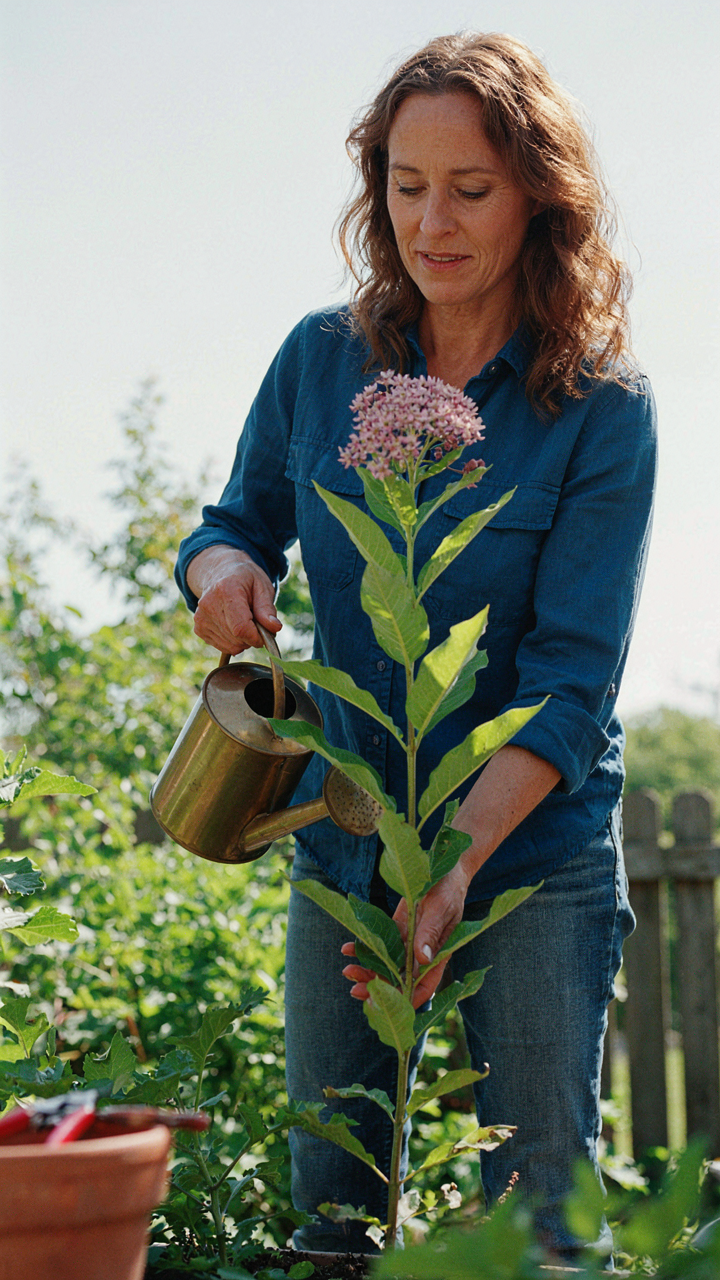
You want milkweed to thrive on neglect because the thought of another garden responsibility terrifies you. Here’s the mechanism: milkweed plants establish dominance through deep taproots, which means initial soil preparation determines everything downstream. Soil quality doesn’t improve after planting. You either build the foundation now or spend years fighting compaction and nutrient deficiency. Most gardeners skip this and wonder why their milkweed underperforms by year two.
Dig planting holes twice as wide as the root ball and amend with sand or gravel if your soil compacts easily. Milkweed species like Asclepias incarnata tolerate wetter conditions, while Asclepias tuberosa demands drainage. Mulch no deeper than one inch around the crown to prevent rot. Water newly planted milkweed weekly for the first month, then taper off sharply. Established plants need supplemental water only during drought stretches lasting three weeks or longer.
Deadheading And Seed Pod Timing
The common advice says “let milkweed go wild for monarch caterpillars.” That’s incomplete. Deadheading and seed dispersal follow a distinct biological cycle that demands tactical timing, not ideology. Remove spent flower clusters before seeds mature if you want to prevent aggressive self seeding in unwanted zones. If you want seeds to spread, leave pods on the plant until they split open naturally in late summer and early fall.
Cut flower stalks just below the seed pod cluster once pods dry to papery texture and begin splitting. This captures seeds for controlled propagation or prevents them from scattering across neighboring beds. Some gardeners remove one third of developing pods to redirect energy into next season’s growth and flowering. Prune damaged or diseased stems at the base immediately, regardless of season, to prevent fungal spread. Monitor for spider mites and aphids during late spring through mid summer, and spray affected areas with strong water pressure rather than insecticide to preserve monarch larvae.
Your Garden’s True Trend Isn’t Aesthetic; It’s A Test Of Your Ecological Intelligence

Most people plant milkweed for the monarchs. Smart people plant it because they understand food webs. You’re either building an ecosystem or decorating dirt. Pick one today: walk outside and commit to one milkweed species that thrives in your specific zone. Stop waiting for the perfect garden plan. A garden that feeds insects beats a garden that looks good in photos every single time.



