

The Illusion Of Automation: Why Your Greenhouse Watering System Fails

More Moving Parts Mean More Failure Points
You want automation because you’re afraid of forgetting to water and losing a crop. That fear is real. But here’s what nobody tells you: every sensor, timer, valve, and line you add to a greenhouse watering system is another point of failure. Systems thinking from engineering shows us that redundancy doesn’t prevent collapse in complex networks—it distributes it. Add a soil moisture sensor to your drip line and you’ve introduced calibration drift, electrical shorts, clogged emitters below it, and a controller that might malfunction. The simpler your greenhouse watering system, the fewer things you diagnose when something breaks. Most growers build elaborate setups because they see other growers doing it, not because their actual operation demands that complexity. Strip your system to its core: a reliable water source, gravity or modest pressure, and lines that get water to the root zone. Everything else is debt.
Complexity creates fragility. A hand-watering station with a hose bib outlasts a networked system with twelve sensors. The hose stays functional for years. The sensors stop reporting accurate readings within months. Your greenhouse watering system should be boring enough that you could explain it to someone in two minutes. If you can’t, you’ve already lost.
The Real Cost Of Invisible Maintenance
“Set it and forget it” systems don’t actually run on their own. They run on your future attention. Most growers discover this during the first season when they’re not watering but their plants are still stressed. The automation absorbed the daily decision-making, so they stopped checking plants by hand. Drip emitters clog silently. Water pressure drops and nobody notices. A sensor gets buried in soil buildup. The system reports success while plants starve. You’ve traded visible work for invisible failure. The cost isn’t measured in dollars spent on equipment—it’s measured in the crop you lose because you trusted something that required calibration you forgot to learn.
Set-and-forget systems demand more maintenance than hand-watering, not less. You monitor for problems you can’t see. You replace sensors. You clean lines. You adjust settings based on season changes the automation can’t predict. The myth is that automation reduces workload. The truth: it changes the work from daily visibility into episodic crisis management. Schedule inspection of your greenhouse watering system components every two weeks, minimum—pressure gauges, emitter output, soil moisture at multiple points in your beds. Write it down. If you’re not checking it, your automation is lying to you.
The Hydro Efficiency Protocol: Maximizing Water Use, Minimizing Waste
When Aim Beats Volume
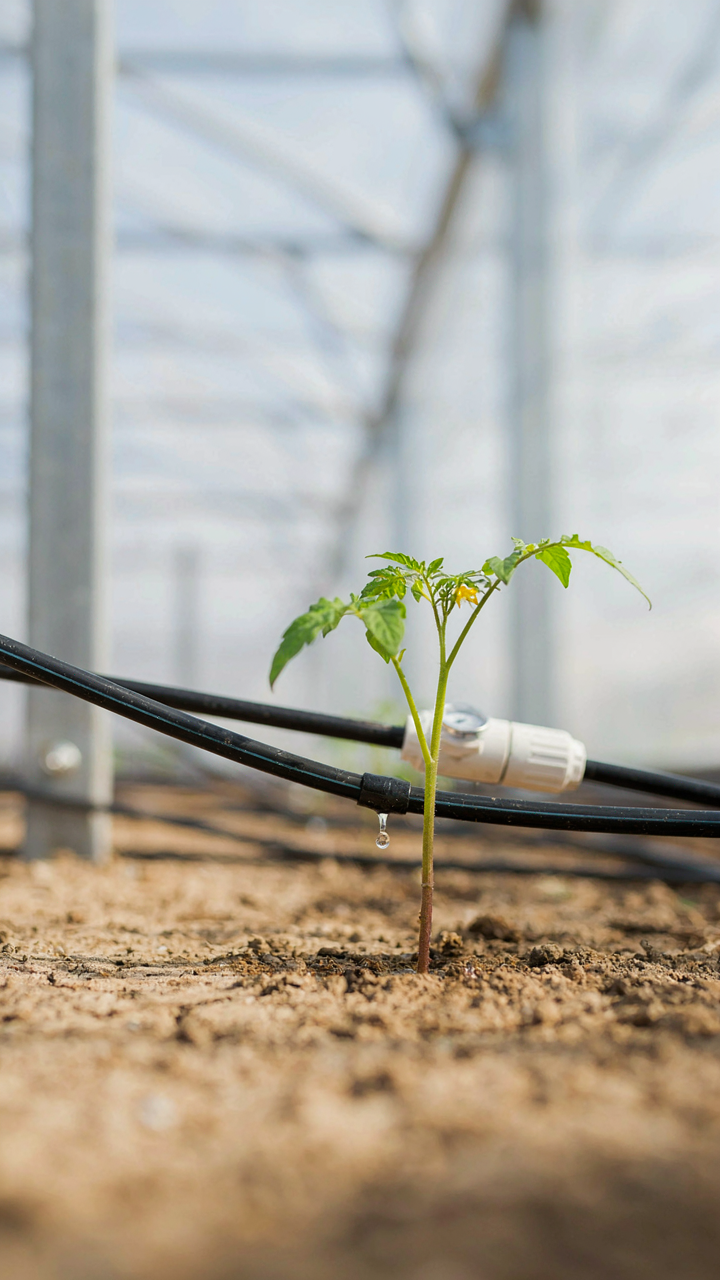
You want to feel like you’re doing something efficient, so you buy a “smart” system and assume coverage equals control. It doesn’t. Precision irrigation beats blanket watering because it’s based on delivery, not hope. The mechanism is simple: spray systems wet leaves, soil surface, and air equally. Drip and micro-irrigation target only the root zone. Less water leaves the system as evaporation or runoff. You use 30 to 50 percent less water while plants absorb more.
Blanket watering creates three waste streams simultaneously. Overhead spray loses water to air before it lands. Surface application sits on soil where it evaporates under heat. Excess water runs off or percolates below root depth. Precision systems eliminate two of these three. The tradeoff is setup complexity and clogging risk if your water isn’t filtered. Most growers accept that problem because the water math forces it.
The Root Zone Is The Only Target
Think of hydrology as a targeting problem. You have a finite resource and a specific destination. Drip emitters hit that destination with minimal loss. Each emitter delivers water directly to soil at the root level, bypassing air and leaf surfaces entirely. Soil moisture stays consistent because you control flow rate and duration. Plants respond by developing stronger root systems and faster growth.
Emitter spacing determines coverage uniformity. Space them too far apart and dry zones form between drip lines. Space them too close and you waste water through redundant delivery. Standard practice places emitters 12 to 24 inches apart for most greenhouse crops, depending on soil type and plant spacing. The emitter flow rate matters more than people admit: clogging at even one emitter creates an immediate dry pocket. Install filters before your main line, then before each zone if budget allows. This single protocol prevents 90 percent of drip system failures.
Beyond The Sprinkler: Rethinking Your Greenhouse Sprinkler Layout

Where Your Water Actually Goes
You want to believe your sprinkler system treats all plants equally because uniform coverage feels fair and sounds efficient. It doesn’t work that way. The mechanism here is simple: water takes the path of least resistance. Overhead systems dump water on leaf surfaces and soil simultaneously. Subsurface systems deliver directly to root zones. One wastes water on evaporation and foliar disease. One forces roots to compete for moisture in localized wet pockets. Your plant density and species determine which failure mode costs you more.
Overhead sprinklers excel with dense, uniform crops where leaf wetness doesn’t trigger disease. Think nursery production of hardy perennials or rapid propagation benches. Subsurface drip lines win with high-value plants, spacing issues, or disease-prone species like tomatoes and cucurbits. The real choice isn’t overhead versus subsurface. It’s whether you’re optimizing for speed of coverage or precision of delivery. Most growers pick overhead first because it’s cheaper upfront, then switch to drip when disease pressure or water bills force their hand. Plan for drip from day one if you’re growing anything you can’t afford to lose.
Water Delivery Matches Crop Architecture
Dense seedling trays need misting systems or overhead lines because roots haven’t penetrated soil depth yet. Mature specimen plants with established root systems absorb water inefficiently from overhead spraying. Think of hydraulic pressure zones in engineering: water concentration matters. With overhead delivery, you’re creating surface saturation that roots below can’t always access effectively. Drip tape positioned two inches into the soil places water exactly where active root hairs operate. Spacing between plants also changes the equation. Wide-spaced ornamentals allow overhead sprinklers to dry between cycles, reducing fungal risk. Densely planted vegetable rows create humidity domes where overhead moisture lingers and encourages powdery mildew, botrytis, and root rot.
Run subsurface drip on tomatoes, peppers, and cucurbits where leaf wetness triggers pathogenic fungi. Use overhead or misting on microgreens, seedlings, and propagation benches where shallow soil and rapid growth cycles make overhead practical. Mixed operations require zoned systems: propagation section with overhead mist lines, production section with drip tape. The installation decision determines maintenance load. Overhead systems clog from mineral buildup in hard water regions. Drip lines clog from sediment. Neither is free. Choose based on your specific crop list and water quality, not on what sounds simpler.
The Minimalist’s Green House Watering System: DIY Simplicity

What You Actually Need To Start
You want to skip the expensive controllers and smart sensors because you think simplicity makes you look resourceful. The real mechanism is this: a functional watering system requires only three things working together—water source, delivery method, and gravity or pressure. Everything else is optimization, not foundation.
- Water reservoir or connection: A tank, pond, or municipal line that holds enough volume for your plants between fill cycles. Size depends on greenhouse square footage and plant density, not trend.
- Distribution tubing: PVC, drip line, or soaker hose that moves water from source to plants. Diameter and material choice depend on flow rate needs and UV exposure in your greenhouse.
- Delivery stakes or emitters: Stakes for potted plants or inline drip emitters for beds. These control where water lands and how fast it releases.
- Basic valve or tap: Manual shutoff to control water flow without buying timers or solenoids. One valve per zone is enough if you water on a schedule instead of automation.
- Pressure regulator: Reduces line pressure to 20-30 PSI if you’re on municipal water. Prevents tubing rupture and uneven emitter flow across your system.
The system works because you understand one principle: water moves downhill and spreads where you direct it. No microcontroller changes this physics. Start here, test your coverage, then add complexity only when manual watering becomes a time drain you won’t accept.
Reject The Sensor Trap
The common advice says you need soil moisture sensors, weather forecasting controllers, and app-based monitoring. That’s wrong. Those tools solve a problem you don’t have yet—they solve the problem of watering 50 zones across 10,000 square feet while you’re absent. Most DIY growers kill their systems with overthinking before they kill them with neglect.
Manual observation beats sensor data because you see wilting, leaf texture, and drainage instantly. You learn plant needs faster than any dashboard tells you. Start watering on a fixed schedule—every other day, or twice weekly—and adjust based on what you see, not what a threshold number tells you. The mechanism is simple: consistency beats precision when you’re learning. Once you’ve grown three seasons without automation and know your greenhouse’s microclimate, then sensors earn their cost.
The Greenhouse Misting System Deception: When It Helps, When It Harms
Humidity Control Versus Plant Hydration
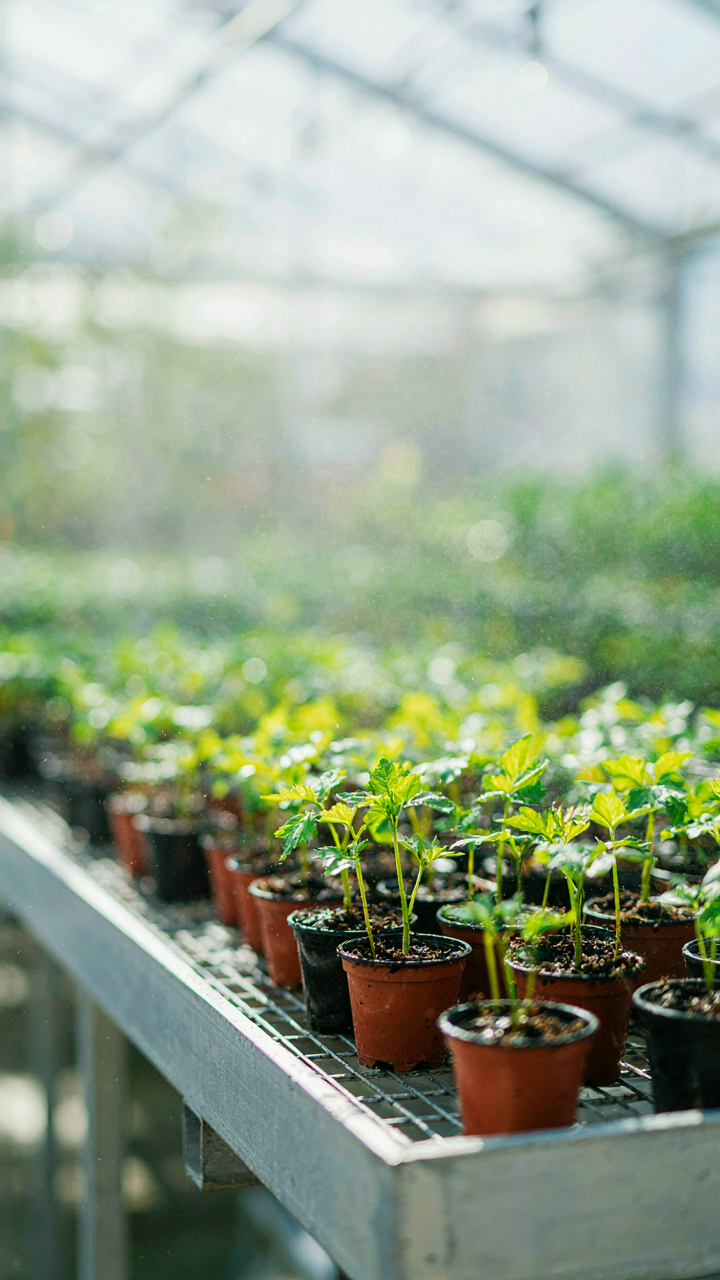
You want misting systems because you think they solve your watering problem. They don’t. Misting creates humidity in the air. It does not deliver water to the roots where plants actually absorb it. This distinction matters because most growers confuse atmospheric moisture with soil moisture, then wonder why their plants wilt despite running misters all day.
Misting wets leaf surfaces and raises ambient humidity. Roots need water in the growing medium. A plant can have 95% relative humidity in the air and still be drought-stressed at the root zone. Misting has one legitimate purpose: propagation of cuttings and seedlings where foliar uptake and humidity stabilization prevent desiccation. For mature plants, misting supplements but never replaces drip irrigation, soaker hoses, or capillary systems that deliver water where it matters.
Fungal Risk From Leaf Wetness
The biology of fungal infection is simple: fungi need moisture, warmth, and poor air movement. Misting systems deliver all three. Leaf wetness from misting creates the exact microclimate where powdery mildew, botrytis, and rust germinate and spread. Common advice says misting won’t cause problems if you do it in the morning. This is incomplete. Morning misting still leaves wet leaves for hours, and greenhouse temperatures stay warm enough for spore germination throughout the day.
Preventing fungal pressure means keeping leaves dry while maintaining soil moisture. Drip and subsurface irrigation achieve this by hydrating roots without wetting foliage. If you must use misting for propagation or humidity-dependent crops, run it in short intervals with aggressive ventilation immediately after to dry leaf surfaces within 30 minutes. Monitor leaf wetness duration with a simple protocol: if water sits on leaves longer than 45 minutes during peak growing hours, you have created a fungal incubator. Stop and adjust ventilation rates accordingly.
Designing For Resilience: Biomimicry In Your Greenhouse Watering System

Water Cycles Without The Mysticism
You want to feel like you’re doing something sophisticated by copying nature. Here’s what actually matters: evolutionary biology teaches us resource allocation. Plants evolved in environments where water arrived in pulses, not constant supply. Your drip system mimics this by delivering water in cycles rather than a steady stream. The plant doesn’t adapt to abundance. It adapts to scarcity interrupted by surplus. Most greenhouse operators flood continuously and wonder why roots rot and disease spreads.
The mechanism is stress response. Brief water availability triggers root development deeper into soil, creating a more resilient plant. Roots that sit in constant moisture stop expanding because they don’t need to search. When you design your watering system around pulse cycles rather than constant flow, you force the plant to build infrastructure. Soil also dries between cycles, allowing oxygen back in. This is non-negotiable for aerobic microbial activity that breaks down nutrients into usable form.
Scarcity Drives Adaptation, Not Growth
Evolution doesn’t reward waste. Plants that survived droughts strengthened their vascular systems and root networks. Your greenhouse watering system should pressure-test this same principle. Give plants what they need to survive stress, not what they can theoretically absorb. Overwatering masks root weakness until you move the plant outside, where it collapses because it was never forced to adapt.
The practical setup here is simple: install a timer that cycles water on for 20 minutes, then off for at least 40 minutes during active growing periods. This creates the scarcity signal. Monitor soil moisture before each cycle, not continuously. Plants grown under pulse irrigation demonstrate stronger stems, denser foliage, and faster disease recovery than those on constant feed. The watering protocol becomes the selection pressure that builds resilience into your crop before it ever leaves the greenhouse.
The Scarcity Advantage: Unlocking Plant Potential Through Strategic Under Watering
When Less Water Leads To Stronger Roots
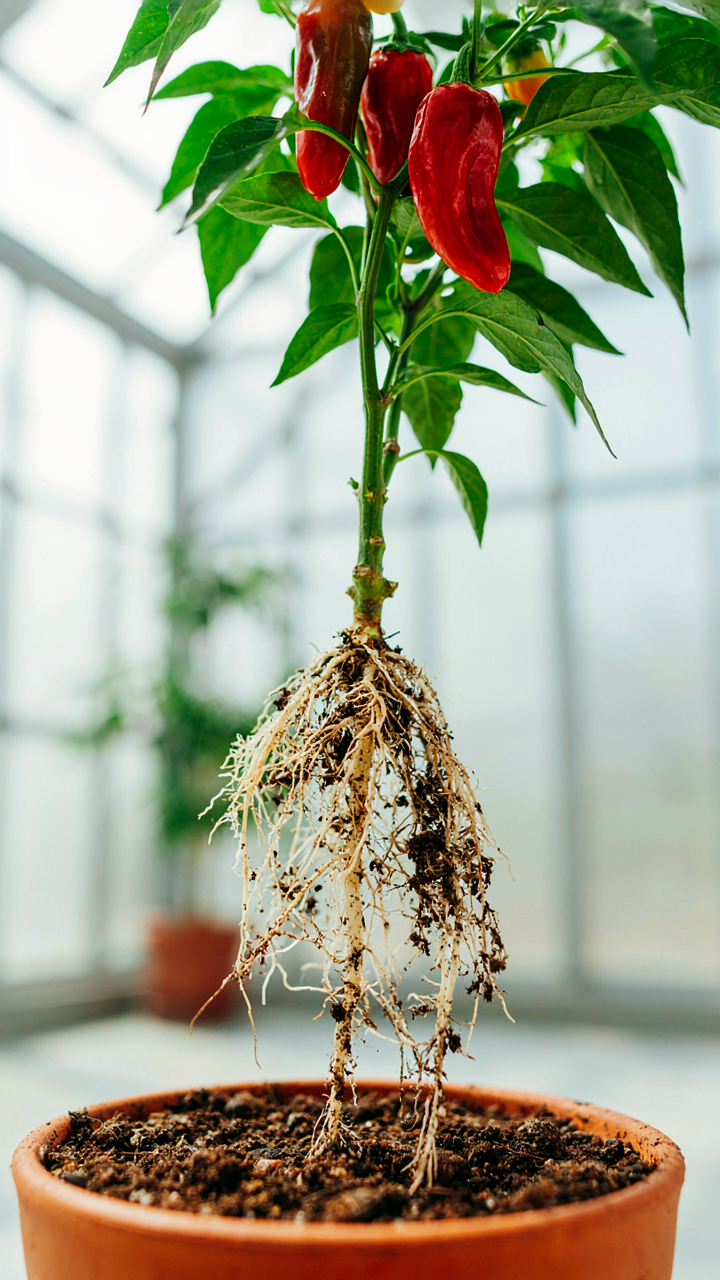
You want to believe there’s a magic watering schedule that works for everything, so you don’t have to think. There isn’t. The mechanism is this: roots grow toward water scarcity, not away from it. When soil stays wet, roots stay shallow because they don’t need to search. Reduce water frequency and volume, and roots push deeper into the substrate to find moisture reserves. Deeper roots mean access to nutrients in lower soil layers and better stability under stress.
The biology here mirrors root behavior in arid environments. Plants don’t evolve deeper root systems because water is abundant—they do it because water is scarce. In a greenhouse, you engineer scarcity by extending the interval between waterings and reducing volume per cycle. This forces the plant to invest energy in root development rather than foliage. Stronger roots support better uptake efficiency when water does arrive, which compounds over multiple growing cycles.
Training Plants For Drought Resistance
The common advice is that consistency prevents stress. Wrong. Consistency prevents adaptation. Plants develop drought tolerance through repeated cycles of mild water deficit followed by rehydration. Each cycle strengthens the plant’s ability to regulate water loss through stomatal control and improves osmotic adjustment in cells. This is why farmers in water-stressed regions see higher yields per unit of water input—the plants have learned to work harder with less.
In greenhouse practice, this means deliberately spacing watering intervals wider than the point where the plant shows visible wilting. Watch the soil moisture, not the calendar. Let the top two inches dry out fully between cycles. The plant experiences mild stress, responds by tightening its water use, and returns to turgor when you water. Repeat this protocol for eight to twelve weeks and you’ve fundamentally shifted the plant’s efficiency. The result: higher yield density per irrigation cycle, lower total water consumption, and plants that tolerate temperature fluctuations without crashing.
Future Proofing Your Backyard Buildings: Integrations And Adaptations
Capturing Water Before It Leaves Your Property
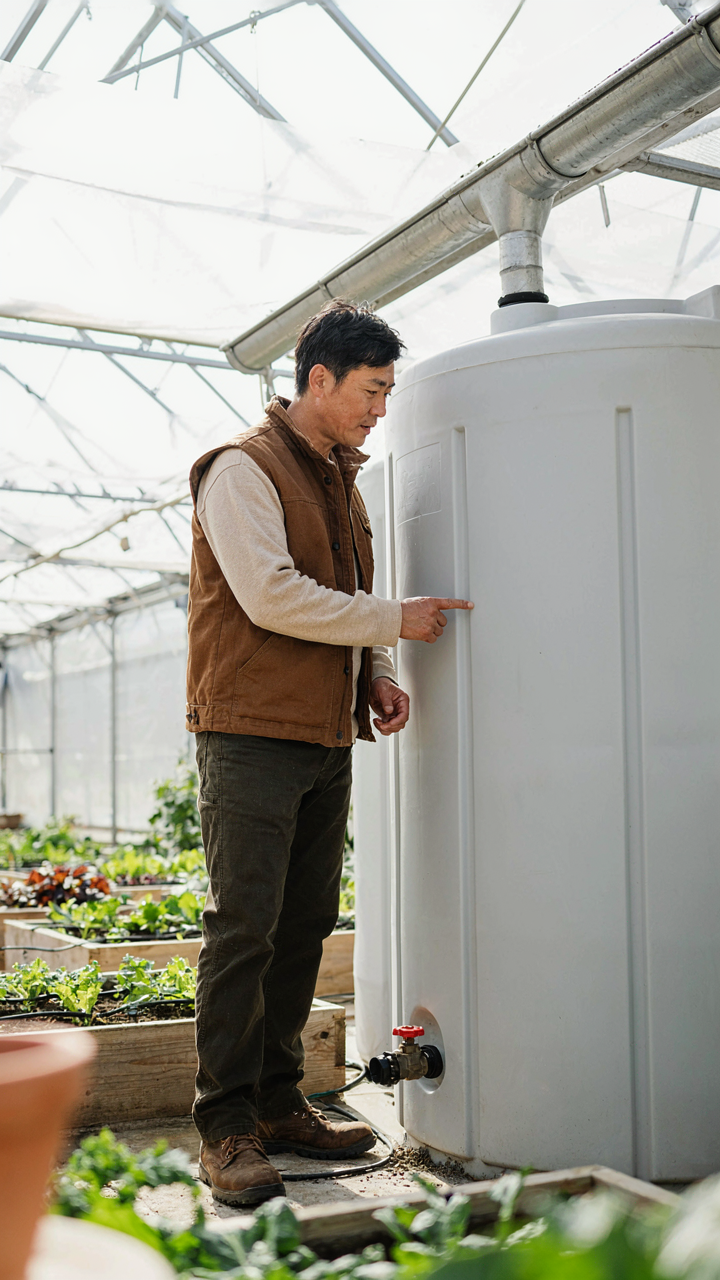
You want this section because you’re afraid of being locked into a system that becomes obsolete or expensive to maintain. The mechanism is simple: rainwater harvesting operates on the same principle as load balancing in network design—you distribute demand across multiple sources instead of relying on a single point of failure. Most growers treat rainwater as a bonus supplement. Wrong. It’s the primary lever that reduces municipal water dependency and cuts your system’s operational cost by thirty to forty percent when sized correctly.
Integrate harvesting by installing gutters on your greenhouse roof, running them to a first-flush diverter, then into storage tanks positioned at your system’s highest point. This eliminates the need for additional pumping during rain events. Size your storage based on your peak weekly consumption, not annual rainfall. Connect tank outlets to your existing drip or micro-irrigation lines through a simple ball valve. During dry periods, your pump pulls from storage first, then switches to municipal or well water. The tanks become your buffer against both drought and system downtime.
Building Systems That Grow With You
Modular design means you stop treating your greenhouse watering setup as a permanent installation and start treating it like software with update cycles. Most DIY greenhouse plans assume you’ll nail everything down and live with it. That’s the trap. Design your system in independent zones using quick-disconnect fittings rather than soldered joints. Each zone operates independently, so you can add drip lines, expand to another bed, or swap out emitters without draining the entire network or calling a contractor.
Use manifold blocks with individual zone valves as your control point. This lets you adjust pressure and flow per bed without affecting others. Run mainline PVC with slip couplings instead of permanent connections. When you add a new growing area or switch crops with different water needs, you swap in different emitters or add a new zone rather than replumbing from scratch. Document your current setup with a simple diagram showing zone layout, emitter spacing, and pressure settings. This becomes your upgrade blueprint when needs change.
Your System Is Only As Smart As Your Biggest Blind Spot
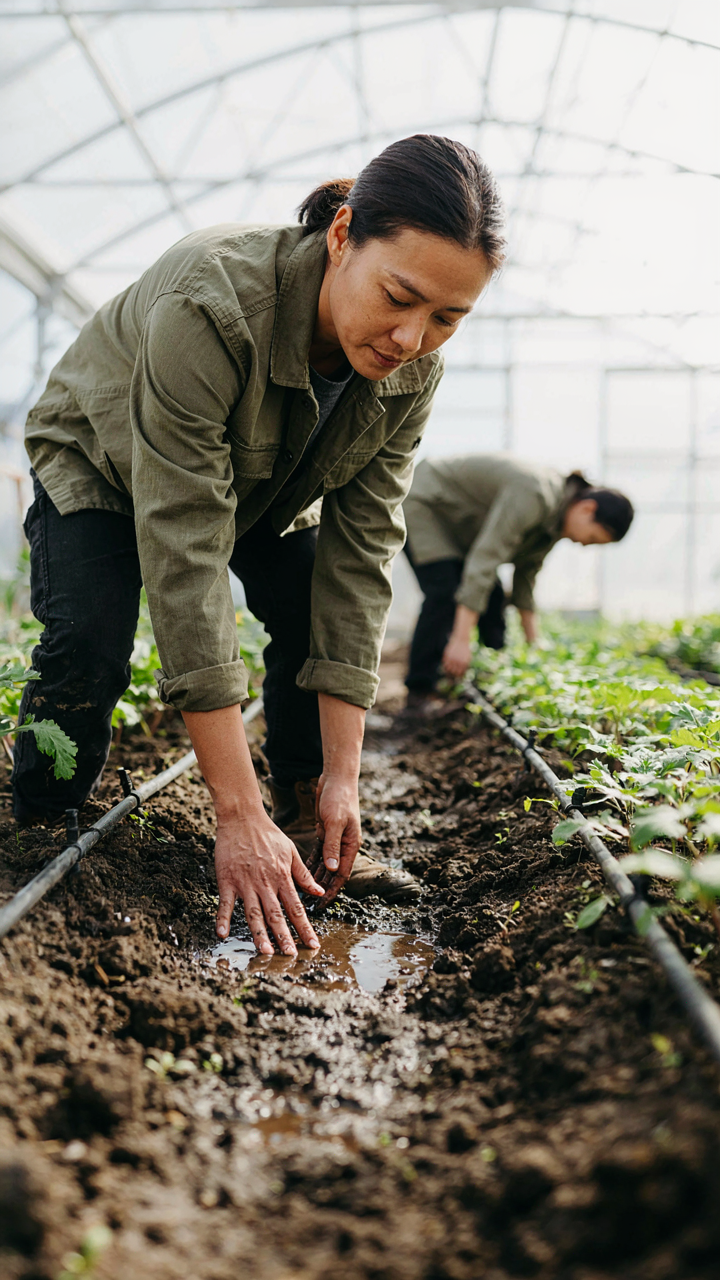
Most growers obsess over drip lines and timers while ignoring the one variable that kills crops: soil drainage. You can own the fanciest greenhouse watering system on the market, but if water pools instead of percolates, you’ve built a disease factory. Stop theorizing. Walk your greenhouse today and dig three random holes in your growing beds. Watch how fast the water disappears. That number tells you everything you need to know before you spend another dime on automation. Your system fails not because it’s broken, but because you never checked what it’s actually sitting on.



