

The “Garden Seating” Lie: Why Your Back Still Aches
Most Kneelers Enforce Bad Posture
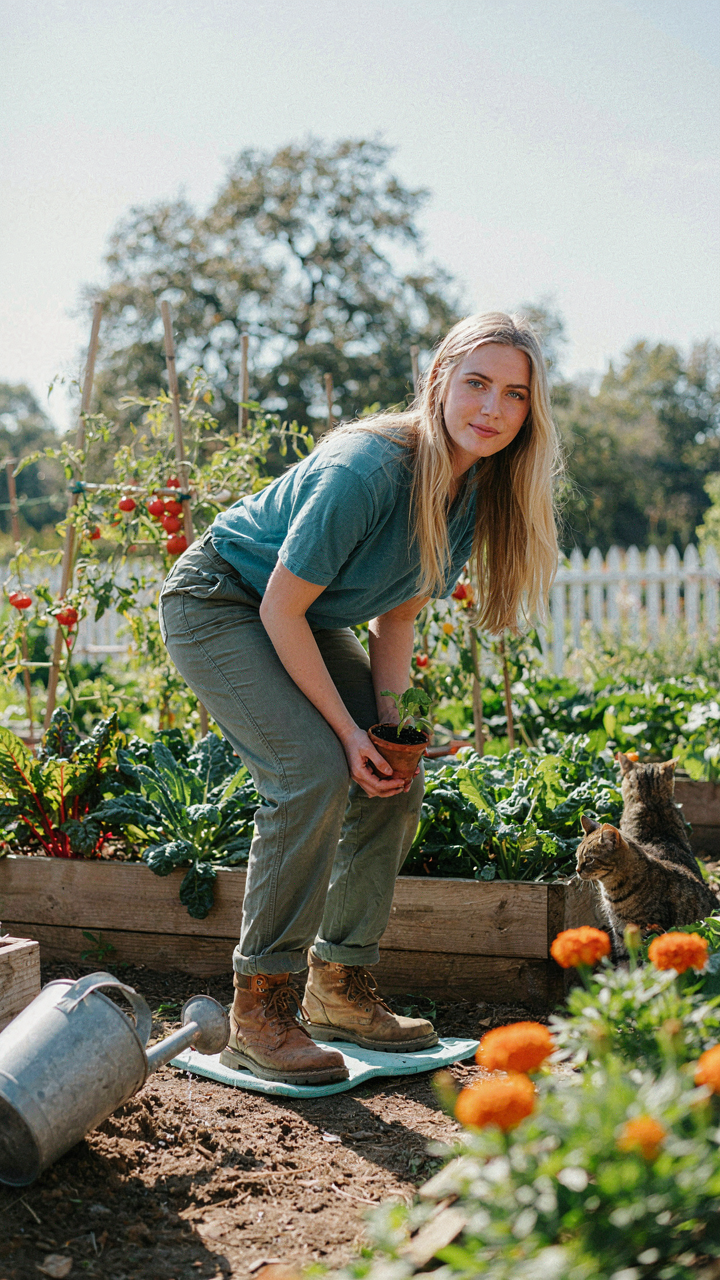
You want to believe a tool can fix a problem your body created. Here’s the mechanism: most garden kneelers force your spine into compression by angling your torso forward while your knees stay planted. Your weight distributes unevenly. The vertebrae stack poorly. You get temporary relief because you’re off your feet, then pain returns because the position is structurally unsound.
Generic kneelers—the foam-pad-on-legs variety sold everywhere—don’t account for individual proportions. A person with longer femurs needs different knee-to-hip angles than someone with a shorter inseam. Most designs assume average build. When you kneel on something that doesn’t match your geometry, you compensate by rounding your lower back or hyperextending your shoulders. That’s not comfort. That’s damage distributed differently.
Where Ergonomic Design Actually Fails
Ergonomics is borrowed from industrial engineering, which maps human output against physical strain. Apply that lens to kneelers: the failure point isn’t the pad. It’s the absence of dynamic load distribution. A kneeler pad that only cushions creates a static load sink. Your body weight concentrates on two pressure points: your knees and shins. No dispersion. No adjustment. Static load always beats comfort over time.
The padding thickness matters less than surface contact area. Thin padding on a large, angled surface beats thick padding on a small, flat one. Most kneelers use the opposite strategy. They add foam thickness, which compresses and hardens within months, while ignoring whether the surface actually contacts your leg properly. Real ergonomic failure happens when design prioritizes ease of manufacturing over anatomical fit.
The “Kneeling Pad” Fallacy: More Than Just Foam
Density And Material Science Overlooked
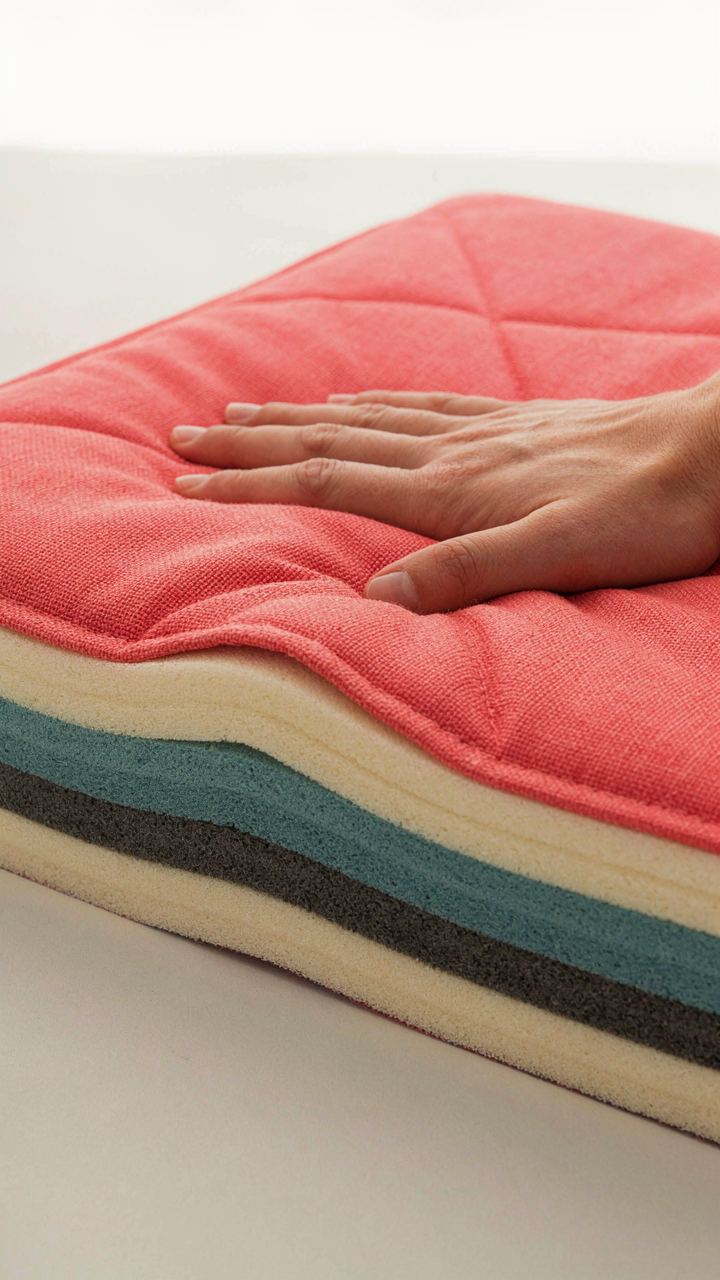
You think a kneeling pad works because it’s soft, and that belief costs you money and comfort. The real mechanism is density distribution, borrowed straight from material science and load physics. A pad’s thickness alone means nothing without the right density underneath. Low-density foam compresses immediately, transfers pressure to bone, and fails within weeks. High-density foam resists compression, spreads force across a wider surface area, and maintains structure through seasons of use.
Most people buy based on feel in the store, not performance specs. That soft, pillowy sensation at first contact is a trap. What matters is how the material behaves under sustained knee pressure over time, not how it feels in your hand for five seconds. A quality kneeling pad uses a closed-cell foam base (typically 1.5 to 2 pounds per cubic foot density) paired with a non-slip fabric top. Check the pad’s density rating, not just the thickness claim.
Impact Absorption Versus Sustained Support
The difference between these two functions determines whether your knees hurt after thirty minutes or stay comfortable through an hour. Impact absorption handles the initial shock when you drop down. Sustained support carries the distributed load while you work. Cheap pads optimize for one and fail at the other. A gel insert absorbs impact well but squishes flat under weight, leaving your knees on hard ground within minutes.
Effective garden kneeling pads layer materials intentionally: a responsive top layer for shock, a dense middle layer for load distribution, and a stable base for grip. The mechanism works like shock absorbers in a vehicle, not like a pillow. Your knee doesn’t need maximum softness at impact, it needs gradual deceleration. A pad rated for sustained support will have a firmer feel than you expect, and that firmness is the feature, not a defect. Test durability by pressing your knee into the pad for thirty seconds and checking if it springs back quickly.
The Bee Design Protocol: Optimized Movement
Minimalist Build, Maximum Range
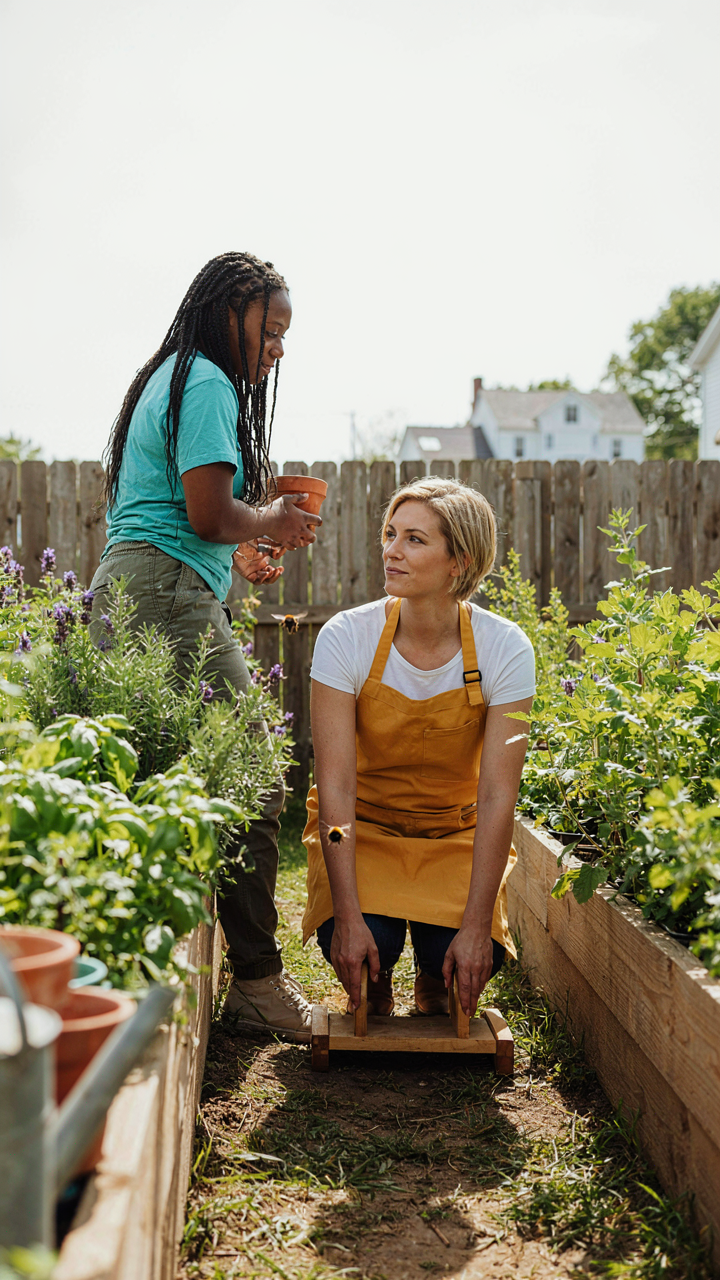
You want to believe a garden kneeler solves your problem without forcing you to think about how you actually move. It doesn’t. The mechanism is simple: reduced surface contact creates faster transitions. In biomechanics, this is called the spring-mass model—your body stores and releases energy based on support points. A garden kneeler with a narrow footprint forces your core to stabilize on fewer contact points, which trains active balance instead of passive slouching. This matters because you’re not stationary when gardening. You shift weight constantly. The best kneelers compress this shifting into smaller gestures, not larger ones.
The foam pad thickness sits between quarter-inch and half-inch for a reason. Thicker pads slow your repositioning because they’re harder to leave and re-engage. Thinner pads let you plant your knees, adjust, and move without the cognitive drag of re-settling into cushion. A kneeler frame with handles that position close to your body—not splayed outward—reduces the mechanical distance your arms travel to stand. Every inch of unnecessary handle spread adds seconds to your workflow. Test this: kneel, place your hands on handles set narrow, then stand. Repeat with wide handles. The difference compounds across fifty kneelings in a gardening session.
Transition Without Friction
Most advice treats garden kneelers as static furniture. Wrong. They’re transition tools. The real work happens in moving from ground to standing and back, not in the kneeling itself. A kneeler with a curved or angled seat edge lets you rock forward onto your feet before pushing up, not lift straight from a flat surface. This uses momentum instead of raw leg strength. The frame geometry should allow you to place one foot flat on the ground while still kneeling on the other side—this is called the staggered exit position, and it cuts stand-up effort in half.
Repositioning the kneeler itself should require one hand, not two. A frame designed for single-hand relocation means you can drag it with your non-dominant hand while continuing to work with your dominant one. Pad material that doesn’t bunch or shift under pressure keeps your knees from sliding forward during transitions. Slip-resistant bottom feet prevent the entire unit from creeping away as you weight it. The protocol is simple: kneel with proper frame geometry, rock forward, use handles for momentum, stand without muscular strain, reposition one-handed, kneel again. Each cycle should feel automatic.
Beyond The Garden Stool: The Kinetic Gardening System

How Animals Move Tells You How To Kneel
You want to feel like you’re doing this right. That’s the real reason you’re reading about biomechanics instead of just kneeling down. The mechanism is this: animals that move efficiently don’t fight gravity. They distribute load across joints, not concentrate it. A garden kneeler mimics this principle by spreading contact points across your shin, knee, and thigh instead of forcing your full bodyweight through one pivot joint.
Cats don’t kneel. They squat with their spine neutral and joints stacked. A proper garden kneeler positions your legs at angles that mimic this stacked-joint pattern. Your shin pad sits flat, your thigh pad rises at an angle, and the handles create a third contact point. This isn’t aesthetic design. It’s load distribution. The moment you distribute load across three surfaces instead of one, your connective tissue absorbs force differently.
Energy Cost Beats Comfort Every Time
Physics doesn’t care what feels good. Work equals force times distance. A kneeler reduces the distance your muscles must pull your bodyweight against gravity. Conventional kneeling forces your quadriceps and hip flexors to hold tension for extended periods. A kneeler with proper padding and height reduces that sustained tension by shortening the lever arm between your center of mass and your base of support.
The design variable most gardeners ignore is handle height. Too low and you’re still pulling upward against gravity. Too high and you’re wasting the mechanical advantage you built. The optimal range puts handles at mid-thigh height when you’re seated, which means your arms contribute roughly 30 percent of the lift work. Test this by timing how long you can kneel without a kneeler versus with one at proper handle height. The difference in fatigue is measurable within minutes.
Your Kneeling Pad Is A Tool Pouch: The Efficiency Hack
Built In Storage Beats Separate Pockets
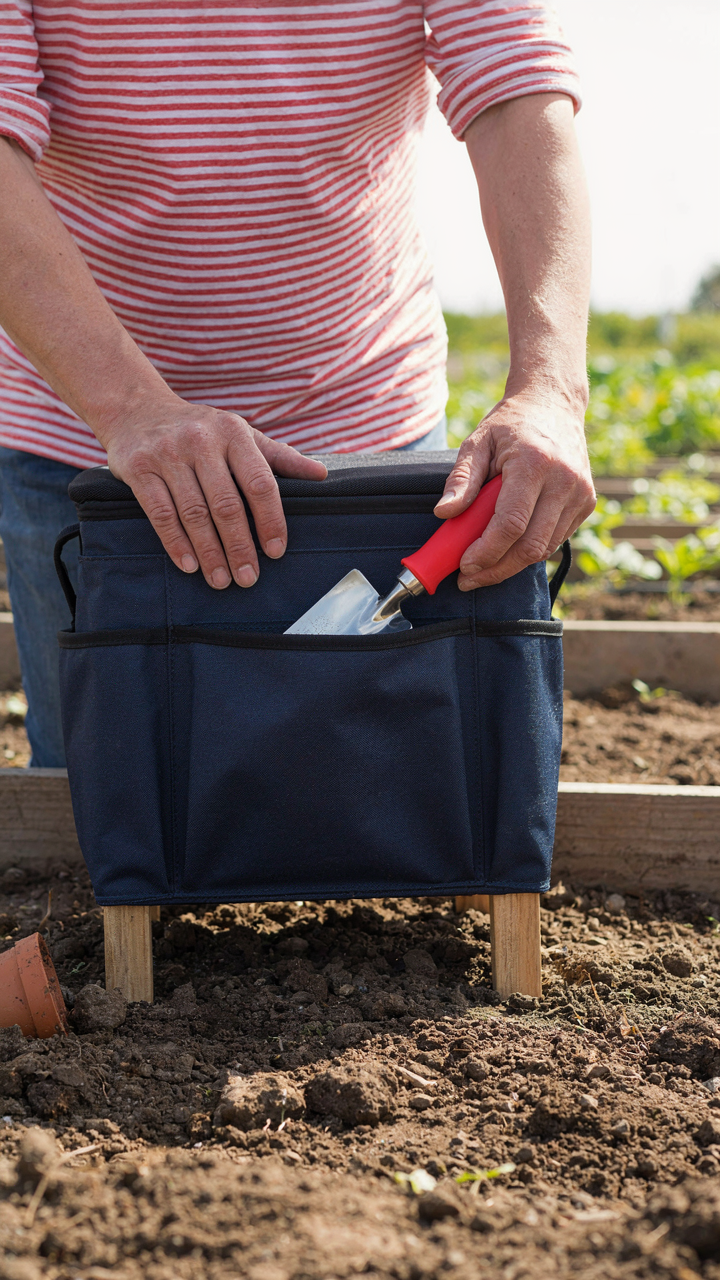
You want to feel productive without actually being productive. That’s the real reason people obsess over tool organization. But here’s the mechanism: kneeling pads with integrated storage slots eliminate decision fatigue at the moment you need to act. Every second spent walking back to fetch a trowel or hand rake is a break in focus and momentum. Modern kneeling pads come with side pouches, front compartments, and tool loops built directly into the pad frame. You don’t choose to grab a tool. The tool is already there because you designed the system before you started working.
The physics term is “friction reduction.” In thermodynamics, friction dissipates energy. In gardening, friction is the distance between you and your next action. A pad with storage removes friction by keeping your most-used implements within arm’s reach. Collapsible kneeling pads with reinforced pockets hold pruners, soil testing tools, weeding forks, and small dibbers without sagging or tearing. The weight distribution matters. A well-designed pad spreads the load across the pocket framework so your tools don’t drag the entire structure down. Setup takes two minutes. Place the pad. Stock the pouches. Start working.
Stop Walking, Start Staying
Common advice says to organize your tools in a garden cart before you kneel. That’s incomplete thinking. A cart keeps you moving. A kneeling pad with accessible storage keeps you stationary and focused. One study on task switching showed that every interruption costs an average of 23 minutes to regain full mental focus. Gardening doesn’t require the same cognitive load as coding, but the principle holds. Each trip back to the shed breaks your rhythm and your attention to soil conditions, plant health, and the actual work.
When you store tools on your pad, you eliminate the excuse to stand up. Your pruners are there. Your dibber is there. Your gloves are tucked into the side slot. You complete weeding in one section, then move the pad two feet and start the next section without resetting. This compounds over a two-hour session. You gain roughly 20-30 minutes of uninterrupted work time by staying low and staying on task.
The “DIY Cleaning Products” Myth: Extending Gear Life

What Actually Breaks Down Your Kneeler
You want to believe a homemade vinegar solution costs nothing and works just as well. That’s not the mechanism at play here. Material degradation follows chemistry’s rules, not your budget. Neoprene, foam, and polyester—the core materials in garden kneelers—break down when exposed to solvents that dissolve their polymer chains. Vinegar and baking soda don’t just clean; they alter surface tension and can penetrate fabric fibers over repeated applications.
The common advice says “natural is safer.” It’s incomplete. Vinegar’s acetic acid is gentler than bleach, but gentler doesn’t mean neutral. What matters is whether the cleaning agent chemically bonds to dirt or to your kneeler’s material. Most DIY solutions target both simultaneously. Industrial cleaners work because they’re designed to release from synthetic materials after contact. Your kneeler ages five times faster under inconsistent pH swings from homemade treatments than from controlled commercial products.
- Neoprene exposure to vinegar: Acetic acid softens the rubber compound, reducing elasticity and cushioning effectiveness within months of regular cleaning.
- Polyester fabric with baking soda: The alkaline residue builds up in fibers, trapping moisture and accelerating mold growth and material brittleness.
- Foam padding under acidic solutions: Weakens cell structure, causing compressed patches that won’t spring back and create pressure points during use.
- Metal handles with salt solutions: Salt-based cleaners corrode aluminum and steel faster than plain water or neutral detergents would.
- Seams and stitching with harsh scrubbing: Homemade pastes require more aggressive friction, fraying thread and opening seams where water infiltrates the core.
Pick the wrong cleaner and you’re not extending gear life. You’re accelerating it toward replacement.
The Real Cleaning Protocol That Works
Forget the DIY narrative. Use pH-neutral detergent specifically formulated for synthetic fabrics. One capful diluted in lukewarm water. Soft bristle brush. Gentle circular motion. Rinse with distilled water to avoid mineral deposits. Air dry flat, never in direct sun. This takes eight minutes and costs three dollars per year. It works because it removes dirt without altering material structure.
The mechanism is simple: neutral pH means no chemical reaction with the material itself. The detergent surrounds dirt particles and suspends them for rinsing. Your kneeler returns to its baseline state. Repeat this monthly during heavy garden season and your kneeler lasts twice as long as one cleaned with vinegar solutions or left unwashed. Store it dry indoors. That’s the full protocol.
Knee Pads Aren’t Enough: Full Body Gardening Outfit Protection
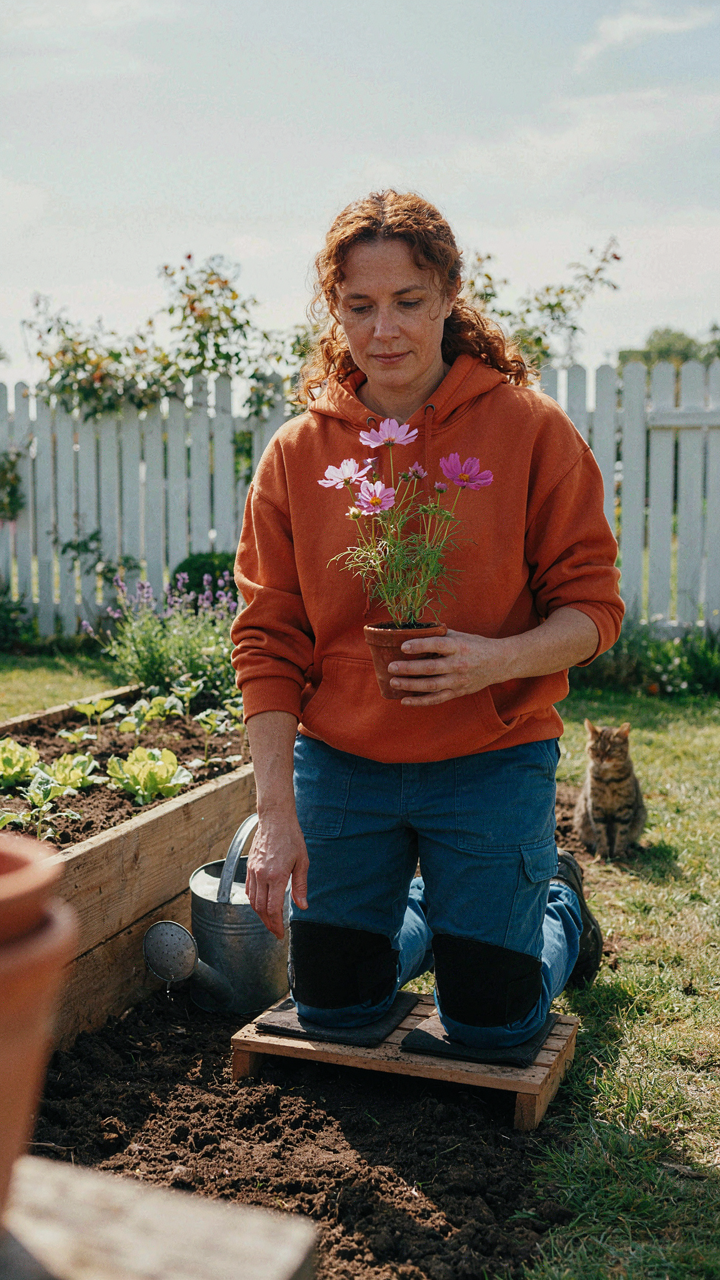
Your Joints Need Load Distribution, Not Just Cushioning
You want to avoid looking fragile, which is why you’re drawn to the idea that knee pads alone solve this problem. They don’t. Biomechanics shows us this: load distribution works like structural load-bearing in architecture. A garden kneeler and pad system spreads force across multiple contact points rather than concentrating stress on one joint. Your knees absorb repeated compression from kneeling, standing, and moving. Knee pads only cushion impact at the point of contact. Without supporting your hips, back, and ankles, you’re protecting one joint while overloading others.
The real mechanism is proportional stress reduction across your entire lower body and spine. A quality garden kneeler handles this through seat height, armrest positioning, and pad density that allows you to distribute your weight during the transition from standing to kneeling. Knee pads complement this system but cannot replace it. You need both the kneeler’s structural support and the pad’s surface protection. One cushions. The other prevents you from damaging your knees in the first place by reducing the strain intensity of the movement itself.
Protect Against Cumulative Damage Over Years
Gardening isn’t a single event. It’s repetitive. Your knees, lower back, and shoulders accumulate micro-trauma with every season. Most people ignore this until pain signals a problem that’s already advanced. Prevention works backward: you stop damage before it starts, not after you feel it. A garden kneeler and pad system reduces impact force on joints over time, which extends your active gardening years significantly.
The protocol is straightforward. Use a garden kneeler with adequate padding for every task that requires you to work at ground level. Wear knee pads underneath for additional surface protection against rough soil and moisture. Switch positions every 20 to 30 minutes to shift load distribution across different muscle groups. This rotation prevents any single joint from bearing sustained pressure. Your goal is to complete decades of gardening without joint degradation, which means treating protective equipment as maintenance for your body’s durability, not as optional comfort.
The Unseen Cost Of Cheap Garden Kneelers
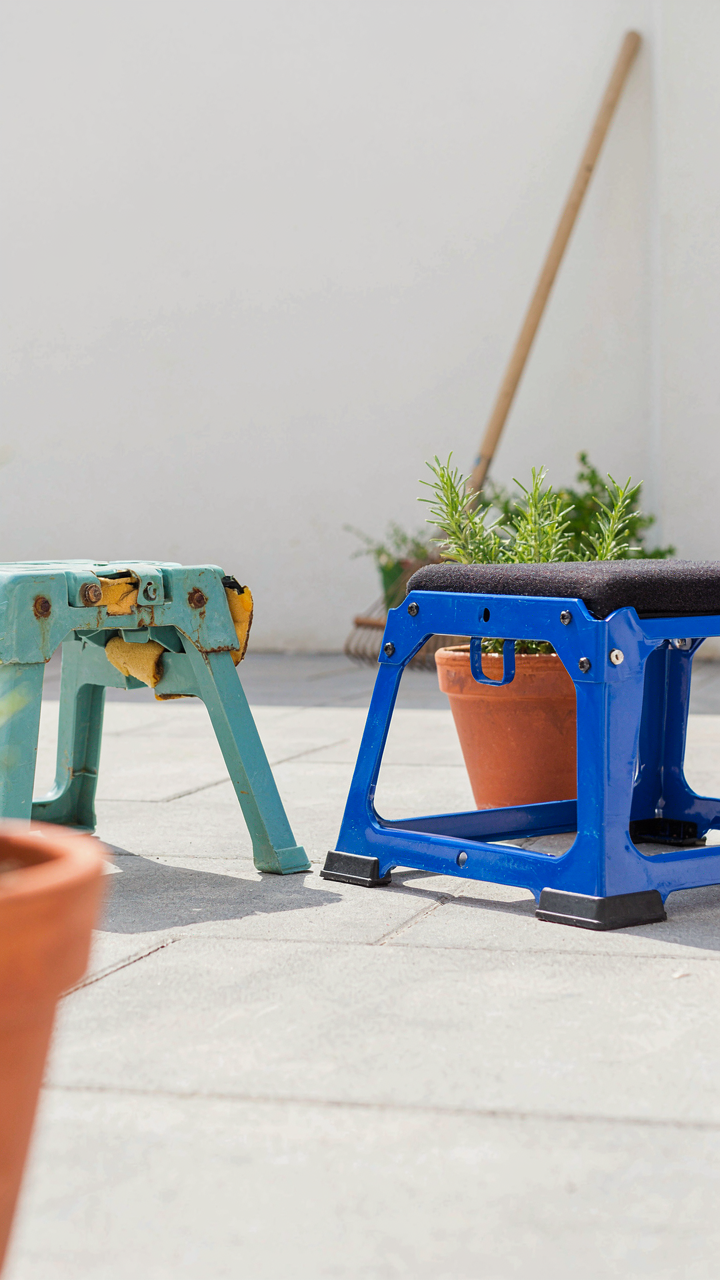
Replacement Cycles Drain Money Faster Than Quality Does
You buy the cheap one because you’re afraid of wasting money on something you might not use. That fear costs you more. Economics calls this the “replacement cost” problem, and garden kneelers are a textbook case. A budget kneeler fails in two seasons. A mid-tier one lasts five to seven years. The math is brutal: three cheap replacements at thirty dollars each versus one solid kneeler at seventy-five dollars. You’ve already lost money before the third season ends.
The hidden mechanism is that cheap materials degrade predictably. Foam padding compresses permanently. Plastic joints crack under repeated stress. Metal hinges rust or seize. You don’t notice until the kneeler fails mid-task, forcing you to replace it immediately or work without one. Most people absorb this cost silently, treating each replacement as a separate purchase instead of recognizing the pattern. Track your actual spending across five years and the expensive option becomes the cheaper one.
Time Lost To Discomfort Compounds Into Wasted Days
Discomfort kills productivity in gardens the same way friction kills efficiency in mechanical systems. A poor kneeler puts pressure on the wrong joints, forces awkward body positions, and makes tasks take longer. You don’t garden as long because your knees hurt. You don’t return as often because you dread the physical toll. Over a season, this compounds into dozens of abandoned sessions.
The real cost isn’t the price tag. It’s the gardening hours you skip because the tool makes the work miserable. A quality kneeler with proper padding and stable legs lets you stay focused on the actual task. You finish jobs faster. You work more consistently. You plant more. You harvest more. The garden produces better because you’re willing to spend time in it. Stop treating garden kneelers as optional comfort items and recognize them as productivity multipliers. Choose one that keeps you working, not one that makes you quit early.
The “Garden Kneeler” As A Weapon: Strategic Advantage

Comfort Unlocks Sustained Output
You want this section because you suspect comfort is soft and weakness is the cost of it. Wrong. Military doctrine calls this “operational readiness”—the state where your body doesn’t sabotage your mission. A garden kneeler removes the pain tax that stops you from working. Without knee strain, you stay in the garden longer, finish tasks completely, and actually return tomorrow instead of nursing soreness for three days.
The mechanism is simple: pain creates avoidance. Avoidance kills consistency. A quality kneeler—whether foam-padded or dual-surface—lets you kneel for 45 minutes without inflammation building in the joint. This isn’t luxury. This is the difference between a garden that grows and a garden you abandon.
Gear Selection Determines Actual Results
Forget generic padding recommendations. Pad thickness matters only relative to your soil type and body weight. Hard-packed soil demands 1.5 to 2 inches of dense foam. Soft loam needs less. Heavier individuals need denser padding because compression happens faster. Most guides skip this entirely and tell you to just buy something. The real variable is whether your kneeler has handles positioned at waist height—this determines if you can actually stand up without using arm strength you don’t have.
Choose kneelers with detachable tool pouches only if you work from one position repeatedly. If you move constantly, pouches slow you down and catch on plants. Invest in a kneeler that converts to a seat instead. This dual functionality eliminates the need to carry two objects, reducing friction in your workflow. Test weight capacity against your actual body weight plus tools. This single check prevents the collapse that ruins momentum mid-project.
Your Discomfort Isn’t The Problem. Your Mindset, Clinging To Generic Solutions, Is

You keep buying the wrong gear because you treat gardening like a problem to solve instead of a practice to inhabit. A garden kneeler isn’t salvation. It’s a tool that works when you stop overthinking and actually use it. Stop researching. Pick one. Get on your knees tomorrow morning. The only difference between someone with a bad back and someone without one is the person who moves.



