
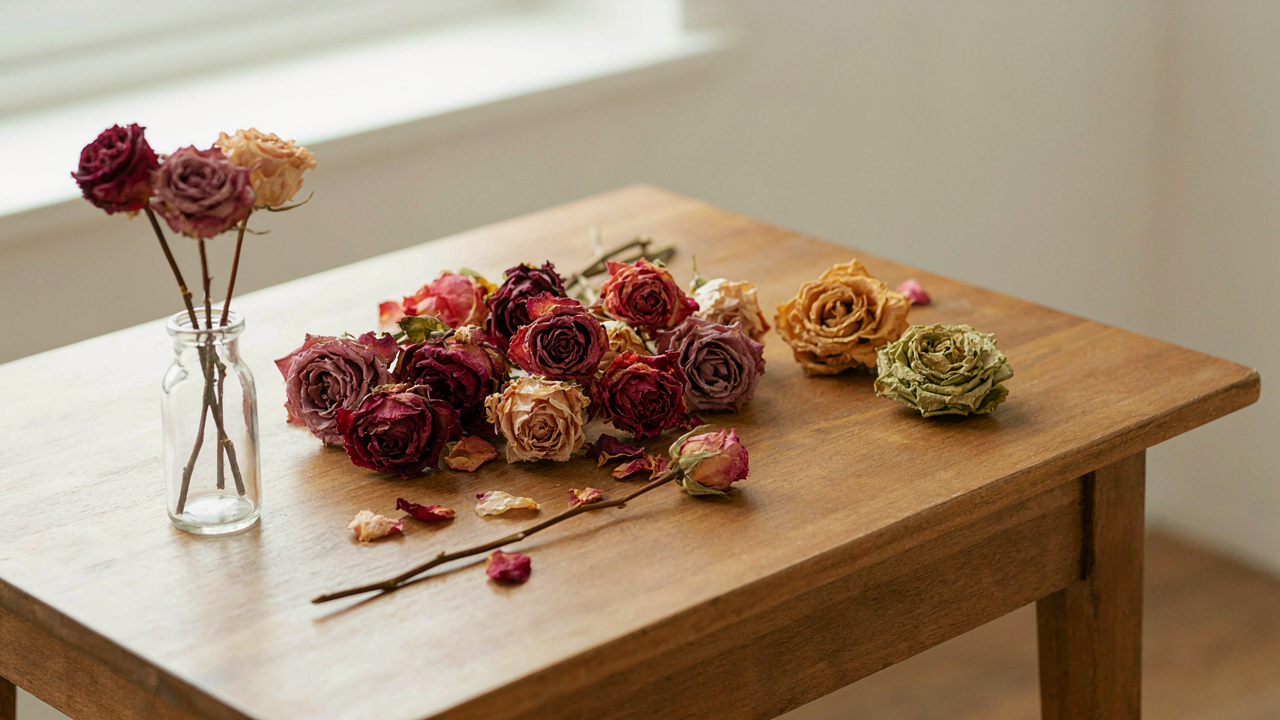
The Folly Of Fresh: Why Traditional Preservation Fails

Moisture Eradication: The True Enemy Of Longevity
You want dried roses to last because the alternative is throwing money at something that dies anyway. The real mechanism at play here is hygroscopic degradation, borrowed directly from materials science: roses absorb and release moisture from their environment until the cellular structure collapses. A fresh rose contains roughly 80 percent water. You cannot simply cut a stem and expect time to do the work. The water must leave the tissue completely, or mold, brittleness, and color loss follow in sequence.
Most people misunderstand what “dry” means. They assume a rose left on a shelf for two weeks is preserved. It is not. Residual moisture trapped inside the petals and stem creates a slow decay process invisible to the eye. The flower may look fine for months, then suddenly crumbles because decomposition accelerated in the humid microenvironment you never controlled. Moisture eradication requires active management, not passive waiting. Your environment’s humidity level, air circulation, and light exposure determine whether a rose degrades in weeks or lasts for years.
Why Common Methods Guarantee Mediocrity
The advice you hear is incomplete. Hang dried roses in a dark corner and they will last, the saying goes. This produces pale, brittle flowers that lose color to light damage before they lose form to humidity. Silica gel is often recommended as a solution, but most people use it wrong, pulling roses out too early and trapping residual moisture inside the petal layers. Pressing roses flat between books produces flat roses, not preserved ones. These methods work partially because they reduce moisture exposure, but they ignore the variables that separate acceptable preservation from reliable preservation.
Air circulation removes moisture but accelerates color fading if light is present. Sealed containers prevent humidity spikes but trap whatever moisture exists inside. Temperature fluctuation causes roses to expand and contract, cracking delicate tissue. The mediocrity comes from treating preservation as a single variable instead of a system with competing pressures. Silica gel drying, when executed with timing precision and stored in sealed containers kept away from direct light in stable temperatures between 60 and 70 degrees Fahrenheit, produces results. Everything else is guesswork that looks fine until it fails.
The Desiccation Protocol: Mastering The Air Dry
Environment Shapes Outcome, Not Effort
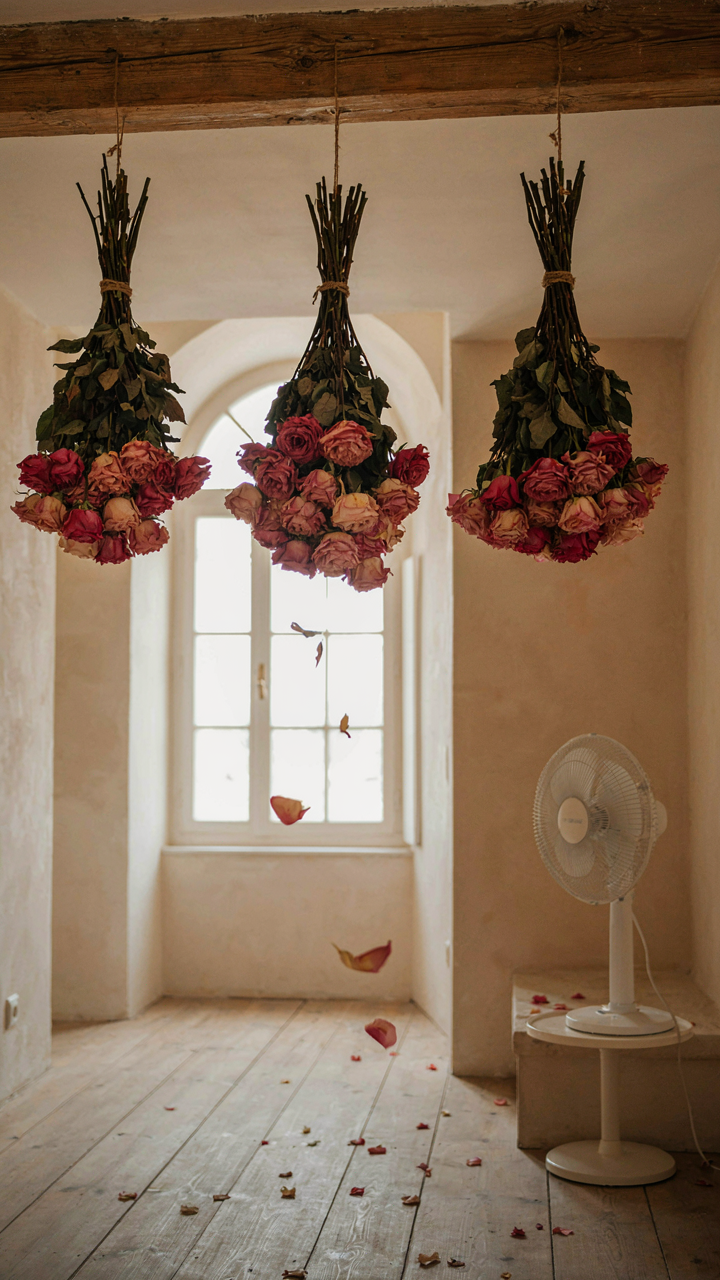
You want dried roses to look like they cost money. That requires understanding one biological fact: roses dry through water evaporation, and evaporation speed determines color retention and structural integrity. Think of desiccation as a thermodynamic problem. Too fast and petals become brittle. Too slow and mold colonizes before moisture leaves. The mechanism is air circulation combined with low humidity and moderate temperature.
Place roses in a space between 60 and 75 degrees Fahrenheit with humidity below 40 percent. Stagnant air kills roses faster than any other single factor. A fan on low speed in the same room accelerates evaporation without creating turbulence that damages petals. Direct sunlight fades pigment, so position bunches in indirect light. Darkness works better than a sunny window. The drying window typically runs 7 to 14 days depending on petal thickness and ambient conditions.
The Spacing Principle Prevents Failure
Everyone bunches roses too tightly. Stems pressed together trap moisture between petals and create microclimates where fungi thrive. Space each stem at least half an inch from its neighbors to ensure air moves through the entire bunch. Mold appears first at the base where stems cluster. Remove any leaves that would sit below the tie point, since foliage holds moisture longer than petals and accelerates decay at ground level.
Hang bunches upside down with stems secured by twine or a rubber band, never wire. The inverted position pulls moisture toward the stems while petals dry face-down. Check bunches at day five. If petals feel papery and stems snap slightly when bent, remove the bunch from the drying space immediately. Continuing past full desiccation inverts the problem: over-dried roses become dust.
Silica Gel Submersion: The Fast Track To Forever Blooms
Which Silica Type Actually Preserves Color
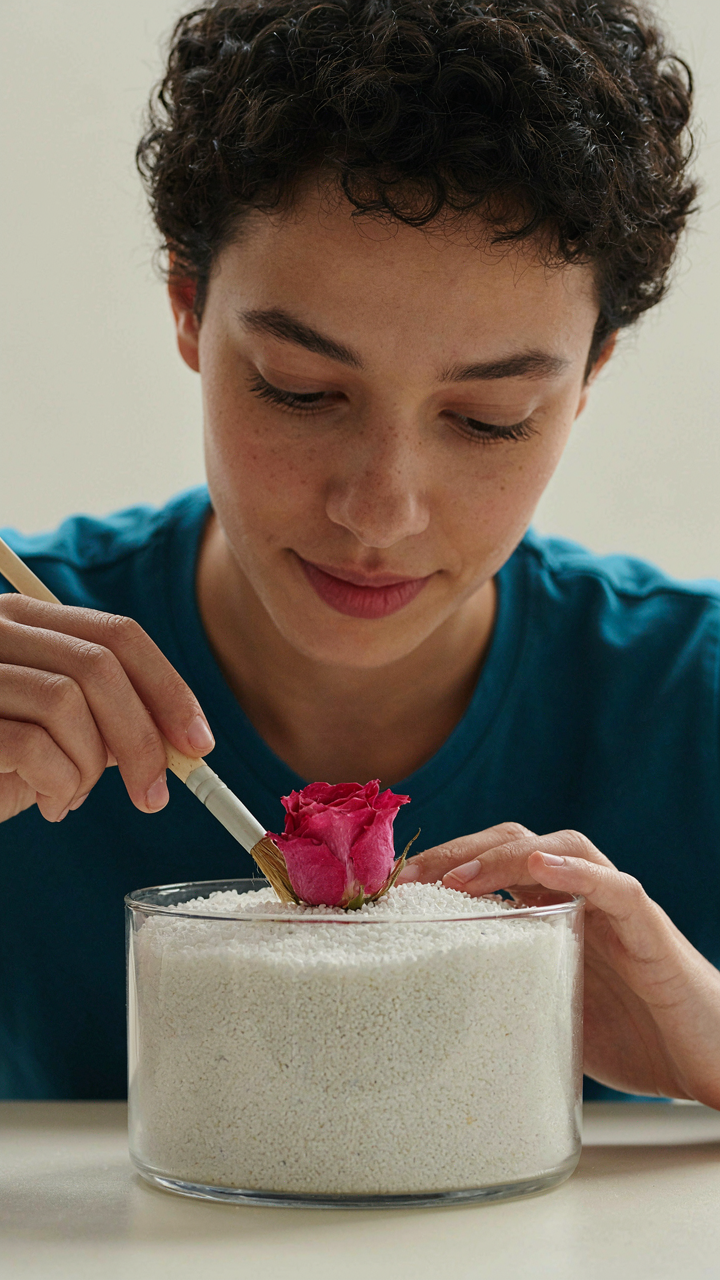
You want roses that don’t look like they spent three months in a tomb. That’s the real driver here. Silica gel works through absorption, a chemistry principle where the gel’s porous structure pulls moisture from plant cells. Remove water fast enough and you stop the oxidation that bleaches color.
Not all silica gel is equal. Standard blue or orange indicator silica has a crystal size around 1-3 millimeters. This works fine but dries inconsistently, leaving some petals papery while others stay slightly moist. Coarse silica, the larger crystals sold for industrial drying, accelerates the process but can bruise delicate petals. Fine silica, typically used in cosmetics and labs, preserves color retention better because it contacts more surface area with gentler pressure. Fresh gel reactivated in an oven (never a microwave) absorbs faster than spent gel. A batch used once loses 40-60% of its drying capacity.
The mechanism is time-based. Roses need 3-7 days submerged in quality silica depending on petal thickness and ambient humidity. Red and pink varieties retain pigment better than whites or pale yellows because they contain more anthocyanin, the pigment most resistant to oxidative fading. The drying speed itself matters more than the silica type chosen.
Burial Method And Container Mistakes
Everyone buries roses wrong. The common advice says lay them flat or hang them dry. That produces faded, brittle stems and petals that shatter at touch. The actual container setup determines whether you get museum-quality preservation or compost-grade results.
Use a rigid plastic or glass container with a fitted lid. Metal rusts and reacts with silica. Ceramic absorbs moisture. Size matters: the container should allow roses to sit upright without crowding, stems pointing down into the gel. Crowded roses steam themselves. Pour one inch of dry silica on the bottom. Place roses stem-down into the gel. Slowly add silica around each rose, rotating the container as you pour so the gel fills between petals without trapping air pockets. This is the error most people make. Air pockets create moisture pockets. Seal the container immediately. Silica gel works only in a closed environment. The gel must be completely dry before you start. If it’s clumpy or damp, activate it first by heating at 250 degrees Fahrenheit for 15-20 minutes until it cools.
After 5-7 days, gently excavate the roses by tilting the container and brushing away silica with a soft brush. Bury them completely and seal the lid every single time you preserve a batch.
The Pressing Paradox: Flatness As A Feature, Not A Flaw
Equipment Decisions That Matter
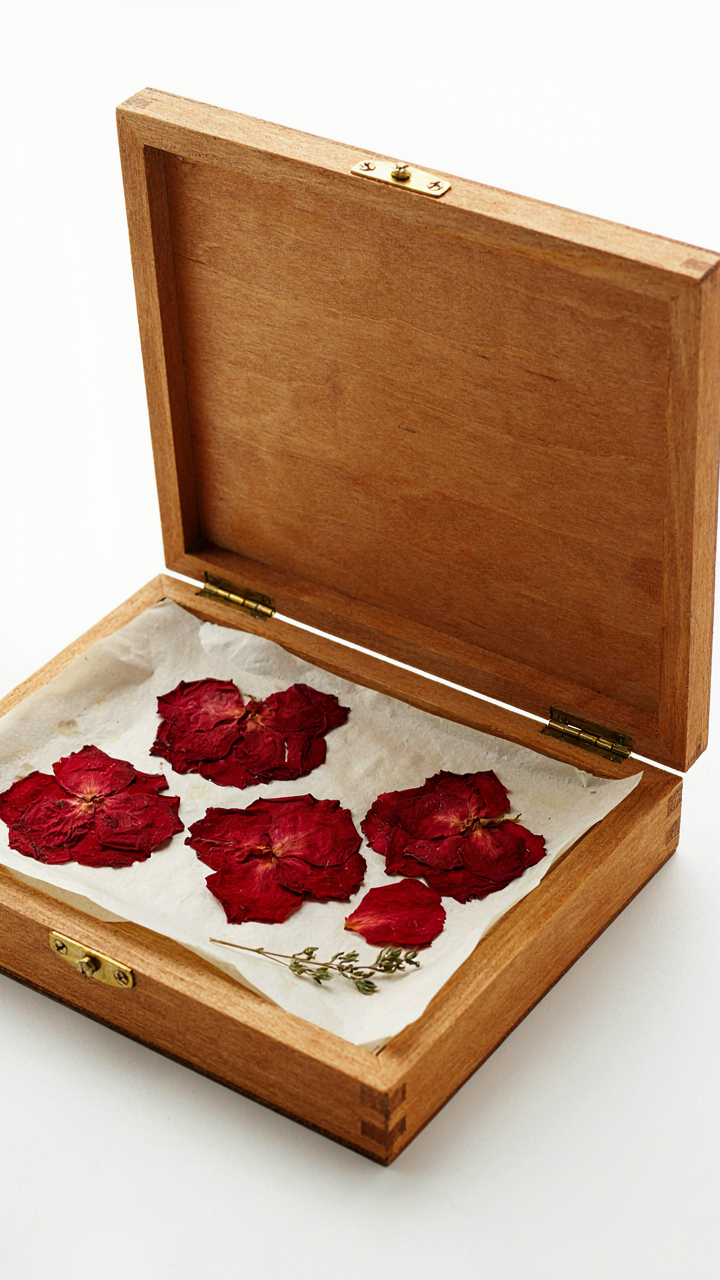
You want pressing to feel like a controllable, professional process because flattening flowers by hand feels amateur. Here’s the mechanism: pressure works like load distribution in structural engineering. Concentrated force creates creases and stem damage. Distributed force over time flattens petals without breaking cellular walls. A DIY press using plywood and clamps costs nothing but demands consistent pressure monitoring. Commercial flower presses offer calibrated screw mechanisms that maintain even load for weeks. Neither is superior. DIY works if you check tension weekly. Commercial presses work if you can accept the cost.
The real decision splits on patience versus precision. Plywood presses suit people who enjoy the ritual and have flexible timelines. Metal flower presses suit people who need predictable results within exact timeframes. Both achieve the same outcome: flat roses with intact petal structure. What changes is how much you tolerate variance in the process.
Paper Selection And Pressure Management
Most advice says “use newspaper” because it’s cheap. That’s incomplete reasoning. Newsprint absorbs moisture but also transfers ink and creates uneven moisture zones across petals. The mechanism is capillary action: paper draws moisture from the rose unevenly, causing some areas to dry faster than others. This creates invisible creases that emerge weeks later. Use acid-free blotter paper or unbleached kraft paper instead. Blotter paper maintains even moisture distribution. Kraft paper prevents chemical transfer. Both cost more than newsprint but eliminate the hidden failure pattern that ruins pressed roses after three months.
Pressure settings demand adjustment based on petal thickness. Thick garden roses need 15 to 20 pounds of pressure per square inch over four to six weeks. Thin florist roses need 8 to 12 pounds over three weeks. Adjust pressure downward at the midpoint. Release tension by twenty percent after the first ten days to prevent stress fractures in the stem. Even pressure applied too long creates brittleness. The moment you open your press, you’ve either preserved the rose or created a time-bomb that shatters under humidity shifts.
Glycerin Immersion: The Supple Secret To Saving Roses
The Osmotic Exchange That Keeps Petals Intact
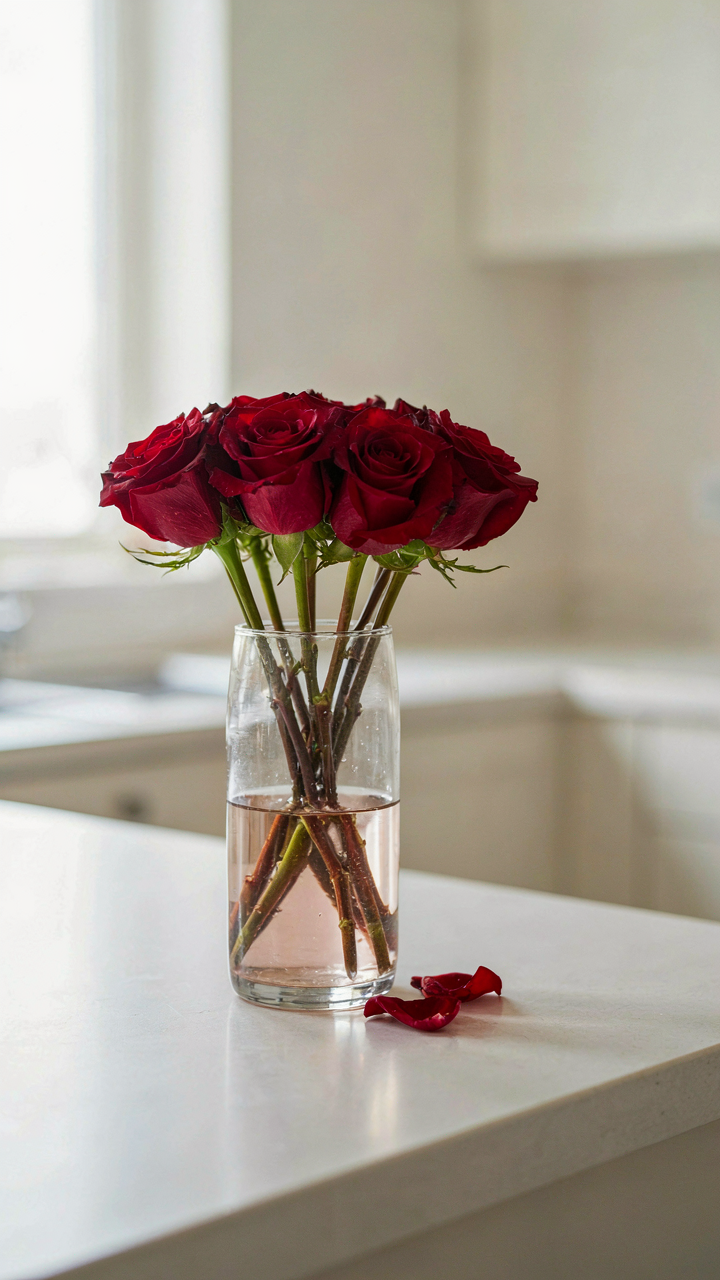
You want roses that don’t turn brittle and crumble the moment someone touches them. That’s the real problem nobody names. Glycerin works through osmosis, the same biological principle that moves water across cell membranes. Instead of air drying, which collapses petal cells and hardens them, glycerin replaces water molecules inside the flower tissue. The petals stay flexible because the glycerin maintains cellular structure while water evaporates around it.
The standard ratio is one part glycerin to two parts water, though this shifts based on rose variety and stem thickness. Mix this solution in a clean container and submerge the cut ends about two to three inches deep. Absorption takes seven to fourteen days depending on temperature and humidity. Warmer environments accelerate the process. You’ll see color shifts as glycerin moves upward, typically a darkening or browning of petals and stems. This isn’t decay. It’s evidence the mechanism is working.
Vascular Conditioning Before Immersion
Cut rose stems at a forty-five-degree angle before glycerin treatment even begins. This exposes maximum surface area in the vascular bundle, the tissue network that transports water and now will transport glycerin upward. A fresh cut matters more than people admit because sealed or crushed vascular tissue blocks absorption entirely, turning your entire batch into a waste of time and materials. Remove foliage from the lower third of each stem to prevent rot and channel all uptake toward the flower head.
Split woody stems vertically for one to two inches if roses came from a thick-stemmed variety. This mechanical disruption forces the vascular system to work harder and absorb faster. Let cut stems sit in room-temperature water for two to four hours before glycerin immersion. This hydration phase ensures cells are fully pressurized and ready to exchange water for glycerin. Skip this step and you create resistance that slows absorption by days, defeating the entire advantage of the method.
Wax Dipping: The Industrial Method For Home Preservation
Wax Types And Melting Points
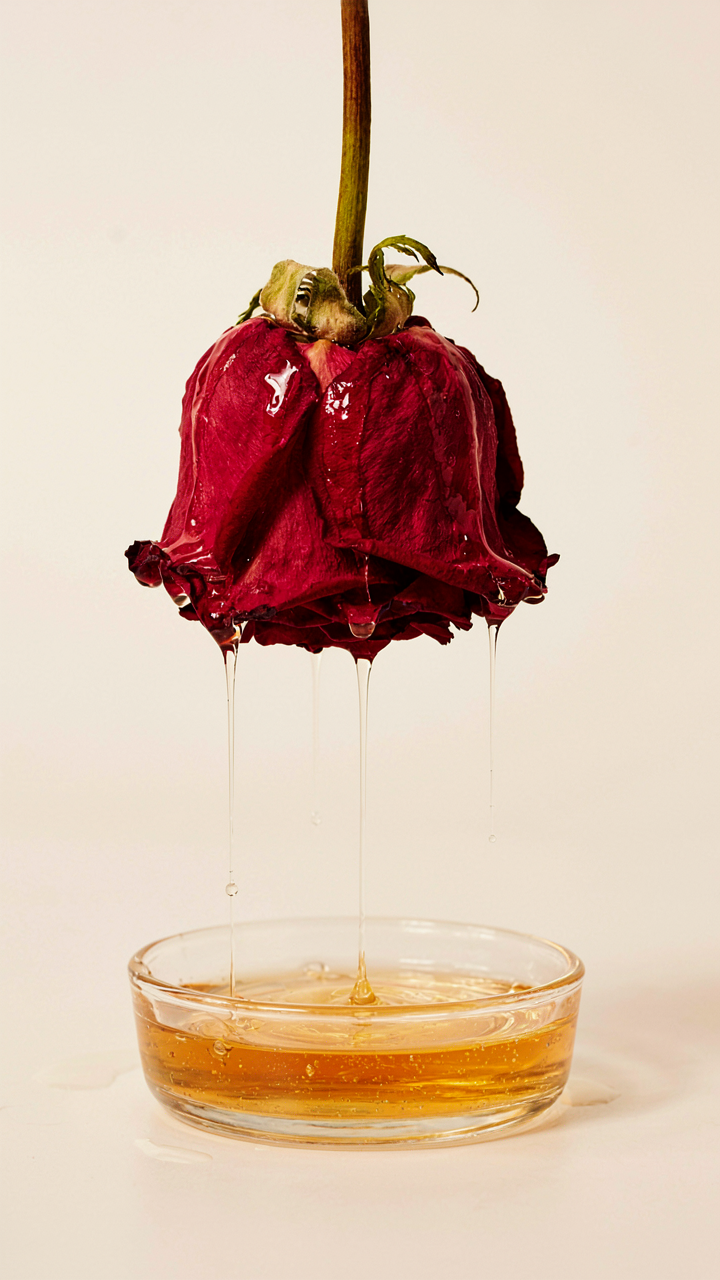
You want wax dipping to work because it looks intentional and permanent, like you’ve sealed something precious rather than just dried it. The mechanism is simple: wax creates a moisture barrier. Different wax types melt at different temperatures, and that temperature determines how well the coating adheres without damaging the rose. Paraffin melts around 130-150°F. Soy wax melts lower, around 120-180°F depending on the blend. Microcrystalline wax runs hotter, 145-200°F. The rose itself tolerates heat poorly once dried, so picking the right wax means matching its melting point to preserve color and petal structure without brittleness.
Most people skip this step and just dunk roses in whatever temperature wax they heat up. That’s wrong. A rose preserved at the wrong temperature will shatter on contact or lose color prematurely. Use a thermometer. Measure the wax temperature before dipping. Paraffin works best for home use because it melts predictably and cools fast enough to create an even seal. Keep the temperature steady at 140°F. Let the wax cool slightly from boil, then dip. The wax should feel warm to your wrist, not hot.
The Dipping Technique
Drips and uneven layers happen because people dip too slowly or at the wrong angle. Physics calls this surface tension and viscosity control, and your wax dipping procedure lives or dies on managing both. Slow dips let gravity pool wax at the base. Fast dips trap air bubbles. The winning move is a single, deliberate dip lasting two to three seconds at a 45-degree angle. You submerge the rose head completely, rotate your wrist once, then lift straight up and let excess drip into the pot for exactly one second before setting it down.
Control the drips by understanding that wax stops dripping when it cools enough to thicken. Two seconds of air exposure reduces drips by half. Uneven layers come from multiple dips thinking you need coverage. You don’t. One proper dip creates an even shell. If you need a thicker coat, wait for the first layer to fully harden, then dip again at the same temperature and angle. Space multiple dips at least two hours apart. Let each rose cure upside down in a cool room before standing it upright.
Petal Alchemy: Transforming Dried Roses Into New Assets
Making Scent Last Without The Waste
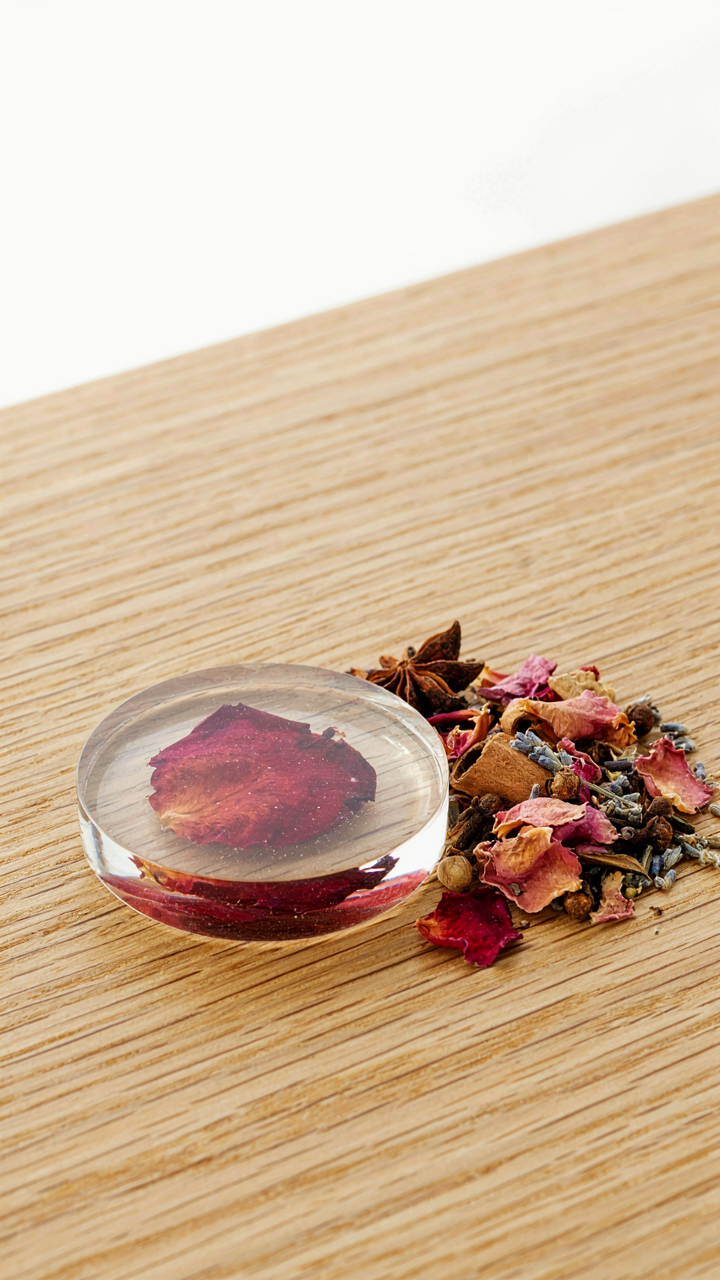
You want your dried roses to smell like proof you have taste. Here’s what actually matters: scent in dried petals follows chemistry’s volatility principle. Fragrant compounds evaporate over time. The mechanism is simple—you’re fighting molecular escape by layering oils and binders that slow diffusion, not stop it. Potpourri works because you’re suspending scent molecules in a matrix rather than letting them drift into air.
- Rose petals with cedarwood: Cedar’s slow-release aromatics extend floral notes by weeks. Mix one part cedar chips to three parts rose petals for balanced saturation without overpowering the rose.
- Orris root fixative base: Orris root absorbs and re-releases fragrance gradually. Use one tablespoon per cup of petals to establish a foundation scent profile that holds for two to three months.
- Dried citrus peel addition: Lemon or orange peel adds brightness and introduces natural acids that prevent mold. This extends shelf life while sharpening the overall scent profile in enclosed containers.
- Lavender as filler and extender: Lavender’s own longevity means it outlasts rose petal scent. Combine equal parts rose and lavender to create a blend that maintains presence for four months in sealed jars.
- Essential oil drop method: One drop of rose essential oil per handful of petals revives fading potpourri. Reapply every six to eight weeks rather than replacing the entire batch, cutting waste by 60 percent.
The real move is storing your mixture in airtight glass containers and opening them only when you need scent projection. Sealed storage cuts volatilization in half compared to open bowls. Refresh by adding fresh dried petals or one drop of essential oil every two months.
Petals Preserved Forever In Resin
Resin casting eliminates the ticking clock problem that kills dried roses. Unlike potpourri or framed petals, resin locks petals in stasis—no oxidation, no fading, no biological decay. The mechanism is physical encasement: the polymer hardens around the petal structure and blocks all contact with oxygen and moisture. What you embed is what you get, permanently.
The common advice skips over a critical step: petals must be dried to a specific moisture level or they’ll warp inside the resin as it cures. Under-dried petals retain internal water that causes clouding. Over-dried petals become brittle and shatter during embedding. Aim for the two-week air-dry window where petals feel papery but still hold their shape. Mix your resin according to manufacturer specs, pour a thin base layer into your mold, position the petal or small arrangement, then pour the final layer slowly to avoid trapping air bubbles. Set cure times vary by resin type—epoxy typically needs 24 hours, UV resin cures in minutes. The finished piece requires no maintenance and resists yellowing for decades if kept away from direct sunlight.
The Entropy Of Beauty: Why Some Roses Resist Immortality
Why Certain Varieties Decay Faster
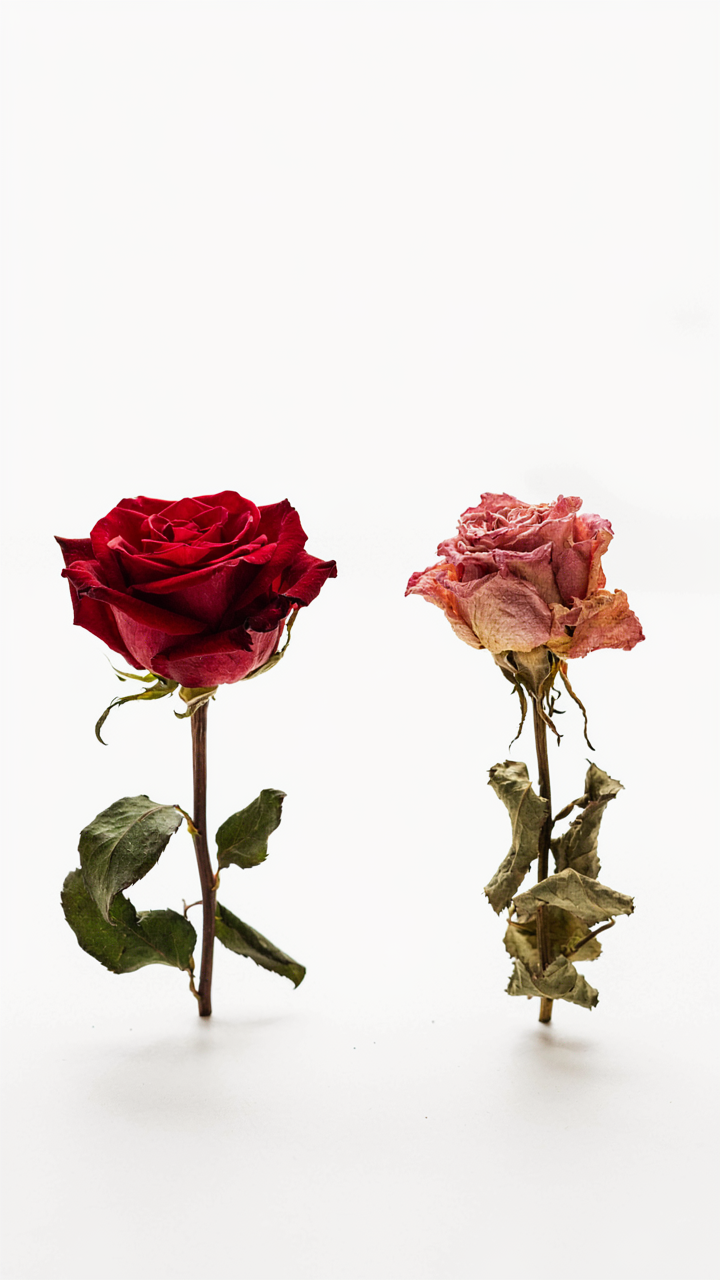
You want to believe there’s a secret rose that stays perfect forever. There isn’t. Here’s the mechanism: evolutionary biology treats decay as a resource allocation problem. Roses bred for longevity in the garden invested heavily in root systems and pest resistance, not cellular structure stability. That investment decision lives in their DNA and directly determines how fast their petals oxidize and collapse after cutting.
Garden roses and heirloom varieties typically outlast florist hybrids in dried form because they evolved under pressure to survive environmental stress, not to look flawless for three days in a vase. Their cell walls contain higher lignin concentrations, a compound that acts like structural scaffolding. When moisture leaves the tissue, lignin-dense varieties hold their shape. Varieties engineered for symmetry and size sacrifice this internal architecture. You’re not preserving the rose; you’re preserving whatever durability its breeding already decided to grant it.
Superior Preservation Candidates Start With Genetics
The common advice says all roses dry the same way with the right technique. That’s incomplete. Genetic predisposition determines the ceiling for what technique can achieve. David Austin roses, for example, carry genetic markers for thicker petals and denser petal clusters inherited from heritage stock. These varieties dry into stable, long-lasting forms. Spray roses, bred specifically for mass production and vase life, have thinner cell walls and dry brittle within months.
Select roses at the nursery by examining petal thickness and petal count before purchasing. Varieties with tightly layered petals and a waxy texture outperform those with thin, papery petals. The genetic variables you cannot change are the ones that matter most. If the rose variety lacks the cellular density to preserve well, no silica gel or hanging method compensates for that deficit. Your preservation success is decided the moment you choose which stems to cut.
From Waste To Wealth: Monetizing Your Dried Rose Cache

Craft Markets Pricing Strategies For Dried Rose Products
You want permission to charge more without feeling like a fraud. Here’s the mechanism: dried roses operate under scarcity economics. Once you dry a rose, it stops degrading at the same rate as fresh flowers. That arrested decay becomes your actual product, not the rose itself. The market doesn’t price based on material cost. It prices based on shelf life and perceived rarity.
Most sellers underprice dried rose products by 40 to 60 percent because they anchor to fresh flower costs. Stop doing that. A dried rose arrangement that takes three hours to construct and lasts two years should cost more than fresh flowers that die in two weeks. Price at the market rate for preserved botanicals, not commodities. Buyers seeking longevity already accept premium pricing. Your job is matching that expectation with clear positioning.
Online Platforms Showcasing Unique Rose Creations
The common advice here is garbage: “Build a following first, then sell.” You have this backwards. You build a following by selling things people want to buy. Platforms like Etsy, Instagram Shop, and TikTok reward conversion, not engagement metrics. Post finished dried rose products with one image showing scale, material quality, and finished state. Include the price and direct purchase link. Skip the story, skip the process video, skip the lifestyle framing.
Your differentiation comes from specificity, not volume. Name the rose variety you used. State the preservation method plainly. Show shelf life expectancy. Buyers on these platforms research before purchasing. Give them data, not inspiration. Update inventory weekly so the algorithm sees fresh content. Track which product images generate clicks versus sales. Double down on what converts, not what looks pretty.
The Unseen Value: Dried Roses As A Stoic Reminder

Imperfection Teaches What Perfection Cannot
You want dried roses to feel meaningful because you’re afraid empty spaces in your home reveal something about you. Here’s the mechanism: wabi-sabi, the Japanese design philosophy, doesn’t celebrate imperfection as a consolation prize. It isolates imperfection as the only honest record of time passing. Dried roses aren’t failed fresh roses. They’re the visual proof that decay has its own structure, its own beauty that exists precisely because it’s temporary.
The browning petals, the curled edges, the brittleness—these aren’t flaws you tolerate. They’re data points. Wabi-sabi treatment means you stop trying to preserve the rose’s original state and start displaying its current one. This reframes dried rose preservation from taxidermy into documentation. You’re not fighting entropy. You’re acknowledging it.
The Finite Thing Teaches What The Infinite Cannot
Stoicism, the ancient Roman and Greek framework, has one core mechanism: premeditatio malorum, or negative visualization—rehearsing loss before it happens. Apply this to dried roses as physical anchors. A fresh rose forces you into denial about its lifespan. A dried rose forces you into acceptance. Every time you see one, you’re not decorating with a symbol. You’re rehearsing detachment.
The dried rose sitting on your shelf is a tool for presence, not nostalgia. It trains your attention toward what exists now instead of what you wish would stay. Most advice treats dried rose preservation as about keeping beauty frozen. The real work is learning to stop freezing. Display dried roses in direct sight lines where you pass them daily, not hidden in shadow or relegated to sentimental corners. The mechanism only works if the impermanence stays visible.
The Real Obstacle Isn’t Preservation; It’s Your Inability To See Decay As A New Beginning
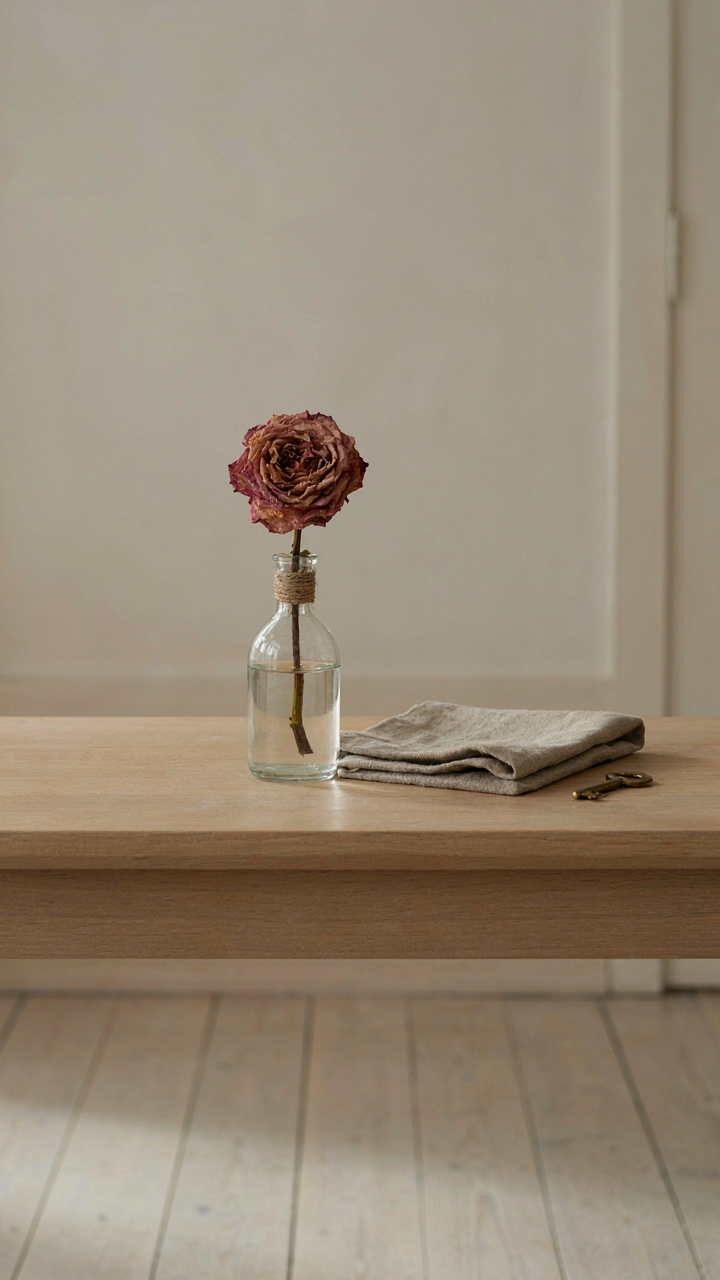
Most people kill their dried roses by fighting what roses actually want to become. You’re not preserving flowers. You’re capturing a moment of transition. The petals brown, the color shifts, the fragility deepens. This isn’t failure. This is the real aesthetic. Stop buying products that promise to “lock in” the original state. Instead, pick one rose today, hang it upside down in a dark corner, and watch it transform into something darker and more honest than the day you cut it. Beauty doesn’t live in fighting time; it lives in accepting what time reveals.



