

The Preservation Paradox: Why Less Intervention Yields More
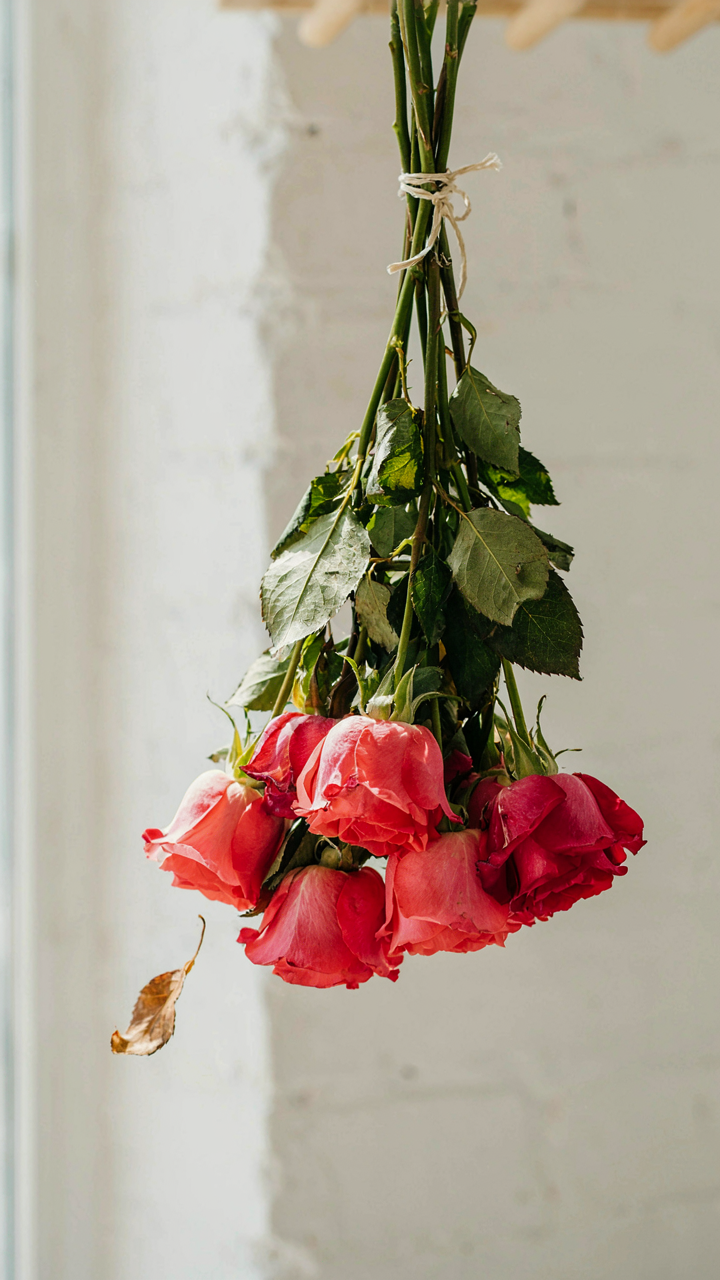
Air Drying Secrets For Vibrant Retention
You want your wreath to look expensive and intentional, not like something that died on a shelf. The real mechanism here borrows from chemistry: oxidation is the enemy, and airflow is your control variable. Most people spray-dry or oven-dry flowers because they’re impatient, then watch colors fade in two months. Air drying works because it slows moisture loss evenly, letting cell structures hold pigment longer.
Hang flowers upside down in a dark, dry space with consistent airflow. Temperature swings and direct light degrade anthocyanins and carotenoids—the compounds that hold color. Three to four weeks is standard for most stems. The wreath materials that retain vibrancy longest are those dried slowly: roses, hydrangeas, and pampas grass beat delicate petals every time. Bundle stems loosely so air reaches all surfaces equally.
Glycerin Infusion: Unexpected Flexibility And Longevity
Glycerin doesn’t dry flowers the way conventional methods do—it replaces water in the plant tissue, making stems stay supple instead of brittle. This shifts the entire design possibility: you can bend, shape, and reposition stems on a wreath base without snapping them. Florists have used this technique for decades because it works, not because it’s trendy.
Mix one part glycerin to two parts hot water, then place cut stems in the solution for seven to ten days. Leaves absorb the mixture and darken slightly, which most designers prefer aesthetically. Glycerin-treated materials last years without color loss because the preservation happens at a cellular level. Build your wreath structure by inserting glycerin-treated stems into floral foam, securing each piece as you layer. This method gives you the control to create intentional negative space rather than cramming flowers into gaps.
Deconstructing Dried Flower Wreath Ideas: Beyond The Bloom

Contrast Through Unconventional Materials
You want your wreath to feel rare. That’s the real reason you’re reading this. Most people stop at flowers because they don’t understand that dried flower wreaths work like a visual hierarchy in graphic design. The focal point doesn’t come from adding more blooms. It comes from introducing materials that violate the viewer’s expectations about what belongs in a wreath. Seedpods, bare branches, lichen, weathered wood slices, and air-dried grasses create tension against soft florals. This tension is what makes people look twice.
The mechanism is simple: dissimilar textures grouped together create perceived value. Eucalyptus stems mixed with pampas grass and dried citrus slices signal intentionality. This isn’t accident or budget constraint. It’s design. Strip leaves from branches before drying to expose the skeletal structure underneath. Bleach some elements while leaving others natural. The contrast between processed and raw materials compounds the visual impact. Start your next wreath with a non-floral anchor first, then build florals around it.
Layering Tactile Depth Over Color
Everyone talks about color coordination in wreaths. Ignore that for now. What actually holds attention is surface variation. Texture is where the wreath lives or dies. A monochrome wreath in cream and white reads as sophisticated not because the colors match, but because you’ve layered rough against smooth, matte against subtle sheen, thin against thick. Bunny tail grasses feel different from cardboard-like statice. Feathery amaranthus differs from the hard shells of banksia pods. Your eye processes these differences as richness.
The real play is mapping three distinct texture types into every section of the wreath. Start with a base texture that repeats around the form for visual continuity. Layer a secondary texture with a different surface quality on top. Then place one accent texture in clusters. This creates a rhythm the eye follows. Use a glue gun to attach materials by their stems or bases, never glued flat. Let edges stick out naturally. This imperfection is what makes a wreath feel handmade, not manufactured.
The Minimalist’s Dried Wreath Protocol
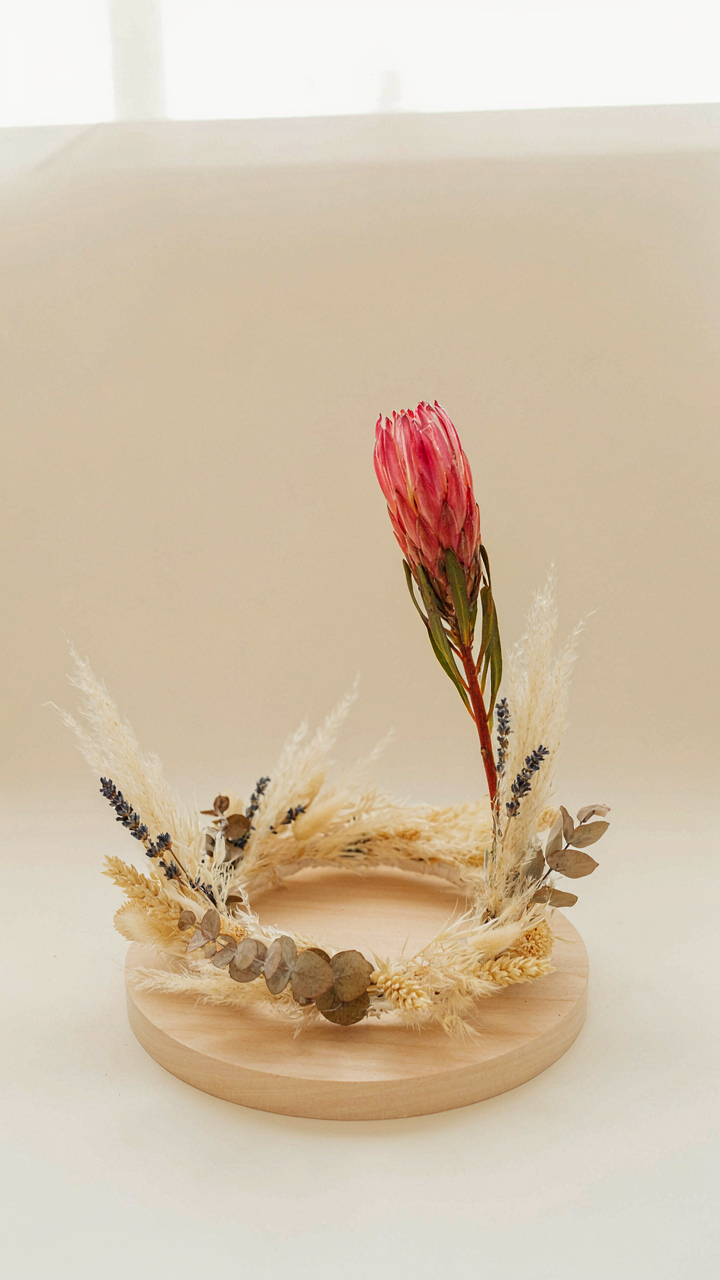
Where You Place One Stem Matters More Than How Many You Use
You want permission to make something that looks intentional instead of sparse, so you don’t feel like you failed at the craft. Here’s the mechanism: focal points in design work like gravity wells. They pull the viewer’s eye and anchor everything else. In a dried wreath, one or two dominant stems placed at strategic intervals—typically where the viewer’s eye lands first, around the 10 and 2 o’clock positions—create the impression of deliberate curation rather than emptiness.
Most people scatter flowers evenly, which deadens a wreath. Instead, identify your visual anchor: a large seed pod, a statement dried flower like a protea or pampas plume, or a textured branch. Place it off-center. Build secondary elements around it in descending visual weight. The eye follows dominance. This creates hierarchy on a circular form and stops the wreath from feeling like decoration and starts it feeling like a choice.
Emptiness Is The Real Design Element
Negative space isn’t something you add after filling a wreath. It’s the skeleton that determines whether your piece reads as refined or cluttered. Japanese floral design principles, which value restraint over abundance, proved this centuries ago: what you leave out defines the composition more than what you include. On a wreath, empty sections of the base force the viewer to slow down and actually register each element.
Build your wreath by first deciding where you won’t place flowers. Mark these zones mentally or lightly with pencil on the back. Then place stems only in the designated areas. This discipline prevents the addiction to filling gaps that ruins minimalist work. Leave roughly 40 to 60 percent of the visible base exposed. The wreath gains impact through contrast, not volume.
Unlocking Dried Floral Art: The Architectural Approach
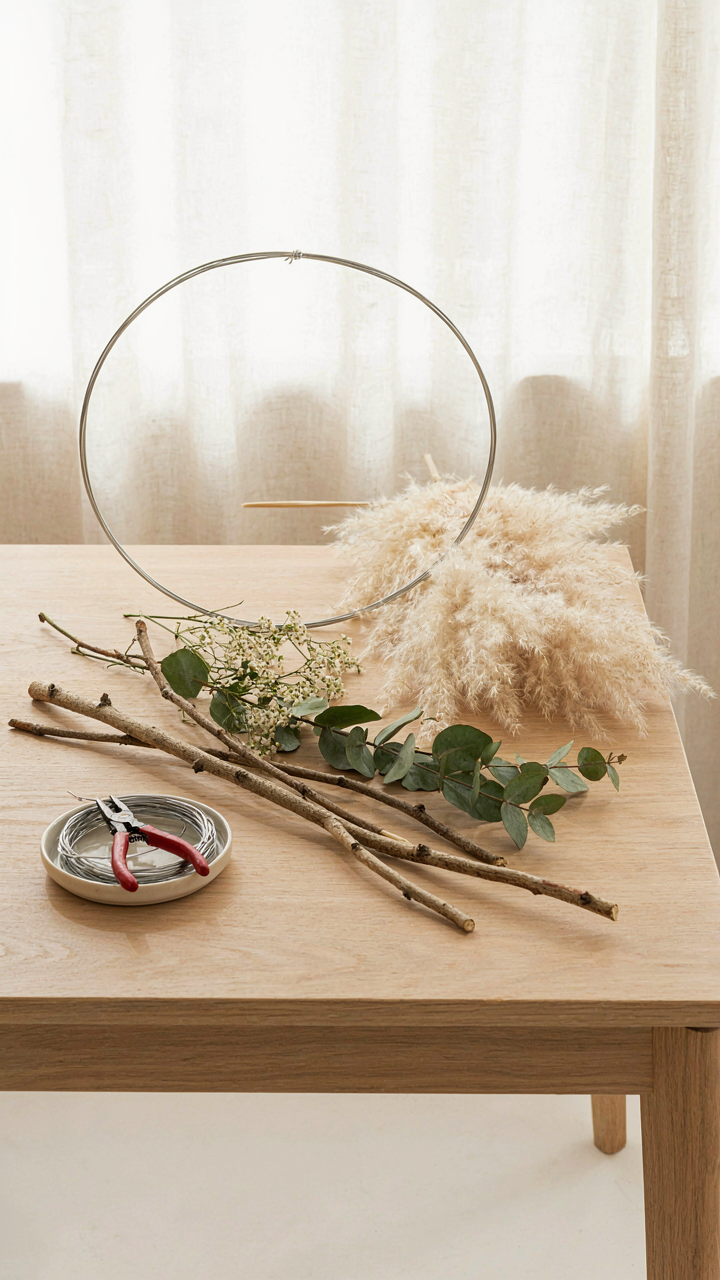
Form And Structure
You want your wreath to look intentional, not like you grabbed whatever dried stems were on sale. That requires stealing from architecture, which solves problems through composition before execution starts. In architecture, load-bearing walls aren’t placed randomly—they follow a structural grid. Your wreath needs the same: a primary armature that determines where everything else attaches. Without this framework, you’re just layering materials and hoping it reads as coherent.
Build your base using a wire or foam frame, then establish three anchor points equally spaced around the circle. These become your structural pillars. Larger, woody stems (pampas grass, dried wheat, stripped branches) form your primary verticals and horizontals. Everything else—smaller flowers, filler foliage, accent materials—attaches to this skeleton. The wreath holds together because the structure precedes decoration, not the reverse.
Engineering Stability And Balance
Most advice tells you to “fill gaps” and “layer naturally,” which is how wreaths collapse after two weeks. Civil engineers don’t balance structures on feel—they calculate weight distribution and anchor points. Your wreath operates the same way. Dense materials (preserved eucalyptus, dried roses, heavier seed pods) belong at the bottom and sides where gravity pulls hardest.
Position lightweight fillers (baby’s breath, statice, paper-thin grasses) toward the top and outer perimeter where they won’t destabilize the piece. Secure every stem individually with floral wire, not glue—wire distributes tension across multiple anchor points instead of concentrating stress on one joint. Check balance by rotating the wreath in your hands and adjusting until no single section feels heavier. This prevents the slow slide that happens when one quadrant pulls the whole structure off-center.
Sourcing Smarter: The Forager’s Dried Flower Wreaths

Where To Find Materials Nobody Sees
You want to skip the markup of craft stores and feel resourceful doing it. But the real mechanism is scarcity perception. When you forage locally, you’re working with plants that have a specific growing window and limited availability. This constraint forces better design decisions because you can’t rely on endless inventory to mask weak composition.
Most people miss the obvious sources: roadsides, field edges, and abandoned lots contain reliable dried material year-round. Queen Anne’s lace, yarrow, goldenrod, and dried grasses grow prolifically and require zero cultivation. Walk your neighborhood in late summer and early fall. You’ll spot dried flower clusters still standing on their stems, ready to harvest. Document the locations now so you can return when the material reaches peak dryness in late September through November.
Taking Without Breaking The System
Ethical foraging isn’t sentiment. It’s supply-chain thinking applied to nature. You cannot strip one location and expect it to regenerate. The mechanism is population density: if you remove more than ten percent of flowering material from a single area in one season, you disrupt seed production and next year’s growth.
Leave the root systems intact by cutting stems above ground level. Harvest from multiple locations rather than one patch. Never take the last stand of anything. On private property, ask permission first. This isn’t moral posturing. It’s structural: repeat access depends on maintaining the resource. If you harvest responsibly today, the same location yields material next year. If you strip it, you’re building a new supply route into your workflow.
DIY Dried Flower Wreath: The Toolkit Of The Unconventional Artist

The Tools Nobody Mentions Until They Fail
You want to skip buying tools because you think it signals you’re not serious yet. That’s backwards. Most people fail at wreath-making because they use scissors instead of wire cutters, then wonder why stems shred and flowers crumble. The mechanism is simple: the wrong tool creates pressure rather than clean separation. Dried flowers are brittle. They need precision cuts, not crushing force.
- Wire cutters: Cuts stems cleanly without crushing the vascular tissue. Prevents crushing that causes flowers to shed petals during assembly and display.
- Floral foam: Holds stems at precise angles and depths. Dried foam is denser than fresh foam, so it grips woody stems without slipping during construction.
- Hot glue gun: Secures stems faster than traditional floral tape. Bonds instantly on dried material, which lacks moisture that weakens adhesion on fresh flowers.
- Paddle floral tape: Wraps around stem bundles to hide mechanics and reinforce weak joints. Sticks better to dry surfaces than to wet or damp stems.
- Serrated florist knife: Trims and shapes foam without crumbling it. Straight blades leave crumbs; serrated blades cut cleanly through dense dried foam blocks.
Amateurs waste time with generic craft tools. Get the five items above. They’re inexpensive, specialized for this exact work, and they make the physical difference between wreath that holds for months and one that sheds in weeks.
Salvaged And Borrowed Materials That Actually Work
Most advice tells you to use only what the florist sells. This misses the economic and aesthetic point entirely. Borrowing from industrial design, dried flower wreath building functions on constraint optimization: the fewer resources you purchase, the more creative pressure you apply to your material choices. That pressure often produces better results than money alone could buy.
Your home already contains viable materials. Newspaper tied around stem bases creates structural bulk without weight. Old copper wire from electronics wraps stems more elegantly than floral tape. Cardboard tubes from paper towels become hidden stem spacers inside the foam. Fabric scraps bind clusters. String from packaging adds texture. The mechanism works because these materials are free but require intentional placement to look intentional rather than accidental. You stop treating the wreath as decoration and start treating it as assembly, which forces you to understand how each element supports the whole.
Beyond Trends: Cultivating Timeless Dried Floral Wreath Designs

Design Principles Over Fleeting Fads
You want to build something that won’t feel dated in two years. The real mechanism here comes from graphic design: contrast is what makes a composition work, not trend alignment. Apply this to dried wreaths. The goal is visual tension between shape, texture, and color value, not chasing what Instagram deemed acceptable this season.
Most wreath advice tells you to “mix and match” without explaining why. That’s lazy. Real durability comes from understanding dominant form, secondary accent, and negative space. A wreath built on these principles works in 2024 and 2034 because it’s solving a visual problem, not performing fashion. Select one primary dried material as your structural anchor, add textural contrast through a secondary element, then introduce a single color accent. This formula doesn’t trend. It works.
The Longevity Advantage Of Dried Elements
Dried flowers don’t degrade in the way fresh blooms do, which means your design choices stay visible and intact far longer than people assume. Most creators miss this: longevity changes what you can build. Fresh arrangements force you into seasonal thinking. Dried elements allow you to play with scale, layering, and structural complexity that would collapse under moisture and rot.
The material itself handles neglect. A dried wreath exposed to indirect light, moderate humidity, and normal air circulation maintains its form and color stability for years. This isn’t marketing talk. It’s material science. You can commit to elaborate construction techniques, dense packing, and unconventional shapes because the dried substrate won’t betray the design after three weeks. This frees you to solve aesthetic problems instead of managing biological decay. Build your wreath as a permanent object from the start.
Monetizing Mastery: Selling Your Dried Wreath Creations

Price By Perceived Value, Not Cost Plus Markup
You want to know if your wreath is worth the asking price so you can sleep at night. That’s not the real problem. The real problem is you’re confusing what something costs to make with what someone will pay for it. Economics calls this the difference between cost basis and willingness to pay. Your dried wreath isn’t priced like materials plus labor. It’s priced like a signal. The buyer isn’t purchasing flowers and wire. They’re purchasing a decision already made for them, time saved, and proof that someone with taste curated this specific arrangement.
Most makers default to material cost plus forty percent markup. This leaves money on the table because it anchors your price to scarcity of supplies, not rarity of skill. A wreath that takes three hours to design and execute should cost more than one that took thirty minutes, even if the material list is identical. Charge based on the skill gap between what a customer could make themselves and what you actually made. Start by identifying three comparable wreaths sold online, note their prices, then position yours slightly above if your execution is sharper.
Tell The Origin Story, Not The Product Story
The real sale happens before anyone sees the wreath. They need to know why this exists and why you made it. That’s not a nice-to-have narrative flourish. That’s the mechanism that converts a curious browser into someone who thinks this wreath was made for them specifically. Skip the generic “I love working with dried flowers” angle everyone uses. Instead, anchor the story to a real constraint, decision, or problem you solved. Did you source these specific blooms because commercial wholesale flowers don’t hold color long enough? Did you develop a certain drying technique because humidity in your region required it? Did you choose these color palettes because they complement a particular interior trend you noticed?
The story does the filtering work. It attracts the customer who values your specific approach and repels the one who just wants the cheapest wreath option. Post the origin story on your product page, in packaging inserts, and in social captions before you ever talk about size or price. This transforms the wreath from a commodity into a minor artifact. The buyer then justifies the higher price to themselves because they’re not just buying an object. They’re buying the reasoning that went into making it.
The Wreath You Don’t Make: Escaping The Trap Of Aspiration

Impact Over Imitation
You want permission to make something that matters instead of something that looks like it matters. Here’s the mechanism: dried flower wreaths operate like a signal problem in economics. You’re not actually trying to make the wreath. You’re trying to prove you’re the kind of person who makes wreaths. That’s the trap.
The real work starts when you stop copying Pinterest. Stop asking what wreath looks most impressive to photograph. Start asking what arrangement solves a specific problem for a specific space. A wreath that fills dead wall space above a console table in a sunlit hallway operates differently than one destined for a shaded entryway. Materials, color density, and structural depth shift with context. Most people never make this distinction.
Success Redefined Without The Noise
Forget the metric of “how many compliments did it get.” That’s borrowed validation. True success means the wreath stays intact for months without shedding stems across the floor, the colors hold their depth in actual light (not Instagram light), and you’d make it again because the process revealed something useful about proportion or material behavior.
Measure backwards from function. Does it anchor the space visually without dominating it? Can you reach around it to access what’s behind it? Are the stems actually secure in the base, or did you glue flowers to foam and call it done? These questions expose whether you built a wreath or assembled a decoration. The difference is in the construction protocol, not the aesthetic outcome.
The Wreath You Don’t Make: Escaping The Trap Of Aspiration

Most people accumulate dried flower wreath ideas forever. They save pins. They watch videos. They never touch a single stem. The shift that matters isn’t learning more techniques, it’s accepting that your first wreath will be ugly and making it anyway. Stop researching. Go buy five dollars worth of dried flowers today and wrap them around a cardboard circle. Perfection is the enemy of the wreath you actually finish.



