

The Illusion Of The Simple Cottage Garden Layout Plan

Why Most Simple Plans Create More Work
You want a cottage garden because you think it’ll require less maintenance than a formal landscape. Wrong assumption. The mechanism is constraint confusion. A formal garden has explicit boundaries and rules. A cottage garden layout plan appears unstructured, so you assume it’s simpler to execute. You end up with competing plant densities, poor sight lines, and zones that sprawl into each other. You spend twice the labor managing what should have been thoughtful.
The real problem is that “simple” cottage garden plans circulate without acknowledging what they’re actually optimizing for. Most published layouts prioritize visual density and charm over workable structure. They show a finished state, not the decisions that prevent chaos. A functional cottage garden layout needs clear pathways, defined growing zones, and intentional spacing rules. Skip these, and you’re maintaining a weed problem that looks intentional.
Rejecting Rigid Blueprints For Organic Evolution
Systems theory calls this emergence: small local rules creating complex patterns without top-down control. Cottage gardens operate by the same principle. You don’t start with a locked blueprint and execute it perfectly. You establish framework rules, then let the garden respond to your site conditions, failures, and what actually thrives.
The common advice here is garbage: “Follow your cottage garden plan exactly.” That’s backward. The plan should be a thinking tool, not a contract. Start with zones: shade areas, drainage patterns, wind exposure, soil quality. Place your structure plants first, paths second, then fill gaps with what survives the first year. This sounds slower but moves faster because you’re not fighting predetermined boundaries. Your layout evolves into something workable because you’re correcting in real time instead of defending a plan on paper.
Cottage Garden Design Layout: The Ecological Flux Method

Study How Plants Actually Live Together
You want permission to stop overthinking your layout. Here’s the mechanism: natural plant communities solve the spacing, light, and nutrient problem through coevolution. You’re not inventing harmony, you’re copying it. Walk a forest edge, a meadow margin, or a hedgerow. Notice which plants occupy the same soil. Notice their heights, root depths, and flowering times. Cottage gardens work when you transplant this observation directly into your beds, not when you follow a generic grid.
Most cottage garden advice skips this step and jumps to “mix textures and colors.” That’s incomplete. The plants need to occupy different ecological niches or they’ll compete and weaken. Observe that tall perennials cast shade on shorter spring bloomers. Observe that shallow-rooted annuals coexist with deep-rooted shrubs. Observe that some plants thrive in disturbed soil while others need stability. Build your layout around these real relationships, not aesthetic rules.
Let Plants Drive The Timeline
Succession is the ecological term for how plant communities change over time. A cottage garden layout ignores succession at its cost. Most gardeners treat their design as static, locked in place the day they plant it. That’s not how living systems work. Perennials will expand. Annuals will self-seed in unexpected spots. Shrubs will cast more shade each year. Your plan must account for this flux or it becomes a chore that fights against plant behavior instead of working with it.
Plant your layout as a starting position, not a destination. Designate zones where you’ll allow volunteers to establish. Leave gaps for plants that will spread faster than expected. Remove or divide plants that dominate their neighbors before they strangle them. The cottage garden thrives because it’s designed for active management of a shifting system, not passive placement of permanent residents. Review your layout every spring and adjust based on what actually grew, not what you intended to grow.
Beyond Aesthetics: The Permaculture Principles For Cottage Garden Layout

Read Your Specific Site
You want permaculture principles to feel like a shortcut to design legitimacy. They’re not. They’re a diagnostic tool that forces you to see what’s actually there instead of what you imagine. Observation in permaculture borrows from ecology, which demands baseline data before intervention. Your site has a microclimate, water flow pattern, and soil condition. These are not obstacles to design. They are the design.
Walk your space at different times. Note where water pools after rain. Track sun exposure from morning to afternoon. Identify wind patterns and frost pockets. Measure your soil pH and drainage in three to four spots. This takes hours, not minutes. Most gardeners skip this and wonder why plants fail in specific zones.
Stacking Functions Every Plant Earns Its Space
The common advice says choose plants you like and place them aesthetically. Wrong. A cottage garden layout only works when each plant performs multiple jobs simultaneously. A fruit tree provides shade, produces food, offers structure, and traps moisture under its canopy. An herb border attracts pollinators, supplies harvests, and stabilizes soil. A nitrogen-fixing legume feeds adjacent plants while looking appropriate in the design. This is functional redundancy, not decoration.
Map your layout by asking what each plant does, not how it looks. If you cannot name three functions per plant, it occupies wasted space. Start with perennials and woody plants that anchor your system for years. Then fill gaps with annuals and herbs that serve immediate needs. This sequencing prevents redesign frustration and accelerates productivity within the first season.
Cottage Garden Ideas Layout: Leveraging Guilds And Companions

Plant Partnerships That Actually Work
You want the garden to run itself so you look competent without effort. That’s not shallow—it’s efficient. Plant guilds are biological systems where three or more species solve each other’s problems simultaneously. Borrow the term from ecology: a guild is a group of organisms filling the same ecological role. In cottage gardens, guilds fill the same design role—they stack functions so one bed does five jobs instead of one.
The Three Sisters guild exemplifies this mechanism: corn provides vertical structure, beans fix nitrogen in soil, squash sprawls as ground cover and suppresses weeds. Medieval cottage gardeners didn’t call them guilds but used them anyway. Each plant removes a constraint the others face. You place them together not for sentimental reasons but because their root depths, nutrient needs, and growth timing align. The garden produces more with less intervention.
Design For Output, Not Just Appearance
Most cottage garden advice treats companions as decoration theory. Wrong. Companion planting functions as a productivity multiplier, not a styling choice. When you position plants by their mutual benefit—nitrogen fixers near heavy feeders, deep-rooted plants near shallow-rooted ones—you reduce fertilizer input and watering frequency. The mechanism is resource distribution. You’re mapping resource flows the way an engineer maps water systems through a city.
Place nitrogen-fixing legumes upwind and upslope from plants that deplete soil nitrogen. Position deep-rooted plants like comfrey next to shallow-rooted plants like lettuce so they tap different soil layers and don’t compete. Tuck pest-repelling herbs like chives among vegetables vulnerable to specific insects. The layout becomes a functional map, not a color palette. Document which guilds work in your specific soil and climate—then repeat that configuration.
The Microclimate Map: Your Unseen Cottage Garden Layout Advantage
Identify Your Sun, Shade, And Wind Patterns
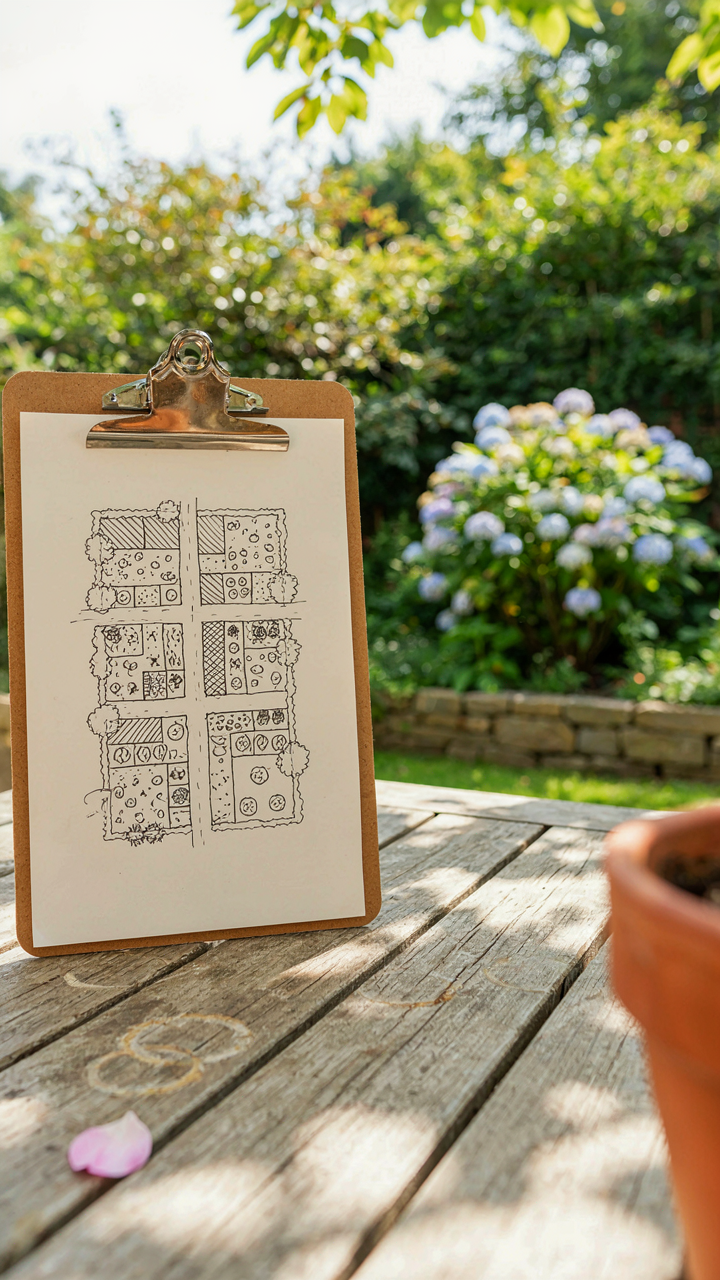
You want to believe your cottage garden will look like someone else’s. It won’t, because your site has a microclimate nobody else owns. The mechanism is simple: solar exposure and wind patterns create distinct zones within fifty feet of each other. Map these zones before you place a single plant, or you’ll spend two years fighting your own geography.
Spend one full day observing your space at dawn, midday, and dusk. Note where shadows fall at each time. Mark areas where wind funnels between structures or accelerates across open ground. Pay attention to reflected heat from walls and hardscape. Document which spots stay wet after rain and which dry fast. This data is your actual garden plan. Everything else is just guessing on top of a better guess.
Plant Species To Microclimate Fit
The standard advice tells you to check sun requirements on a plant label. That’s incomplete. You need to match plant tolerance windows to the actual conditions your microclimates deliver. A plant listed as “partial shade” performs differently on a north wall than on an east-facing slope. The difference is radiation angle and duration, not just hours of direct sun.
- Full sun zone (6+ hours direct): Prioritize Mediterranean herbs like lavender, rosemary, and thyme. These tolerate heat reflection and need drainage cottages typically provide through raised beds or sloped terrain.
- Part sun zone (3-5 hours, typically morning): Place early bloomers like hellebores and pulmonaria here. They benefit from morning light but avoid afternoon scorch common in cottage gardens near south-facing walls.
- Shade zone (under 3 hours or dappled only): Use shade-tolerant perennials like hostas, astilbe, and ferns. These prevent bare patches and reduce maintenance pressure in areas where sun simply doesn’t reach.
- High wind corridor: Select wind-resistant plants with flexible stems like ornamental grasses and low shrubs. Avoid tall, brittle plants that snap or require staking in exposed cottage garden edges.
- Wet retention zone: Place moisture-loving plants like marsh marigold, siberian iris, and astilbe. Cottage gardens often have natural low points. Use them instead of fighting drainage with amendments.
The layout works when every plant occupies a zone where it thrives without intervention. Stop moving plants around year two because you chose the wrong spot. Choose the right spot first by reading your land, then select what belongs there. Your microclimate map becomes your plant placement protocol.
Cottage Garden Planting Plan: The Bio Mimicry Framework

Layered Planting Creates Structural Defense
You want to believe a cottage garden is chaos that somehow works. It’s not. Military strategy calls this “defense in depth” – positioning forces across multiple lines so breaching one doesn’t collapse the whole system. Your planting layers do the same thing. Tall plants shield medium ones. Medium ones shade soil dwellers. Each layer absorbs pest pressure, disease spread, and environmental stress before it reaches the next.
A cottage garden layout places tall perennials or shrubs at the back or north side, mid-height plants in the middle zone, and ground covers or short bloomers forward. This isn’t decoration. The dense canopy breaks wind patterns that accelerate fungal spore spread. Lower plants stay drier because upper layers intercept moisture. Pests that target one layer find barriers they can’t easily cross. Density itself becomes the mechanism of survival.
Disease And Pest Resistance Through Composition
Most advice says “plant resistant varieties and space them well.” True but incomplete. The real lever is limiting pest population density before intervention becomes necessary. When you mix plant families and bloom times, you fracture the ideal conditions any single pest needs to explode. A cabbage worm finds cabbage, but it also finds dill flowering nearby, which attracts parasitic wasps that hunt it.
Cottage gardens historically mixed food plants, ornamentals, and herbs because people needed output from small space. That mixing was accidentally brilliant for resilience. A striped Japanese beetle has no reason to establish if your layout alternates its food sources with plants it ignores. You interrupt its breeding cycle through spatial disruption alone. Build your plan around staggered planting dates and mixed compositions. Space plants for air flow but density for pest confusion. Apply this structure first, then choose specific varieties.
The Anti Fragile Cottage Garden Design: Beyond ‘Maintenance Free’

Design For Adaptation, Not Static Perfection
You want a garden that looks like it takes no work because admitting maintenance effort makes the whole thing feel like failure. The real mechanism here comes from antifragility in systems design: a cottage garden becomes stronger under stress, not weaker. Most layouts treat plants as fixed objects in fixed positions. That’s backwards. A resilient cottage garden layout anticipates that some plants will die, some will spread aggressively, and some will perform differently than expected. Design for replacement and reshuffling, not permanence.
Build your layout with intentional gaps. Cottage gardens thrive on succession planting, not completion. Leave 15-20% of bed space unplanted or loosely occupied. This gives you room to swap underperformers without redesigning the entire bed. Use perennials as anchors, but treat annuals and short-lived perennials as fill. The layout succeeds when it absorbs change without collapse. This approach reverses the typical suburban assumption that a finished garden stays finished.
Embrace Benign Neglect; Let Nature Prune
Most gardeners are told to deadhead, stake, and maintain constant vigilance. That advice wastes your time and works against cottage garden principles. Benign neglect means strategic abandonment: you stop doing things that don’t matter, not everything. The cottage garden layout predates industrial lawn culture by centuries. Historical layouts survived on minimal intervention because the design itself prevented crisis. Dense planting crowds out weeds. Varied maturity dates mean something always flowers. Self-seeding fills gaps automatically.
Stop pruning plants that don’t need it. Let self-sown seedlings colonize bare spots unless they directly compete with intentional plantings. Many cottage perennials spread and reshape their footprint year to year. Your layout should accommodate this movement, not fight it. Mark your perimeter beds clearly so you know what’s deliberate growth and what’s accidental. Remove only what chokes adjacent plants or violates a sight line. Everything else stays until it proves itself a problem.
Cottage Garden Layout Design: The Soil Food Web Protocol

Feed The Soil, Not The Plants
You want a cottage garden that thrives without constant maintenance because you’re tired of feeling dependent on purchased inputs and looking incompetent when plants die. The mechanism is biology, not gardening aesthetics. Mycorrhizal networks—fungal threads that colonize plant roots—trade phosphorus and nitrogen directly to your plants in exchange for carbohydrates. Most gardeners ignore this and dump fertilizer instead, which kills the fungi. Your layout design must protect these networks.
Spacing in your cottage garden layout directly controls fungal colonization rates. Dense planting patterns allow fungal networks to propagate across root zones faster than sparse arrangements. Wide spacing breaks connectivity and forces plants to fend alone. The traditional cottage garden’s crowded bed design wasn’t romantic nostalgia—it was a soil food web protocol that worked for centuries before synthetic fertilizers made us stupid about it.
Minimize Disturbance For Microbial Health
The common advice to till and amend your beds each season is backwards and destructive. Tilling severs mycorrhizal networks, kills bacterial colonies, and resets your soil biology to zero every time you turn it over. A functioning soil food web takes three to five years to establish. You rebuild it every spring and wonder why you’re exhausted.
Your cottage garden layout must eliminate tillage entirely. Use a no-dig methodology within your beds: add compost on top, plant through it, and let biology do the work vertically instead of you doing it horizontally with a shovel. Permanent pathways around your beds preserve undisturbed zones where fungi establish strongholds. This single protocol change converts your garden from a yearly reset into a compounding biological asset.
The Harvest Driven Cottage Garden Plan: Designing For Abundance

Edibles That Double As Garden Structure
You want edibles in your ornamental beds because you think it looks intentional and resourceful. The real mechanism is density. Edibles occupy vertical and horizontal space simultaneously, which means you’re solving the layout problem twice with one plant. Fruit trees, berry shrubs, and climbing beans become living walls. Herbs like rosemary and bay act as specimen plants. The visual distinction between “vegetable garden” and “flower garden” is marketing, not design fact.
Plant edibles where they solve a layout function first, produce second. A gooseberry or currant shrub works as a foundation planting. Kale and chard occupy the mid-border where their texture reads as intentional. Nasturtiums and borage fill gaps while producing. The cottage garden layout plan that works is the one where no plant exists for decoration alone. Every stem justifies its square footage through form, color, or harvest.
Staggered Planting For Year Round Yield
Most advice says “succession plant” and stops there. That’s incomplete. Succession planting is agricultural scheduling applied to small space. You’re not managing a single crop cycle. You’re managing overlapping cycles so the garden produces when you need it, not when the seed packet decides. This requires knowing your freeze date, your growing season length, and which crops tolerate your specific microclimate.
Map your planting schedule backwards from your desired harvest windows. Sow lettuce and greens every two weeks from spring through early fall. Plant beans in waves, not all at once. Use fast-maturing varieties alongside slower ones to fill gaps. Some plants like brassicas actually improve after frost. Your cottage garden layout plan becomes a calendar with soil mapped onto it. The physical space gets designed around when things produce, not just what looks good together.
The True Obstacle Isn’t Lack Of A Plan, But Your Fear Of Relinquishing Control To Nature’s Superior Design
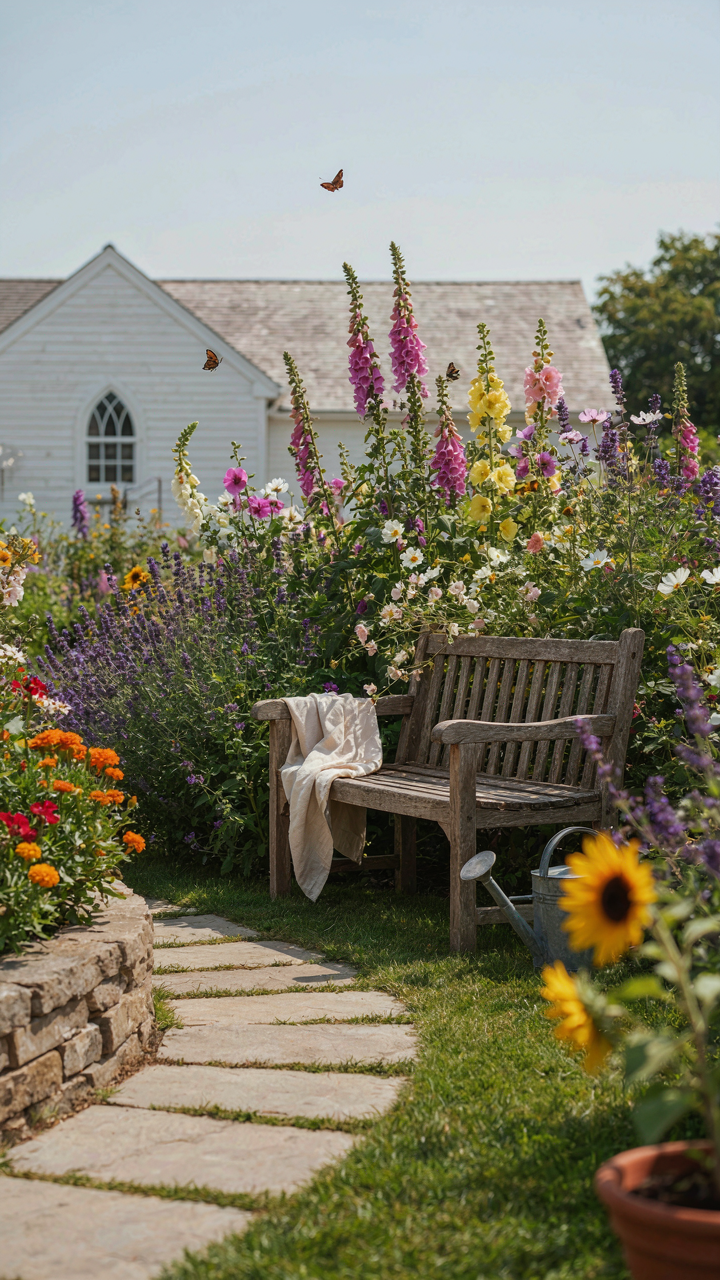
You don’t need a perfect cottage garden layout plan. You need permission to let plants tell you what works. Most people fail because they grip the blueprint too tight, fighting what thrives naturally in their soil and sunlight. Stop designing like an architect. Start observing like a farmer. Plant something today in an awkward corner you’ve been overthinking. Nature doesn’t ask for permission.



