

The Illusion Of Special Occasion Water Features

Why Most Features Fade Into The Background
You want people to remember your event, not just attend it. Most backyard water features fail because they solve the wrong problem: they prioritize aesthetics over function. Homeowners copy what looks good in magazines without understanding that a water feature works like a focal point in composition. It needs contrast, movement, and a reason to exist beyond decoration. Without that, it becomes invisible.
The mechanism is simple. Your brain stops noticing what doesn’t change or demand interaction. A still pond or stagnant fountain blend into the landscape within hours. Guests stop seeing it. The feature becomes part of the background noise, exactly like an overhead light or a fence. You’ve invested money and space into something that registers as furniture, not memory.
The Price Of Blending In
Everyone builds what everyone else builds. Tiered fountains, small ponds with rocks, basin features ordered from big-box retailers. This conformity costs more than money. It costs differentiation. You’re competing against every other property in your neighborhood that chose the same safe option, which means your water feature has zero psychological weight.
Real cost arrives when you realize the feature doesn’t serve your actual event. A shallow basin fountain does nothing for a gathering of fifty people. It can’t create zones. It can’t provide seating areas. It can’t anchor the space. You end up with a decoration that your guests ignore because it offers them no practical value. Move beyond ornament. Build for purpose first, aesthetics second.
The Unseen Psychology Of Water In The Garden

Water As A Sensory Anchor
You want a water feature because you think it looks good. The real reason is you need a focal point that works on your nervous system, not just your eyes. Water operates as a sensory anchor in landscape psychology, the same way a keystone species anchors an ecosystem. Your brain locks onto moving water or sound because it signals safety and resource availability, a survival mechanism we haven’t evolved past.
This is why a stagnant pond fails but a small fountain works. The movement and sound create a stimulus that your attention naturally gravitates toward without effort. When guests arrive at your property, their nervous system settles the moment they hear or see that water. You’re not installing decoration. You’re installing a biological off-ramp from the noise outside your property line. The mechanism is direct: water feature present, cortisol drops, perceived value of space rises.
Emotional Resonance Beyond Visual Appeal
Most advice says water features “add beauty and tranquility.” That’s incomplete. The real work happens in memory encoding, not aesthetics. Water features trigger autobiographical memory retrieval. A fountain reminds someone of a childhood home. A small stream recalls a vacation. These memories don’t require the feature to be large or expensive. They require specific sensory data that connects to lived experience.
This is why the same water feature lands differently for different people at the same event. One guest feels grounded. Another feels nostalgic. Another doesn’t notice it at all. Your job isn’t to design something universally beautiful. Your job is to design something that creates space for people to access their own emotional content. The practical protocol is simple: choose water movement patterns and sounds that match the mood you want the space to hold, then let guests do the rest.
The Event Centric Design Protocol For Backyard Water Feature Ideas

Match Water Features To Your Actual Event Type
You want people to think you planned this on purpose, not that you bought something generic and hoped it worked. The mechanism is constraint. Most people treat water features like decoration when they should treat them like infrastructure for a specific gathering. A fountain performs differently at a cocktail party than at a children’s birthday. A pond serves a wedding differently than a corporate retreat. Design backward from the event, not forward from the catalog.
Wedding receptions need water features that create visual depth without blocking sightlines. Fountains with wide basins work because guests can stand nearby and hear conversation over the sound. Ponds should sit at the perimeter, not the center, so they frame the space rather than fragment it. For smaller gatherings like dinner parties, a recirculating stream or waterfall becomes the acoustic anchor that masks awkward silences. The water does functional work, not just aesthetic work.
Build Adaptability Into Your System From The Start
Most people regret their water features because they’re locked into one configuration. The real advantage goes to designs that shift. Modular components let you reposition elements based on what each event demands. A tiered fountain can run with one, two, or all three tiers active depending on crowd size and noise tolerance. Moveable basin-and-pump systems sit on platforms that relocate in a day.
Recirculation systems with adjustable valve controls let you dial the water volume up or down without rebuilding anything. A feature that dominates a small garden party becomes background ambiance for a larger event with one adjustment. This flexibility costs more upfront but eliminates the choice between one permanent configuration and starting over. The system that adapts outlasts the system that impresses once.
The “Flow State” Method: Designing Engaging Waterfalls Backyard
Water Movement Physics And Depth Perception
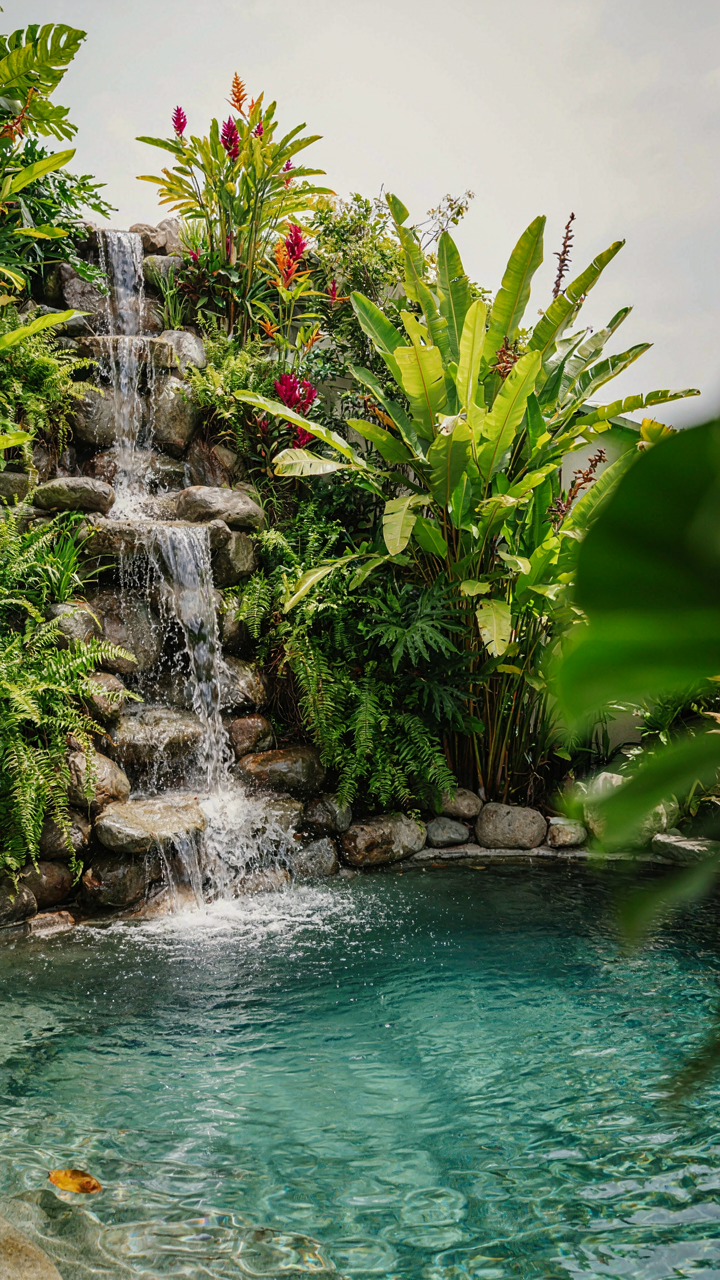
You want people to stop mid-conversation and stare at your backyard. That’s the real reason you care about this section. Physics explains why: water movement triggers primal attention because our brains evolved to track flowing resources. Apply fluid dynamics directly to waterfall design, and you control that attention like a switch. The mechanism is momentum transfer. When water drops from height, gravity accelerates it to a terminal velocity determined by the distance fallen. Most people build shallow cascades and wonder why guests ignore them. The problem isn’t the water itself, it’s that shallow falls move too slowly to register as compelling motion.
Height matters more than volume. A ten-foot drop hitting a two-inch-deep pool creates visible turbulence and sound that engages the nervous system. A three-foot drop into a six-foot pool dies into stillness. Measure your feature’s vertical drop in feet, then calculate impact depth based on the basin size you’re working with. If your drop exceeds three feet, you need at least eighteen inches of basin depth to sustain visible circulation. This isn’t aesthetic preference, it’s the baseline physics requirement for water to stay visually active.
Cascade Design And Acoustic Engineering
Sound engineering reveals the hidden layer most people miss: your waterfall performs two jobs simultaneously, and you’ve been optimizing for only one. The acoustic principle of resonance frequency applies here. Water hitting different materials at different angles produces frequencies between 40 and 8,000 Hz. Most human ears respond viscerally to the 500-2,000 Hz range, which means your cascade material selection directly controls emotional response. Stone absorbs and scatters sound. Fiberglass or concrete reflects it. This choice predetermines whether your feature feels natural or hollow.
Build your cascade in stages instead of one long drop. Stagger three four-foot drops instead of one twelve-foot plunge. Each stage breaks the water into smaller sheets, increases contact surface area, and generates richer sound texture. Use river rock in the spillway zones where water first impacts, then transition to smaller gravel or sand in collection pools to dampen the lowest frequencies. Install your pump intake at the basin floor with a settling chamber above it, not directly from the basin floor. This protocol prevents debris recirculation and maintains consistent flow velocity through your cascade stages, which keeps sound consistent.
Beyond The Pond: Unexpected Garden Water Feature Integration

Vertical Water Gardens And Living Walls
You want people to notice you’ve invested in something sophisticated without looking like you’re trying too hard. That’s the real engine here. Vertical water features work because they apply the principle of stacking from architecture: you’re multiplying surface area in a fixed footprint, which means more visual impact and more usable water movement in a compact space.
A living wall with integrated water channels uses gravity as the delivery system. Water cascades down planting pockets, feeds roots directly, and recirculates at the base. This isn’t decorative waste. The mechanism is efficient: you eliminate standing water problems, reduce mosquito breeding grounds, and create actual evaporative cooling around your seating areas. Installation requires basic plumbing knowledge and proper drainage planning before you build the frame.
Rainwater Harvesting For Sustainable Features
Most backyard water feature advice ignores the supply problem entirely. You’re told to add features but not shown how to sustain them without running your water bill into the stratosphere. Rainwater harvesting solves this by making your water feature self-feeding. Capture runoff from roof surfaces or hardscape, filter it through a collection tank, and feed it directly into your fountain or stream system.
The operational advantage is direct: you eliminate dependency on municipal water, reduce chemical treatment costs, and create a closed loop that actually improves during rain events instead of becoming a maintenance burden. Sizing matters here. Calculate your roof area in square feet, multiply by your local average annual rainfall in inches, convert to gallons, and dimension your collection tank to handle peak capture while accounting for evaporation losses. Start with a 50 to 100 gallon capacity tank and adjust based on feature size and climate zone.
DIY Garden Fountains: Strategic Impact, Not Just Assembly

What You Actually Pay For Complexity
You want to build a fountain because you think it proves you can execute something ambitious. That’s the real driver, and it matters because it distorts your decisions from the start. Economics calls this opportunity cost: every hour spent debugging a three-tier recirculation system is an hour you don’t spend on the actual impact—which is sound and movement, not engineering complexity.
A basic pump pushing water over stacked stone or through a simple basin delivers 90 percent of the sensory effect. The remaining 10 percent you chase costs triple the time and money. Start there, not with elaborate plumbing designs that sound impressive in planning but fail in execution because you didn’t account for water loss, mineral buildup, or seasonal maintenance.
Minimum Feature, Maximum Presence
Military strategy teaches economy of force: concentrate resources on decisive points, not everywhere. Apply this to water features. A single focused element beats a scattered setup. One strong pump, one visible water path, one sound signature you can actually hear from inside your home. That’s the decisive point.
Most DIY builds fail because they try to create “wow factor” through multiple basins, lighting, and decorative extras before nailing the core mechanism. Get the water moving reliably first. Everything else is ornament. Once your fountain runs without intervention for a month, then add. The protocol: install pump and basin, run daily for 30 days, log maintenance needs, then expand based on what actually breaks.
Mastering The Garden Pond Design For Lasting Impression

The Nitrogen Cycle Keeps Your Pond Alive
You want a pond that doesn’t turn into a mosquito breeding ground the week after your dinner party. Here’s the mechanism: a garden pond is a closed ecosystem. Borrow the principle from aquatic biology—the nitrogen cycle moves ammonia through bacteria into nitrite, then nitrate, which plants consume. Without this loop working, algae blooms and water turns green. You need beneficial bacteria colonizing your substrate, plants pulling excess nutrients, and surface agitation moving oxygen through the water column.
Most pond owners skip the biological foundation and just add chemicals or change water constantly. That’s exhausting and temporary. Build the system right: add gravel and rocks where bacteria colonize, plant marginal species like pickerel rush that consume nutrients aggressively, and install aeration or a waterfall that adds oxygen. A functional pond self-regulates. Test water parameters quarterly, not weekly. The waterfall serves double duty—it aerates and creates visual movement without running a separate pump system all season.
Lights Shape How Guests Actually See Your Pond
Evening lighting transforms a pond from invisible to memorable. This isn’t decoration. Underwater lights pointed upward silhouette plants and fish. Directional lights angled along the water surface create reflection drama. Pathway lights around the perimeter ensure safety while drawing the eye inward toward the feature. Color temperature matters: warm white (2700K) reads intimate and intentional, while cool white (5000K) feels clinical and washes out the water’s natural reflections.
Position lights before you fill the pond. Retrofit lighting means draining or fishing cables through mud. Mount submersible LED fixtures on the pond bottom, angled to graze stone and plants rather than blast directly upward. Use uplighting on one side of the feature and cross-lighting from another angle to create depth. Install a simple timer that activates at dusk and shuts off before midnight—this signals intentional design, not an all-night spectacle. The goal is controlled visibility: guests notice the pond exists, but can’t see every detail. That restraint creates intrigue.
The Investment Fallacy: Why Custom Beats Off The Shelf
What Custom Actually Costs
You want permission to spend more money without feeling irresponsible. That’s the real reason you’re reading this section. Here’s the mechanism: off-the-shelf water features follow the economics principle of “sunk cost recovery.” Manufacturers build thousands of identical units to spread tooling costs across volume. You pay for that efficiency. Custom builds reverse the model. You absorb the design and fabrication cost upfront, but you eliminate the markup structure entirely. A precast fountain costs more per unit because the factory needs margin on every sale. A custom installation costs more in labor but scales to zero additional units, so your cost stays fixed regardless of market demand.
The math shifts when you calculate backward from event value. A special occasion justifies investment because it happens once, yet creates recurring memory and social proof. A wedding uses the same water feature for one day but photographs it for years. That feature becomes part of how guests remember the event. Off-the-shelf pieces break this equation because they’re interchangeable. Your guests forget what they saw because ten other weddings used the same fountain. Custom work creates differentiation that justifies the spend because differentiation is what people actually remember. Measure ROI not by resale value but by narrative weight. If the feature becomes the story people tell about your event, it paid for itself.
Recognizing The Upgrade Cycle Trap
Most people think the problem with off-the-shelf features is poor quality. Wrong. The real problem is psychological. Manufacturers design to trend, not to endure. A modular water feature feels fresh for two years, then looks dated because newer materials or styles emerged. You then face pressure to replace it. The upgrade treadmill is the intentional business model. You start with a mid-range kit feature. It works fine for two seasons. Then a better material becomes mainstream. Your guests have seen the old style elsewhere. You upgrade. This cycle repeats every three to four years, costing more in aggregate than a single custom build would have cost upfront.
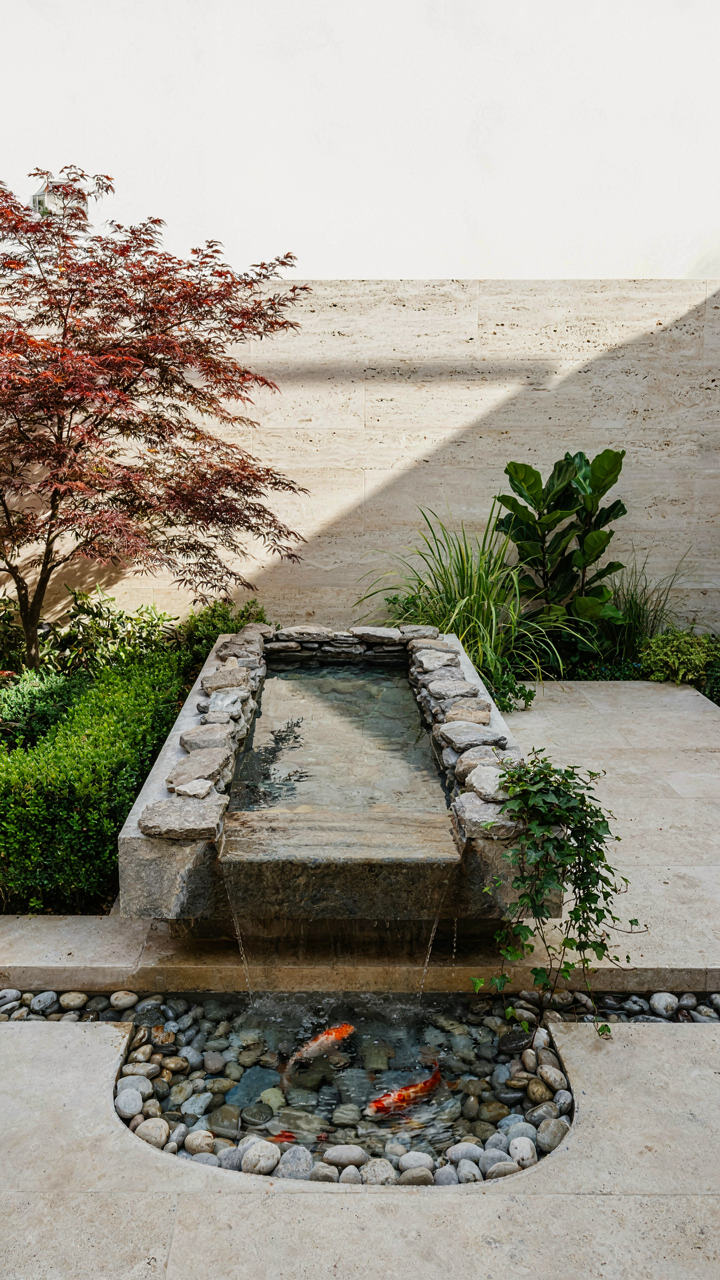
Custom installations break the cycle because they’re built on site using materials chosen for durability, not trend compliance. A stone-lined basin with a recirculation system doesn’t become obsolete because stone doesn’t follow fashion. Copper patinas with age but remains functional and valued. Built-in plantings mature rather than degrade. The feature gains narrative weight over time instead of losing it. When your special occasion ends, a custom feature becomes permanent landscape infrastructure that serves future events better than it served the first one. Stop replacing. Start building things that improve with age.
The Real Obstacle: Your Default To Easy Over Impactful. Stop Decorating; Start Designing Experiences
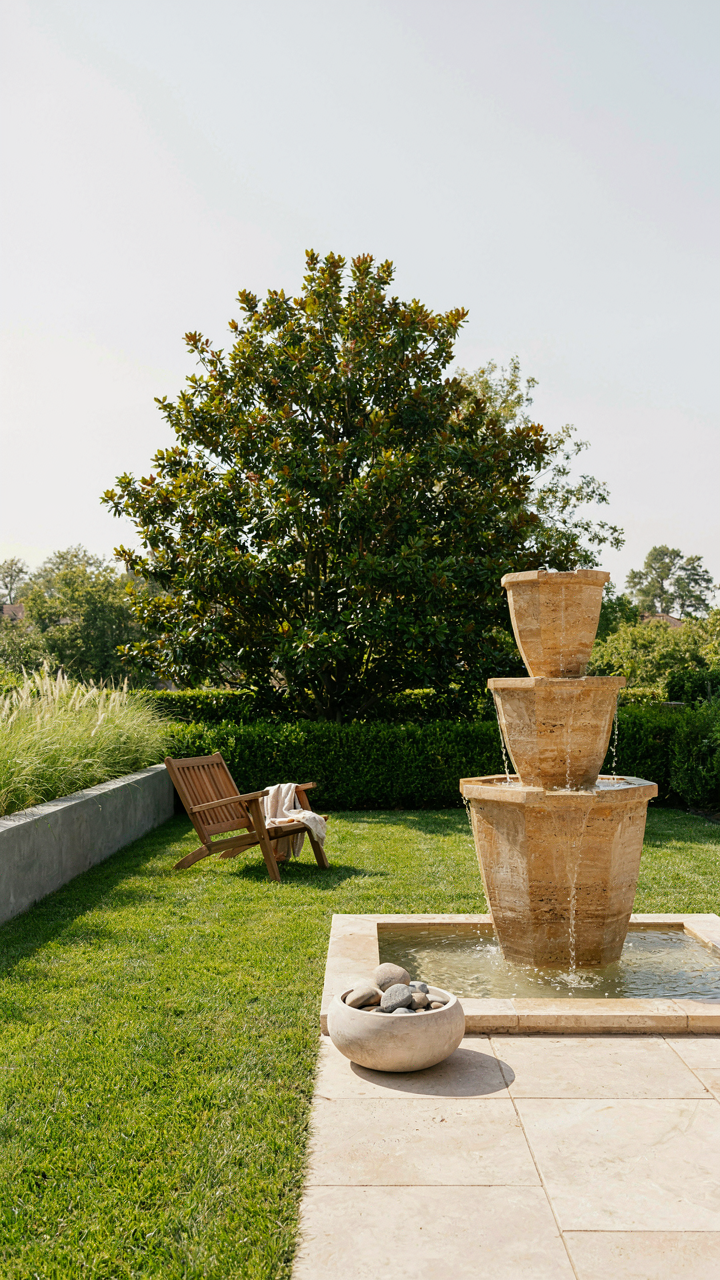
Most people buy a fountain and call it done. You won’t. The shift that matters is moving from decoration to intention. Water features work when they solve a problem: blocking street noise, creating a gathering point, or marking a specific memory. Pick one problem your backyard actually has. Today, sketch where water goes and what it fixes. Everything else follows from that single decision. A water feature without purpose is just expensive landscaping.



