
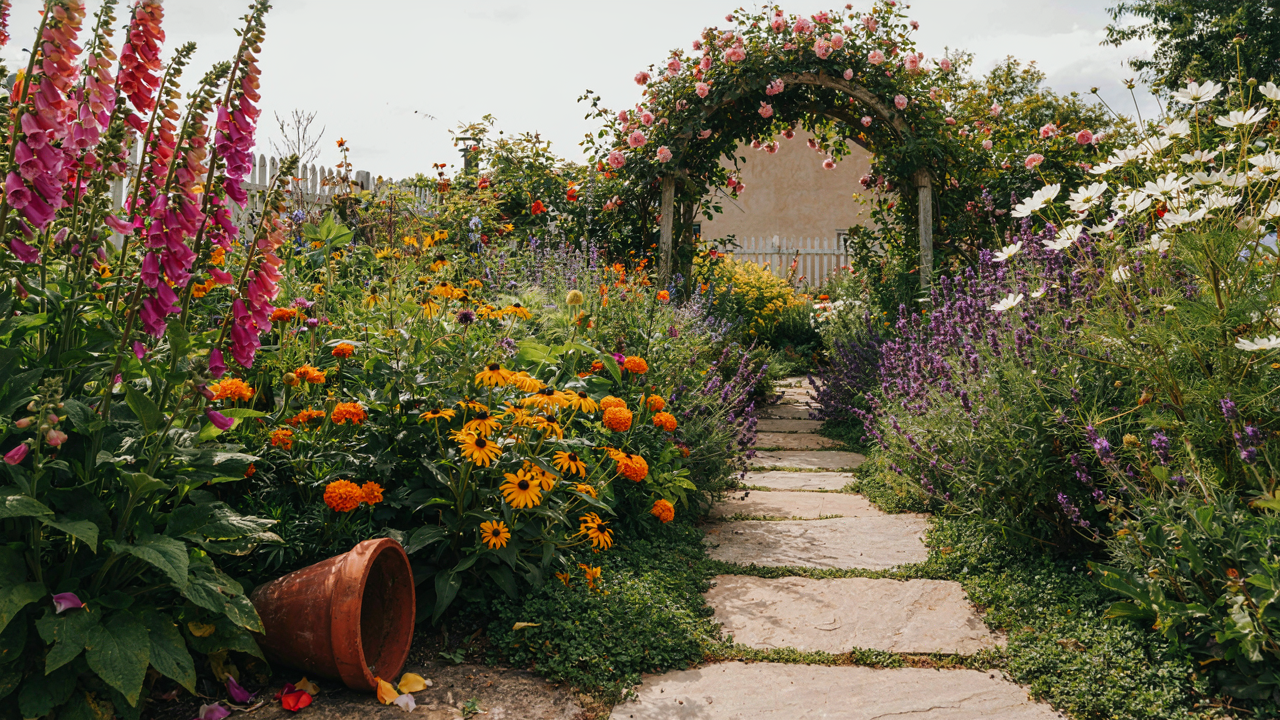
Beyond Blooms: The Cottage Garden Design Paradigm Shift

The Soil System Comes First
You want a cottage garden that looks effortless because you think that proves your taste. Here’s what actually matters: the soil structure determines plant survival, and survival determines every visual outcome you’ll chase. Borrow the agricultural principle of “load bearing capacity”—your border plants need soil that holds what they demand without collapse. Most people buy plants first, soil second. That’s backward. Heavy clay, sandy drains, compacted earth—each creates a different carrying load for root systems. Build the foundation or watch everything fail regardless of which cultivars you select.
The plants you choose for special occasions survive or die based on biological availability, not hope. Cottage garden borders need 4 to 6 inches of amended topsoil, proper drainage pathways, and organic matter that feeds the microbial layer beneath. These aren’t aesthetic choices. They’re non-negotiable prerequisites. Start with a soil test if you’re serious. Know your pH, nitrogen levels, and texture before selecting a single plant. The visual impact people photograph happens only after you’ve solved the invisible problem first.
Function Shapes What Gets Planted
People design cottage borders around what looks good in magazines, then wonder why plants underperform or look sparse by July. The real work is asking what the border needs to do: filter wind, attract pollinators for nearby vegetables, screen an ugly fence, provide cut flowers for events, or create seasonal color shifts. Each answer changes the plant list entirely.
A border that cuts flowers for spring events needs delphiniums, roses, and dahlias positioned for harvest access, not pure visual balance. A border that stabilizes slope needs deep-rooted perennials like catmint and Russian sage, planted tight. A border protecting tender vegetables from wind needs taller structural plants—foxgloves, hollyhocks, delphiniums—on the north or prevailing wind side. Functionality dictates spacing, height arrangement, and which cultivars survive your specific context. Design the job, then select plants that do it.
The “Perennial Resilience” Protocol For Garden Borders

Hardy Species Selection: Native And Naturalized Choices
You want a border that doesn’t collapse the week before your garden party. That fear drives most gardeners to overthink plant selection, when the real mechanism is simpler: native and naturalized plants have already solved the survival problem in your climate zone. Ecology calls this “niche adaptation”—each plant fits a specific environmental slot. In cottage borders, this means choosing perennials that thrive without constant rescue.
Hardy species don’t need coddling because they evolved or adapted to your region’s moisture, soil pH, and temperature swings. Native plants like coneflower, black-eyed Susan, and daylily demand less intervention. Naturalized plants like yarrow and salvia perform equally well after establishing. Both categories hold borders upright through late-season stress and poor soil conditions that would kill tender annuals.
- Coneflower (Echinacea): Cold-hardy perennial with deep taproots accessing water in lean soil. Tolerates full sun and poor drainage. Blooms midsummer to frost with minimal fertilizer.
- Black-Eyed Susan (Rudbeckia): Native to Eastern North America, establishes fast and self-seeds responsibly. Thrives in compacted soil. Yellow flowers sustain borders through late season.
- Daylily (Hemerocallis): Extremely cold-tolerant and drought-resistant once established. Handles poor soil and neglect better than most border plants. Bloom window varies by cultivar.
- Yarrow (Achillea): Naturalized Mediterranean species with fibrous roots that stabilize poor soil. Tolerates heat and dryness. Flowers dry on stems for extended visual presence.
- Russian Sage (Perovskia): Semi-woody perennial hardy to Zone 4. Demands well-drained soil but needs no staking or deadheading. Blooms extend through September.
These species form the spine of a border that functions without you. They survive drought, poor soil amendment delays, and visitor foot traffic. Plant them in fall or early spring to establish roots before stress periods, and they’ll carry any special occasion without collapse.
Layering For Continuous Bloom, Minimal Intervention
Stop planning borders by bloom month. That’s gardening from a spreadsheet, not from how plants actually perform. The real protocol is staggering bloom timing across plant heights so the eye moves through the space, and each tier handles its own maintenance. You layer height and timing together, not separately.
Front-of-border plants (12 to 18 inches) flower early and hold their structure: catmint and alliums. Mid-layer plants (24 to 36 inches) bloom mid-season and anchor the view: garden phlox and delphinium. Back-layer plants (36 inches and up) flower late and provide depth: Joe-Pye weed and tall asters. This stagger means no month reads empty, and taller plants mask declining foliage from early bloomers. Plant densely enough that mature foliage fills gaps, so you never deadhead compulsively or replant holes.
The intervention pivot happens once: at establishment. Dense planting means weeds can’t colonize. Mature perennials crowd each other into structure without staking if you choose naturally stiff varieties. Deadheading becomes optional because later bloomers hide earlier spent flowers. Feed once in spring, then stop. Water during the first growing season to establish deep roots, then let native rainfall do the work. This is the protocol: plant right once, then let resilience run.
Why Your English Cottage Garden Needs Systems Thinking, Not Just Charm

Watch Your Plants Talk To Each Other
You want your cottage garden to look effortless on special occasions, but you’re actually afraid it’ll look neglected instead. Here’s the real mechanism: cottage gardens fail when you treat each plant as an isolated decision rather than a living feedback loop. Borrow from systems engineering. In that field, engineers build feedback loops to measure output, catch drift, and adjust input. Your border plants work the same way. Tall delphiniums shade lower foxgloves. Foxgloves self-seed and crowd out lady’s mantle. Observe which plants thrive near each other and which ones don’t.
Document what you see in your specific garden, not what a book tells you should happen. The soil drainage, sun exposure, and plant vigor in your space are unique variables. After three weeks into the growing season, notice which combinations are strengthening each other and which are competing. Adjust spacing or remove weak performers before they consume resources. This cycle repeats every season, and each observation makes your next planting more precise. The mechanism is simple: observe the actual interaction, measure the outcome, refine your placement for the next cycle.
Redundancy Protects Against Single Points Of Failure
Most cottage garden advice tells you to plant one specimen of each variety for visual impact. That’s incomplete. Systems engineering relies on redundancy, the principle that critical functions should have backup options. Your border needs this too. If one cultivar of geranium fails due to unexpected drought or pest pressure, a second variety of geranium in a different microclimate within the border keeps the visual structure intact.
Plant two or three varieties of flowers that occupy the same visual role and bloom window. Example: pair traditional Delphinium with hardy Aconitum, or combine Dianthus with Pinks in different cultivars. When one struggles, the other maintains your design intent for that special occasion. This isn’t redundancy for beauty. It’s redundancy for reliability. Your border performs its function regardless of which single plant fails, because the system has built-in alternatives.
The “Strategic Succession” Method For Dynamic Cottage Borders

Planned Plant Succession: Year Round Interest
You want your border to look intentional during the exact moment guests arrive, not three weeks before or after. That’s the real driver here. The mechanism is ecological succession applied to ornamental space: you’re stacking bloom times and structural phases so something always occupies visual weight. Spring bulbs fade. Early perennials take over. Late bloomers extend the show. Structural plants hold the line when nothing flowers. You’re not decorating; you’re engineering continuous occupation.
The common mistake is treating succession as “more of the same thing, different times.” That’s backwards. Succession requires substitution. Early tulips and hellebores occupy February through April. Alliums and early perennials take May through June. Mid-summer bloomers like salvias and delphiniums own July. Ornamental grasses and late asters close August through November. Each layer physically replaces the visual footprint of what came before. Without this substitution, borders flatten into a monotonous middle state. Map your border on paper with bloom times stacked vertically, not just sketched horizontally.
Self Seeding Annuals And Biennials For Effortless Refresh
Most gardening advice frames self-seeders as “bonus plants you get for free.” Wrong framing. They’re actually your lowest-maintenance succession tool because they regenerate automatically in the gaps created by timing. Nigella, cosmos, and cornflowers seed themselves into spaces left by spring bulbs and early perennials. You don’t replant them annually. The border maintains its own filler layer without your intervention. This only works if you let plants set seed before cutting borders back in late autumn.
The protocol is simple: identify which self-seeding annuals and biennials thrive in your soil and light conditions, then stop deadheading on purpose in late season. Let nigella, foxgloves, and sweet Williams drop seed before frost. Remove only diseased or genuinely unsightly material. In spring, thin seedlings ruthlessly to prevent overcrowding. This creates a living inventory system that refills your border without nursery trips. Leave the seed stage unmanaged, and your refresh cycle collapses into replanting work.
Unlocking The Power Of Edibles In Your Cottage Garden Border Ideas

When Ornament Becomes Harvest
You want your border to do more than look good at a garden party. You want it to justify the space and make visitors think you’re doing something clever. Here’s the mechanism: edibles in borders work because they collapse the boundary between production and display. Rosemary, sage, and thyme deliver fragrance, texture, and form while you harvest without replanting. Borage flowers attract pollinators and sit on salads. Nasturtiums climb and bloom while their leaves feed you. The dual-purpose plant forces your border to earn its keep instead of being pure ornament.
The common mistake is treating edibles as an afterthought, tucking them into gaps. That fails because edibles need the same design logic as any border plant. Height, color, seasonal performance, spread, and hardiness still matter. A sprawling nasturtium vine needs a support structure or edge role. Tall fennel demands a back position. Compact thyme works edges. You’re not just adding utility to decoration. You’re redesigning the border so every plant pulls two jobs at once without compromising either one.
Structure Before Yield
The temptation is to plant for production first and hope for aesthetics. That inverts the actual constraint. Cottage garden borders succeed because they follow visual hierarchy and repetition, not because they maximize output. A single dwarf apple tree in the wrong spot ruins the line. Six parsley plants scattered randomly break rhythm. Treat edibles like you would any perennial or shrub: choose a limited palette, repeat it in odd numbers, and let growth habit shape the structure rather than fighting it.
Practical yield compounds when you stop seeing edibles as exceptions to design rules and start seeing them as material choices. Chives repeat the line of a border edge cheaper than germander and flower. Purple sage creates the same mounding form as catmint with harvestable leaves. Beach plum or sea buckthorn functions as a backbone shrub while producing fruit. The yield happens because the plants are healthy, positioned correctly, and suited to your soil and light. Pick the edible species that already fit the structure you need, then harvest from them.
The “Weed Suppression” Blueprint For English Garden Border Ideas
Outcompeting Weeds Through Layered Density
You want a border that looks effortless. What you’re really avoiding is the weekly ritual of pulling weeds while guests arrive. The mechanism is simple: weed seeds need light to germinate. Dense planting blocks that light. Think of it as ecological competition from biology. In a cottage border, you’re creating a monopoly on resources so weeds have nowhere to establish.
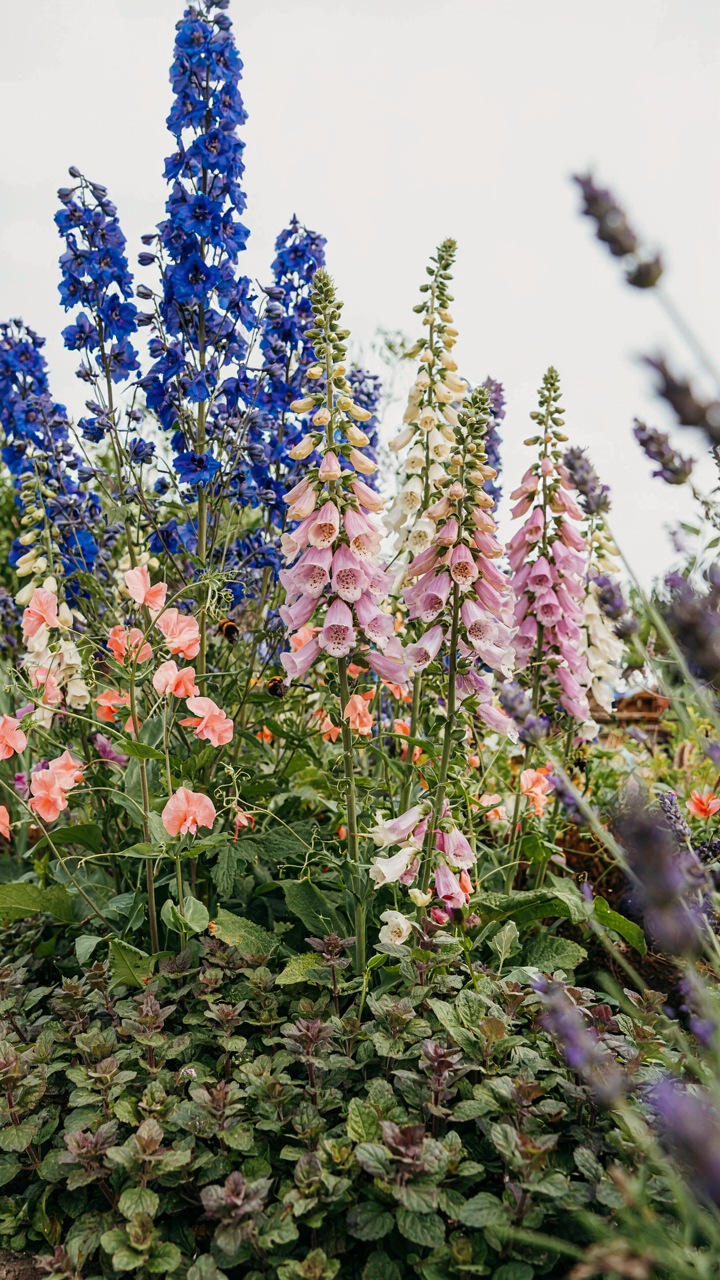
The standard advice tells you to space plants “according to their mature size.” That’s incomplete. Space them to close canopy overlap by their second growing season, not their fifth. Delphinium, foxglove, and salvia crowd together intentionally. Their foliage creates shade at soil level. Sedum and catmint fill gaps at ground height. Layer by height and fill rate, not just aesthetics.
Strategic Mulch And Groundcover Placement
Mulch alone does nothing. The real work happens when you pair it with strategic groundcover that roots shallow and spreads horizontally. Ajuga, creeping thyme, and lamb’s ear are not decorative afterthoughts. They physically occupy the soil surface where weed seedlings would otherwise land.
Apply mulch only in gaps between established plants, not over their crowns. Two to three inches works. Refresh annually in spring before weeds germinate. Layer groundcover in the first season while borders establish, then let them knit together. When the border canopy closes by midsummer, your mulch job becomes maintenance, not necessity.
Border Landscaping Ideas: The Art Of Structured Chaos
Verticality And Texture Layering
You want a border that doesn’t look like everyone else’s, and that fear of sameness is exactly why you’ll waste money buying random plants that don’t work together. The mechanism is simple: flat borders read as incomplete because your eye has nowhere to travel. Borrow from architecture—think about how a building uses negative space and varying heights to create visual interest. Cottage borders fail when they treat height as afterthought instead of structure.
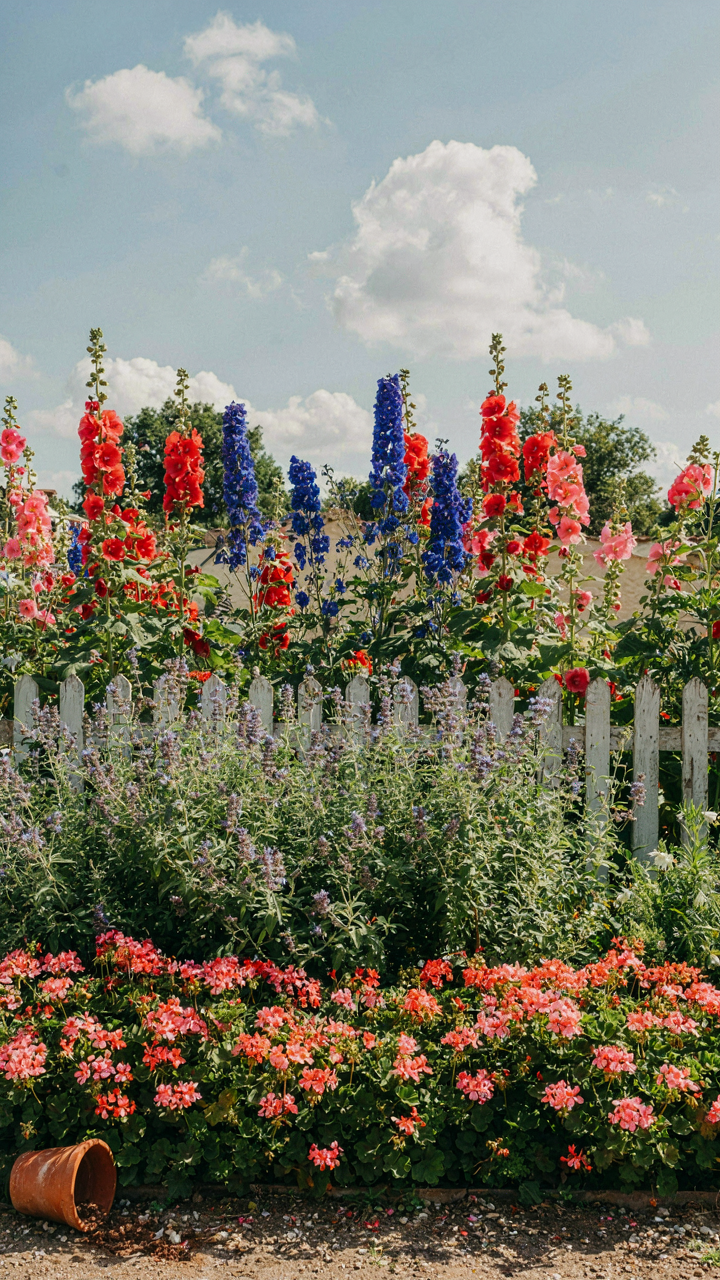
Layer plants by mature height in thirds: ground level anchors, mid-range fillers, and vertical punctuation. Delphiniums, foxgloves, and hollyhocks provide the skeleton. Marry them with lower texture plants like catmint or geranium that soften edges without competing. The border stops looking sparse when you force the eye to move vertically through distinct zones instead of scanning horizontally across a flat plane.
Repetition Creates Rhythm, Not Monotony
The advice to “avoid repetition” is wrong, and it’s why most cottage borders look chaotic instead of intentional. Repetition is an economy principle: when you concentrate plant mass instead of spreading varieties thin, you reduce visual clutter while increasing impact. Three specimens of the same plant read as design choice. One specimen reads as accident.
Select one anchor plant—say, nepeta or lavandula—and repeat it at intervals along the border. Mass five to seven specimens rather than scattering singles. This creates visual anchors that guide the eye and simplify maintenance. Repeat this tactic with a secondary texture plant. The border stops looking like a plant collection when you make repetition do the organizational work.
Cottage Garden Ideas Layout: Beyond The Straight Line

Curved Paths And Hidden Sight Lines
You want your cottage garden to feel discovered, not surveyed. That’s the real motive here: the illusion of depth where none exists. Borrow from urban planning’s concept of “prospect and refuge.” A curved border path creates prospect (you see ahead but not everything) and refuge (areas feel secluded). Plant tall specimens like delphiniums or hollyhocks at path bends to block sightlines deliberately. This forces movement. Visitors walk the curve instead of scanning the whole plot at once.
The mechanism is simple: constraint creates narrative. A straight border reads as inventory. A curved one reads as experience. Place your tallest cottage garden border plants (5 to 6 feet) at the outer curve of a path bend, not the inner edge. This blocks the view forward and pulls the eye along the line of the path itself. Plant shorter specimens on the inner curve to maintain access and avoid creating a tunnel. The payoff is immediate: a 20-by-30-foot plot suddenly feels like 50 feet of journey.
Breaking Geometry For Organic Movement
The common advice here is wrong: “plant in layers of height.” That’s not organic. That’s stacking. Real organic appeal comes from breaking the expected plane, not organizing it. Cottage garden borders work when you interrupt geometric regularity with specimen placement that feels accidental but isn’t. A tall rose breaking forward from a bed of catmint. Foxgloves erupting at odd intervals instead of graduated rows. Unpredictable plant heights create visual stops that slow eye movement and increase perceived complexity.
The difference between planned randomness and actual randomness is the difference between amateurish and intentional. Place your tallest cottage garden border plants first, spacing them 6 to 8 feet apart rather than in strict patterns. Fill the gaps with mid-height plants like salvias, coreopsis, and nepeta, but leave small voids. These voids—actual empty soil—break the visual mass and allow the eye to rest. That spatial rhythm is what makes a border feel natural instead of designed.
Front Yard Cottage Landscaping: Public Face, Private Ecosystem

The Tension Between Display And Function
You want the front yard to impress neighbors while secretly hoping it doesn’t require constant maintenance. That tension is real, and it reveals the actual problem: most gardeners treat curb appeal and ecological health as separate goals when they’re the same system working at different scales. Cottage border plants solve this by doing both simultaneously—they draw the eye while feeding pollinators, they look intentional while self-seeding strategically, they age gracefully instead of declining into shabby maintenance nightmares.
The mechanism is simple. A well-designed cottage border doesn’t perform for an audience and then collapse behind the scenes. Digitalis, Alchemilla mollis, and hardy geraniums thrive on neglect while looking substantial from the street. They don’t require pruning schedules, fertilizer regimens, or replacement cycles that drain your time. The plants themselves become the infrastructure. Choose species that naturalize, reseed, and spread without becoming invasive, and your front yard becomes a living asset instead of a liability masquerading as landscaping.
Soil Variation Shapes Which Plants Actually Survive
Ecology borrowed the term “niche” to describe the specific conditions where an organism thrives. In cottage border design, your niche is the microclimate—soil depth, drainage rate, sun exposure duration, wind exposure, and frost pocket location. Every front yard contains multiple microclimates within arm’s reach of each other, and most gardeners ignore this completely, treating the whole border as one uniform space and then wondering why half their plants struggle.
- Raised Mounds For Drainage: Build 8-12 inches higher than grade to accelerate water movement, creating dry pockets for Sedums, Lavender, and silver-foliaged plants that rot in clay.
- Foundation Shade Pockets: East or north-facing walls stay cooler and retain moisture longer—ideal for Hellebores, Tiarella, and shade-tolerant Astilbes during hot summers.
- Wind-Sheltered Alcoves: Entry alcoves and fence corners block prevailing winds, protecting delicate stems of Delphiniums and tall Foxgloves that snap in open exposure.
- Compacted Base Areas: High-traffic zones near walkways compress soil, reducing drainage and favoring tough species like Catmint, Russian Sage, and creeping Thymes.
- Low Swale Zones: Natural grade depressions collect runoff and stay boggy—right for Lychnis, moisture-loving Primulas, and species Tulips that naturalize in wet springs.
The payoff appears within one season. Map these microclimates before planting, place plants according to their actual needs, and your border stops looking like a experiment and starts looking intentional. Spot placement becomes strategy instead of guessing.
The “Minimalist Maintenance” Mandate For Your Cottage Border

Stop Deadheading Everything You Plant
You want a cottage border that looks effortless at dinner parties. That’s the real fear underneath this section: spending weekends pruning while guests assume you have help. Here’s the mechanism from biology: plants evolved seed production as their terminal goal, not perpetual bloom. Fighting that costs energy you don’t have. The plants that matter in a cottage border are the ones that self-regulate through their own biology rather than demanding intervention.
Foxgloves, delphiniums, and lupines set seed naturally and stop flowering once that job completes. Removing spent blooms delays seed set and tricks the plant into one final push, but only on species where this matters functionally. Most cottage staples like nepeta, alliums, and sedums bloom once per season regardless of deadheading. You deadhead them for aesthetics, not longevity. The genuine maintenance win comes from planting species that stay attractive after flowering ends, not ones that collapse into brown mush by August.
Anchor Your Season Around Three Work Dates
One spring cut, one midsummer edit, one autumn cleanup. That’s not gardening theory—that’s how cottage borders actually perform with minimum labor. Cut back catmint and geraniums hard in late spring after last frost. This single action prevents woody, hollow centers and forces dense new growth that flowers prolifically. Skip this and you get leggy plants by July that never recover.
Midsummer means deadheading only the plants that genuinely demand it for continued bloom: roses, some salvias, and continuous bloomers like coreopsis. Ignore the rest. Autumn cleanup happens after frost kills everything back. Cut ornamental grasses, remove dead material, and leave seedheads of alliums and sedums standing through winter for structure and wildlife. Three dates. Done.
The True Obstacle Isn’t Your Plant Choices; It’s Your Refusal To Engineer A Self-sustaining System

Most gardeners treat cottage borders like decoration instead of ecosystems. You pick plants, hope they survive, then abandon them. The real leverage is designing a border that feeds itself through soil biology, companion relationships, and strategic placement. Stop fighting nature and start orchestrating it. Pick one section of your border this week and cluster plants that genuinely support each other rather than compete. Your garden only becomes special when it runs on its own intelligence, not your constant intervention.



