
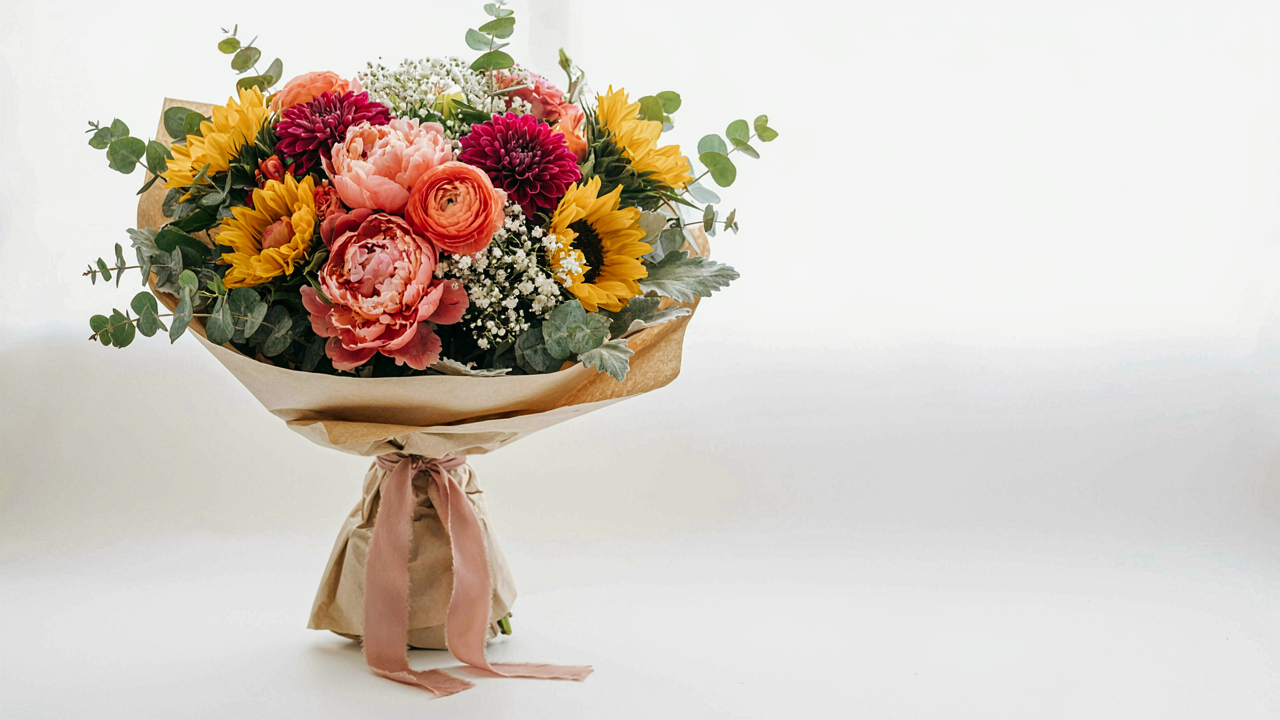
The Unseen Psychology Of The Gift Bouquet Reveal
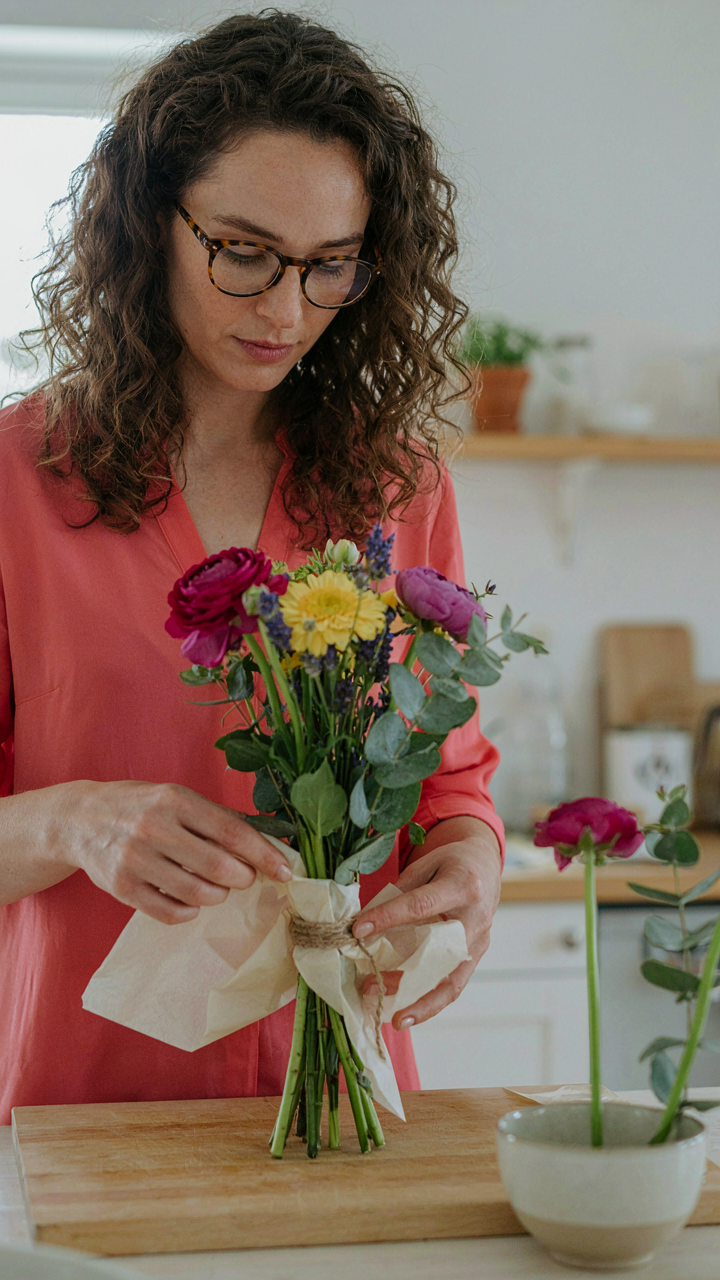
The First Three Seconds
You care about this because unwrapping a gift creates a moment where someone judges your taste before they judge your generosity. That judgment happens in the visual milliseconds before they see the flowers. Neuroscience maps this to dopamine release, the same mechanism that fires when encountering novelty or status signals. Flower bouquet wrapping isn’t decoration, it’s the trigger mechanism. The material, color, and reveal structure determine whether dopamine spikes or flatlines. Poor wrapping communicates indifference. Strategic wrapping communicates intention.
The wrap serves as the frame before the content. This matters because frame quality shapes perception of content quality. A bouquet wrapped in tissue paper signals one thing. The same bouquet wrapped in structured kraft paper with visible stem binding signals another. The brain processes wrap first. It allocates attention based on that initial signal. This is why luxury brands obsess over unboxing. The wrap teaches the brain whether to activate excitement or dismiss the gift as forgettable. The recipient’s dopamine response to the wrap directly influences their emotional response to the flowers.
Anticipation As The Hidden Multiplier
Wrapping mechanics create delay, and delay creates value through scarcity of information. Luxury retailers understand this principle from behavioral economics: controlled access to information increases perceived worth. An opaque wrap that obscures flower type, color, or volume forces the brain to generate multiple possible scenarios. Each scenario is a micro-prediction. When the actual bouquet exceeds the worst prediction, satisfaction compounds. This is anticipation as value multiplier. Transparent wrapping eliminates all predictions. No predictions mean no compounding satisfaction.
The reveal structure determines how much mental effort the recipient invests before seeing the flowers. Layered wrapping, where outer materials hide inner materials, extends the anticipation window. Kraft paper outer layer, then tissue, then structured elements inside. Each layer removed is a prediction reset. The recipient’s brain recalibrates expectations downward with each layer, then upward when the final reveal exceeds those adjusted expectations. This layered approach multiplies perceived value without changing the flowers themselves. Position the stem binding visibly at the final reveal moment to anchor the visual impression and signal craftsmanship.
Beyond Paper: Material Science Of DIY Bouquet Wrap
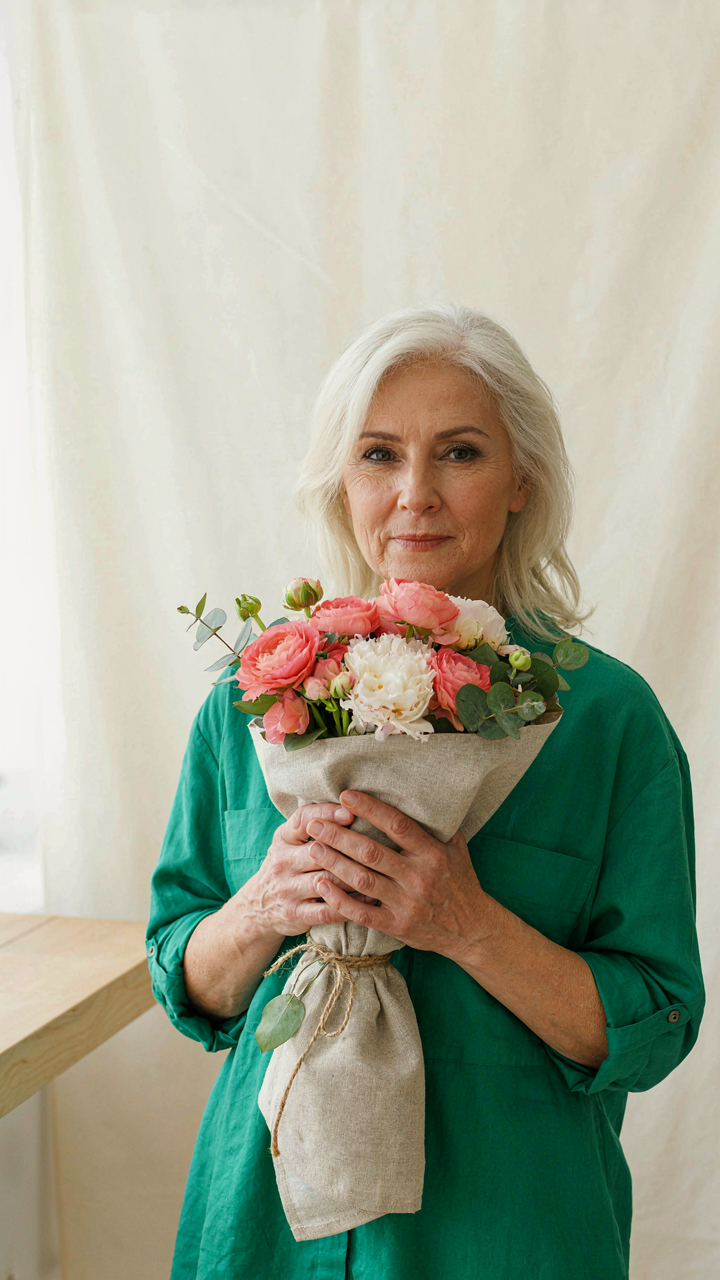
Touch Changes How Expensive Your Gift Feels
You want people to think you spent more than you did. That’s the real mechanic here. Fabric wrap exploits texture because your brain processes tactile sensation before it processes cost. Linen, silk, and cotton create perceived value through hand-feel alone. The physics principle is simple: surface roughness and weight distribution trigger luxury associations in the nervous system before conscious thought intervenes.
Silk charmeuse over tissue creates a two-layer effect that stops hands mid-motion. The friction and drape signal craftsmanship. Linen wraps communicate restraint and intention because the weave is visible and deliberate. Cotton muslin feels premium when dyed in muted tones because the weight suggests substance. Texture does the work that color cannot. Your wrap material must demand touch to be effective.
Real Sustainable Choices That Aren’t Marketing Theater
Most eco-wrap advice is incomplete. Recycled paper exists, but it shreds. Kraft paper degrades under moisture. Fabric reuse sounds noble until you realize the recipient throws it away anyway. The actual mechanism for sustainability in bouquet wrap is durability plus second use. Materials must survive the gift exchange and then function in the recipient’s life afterward.
- Linen cloth wraps: Survive multiple bouquets, washable, store flat, become tea towels or drawer liners after use cycles through.
- Hemp fabric: Stronger than linen when wet, accepts natural dyes without chemical processing, ages visibly to show wear patterns.
- Organic cotton muslin: Biodegradable without synthetic finishes, works as storage cloth for dried flowers or kitchen use post-gift.
- Jute twine with dried grass: Compostable materials that require zero processing chemicals, can be planted with seeds in garden soil.
- Repurposed fabric scraps: Zero production footprint when sourced from tailors or textile studios, bundled as statement piece rather than hidden.
Sustainable wrap only works when the recipient sees a reason to keep it. Fabric that transitions into household utility wins. Jute and dried grass compost within weeks if left outdoors. Your wrap material choice must solve a problem for the person receiving it, not just ease your conscience about waste.
The Minimalist’s Manifesto For Flower Bouquet Diy
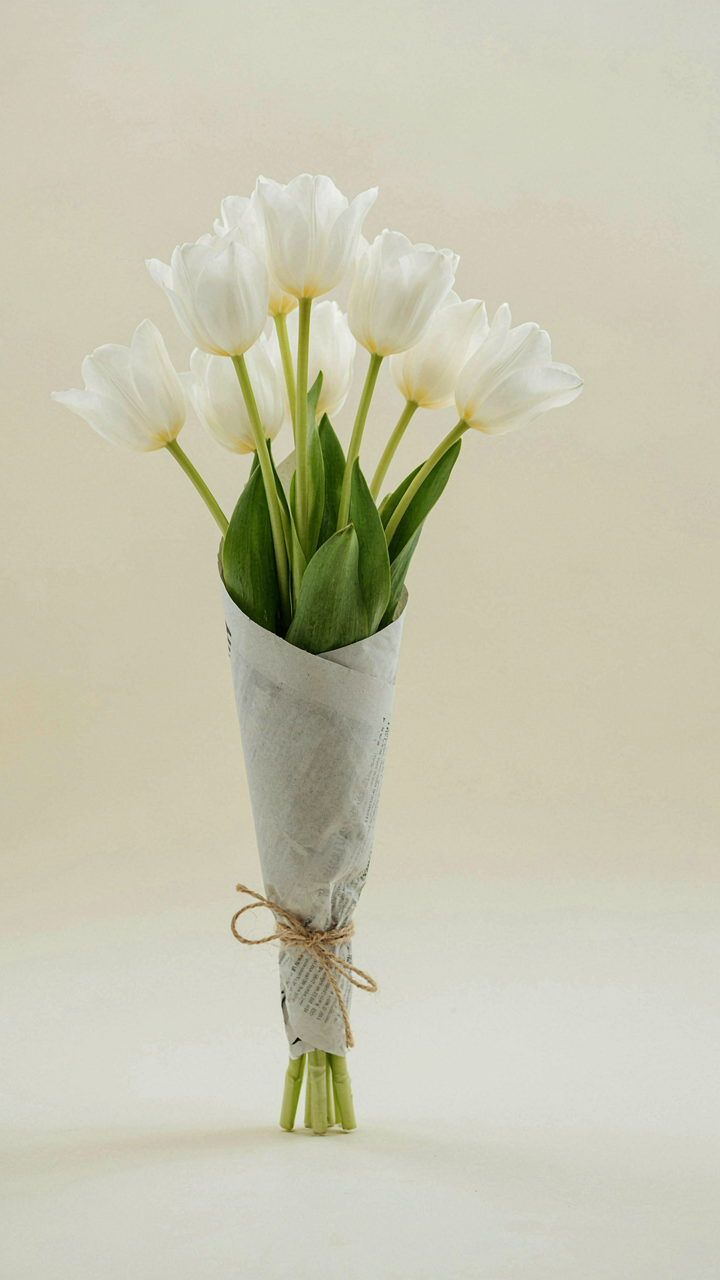
Stripping Away The Noise
You want permission to spend less time on wrapping without looking cheap. That’s the real question. The mechanism is this: constraint forces intentionality. In design, what you remove matters more than what you add. Minimalism in flower wrapping isn’t about being sparse for sparse’s sake. It’s about removing every element that doesn’t serve the flower itself. The wrap disappears. The arrangement becomes the statement.
Paper choice is everything here. Kraft paper, newsprint, or single-color tissue beats layered, patterned chaos. The texture of the material does the work. A single quality material wrapped tight creates sophistication through restraint, not decoration. This is the opposite of what most people default to, and that gap is where elegance lives.
One Color Tells The Story
The real advice about “highlighting the flower” is incomplete. You don’t highlight by adding contrast. You highlight through elimination. In visual hierarchy, contrast is just one tool. Monochromatic wrapping removes cognitive noise. Your eye goes directly to the blooms because there’s nowhere else to go. The wrap becomes a frame, not a competitor for attention.
Choose one color that sits in the same temperature family as your flowers. Cool greens with cool-toned blooms. Warm taupes with warm arrangements. This creates visual continuation, not separation. A single accent—twine, ribbon, or a single leaf—placed at the tie point gives the eye a landing spot without fracturing the design. That one element should serve function, not decoration.
The “Engineered Serendipity” Bouquet Tutorial

When The Wrap Becomes The Reveal
You want people to feel like they discovered something, not received a package. That’s the real mechanism here—borrowed from game design’s concept of “pacing.” In flower bouquet wrapping, pacing means the sequence of visual layers someone encounters. Each layer removes friction between the giver’s intention and the receiver’s emotional peak. Most wrapping advice treats this as decoration. It’s actually information architecture disguised as craft.
The reveal structure is where the work happens. Start with an opaque outer layer—kraft paper, linen, or solid fabric that blocks the view completely. This creates anticipation through denial. The second layer introduces a hint: a peek of color, texture, or a single stem visible through a cutout. The final layer is the unwrap itself, where the full arrangement emerges. This three-stage sequence hijacks attention and makes the recipient participate in the discovery rather than passively receive it.
Building Narrative Into The Unwrapping Sequence
A narrative arc isn’t just story structure—it’s the tension between what’s hidden and what’s revealed, mapped onto physical materials. The outer wrap is your setup: utilitarian, neutral, uninformative. As layers peel back, information density increases. The middle layer introduces color or typography that hints at the bouquet’s personality. The interior wrap—tissue, moss, or silk ribbon—completes the character reveal. This progression from mystery to clarity creates cognitive engagement, not just visual satisfaction.
The unwrap itself becomes a moment, not an afterthought. Use materials that resist easy removal: double-sided tape instead of single-sided, overlapping rather than tucking, textures that require deliberate handling. This slows the receiver down and forces attention. When someone has to work slightly to access the flowers, they register the experience as intentional rather than transactional. Layer your materials in reverse order of reveal: opaque first, textured second, transparent or semi-transparent last, so each removal exposes something new.
Deconstructing The Conventional Bouquet Wrap
When Wrapping Becomes Visual Noise
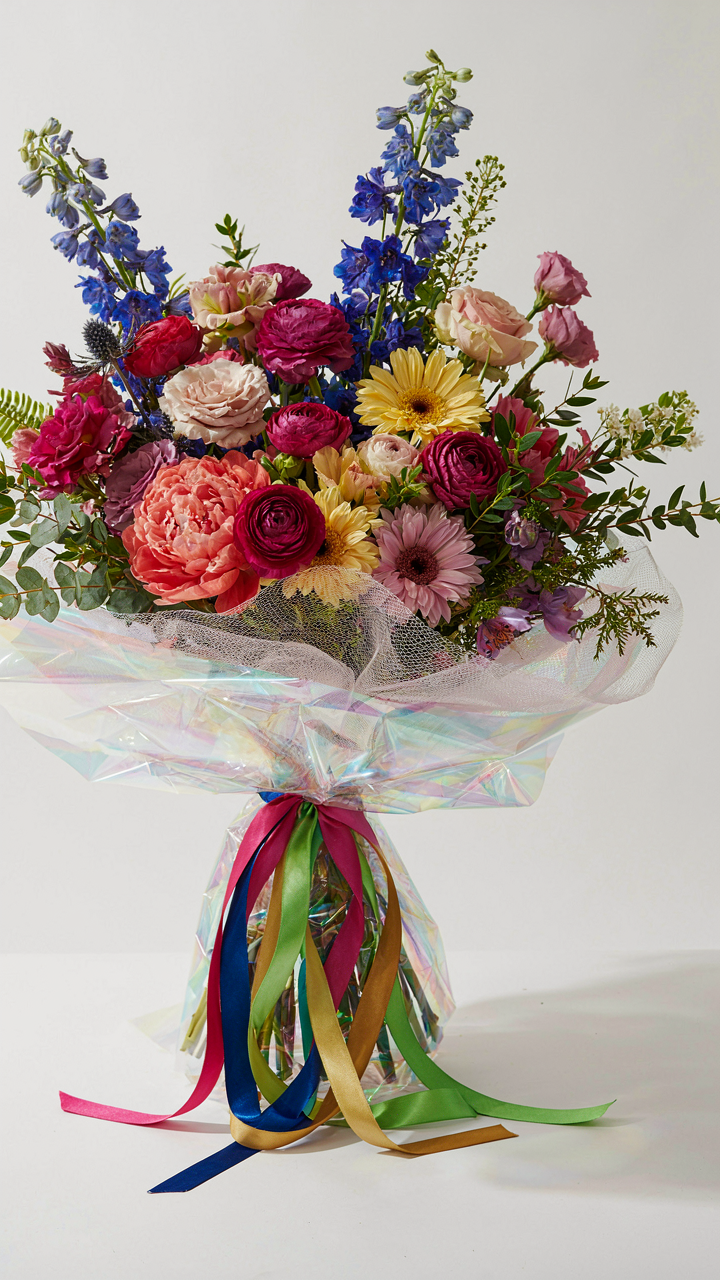
You care about this because you think more layers equal more perceived effort, and effort signals care. It doesn’t work that way. In design, think of wrapping like signal-to-noise ratio in information theory. Clutter drowns the signal. Too many textures, ribbons, and decorative elements force the eye to work instead of land. The bouquet itself is the message. Everything wrapped around it should amplify that message, not compete with it.
Most gift wrap advice tells you to combine materials freely. That’s wrong. Each additional element you add either strengthens the focal point or weakens it. Layering tissue, mesh, cellophane, ribbons, bows, and decorative picks all at once doesn’t read as generous or thoughtful. It reads as indecisive. The mechanism is simple: viewers have finite attention. Spend it all on the flowers, not on the wrapping theater around them.
Effectiveness Over Visual Decoration
The real divide isn’t between simple and complex wrapping. It’s between wrapping designed for the gift’s purpose and wrapping designed to look busy. A bouquet meant to brighten a hospital room needs minimal obstruction. One sent as a centerpiece for a dinner needs enough structure to sit upright without support. One carried as a hand-held gift needs grip space and protection.
Decorative wrapping often blocks what makes the bouquet work. Heavy paper hides stem quality. Opaque materials obscure flower variety and color. Oversized bows prevent the arrangement from being seen at eye level. When you evaluate wrap choices, ask what job it actually does: Does it protect stems? Does it create a gift-appropriate silhouette? Does it enhance the specific context? If the answer is no, it’s decoration masquerading as function, and you remove it.
The “Asymmetric Advantage” In Gift Bouquet Presentation

When Your Wrap Breaks The Pattern
You want people to remember what you gave them. That’s the real reason you’re reading this. The mechanism is simple: your brain flags disruption. Evolution wired us to notice what doesn’t fit. In evolutionary biology, this is called the novelty preference—organisms survive by detecting what’s different in their environment. Apply that directly to bouquet wrapping. A standard cellophane sleeve signals “I bought this at a store.” An asymmetric wrap, or a material choice nobody expects, signals intentionality. Your gift lands in their visual field as a decision, not a default.
Standard advice says “match your wrap to the occasion.” That’s incomplete. The real play is breaking the pattern they anticipate while staying coherent with the gift itself. A matte kraft paper wrap with a single silk ribbon works because it violates the expectation of shine and volume most people associate with flower packaging. The nervous system registers the departure before the conscious mind does. That gap is where perceived value lives.
Scarcity Encoded In Material Choice
Economics calls this signal theory: people infer value from attributes that cost more to produce or source. In bouquet wrapping, rarity works the same way. When you use hand-finished paper, vintage fabric scraps, or specialty materials, you’re not just wrapping flowers. You’re broadcasting that this person warranted effort beyond the transactional.
The mistake most people make is conflating expensive with rare. A gold foil wrap costs more but signals mass production. A vintage linen cloth or reclaimed silk signals that you sourced something specific. The receiver doesn’t consciously calculate material cost. They register the irregularities, the texture variations, the weight in their hands. These physical cues register as “this was chosen, not grabbed.” The protocol is simple: source one material that requires active sourcing, not just purchasing online.
Kraft Paper Wrapping: The Underestimated Powerhouse
Why Kraft Works When Everything Else Feels Generic
You want people to think you put thought into this. That’s the real motive, and kraft paper solves it because it signals restraint instead of trying too hard. The mechanism is simple: kraft’s texture and neutral tone make the flowers the focal point instead of competing with them. Most gift wrap does the opposite. It screams for attention while the actual gift gets buried. Kraft reverses this dynamic by design, not accident.
Kraft paper works because it has visual weight without visual noise. The material itself carries a message about intentionality. When someone receives flowers wrapped in kraft, they read it as deliberate choice, not default option. The paper becomes invisible support rather than decoration competing for dominance. This is why it works across every flower type and arrangement style.
Layering Techniques That Actually Change Things
Kraft’s real power emerges when you layer it with functional elements. Each layer serves a specific mechanical purpose: the kraft base protects, secondary materials add visual interest, and finishing touches telegraph care. This isn’t decoration for decoration’s sake. Think of it like systems architecture in design. Each component has load-bearing responsibility.
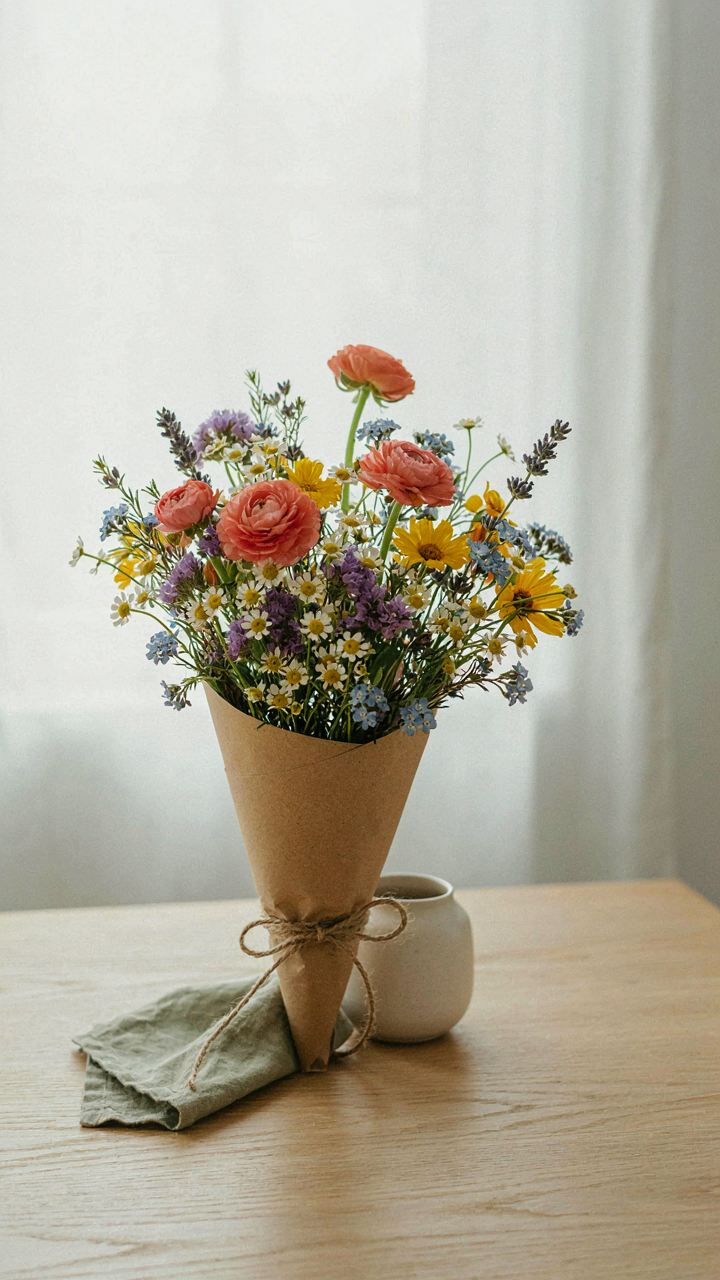
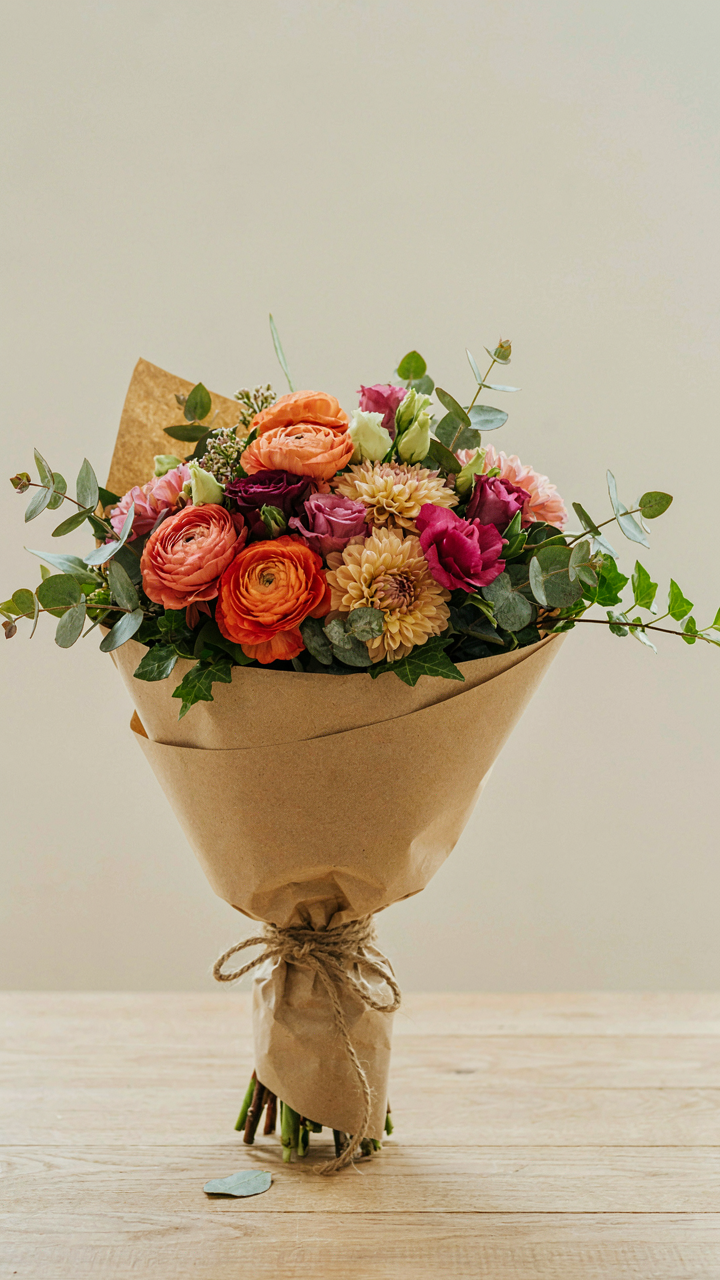
- Single layer with twine: Kraft alone, secured with natural twine at the stem. Minimal, direct, eliminates visual clutter while holding the arrangement stable.
- Kraft plus tissue contrast: Layer kraft on the outside with colored or white tissue underneath for a two-tone edge reveal. The contrast draws the eye without overwhelming the flowers.
- Kraft with leaf accents: Tuck eucalyptus or preserved greenery between kraft folds. This adds dimension and texture while keeping the overall aesthetic cohesive and organic.
- Double-wrap with ribbon hierarchy: Inner kraft layer wrapped tight, outer layer wrapped loose, then tie with a single statement ribbon. The looseness signals intentional asymmetry rather than careless execution.
- Kraft cone with open top: Roll kraft into a cone shape and leave the flower heads exposed at the top. This reveals the arrangement while kraft manages the lower stems and water absorption.
The key is restraint in application. Most people over-layer kraft with too many textures and it collapses into visual chaos. Start with kraft as your anchor, add one complementary material, then stop. The goal is clarity of composition, not abundance of elements.
Shower Wrap & Paper Bouquet Diy: Beyond The Event

Make The Wrap The Artifact
You want people to remember you gave them something thoughtful, not just flowers that die in a week. The real mechanism here borrows from product design’s concept of planned obsolescence in reverse. Instead of building in failure, you build in repurposing. The wrap becomes the container. Kraft paper, muslin cloth, or newsprint transforms into drawer liners, plant pot covers, or storage for seeds. The recipient keeps using your gift after the flowers fade. This extends your presence in their space without them thinking about it.
The math is simple: flowers last five to ten days maximum. A reusable wrap lasts months or years. Most people gift wrap and never consider this angle. They treat paper as trash instead of a second product. Choose materials that age well, not materials chosen for Instagram appeal. Textured paper develops character with handling. Linen wrap softens. This shift from disposable to functional is where shower wrap stops being an expense and becomes a strategy.
The Handmade Signal Nobody Questions
People notice when you didn’t buy a pre-made bouquet wrap. They don’t always know why they notice, but they do. The DIY wrap signals time investment, which translates to status in gift-giving hierarchies. You didn’t outsource to a florist’s production line. You made a choice to spend minutes or hours on something that lasts hours. Economics calls this conspicuous consumption, but applied to effort instead of money. High-status people have time; they use it to signal care through craft.
DIY doesn’t mean crude. It means intention made visible. Hand-torn paper edges, custom twine wrapping, layered fabric combinations, or sealed wax stamps all read as deliberate. The recipient can see decision-making. A store wrap says “I went to the store.” Your wrap says “I thought about this.” The protocol is straightforward: choose one material as your base, add one textural layer, add one functional element like twine or ribbon, and seal it with something personal like a name tag or wax. That’s the full stack. Nothing more.
The Anti Trend Guide To Bouquet DIY Gift
What Actually Lasts In Design
You’re reading this because you’re afraid your wrapped bouquet will look dated in six months. Stop. The mechanism is simple: trends die because they depend on novelty. Timeless wrapping works because it solves a functional problem without screaming for attention. Clean kraft paper, neutral twine, and minimal folds age well because they don’t rely on what’s popular this season. They rely on proportion, restraint, and material quality.
The Bauhaus movement got this right in the 1920s. Form follows function. A wrapped bouquet needs to protect stems, sit stable in a vase, and not compete with the flowers themselves. When you strip away decoration purely for decoration’s sake, you’re left with what works. Florists in Japan have known this for decades. Simplicity outlasts complexity every time because it has no shelf life to expire.
Rejecting The Factory Floor Aesthetic
Mass produced gift wrap exists to sell more ribbon, more bows, more “seasonal” packaging every quarter. That’s the mechanism. Florists and retailers profit from making last year’s wrap feel obsolete. When you DIY, you break that cycle. Hand torn edges, imperfect folds, materials you sourced yourself, create genuine differentiation. Not because imperfection is trendy. Because it proves intention.
Use materials for their original purpose instead of their branded purpose. Newspaper sections with type you actually read. Brown butcher paper from a local supplier. Fabric scraps that came from somewhere real. Twine from a hardware store, not a craft aisle designed to expire. The wrap becomes an artifact of a decision you made, not a product someone designed you to desire. Each bouquet now carries a specific history instead of a generic aesthetic code.
The Real Obstacle Isn’t The Wrap; It’s Your Fear Of Standing Out
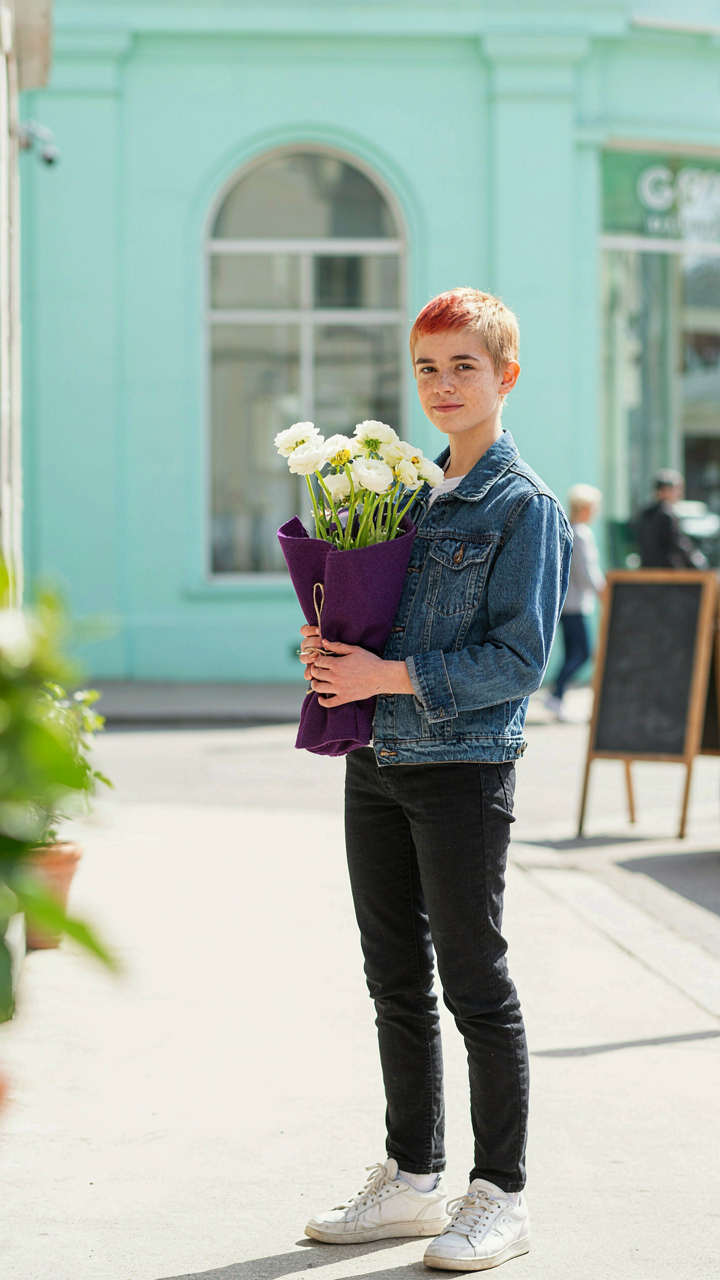
People don’t buy generic wraps because they’re better. They buy them because wrapping a bouquet in kraft paper and twine feels safer than experimenting with color or texture. You already know what works. The problem is what works for everyone else is invisible. Stop asking what’s trendy and start asking what makes your gift impossible to forget. Pick one wrap idea that makes you slightly uncomfortable and execute it flawlessly today. Memorable gifts aren’t wrapped in comfort.



