
The Forager’s Protocol: Sourcing Beyond The Craft Store
Respecting The Land While You Take From It
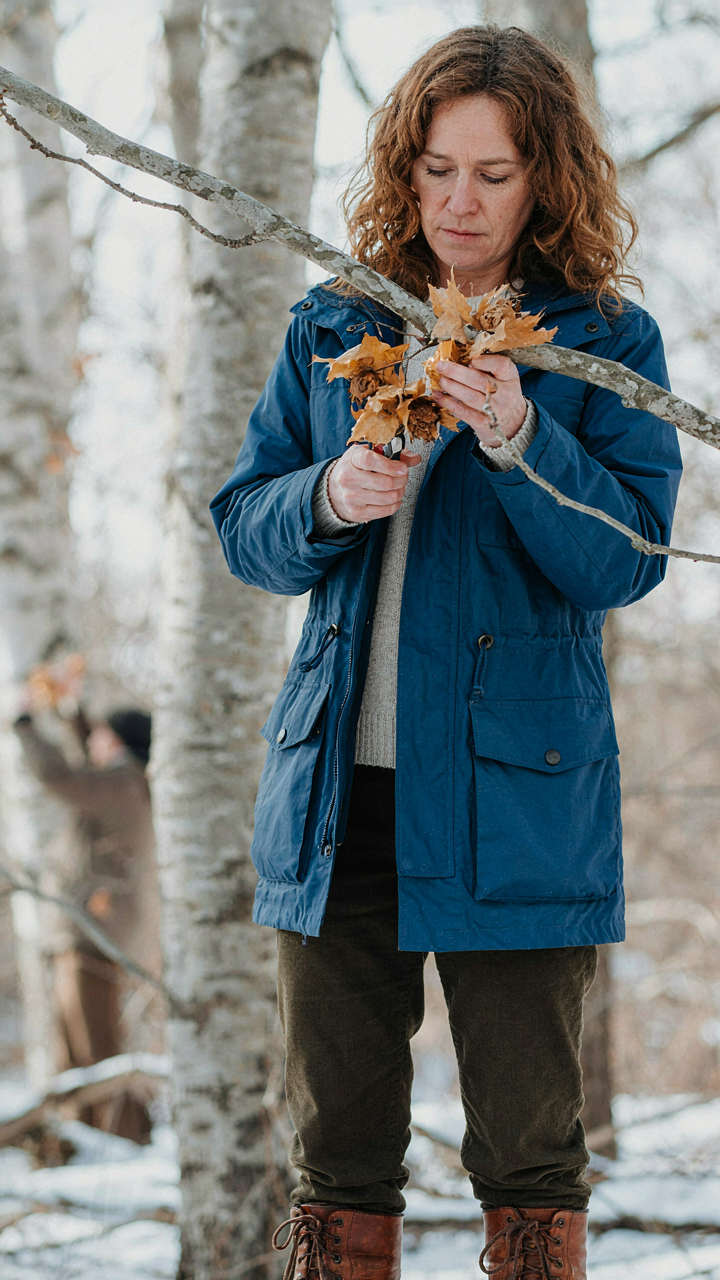
You want to feel like you’re doing something authentic instead of buying dead flowers from a big box store. That status anxiety is the mechanism: you need specimens that carry a story, not a barcode. Ethical wildcrafting isn’t gatekeeping. It’s a simple rule set that keeps you from destroying the ecosystem you’re harvesting from.
Start with the core principle: never take more than one third of any plant population in a location. This comes directly from conservation biology. Leave enough for the plant to regenerate and for other species that depend on it to survive. Identify the landowner or manager before you harvest anything. Public land has rules. Private land needs permission. Trespassing for plants isn’t foraging, it’s theft with a nature-positive story attached.
What’s Available Right Now In Your Region
The common mistake is thinking seasonal harvest means winter is dead. It isn’t. Winter offers bare branches with sculptural form, seed pods with structural integrity, and dried grasses that hold shape for months without processing. Spring floods your options with tender stems and unfurling fronds. Summer brings flowers at peak color and texture. Fall delivers the highest concentration of usable material.
Track your region’s growing calendar. Mark when specific plants fruit, flower, or go dormant. A sycamore seed ball appears in fall and holds through winter. Milkweed pods split in late August. Thistle stalks dry on the plant in September. Your gift specimens become stronger when you harvest them at their optimal stage, not whenever you remember to look outside.
Real Flowers Art: Preserving Nature’s Ephemera
How Pressing Actually Works Vs. What You’ve Been Told
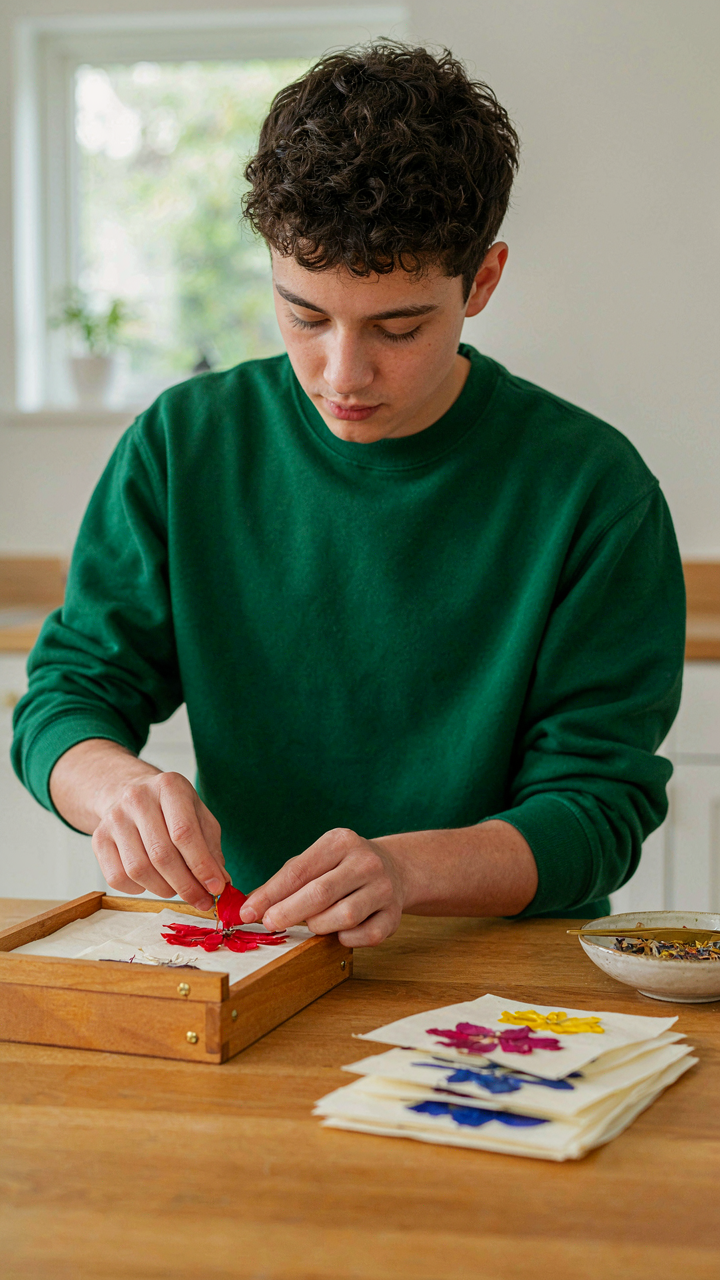
You want to preserve flowers because throwing them away feels like waste, and you need proof you didn’t miss the moment. Here’s the mechanism: pressing works through applied weight and time, not magic. The weight forces moisture out of plant cells while the paper absorbs it. A book does this passively. A dedicated press does it uniformly.
Most people default to books because they’re free and nearby. A phone book, dictionary, or textbook works fine for casual preservation. A botanical press—basically two wooden frames with screws—costs fifteen to forty dollars and delivers consistent results because you control pressure across the entire specimen. The difference isn’t subtle: books bend flowers unevenly, creating wrinkles. Presses flatten them flat. Choose based on volume and precision required, not sentiment.
Silica Gel Beats Air Drying For One Specific Reason
Preservation happens through moisture removal, and silica gel does it in days while air drying takes weeks. Here’s the trade: silica gel preserves three-dimensional shape and color vibrancy because it pulls moisture fast and uniformly. Air drying trades structure for simplicity. Flowers become brittle and fade, but you need zero equipment.
Silica gel costs eight to fifteen dollars for reusable cartridges and works in sealed containers—a plastic box, jar, or ziplock. Bury flowers in the gel, seal it, wait three to seven days depending on thickness. The gel changes color as it absorbs moisture, so you know when it’s done. Air drying requires hanging flowers upside down in a dark, dry space for weeks and delivers unpredictable results based on humidity and air circulation. Use silica gel if you want consistent, vibrant specimens. Use air drying only if speed matters less than zero cost.
The Un Framed Leaf Display: Art In Plain Sight
Mounting On Unconventional Surfaces
You want this to feel curated without looking like you tried. That’s the real tension here. The mechanism is simple: mounting pressed botanicals on surfaces outside the frame removes the “safe” barrier that makes art feel like decoration. It becomes integration instead.
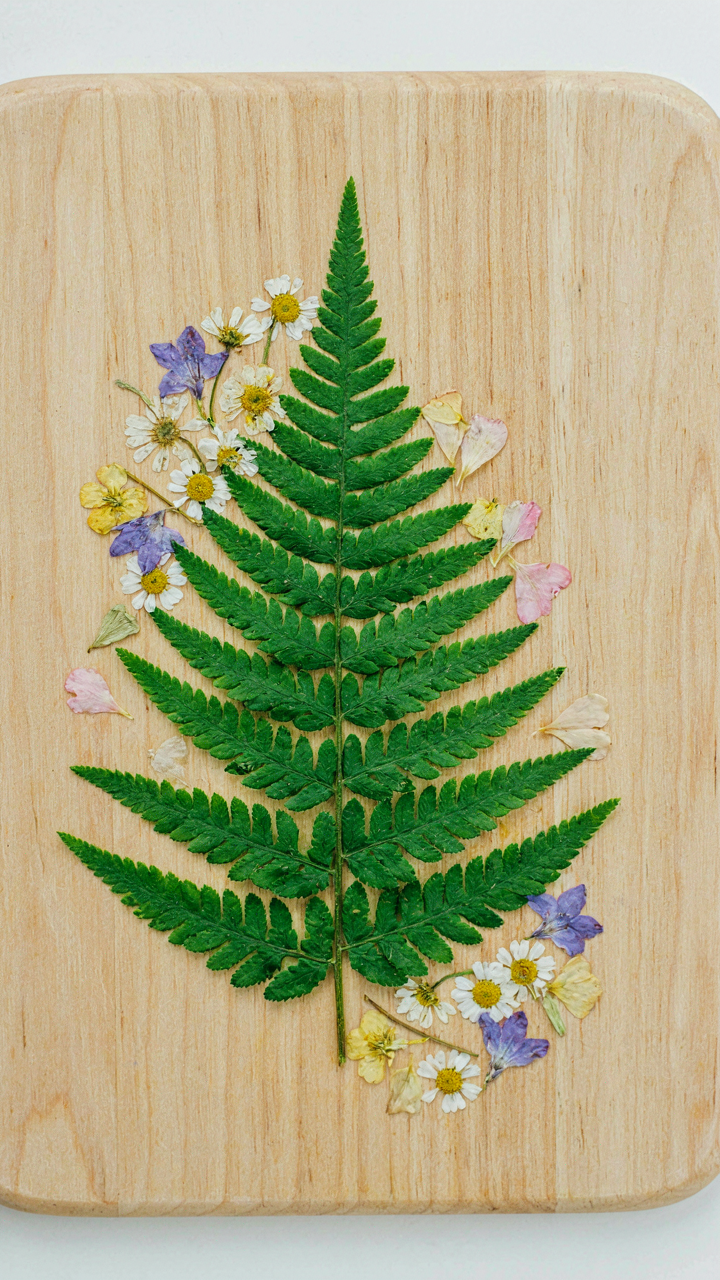
Pressed leaves and flowers adhere cleanly to wood, ceramic, fabric, and resin using archival-quality adhesive or embedding techniques. Wood surfaces—cutting boards, panels, box lids—absorb the botanical directly into the object’s purpose rather than isolating it behind glass. Resin casting preserves specimens while creating functional pieces like coasters or wall tiles. Fabric mounting via textile medium bonds botanicals permanently to canvas or linen without frames.
Arrangement For Dynamic Impact
Static symmetry kills impact. Borrowed from landscape design’s principle of focal hierarchy: you build a dominant axis first, then subordinate elements. One large pressed leaf becomes the anchor. Smaller specimens radiate outward in odd numbers, which disrupts predictability and forces the eye to move.
Cluster placement matters more than even spacing. Group three to five specimens close together, then space secondary clusters farther apart. This creates rhythm without repetition. The negative space around grouped botanicals becomes active—it’s not empty, it’s breathing room that makes the arrangement read instantly. Mount the dominant piece slightly off center, slightly higher. Everything else follows that weight, not a grid.
Dry Leaf Art: Beyond The Autumnal Cliché
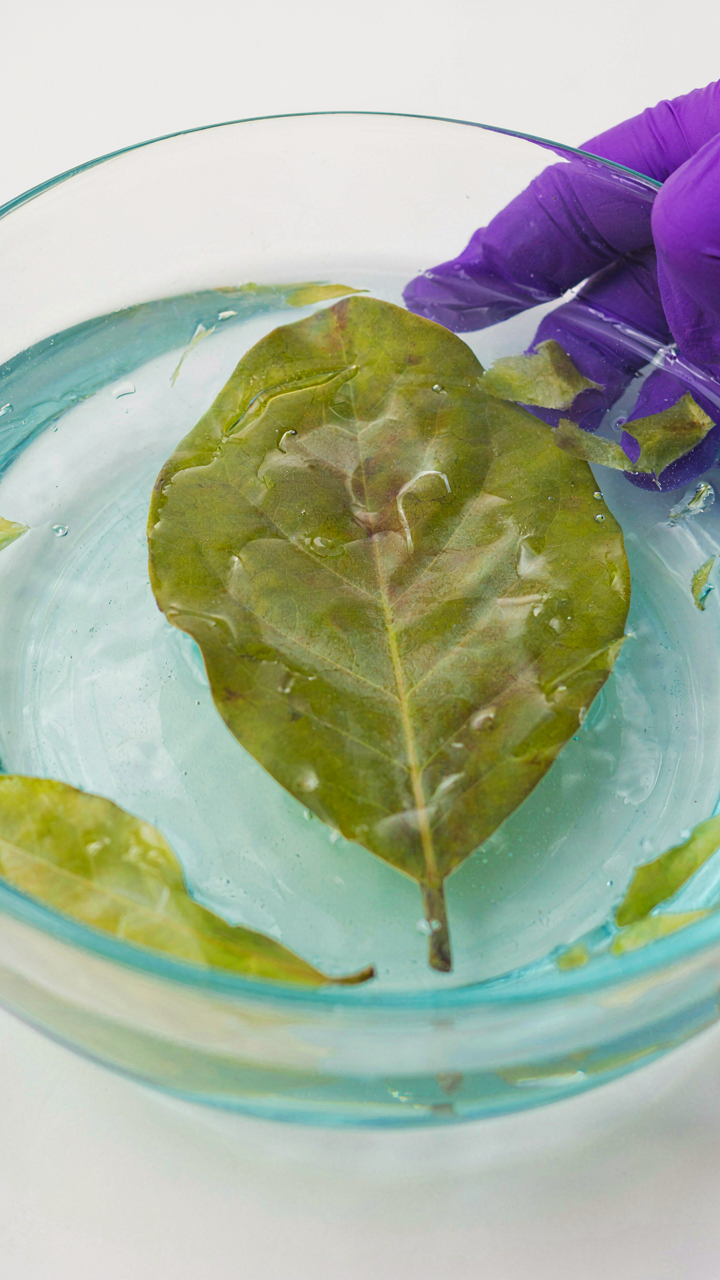
Leaf Skeletonization For Intricate Patterns
You want the gift that looks difficult enough to impress but simple enough that you won’t spend three weeks on it. That’s the real pull here, and skeletonization delivers it. Borrowing from biology, leaf skeletonization removes the chlorophyll and flesh while leaving the vascular system intact, which is the skeleton’s transport network. This creates the delicate vein structure that becomes your actual artwork.
The process is mechanical, not mystical. Soak leaves in water for one to two weeks until the tissue softens. Use a soft brush to gently scrub away the decayed matter, exposing the veins beneath. Magnolia, oak, and sweetgum leaves work best because their vascular systems are robust. Bleach the skeleton pale or leave it cream-colored. Mount it on dark paper or frame it directly. The outcome reads as intentional craft because it is.
Color Saturation Through Selective Dyeing
Most people dye skeletonized leaves with food coloring or watercolor and wonder why the result looks flat and muddy. They’re applying pigment to a surface that was never meant to hold it uniformly. Real saturation happens through the leaf’s remaining cellular structure. Acid dyes penetrate deeper than basic watercolors and bind to the residual plant matter rather than sitting on top.
Mix acid dye with water according to package ratios, then submerge the dried skeleton for fifteen to thirty minutes depending on desired intensity. Check every five minutes to avoid over-saturation. Glycerin can replace water for more even color distribution and prevents brittleness. Hang the leaves to dry vertically on parchment paper so gravity doesn’t pool the dye. Once dry, they hold color without fading for years when kept away from direct sunlight.
Fern Crafts: Architectural Botany Principles
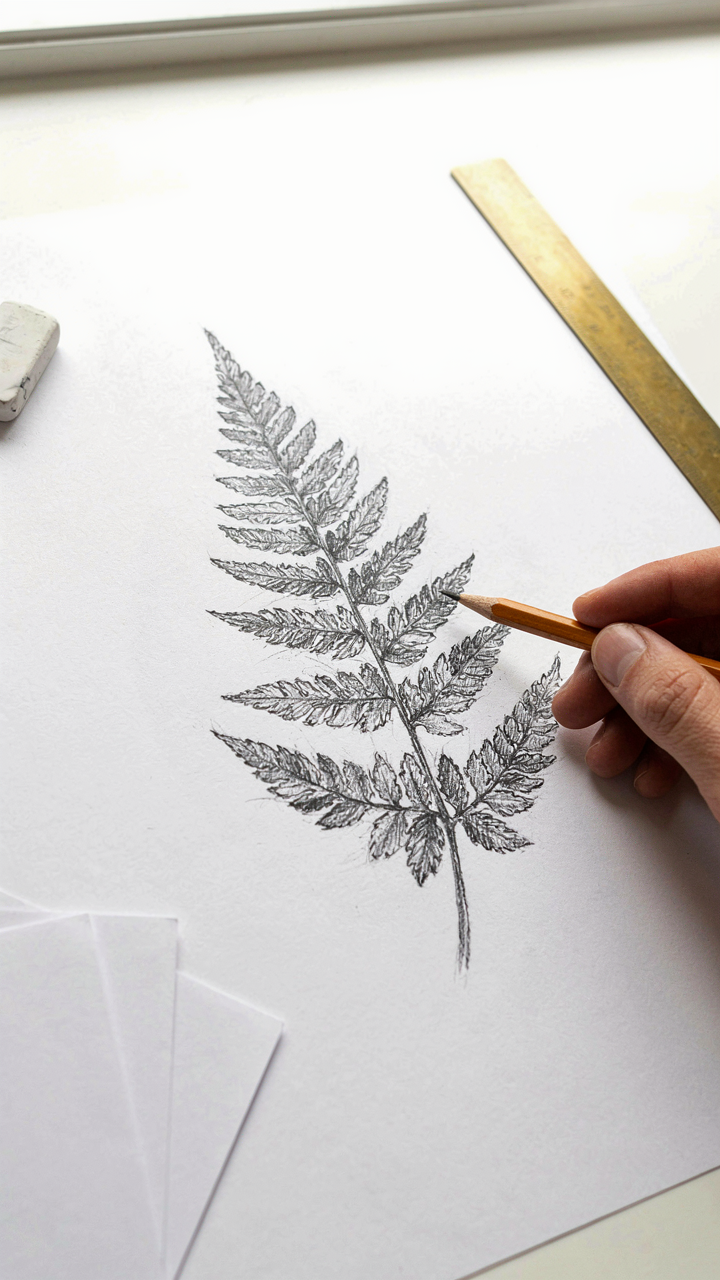
How Ferns Solve The Composition Problem
You want your botanical art to look intentional, not random. The mechanism you’re after is constraint, and ferns deliver it by accident. Mathematics borrowed from architecture calls this the golden ratio, but ferns don’t care about Fibonacci numbers. They care about resource efficiency. Each frond divides into smaller fronds, which divide again, following the same proportional rule. This self-similar branching creates visual weight distribution that reads as “balanced” without needing you to measure anything.
Ferns grew this way because it maximizes surface area for photosynthesis while minimizing structural strain. When you compose a fern-based gift, you’re borrowing a system that already solved the problem of making something complex look intentional. Sketch the main frond first, then subdivide at roughly consistent angles. The gift won’t feel rushed or amateurish because the underlying structure enforces restraint. Stop subdividing before you hit total visual chaos. The moment you recognize the repeating pattern, you’ve found your stopping point.
Pattern Repetition Without Monotony
Everyone says ferns have fractal patterns. That’s incomplete advice because fractals describe the structure but miss the design principle that matters. Fractal geometry refers to self-similar patterns repeating at different scales. A fern frond shows this at the macro level, the meso level, and the micro level. The tactical move is recognizing that you don’t need to render every single subdivision equally. Botanical art gifts that land do selective detail work instead.
Paint or draw the primary fronds with full precision. Drop secondary fronds to medium detail. Leave tertiary fronds as suggestion, or omit them entirely. This creates visual hierarchy without breaking the fractal logic. The viewer’s brain still reads “fern” because the proportional logic persists even at lower resolution. Your recipient sees intentional restraint, not lazy execution. Detail work compounds fatigue. Strategic vagueness compounds impact.
Pressed Flowers Artwork: The Resin Encapsulation Method
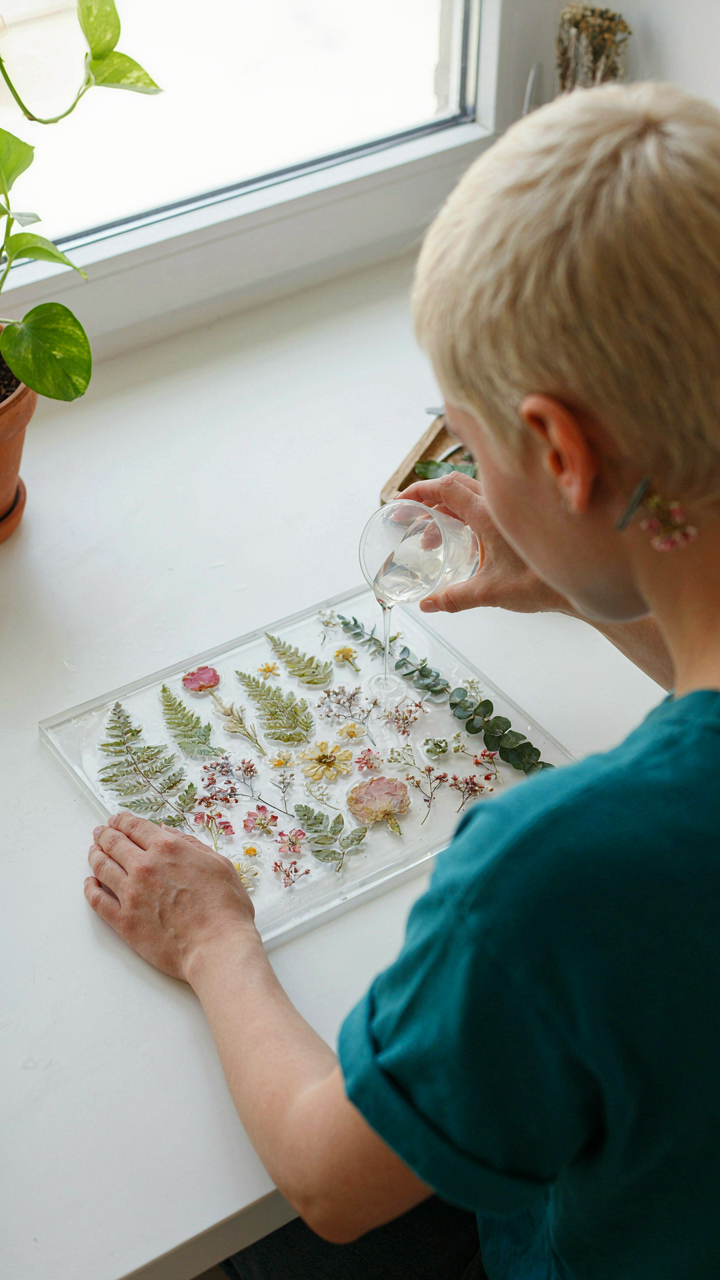
Choosing Your Resin And Casting Approach
You want this to look intentional, not like something you made in your garage. The mechanism that separates amateur from sellable is material selection paired with casting discipline. Think of resin work like chemistry: the substrate determines the reaction. Two-part epoxy resin dominates botanical encapsulation because it cures hard, yellows slowly, and accepts flowers without degrading them. UV resin exists but cures too fast for embedded layouts and yellows faster under sunlight exposure.
- Two-Part Epoxy Resin: Standard choice for botanical work. Cures in 24 to 72 hours depending on brand. Allows time to position flowers before hardening. Lower cost than alternatives.
- UV Resin: Fast cure in 5 to 10 minutes under UV lamp. Ideal for small pieces and pendants. Yellows quicker than epoxy in direct sun. Limits working time for complex layouts.
- Deep Pour Epoxy: Formulated for thick castings without shrinkage cracking. Better for layered botanical designs. Requires precise temperature control during cure.
- Crystal Clear Casting Resin: Achieves high gloss finish. Works well for flat pressed flower designs. Requires degassing to remove bubbles before pour.
- Polyester Resin: Cheaper option with shorter work window. Stronger chemical smell. Less forgiving for intricate flower placement. Acceptable for rough textures.
Casting technique matters as much as resin type. Shallow pour methods work for thin designs under quarter-inch depth. Deep pour requires layered casting: first layer seals the flowers, second layer locks them. Mix your resin according to ratio instructions precisely or you trap uncrosslinked material that stays tacky.
Managing Air And Achieving Clean Cure
Common advice says “tap the mold and it’ll bubble out.” That’s lazy thinking. Bubbles form because you’re mixing air into the resin or because air escapes from the flowers themselves during cure. Physics names this outgassing: the slower your flowers release trapped moisture and oxygen, the longer bubbles travel upward through the resin medium.
Vacuum degassing solves this but requires equipment. Without a vacuum chamber, use stillness and time. Pour your resin slowly in a thin stream rather than dumping it. Let the mold sit untouched for 30 to 60 minutes before moving it. Surface bubbles rise and pop naturally. Pour your first layer thin enough that flowers have nowhere to trap air pockets beneath them. Then wait the full cure window specified by your resin manufacturer before adding a second layer.
Dried Flower Card: Message Amplification
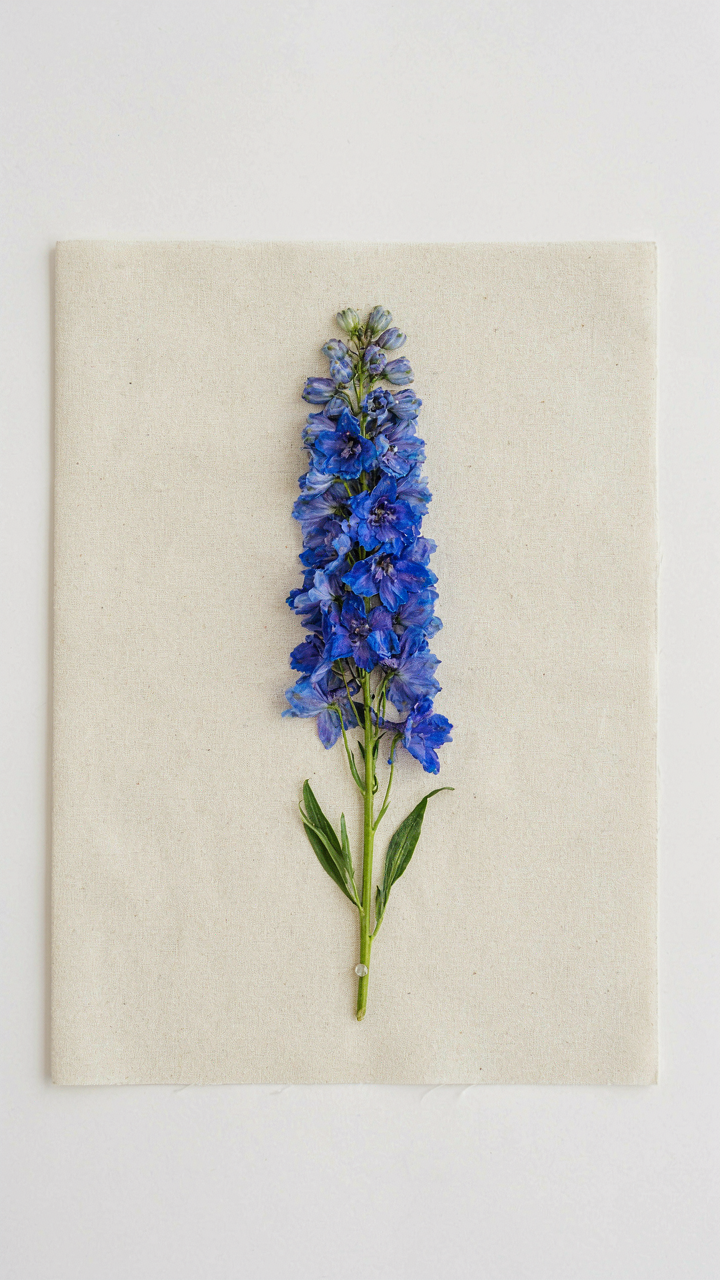
When Less Space Demands More Clarity
You want the card to feel intentional, not like you ran out of budget. Here’s the mechanism: constraint forces hierarchy. In design, negative space functions exactly like silence in conversation—it makes what remains impossible to ignore. A single pressed flower centered on cream cardstock stops the eye harder than a cluttered arrangement ever could. The recipient processes the gesture as deliberate, not default.
Minimalism works because it removes competing signals. Your message lands when nothing distracts from it. Place one botanical specimen, one text line, one pause. That’s the entire system. The dried flower becomes the anchor point; the paper becomes the amplifier. This approach requires you to choose the exact right flower and the exact right words. No room for filler. No room for hedging.
Heavy Stock With Visible Texture
Kraft cardstock and cotton blend papers aren’t trendy—they’re functional. Textured paper creates tactile friction that makes the card feel like an object, not a mass-produced item. When a dried flower sits on a smooth surface, it reads as flat. On rough paper, the flower’s edges cast micro-shadows that create depth without adding visual noise.
Choose paper with a visible weave or grain. Lay the pressed flower across the texture so the paper’s surface becomes part of the composition. The contrast between the delicate flower and the substantial paper stock signals that someone invested thought here. Mounting the flower with a minimal adhesive dot keeps it readable while the paper’s texture carries the weight of the design. This pairing transforms a simple card into a tactile statement.
The Anti Mass Produced Gift: Crafting True Value
Where The Gift Actually Comes From
You want to give something that proves you paid attention. That’s the real motive here, and it’s not shallow. The mechanism is simple: gifts with origin stories activate a different neural pathway than store-bought items. They signal investment of thought, not just money. Botanical art gifts work because you’re not handing someone a thing. You’re handing them a decision you made about who they are.
The best botanical art gifts carry a clear lineage. You drew it from a plant in their garden. You found a pressed specimen from a trip you took together. You sourced it from a local artist whose work matches their actual taste. The origin story doesn’t need to be elaborate. It needs to be true and specific to them.
Imperfection Proves The Point
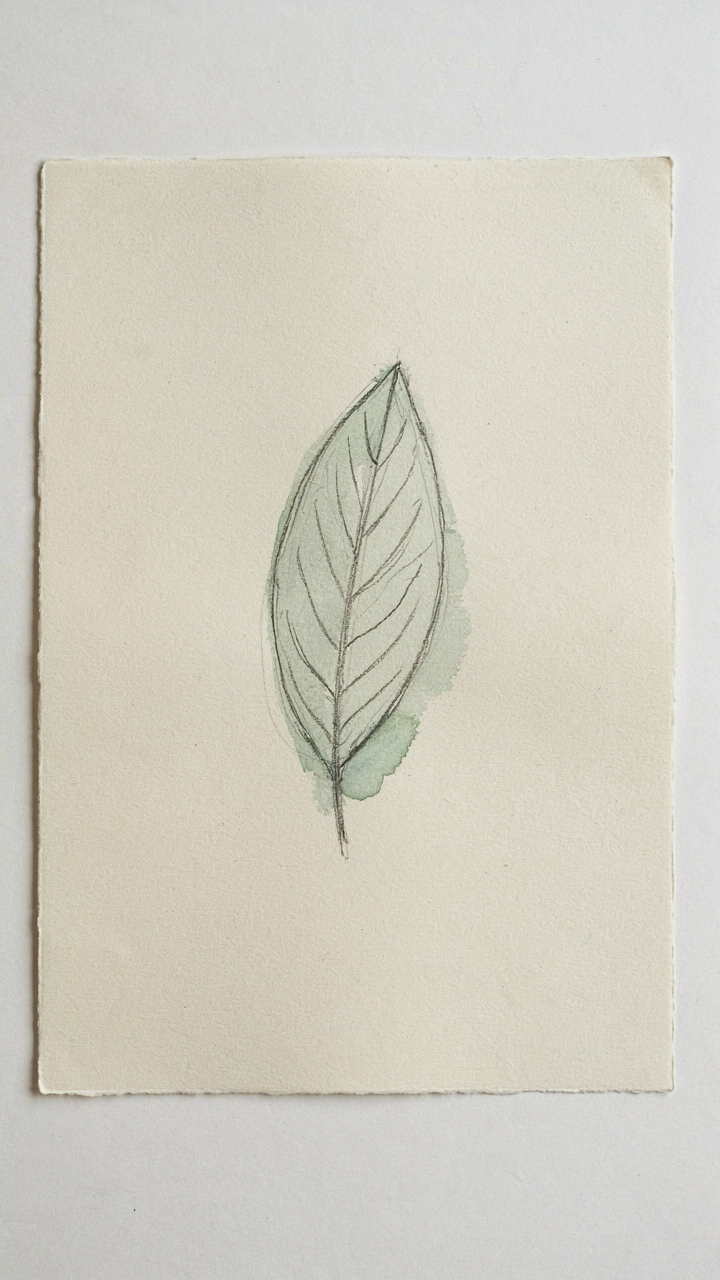
Most advice says your botanical art needs to be polished. It doesn’t. This is backwards. A hand drawn botanical sketch with visible hesitation marks, slightly asymmetrical leaf proportions, or unperfect color fills outperforms flawless digital renderings because imperfection proves human intention. Mass production erases all traces of decision making. Your mistakes show you decided to give your attention instead of your credit card.
The watercolor runs slightly outside the leaf outline. The pencil pressure varies. The paper shows age or wear. These are not failures to hide. They’re evidence that someone chose to spend hours making this specific object for this specific person. That evidence is the actual gift. Box it simply. Let the work speak without apology.
Your Greatest Obstacle Is Not Talent, But The Fear Of Imperfection Holding You Back
You’re waiting for permission that will never come. The gap between a mediocre botanical gift and a meaningful one isn’t skill. It’s shipping something imperfect anyway. Today, sketch one plant badly. Give it away. Watch what happens when someone receives a gift made by your hands instead of your hesitation. Imperfection is the only proof you actually tried.



