
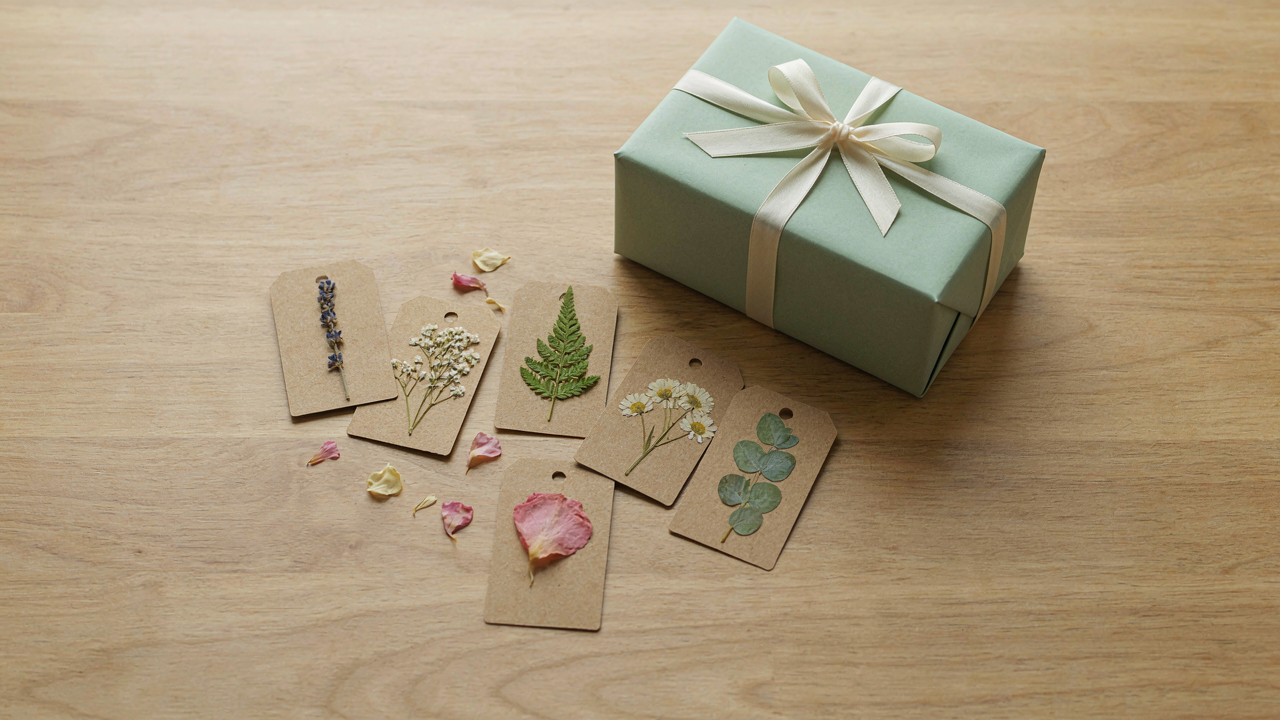
The Discerning Giver’s Edge: Why Dried Flower Gift Tags Trump Mass Produced Blandness

What Actually Separates Thoughtful From Forgettable
You want people to remember you gave them something. That’s the real motive here, and dried flower gift tags work because they signal scarcity in a world of infinite generic options. In economics, scarcity drives perceived value. A mass-produced tag with a stock image costs nothing to make and shows nothing about the giver. A dried flower tag requires selection, intentionality, and a material that degrades over time. The recipient sees the difference instantly. They understand that you picked this specific tag because it mattered, not because it was convenient. That gap between convenient and intentional is where all perceived value lives.
Blandness isn’t neutral. It’s a statement that says the wrapping doesn’t matter as much as what’s inside. That might be true, but it’s a weak negotiating position. The tag is the first touchpoint. It frames everything that follows. A dried flower tag frames the gift as curated, not rushed. The recipient’s brain registers this before they consciously think about it. They feel the weight of deliberate choices, and that feeling transfers directly to how they experience the gift itself. This is psychological priming in action, not manipulation. You’re simply using the medium to tell the truth about your effort.
The Signal That Disrupts Automatic Processing
Most people don’t actually see gift tags anymore. They exist in the visual noise of wrapping paper, ribbon, and the shape of the box. Dried flower tags interrupt that automaticity because they’re three-dimensional, textured, and fragile-looking. Your brain can’t process them as background noise. The moment someone picks up a gift with a dried flower tag, their attention snaps to the tag itself. They handle it differently. They slow down. This isn’t magic. It’s just what happens when something breaks the expected pattern in a high-stakes social moment like gift-giving.
The psychological mechanism at work is called interrupt-driven attention. When the tag looks different from every other tag they’ve received this year, it demands processing. The dried flowers create visual novelty and tactile surprise simultaneously. Your brain categorizes novelty as important, so the tag feels important, which makes the giver feel important. The gift feels more significant because the presentation demanded conscious attention instead of automatic acceptance. This effect compounds if the tag actually relates to the gift inside or reflects something you know about the recipient. Execution: before selecting a tag, identify one visual element the recipient responds to, then match the dried flowers to that element.
The Authenticity Protocol: Elevating Gifts With Pressed Flower Crafts
How To Press Flowers Like A Technician
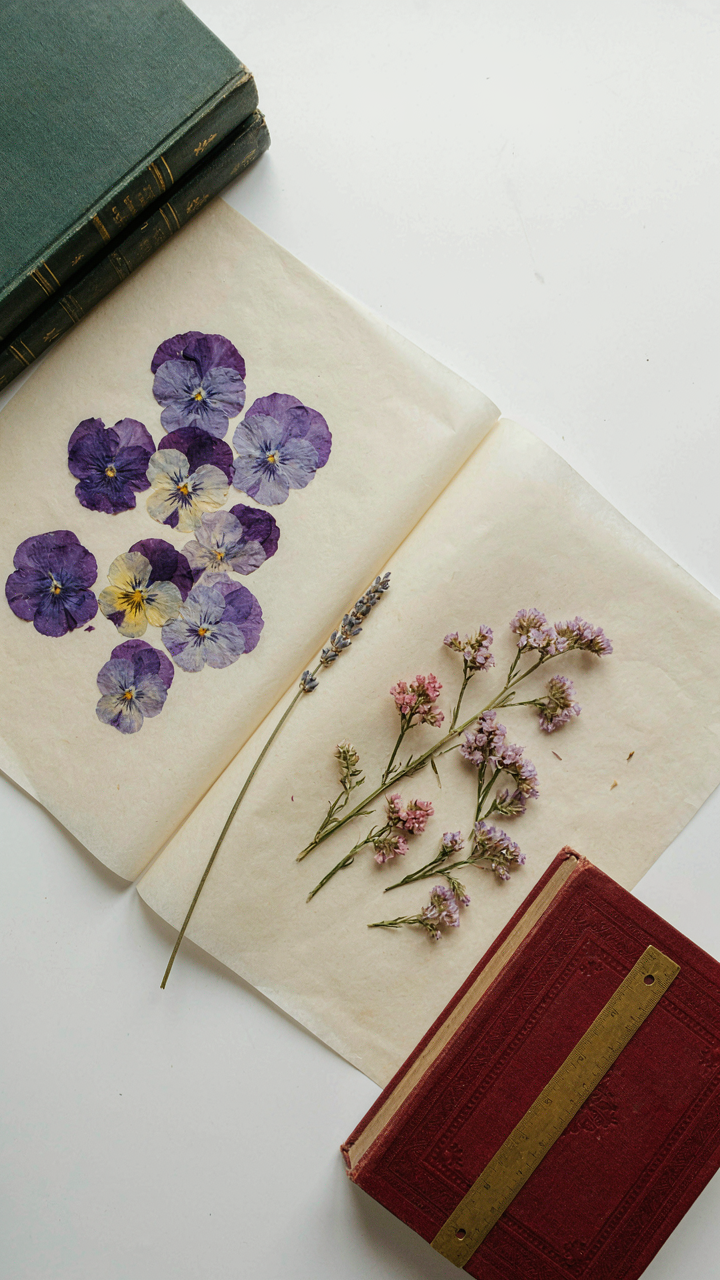
You want people to think you spent more time on this than you did. That’s the real driver. The mechanism is simple: pressed flowers outlast fresh ones because you’re removing moisture, which is what decay feeds on. Pressing stops the clock on deterioration. Use heavy flat objects—books, wooden blocks, or a flower press—and stack weight evenly. Place flowers between uncoated paper or parchment. Change the paper every two to three days for the first week to absorb residual moisture. Most flowers fully press in two to four weeks depending on thickness and water content.
The timeline matters because incomplete pressing creates brittle material that fails. Thin flowers like pansies and statice press in fourteen days. Thicker specimens like roses need thirty. Don’t rush or use heat—microwave pressing damages pigment and creates uneven results. Once pressed, store tags flat in a cool, dry place away from direct sunlight. UV light fades color faster than time alone. Pressed flowers are stable only when moisture is completely gone and kept that way.
Restraint In Design Separates Noise From Signal
Everyone slaps dried flowers onto a tag and calls it done. That’s the generic approach. Real minimalism here means using negative space as the primary design element, not decoration. Bauhaus designers understood this: remove everything except what carries meaning. One pressed flower per tag. One. The frame—the paper or cardstock—becomes more important than the specimen.
Choose neutral paper: cream, white, or soft gray. Avoid patterns. Mount the flower off-center using acid-free adhesive. This asymmetry creates visual tension that draws the eye, which is why it works where centered designs feel static. The tag’s purpose is identification, not distraction. Text should be minimal: sender name or a single word. Sans-serif typeface only. The flower is the statement. Everything else is infrastructure.
From Cut Flower Garden To Curated Tag: Sourcing Your Signature Blooms
Which Blooms Actually Survive The Drying Process
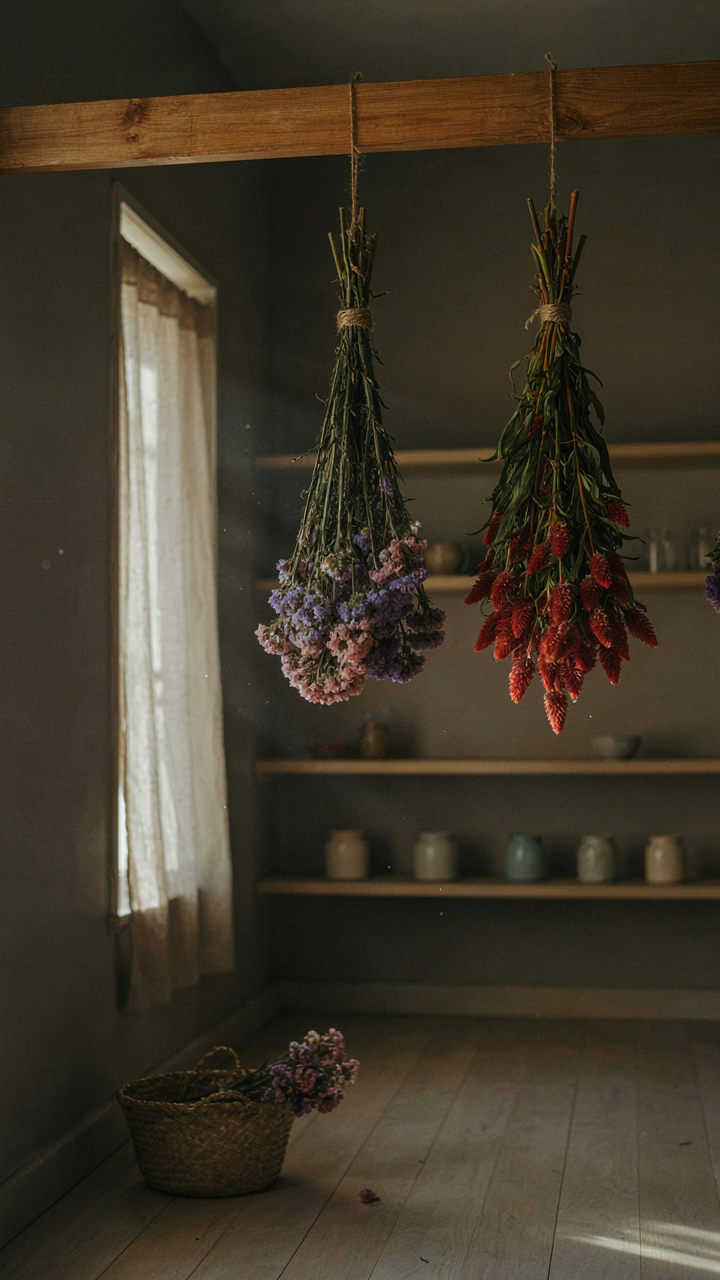
You want dried flowers on your gift tags because they signal intentionality. Here’s what nobody tells you: most flowers fail to dry well, and the ones that do follow basic botany. Flowers with low moisture content and sturdy cell structures retain color and form. Statice, baby’s breath, and celosia dry predictably because they evolved in arid conditions. Roses, peonies, and tulips collapse into papery husks because they’re moisture-dependent. The mechanism is simple: water content determines drying speed and final integrity. Pick flowers with naturally thin petals or dense, papery structures.
Your selection narrows fast once you understand this filter. Hydrangeas dry to muted tones but hold their shape. Larkspur and delphinium maintain structure through the entire process. Grasses and seed pods require almost no intervention. Carnations work because they’re bred for durability. Skip garden staples like dahlias and ranunculus unless you want brown disappointment. Test one bloom first. Hang it for two weeks. Judge the result before committing to volume.
Growing Dense Specimens At Home
Greenhouse conditions aren’t required to grow flowers worth drying. You need intentional spacing and light exposure instead. Commercial growers produce weak stems because they crowd plants for yield. Home gardeners can do the opposite: fewer plants per square foot means thicker stems and larger blooms. Sunlight directly correlates with cell structure density. Six hours minimum daily exposure hardens the plant tissue before harvest.
Start with statice and celosia if you’re new to this. Both tolerate poor soil and inconsistent watering. Harvest them at peak bloom before petals soften. Tie bundles loosely with twine and hang them upside down in a dark, ventilated space for ten to fourteen days. Temperature should stay between 60 and 75 degrees. Once dry, store them flat in acid-free paper in a cool closet. Handle minimally. They’re ready for pressing into your gift tag designs once storage curing completes.
The Artisan’s Toolkit: Mastering Crafts With Dried Flowers
The Right Equipment Separates Results From Waste
You want the tag to look intentional, not like you assembled it in five minutes. The truth is most people stop at scissors and glue, then wonder why their tags fall apart or look fragile. Dried flowers require specific handling because their structural integrity depends on moisture control and precise attachment. Basic tools fail because they either crush the petals or create weak bonds that fail under humidity shifts.
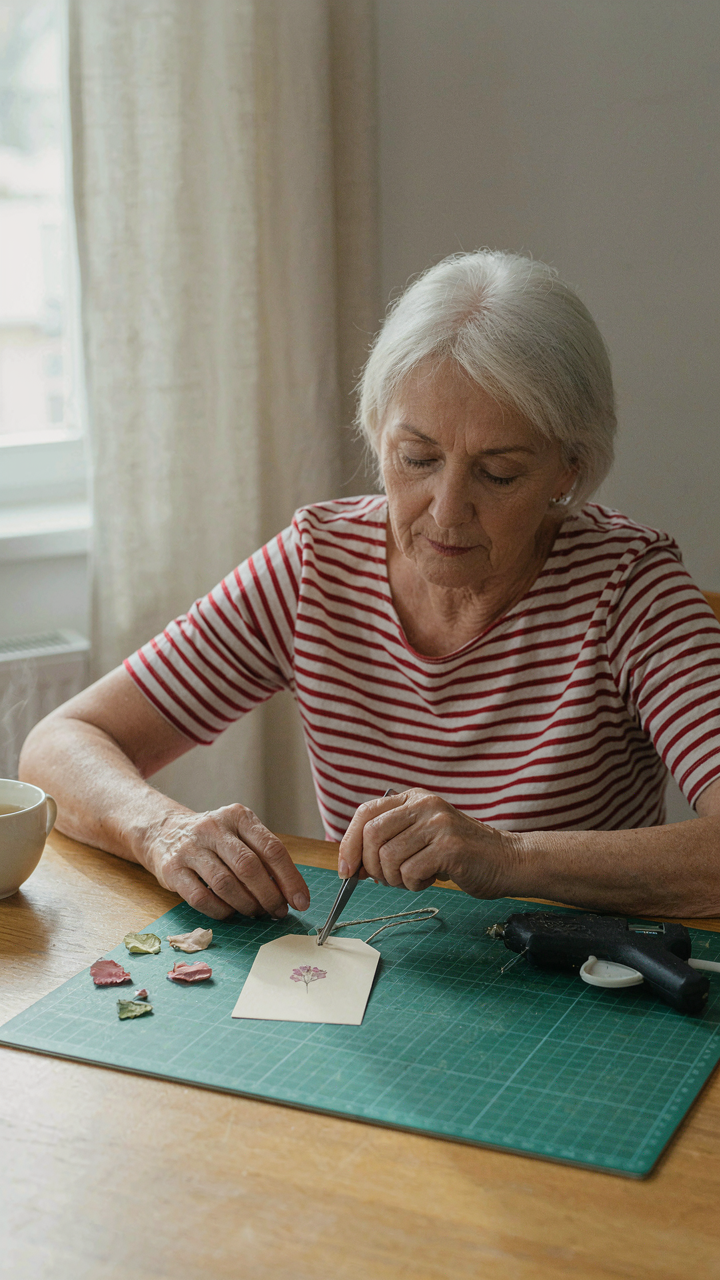
- Bone folder: Creases cardstock cleanly without damaging adjacent dried flowers. Prevents the crushing that dull tools cause when scoring or folding tag material.
- Tweezers or fine-tip forceps: Positions delicate stems and small blooms without fingerprints or pressure damage. Essential for intricate arrangements where placement matters.
- Low temperature glue gun: Bonds flowers to cardstock without heat that causes browning or brittleness. Higher temps denature the botanical material faster than time alone would.
- Cutting mat with self-healing surface: Protects dried flowers from being crushed during trimming or scoring. Prolongs the lifespan of both tool and material.
- Fine-grit sandpaper or sanding block: Smooths cardstock edges that would otherwise snag and tear delicate stems during assembly.
The equipment you choose determines whether tags hold their structure for months or degrade within weeks. Invest in tools designed for precision, not volume. A single low-temperature glue gun outlasts five standard ones when working with botanicals.
Creating Tags That Survive Time And Movement
Durability in dried flower tags operates like structural engineering: distribute stress across multiple connection points rather than concentrating it in one spot. The common advice is to just seal everything with resin or varnish. That’s incomplete. Sealing traps residual moisture inside the arrangement, which accelerates decomposition from the inside out.
The real mechanism is threefold. First, ensure your dried flowers are genuinely dry before assembly, with moisture content below 15 percent. Second, use pH-neutral adhesives that don’t chemically degrade the plant material. Third, apply a thin, breathable protective layer like matte acrylic spray instead of heavy resin coatings. This allows the flowers to maintain their current moisture state without trapping or losing water too rapidly.
Position the tag string or hole punch away from where the glued flowers sit. Stress concentrates at attachment edges, so move the punch to the blank cardstock area. The dried flower arrangement should never bear the tag’s weight during handling. Rotate your string anchor point ninety degrees from the primary flower cluster, and test the assembly by hanging it empty for three days before adding the gift.
Beyond Tags: Handmade Cards With Dried Flowers For Deeper Connection
When Pressed Flowers Actually Matter
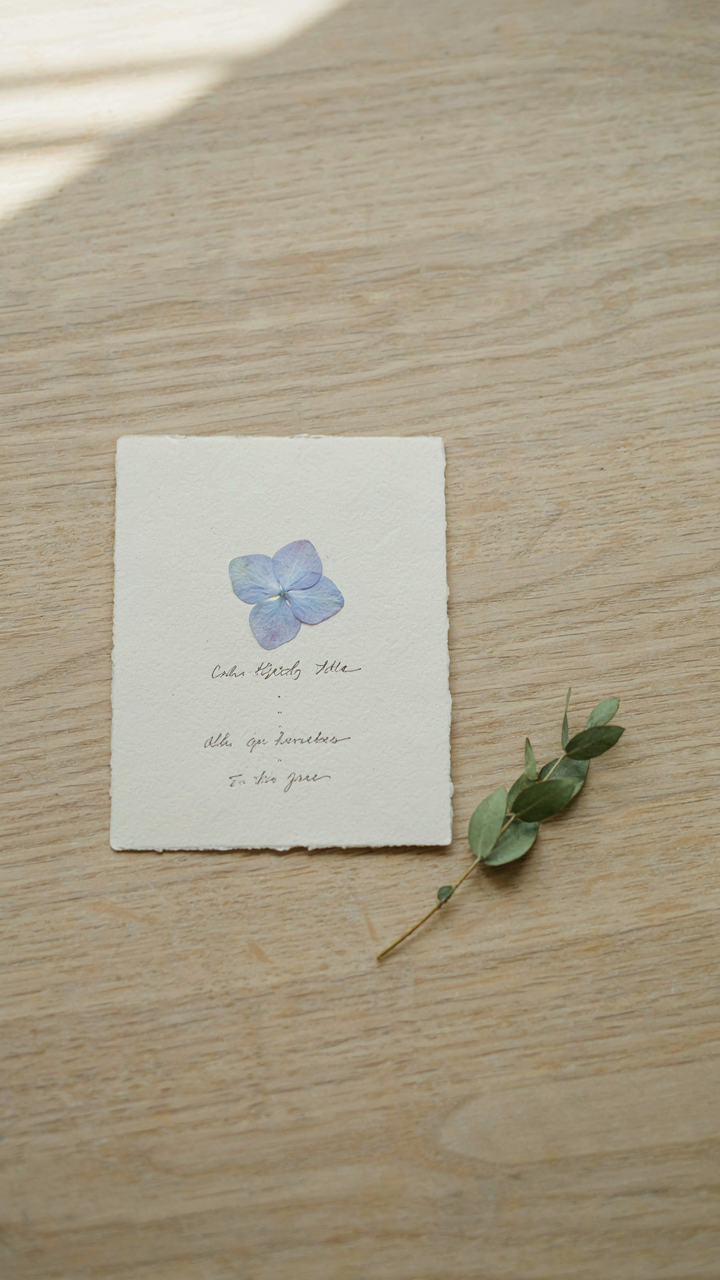
You want the card to say you spent time on it instead of buying something mass-produced. That’s the real game here. The mechanism is simple: pressed flowers in card design work because they create friction between the recipient’s expectation and reality. They’re expecting paper. They get evidence of deliberate labor. The difference between those two things is where meaning lives.
Pressing flowers flat takes days, sometimes weeks depending on the method and species. You’re not adding decoration after the fact. You’re incorporating the botanical material into the card’s structural design from the start, treating it as part of the layout rather than an ornament glued on top. This distinction changes how the card reads. The flower becomes integral to the message, not separate from it.
Words That Work With Visual Silence
Messaging advice around handmade cards is usually wrong. People tell you to write more, make it heartfelt, add personality through prose. That’s backwards when dried flowers are present. The flowers are already doing the work of saying “I cared enough to create this.” Your words should operate in a different register.
Keep the text sparse and specific. Name a concrete memory, a real detail about the recipient, or a direct statement about why you’re giving this. The dried flowers handle the emotional labor. Your job is precision. The combination of pressed botanical material plus a single strong sentence outperforms flowery handwriting and long paragraphs every time. Dried flowers are already the decoration. Make your words functional instead of ornamental.
The Enduring Statement: Maximizing Impact With Dried Flowers Ideas
Keeping Color From Fading Into Gray
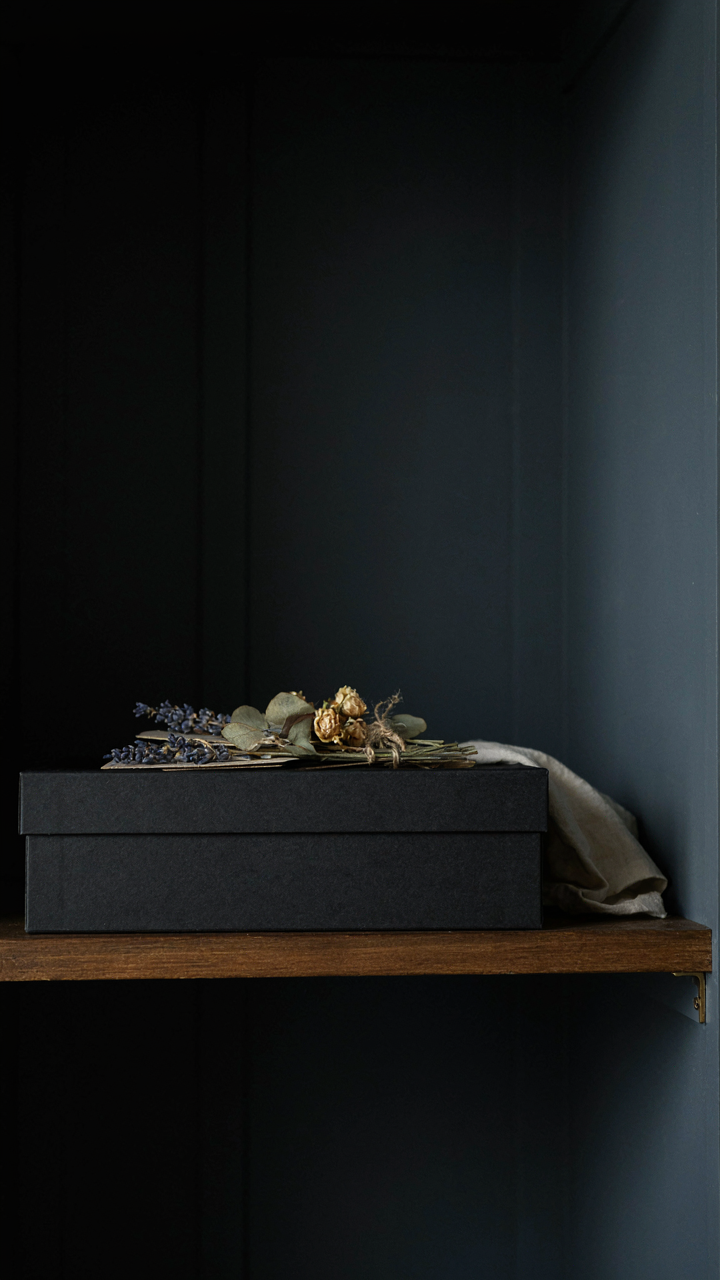
You want dried flower tags that don’t look dead in three months. The real fear isn’t that flowers fade—it’s that your gift looks cheap and forgotten before anyone uses it. Here’s the mechanism: color loss in dried flowers happens through light exposure and oxidation, the same process that degrades any organic material over time. UV rays break down pigments faster than anything else.
Silica gel drying locks color better than air drying because it removes moisture rapidly, stopping the degradation clock earlier. Store finished tags in opaque containers away from direct sunlight. This isn’t optional if you want them lasting a year. Some makers use glycerin solutions during the drying process to retain flexibility and color depth, though this adds complexity. The payoff: tags that stay vibrant enough to display as decoration after the gift is opened.
From Tag To Permanent Fixture
Most people trash gift tags after unwrapping. The real move is designing them so they become something else—a bookmark, a hanging ornament, a framed piece. This shift happens the moment you stop thinking of the tag as disposable and start building it as a small object.
Attach tags to a thin wire loop or twine at purchase. Include a note suggesting three alternate uses: pressed into a book, hung on a shelf, or mounted in a shadowbox. Tags with reinforced edges and quality cardstock hold up to handling better than flimsy versions. The recipient decides whether to keep it, but you’ve removed the friction that makes them toss it. Design with this reuse in mind from the start, and you’ve turned a tag into a lasting piece of someone’s home.
The Scarcity Principle: Engineering Desire With Unique Pressed Flower Tags
Why Limited Supply Actually Works
You want permission to charge more. That’s the real reason scarcity matters to you. Economics calls this the scarcity principle: supply constraints drive perceived value independent of actual quality. Dried flower tags hit this mechanism hard because no two pressed flowers are identical. Each tag carries variation built into its material. A florist can’t mass-produce sameness even if they wanted to. This isn’t marketing theater. It’s a physical property you can leverage.
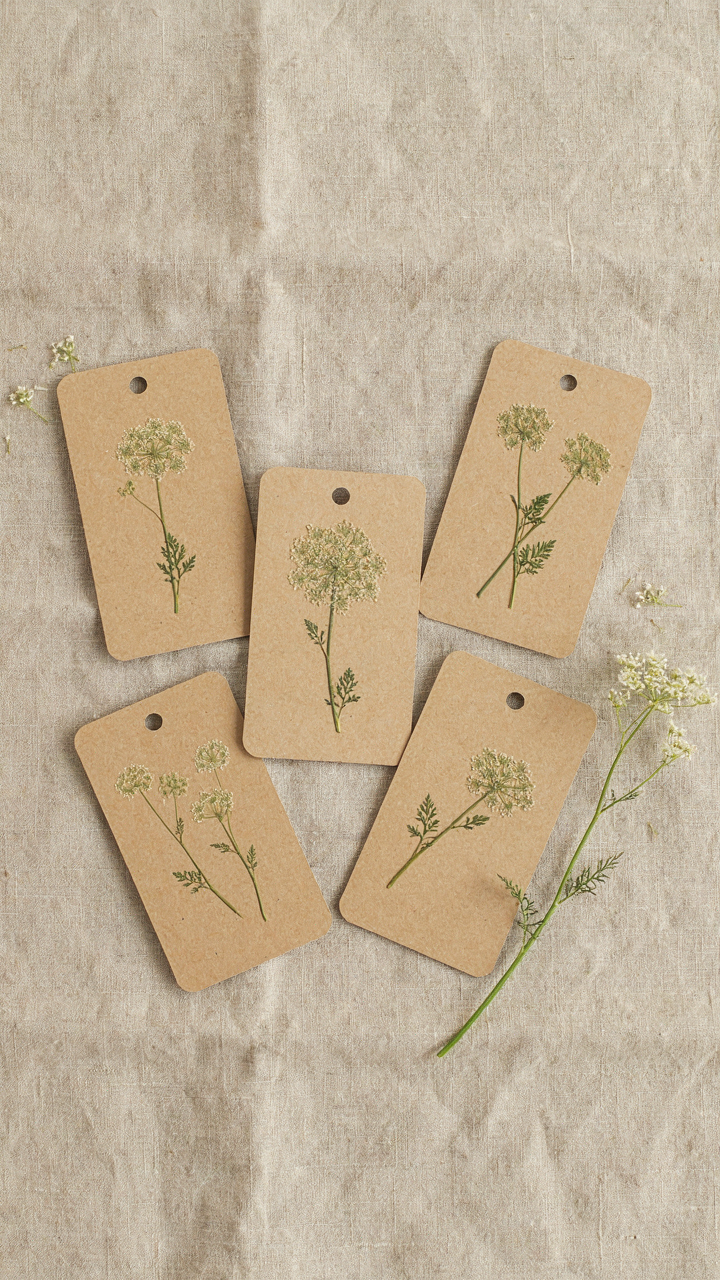
Limited batches of pressed flower tags create authentic scarcity, not artificial gatekeeping. When a sender knows only five tags exist with that exact Queen Anne’s lace pattern, they assign higher meaning to the gift. The receiver notices the constraint too. They clock it as deliberate, not cheap. This shifts how they perceive the entire package. The tag becomes evidence of thoughtfulness, not an afterthought. Price resistance collapses when people believe they’re holding something unrepeatable.
The Desire For Things Nobody Else Has
Behavioral psychology proves humans don’t want objects for utility. They want them for differentiation. Pressed flower tags satisfy this directly because personalization through scarcity bypasses the comparison game. Your friend can’t buy the same tag at five retailers. They can’t see their coworker carrying an identical one. This removes the status anxiety that kills desire.
The mechanism works like this: you source unique pressed flowers, create limited batches tied to those specific specimens, then document the constraint. Don’t hide it. Name the flower species, mention the pressing date, note the batch size. When someone reads “eight tags with glacier buttercups, pressed July 2024,” their brain registers finality. Scarcity becomes verifiable fact, not sales language. They decide to buy before rational objection sets in.
Post Gifting Dynamics: Integrating Dried Flower Art Into The Stylish Home

Tags As Miniature Art Pieces
You want people to notice the care you took. That’s the real reason you’re reading this. The mechanism is simple: dried flower gift tags stop functioning as packaging the moment someone sees them as objects worth keeping. They become investment pieces in a room’s visual narrative instead of trash destined for a drawer.
Treat tags as framed specimens rather than labels. Mount them in shadow boxes, lean them against books on shelves, or pin them to cork boards as rotating gallery displays. The dried flowers already have inherent structure from their botanical form. You’re just removing them from the transaction context and placing them in the contemplation context where design actually lives.
Small Botanical Vignettes
Like ecology demands spatial relationships between organisms to create a functioning system, dried flower tags demand intentional placement groupings to anchor a room’s visual weight. Don’t scatter them. Cluster three to five tags around a single surface to create deliberate focal points that read as curated rather than accidental.
Build vignettes on nightstands, desk corners, or shelf edges by pairing tags with complementary objects: smooth stones, glass vessels, leather-bound journals, or ceramic vessels. The tags provide the organic vertical element. The surrounding objects provide the grounding mass. Rotate tags seasonally or when their aesthetic no longer serves the space. This keeps the vignette from becoming background noise that your eye stops registering.
The Real Obstacle Isn’t Finding ‘style,’ It’s Your Refusal To Commit To Genuine Expression In The Smallest, Most Impactful Details
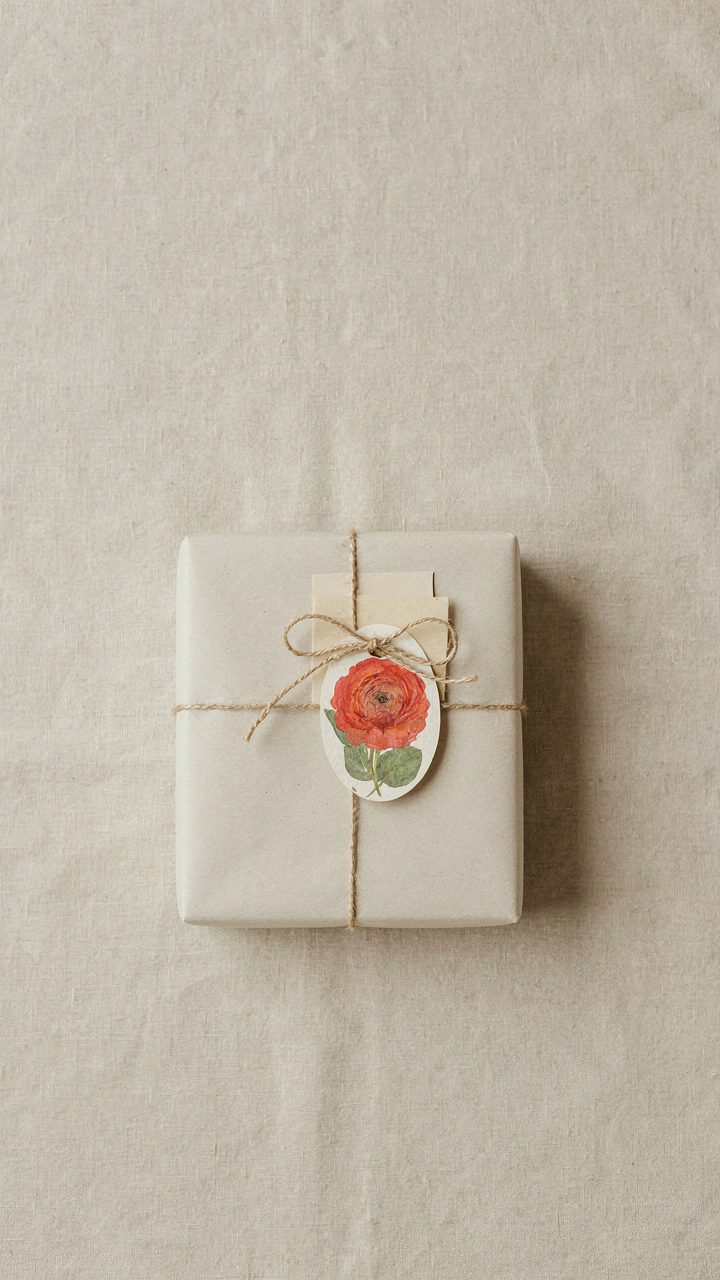
Most people treat dried flower gift tags as afterthoughts. They’re not. They’re the difference between a gift that whispers and one that screams intention. Stop scrolling for the “perfect” tag and buy one today that makes you uncomfortable in its honesty. The real move isn’t collecting options. It’s choosing something and actually using it. Your home doesn’t need more style choices. It needs you to stop hedging your bets on beauty.



