
The Forager’s Fallacy: Why “Just Picking” Fails Your Wildflower Bouquet

Ecological Impact Versus Aesthetic
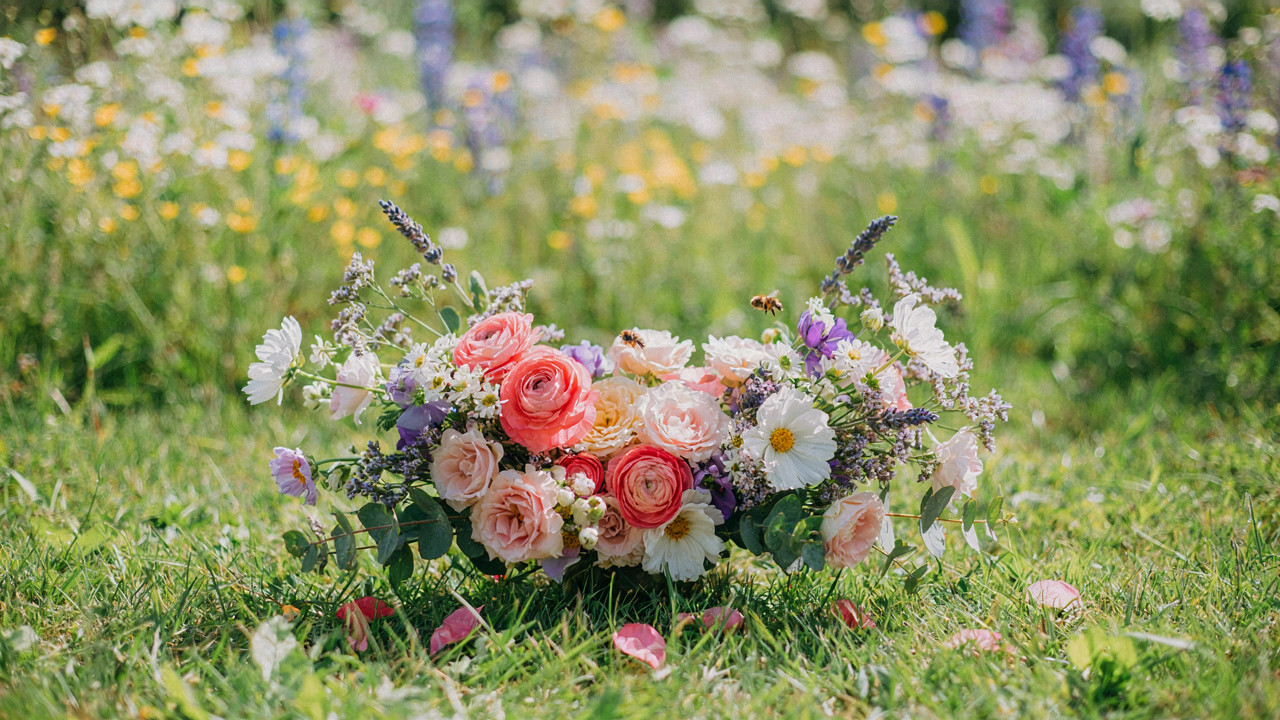
You want the bouquet to look effortless because effortless signals authenticity and taste. The mechanism that kills this is simple: wild plants survive through scarcity, not abundance. Pull a population below its reproduction threshold and it doesn’t come back next season. Ecology calls this carrying capacity. In bouquet sourcing, it’s the difference between sustainable harvest and strip-mining a meadow. Most weddings don’t think past “it looks natural.” They don’t calculate whether the field can regenerate what they took.
Wildflower bouquets work because they’re rare in formal settings, not because they’re free. The aesthetic value exists precisely because most people don’t pick indiscriminately. Rare native species like lady’s slipper orchids or trilliums can take years to mature from seed. Removing even a few specimens from a small population creates a visible gap. The field looks picked over. Your bouquet gains nothing from destroyed habitat, and your guests notice the difference between thoughtful sourcing and amateur depletion.
Legal And Ethical Sourcing Principles
Ethics without law is just marketing. Most states prohibit harvesting wildflowers from public land without explicit permission. Private land requires the owner’s consent in writing. National parks and protected areas ban collection entirely. The common advice to “ask permission first” is incomplete. You need to know which species are listed as threatened or endangered in your state before you ask anyone anything. Picking a protected flower on private land with permission is still illegal.
Ethical sourcing means working with growers who cultivate wildflowers specifically for cutting, or working with florists who source from verified sustainable suppliers. Nursery-grown wildflowers look identical to wild ones but require zero habitat extraction. Order three weeks before your wedding. Most florists source from regional growers or specialty suppliers who propagate from seed, ensuring the meadow stays intact while your bouquet stays authentic.
The Chaos Theory Protocol For Wildflower Bouquets
Nature’s Hidden Math
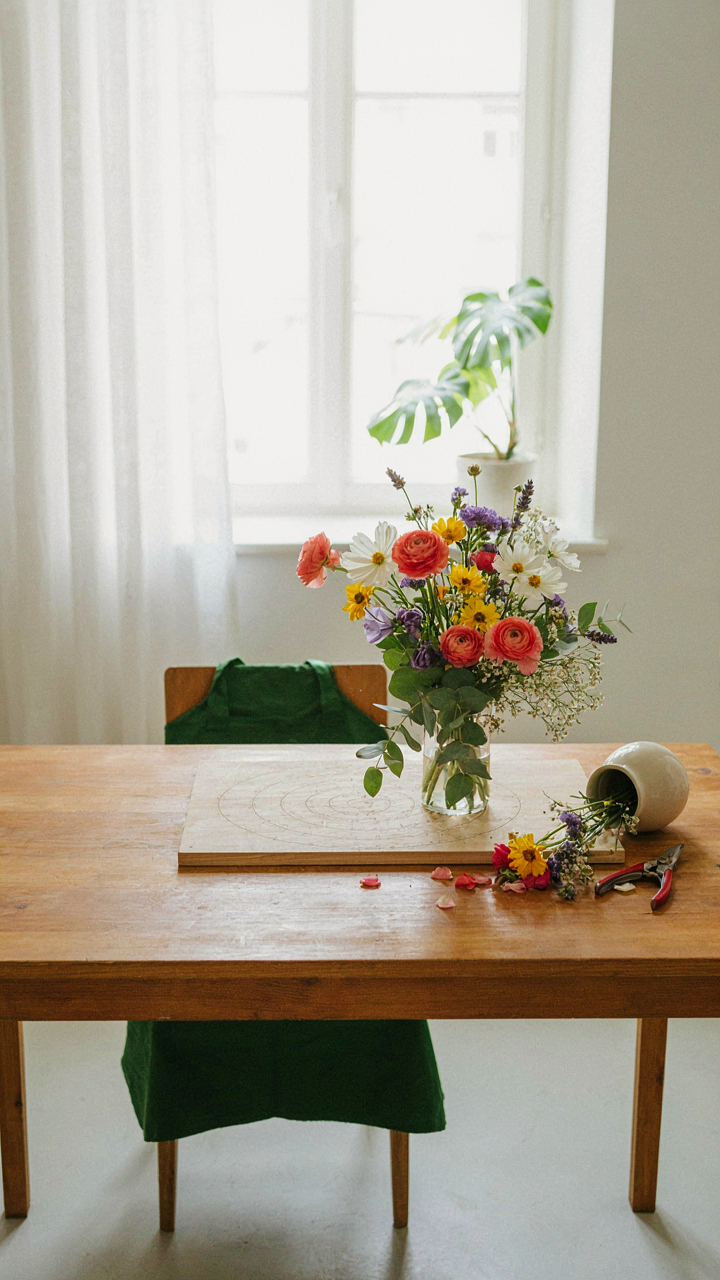
You want this section to make you look smart at the reception. Here’s the real mechanism: wildflower bouquets work because they follow mathematical patterns, not because they look “wild.” Biology uses Fibonacci sequences to grow plants efficiently. Your bouquet uses the same ratio—1, 1, 2, 3, 5, 8—to arrange stems so every angle reads as intentional, not accidental. The spiral appears in sunflower seed heads, pinecones, and unfurling ferns. Apply it to bouquet construction and you stop fighting randomness.
The Fibonacci spiral isn’t decoration. It’s the path your eye travels through the arrangement. Start with one stem at the center. Add one more beside it. Then two. Then three. Then five. Each new group sits at roughly 137.5 degrees from the last—the golden angle. Florists call this intuition. Mathematicians call it inevitability. Wedding guests call it stunning. The mechanism works because human eyes evolved to recognize efficiency in nature.
Pattern Stacking At The Stem Level
The common advice says “just mix wildflowers randomly.” Wrong. Fractal patterns repeat at every scale—from the overall silhouette down to how individual stems branch. Architecture borrowed this concept from nature long ago. Your bouquet must fractal too. The large shape mirrors the small shapes. Delphinium spikes contain dozens of tiny florets arranged the same way the whole bouquet arranges itself.
Build this by nesting repetition. The outer perimeter uses tall stems that lean outward at 45 degrees. The middle layer uses medium stems at 60 degrees. The inner core uses short dense clusters at 90 degrees. Each layer contains the same proportional mix: the visual weight stays consistent when you zoom in or out. Construct the arrangement by this layering protocol, not by “feel,” and chaos becomes a system you can replicate.
Bridal Bouquet Wildflower: Beyond The Bloom
Branches, Seed Pods, And Structural Depth
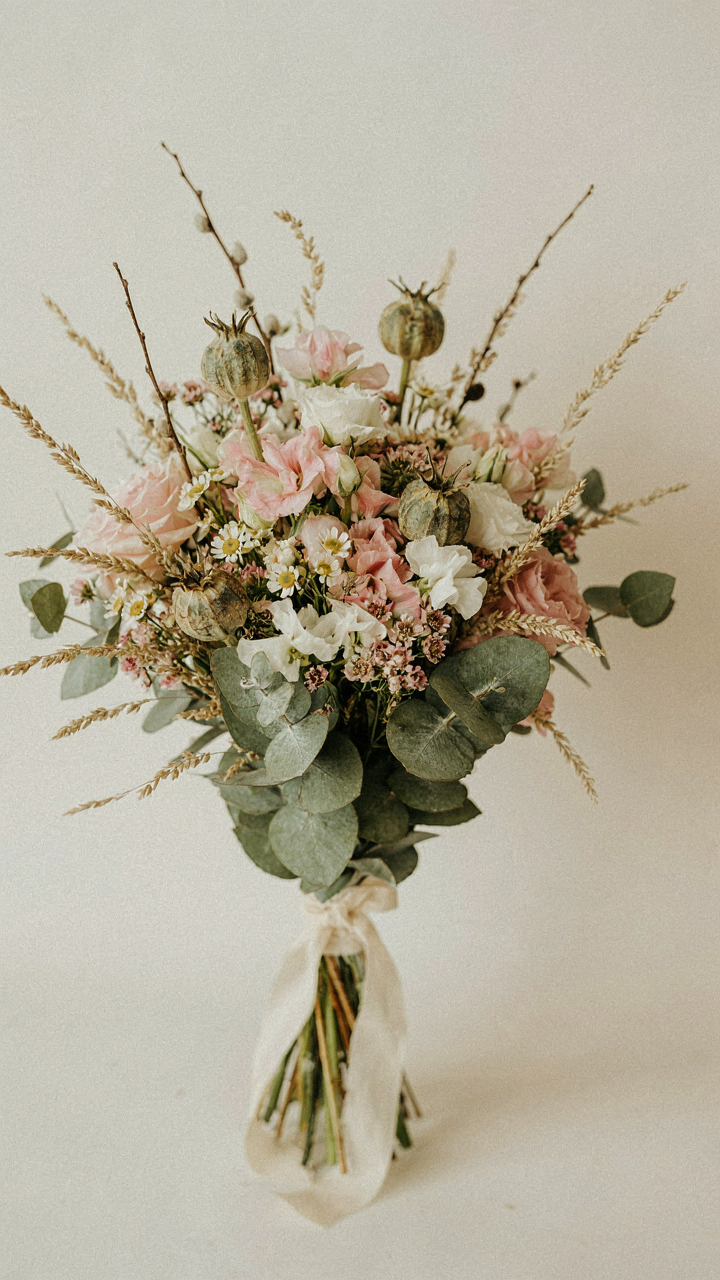
You want your bouquet to look intentional, not like you grabbed whatever was on sale. That means moving past flowers alone. Wildflower bouquets work because they mimic meadow ecology—layers of height, texture, and visual weight that flowers cannot generate by themselves. Non-floral elements create the scaffold everything else hangs on.
- Dried branches and twigs: Provide vertical line and skeletal structure. Willow, birch, or pussy willow creates movement without competing for visual attention against blooms.
- Seed pods and grasses: Add architectural interest. Nigella pods, wheat, rye, or pampas grass introduce geometric shapes and subtle color variation beyond petal tones.
- Foliage stems: Eucalyptus, dusty miller, or ruscus extend the color palette into greens and silvers while filling gaps. They’re functional scaffolding, not filler.
- Berries and fruit clusters: Hypericum berries or skimmia add weight and unexpected color. They age gracefully and photograph well in changing light.
- Lichen-covered branches and driftwood: Real texture that reads as collected, not designed. These elements signal craft and intention to anyone looking close.
The goal is proportion. Non-floral elements should occupy 30 to 40 percent of the bouquet’s visual mass. This prevents the arrangement from feeling like a flower dump and gives each element room to register. Assembly works backward—build the structure first, slot flowers into the gaps second.
Layering Rough Against Smooth
Most wedding bouquet advice treats texture as decoration. It’s not. Texture is contrast, and contrast creates the visual tension that makes people stop looking at phones. Wildflower bouquets need opposing materials working against each other.
Pair papery seed heads against velvety petals. Smooth hypericum berries against fuzzy yarrow. Rigid branches against soft ornamental grasses. The eye reads these differences as intentional composition, not accident. One-note texture reads as flat and forgettable. Rough against smooth is the mechanism that makes a bouquet feel alive instead of arranged.
Build in layers rather than mixing everything at once. Start with structural elements, add mid-tone textures like fern or astilbe, then place final flowers where they catch light and cast small shadows. Position delicate elements slightly forward so they catch hand movement. The bride’s hands will shift the bouquet throughout the day—structure it so that motion reveals new texture combinations, not flattens everything into a uniform shape.
The Terroir Method: Locality As Luxury For Wedding Bouquets Wildflowers
When Season Dictates What You Actually Have
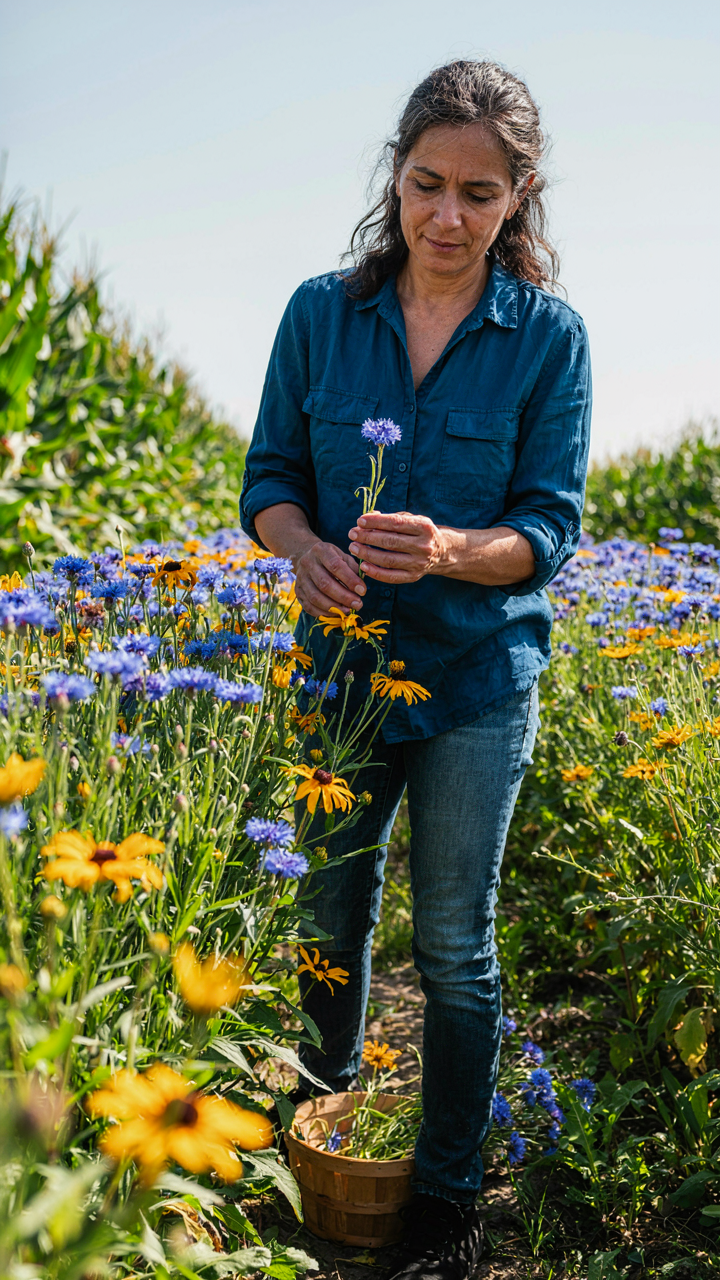
You want the wildflower bouquet because it signals you didn’t order from a catalog like everyone else. That’s the real motive. The mechanism is simple: wildflowers grow on a schedule you don’t control, and that constraint is exactly what makes them valuable. Borrow from viticulture, where terroir means soil and climate create non-replicable results. In bouquets, terroir means your wedding flowers depend entirely on what bloomed in that region during that month. You can’t force it.
Most florists pretend they can source any wildflower any season. They can’t. What actually happens is they substitute aggressively or import from regions with different growing calendars, which kills the entire point. Spring wildflowers in May won’t exist in November in the same location. A florist working with local farms knows what blooms when because they’ve watched the cycle. Cornflowers peak mid-summer. Black-eyed Susans dominate late summer into fall. Lupines vanish by mid-June in most climates. Your wedding date determines your palette, not your preference.
Building Farm Networks That Survive Beyond One Event
Supporting local flower farming isn’t charity. It’s infrastructure. When you source from a regional grower instead of a wholesale distributor, you’re funding someone to keep wildflower beds established and maintained year-round. That farmer then has predictable demand, so they plant more diversity. The relationship works backward from what people assume: the florist doesn’t find farms. The couple who cares about authenticity does, then tells their florist which farm to source from. That changes what farms decide to grow.
Most wedding couples never ask where wildflowers come from. They assume availability. The farms that could supply reliable wildflowers don’t exist in many regions because demand was never demonstrated. You create demand by booking your florist months ahead and specifying local sourcing. The florist then approaches farms with a concrete order. Farms then decide whether to dedicate acreage. One wedding bouquet alone doesn’t move the needle, but committed couples within a region do. Call local farms directly. Ask what they specialize in and when. Book based on bloom cycles, not on what Instagram shows you.
Deconstructing The Wildflower Bride Bouquet Aesthetic
The Asymmetry That Looks Unplanned
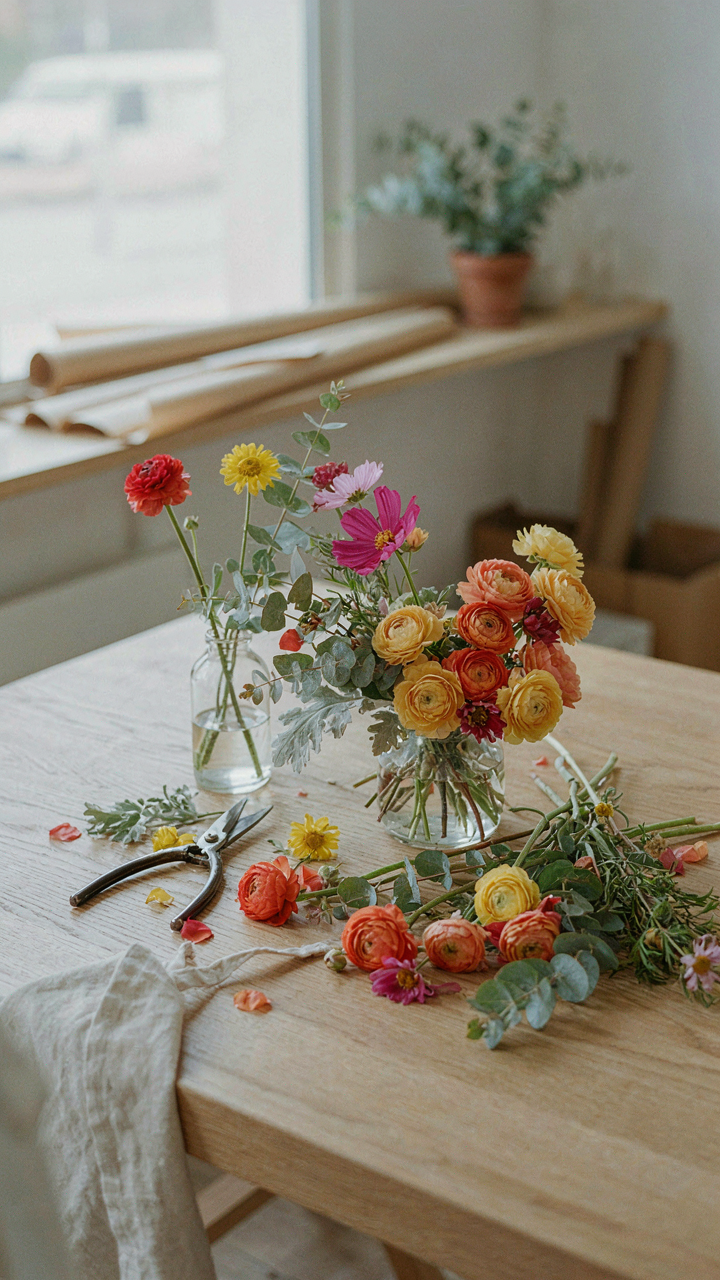
You want people to think you didn’t try. That’s the real reason this section matters to you. Asymmetrical wildflower bouquets borrow from graphic design’s principle of visual weight: unequal distribution of elements across a composition that still feels balanced, not random. The mechanism is simple. A symmetrical bouquet reads as formal, controlled, expensive in an obvious way. Asymmetry signals confidence. It says you chose this deliberately, not because you had to match a template.
The practical execution requires deliberate constraint. Bunch flowers at different heights within the same hand hold. Place your focal blooms off-center, then build density on one side while leaving the opposite side sparse. The unevenness must look intentional, which means it cannot look accidental. Rotate the bouquet 45 degrees as you build it so you can see the profile from multiple angles. This prevents the trap of looking sloppy.
Colors That Actually Contrast
Pairing wildflower tones is not about romance or complementary aesthetics. It’s about optical clarity. Two colors create contrast when they differ in both hue and value. Sage and burgundy work because they sit opposite on the color wheel and the burgundy reads darker. Cream and purple work for the same reason. Generic advice says “pick colors that make you happy.” That’s incomplete. Colors that make you happy might muddy together visually in photographs.
Test your palette in direct sunlight and in the venue lighting where the bouquet will actually appear. Photography flattens dimension, so colors that seem distinct in person compress into visual noise on camera. Use one dominant color as your base, introduce one complementary accent color, then add whites or neutrals to separate them. This three-tier structure prevents the bouquet from reading as a blob. Wildflower variety becomes an asset only when the underlying color structure is clean.
Engineering Endurance: Longevity For Your Bridal Bouquet Colorful
Cut Flowers At Peak Ripeness
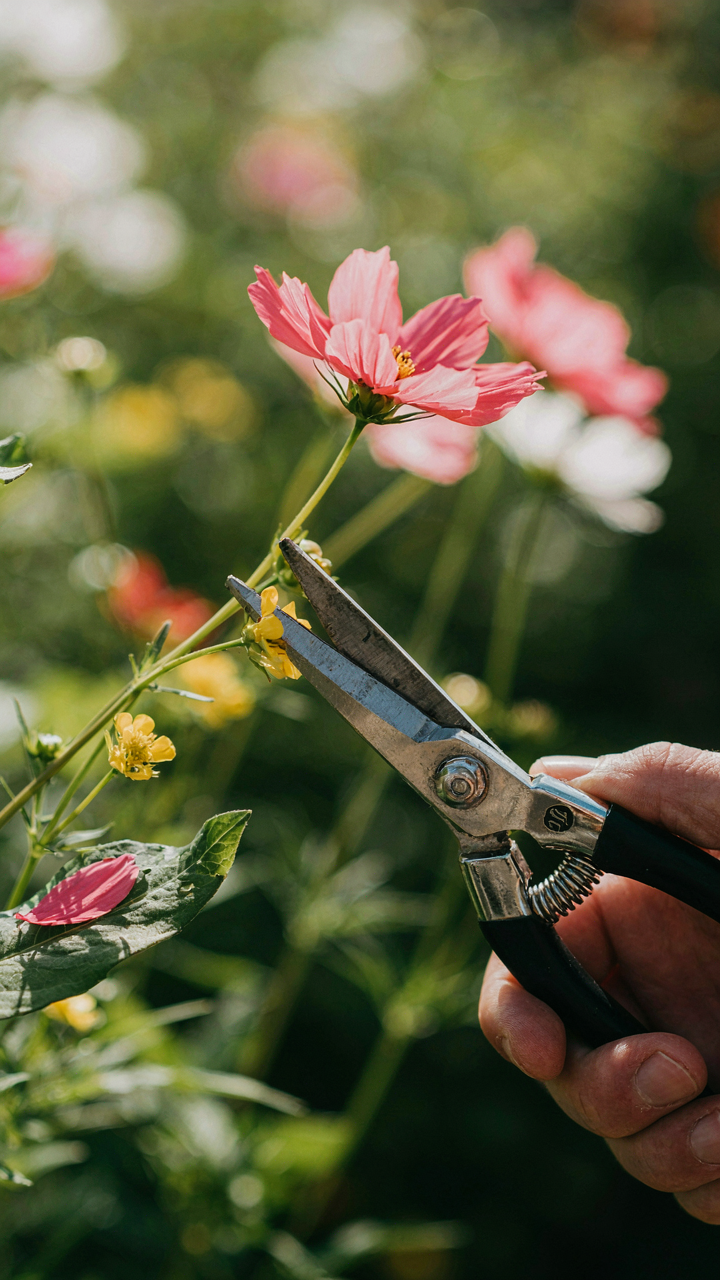
You want your bouquet to last through the ceremony without wilting, because a drooping arrangement broadcasts neglect to every guest watching. The mechanism is simple: harvest wildflowers in early morning after dew dries but before heat stress triggers water loss in the stem. Cut at a 45-degree angle, two inches below the bloom, using sharp shears to avoid crushing vascular tissue. Crush the stem end or split it vertically if you’re using woody varieties like solidago or certain grasses, which don’t absorb water efficiently through closed fibers.
Condition the cut flowers in cool water with flower food for two to four hours before arranging. This pre-hydration fills the stem’s xylem vessels, creating a water reserve the bouquet taps during the day. Never use warm water or direct sunlight during conditioning. The goal is saturation at a cellular level, not just surface wetness. This step determines whether your arrangement stays firm at the reception or crumples by the vows.
Structural Integrity Through Strategic Binding
Physics calls it load distribution. For bouquets, it means the way you bind stems directly affects how water travels to outer flowers and whether the structure collapses under its own weight. Bind tightly at one point using floral tape, then wrap once more two inches lower to create a compression zone that prevents stem splitting and stabilizes water uptake across all flowers simultaneously.
Use floral foam or a hand-tied grid of stems, not both. Foam absorbs water but dries out faster than bound stems sitting in water-filled holders. A tight hand-tied bouquet with stems wrapped in wet paper towels inside a sealed plastic lining preserves hydration longer because you control the water source directly. At the reception, transition the bouquet into a water-filled vase immediately after photos. This single protocol shift extends vibrancy by six to eight hours, the difference between a sharp arrangement and a sad one.
The Wildflower Palette: Strategic Color Theory For Bouquet Wild Flowers

What Color Actually Does To A Room
You want the bouquet to look intentional, not like someone grabbed whatever bloomed that morning. That’s the real fear here. Color in wildflower bouquets operates on the same principle as contrast in design: warm tones advance toward the viewer, cool tones recede. This is physics, not opinion. A bouquet heavy in oranges, reds, and yellows commands attention and fills visual space. Blues, purples, and whites create depth and pull the eye inward, making the arrangement feel structured rather than chaotic.
Most florists miss this because they arrange by availability, not by spatial strategy. The mechanism is simple: decide first whether you want the bouquet to dominate the room or complement it. Warm palettes work as focal points in neutral venues. Cool palettes integrate into formal settings and let other elements breathe. Once you name your objective, select flowers that deliver that temperature. Wildflowers like cosmos and rudbeckia give you warm anchors. Delphiniums, cornflowers, and statice provide cool scaffolding. The wedding’s lighting matters here too. Warm venues need cooler flowers to prevent visual oversaturation. Cold fluorescent lighting demands warm tones to feel alive.
Clashing Colors That Actually Work
The conventional wisdom says stick to adjacent colors on the wheel. That’s incomplete. Clashing works when you use saturation as a buffer. A fully saturated magenta wildflower paired with a desaturated sage green reads as intentional contrast, not error. The saturation difference prevents visual noise and signals design control. This is why some bouquets feel luxe and others feel thrown together.
Uncommon pairings work best when one color dominates and the other appears in small, strategic clusters. Use warm yellows as your primary, then introduce deep burgundy in 15 to 20 percent of the bouquet’s volume. The eye reads this as deliberate accent work, not accident. Wildflowers excel at this because their natural variation in tone creates internal tension that makes bold pairings feel balanced. The real protocol: establish your dominant color first, then choose a contrasting accent that differs by at least two steps on the saturation spectrum. Test the pairing under the venue’s actual lighting before committing stems.
Investment, Not Expense: Valuing Your Unique Wildflower Bouquets
What You’re Actually Paying For
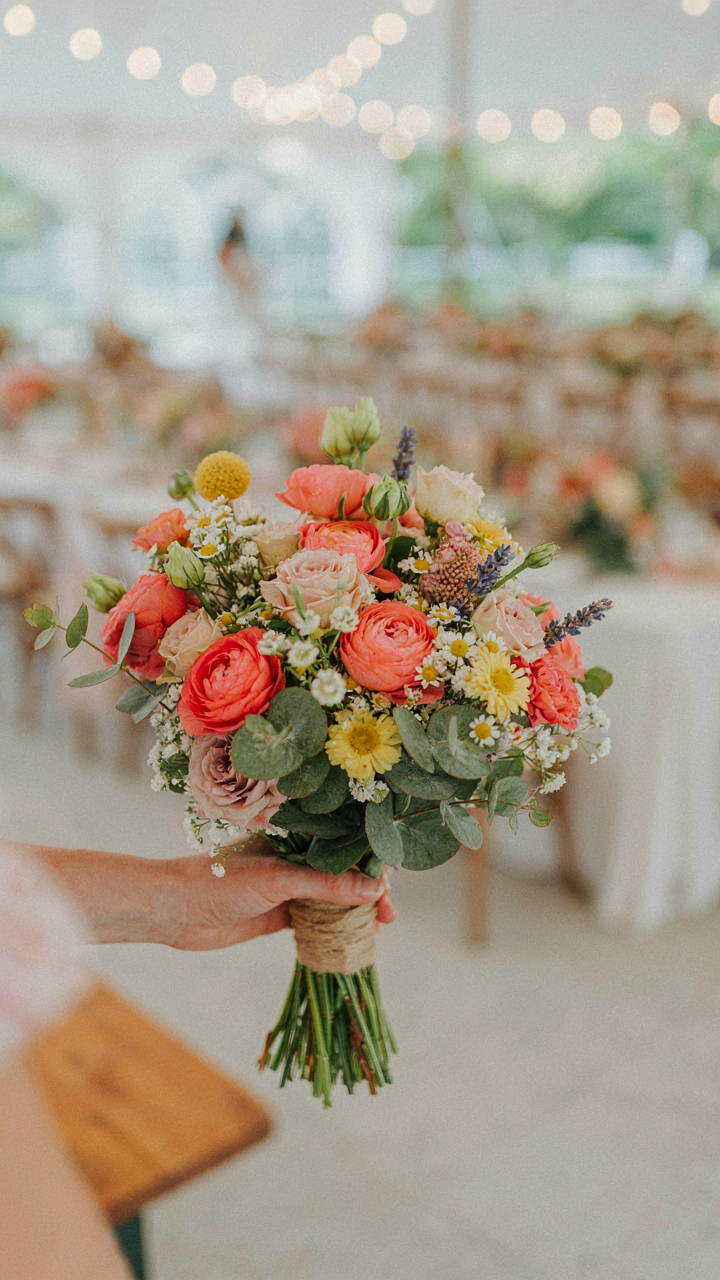
You want permission to spend money without feeling wasteful. Here’s the mechanism: a customized wildflower bouquet for weddings isn’t priced like commodity flowers. It’s priced like design labor. The florist sources seasonal varieties, constructs a composition that photographs well, handles logistics on your timeline, and executes a vision that doesn’t exist in nature or inventory. You pay for constraint removal and creative problem solving, not stems.
The cost breakdown exposes what most couples miss. Seasonal wildflower sourcing costs more than year-round roses because availability varies by region and month. Designer time runs 15 to 30 percent of total cost. Materials, labor, and delivery infrastructure account for the rest. A realistic budget for a bridal bouquet with mixed wildflowers ranges between 75 and 200 dollars depending on scale, season, and your florist’s experience level. Knowing this structure prevents sticker shock and clarifies where your money actually goes.
Memory Compounds Faster Than Sentiment
Economists call this the endowment effect. You value something more after you own it. A wildflower bouquet for weddings operates on borrowed-field economics: the asset appreciates in your mind over time, not depreciates. Photos you take on the wedding day anchor the memory. Five years later, you remember the bouquet’s presence before you remember the flowers themselves.
This isn’t nostalgia clouding judgment. It’s documentation compounding. When you display wedding photos, the bouquet appears in every shot. When you tell the wedding story, you reference the flowers. When your kids ask about your wedding, the imagery includes that specific arrangement. The emotional return multiplies because the bouquet becomes a visual anchor for the entire day’s meaning. Invest in something you’ll photograph and reference repeatedly, because that object becomes the memory’s container.
The Real Obstacle Isn’t Finding The Right Wildflower Bouquet For Weddings, It’s Your Resistance To Abandoning Predictable Patterns

You already know wildflower bouquets work. You’ve seen them everywhere. The real question is whether you’ll actually choose them over the safe rose option that everyone expects. Most couples won’t. They’ll scroll past wildflower inspiration and book the florist who does what they’ve always done. Stop being most couples. Call a florist today and ask one specific question: what wildflowers bloom during your wedding month. Your answer determines whether your bouquet becomes a conversation or just decoration.



