

The Illusion Of Novelty: Why Most Meadow Style Bouquets Are Identical
When Everyone Copies The Same Pinterest Board
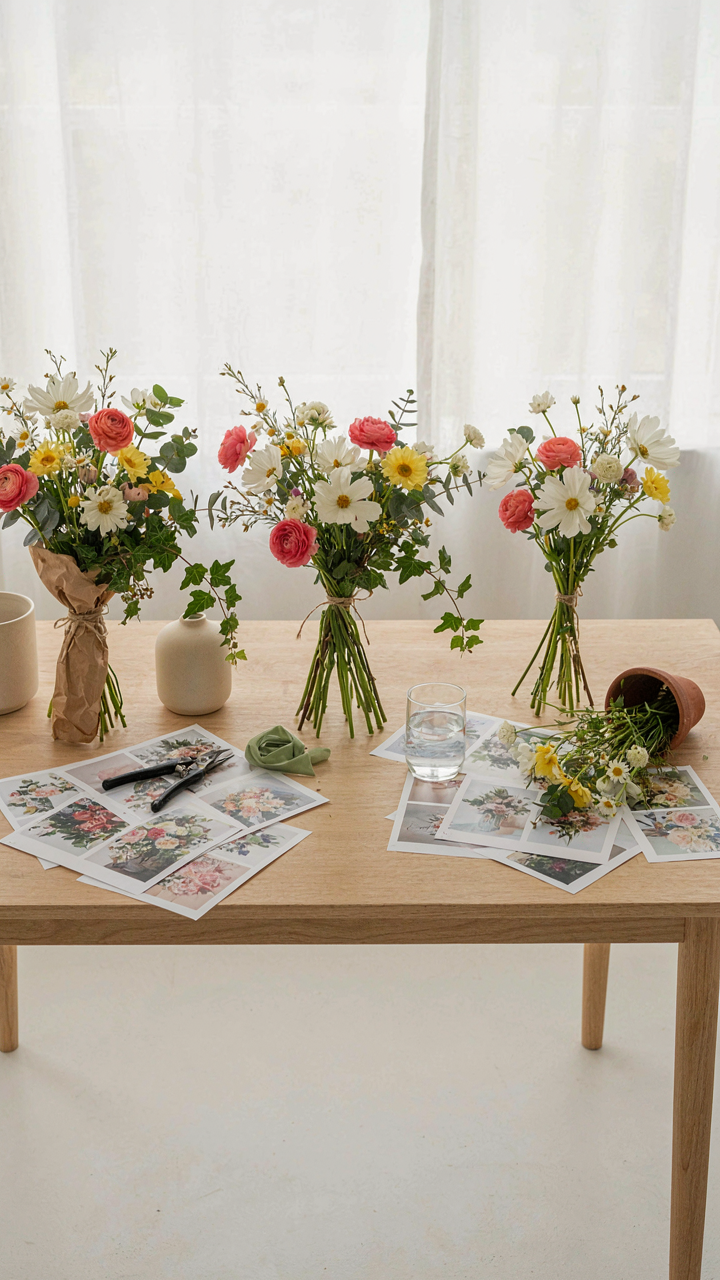
You want to believe your bouquet is unique. That fear of sameness drives the search for trends. But here’s the mechanism: meadow style bouquets hit market saturation the moment they became searchable. Florists and event designers now pull from the same visual pool. Instagram, Pinterest, and design blogs function as a monoculture engine. One successful arrangement gets screenshotted, studied, and reproduced across fifty shops within months. The style itself—loose, garden-forward, asymmetrical stems—creates the illusion of variety while actually constraining choices into narrow parameters.
The problem isn’t that meadow arrangements look similar. The problem is the pipeline that makes them similar. Florists don’t source unique specimens and build from first principles anymore. They search “meadow bouquet inspo,” find three dominant compositions, and reverse-engineer them with local inventory. The structure repeats: one focal flower, filler material, greenery, a specific hand-tie width, wrapped paper. Supply chains standardize flowers globally, so a ranunculus from Ecuador and one from California look identical. Novelty dies the moment everyone accesses the same reference material simultaneously.
The Hidden Cost Of Inspiration Boards
Inspiration boards promise creative freedom. They actually create visual debt. This is how economics works: you inherit someone else’s scarcity model and treat it as your own constraint. When a florist pins a meadow arrangement, they’re not borrowing a style—they’re borrowing someone’s resource allocation decision. That board shows which flowers cost less, which greenery holds up under shipping, which hand-tie technique produces the fastest turnaround. The florist copies the surface (aesthetic) but absorbs the underlying logic (cost optimization). Within a season, that single board has shaped fifty bouquets across ten different shops.
The real cost isn’t imitation. It’s the death of differentiation before it starts. A florist who builds from an inspiration board will never ask why they’re using those specific stems or that exact filler ratio. They skip the experimentation phase. They skip the failure phase. They skip the discovery of what actually works for their local market, their climate conditions, and their client base. The bouquets become functionally identical because they inherit the same shortcuts. To break this pattern, stop consuming inspiration boards as solutions. Consume them as problem statements. Reverse-engineer what’s actually selling, then build something incompatible with it.
Beyond The Instagram Filter: Real Wildflower Bouquets That Endure
What Actually Lasts In Water
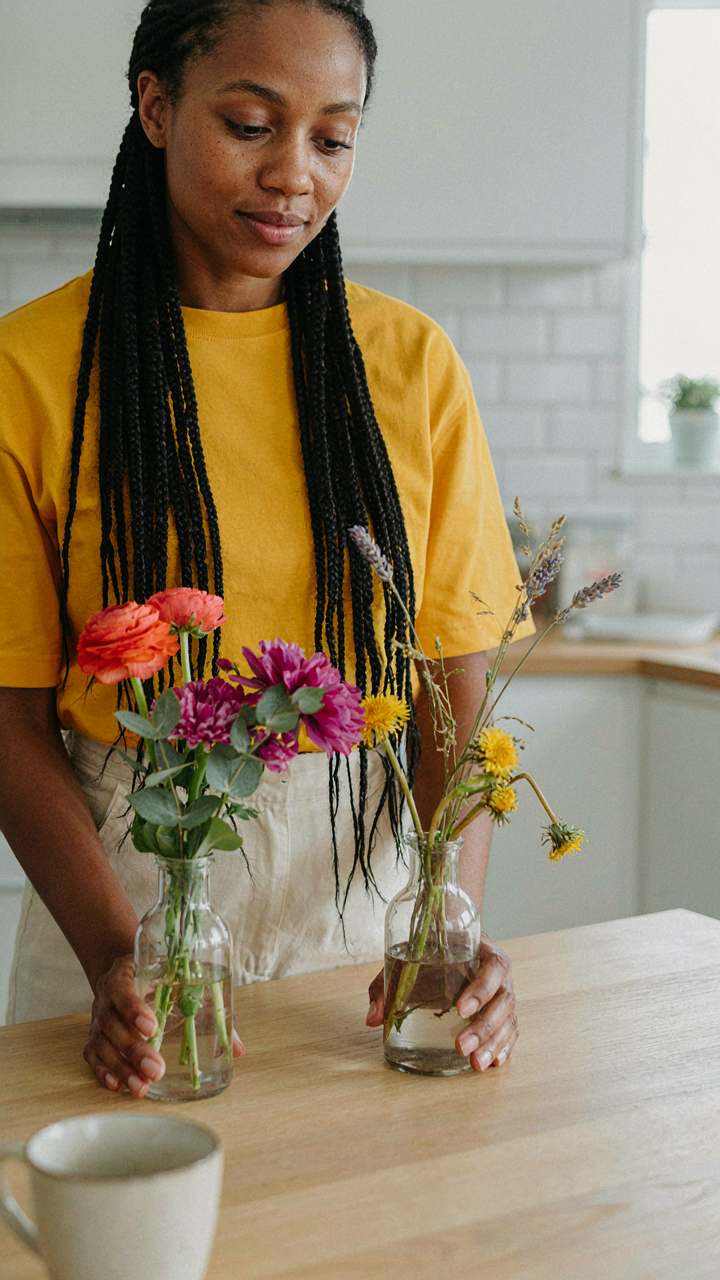
You want to believe the meadow aesthetic is sustainable because it flatters your taste. Here’s the mechanism: foraged wildflowers and cultivated imitations live in different timeframes. True wild specimens—Queen Anne’s lace, cornflowers, yarrow from fields—have evolved vascular systems that handle stress. Cultivated hybrids bred for color density and uniform shape sacrifice vessel efficiency for appearance. One withers in three days. One holds seven to ten.
Florists know this and say nothing. They source “meadow-style” bouquets from breeding programs optimized for bloom size, not resilience. The look is identical to foraging. The durability is theater. Ask your florist directly: did these come from a forager or a farm? The answer determines whether you’re buying flowers or a photograph that dies fast.
Seasonal Reality Versus Year Round Supply
Botany and commerce create a tension meadow bouquets can’t resolve. True seasonal foraging means Queen Anne’s lace in late summer, cosmos in fall, nothing in winter. Cultivated alternatives exist in every season because growers extend daylight artificially and control temperature. You cannot get authentic meadow material in January from a local field. You can get something that looks like it.
This is where most advice fails. Articles tell you to “source locally and seasonally” without naming the cost or time constraint. Authentic material sourcing requires either a foraging relationship with a specific region or a florist connected to seasonal farms willing to work on limited inventory. Most bouquets labeled “meadow style” use cultivated flowers year-round and adjust the ratio by season. Build your sourcing around what your region actually grows in that month, not around a fixed aesthetic.
The Unconventional Wild Bouquet: Mastering Asymmetry And Imperfection

Throwing Out The Grid
You want permission to break the rules because you think that makes you an artist. Here’s the mechanism: traditional floristry relies on geometric centers and radial symmetry because they’re easy to execute and easy to sell. Meadow style bouquets work because they borrow from biology’s growth patterns, not geometry. Plants don’t arrange themselves in perfect circles. They compete for light, crowd each other, and create density where conditions allow. The shift moves you from designing a shape to designing an ecosystem.
Traditional advice says asymmetry means “balance the visual weight.” That’s incomplete. Real meadow bouquets abandon balance entirely and replace it with directional flow. You’re not arranging flowers. You’re creating a focal area where the eye enters, then directing it through layers of depth and material. This requires removing stems at specific angles to establish sightlines, clustering similar textures to create momentum, and leaving deliberate gaps so the eye moves forward, not outward.
Natural Layering Without The Performance
Stop forcing stems into positions they don’t want. That’s the wrong move. Instead, build the structure by understanding each stem’s natural lean and working with it. Some flowers naturally want to angle down. Some want to reach up. Some want to sit tight. Fighting these tendencies creates visible tension in the final piece. It also wastes your energy trying to maintain the unnatural hold.
Layer by placing flowers at their true angles, then add secondary and tertiary materials around them to anchor and support. The outer edge of a meadow bouquet isn’t a boundary you construct. It emerges from the natural reach of your materials. This means your hand doesn’t force a wrap or edge. The bouquet’s silhouette becomes what it becomes based on the plants’ actual growth direction. Trim stems where they naturally angle away from the center, keeping them in the hand at the grip point where they want to sit.
The Forager’s Protocol: Crafting A Unique Wildflower Bouquet Spring
Know What Grows Where You Are
You want the Instagram-worthy wildflower look without admitting you don’t know what you’re looking at. Here’s the mechanism: native species thrive in their region because soil chemistry, water availability, and sunlight align with their biology. That alignment is what makes them last in a vase. Non-native flowers look right for three days, then collapse because they’re fighting conditions they never evolved for.
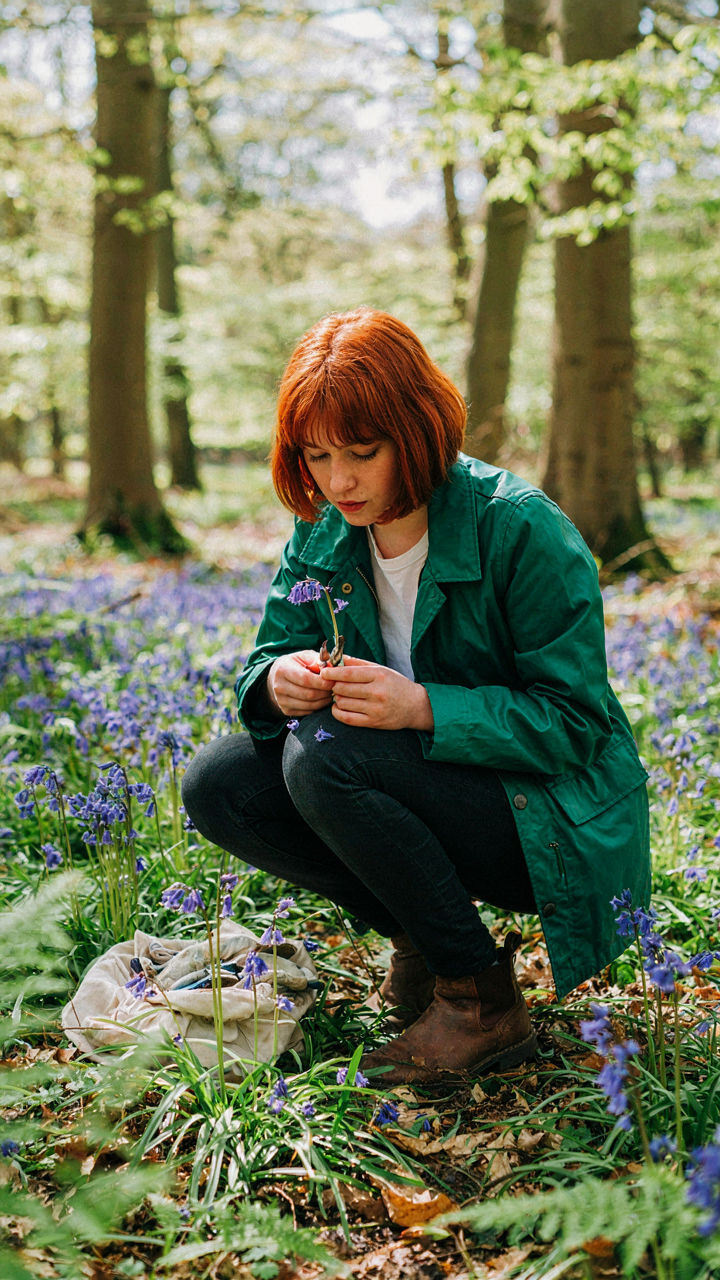
Start with your USDA hardiness zone and local soil type. Visit state extension websites or native plant societies specific to your region. They publish seasonal charts showing what blooms when. Bluebells, trilliums, and wild columbine work for eastern temperate zones. Prairie coneflowers and black-eyed Susans dominate the midwest. California poppies and lupines define western meadows. The specificity matters because a flower that’s native to your zone is already wired to perform.
Harvest Without Depleting The Source
Most people get this wrong. They think ethical harvesting means “pick sparingly.” Wrong. Ethical harvesting means understanding population dynamics from ecology. A wildflower population sustains itself through seed production. If you remove the flowering stem before seeds set, you reduce next year’s population. Take the same patch twice in one season and you’ve collapsed it.
The protocol: harvest only from populations you’ve observed over multiple seasons and confirmed are thriving. Never take more than one stem per three plants. Leave blooms on at least 60 percent of the population to ensure seed distribution. If a patch is small or isolated, don’t harvest from it at all. Cut at the base early morning when stems hold water longest. This isn’t philosophy. It’s math.
Deconstructed Elegance: The Simple Wildflower Bouquet Method
Restraint As The Real Differentiator
You want this because everyone else is doing maximalist florals and you’re tired of looking like them. The mechanism is simple: constraint forces intentionality. In design systems, negative space is the element that makes positive space legible. Meadow style bouquets work backwards from this principle. Instead of filling every gap, you remove stems until only the necessary ones remain. This shift from addition to subtraction is where the visual power actually lives, not in the flower count.
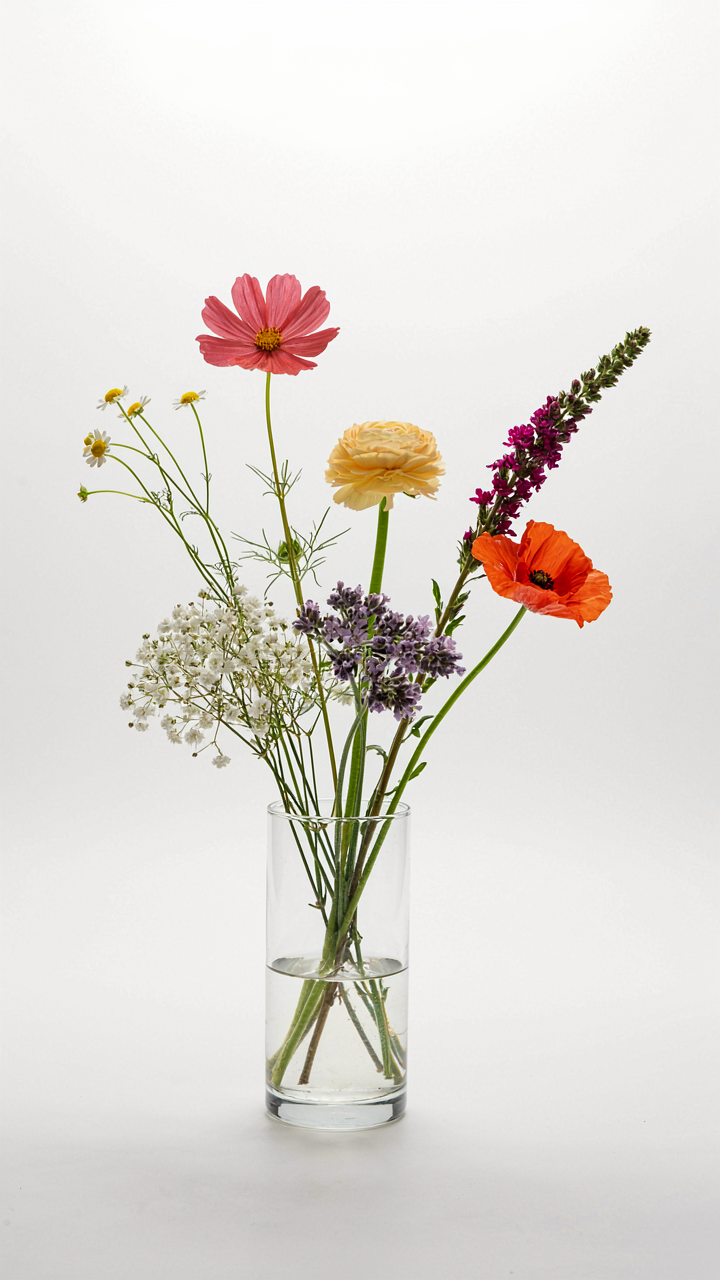
Most advice tells you to “let it be loose and natural.” That’s incomplete. Looseness without structure reads as careless. The real move is calculating which stems create sight lines, which establish rhythm, and which ones break that rhythm. Remove the redundant ones first. This takes deliberate editing, not inspiration. Strip the arrangement down to six to twelve stems maximum, ensuring each one occupies distinct visual real estate in the vase.
The Texture Play That Replaces Volume
Focusing on what each individual flower actually does, rather than treating them as interchangeable volume, changes the entire outcome. A cosmos differs structurally from a zinnia differs from a celosia. Each has a different visual weight, a different line quality, and a different temporal arc once cut. When you stop thinking in quantities and start thinking in characteristics, you see that mixing three different flower types at low quantities creates more visual interest than ten stems of the same species.
The selection process becomes architectural instead of aesthetic. Choose one focal flower for its form, one for its delicate line work, one for its textural complexity. Let those three dominate the composition. A single queen anne’s lace stem does more work than five of them because it reads as intentional accent rather than filler. The constraint forces each flower to earn its place through distinct visual contribution.
The Ecosystemic Wildflower Flower Bouquet: Borrowing From Biology

How Forest Floors Structure Arrangement
You want this section to validate that your eye for chaos is actually refined taste. Here’s the mechanism: biology uses layering to manage density without collision. Florists call this “texture variation.” Forests don’t. In a forest, canopy blocks light, understory captures what filters through, and ground layer occupies remaining space. Each tier solves a constraint. Meadow bouquets reverse-engineer this system. Dense focal flowers become canopy. Secondary blooms fill mid-layer gaps. Filler materials (grasses, seed heads, foliage) occupy ground layer. The arrangement survives because nothing competes for the same visual plane.
This structure works because your eye processes depth, not just color. When flowers sit at identical heights, they flatten and blur together. Stagger them vertically by two to four inches. Ground-layer materials should read as a base, not an afterthought. The principle holds across scale: a compact hand-tied bouquet and a full-sized arrangement follow the same depth rules. Build downward from the focal flowers, not outward.
Texture Pairing That Actually Functions
The advice to “mix textures for interest” misses the point entirely. Textures aren’t decoration. They’re contrast systems that prevent visual fatigue. In ecological symbiosis, organisms occupy niches that benefit the whole organism. In bouquets, textures do the same work. Smooth petals need rough foliage nearby to register as smooth. Hard seed heads need soft filler to register as hard. Without opposition, everything reads as the same. You’re not adding interest. You’re creating legibility.
Select textures that occupy opposite ends of a spectrum: waxy against papery, spiky against round, matte against glossy. Queen Anne’s lace provides lacy texture that dissolves visually next to ranunculus. Astilbe adds feathery softness that sharpens the geometry of solidago. The pairing works because each texture annihilates the viewer’s adaptation to the other. Switch textures every two inches of stem height. Repetition without rhythm reads as accident, not design.
Beyond Prom Night: The Wildflower Hoco Bouquet For The Unconventional

When Formal Events Meet Untamed Florals
You want permission to break the mold without looking like you didn’t try. That’s the real tension. The mechanism is simple: formal events require structure, but meadow style bouquets introduce controlled chaos that reads as intentional rather than lazy. The key is anchoring wild elements to a clear grid. Use a compact, geometric base—a tight spiral or hand-tied structure—then layer loose flowers within defined boundaries. This prevents the bouquet from reading as “grabbed from a field” and instead signals “designed to feel natural.” Combine Queen Anne’s lace, celosia, and astilbe with structured focal flowers like garden roses or ranunculus. The frame does the work.
Texture contrast amplifies the effect without adding size. Pair delicate fillers with substantial blooms so the eye lands on intention, not chaos. Formal venues expect hand-tied bouquets gripped at a precise angle. Meadow style breaks this by sitting looser in the hand, but the spiral base keeps it from falling apart under scrutiny. Scale matters too—a hoco bouquet needs to sit proportionally against formal wear, so keep width between eight and ten inches. Add a structured wrap in linen or ribbon, tied clean at the grip point. The bouquet becomes a visual argument rather than an afterthought.
When Statement Means No Apologies
The common advice says “add wildflowers to any bouquet and call it meadow style.” Wrong. True meadow style demands you eliminate filler that dilutes contrast. This is constraint, borrowed from design thinking, and it separates conviction from decoration. A meadow bouquet makes a claim: every stem serves visual weight or narrative purpose. If a flower doesn’t pull its own mass, it gets cut. For hoco, this means choosing a dominant color story—dusty purple with cream and green, or burnt orange with ivory—then stacking variation within that range. No rainbow effect. No hedging bets with safe pastels if your instinct says bold.
Statement pieces require curation that most florists skip. Select five to seven flower types maximum, then commit fully to their personalities rather than softening them with commercial filler. Hypericum berries add graphic punch without apology. Veronica provides vertical line without prettifying. Thistle reads as intention. When you grip that bouquet walking down the aisle, everyone sees a person who chose this, not someone who accepted what was offered. The mechanism: confidence reads as design when every element earns its place.
The Anti Bridal Bouquet Wildflower: Rejecting The Pre Packaged Aesthetic
Your Story, Not The Vendor’s Script
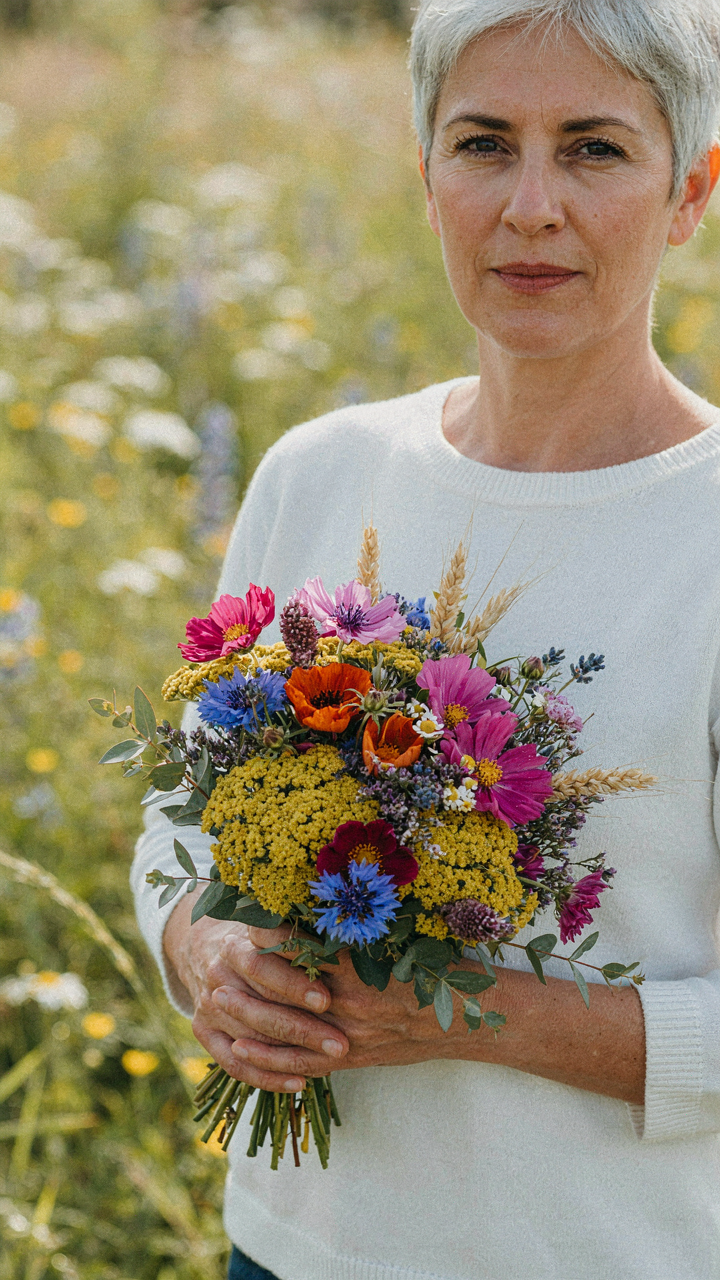
You want permission to do something different without looking cheap. That’s the real calculation. The mechanism is simple: the bridal industry monetizes conformity. It sells you a template, charges a premium for executing it, then tells you that deviation signals low budget or poor taste. Meadow style bouquets break this by inverting the status signal. They cost more to source intentionally. They require a florist who understands composition instead of just following a formula. The work is invisible, which is precisely why it signals taste to people who know where to look.
The shift from rigid wedding floristry to meadow arrangements mirrors how personal branding moved from corporate templates to authentic narrative. You’re building a visual story that connects to your actual life, not borrowing someone else’s aesthetic. This means identifying what grows near you, what colors appear in your home, what flowers you’ve encountered that stick in your memory. The bouquet becomes documentation of choice rather than consumption of a preset.
- Seasonal specificity over year round availability: Source what actually blooms when your event occurs, anchoring the arrangement to place and time instead of warehouse logistics.
- Color palette tied to your environment: Pull tones from your home, venue, or landscape rather than matching a Pinterest board divorced from your context.
- Texture over symmetry: Include foliage, seed heads, and structural elements that create visual weight without requiring the florist to force every stem into geometric alignment.
- Local grower relationships: Work directly with farms or foragers who can tell you the actual story of each flower instead of sourcing from wholesale distributors three states away.
- Imperfection as intentional choice: Embrace visible variation, asymmetry, and the signs of hand assembly instead of treating them as flaws to hide.
The common advice here is backward. People tell you to “find your style” and “express yourself,” as if taste is discovered instead of constructed. The real move is constraint. Limiting yourself to flowers that grow in your region during your season forces intentionality. You can’t hide behind options. You work with what’s available and make it mean something.
The Economics Of Bespoke Versus Mass Production
Mass produced bouquets operate on volume margins. A florist orders 500 white roses, 500 eucalyptus stems, 500 ruscus bunches. They execute the same design 100 times that week. The labor cost per unit drops. The per stem wholesale cost drops because of bulk purchasing. They charge you $150 and keep $80. Bespoke meadow arrangements work on a different profit structure entirely. A florist sources 20 different flowers for your specific bouquet. Half come from a local grower. Some are seasonal and cost more because supply is tight. The labor is higher because composition takes time. The wholesale cost per stem is higher. They charge you $300 and keep $100. This sounds worse until you realize you’re paying for selection, knowledge, and constraint instead of volume efficiency.
The cost difference isn’t arbitrary. It reflects actual resource scarcity. Meadow style demands flowers that mass market florists actively avoid because they don’t store well, ship poorly, or require skilled handling. You’re paying for someone to reject the efficiency model. You’re also paying for the risk. A florist building 50 identical bouquets uses proven combinations. A florist building one meadow arrangement is making specific bets about how unusual textures and colors will read together. They own that risk. The price reflects it. Start by asking a florist what they can source locally and what they’d charge if you committed to one delivery season instead of requiring year round availability.
Cultivating Authenticity: Your Signature Wildflower Bride Bouquet

Build Your Visual Fingerprint
You want people to recognize your bouquet before they see your face. That’s the real driver here. Meadow style bouquets operate like visual branding in economics: scarcity and consistency create perceived value. Your signature bouquet works the same way. The mechanism is simple: repeat specific flower combinations, color ratios, and structural choices until they become unmistakably yours. Don’t chase every trend that lands on Instagram. Pick three to four flowers you genuinely prefer and master their proportions together.
Consistency beats novelty every time in meadow arrangements. A bride who uses the same palette of Queen Anne’s lace, astilbe, and garden roses across multiple seasons builds recognition. Florists and photographers start requesting you specifically. That’s the compounding effect of a real aesthetic signature. The visual fingerprint matters more than complexity. Start by identifying which wildflowers and garden flowers actually appeal to you, not which ones photograph well in someone else’s feed.
The Cost Of Copying Trends
Most advice says “stay current.” That’s backwards for meadow style. Trends in floral design move fast because Instagram amplifies them, then kills them just as quickly. A wildflower bouquet trend from two years ago looks dated now because everyone adopted it simultaneously. Copying trends gives you the exact opposite of what you actually want: you become forgettable. The real play is building something durable enough to outlast the cycle.
Meadow bouquets succeed when they reflect your environment and season, not Pinterest boards from March. If you live in a region with native prairie plants, use them. If your wedding is in autumn, lean into those flowers rather than forcing spring blossoms. This isn’t about being contrary for status. It’s about creating something that photographs well years later instead of looking obviously dated within months. Document your bouquet with consideration for timelessness, then commit to variations of that same core aesthetic.
The Deliberate Chaos Method: Designing Bouquets That Defy Expectation

When Asymmetry Becomes Strategy
You want permission to break the rules without looking incompetent. Here’s the mechanism: meadow style bouquets work because they steal from garden ecology, not formal arrangement. In nature, plants compete for light and space. They grow irregular. Stems bend. Heights vary. Florists trained in symmetry treat this as a problem to solve. Meadow design treats it as the solution. The tension between opposing angles and unmatched scale creates visual weight that balanced arrangements simply cannot generate. You stop fighting disorder and weaponize it instead.
Most floristry education teaches proportion through ratio and bilateral symmetry. That advice fails for meadow bouquets. Deliberate asymmetry doesn’t mean random. It means calculated imbalance. Place your tallest element off-center. Stack your densest flowers to one side. Let negative space breathe unevenly. The viewer’s eye works harder. Harder engagement means stronger memory. This is how meadow bouquets become distinctive in a market drowning in homogeneous round shapes and centered focal flowers.
Rule Breaking That Generates Recognition
Meadow style ignores the conventional hierarchy of focal, secondary, and filler flowers. That framework assumes a visual pyramid. Meadow bouquets distribute emphasis across multiple heights and densities instead. You place statement-level blooms (dahlias, roses, or celosia) at varying levels, not clustered at a single focal point. Secondary elements don’t recede. They advance and retreat throughout the composition. The structure becomes a landscape rather than a hierarchy.
The practical step: force yourself to use at least three different flower depths when you build. Don’t graduate them smoothly. Jump from a 28-inch stem to a 14-inch stem, then back to 22 inches. Include trailing elements that fall lower than your front line. Repeat colors and textures across multiple zones instead of grouping them. This breaks the “read it left to right, top to bottom” expectation that domesticated arrangement creates. The bouquet demands attention in multiple directions at once.
Your Fear Of Missing Out On A Trend Is The Only Thing Truly Holding Back Your Artistry

The real problem isn’t that meadow style bouquets are trending. It’s that you’re designing for approval instead of designing for meaning. Every florist chasing the same wildflower aesthetic produces the same forgettable arrangement. Stop asking what’s popular and start asking what your client actually needs to feel. Create one bouquet today that breaks your pattern. Your signature matters more than the trend.



