

The “Effortless” Lie: Why Most Wildflower Centerpiece Ideas Fail
What Everyone Gets Wrong About Wild
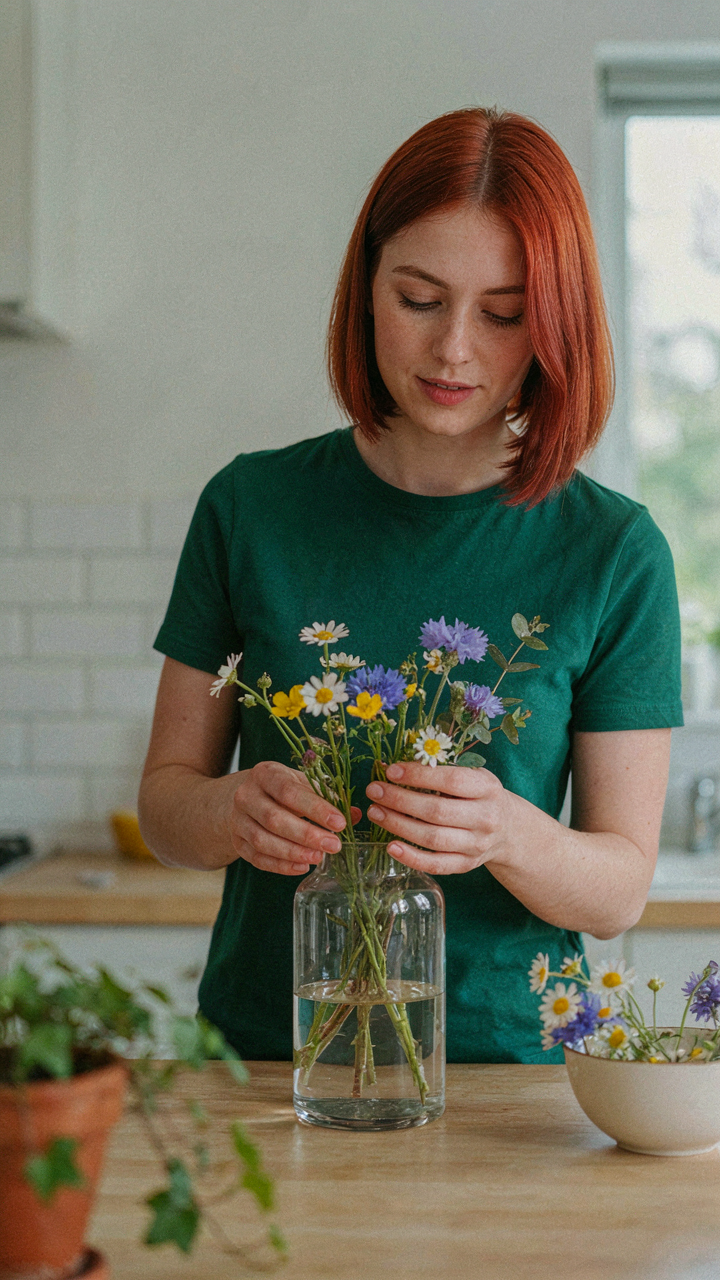
You want to believe wildflower arrangements work because they’re supposed to be forgiving. That’s the real appeal. In systems design, we call this “entropy”—the assumption that disorder naturally stabilizes itself. It doesn’t. A wildflower centerpiece fails not because wildflowers are hard to work with, but because most people confuse “untamed” with “unstructured.” They dump stems in a vase and call it done.
The mechanism is simple: wildflowers need intentional placement more than cultivated flowers do. Their stems vary wildly in thickness and length. Their bloom timing differs by species. Without a grid, frog, or internal structure, they collapse into a limp heap within 36 hours. The stems tangle. Flowers drop. Water clarity turns brown. You’re left holding a failed centerpiece that looks worse than something you’d have paid $40 for.
What Actually Works Below The Surface
Forget the Instagram nonsense about “just grabbing what you see.” Real simplicity requires invisible architecture. Florists use mechanics—chicken wire, floral tape, pin frogs—to create invisible scaffolding that holds stems at angles. The flowers appear random. The structure is not.
Start with a clean vessel. Fill it with fresh water mixed with flower food. Install a frog or crumpled chicken wire that sits an inch above the rim. This does one job: it forces each stem into position and holds it there as other stems support weight. Layer your tallest stems first, angled outward at 45 degrees. Then fill gaps with secondary heights. Work in thirds—foreground, middle, background. The result looks casual because the infrastructure handles the load, not because you got lucky.
The Forager’s Manifesto: Sourcing Beyond The Florist

What Actually Grows Near You
You want to avoid paying florist markup while looking intentional. The real mechanism is simple: your region already produces flowers that work for centerpieces, but you’ve never looked because they don’t appear in grocery store buckets. Native wildflowers have deeper root systems, longer vase life, and cost nothing. They also signal knowledge instead of budget, which matters more than you think.
Your local ecosystem determines what you can actually source. Research native species in your hardiness zone using university extension databases or native plant societies in your region. Timing matters—spring bloomers differ from summer and fall varieties. Visit natural areas during peak bloom seasons to understand what’s available before you need it for an event.
The Line Between Harvesting And Harm
The common advice tells you to “only pick a little” and call it ethical. That’s incomplete. There’s actual ecology here—think of a wildflower population like a capital reserve. Taking seeds or root systems drains future blooms. Taking flowers when the plant has already flowered depletes nothing. The difference determines whether you’re harvesting or damaging.
Ethical foraging follows one rule: only take flowers that have already opened and are past peak bloom. Never remove entire plants, roots, or seed heads. Never strip all flowers from a single patch. If a species is rare in your area, leave it untouched. Check local regulations before foraging on public land. Most states protect certain native species. One state fine costs more than a year of florist flowers.
Vessel Alchemy: Elevating Your Wild Flower Table Arrangements
Why The Container Matters More Than The Flowers
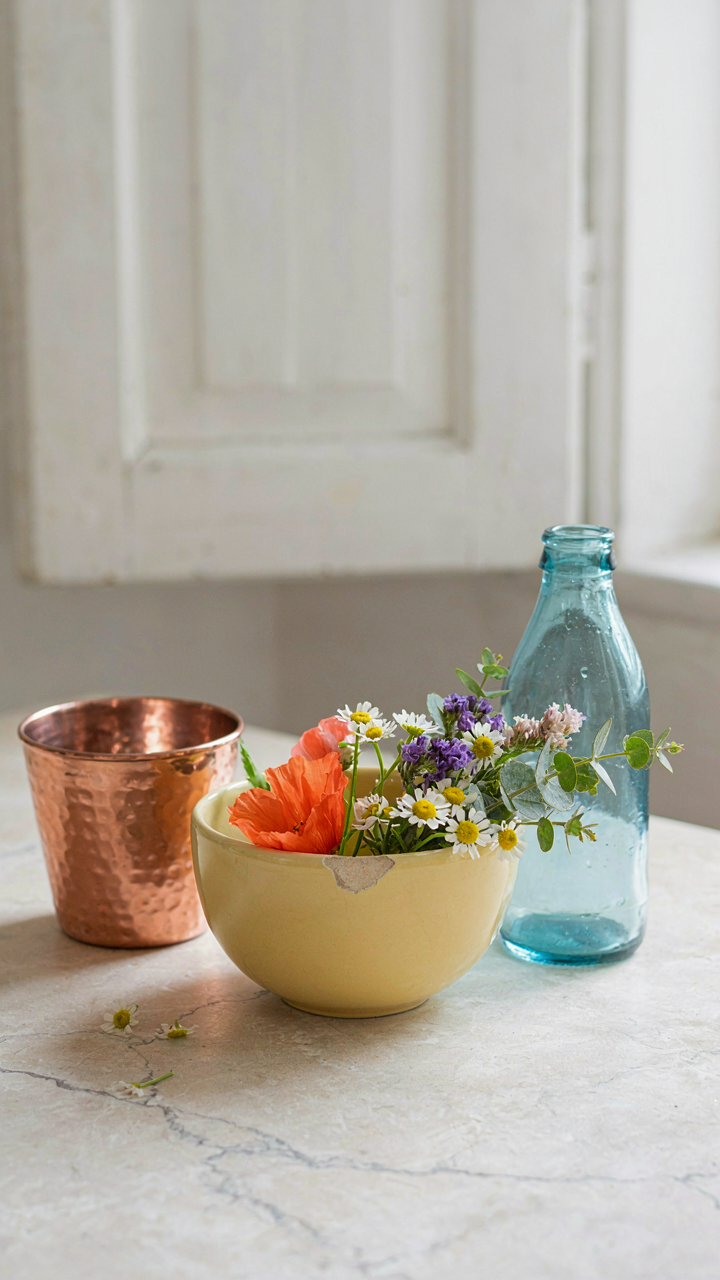
You want people to think you have taste without admitting you grabbed flowers from a field. The truth is mechanical: the vessel controls whether your arrangement looks intentional or accidental. In design systems, we call this “constraint-driven output.” Your container is the constraint. It determines proportion, visual weight, and whether viewers perceive chaos or composition. Pick wrong and even premium wildflowers look like a accident. Pick right and grocery store stems become deliberate.
Repurposed containers work because they signal restraint, not desperation. Mason jars, vintage tins, chipped ceramic bowls, and weathered glass bottles have friction built in. They push back against the arrangement instead of disappearing. This friction forces you to work within limits, which paradoxically makes the result look more refined. A wildflower arrangement in a generic clear vase reads as filler. The same arrangement in a dented copper cup reads as thought. The flowers didn’t change. The frame did.
Container Shape Dictates What Grows Where
Mouth diameter and height work like physics constraints on your arrangement. In fluid dynamics, the shape of a vessel determines how liquid flows and settles. Wildflower arrangements follow the same logic. A narrow-mouth container forces stems upward and outward in a tapered cone. A wide, shallow bowl demands horizontal spread and low density. A tall cylinder requires height variation or it reads as a stem bunch. Most people ignore this and jam flowers into whatever vessel they own, then wonder why it collapses.
The mechanism is simple: stem angles are limited by the opening. A three-inch mouth won’t accept stems at forty-five degrees without them sliding sideways. A six-inch mouth lets you angle aggressively. Taller vessels hide weak stems inside the container. Shorter vessels expose every stem’s weaknesses. Before you cut a single flower, hold the empty vessel and trace the angles available to you. This single step eliminates ninety percent of arrangement failures. You’re not being creative yet. You’re reading the physical grammar the container already wrote.
The Asymmetry Principle: Escaping Stiff Wildflower Table Decor
Natural Balance, Not Forced Symmetry
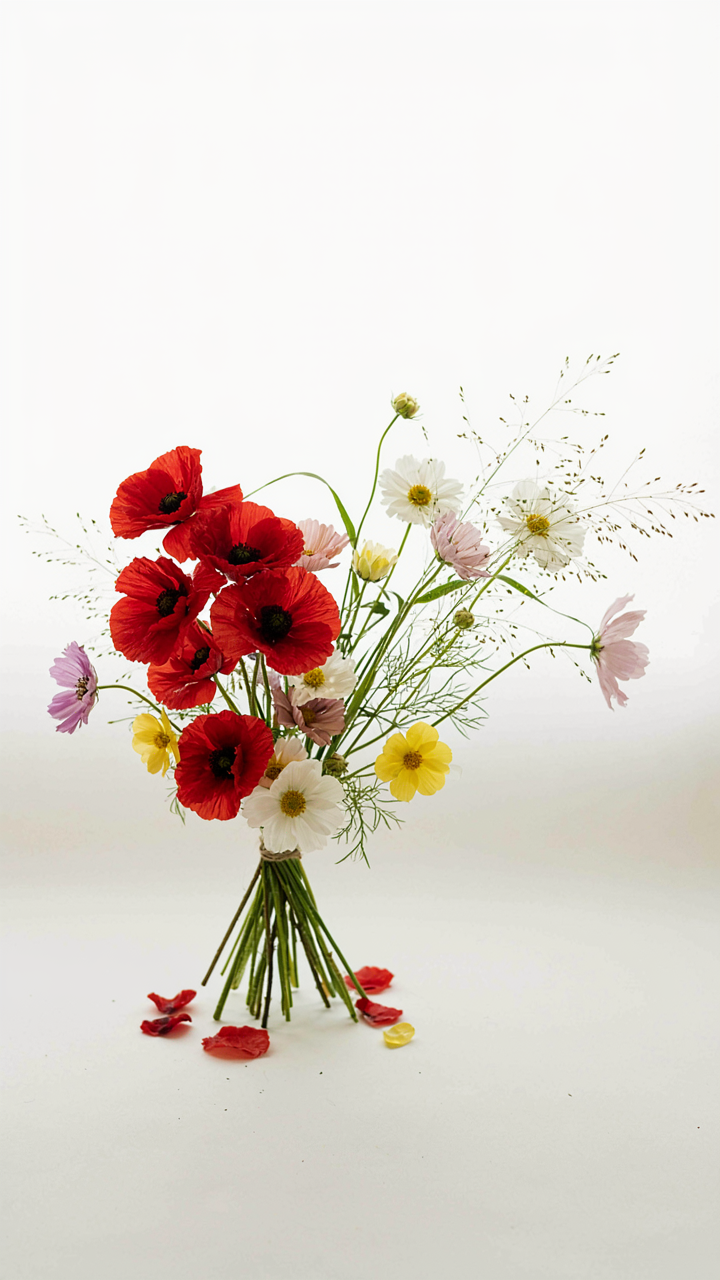
You want your centerpiece to look effortless because that signals taste and control. Here’s what actually matters: symmetry is a crutch that reads as anxious. The real mechanism comes from design balance, borrowed from visual weight distribution in composition. Think of your vase and stems as objects with invisible mass. A tall stem on the left needs counterweight on the right, but that weight doesn’t need to occupy the same position.
Wildflower arrangements fail when they’re mirror images. Place your tallest stems off-center. Let shorter blooms cluster on one side while negative space breathes on the other. Your eye still finds rest because the visual weight distributes evenly across the table, not because everything matches. This is why professional florists never build down the middle first.
Visual Weight And Focal Points
Stop treating all flowers as equal. Density creates weight. A tight cluster of yarrow reads heavier than scattered Queen Anne’s lace at the same volume. This controls where attention lands. Position your darkest or most saturated blooms off-center to anchor the entire piece. Lighter stems, grasses, or filler flowers become guides that pull the eye toward that focal point without announcing it.
The arrangement works because the viewer’s attention moves through it rather than landing flat. Start by identifying your densest or most textured flower. Place it slightly forward and to one side of your container. Build around it with progressively lighter materials. The focal point holds attention. Everything else creates rhythm. This method works whether you use three stems or thirty.
The Negative Space Protocol: What Not To Include
The Difference Between Clutter And Breathing Room
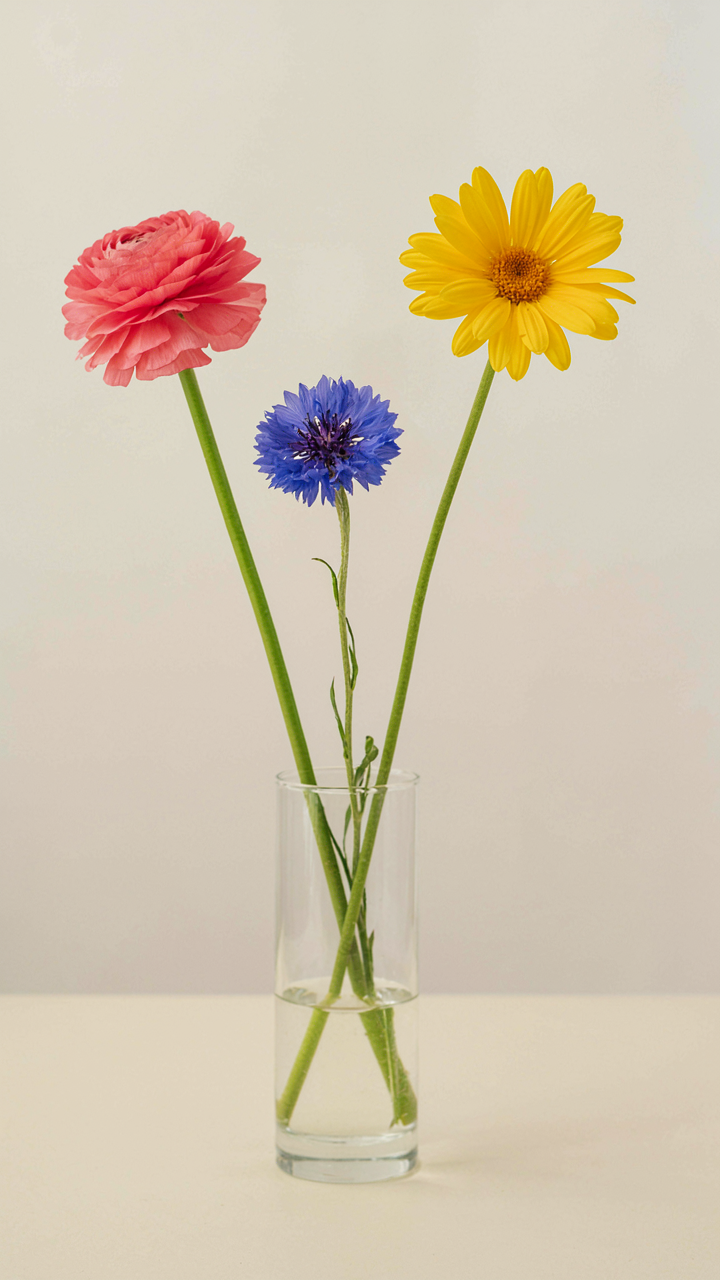
You want your centerpiece to look full because empty space feels like failure. The mechanism that matters is borrowed from design: signal-to-noise ratio. In wildflower arrangements, noise is visual competition—every stem fighting for attention. Signal is the arrangement’s actual form. When you pack stems without gaps, noise drowns signal. The viewer’s eye lands nowhere because it lands everywhere.
Most advice says “fill the vase.” That’s incomplete. The real rule: remove one stem at a time until removing another stem breaks the arrangement’s structure. Stop there. Breathing room isn’t decoration—it’s contrast. It makes the flowers you kept actually visible. Dense arrangements read as anxiety. Sparse ones read as intention.
The Architecture Of Silence
Silence in composition works like music—rests define the melody. Remove filler plants. Remove baby’s breath. Remove anything that exists only to take up space. These materials destroy clarity because they create visual static without contributing form or color depth.
- Queen Anne’s Lace as filler: Creates fine texture that diffuses focal points instead of framing them. Use sparingly or eliminate entirely.
- Dusty Miller stems below the waterline: Absorbs water without adding visible value. Trim aggressively or remove.
- Excessive foliage density: Leaves stacked on leaves hide flower heads and create a suffocating mass. Thin before arranging.
- Secondary blooms clustered together: Multiple small flowers crowded in one zone create visual noise instead of depth. Distribute or cut.
- Mismatched stem heights without intention: Uneven arrangements that lack clear depth planes read as accidental rather than designed.
The protocol: identify your three strongest flowers first. Build around those. Every other stem must justify its presence by either extending a sight line, creating depth, or amplifying color. Delete everything else before you add it.
Wildflower Wedding Theme: Micro Arrangement Multiplier Effect
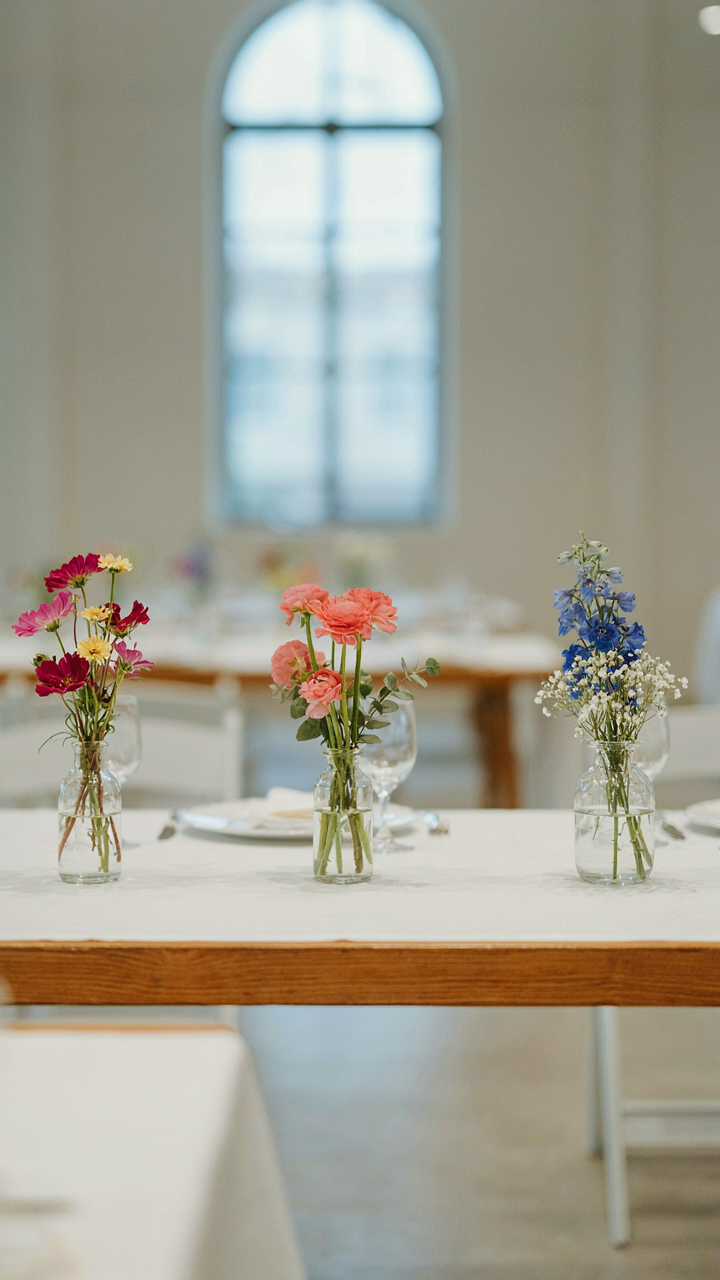
Small Clusters Command Attention Better
You want people to notice your centerpieces without spending a fortune or looking like you tried too hard. That’s the real tension here. Economics has a concept called diminishing returns. In wildflower centerpieces, the inverse applies: three tight clusters of five stems beat one loose arrangement of fifteen stems every time. Density creates visual weight that reads as intentional from across a room.
The mechanism is pure contrast. When wildflowers scatter loosely, the eye hunts for meaning and finds none. When you compress the same stems into a tight sphere or cylinder, the viewer’s brain registers a deliberate form immediately. A wedding guest processes a micro cluster in milliseconds. They remember it. A loose arrangement vanishes into background noise. Build centerpieces around this compression principle rather than volume.
Distribution Strategy Determines Impact
Spacing micro clusters across your table creates rhythm instead of monotony. One large centerpiece per table reads as dead weight. Five small ones distributed along the table length creates a line of visual anchors that keeps eyes moving and engaged. The human brain tracks patterns, not static objects. Deploy your clusters to create that pattern.
Logistics matter more than aesthetics here. Small clusters require fewer stems, lower cost per arrangement, and easier transportation to the venue. You can build them the morning of without wilting risk. Distribute them strategically: one near each place setting, one at table corners, one in the center. This approach forces guests to interact with the design rather than stare at a single focal point. The arrangement multiplies its impact through repetition and placement, not size.
The Biomimicry Method: Nature’s Engineering For Wildflower Centerpieces
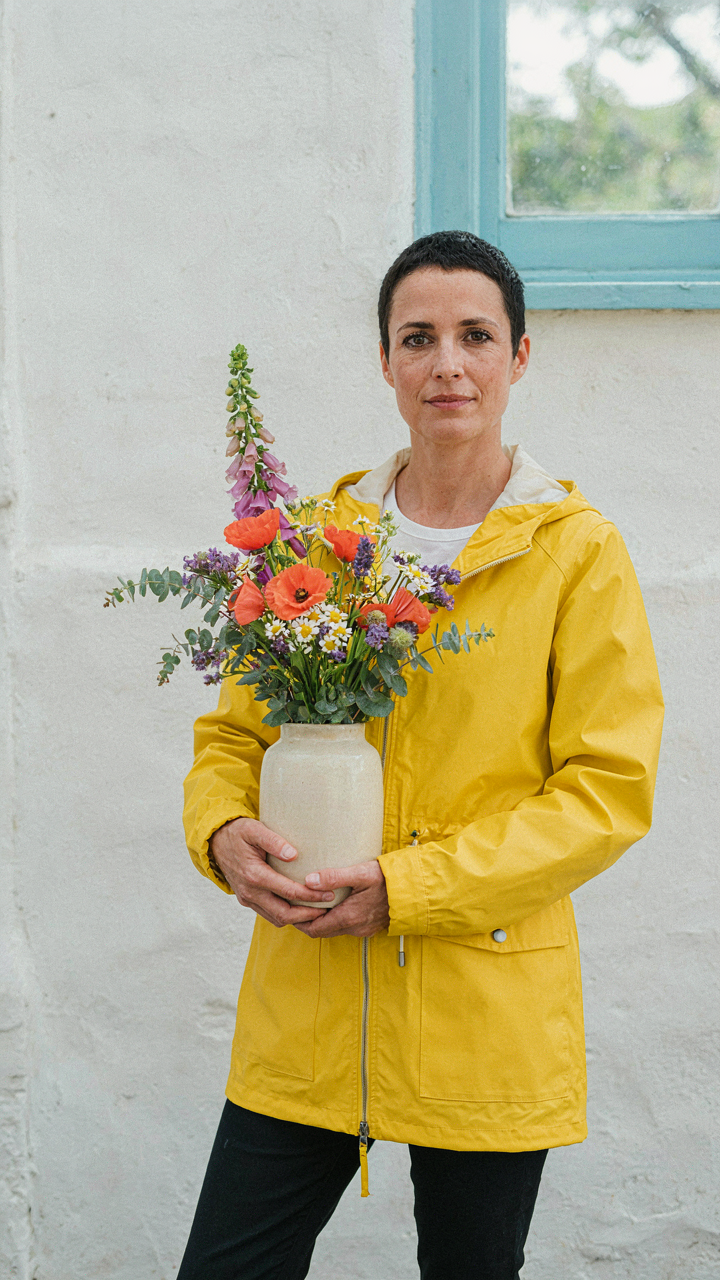
How Plants Actually Arrange Themselves
You want this to look effortless because you’re afraid your arrangement will scream “I tried too hard.” The mechanism is simple: plants don’t grow in symmetrical grids. They cluster by density and light availability. In ecology, this is called aggregation patterning. Apply it directly to your centerpiece by grouping similar heights together, then breaking the pattern with single tall stems at irregular intervals. Don’t space everything evenly. Observe actual wildflower meadows and notice how Queen Anne’s lace, black-eyed Susans, and coneflowers bunch naturally rather than distribute themselves like soldiers.
The practical move is to fill your vase by layering stems in clusters of three to five, rotating the grouping as you add depth. Place your tallest stems off-center, not in the middle. Step back every few additions and check the silhouette against the edge of your container. When the outline matches what you’d see in a field rather than a florist shop, stop. The arrangement works because it mirrors how these flowers actually compete for resources and light in real growing conditions.
The Load Bearing Architecture Behind Stems
Flower stems function like structural columns in a building. They carry weight and distribute it downward. Thicker stems support heavy flower heads. Thinner, woodier stems like solidago or delphinium act as scaffolding that holds softer stems upright without collapsing. The common mistake is treating all stems as equal support. They’re not. A dense cluster of thin stems can fail under the weight of a single large bloom head.
Build your centerpiece from the outside in. Start with woody, structural stems positioned around the vase perimeter. These become your framework. Then nest your heavier blooms into this structure so the weight distributes across multiple support points rather than loading onto a single stem. Fill gaps with filler material only after your load-bearing stems are positioned. This method prevents the common collapse that happens around day three when water absorption weakens stem walls. The arrangement holds because you’ve engineered it to handle its own weight.
Beyond Blooms: Integrating Texture In Wild Flower Centerpieces

What Actually Fills The Space
You want people to think you didn’t just grab flowers and dump them in a vase. That’s the real fear here. The mechanism is simple: texture creates perceived complexity without requiring more flowers. Borrowing from visual hierarchy in graphic design, think of texture as the supporting cast that makes the lead actor look better. Seed pods, dried grasses, and woody stems aren’t filler. They’re structural elements that change how light hits the arrangement and force the eye to move through the piece instead of stopping at the first bloom.
Most tutorials skip this because it’s harder to photograph and harder to explain. You need to include non-floral material that serves a structural purpose, not just visual noise. Ornamental grasses like fountain grass or feathery oat stems create movement. Dried seed pods from Queen Anne’s lace or nigella add weight at the base. Stripped branches or twigs provide the skeleton the whole arrangement hangs on. The beginner mistake is treating these as optional. They’re not. They’re what separates a cluttered bunch from a composed centerpiece.
Building Layers That Work Visually And Physically
Texture creates depth by forcing the viewer’s eye to track different planes simultaneously. When you mix soft flower petals with hard seed pods and thin grass blades, you create actual visual depth, not the illusion of it. Start with your structural layer first: place branches or thick stems to establish the height and width boundaries. This prevents everything from collapsing into a flat dome shape. Then layer in grasses and secondary stems that weave through the primary structure. Finally, nestle flowers into the spaces these materials create, not on top of them.
The tactile component matters more than people admit. A centerpiece you can touch without worrying about destroying it feels intentional and confident. Rough bark, papery seed cases, and dried grass won’t shatter when guests brush past. This creates psychological permission for the arrangement to feel less precious and more inhabitable. Leave some stems and pods exposed and visible. The variety of textures and finishes is what stops the eye from treating the arrangement as one solid mass. Build outward from the center, checking sightlines at eye level before adding the final pieces.
The Longevity Hack: Keeping Your Dream Wedding Decorations Fresh

The Three Variables That Actually Matter
You’re worried about this because wilting flowers before the reception ends means your money and planning disappeared in real time. Here’s the mechanism: wildflower centerpieces die because of three independent systems failing at once—water uptake, cellular respiration accelerating with heat, and light triggering faster bloom senescence. Think of it like supply chain logistics: flowers need consistent input (water), stable operating conditions (temperature), and protection from accelerating decay signals (light). Most people focus only on water and miss the other two levers entirely.
- Water Management: Cut stems at a 45-degree angle and place in room-temperature water mixed with floral preservative. Change water every 12 hours. Cloudy water means bacteria blocking the vascular system, stopping hydration completely.
- Temperature Control: Keep centerpieces between 65 and 72 degrees Fahrenheit. Heat speeds cellular respiration, which exhausts the plant’s stored energy faster. Move arrangements away from direct sunlight, heating vents, and kitchen warmth.
- Light Exposure: Position centerpieces in indirect light only. Direct sunlight accelerates the ethylene production that signals blooms to drop petals. Morning shade is preferable to afternoon exposure.
- Humidity Levels: Mist wildflower arrangements lightly each morning. Low humidity increases transpiration rates, pulling moisture from stems faster than roots can replace it. Aim for 50 to 60 percent relative humidity.
- Ethylene Avoidance: Keep centerpieces away from ripening fruit, vegetables, and closed spaces. Ethylene gas from produce triggers premature aging in flowers. A simple distance rule beats any other preservation hack.
The real edge is monitoring water clarity daily. Cloudy water signals bacterial bloom, which creates a physical blockage in the stem’s capillaries and stops all water movement upward. When water turns cloudy, change it immediately—this single action extends centerpiece life by 2 to 4 days.
Before The Event, After The Event
Most vendors tell you to “just add flower food” as if that’s a system. It’s not. The actual prep work starts 48 hours before your event, not the morning of. Strip all lower leaves from stems—they sit below the waterline and rot, contaminating the entire vase and accelerating bacterial growth. Recut stems underwater at a 45-degree angle using a sharp knife, not scissors. Crushed cells can’t absorb water. Dull scissors crush. Sharp knives slice cleanly.
After the event, stop pretending the centerpieces will last through the next week. They won’t. What will work: photograph them immediately while lighting is good, then disassemble them. Save any wildflowers that haven’t begun petal drop by pressing them between newspaper under heavy books for 3 to 5 days. Press only the most intact blooms. The rest compost. If you want to preserve the arrangement concept itself, sketch the layout or shoot video during setup—this gives you a replicable design for future events without waiting for flowers to survive beyond their biological timeline.
The Real Obstacle Isn’t Lack Of Ideas, But Your Fear Of Trusting Untamed Beauty

You’ve been trained to control everything. Matched sets. Color coordination. Symmetry. Wildflowers reject that framework entirely, and that rejection terrifies you. Stop fighting it. The mess is the point. Go pick whatever blooms you find today, shove them in a container, and live with the result for a week. You’ll realize the imperfection isn’t a flaw to hide but a signal of authenticity that your guests actually feel. Perfection puts people to sleep. Wildness wakes them up.



