
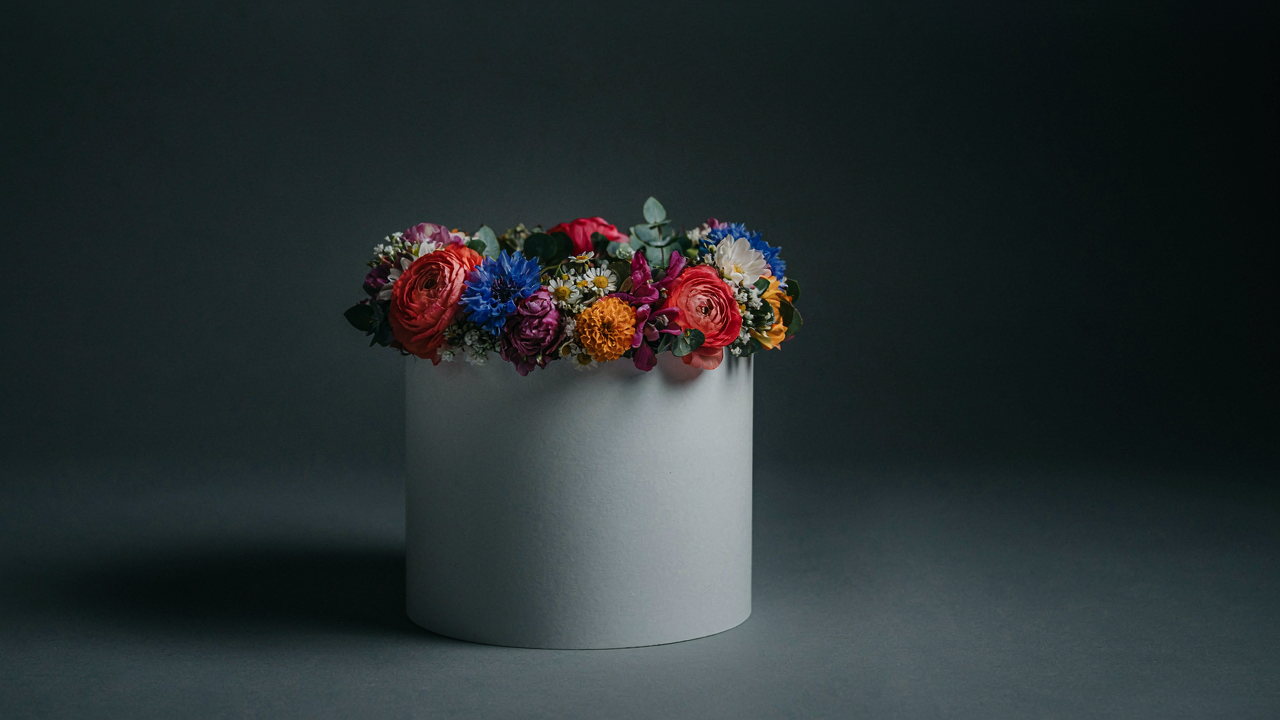
The Dehydration Delusion: Why Most DIY Methods Fail
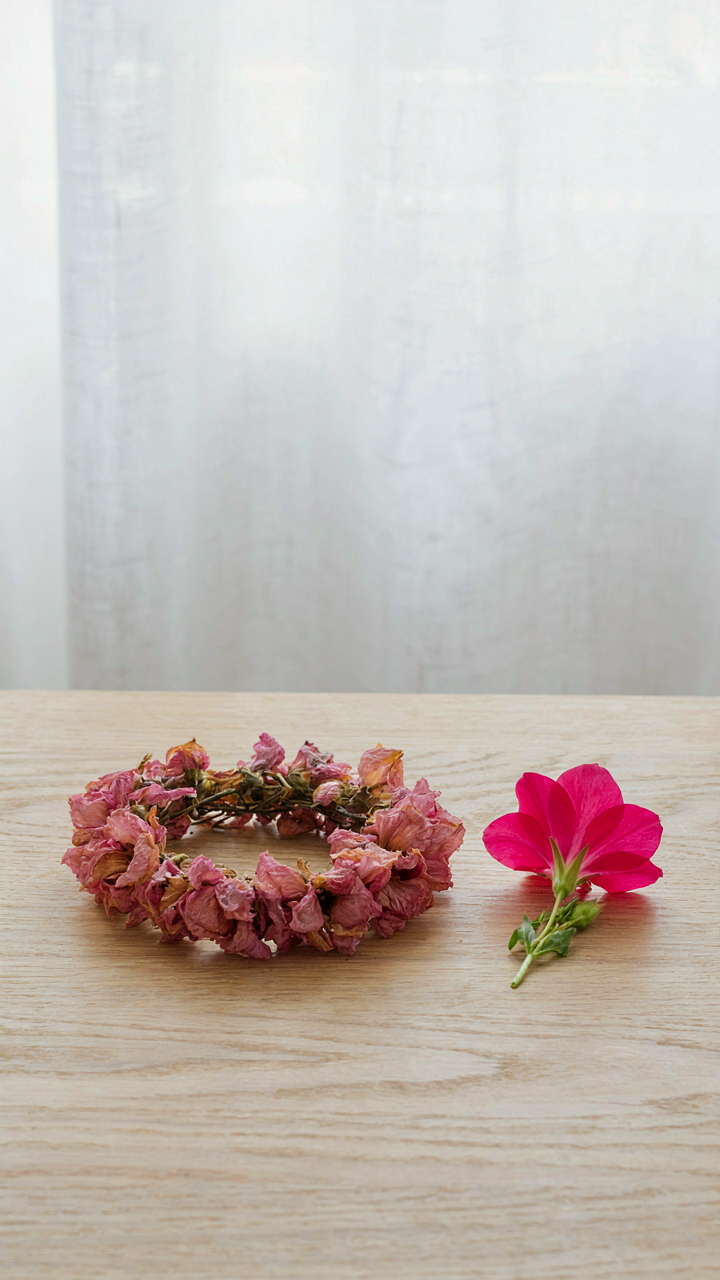
When Water Leaves Faster Than Structure
You want your flower crown to last because you paid for it, gifted it, or built it yourself. The real problem isn’t drying the flowers. It’s that most people dry them wrong, destroying the cellular architecture in the process. Think of it as a physics problem: rapid water loss creates internal stress. Cells collapse inward. Petals warp and shrink unevenly. The crown falls apart not because it’s dry, but because it dried wrong.
The mechanism is simple. Flowers are mostly water. Remove that water too fast and cell walls cave in on themselves like a building losing its foundation all at once. Remove it at the right pace and the cell structure stays intact, holding the flower’s original shape. This is why air-drying in a dark room for three weeks beats leaving a crown on a sunny windowsill for three days. Speed kills the structure. Patience preserves it.
The Two Failures Hiding In Plain Sight
Most advice on air-drying and silica gel preservation is incomplete. It tells you the steps but not why those steps matter. Air-drying fails when people ignore humidity. Silica gel fails when people assume it works like a sponge and rush the process. Both methods work. The execution doesn’t.
Air-drying in humid environments means water leaves the petals slower than it leaves the air around them. The flowers reabsorb moisture. They mold. They brown. You need dry air, darkness, and airflow. Silica gel absorbs water so aggressively that it pulls it from petals faster than the cell walls can adjust. The petals desiccate and become brittle. Bury flowers in fresh silica gel, check them daily starting day four, and remove them before they turn paper-thin. That’s the actual protocol most guides skip.
The Material Science Of Fleurs Séchées: Choosing For Eternity
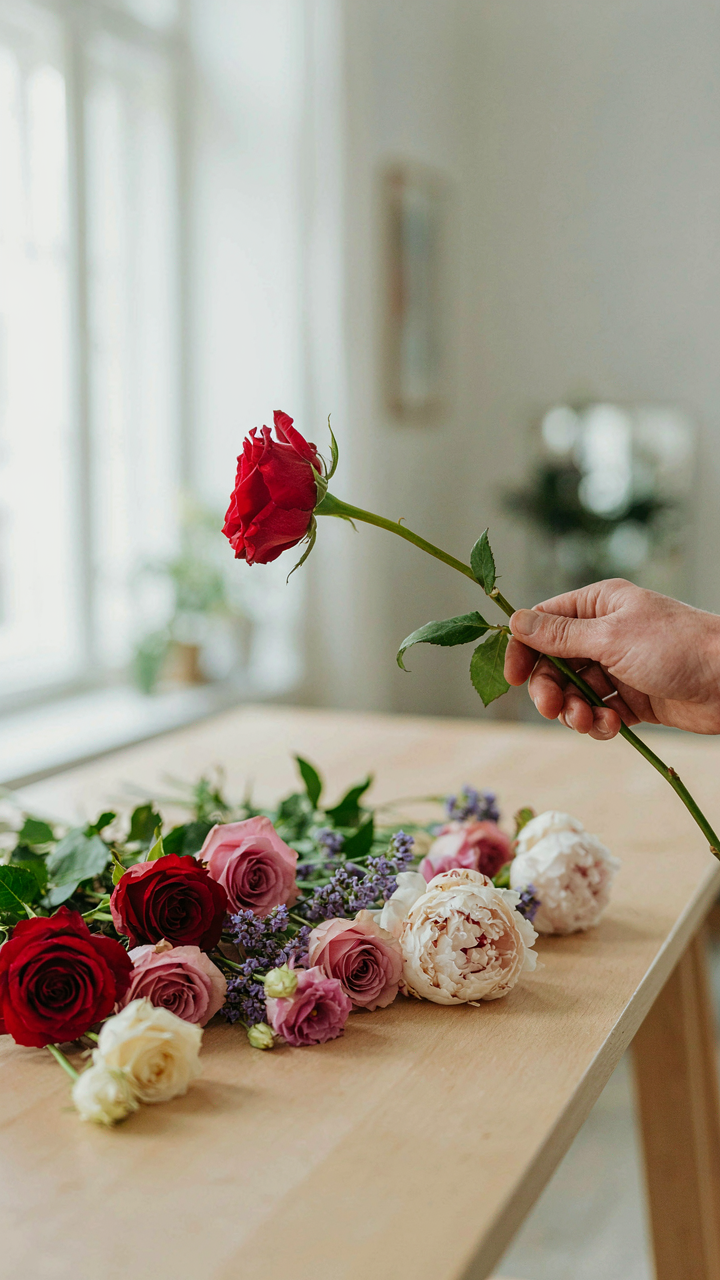
Naturally Resilient Blooms Last Longer
You want your crown to outlast the event because throwing money at something disposable feels like waste. Here’s the mechanism: certain flowers have cellular structures built for water loss. Roses, statice, and ammobium dehydrate slowly and retain shape because their cell walls contain lignin, the same compound that makes wood structural. Flowers with thin, delicate petals like peonies or tulips collapse into themselves the moment moisture leaves because they lack this reinforcement.
The common advice says “just dry everything.” Wrong. Some blooms are engineered for preservation and others simply aren’t. Dahlias, ranunculus, and most garden hybrids fail preservation because their petal density creates moisture pockets that rot before they cure. Lavender, statice, yarrow, and celosia dry predictably because their structure accommodates airflow. Pick flowers that want to last, not flowers you wish would last.
Structural Integrity Determines Preservation Speed
Stems carry the load that petals cannot bear alone. A weak stem means your crown collapses under its own weight during the drying phase, crushing petals below. Woody stems like those in roses and hypericum berries maintain rigidity as water evaporates because they contain vascular bundles that don’t collapse inward. Hollow or pithy stems like those in hydrangeas or chrysanthemums crumple from the inside out.
Test stem integrity before committing to a design. Bend the stem gently—it should flex and return, not snap or go limp. Petal attachment matters equally. Flowers where petals connect via thin cellular bridges fail first. Strong petal-to-stem junctions found in roses, celosia, and statice mean individual florets stay put during the six to twelve week cure time. Weak junctions mean petals separate and scatter, leaving you with a crown frame, not a crown.
The Zinnia Flower Crown Paradox: Beauty That Fights Back

Why Zinnias Outlast Everything Else
You want zinnias in your crown because they last longer than other flowers, and that means fewer replacements, less frequent maintenance, and more hours where your crown actually looks intentional instead of wilted. The mechanism is biological: zinnias have naturally thick cell walls and a waxy cuticle layer that resists water loss. This isn’t luck. It’s an evolutionary adaptation zinnias developed to survive in hot, dry climates. When you cut a zinnia stem, that same structural advantage that keeps the plant alive in drought conditions keeps the flower hydrated longer in a crown.
The practical advantage compounds fast. Most flowers degrade because water evaporates from their petals and stems. Zinnias lose water slower. Their thick, fibrous stems don’t collapse as quickly as softer varieties like dahlias or peonies. A properly cut zinnia can maintain structural integrity for five to seven days in a crown without any special treatment. That’s double or triple the lifespan of a delicate bloom in the same conditions. Cut the stem at a 45-degree angle and place it in water immediately after harvest. Remove lower leaves so bacteria can’t colonize the water line.
The Defense System You’re Already Ignoring
Zinnias don’t just resist decay by accident. They carry natural antimicrobial compounds in their stems and flowers that actively suppress bacterial growth in the water they draw up. Think of it like immunology applied to floristry: your crown’s water quality is the immune system, and zinnias are the organism that fights back against microbial invasion. This is why zinnias outperform in humid conditions where bacteria typically accelerate bloom death. The flower’s own biochemistry does half the preservation work for you.
Most people don’t exploit this. They treat all flowers the same way: add flower food, change water, trim stems. That’s generic. Zinnias need a different protocol. Since they’re already fighting bacterial colonization internally, your job is to keep their water channel clear and their stems hydrated. Use distilled or filtered water instead of tap water. Tap water introduces mineral deposits and chlorine that interfere with the zinnia’s natural defenses. Keep the stem end submerged continuously. Air pockets in the xylem tissue kill a zinnia faster than anything else.
The Environmental Control Protocol: Beyond ‘Cool, Dark Place’
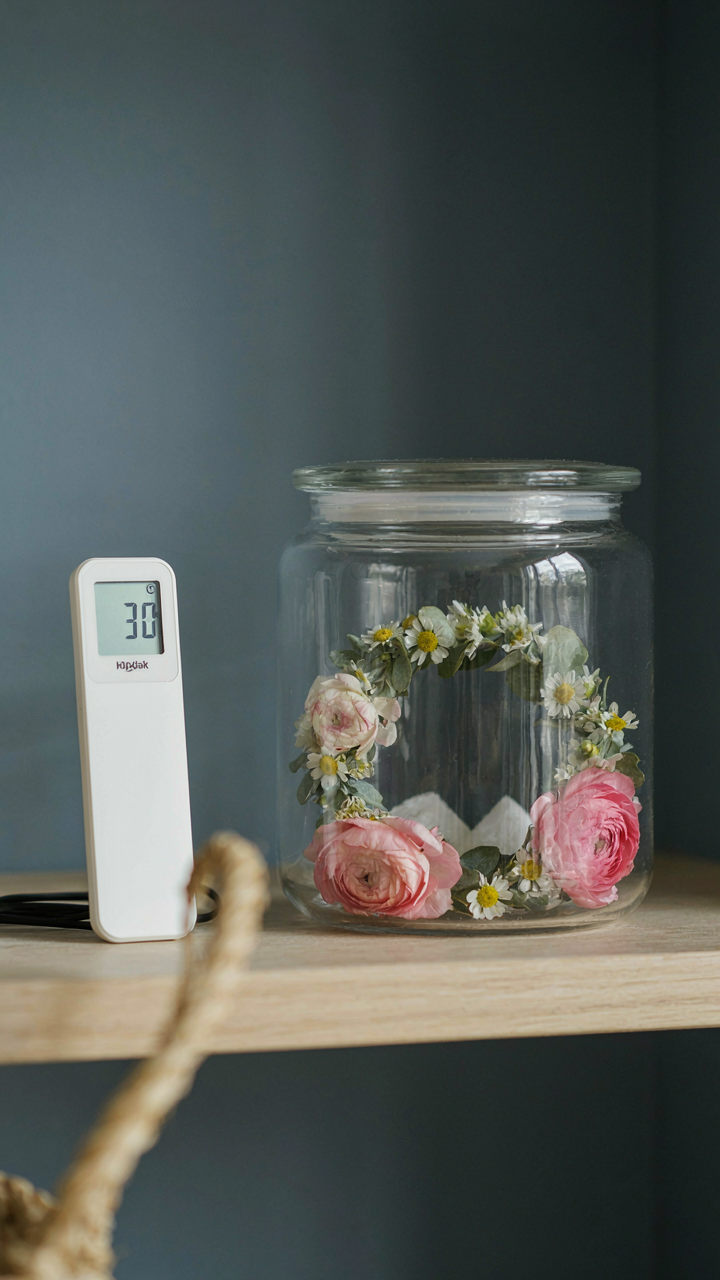
Humidity As The Silent Killer
You want your crown to last because you spent money on it and hate waste. Here’s what actually happens: humidity accelerates the browning and brittleness of petals by feeding mold growth and speeding moisture absorption into plant cells. Think of humidity like compound interest in microbiology. High humidity doesn’t just preserve flowers—it weaponizes decay. Petals absorb ambient moisture, lose structural integrity, and become vulnerable to fungal colonization within days.
The advice to “keep it dry” is incomplete. Aim for 30 to 40 percent relative humidity. Below 25 percent and petals become too brittle and crack during handling. Above 50 percent and mold establishes itself aggressively. Use a hygrometer to measure actual humidity in your storage space, not guesses. Silica gel packets absorb excess moisture when sealed in a container with the crown.
Temperature Swings Destroy Structure
Constant temperature beats perfection. Most people chase the coldest temperature they can access and ignore what happens when the crown moves between environments. Temperature fluctuations force plant cells to expand and contract repeatedly, rupturing cell walls and accelerating desiccation. Stability matters more than the absolute number on the thermometer.
Store the crown at 60 to 65 degrees Fahrenheit and keep it there. Moving from a warm room to a cold refrigerator, then back out, creates stress cycles that damage petals faster than a single warm day ever would. If transport is unavoidable, allow 30 minutes of gradual acclimation in an intermediate space before exposing the crown to the final temperature. The mechanism is physiological: cellular water content shifts unpredictably during rapid temperature changes, and flowers lack the adaptive capacity that living plants can mobilize.
The Chemical Stabilization Gambit: When To Intervene
Glycerin Infusion: Process And Realistic Expectations
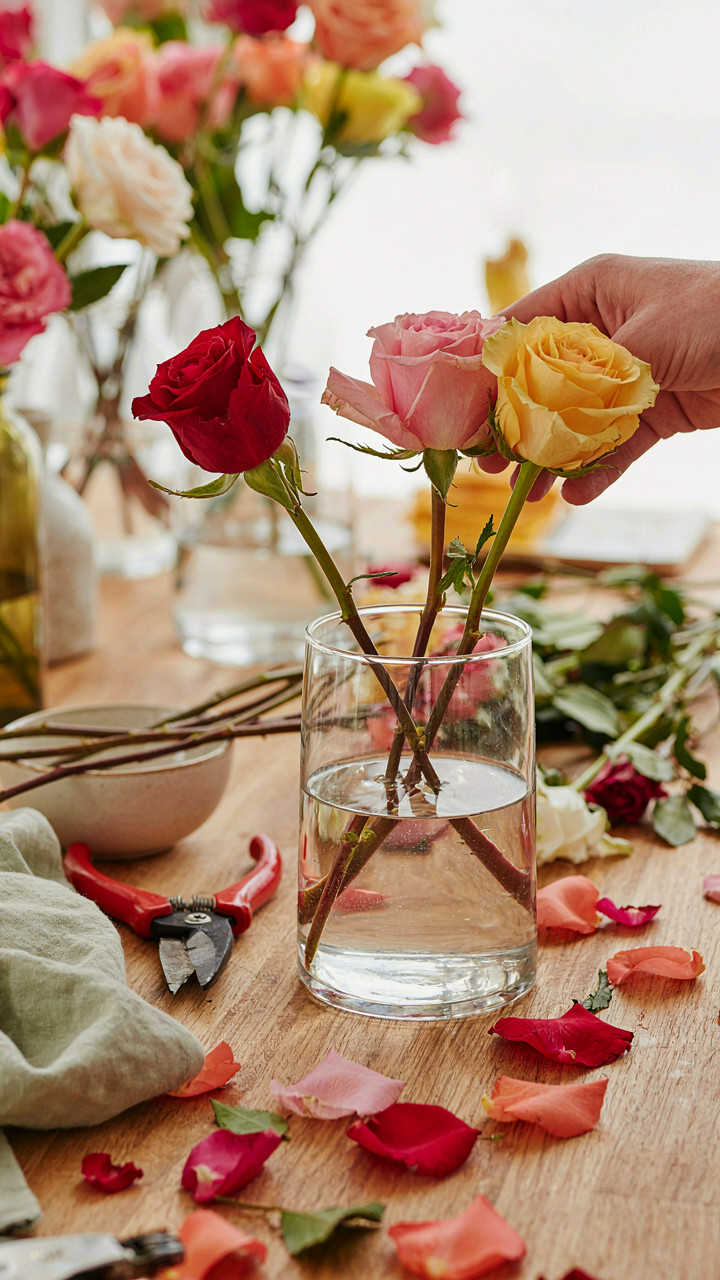
You want glycerin because you think it’s the silver bullet that keeps flowers looking fresh forever. It isn’t. Glycerin works through osmosis, the same mechanism plants use to pull water up their stems, except you’re reversing the flow to replace water with a humectant that resists decay. Cut stems at a forty-five-degree angle, split woody stems lengthwise, then submerge the bottom two inches in a fifty-fifty mix of glycerin and water for three to seven days depending on stem thickness.
What actually happens: glycerin darkens flowers, shifts their color palette, and leaves them waxy and papery. They last longer than fresh flowers, but they don’t look fresh anymore. The timeline is honest though. Roses, carnations, and eucalyptus absorb glycerin fast. Delicate flowers like peonies or ranunculus absorb it unevenly and often look patchy. Use glycerin when you want preservation over appearance, not when you’re chasing Instagram aesthetics.
Sprays And Sealants: Superficial Fix Vs True Preservation
Most flower crown preservation spray does one thing well: it slows water loss from petals and leaves. Then people treat it like a magic barrier against time itself. Hairspray locks in moisture short term, floral sealants add a protective coating, but neither addresses the real problem: cellular breakdown and microbial decay happening inside the stem. You can seal the outside all you want. The flower is still dying from the inside out.
Floral sealants work best as part of a system, not as a standalone solution. Mist the crown lightly after conditioning stems in floral preservative, keep it out of direct sunlight, and maintain consistent humidity around sixty to seventy percent. Skip the spray if you’re storing a crown dry. Spray adds weight that pulls fragile petals down when there’s no stem water pressure supporting them. The actual preservation happens through temperature control and moisture management, not through coating flowers with polymer.
Deconstructing The ‘How To Make A Flower Crown DIY’ Myth

The Base Decides Everything
You want the Instagram version without the dead flowers by Tuesday. Here’s the mechanism: the base material determines structural integrity and preservation speed. Think of it like load-bearing architecture. A weak foundation doesn’t just fail—it accelerates decay of everything attached to it.
Most DIY guides skip past base selection entirely. They jump to “use floral wire” without explaining why. Floral foam absorbs water unevenly, dries at different rates across sections, and creates pressure points that crush delicate stems. Chicken wire wrapped in moss or a pre-formed foam ring offers better water distribution. The base either extends bloom life or cuts it short.
Secure Without Crushing
Attachment methods determine whether stems stay viable or snap under their own weight. Florists learned this decades ago through trial, but the logic applies to crowns too: minimal contact points preserve capillary function. Tape and wire restrict water movement. Floral picks and foam insertion points distribute pressure across stem length instead of strangling it at one spot.
The common move is wrapping everything tight. Wrong. Tight binding cuts off nutrient transport and traps moisture against the stem. Use soft floral tape or no-tie clips to anchor stems into the base, leaving the actual flower head and upper stem free to move slightly. This single protocol shift extends crown life by three to five days on average.
The Make A Dried Flower Crown Industrial Design Principles

What Nature Already Solved
You want a flower crown that doesn’t fall apart in three days because you spent money on it and need the photo to matter. Here’s what actually works: nature has been drying things for millions of years, and flowers evolved specific traits to survive that process. Study how seeds dry on the plant before they drop. Observe how petals curl inward as moisture leaves. The mechanism is simple: slow, even water loss prevents structural collapse. Flowers that dry intact share common traits: low moisture content, thick cell walls, and efficient vascular systems. Copy this, not Pinterest aesthetics.
When florists talk about “delicate” flowers, they mean flowers with poor drying architecture. Roses dry well because their cell structure resists collapse. Dahlias crumble because they’re built for water retention. The dried flower crown trend exploded because designers finally stopped fighting plant biology and started working with it. Choose flowers that nature designed to last.
Slowing Decay Through Design
Entropy is a physics term for disorder spreading through a system. In flower crown preservation, entropy is petals falling off, colors fading, and stems snapping. You don’t stop entropy, but you can engineer conditions that slow it down drastically. The common advice to “just hang them upside down” is incomplete—air circulation, temperature stability, and light control matter more than position alone.
- Air Circulation Speed: Flowers dry too fast in direct wind and too slowly in stagnant air. Target a gentle cross breeze in a 65-75 degree space. Forced air from fans causes uneven drying and petal curling.
- Humidity Range: Keep preserved crowns between 30-50 percent relative humidity. Above 60 percent, mold colonizes before flowers fully desiccate. Below 20 percent, petals become brittle and shatter on handling.
- Light Exclusion: Direct sunlight bleaches pigments within days. Store in indirect light or complete darkness. UV exposure accelerates oxidative breakdown of cell structures that hold color.
- Temperature Consistency: Fluctuations between hot and cold cause expansion and contraction in stem tissues, cracking vascular tubes. Maintain 65-72 degrees without swings exceeding five degrees daily.
- Moisture Barriers: Silica gel packets near the crown absorb excess humidity without touching flowers. Replace packets weekly during the first month of drying to maintain optimal decay resistance.
The specific protocol: hang crowns in a shaded room with passive air movement, place silica packets within six inches, and check humidity weekly with a cheap digital meter. These variables aren’t suggestions, they’re the actual system that determines whether your crown lasts months or weeks.
Post Preservation Neglect: The Unfinished Business
Where Your Flower Crown Actually Dies
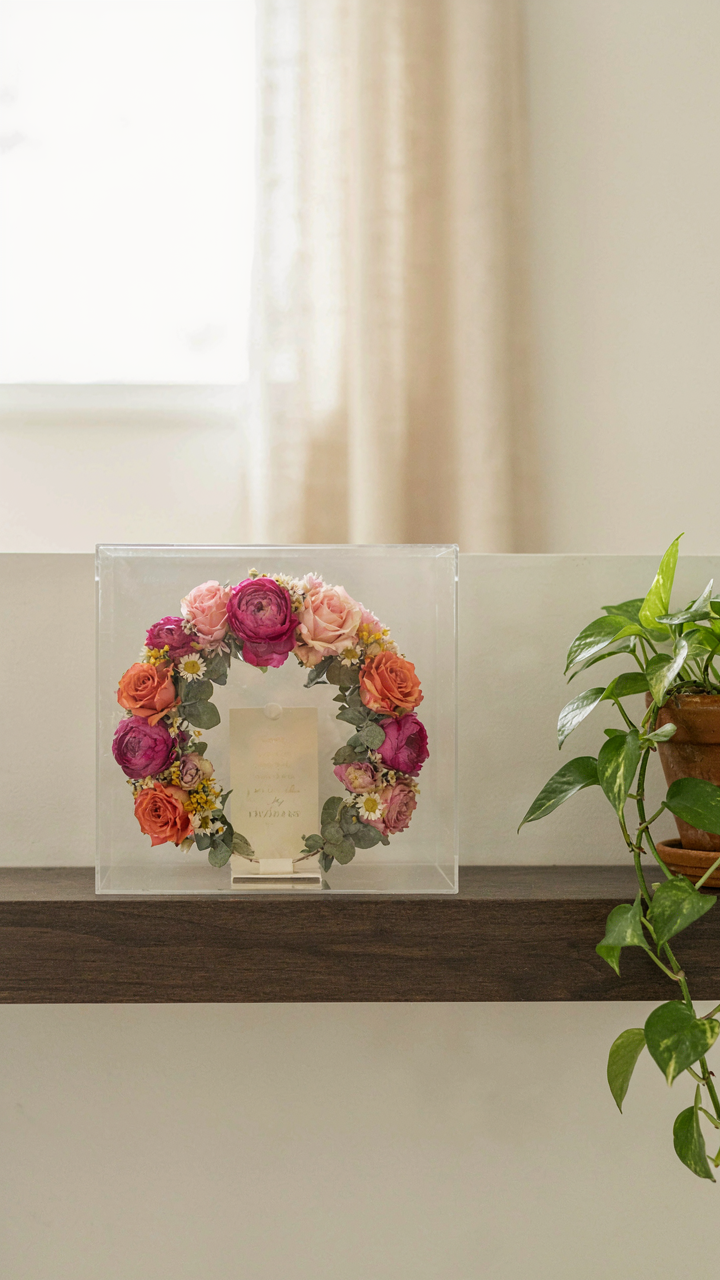
You’re preserving a flower crown because you want proof that something mattered. That’s the real motive. But preservation isn’t a one-time event. It’s entropy management. The moment you store a preserved crown without a system, degradation accelerates faster than you think. Environment controls the outcome here. Temperature swings, humidity spikes, and light exposure don’t just fade flowers—they trigger chemical breakdown in the plant material itself. Most people store crowns in closets or boxes and assume the work is done. It isn’t.
The mechanism is simple: preserved flowers exist in a suspended state. They’re not alive, but they’re not inert either. Moisture in the air rehydrates dried petals. Heat causes oils to oxidize. UV light breaks down pigment structures at the molecular level. You need a storage environment that arrests all three variables simultaneously. This means a cool, dark, dry space with stable temperature. A sealed container beats open shelving. Acid-free tissue paper prevents direct contact with container materials that can leach chemicals into petals. You’re not storing flowers. You’re maintaining an archaeological specimen.
Dusting Without Destroying What’s Left
The standard advice here is wrong: don’t use water, don’t use compressed air, don’t touch it much. That’s incomplete. You need a protocol that removes dust accumulation without fragmenting brittle material. A soft-bristled brush designed for delicate work—natural hair, not synthetic—is your tool. The bristles bend rather than snap flower stems. Work in slow, deliberate strokes along the direction of the petal structure, not against it. This takes time. Speed creates friction. Friction breaks things.
Damage control happens between inspections. Check your crown every three months for signs of mold, petal loss, or color shift. These are flags that your storage conditions have failed. Mold indicates humidity above 60 percent. Rapid color fading means light is penetrating the storage area. Loose petals signal temperature fluctuation. Address the environmental variable immediately, not after the next inspection. Document what you see. Photos create a baseline. You’ll catch deterioration early only if you know what normal looks like on day one.
Beyond Trends: Cultivating A Preservation Mindset
Everything Dies Eventually
You want preservation tips because you’re afraid of wasting money on something that falls apart in days. That’s honest. Here’s the mechanism: biology doesn’t negotiate. Every organic material—petals, stems, leaves, grasses—contains water and cellular structures that degrade on a fixed timeline. Humidity, heat, and light accelerate that process. You can’t stop it. You can only slow it down by controlling the conditions around it.
The real shift happens when you stop fighting the clock and start measuring against it instead. A flower crown lasts three to five days at room temperature before visible deterioration. Refrigeration extends that to two weeks. You’re not preserving forever. You’re buying time within a known window. Accept the window, and your strategy changes from desperation to precision.
The Math Of Decomposition
Everyone says “just dry your flowers” like that’s the answer. It’s incomplete. Decay follows predictable chemical patterns, not magical thinking. Drying removes water that feeds microbial growth and hydrolytic breakdown, but it doesn’t stop oxidation or structural collapse. A dried petal is still fragile. A silk replica doesn’t exist in the same material reality.
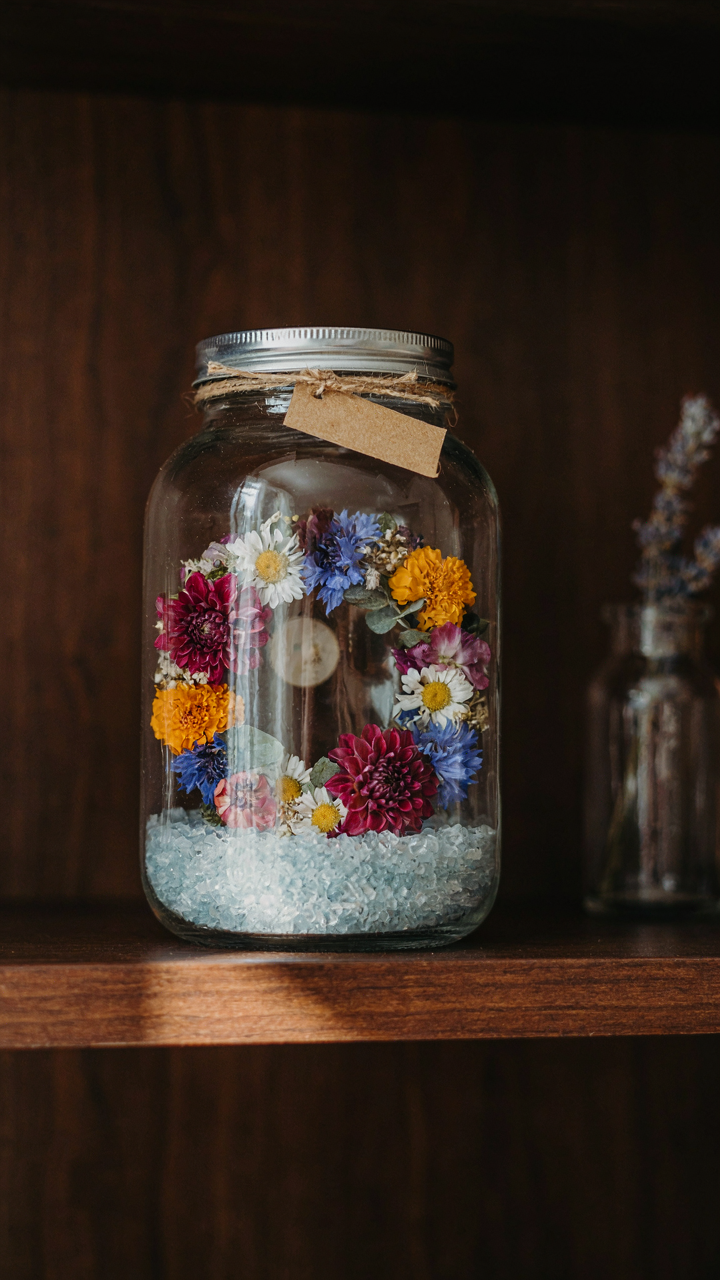
What actually works is layering incompatible conditions for decomposition. You need low humidity (below 30 percent), cool temperature (45 to 55 degrees Fahrenheit), and darkness. Add all three and you interrupt the decay chain. Use silica gel in a sealed container in a dark closet, not on a shelf. The container isn’t decoration. It’s a protocol execution step.
The Only Preservation Tip You Need: Master Decay, Not Delay
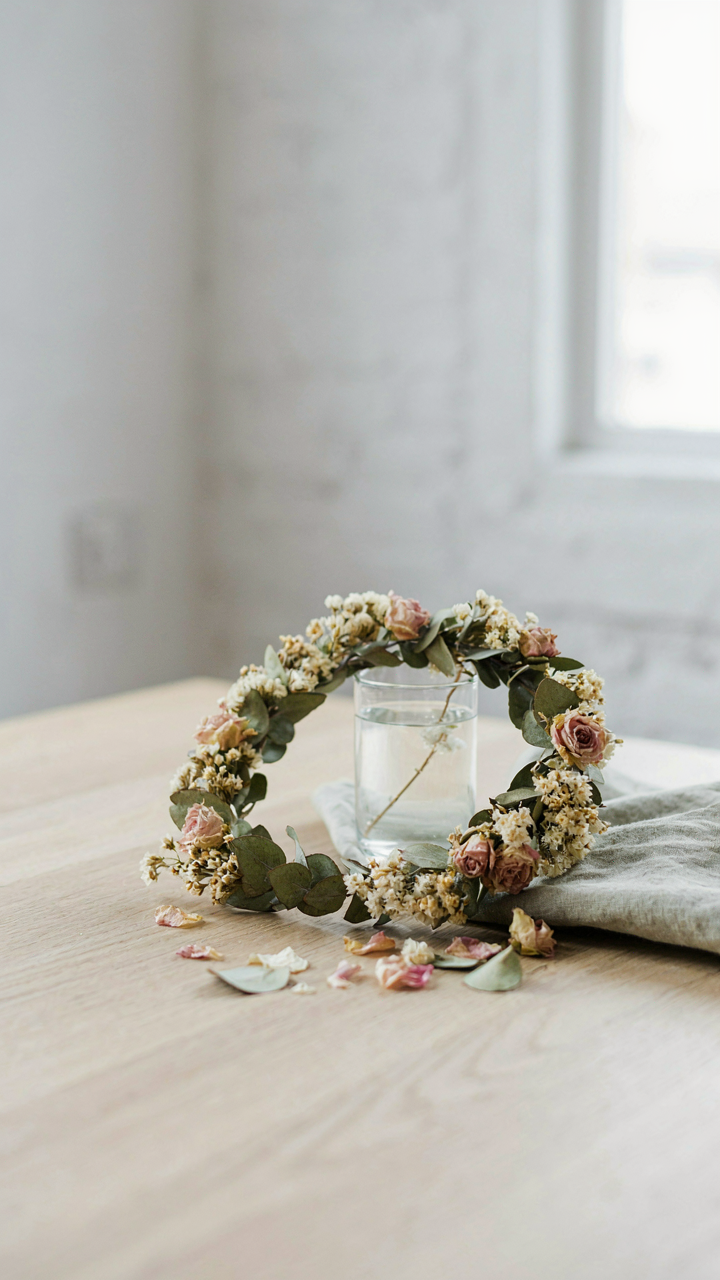
Stop fighting biology. Flower crowns die. The real skill isn’t extending their life by three extra days with some glycerin hack—it’s designing them to peak at the exact moment that matters, then letting them go gracefully. Photograph them at their best, preserve the memory instead of the petals, and build the next one better. Your crown’s worth comes from the moment you wear it, not the months it sits in a box. Stop preserving flowers. Start designing experiences.



