
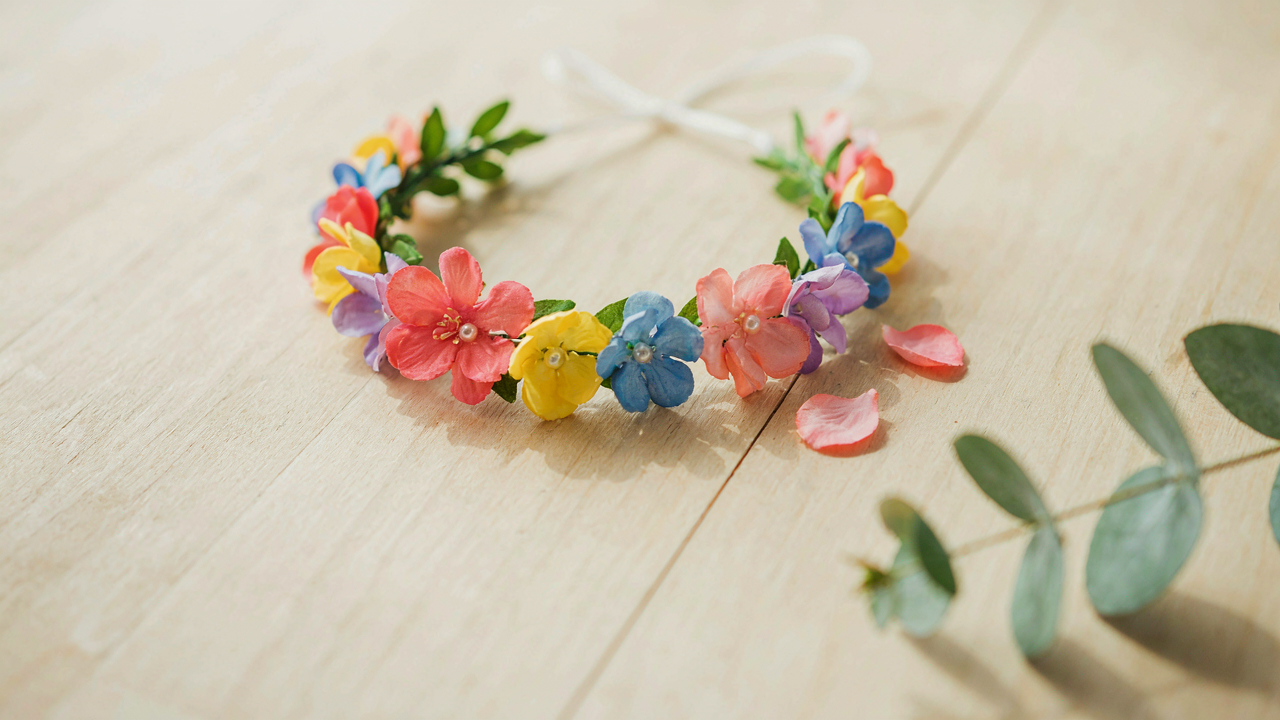
The Floral Halo Fallacy: Why Generic Crowns Fail
What Actually Breaks A Baby Flower Crown
You want the crown to last through photos without falling apart, and you’re afraid spending time on this means you’ll get it wrong anyway. Here’s the mechanism: baby flower crowns fail because people treat them like decorative afterthoughts instead of engineered objects. Think of it like structural engineering—the base is load-bearing. A weak base distributes weight unevenly, causing stems to snap and flowers to drop within minutes. Most crowns use floral foam that’s either too dense (restricts water uptake, flowers wilt fast) or too soft (can’t hold stem angle, everything slouches). The real variable isn’t the flowers themselves. It’s whether the base can hold tension without crushing the baby’s head or collapsing under its own weight.
Builders don’t start with decoration. They start with foundation. The same applies here. A proper baby flower crown base uses materials that secure stems at precise angles while remaining light enough that a baby tolerates wearing it. Stems need to sit at 45-degree angles minimum to maintain water column integrity. When you jam flowers straight down into soft foam, capillary action fails. Water doesn’t travel the stem properly. The flower dies before the photo session ends. That’s not a flower problem. That’s a base design problem that nobody admits.
When Materials Sabotage The Entire Crown
The consensus says “use whatever flowers are in season and pretty.” That’s incomplete and lazy. Material choice determines lifespan, weight, and structural integrity—not aesthetics. A baby crown made from heavy tropical flowers (orchids, proteas) will slip off or cause neck strain within 30 minutes. The physics of load distribution works against you. Lighter stems like baby’s breath, waxflower, and eucalyptus hold water differently than dense blooms. Waxflower retains moisture longer because it has smaller stem diameter and denser cellular structure. That means it stays rigid longer. Eucalyptus leaves don’t require constant water absorption the way flower petals do, so they maintain shape through temperature changes during outdoor shoots.
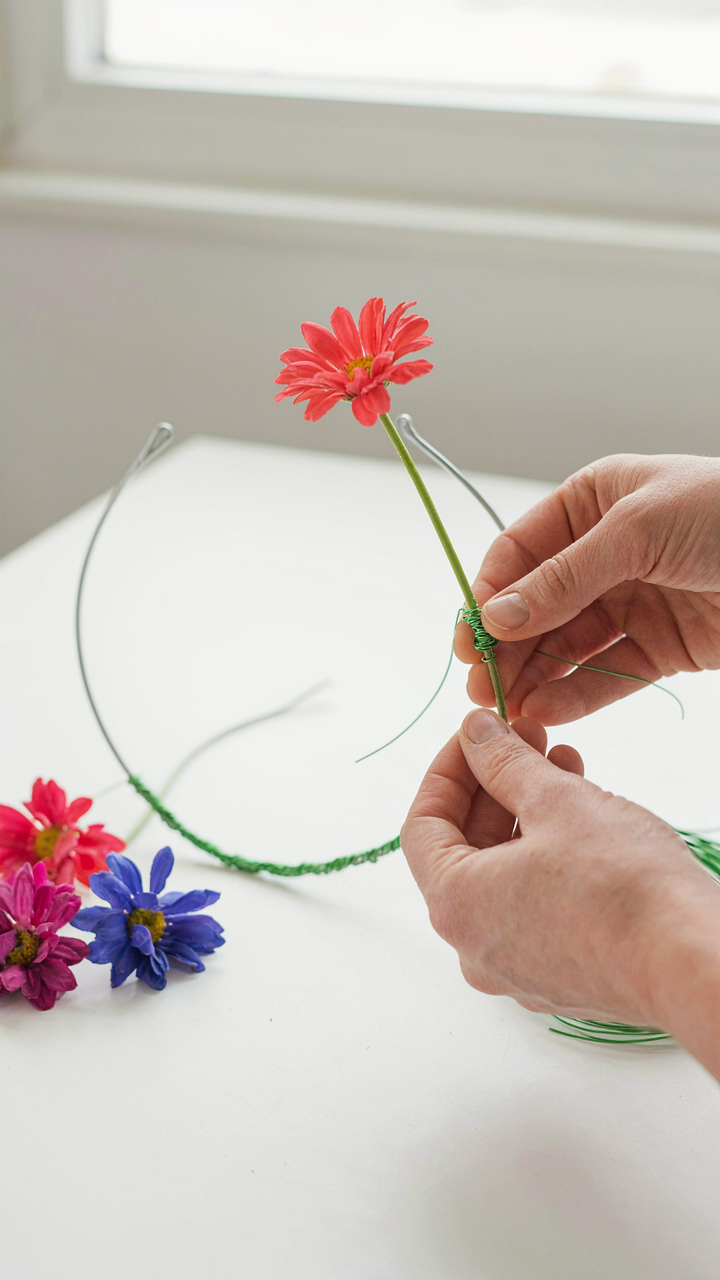
Floral wire gauge matters more than most people realize. Thin wire (24-26 gauge) wrapping weak stems creates a failure point exactly where you don’t want it—at the crown base where movement happens. The stem bends at the wire junction, snaps internally, and the flower goes limp. Use 20-22 gauge wire for structural integrity, but this only works if you’re also using materials that accept that wire gauge without crushing. Foam density, stem thickness, and wire gauge form a system. Break one component and the whole crown fails faster.
The ‘Baby Flower Crown’ Blueprint: Foundational Principles For Design
Head Circumference And Weight Distribution
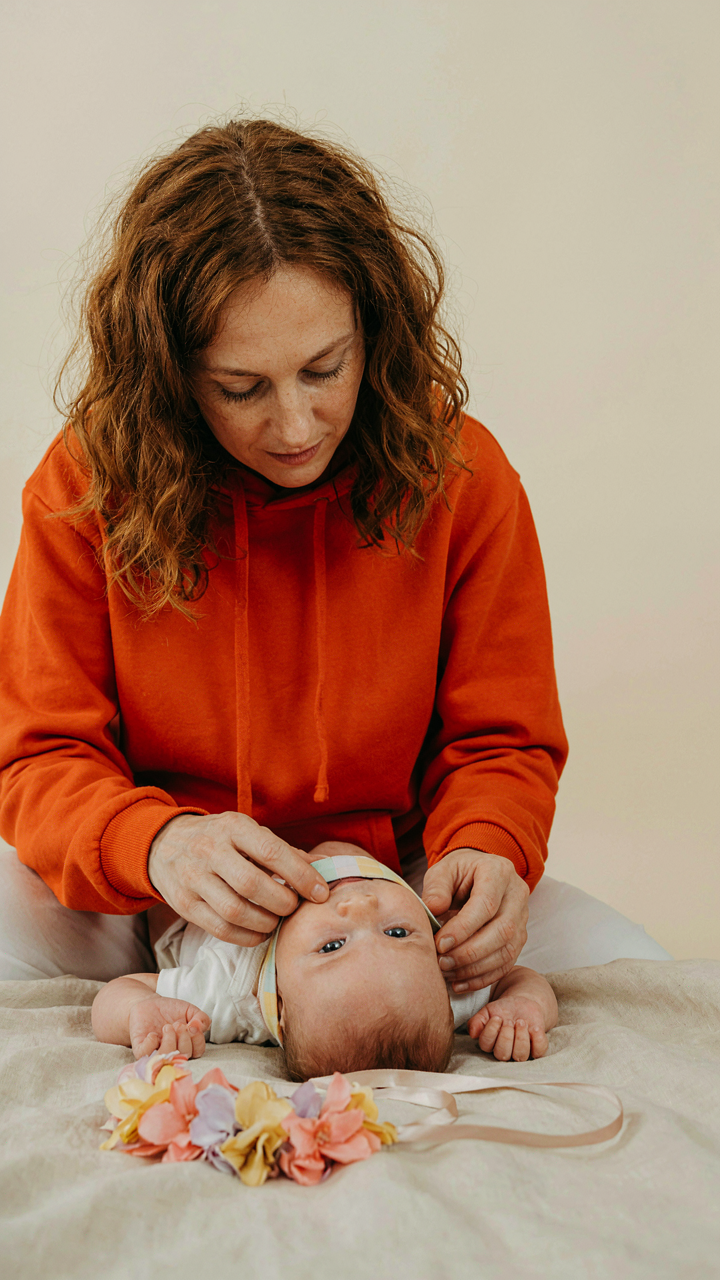
You want the crown to look adorable in photos without admitting you’re anxious about whether it’ll stay put or hurt your baby. Here’s the mechanism: a baby’s head grows predictably, and that growth determines both the circumference and the structural load the neck can support. Newborns have head circumferences around 13-14 inches. By six months, that’s 16-17 inches. By one year, roughly 17-18 inches. Weight matters because a crown’s total mass—flowers, wire, padding—creates downward force on the cervical spine.
The practical boundary is simple. Keep total crown weight under two ounces for babies under six months. Under four ounces for six to twelve months. Measure the baby’s head at the widest point above the ears using a soft tape measure. Build your base band with this exact measurement plus half an inch of flexibility. Elastic or adjustable velcro backing prevents circulation issues while accommodating rapid growth.
Selecting Flowers That Don’t Compromise Safety
Everyone recommends “baby safe flowers” without defining what that means. Most advice is incomplete. The real issue isn’t toxicity alone—it’s texture, fragility, and whether petals shed into the baby’s face and mouth. Silk flowers eliminate petal drop and bruising. Fresh flowers wilt within hours and release moisture that breeds bacteria near sensitive skin.
Use silk peonies, silk roses, or preserved moss as your anchor pieces. These hold their shape under handling and don’t degrade when a baby grabs or mouths the crown. Secure each element with floral wire wrapped tight, not loose loops that catch on skin. Test the finished crown by running your thumb over every surface. If you feel anything sharp, protruding, or rough, redesign it. The crown comes off immediately if the baby shows any sign of discomfort.
Beyond Blooms: The Durability Protocol For Flower Girl Crowns
How Tension Holds Structure
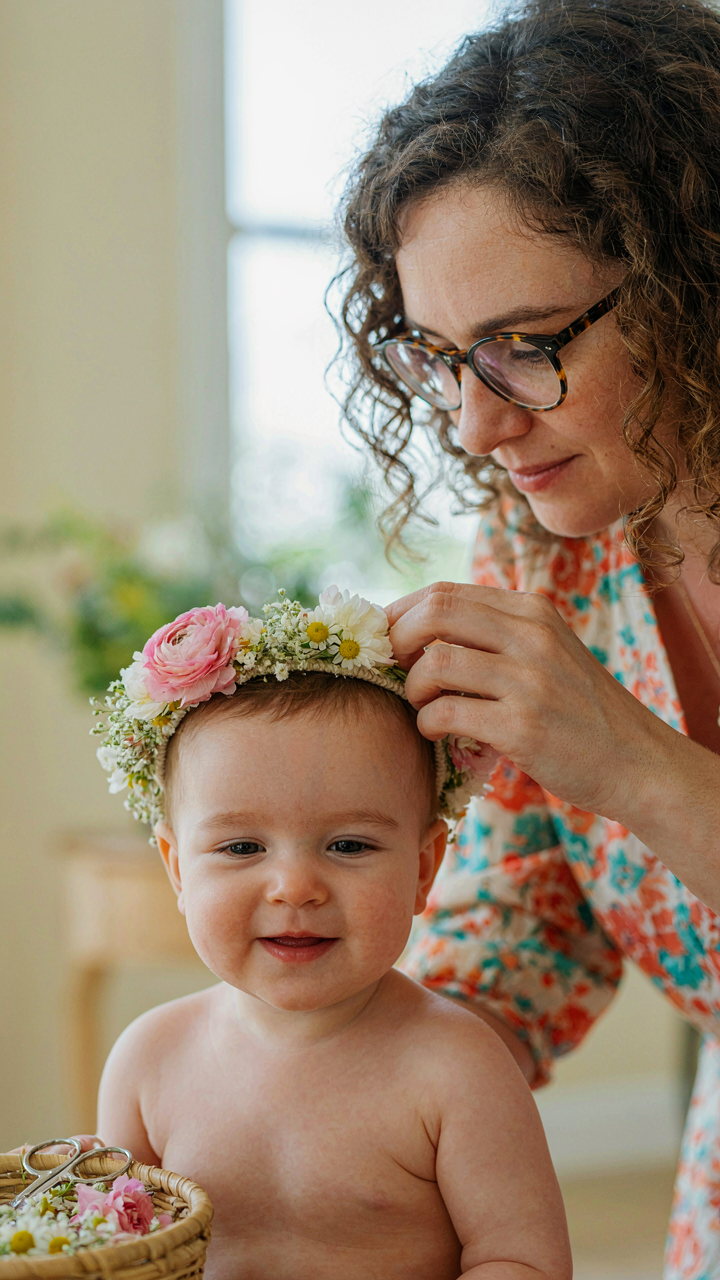
You want the crown to survive the event without looking like your baby went through a fight. The real issue isn’t the flowers—it’s the base framework. Think of it like structural engineering: a crown needs a load-bearing core that distributes stress evenly so no single point fails when your infant turns their head or reaches up.
Most people use floral foam or wire as the foundation, but they don’t reinforce the attachment points where flowers connect to the base. This creates weak zones. Double-wrap every stem connection using floral tape, then secure the tape itself to the base with a second pass of tape applied perpendicular to the first. This cross-hatching method prevents peeling and holds under movement.
Movement Anchors That Actually Work
Babies move unpredictably, and a crown sitting loose on the head becomes a target for grabbing. The mechanism here is friction plus strategic anchor points, not hope that a headband stays put. Use a combination of elastic band and internal grip surfaces that contact the scalp directly without slipping.
Sew or glue a thin rubberized or textured material to the inner rim of the crown where it meets the head. This increases resistance to sliding. Pair this with a lightweight elastic band that runs under the chin or across the back of the head, depending on comfort tolerance. The band should attach at two points minimum on opposite sides of the crown base to prevent tilting. Test the hold by gently rotating and tilting the crown on the baby’s head before the event—if it shifts more than a quarter inch, tighten the anchor points.
The Bio Feedback Loop Of A Floral Halo: Optimizing Comfort
Sensory Input: Texture And Temperature Management
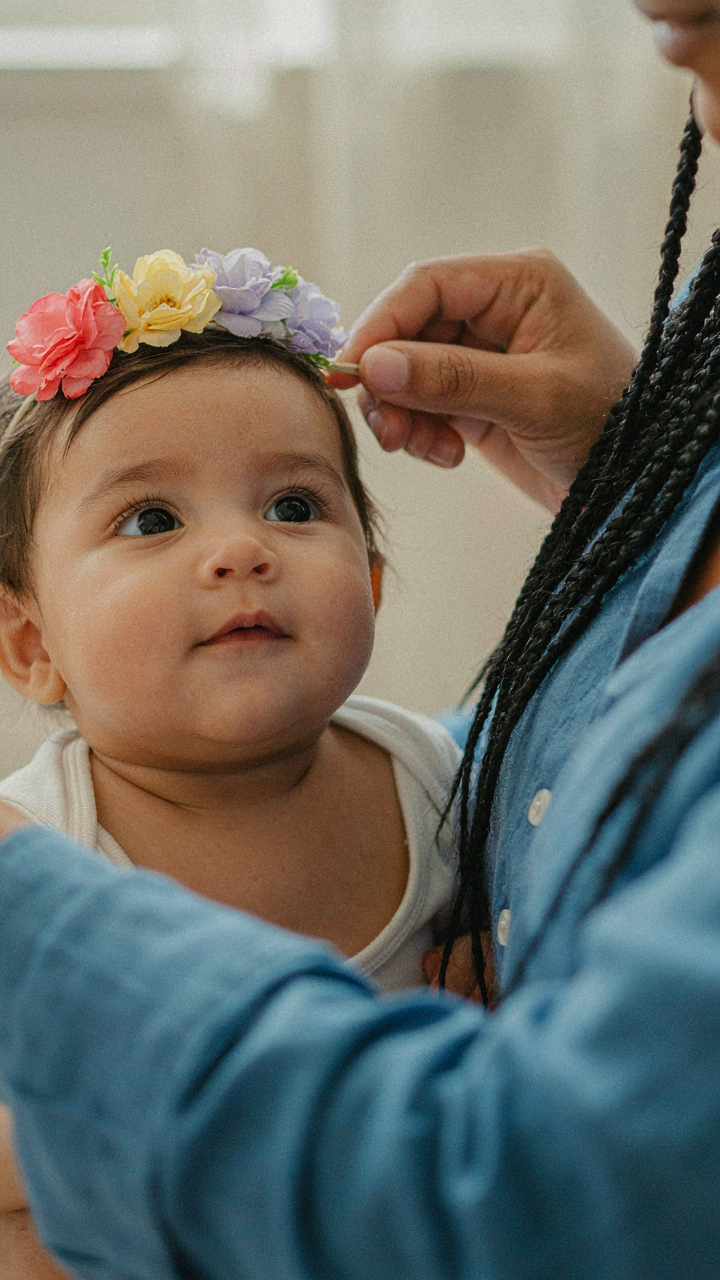
You want your baby to look good in photos without screaming. The real mechanism here is proprioceptive feedback, borrowed from neurobiology: your baby’s nervous system interprets the crown’s contact points as either safe or threatening based on texture and heat. Smooth materials register as neutral. Rough fibers trigger defensive response. Temperature matters equally. A crown that traps body heat creates cortisol spikes, which shows up as fussiness in the frame.
Choose materials that dissipate heat rather than hold it. Silk ribbon, thin wire, and air-dry foam bases outperform thick felt or dense floral foam. Fresh flowers release moisture that keeps the crown cooler than artificial alternatives. Test the base against your own inner wrist first. If it feels scratchy to adult skin, it will irritate a baby’s scalp within minutes. The crown should feel like wearing nothing at all.
Prevention Of Irritation And Pressure Points
Most parents place crowns too tight, mistaking security for safety. This is wrong. A loose fit prevents the blood vessel compression that causes redness and discomfort. The crown sits on top of the head, not gripping it. Pressure points emerge where the base contacts the skull, especially behind the ears and across the forehead. These spots determine whether a baby tolerates fifteen minutes or five.
Build the base with graduated support rather than uniform contact. Use soft wire that bends to skull contours instead of rigid bands. Pad high pressure zones with fleece or cotton batting. Test the fit by sliding one finger under the band at every point. You should feel resistance, not tension. A crown that leaves marks after five minutes is too tight, and a tight crown defeats the entire purpose of having one in the first place.
1st Birthday Flower Crown: Crafting A Statement, Not A Cliché
Skip The Instagram Template
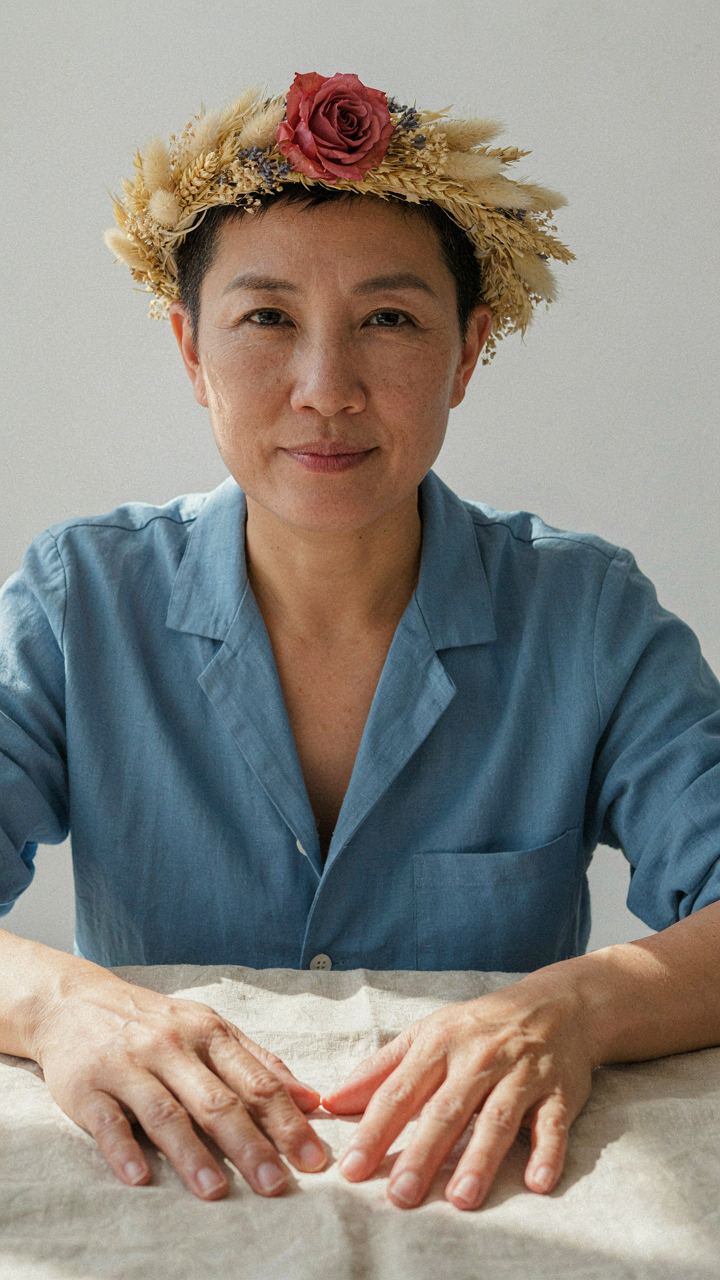
You want your kid’s flower crown to signal that you care about aesthetics—that you’re not just another parent buying whatever the party store sells. Here’s the mechanism: consensus ruins distinction. Every first birthday crown looks identical because parents copy what they see online, which means the real move is constraint, not maximalism. Pick a single design principle and execute it ruthlessly instead of throwing every trend at it.
The pastel-and-baby’s-breath formula exists because it’s safe and requires no thought. That’s precisely why it fails to register. Real differentiation comes from theme coherence: pick a single visual language—Art Deco geometry, Scandinavian minimalism, botanical accuracy, color blocking—and let everything else follow from that decision. Your florist or DIY approach matters far less than the underlying decision framework you’re using.
Texture And Material Hierarchy
Design principle borrowed from industrial design: constraint creates clarity. A flower crown needs a dominant material, a secondary material, and one accent. Most crowns jam every element into equal visual weight, which reads as chaos. Dominance means one texture does seventy percent of the work.
Build around a structural material first: raffia, leather cord, wire frame, or even sculptural branches that aren’t flowers at all. Layer one secondary element—dried grasses, feathers, seed pods, or preserved foliage—that contrasts with the primary. Then add flowers as the accent layer, not the foundation. This inverts the typical approach and produces a crown that photographs as intentional, not generic.
The ‘Flower Crown Hairstyle’ Deception: It’s About The Hair, Not Just The Crown

Crown Placement Depends On Hair Structure
You want the crown to look effortless, like it belongs there. That’s the real fear driving this section—that it’ll slip, look glued on, or betray the whole setup as costume instead of natural. Here’s the mechanism: hair density and texture determine anchor points. Fine hair needs smaller, lighter flowers and tighter weaving. Thick hair can support heavier blooms and looser placement. The crown doesn’t sit on top of hair—it integrates into it. This is structural engineering applied to a baby’s head.
Hair length matters more than most people admit. Short hair below two inches makes traditional crown placement impossible because there’s nothing to grip. You need either longer strands to weave through, or you shift to a clip-based system that fastens directly to existing baby hair accessories like headbands. Medium length hair between two and four inches becomes your sweet spot for flower crown work. This is where you can weave, where flowers sit stable, and where the whole thing photographs without looking precarious.
Securing Method Determines The Look
The styling technique isn’t about making the crown pretty—it’s about making it stay put without damaging the baby’s scalp or hair. Common advice here is wrong: most people assume you just weave flowers through hair and call it done. That fails because baby hair is fragile, and movement destroys the setup within minutes. The real protocol uses two anchor points minimum. You secure the crown base to existing hair elastics or clips first, then position flowers around that stable frame rather than building stability from loose hair strands alone.
Flower weight distribution changes everything about how long the crown lasts. Heavier flowers clustered on one side create torque that pulls the entire crown sideways. You distribute weight evenly across the circumference, or you add a secondary anchor point on the heavy side. Floral foam bases work better than wire frames for babies because they’re lighter and won’t create pressure points. The crown should feel almost weightless to the baby—under two ounces total for infants, under four ounces for toddlers. If the baby notices it, your securing method failed.
Avoiding The “Crown Catastrophe”: Preventing Common Failures
Mistakes That Kill The Crown Before You Start
You’re worried about wasting money on materials that fall apart in photos. The real mechanism is that most people build flower crowns without understanding load distribution. Think of it like structural engineering: a crown fails when weight concentrates in one spot instead of spreading across the base band. Your materials aren’t bad. Your construction method is.
- Overloading one side: Clustering all heavy flowers on the back creates neck strain and tilts the crown forward. Distribute blooms evenly across the band so weight feels balanced on the head.
- Using wet stems directly on skin: Fresh stems release moisture that causes irritation and crown slippage after 20 minutes. Wrap stems in floral tape and secure them to a foam or wire base first.
- Choosing flowers too heavy for the base: Soft stems like spray roses wilt under their own weight without rigid support. Match flower density to your base material’s strength rating.
- Skipping the padding layer: A bare wire or foam band cuts into the scalp and shifts during wear. Always add soft fabric, foam padding, or a cloth-wrapped base for comfort and stability.
- Ignoring humidity and heat: Flowers wilt faster in warm rooms or outdoor sun without water preservation. Mist the crown 30 minutes before wear and store it in a cool space until photo time.
The difference between a crown that lasts four hours and one that lasts forty minutes is a thirty-second decision about how you anchor each stem. Don’t learn this during the photo shoot.
When The Crown Turns Against You Mid Wear
Flowers start browning faster than expected, or stems slip out of position without warning. Both problems trace back to one overlooked detail: you attached flowers to a base that couldn’t hold them through movement and air exposure. The moment the baby moves their head, gravity and vibration work against weak anchor points.
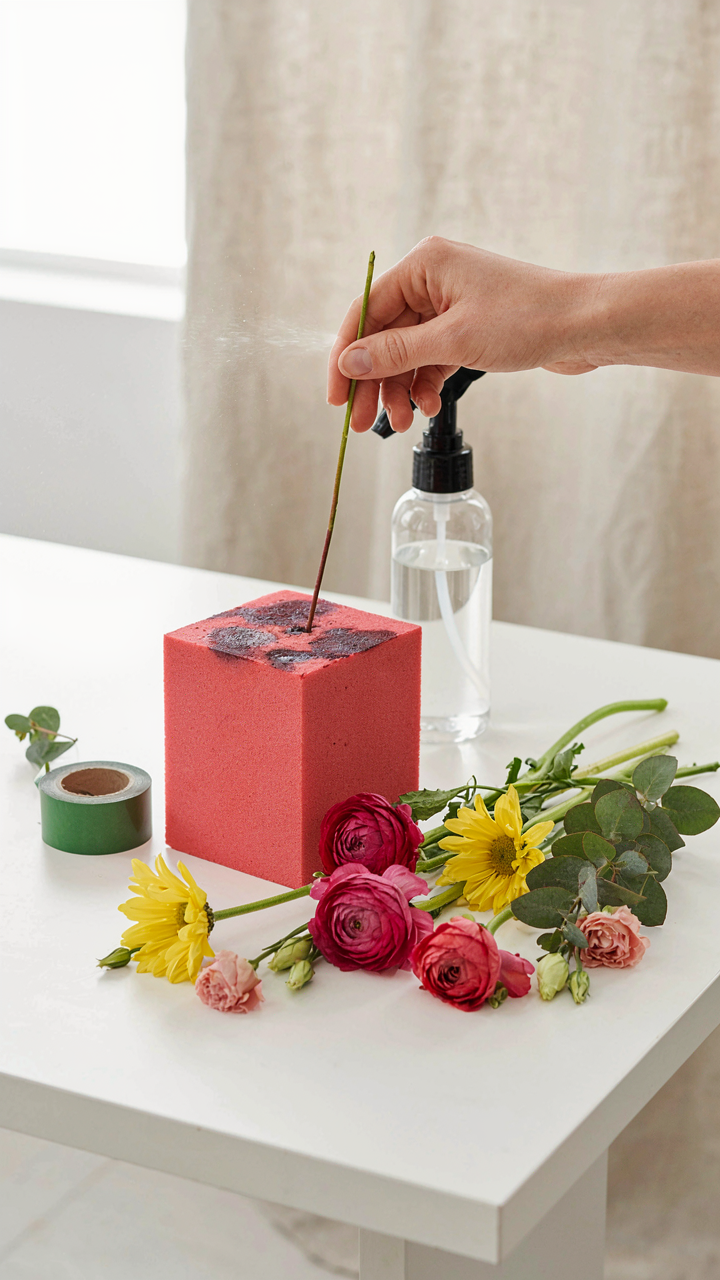
If petals brown during the shoot, the blooms dried out because floral foam wasn’t saturated enough before you inserted stems. Pre-soak foam for a full five minutes and keep a misting bottle on set. If stems loosen, you either used foam that’s too old or pressed stems in at the wrong angle. Fresh foam grips perpendicular insertion better than angled pushes. Test the crown on the baby for five minutes in a controlled space before the formal photo session starts. You’ll catch shifting immediately and have time to reinforce weak spots.
The Unseen Value: Why A Quality Flower Crown Matters
Objects That Survive The Moment
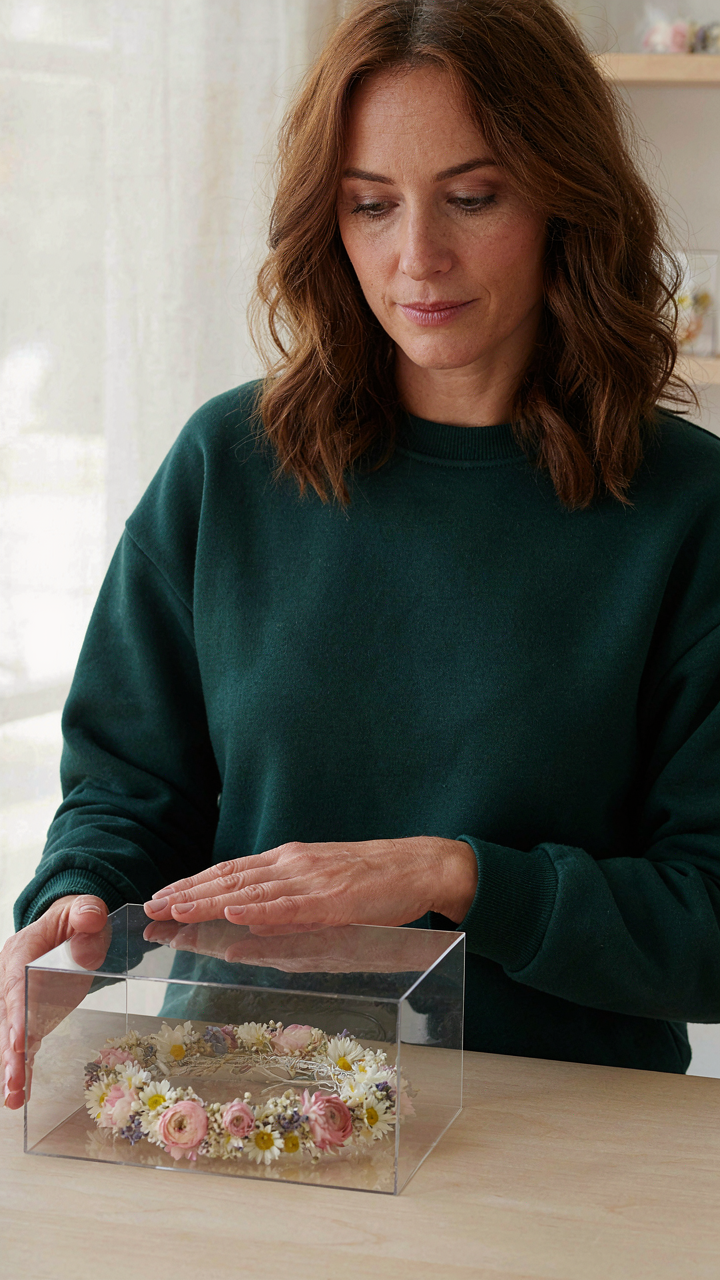
You want proof your child existed at this exact age. That’s the real reason you care about quality. A cheap flower crown falls apart in two weeks. A well-made one—constructed with proper floral mechanics, dried flowers that hold structure, or silk alternatives rated for humidity—becomes an artifact. Parents keep these. They photograph them years later. The construction method determines whether the crown degrades or endures. Florists use wire wrapping and floral foam bases for a reason: they preserve the form through handling, storage, and time.
The durability gap operates like compound interest in memory. A fragile crown exists only in photos. A structured one sits in a box, retrievable, tangible, real. When your child turns sixteen, you pull it out. It still holds its shape. That’s not sentimentality. That’s design doing its job. The difference between a one-dollar craft store crown and a thirty-dollar heirloom crown is the decision to use materials that resist entropy.
The Image Lives Longer Than The Event
Photography preserves moments. A well-designed flower crown photographs differently than a drooping one. The structure holds the flowers at flattering angles. The colors read clearly in sunlight and indoor light. Professional photographers know this: what looks mediocre to the eye can look sharp in a frame. A quality crown solves a technical problem. It sits stable on a moving child’s head, stays in focus, and doesn’t require constant adjustment between shots.
The photographic legacy becomes the actual legacy. Your child won’t remember wearing the crown. They’ll remember the image. A crown that looks intentional, well-constructed, and thoughtfully colored in photos becomes the visual story you tell about this age. Cheap materials photograph as cheap. Quality materials photograph as care. When you share these images years later, the crown either communicates that this moment mattered or that it didn’t. Select flowers and construction methods based on how they appear in the specific lighting where you’ll photograph.
The ‘Crown Culture’ Misconception: Beyond Aesthetics

What The Mirror Actually Shows
You care about this section because you want permission to believe the crown means something deeper than decoration. Here’s the mechanism: adornment works through what psychologists call “enclothed cognition”—the idea that wearing something changes how the wearer thinks about themselves. A baby flower crown doesn’t make an infant think differently. It rewires how adults around them perceive and treat that child. The crown signals “this moment matters” to observers, not the wearer.
Parents deploy flower crowns strategically during moments they want to memorialize or elevate socially. The crown transforms an ordinary afternoon into content-worthy territory. It flags the child as “celebrated” within the family’s internal hierarchy of moments. This isn’t shallow. It’s how humans mark which experiences deserve preservation and attention. The mechanism is social signaling dressed up as innocent aesthetics.
Headwear As Tribal Vocabulary
Anthropology shows that headwear has always functioned as a status and belonging decoder. A flower crown on a baby operates the same way. It communicates tribe affiliation, occasion importance, and family values to observers within seconds. In some communities, the crown signals wealth and leisure. In others, it marks participation in specific cultural ceremonies or aesthetic movements. The flower crown doesn’t exist in a vacuum—it exists in context relative to the viewer’s cultural decoder.
Different cultures weaponize headwear differently. Japanese families use seasonal flowers in children’s hair for specific festivals. Scandinavian traditions involve wreaths for midsummer celebrations. American middle-class aesthetics borrowed the “flower crown” language from bohemian counterculture and commercialized it for Instagram-era parenting. To ignore cultural significance is to miss why the same object carries opposite meanings across contexts. Know your audience’s decoder before you choose your flowers.
The Incomplete Truth: Why Your Child’s Crown Isn’t Just About Petals

Most parents build flower crowns to capture a moment. They miss the real play. A flower crown teaches your child that she can create beauty on her own terms, without permission, without a store. Today, grab whatever flowers grow near you and let her build it wrong. The crown your child makes herself becomes the crown she remembers forever.



