
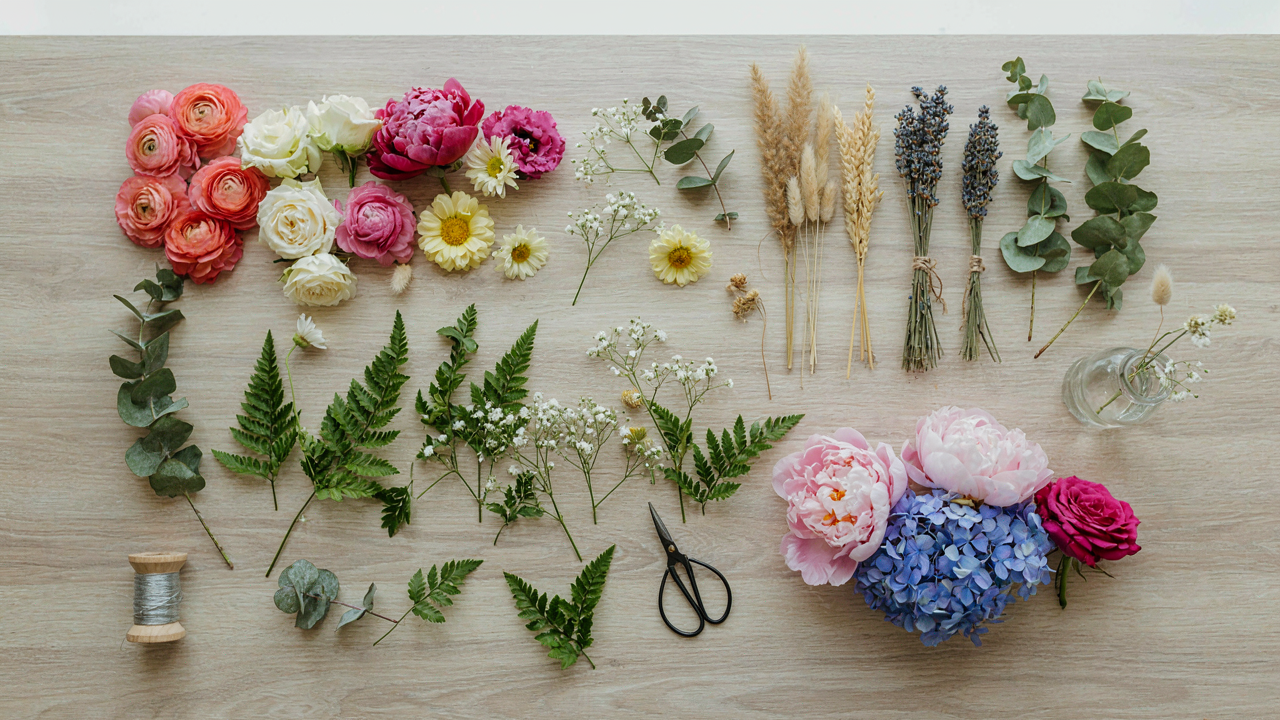
The Myth Of “Natural” DIY Flower Crown: Why Your Efforts Collapse
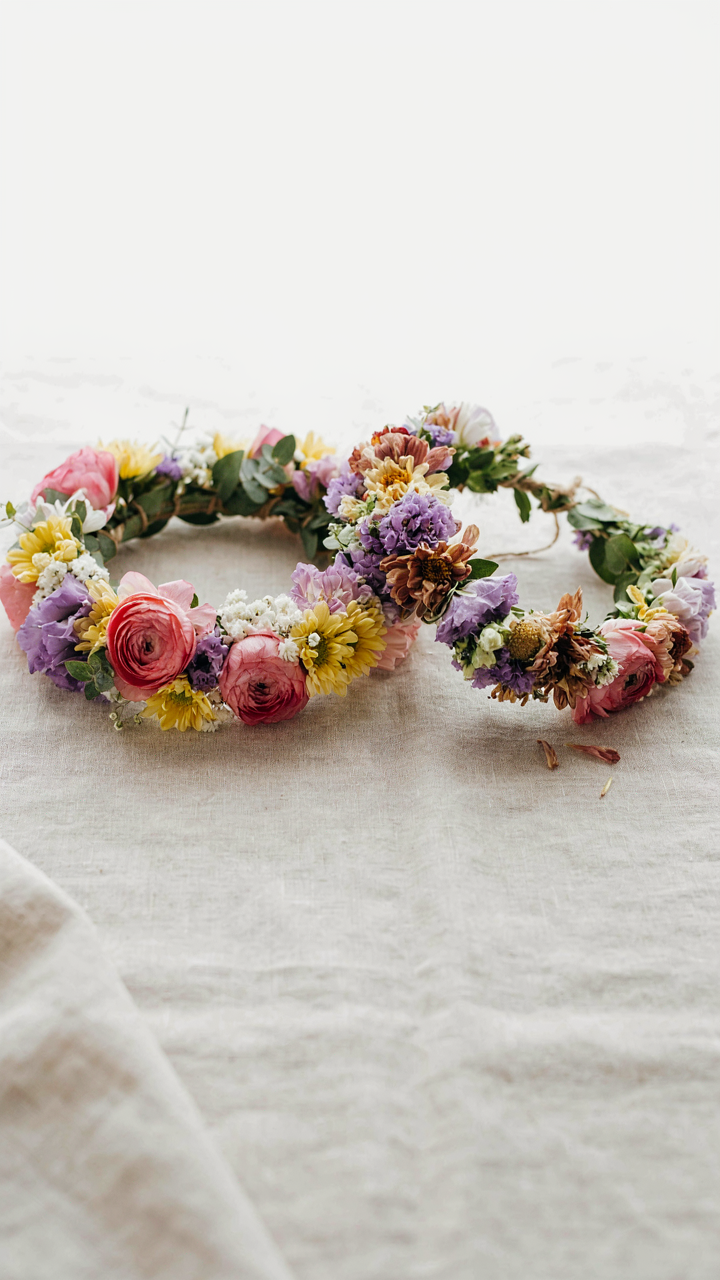
What Fresh Flowers Actually Do
You want the Instagram version without paying for it. Here’s what nobody tells you: fresh flowers follow biology, not aesthetics. They respire. They lose water through their stems and petals. Within 24 to 48 hours, the cells collapse. Wilting isn’t a slow fade. It’s cellular dehydration followed by structural failure. Most DIY attempts use stems that can’t hold enough water to sustain the bloom.
The real problem isn’t your technique. It’s material selection. Fresh-cut flowers demand constant hydration through a base that maintains pressure—floral foam, chicken wire with moss, or a water-holding apparatus. Skip this, and you’re watching biology work against you in real time. Tutorials skip this step because it requires planning. You can’t film a quick crown and expect results.
Durability Beats The Romance Story
Forget the narrative that authenticity means fresh and temporary. That’s backwards thinking dressed up as virtue. In design language, we’d call this a failure of “structural integrity”—the material’s capacity to perform its intended function over time. A crown that dies in your hair during an event doesn’t look natural. It looks like poor planning.
Preserved flowers, silk alternatives, and dried botanicals hold their form because they’ve already lost the water that causes decay. They maintain shape, color stability, and wearability for months or years. Stabilized flowers use glycerin to replace water and preserve cellular structure. These aren’t shortcuts. They’re engineering solutions. Choose materials based on how long you need the crown to exist, not on how it makes you feel when you’re assembling it.
The Structural Integrity Protocol: Beyond Floral Tape
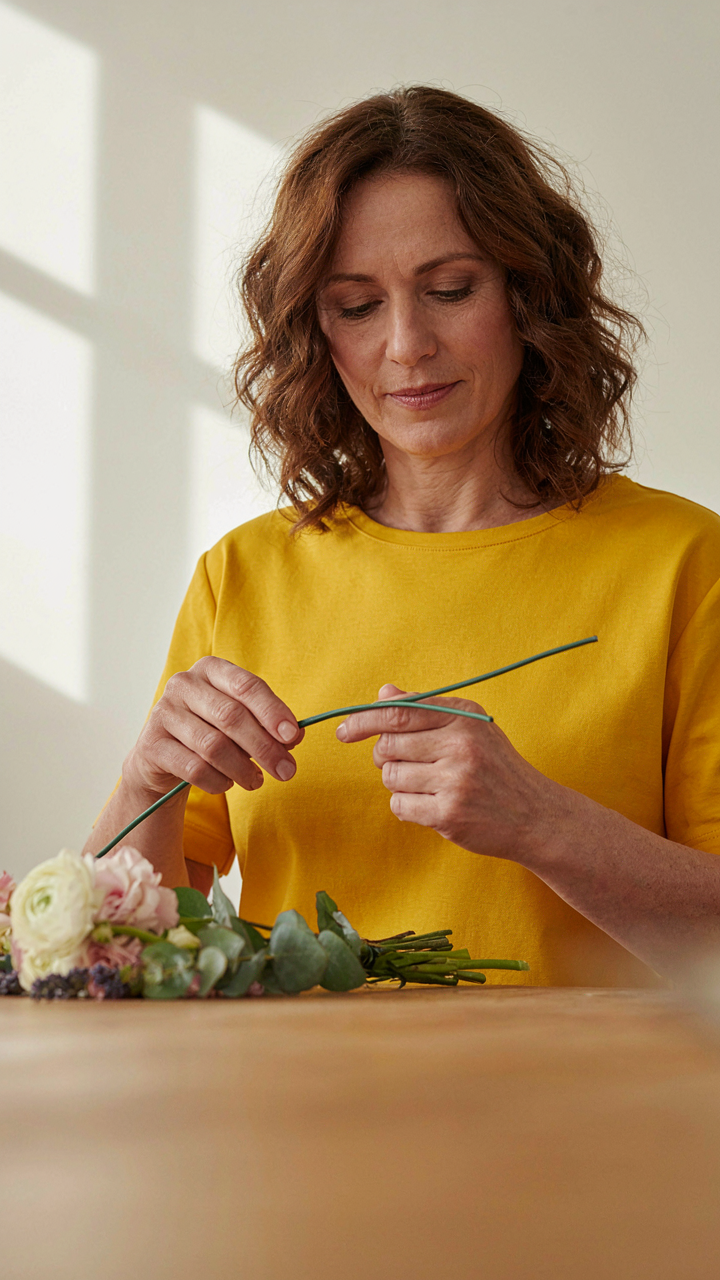
Choosing The Right Wire Gauge
You want your crown to hold its shape for hours without collapsing, and you’re afraid floral tape alone won’t cut it. Here’s the mechanism: wire acts as a skeleton. The thicker the wire, the more load it bears before bending. Florists use gauge numbers inversely—lower numbers mean thicker wire. Gauge 20 and 22 handle most home crowns. Gauge 18 supports heavier blooms or extended wear. Gauge 24 and 26 work only for lightweight, delicate flowers that won’t stress the structure over time.
The real mistake is mixing gauges randomly. Build your base frame with 18 or 20 gauge, then step down to 22 or 24 for attaching individual stems. This tiered approach distributes stress instead of concentrating it at weak points. Test the frame’s flex before adding flowers—it should bend slightly under finger pressure but snap back immediately. That snap-back is your confirmation the gauge is adequate.
The Anchor System That Actually Holds
Floral tape fails because people don’t understand tension. This is mechanics applied to crown building: distribute force across multiple contact points rather than concentrating it at one joint. Wrap your base frame wire to the wire that will carry blooms using a double-helix pattern—cross over, under, over, under—not in single circular loops. Each cross creates a lock point. A single wrap around the wire frame does nothing. Three or four deliberate wraps with pressure hold permanently.
The second layer is stem placement. Insert flower stems at a 45-degree angle into the frame, not perpendicular. This angle multiplies the surface area of contact between stem and supporting wire. Secure with floral tape only after the stem is locked in mechanically. Tape is secondary—it seals the bond, not creates it. Your crown survives the first hour of wear because the geometry is right, not because the tape is tight.
Choosing Your Bloom Arsenal: Not All Flowers Are Created Equal

Stem Resilience And Water Retention
You want your crown to look fresh for hours, not collapse mid-event. This is really about physics: a flower crown behaves like a structural load-bearing system, and stem water capacity determines how long it holds tension. Weak stems fail under their own weight. Hardy stems absorb water faster and maintain turgor pressure, which keeps petals firm and the structure rigid.
Roses, carnations, and hypericum berries retain water longest because their stems are dense and woody. Dahlias and zinnias wilt faster due to thinner vascular tissue. Pre-cut flowers in a hydrated state absorb more water before assembly than dry ones. Soak stems in cool water for two hours minimum before building your crown. Skip the floral foam misconception for crowns; it’s too heavy and restricts water flow to outer blooms. Instead, use a damp base wrap that wicks moisture continuously to every stem junction.
Weight Distribution And Balance
A crown that tilts left looks broken, not artful. Mechanical engineering teaches load distribution: your head cannot correct an unbalanced crown the way a building corrects with internal stress. Dense blooms must sit at four cardinal points, not clustered on one side. Lightweight fillers (eucalyptus, baby’s breath, bear grass) distribute visual mass without adding physical weight.
Measure and place heavier flowers first, then layer lighter ones around them. The back of the crown needs as much structure as the front, even if unseen. A crown that weighs more than eight ounces creates neck strain within thirty minutes. Test your crown’s balance by holding it horizontally on one finger at the center point; it should not tip. If it does, remove blooms from the heavy side and reposition them toward the light side until equilibrium holds.
The Hidden Art Of Adhesion: More Than Just “Make A Flower Crown”
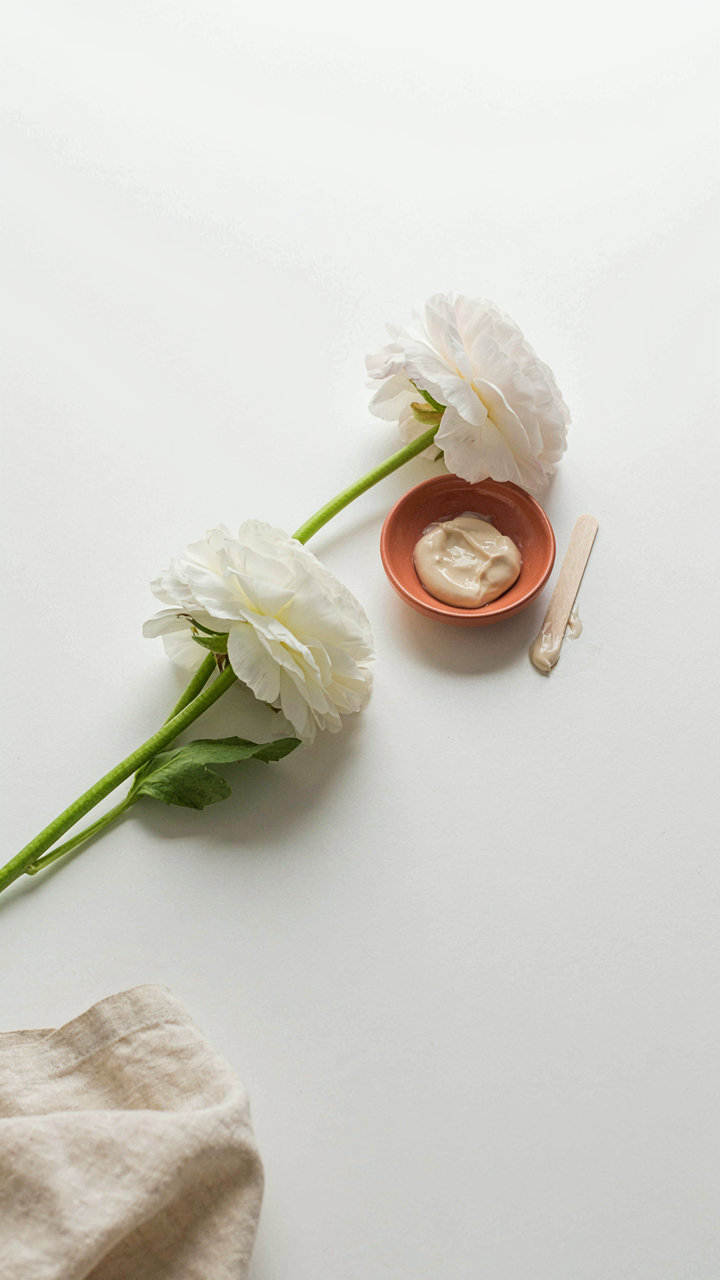
Which Adhesive Actually Holds
You want your crown to survive the event without falling apart mid-wear. That’s the real concern here, not aesthetics. Adhesion borrowed its fundamental principle from chemistry: surface contact determines bond strength. The better your adhesive matches the material’s porosity, the longer your crown lasts.
Most people default to hot glue and call it done. Wrong move. Hot glue creates a mechanical bond that fails on delicate stems and fresh flowers because the heat damages cell walls. You need options that respect material variation.
- Hot Glue Gun: Fast setup, works on wood and plastic bases, but scorches fresh stems and dries brittle. Use only on non-living materials.
- Floral Foam Tape: Waterproof adhesive strip designed for floral work, bonds wet foam to metal frames without chemical breakdown. Gold standard for fresh arrangements.
- Florist’s Tacky Putty: Reusable adhesive clay that grips without heat or moisture sensitivity. Holds stems in place without crushing them or requiring drying time.
- Waterproof Epoxy: Two-part adhesive for permanent bonds on metal, ceramic, and hardened bases. Overkill for temporary crowns but unbeatable for structural integrity.
- Floral Wire and Wrapping: Not adhesive, but mechanical fastening. Wraps stems to frame directly without chemicals. Best for preserving material quality long-term.
Application method matters as much as adhesive type. Apply tape or putty to the base before inserting stems, not after. This prevents air pockets that weaken the bond. When using epoxy, rough the surface slightly to increase mechanical grip. Press at ninety degrees to the surface for five seconds minimum. Let it cure fully before handling.
Temperature And Humidity Kill Your Work
Everyone assumes material degrades because the adhesive fails. That’s backwards. The material itself deteriorates first, and weak adhesive just exposes the problem faster. This is basic materials science: heat accelerates molecular breakdown, moisture triggers mold and cellular collapse in organic matter.
Fresh flowers degrade three times faster at room temperature than in climate-controlled storage. Direct sunlight attacks pigmentation and wilts stems within hours. High humidity triggers fungal growth on flower petals and decay in foam bases. Low humidity desiccates everything unevenly, creating stress points where bonds crack. The adhesive holds firm the entire time while everything around it turns to dust.
Prevention beats repair work every time. Store your finished crown in a cool, dark space between fifty and sixty degrees with forty to sixty percent relative humidity until wear time. Transport it in a ventilated box, never sealed plastic. If using fresh flowers, mist stems lightly two hours before wearing, not right before, so surface moisture evaporates and doesn’t trap humidity against your scalp. Keep the crown away from direct heat sources, HVAC vents, and humid bathrooms before and after the event. Check foam bases weekly for soft spots that signal moisture damage or mold colonization early enough to replace them before adhesive joints fail completely.
The Desiccation Defense Strategy: Keeping Your Crown Alive

Pre Treatment For Extended Freshness
You want your crown to last because the alternative is admitting you wasted money on materials that died in three days. Here’s the mechanism: flowers wilt when cells lose turgor pressure, the rigid state created by water filling plant tissue. Pre-treatment interrupts this collapse before assembly even starts.
Cut stems at a forty-five degree angle under running water. This increases surface area and prevents air from sealing the cut closed. Strip leaves from the lower two inches so they don’t sit in water and rot. Soak stems in cool water with a floral preservative for two to four hours before you build. The preservative contains biocides and sugar, feeding the flowers while killing bacteria that block water uptake.
Hydration Tactics After Assembly
Most crowns fail because people assemble them, wear them once, then leave them dry on a shelf. The flowers don’t magically recover from dehydration just because you stored them carefully. Keep your finished crown on a damp floral foam base in a cool room between wears. Mist the entire structure daily with a spray bottle. This replaces surface moisture lost to air and slows transpiration without waterlogging the blooms.
Before wearing, soak the foam base in cool water until fully saturated. Let excess water drain for fifteen minutes so it doesn’t drip on your hair or clothes. Check foam moisture every twelve hours if the crown stays assembled. When foam dries to a spongy texture rather than soggy state, rewet it completely. This cycle maintains stem hydration without creating conditions for mold or bacterial growth.
Unconventional Fillers: Breaking Free From The Flower Crown Tutorial Norm
When Greenery Becomes The Framework
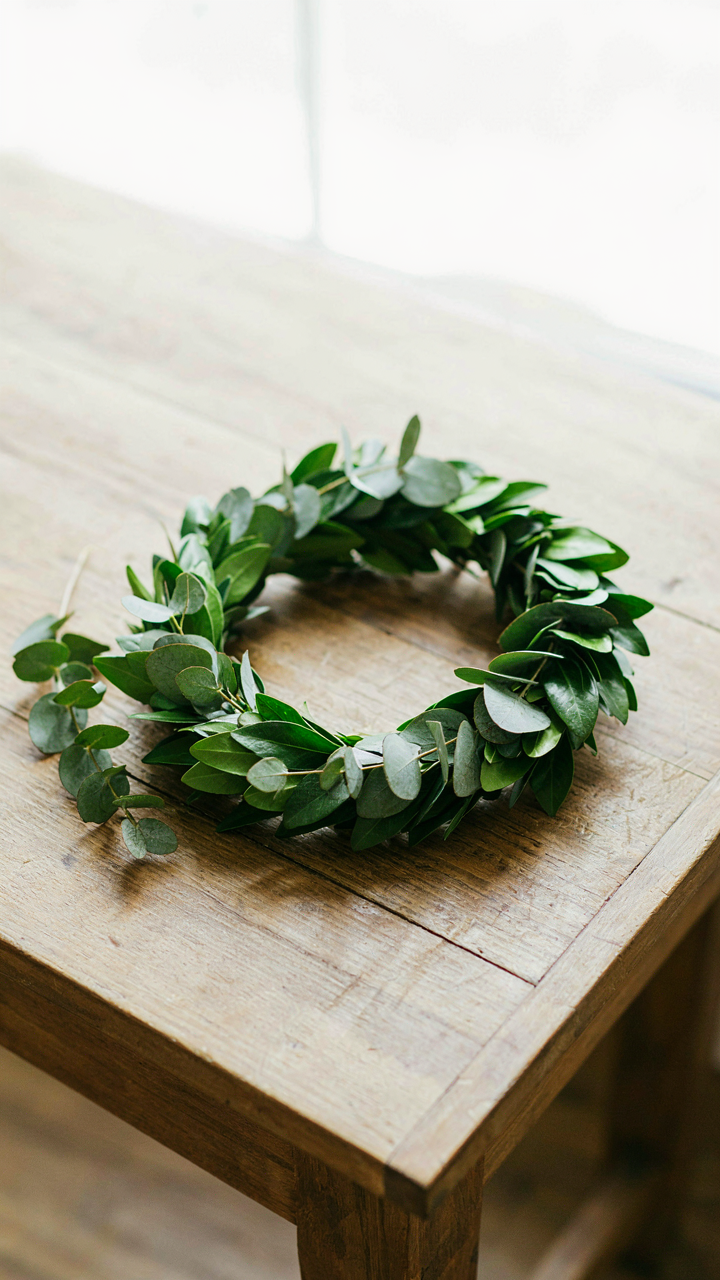
You want permission to skip the expected flowers because you’re tired of looking like everyone else’s Pinterest board. The real mechanism is this: greenery works as structural scaffolding, not decoration. In architecture, scaffolding bears load. In flower crowns, greenery bears visual weight. Without it, loose flowers collapse into a shapeless tangle. Most tutorials skip this because they assume you already know greenery matters. You don’t. Start with structural stems like salal, eucalyptus, or leather leaf. These hold form while flowers sit inside them, not on top.
Secondary fillers like dusty miller, baby’s breath, or Italian ruscus add density without adding cost or fragility. They occupy negative space that would otherwise look sparse or require more premium flowers to fill. The crown reads complete because the eye sees coverage, not because you spent extra money. Test this by building a frame with greenery alone, then adding flowers. You’ll notice the flowers become accents instead of the entire structure. That shift changes how a crown photographs and lasts.
Materials Beyond Botanical Origin
The tutorial industry sells you flowers and only flowers because that’s simple to teach. It’s also incomplete. Mixing textures forces you to think like a florist instead of a follower. Incorporate preserved materials like bleached pampas, dried thistle heads, or air-dried sola wood. These don’t wilt, photograph clearly, and cost less than fresh equivalents. Add textural contrast with elements like twine-wrapped stems, wire frames, or soft leather cord wrapped around the base.
Non-botanical materials serve a tactical function: they extend wearability and shift the crown into a wearable object instead of a temporary arrangement. Copper wire, brass accents, or silk ribbon can anchor stems while creating visual interest that fresh elements alone cannot deliver. The crown stays stable longer, photographs with sharper detail, and creates a finished rather than improvised aesthetic. Build your anchor system first using wire and tape, then layer botanicals around it instead of hoping botanicals alone will hold.
Ergonomics Of Elegance: Comfort In Your Diy Crown

How Much Weight You Can Actually Wear
You want to wear it without looking like you’re suffering, and that’s the real reason this matters. Physics governs wearability the same way it governs structural load capacity: distribution determines whether the system fails. A crown that concentrates mass at the top creates leverage against your neck. Spread that weight across the band perimeter and you reduce strain exponentially. Most DIY crowns fail because makers prioritize visual density over load management.
Fresh flowers weigh more than dried varieties because of water content. A fully hydrated stem-heavy crown registers between 8 to 12 ounces depending on flower choice and density. Your head can sustain this comfortably for 4 to 6 hours before fatigue sets in. The threshold shifts lower if you use heavy materials like thick wire bases or glass beads. Use lightweight foam bases instead of floral foam, and substitute artificial flowers if you need the crown to last beyond a single event without degradation.
The Mechanism That Stops Slippage
Generic advice says velcro or bobby pins work fine, but that’s incomplete. Engineering calls this friction resistance, and crown stability depends on multiplying contact points between the base and your hair structure. A single anchor point will migrate. Three strategic anchor points create a tripod effect that distributes micro-movements across the scalp. The securing mechanism determines whether you touch your crown every five minutes or forget you’re wearing it.
Hair density and texture matter more than the fastening device itself. Fine hair requires more anchor points and lower tension per point. Thick hair forgives aggressive securing because the strands absorb pressure. Secure the crown at the nape, two temple points, and one crown vertex. Use clear elastic instead of bobby pins because elastic distributes tension across hair strands rather than concentrating it at a single point. Test the grip by turning your head sharply side to side before you commit to wearing it.
The Seasonality Paradox: When To Forage, When To Buy

Know Your Region’s Bloom Calendar
You want to look like you have access to rare materials without paying premium prices or admitting you don’t know what grows when. The mechanism is simple: local bloom cycles dictate what’s actually available, and working against them costs money and time you won’t get back. Spring bulbs peak March through May depending on latitude. Summer perennials peak June through August. Fall asters and chrysanthemums peak September through November. Winter forces you toward dried materials or imported stock. Know this schedule for your specific region, not the generic one online.
The real move is building a material availability map for your area. Contact local nurseries or botanical gardens to verify exact bloom windows for the species you want. This takes two hours. It saves you from ordering materials that won’t be available for another six months or discovering your preferred forage spot has nothing harvestable in week three of your project. Seasonality isn’t romantic constraint. It’s your supply chain.
Real Cost Versus Perceived Savings
The common advice says forage when you can, buy when you can’t, and you’ll save money. That’s incomplete. Economics calls this the hidden cost of coordination, and it applies directly to material sourcing for flower crowns. Foraged materials require time investment, proper tools, transportation, and knowledge of where to harvest legally. Bought materials require money but no coordination burden. The actual math often favors buying, especially for intricate work.
Forage only if the material is abundant in your region, you have legal access, and the time investment is genuinely lower than the purchase price. Don’t forage filler greenery from a public park for three hours when bulk eucalyptus costs twelve dollars. Buy premium fresh materials when you’re building for a client or event. Forage supplementary elements when you have excess time and clear access. This isn’t compromise. It’s efficiency.
Beyond The Bloom: The Art Of A Simple Flower Crown

Less Is Actually The Hard Move
You want this section because you’re afraid a simple crown looks cheap. Here’s the mechanism: restraint signals control. In design systems theory, constraint is what forces intentionality. Every material you exclude from a flower crown becomes a statement about what matters. Most people add more to hide weak choices. The real play is removing everything except what actually works.
A simple crown demands better source material. You can’t hide mediocre flowers behind volume. Each stem, leaf, and binding point becomes visible. This forces you to understand materials at a functional level instead of aesthetic decoration. Cheap wire shows. Dull greenery reads as filler. When you strip the design down, material quality becomes the entire crown.
Texture Against Negative Space
Don’t believe the advice that texture requires complexity. That’s how people justify overcrowding. Texture works because of contrast with emptiness. A single magnolia leaf holds more visual weight than five generic filler stems. Feathery elements like astilbe read stronger when surrounded by open air instead of packed in tight.
The mechanism is signal-to-noise ratio. Your eye registers difference, not volume. A crown with two textures and visible gaps registers as intentional design. One with eight textures and no breathing room registers as confused. Choose two or three materials with distinct tactile qualities: something smooth, something structured, something with visible fiber or layers. Mount them with actual space between each element. Space is material too.
Your Crown, Your Rules: The Definitive How To Make A Flower Crown Manifesto
Choose Materials That Reflect Your Actual Life
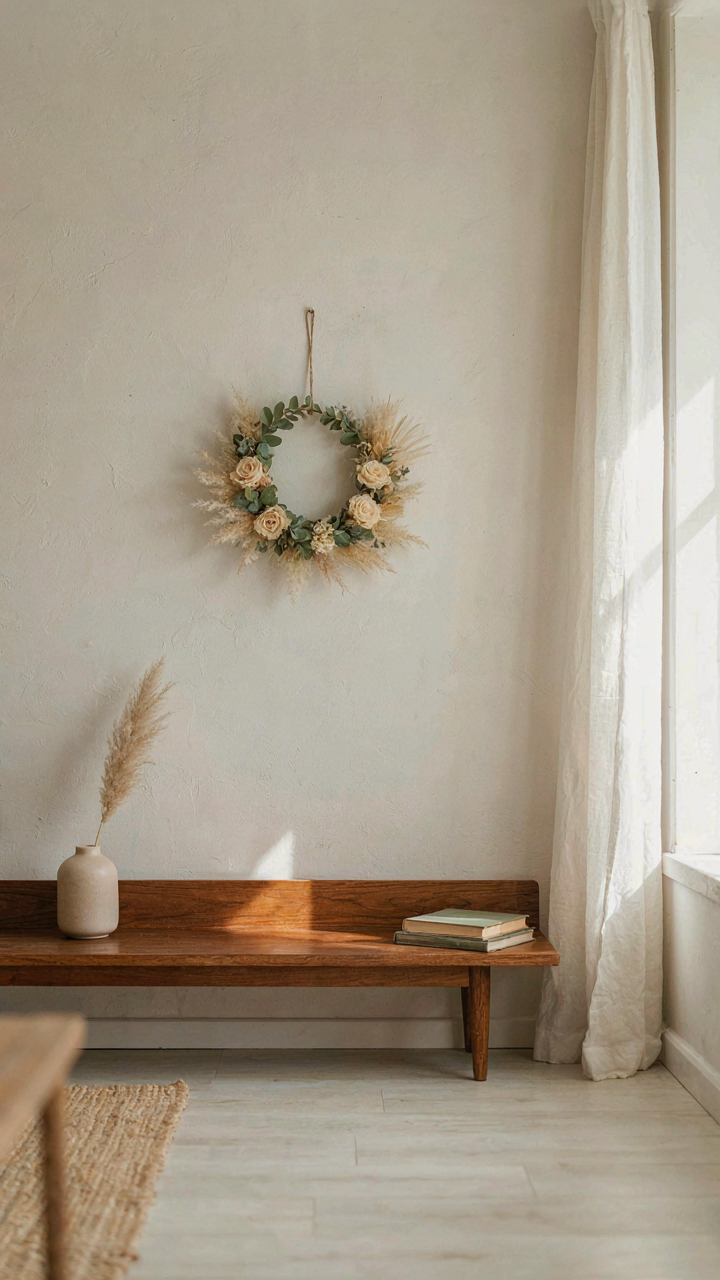
You want permission to break the rules because you’re tired of looking like everyone else. The mechanism is simple: materials signal intention. Dried grasses, preserved flowers, and silk stems don’t demand constant replacement or maintenance. Fresh flowers wilt. You replace them weekly. That’s not personalization, that’s a subscription. Pick materials that align with how you actually live, not the Instagram version of how you think you should live.
The constraint forces the decision. Real personalization happens when you accept what you’ll maintain versus what you’ll ignore. Eucalyptus holds color for months. Pampas grass adds texture without needing water. Leather cord, wire, and foam bases become design choices, not invisible infrastructure. Build around materials you’ll keep visible and functional, because the crown that sits on your shelf unused teaches nothing about your style.
Ignore The Season, Build The Pattern
Trend cycles convince you that seasonal flowers matter. They don’t. What matters is consistency across your space. A crown made from dusty rose, cream, and sage will harmonize with your interior whether it’s March or November because those colors have no calendar. Seasonal thinking creates the churn problem: new crown every quarter, nothing ever settles into the room’s visual language.
The real constraint is palette coherence, not novelty. If your home runs warm tones and natural wood, a crown of bleached pampas grass and cream-toned dried roses stays relevant for years. You’re not chasing what bloomed last month. You’re building an object that belongs in your space permanently. The specificity is what ages well. Boring crowds materials by following what’s available. Intentional crowds materials by choosing what serves the room’s visual architecture.
The Real Obstacle Isn’t Finding The Right Materials; It’s Your Unwillingness To Embrace The Impermanence You’re Trying To Control

You’re buying flower crown materials because you want permanence in a temporary world. You think the right materials solve this. They don’t. Flowers die. Leaves wilt. Your crown will decay. Stop fighting it. Pick your materials today, build your crown this week, and accept that beauty lives in its expiration date. The best flower crown material isn’t something that lasts forever—it’s something you actually use before it’s gone.



