

The Illusion Of Abundance: Why Most Lantern Ideas Fail

Everyone’s Giving You The Same Answer
You want your garden to look intentional, not like you bought whatever was on sale at the home center. That fear drives most people to lantern ideas that feel safe but land flat. The mechanism is simple: consensus advice exists because it’s easy to repeat, not because it works. Mass-produced lantern collections get recycled across design blogs because they’re low-friction content. You see the same Moroccan pendant, the same Edison bulb string setup, the same solar stake lanterns in every “inspiration” gallery. Repetition creates the illusion of validity, not actual style.
The real problem is that generic lantern placement follows generic principles. Symmetry, balance, ambient lighting—these rules are borrowed from interior design but ignore how outdoor space actually functions. A garden lantern isn’t decoration first. It’s a tool for directing movement, creating focal points, and establishing boundaries. Most advice skips this entirely, jumping straight to aesthetic without understanding the structural role. That’s why copying an idea from a design magazine fails in your specific yard. The lantern idea worked in someone else’s context. Your context is different. The mechanism you’re missing is constraint. Every successful garden lantern arrangement solves a specific problem in a specific space, not a general problem everywhere.
Mass Production Erased The Variation That Matters
The lantern industry standardized around what manufactures could produce cheaply, not what actually distinguishes gardens. Before mass production, lanterns were site-specific. A craftsperson would build to the available materials and the specific purpose—marking a path, lighting an entryway, creating shelter from wind. Economics drove differentiation. Now economics drives uniformity. You can buy the same plastic lantern in Seattle, Phoenix, and Florida. The material doesn’t change. The proportion doesn’t change. The aesthetic burden falls entirely on placement, but placement alone can’t compensate for a generic object.
The constraint that matters isn’t aesthetic preference. It’s material durability in your climate, actual light output versus decorative appearance, and how the lantern integrates with your garden’s existing structure. A steel lantern rusts differently in humid versus dry climates. A ceramic piece cracks under freeze-thaw cycles. A glass lantern collects debris and loses visual clarity. These aren’t details. They’re the difference between a lantern that ages poorly and one that becomes more interesting over time. Before selecting any lantern idea, audit what survives in your specific conditions. This determines whether you end up with patina or deterioration.
The “Visual Gravity” Method For Garden Lantern Placement
Where Your Eye Stops First
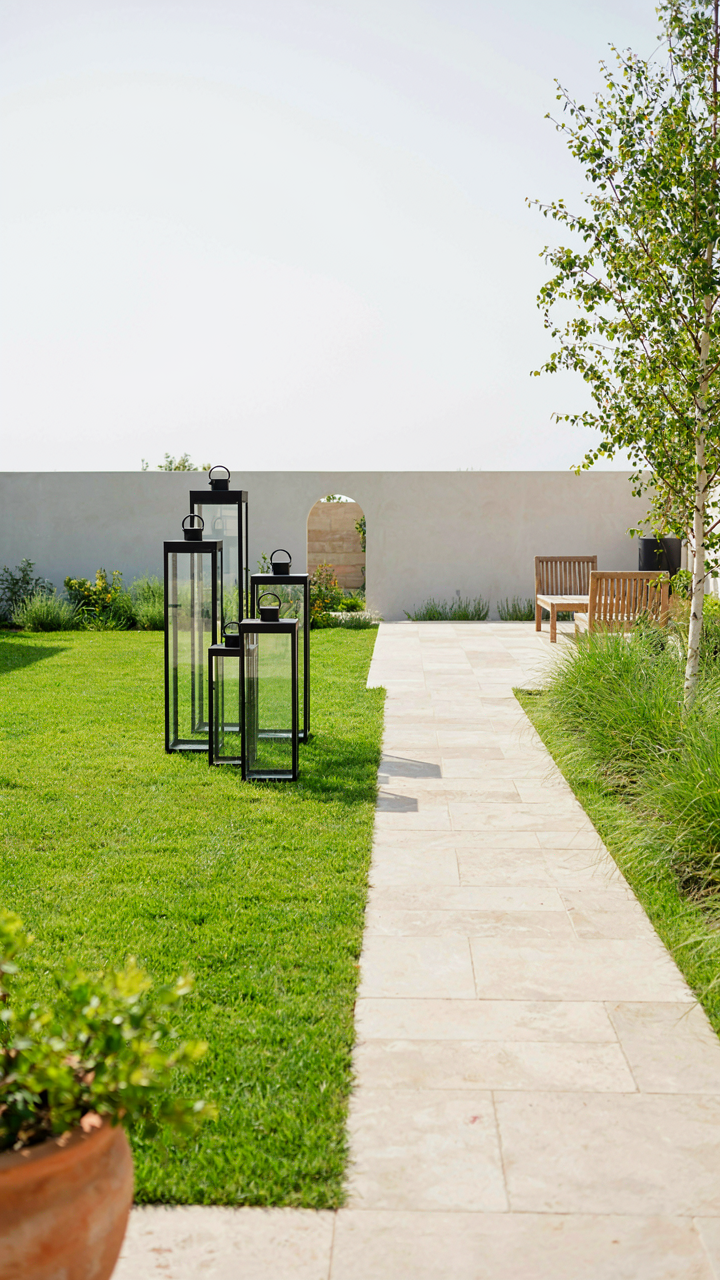
You want people to notice what you’ve built, which means you need to stop their eye before it wanders. This is visual hierarchy, borrowed from graphic design and urban planning. In lantern placement, weight is concentration. A single lantern disappears into the landscape. Three to five lanterns clustered at decision points create anchor points that command attention without effort.
Place clusters at entry thresholds, seating areas, or where pathways intersect. The cluster doesn’t need to be tight. Space them six to twelve feet apart within the grouped area. This distance prevents visual muddle while maintaining the grouped effect. Install them at consistent heights within each cluster so your eye reads them as one unit, not scattered pieces.
Movement Without Motion
People’s eyes follow paths. Garden lanterns should guide that movement intentionally, not randomly. This isn’t about being obvious. Strategic spacing along routes creates rhythm—the eye moves forward naturally because you’ve placed stopping points that don’t feel forced.
Use descending or ascending lantern heights along pathways to subtly direct flow. Decrease brightness as distance increases to compress visual depth and pull the eye toward a destination. Place lanterns on alternating sides of a path to create a measured pace. The viewer processes each lantern as a waypoint, moving from one to the next in sequence rather than taking in the entire garden at once. This mechanism keeps the eye engaged while controlling exactly where attention travels.
Upcycling Garden Deco: Beyond The Mason Jar Lanterns

Find Charm In Discarded Objects
You want to look like you have taste without spending money on it. That’s the real mechanism at work here. Salvage works because constraint forces specificity. When you pull from what exists rather than what’s manufactured, you eliminate the mass-produced sameness that kills visual interest. A dented brass urn from a thrift store has history embedded in its surface. A factory lantern does not. The difference isn’t subtle if you know where to look.
The supply chain for old objects is predictable: estate sales, salvage yards, architectural reclamation shops, and forgotten corners of second-hand stores. These sources exist because people discard items faster than decay consumes them. You’re not being resourceful by shopping there. You’re accessing inventory that was already written off. The scarcity is real. The charm is incidental to that scarcity. Pick items with structural integrity first, aesthetic appeal second. A cracked ceramic pot still holds a candle. A rusted-through coffee tin does not.
Repurpose Everyday Materials Into Fixtures
The conventional wisdom says painting or staining transforms objects into lanterns. That’s incomplete. Real transformation requires you to understand load capacity and heat dissipation. Think like a materials engineer here. A tin can conducts heat directly to whatever touches it. A glass jar diffuses light without burning your hand. A copper vessel ages visibly when exposed to flame and weathering. These aren’t aesthetic choices. They’re mechanical realities that determine whether your lantern works or becomes a fire hazard.
Start with objects that already manage heat or light exposure. Old hurricane lamp bases work because they’re designed for it. Vintage wire baskets designed for produce hold battery-operated lights without modification. Reclaimed wood frames accept candles safely if you understand wood flash points. The work isn’t in decorating. The work is in matching material properties to function. Install your light source first. Judge the effect. Add protective barriers only where heat concentration demands it. This protocol prevents failure.
The “Eco Luxe” Protocol: Solar Lanterns For Impact

Why Solar Actually Works
You want the environmental benefit without the guilt of running grid power to your garden. Here’s the mechanism: solar lanterns convert photon energy into stored electrical charge during daylight, then release it as light when ambient brightness drops. This isn’t magic—it’s basic physics applied to a product category. Modern solar cells capture roughly 15-20% of incident sunlight, store it in rechargeable batteries, and trigger LED output through a simple light sensor. The real advantage isn’t the environmental purity you tell yourself about. It’s operational freedom. You install once and stop managing power cords, batteries, or circuits forever.
Most people buy solar lanterns expecting “set and forget” performance. That’s incomplete thinking. Solar lantern output depends entirely on prior charge accumulation, which means weather, season, and positioning matter more than the device itself. A lantern charged under cloudy skies will underperform on the brightest night. The charge cycle compounds: poor placement compounds into dimmer light, which compounds into disappointment. This is why placement strategy separates the people who actually use their lanterns from the people who store them in a shed.
Where Light Meets Available Sunlight
Angle of incidence determines charge rate—this principle comes directly from solar engineering, and it applies equally to a 20-dollar garden lantern or a residential roof system. Most people place solar lanterns in shade because the location looks good. They then blame the lantern when it barely glows. Position solar lanterns to receive direct, unobstructed sunlight for at least six hours during peak solar hours, roughly 10 AM to 3 PM. South-facing positions work best in northern hemisphere locations. East-facing positions catch morning charge when dew has cleared but intensity remains high.
Elevation matters more than people admit. Ground-level placement catches less light and more obstruction from grass, plants, and shadows. Elevated positions on railings, posts, or shelves increase surface area exposure and reduce shadow interference. Rotate lantern positions seasonally if possible. Winter sun tracks lower across the sky, so positions effective in summer may fail in winter. Test placements over a two-week period before finalizing, because accumulated charge patterns reveal the actual sunlight availability your garden receives.
Lanterns In Trees: Mastering The Canopy Glow
How Light Behaves At Height
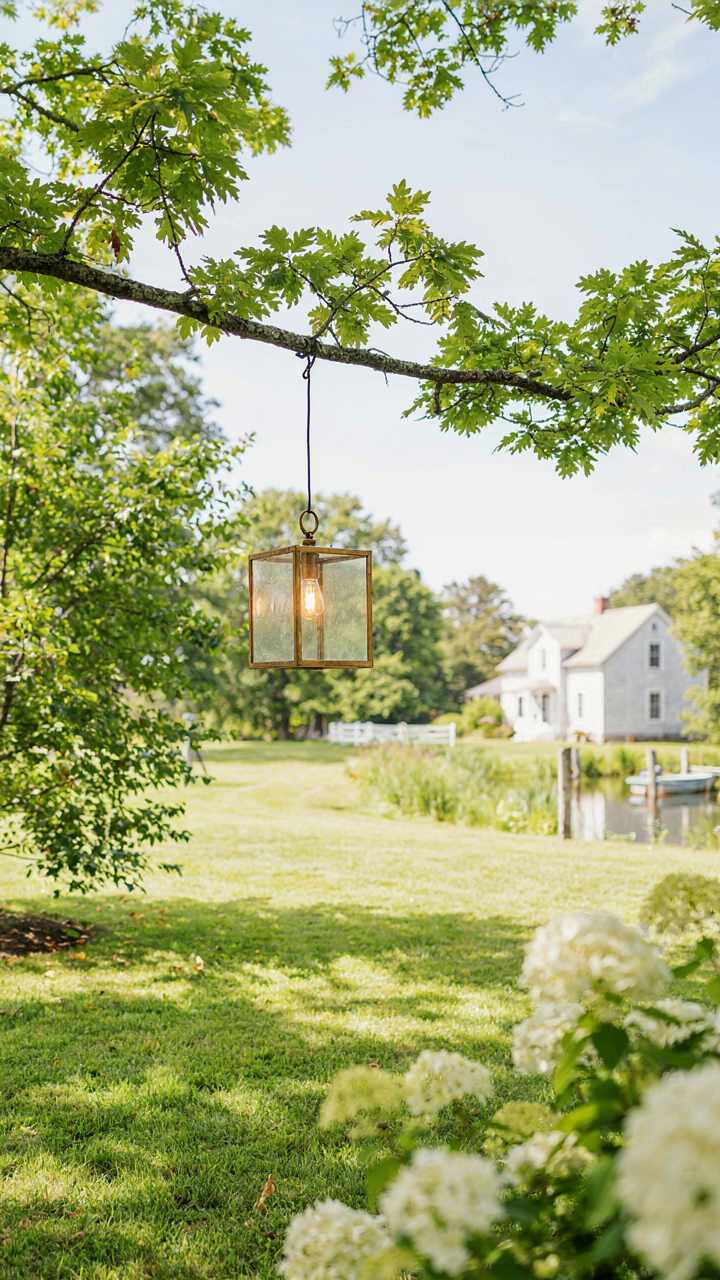
You want trees lit because it signals investment in your property. Real talk. But most people hang lanterns and wonder why the effect feels flat or washed out. Physics matters here. Directional light creates shadow and contrast, which reads as depth. Diffused light spreads everywhere and collapses dimension. A lantern hanging in a tree trunk casts downward and outward. The canopy absorbs some rays and reflects others, creating pockets of brightness and darkness that register as intentional design rather than accidental glow.
The material of your lantern controls this outcome entirely. Frosted glass diffuses. Clear glass with an internal shade directs. Metal frames with open sides let light escape sideways and upward, while enclosed designs funnel illumination downward. Placement matters too. A lantern hung at eye level or slightly above reads brighter than one lost in foliage. The source matters most. Warm-toned bulbs near warm wood tones read cohesive. Cool light on light bark reads sterile. Position your lantern so the light trajectory clears major branches, not fights through them.
Hanging Systems That Don’t Fail
Cable and carabiner is the internet’s default answer. It fails constantly because people underestimate seasonal movement, wind load, and the weight distribution of a swaying lantern. Trees flex. Branches shift. Your hardware must absorb that without slipping. Stainless steel cable rated for at least three times the lantern’s weight is the baseline. Galvanized cable corrodes faster than stainless in wet climates. Carabiners need locking mechanisms, not the basic clip version.
Rope presents a different problem: UV degradation and water rot. Synthetic rope lasts longer than natural fiber, but both fail predictably once exposed. Inspect connection points quarterly. Bracket systems bolted directly into solid wood offer stability if you’re willing to scar the tree. For temporary installations, adjustable tree straps distributing weight across wider bark sections prevent damage while keeping hardware removable. Test your setup by applying downward force equal to the lantern weight plus thirty percent for wind load before you trust it overnight.
The “Layered Illumination” Framework For Garden Lanterns
Start With Foundation Light
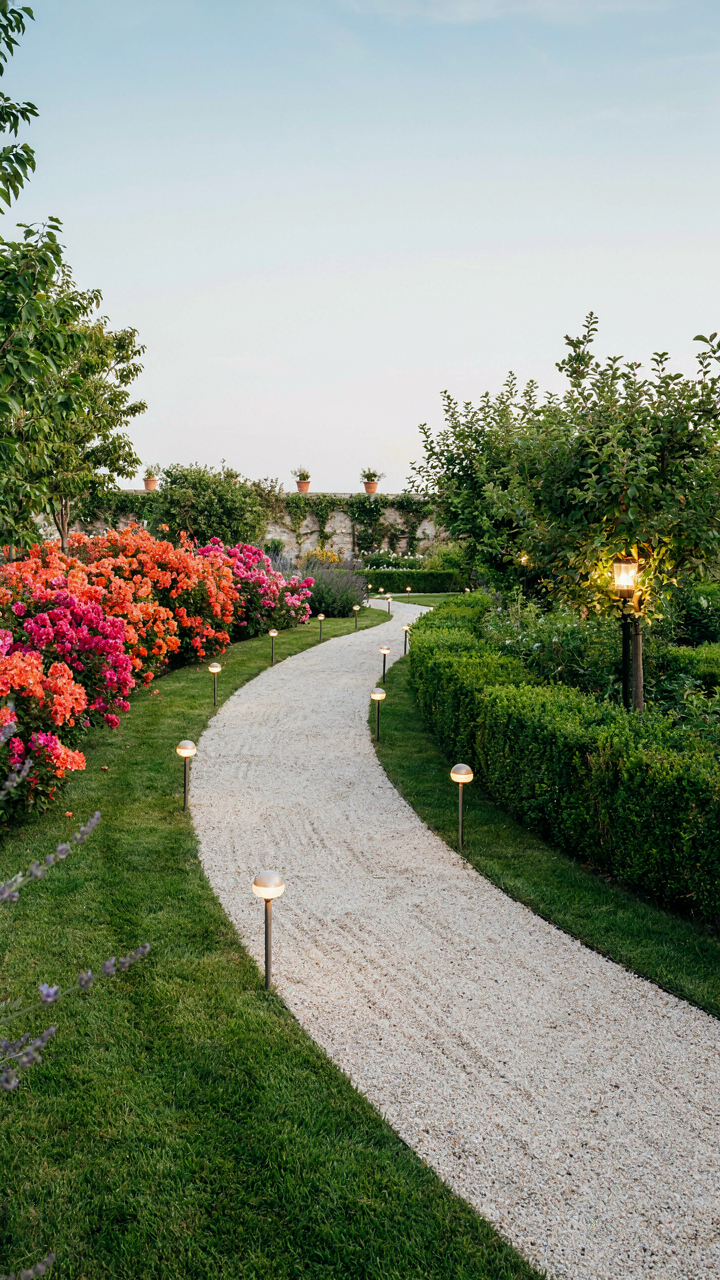
You want people to notice your space without looking like you tried too hard. The real mechanism here is contrast: your eye registers light against darkness, not absolute brightness. Base lighting borrows from theatrical lighting design, where foundation illumination creates the stage itself. Lanterns positioned at ground level or hung at consistent heights establish a visual floor that makes everything else readable. Without it, accent pieces look random and your garden reads as chaos.
Place base lanterns along pathways, near seating areas, and around the perimeter. The goal is visibility, not drama. Use consistent wattage and color temperature across all base units so the eye moves smoothly through the space rather than getting snagged on bright spots. This foundational layer does the work no one consciously notices, which is exactly the point.
Accent Lanterns Create Visual Hierarchy
Most people throw accent lanterns everywhere and wonder why their garden looks cluttered instead of designed. The difference is placement logic, not quantity. Accent lanterns should land on specific architectural or natural features: a tree trunk, a water feature, a seating nook, or an entrance point. They interrupt the uniform base layer strategically, forcing the eye to move toward what matters.
The mechanism is simple: humans track contrast and movement. An accent lantern 40 percent brighter than base lighting, positioned on a feature with texture or depth, creates a focal point. Space accent pieces at least 8 to 12 feet apart so they read as intentional decisions rather than decoration spam. This creates rhythm and prevents visual fatigue from too many competing lights.
The “Sensory Signature” Blueprint With Diverse Lantern Ideas

Layering Materials For Light Refraction
You want your garden to feel intentional, not assembled. That’s the real driver here. The mechanism is borrowed from physics: refraction. Different materials bend light differently. Combine them strategically and you control not just brightness but the quality of illumination itself. Frosted glass diffuses harsh rays. Metal frames direct and contain light. Paper or fabric softens edges. Stone absorbs and radiates warmth separately.
- Frosted Glass With Brass Frames: Creates soft, diffused light while brass oxidizes over time, adding visual depth and character without maintenance demands.
- Paper Lanterns Over Metal Armatures: Paper burns through eventually, but the metal skeleton remains reusable for seasonal swaps. Budget for replacement paper annually.
- Stone Or Concrete Bases With Glass Tops: Concrete retains heat from the lantern flame, radiating warmth hours after sunset. Glass prevents wind from extinguishing the light.
- Copper Sheeting With Woven Rattan: Copper develops patina that catches changing light. Rattan weaving creates shadow patterns that shift as flames move inside.
- Ceramic Vessels With Perforated Lids: Ceramic holds heat without cracking. Perforations in the lid create constellation-like light projections on surrounding surfaces.
The combination matters more than individual materials. One frosted-glass lantern alone does nothing. Place it next to a metal one and a stone base, and suddenly the space reads as designed. You’ve created visual hierarchy through material contrast. This is how you avoid the flat, generic garden that reads as purchased rather than built.
Embedding Ambient Sound And Scent Triggers
Most garden design stops at light and calls it done. That’s incomplete thinking. Your senses operate in parallel, not sequence. Add wind chimes near lantern clusters and the movement of air that scatters light also produces sound. Metal chimes respond to breezes wooden ones don’t. Place fragrant plants at lantern height so rising heat carries scent upward toward seating areas. Jasmine, honeysuckle, and night-blooming varieties release compounds strongest in warmth. The lantern becomes the thermal engine for scent distribution, not just illumination.
The mechanism is synesthesia of environment. Your brain doesn’t file light, sound, and smell separately in outdoor spaces. It brands the entire location by the combined input. A lantern that produces only light feels incomplete. Add a single chime and a potted jasmine within three feet of it and the same space becomes memorable. Visitors stop asking “why lanterns” and start planning return visits. Embed sound and scent deliberately within arm’s reach of your lantern placement, not scattered randomly across the garden.
Avoiding The “Retail Trap”: Sourcing Authentic Garden Deco

Where Real Lanterns Come From
You want proof you picked something nobody else has. That’s the real reason this section matters. The mechanism is simple: mass retail lanterns all source from three factories in Southeast Asia. They rebrand the same molds under fifty different labels. You get identical products at wildly different price points.
Artisan and vintage pieces break this cycle because they carry production constraints. A craftsperson makes thirty lanterns a year, not thirty thousand. Vintage lanterns from the 1970s onward show actual use history—patina, dents, repairs—that signal authenticity. This scarcity forces differentiation. When you buy from makers with transparent production limits, you’re not participating in the volume game.
Building A Lantern Collection With Intent
Collections without narrative are just accumulation. Design principle borrowed from curation: a coherent collection needs constraints, not variety for its own sake. Your lantern selection should reflect either a specific era, a geographic origin, or a material progression. This creates visual harmony instead of visual noise.
Define your constraint first. Choose a lane: Moroccan pierced brass from the 1950s-60s. Japanese paper lanterns across three decades. Victorian cast iron with restoration history. Then source within that boundary. This discipline forces you to understand what you’re actually buying instead of chasing whatever lantern trend cycles through social media. Stick to the constraint when tempted by outliers, and your collection will read as intentional, not desperate.
Beyond Trends: Cultivating A Timeless Lantern Tree Aesthetic

Materials That Don’t Require Replacement
You want your lantern setup to signal permanence, not constant updating. Here’s the mechanism: materials degrade at predictable rates. Brass, copper, and cast iron slow this process dramatically compared to painted steel or plastic composites. The investment compounds because replacement costs exceed original purchase price after three years. Choose metals that oxidize into protective patina layers rather than rust through. This is the difference between a fixture you own and one that owns your maintenance calendar.
Real durability means selecting lanterns rated for your climate zone’s temperature swings and UV exposure. Borosilicate glass resists thermal shock better than standard soda lime glass. Stainless steel fasteners prevent corrosion at joints where moisture collects. Don’t buy based on appearance alone. Test the material’s track record in your specific environment by checking how similar installations perform after five years, not marketing promises about longevity.
Your Aesthetic, Not The Algorithm’s
Personal taste compounds over time when it’s actually yours. Most people outsource this decision to Pinterest and Instagram, mistaking volume for truth. The real mechanism is constraint: you design faster and with conviction when you ignore what everyone else is doing. This applies to lantern design the way evolutionary biology applies to species survival. You adapt to your space’s specific conditions, not attempt to fit trends that evolved elsewhere.
Define one core principle for your setup and build everything around it. Maybe it’s functional minimalism, or warm ambient pools of light, or integration with existing architectural lines. Apply this principle to every choice: lantern shape, placement, material finish, mounting height. This framework eliminates 90 percent of decisions instantly. When you revisit your garden in seven years, you’ll adjust incrementally rather than rip everything out because trends shifted.
The Real Obstacle Isn’t Finding Lanterns, It’s Your Fear Of Committing To A Distinct Aesthetic

You already know what you want. You’re scrolling through garden lantern ideas because you’re afraid that choosing one style means you’ll look wrong. You won’t. Pick a lantern that makes you feel something today, buy it this week, and place it where you see it most. Your yard won’t judge you for committing. Your neighbors might envy you for it.



