

The Myth Of The “Perfect” Container Water Garden: Less Is Actually More

Stop Chasing The Instagram Version
You want people to think you have taste. The problem is you’re copying what worked for someone else’s specific conditions, not building for what actually survives in your space. Container water gardens fail because people load them with plants, rocks, and décor until the system collapses under its own weight. The mechanism is simple: more components mean more variables to control, more surfaces for algae, more competition for nutrients, and more points of failure. Restraint isn’t boring. It’s the opposite of the trend-chasing that kills these gardens in month two.
The decorative excess trap comes from garden centers and social media showing maxed-out containers. These photos capture one moment, not the three months after when algae blooms turn the water green and half the plants die. You don’t need floating lotus, submerged stem plants, marginal plants, decorative snails, and river rocks all fighting for dominance. You need a water source, a container, and a single functional system that actually processes waste. Start with one plant type. Add complexity only when you’ve proven you can maintain the basics.
Function First, Aesthetics Follow
Think in terms of load capacity, the way engineers think about structures. Your container is a closed system with finite oxygen production, nutrient cycling, and waste absorption. Overload it with organisms and you exceed capacity. The plants you choose must match three things: your light hours, your water temperature range, and your willingness to maintain them. Aesthetic choices come after you nail these three, not before. Most people reverse this order and wonder why their water garden dies.
Functional container water gardens operate on a principle: the system stays stable because nothing in it is struggling. A water lily in full sun with adequate depth thrives. A fern crammed into inadequate light with cold water rots. Pick one specimen that matches your actual conditions, not the one that looks best in a catalog photo. You’ll spend less time troubleshooting and more time enjoying something that actually works. The maintenance schedule is your feedback loop. If you’re adjusting pH weekly or fighting algae constantly, your functional setup is wrong.
The Ecosystem First Protocol For Small Water Gardens

What Actually Lives In Your Water
You want your container to look effortless and alive because you don’t want to admit you’re managing a system. Most people treat water gardens as decoration, not as functioning ecosystems. Apply biological ecology here: container water gardens operate on the same nitrogen cycle principle that governs natural aquatic systems. Bacteria colonize surfaces, convert waste into plant nutrients, and create conditions for life to sustain itself. Without this cycle running, you’re just keeping plants on life support.
The nitrogen cycle in your container moves through three phases. Ammonia from fish waste or decaying plant matter oxidizes into nitrite, then converts to nitrate through bacterial action. Plants consume nitrate. This loop either runs or it doesn’t. If it stalls, water clouds, algae explodes, and fish die. Most people skip the bacterial foundation and wonder why their water turns green within weeks.
Where The Microfauna Does Its Work
Snails, copepods, and daphnia aren’t decoration. They’re the system’s labor force. Common advice treats these organisms as optional add-ons to a planted container. That’s incomplete. These creatures break down organic matter into smaller particles that bacteria can process efficiently. Without them, decomposition happens slower, ammonia accumulates, and your water chemistry destabilizes.
Start with snails first, specifically mystery snails or Japanese trapdoor snails in most climates. They eat algae, consume decaying plant tissue, and produce waste that feeds your nitrogen cycle. Add daphnia or copepods after snails establish themselves and water parameters stabilize. This sequencing matters because each organism tier depends on stable conditions from the tier below it. The protocol isn’t random.
Container Selection: Beyond The Obvious Pond In A Pot

Pick What Survives, Not What Photographs
You want the container to look intentional because you’re building this for an audience, even if that audience is just yourself. Stop. The real mechanism is this: a container fails when it can’t regulate the temperature swings that water inside experiences daily. A shallow ceramic bowl looks refined until a freeze cracks it or sun heat spikes the water to lethal levels for fish or plants. Durability means choosing materials that absorb and release thermal energy predictably, not materials that photograph well on social media.
Fiberglass, plastic, and concrete are the workhorses. They survive freeze cycles because they expand and contract without fracturing. Ceramic and thin metal containers are traps masquerading as design choices. The math is simple: a container that fails after one season isn’t elegant, it’s wasteful. Pick something that performs the same way next year as it does today.
Thermal Mass Determines What Actually Lives Here
Thermal mass is a physics term describing how much heat energy a material absorbs before its temperature rises. In container water gardens, this one variable controls whether your ecosystem stabilizes or swings wild. A thick concrete container holds steady temperatures. A thin plastic container temperature-spikes, stressing fish and plants into death or dormancy.
Material thickness matters more than material type. A half-inch fiberglass container performs worse than a two-inch concrete one, even though both are technically durable. Water stays oxygenated and life stays alive when temperatures don’t spike thirty degrees between morning and afternoon. Before you buy, measure container wall thickness. Measure it. Don’t guess.
Water Lotus & Companions: Strategic Planting For Container Water Gardens

Species That Survive Container Constraints
You want your container garden to look effortless so people assume you know what you’re doing. The real mechanism is this: most aquatic plants fail in containers because they’re bred for sprawling pond ecosystems, not confined volumes where root space, water chemistry, and light exposure shift fast. Dwarf lotus varieties like Nymphaea ‘Pygmaea Helvola’ and ‘Pygmaea Alba’ thrive in 12 to 18 inches of water. These aren’t mutations or novelties. They’re cultivars bred specifically for constraint. Water lettuce and water sprite tolerate poor conditions because they’re weeds, not refined specimens. Pick species with shallow root systems and compact growth patterns.
The second filter is maintenance load. Anubias and Java fern grow slow enough that you won’t spend weekends pruning. Pickerel rush produces vertical interest without choking the surface. Hornwort oxygenates water but spreads aggressively, so contain it in a separate net pot rather than planting it loose. Robust doesn’t mean uncontrollable. It means the plant survives temperature swings, inconsistent light, and minor nutrient imbalances without rotting or collapsing into itself.
Containment Before Aesthetics
Most advice about companion planting misses the actual problem. The issue isn’t which plants look good together. It’s that vigorous species outcompete others and turn your container into a monoculture within weeks. Think of container ecology like territorial control in confined space. Once an aggressive species claims resources, removal becomes labor-intensive. The answer is deliberate segregation. Divide your container with submerged net pots. Use one for lotus or water lily. Reserve another for floating plants like water hyacinth. Keep stems like water sprite in their own section so you control their spread.
Proliferation also happens vertically. Floating plants shade submerged species, killing them. Tall emergent plants steal light from lower companions. Stagger heights and coverage percentages. No single plant should occupy more than 40 percent of surface area. Check growth rates before mixing species. If one doubles in biomass monthly and another grows 2 inches per season, they won’t coexist peacefully. Segregation isn’t overcomplicated. It’s the only mechanism that prevents botanical chaos in a closed system.
The Water Chemistry Framework: Ditch The Additives
Natural Cycling: Understanding Nitrogen And PH
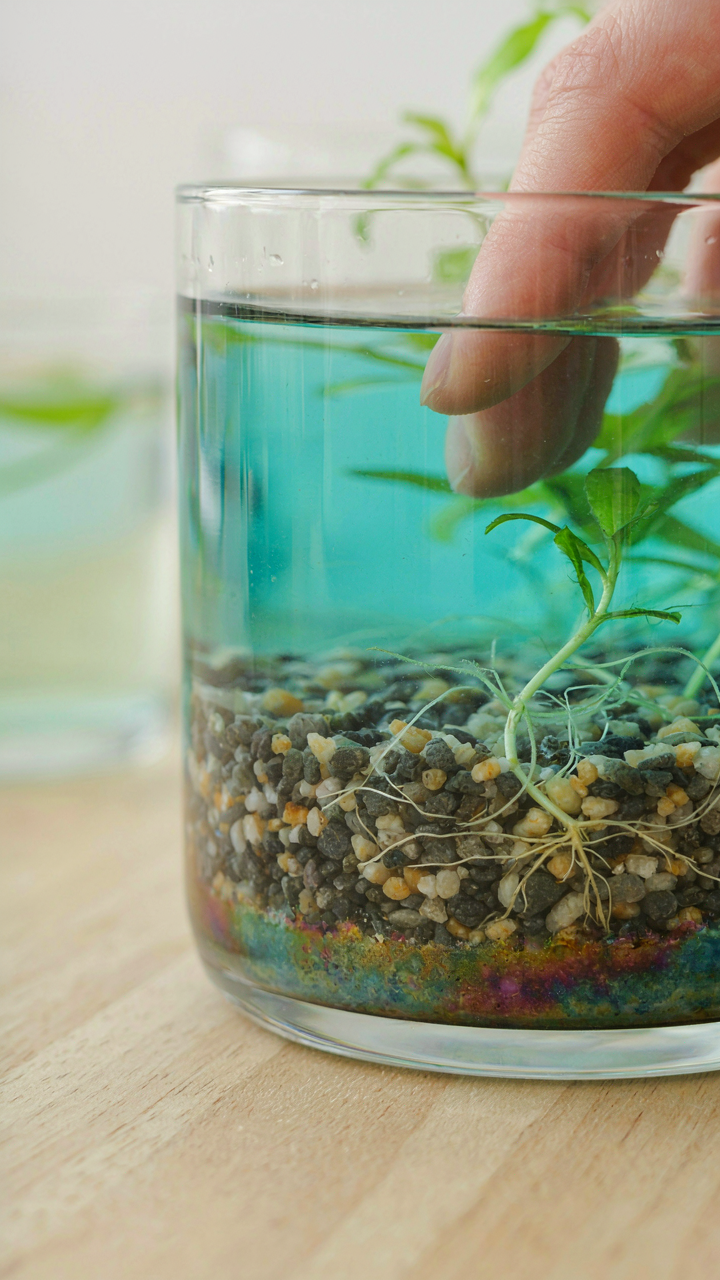
You want to buy a product that fixes your water problems so you don’t have to think about it. That’s not how water works. Nitrogen cycling is the metabolic engine of your container: ammonia from fish waste converts to nitrite, then nitrate, through bacterial colonies you can’t see. pH drift happens because this process generates acid. You either work with the cycle or fight it constantly.
The bacteria doing this work need surface area and time. That’s it. A bare container will cycle slower than one with substrate and plants because there’s less real estate for colonies to colonize. You don’t need additives to “speed up” cycling. You need stable temperature, partial water changes, and patience. Most people want results in two weeks. Cycling takes four to six weeks minimum in cooler water, faster in warm water above 70 degrees Fahrenheit where bacterial metabolism accelerates.
Biological Filtration: Self Regulating Clarity
Cybernetics studies systems that self-correct through feedback loops. Your container water garden operates on the same principle: plants consume nitrate, fish produce it, bacteria mediate the exchange, clarity emerges as output without you dosing chemicals. The moment you add clarifiers or excess treatments, you break the feedback loop and create dependency.
The real filter is your substrate and plant roots. Gravel or aquatic soil holds bacteria that process waste. Plant roots absorb excess nutrients before algae can. Moving water through substrate instead of letting it sit stagnant accelerates biofilm formation where filtration actually happens. This isn’t mystical. It’s microbiology. You establish the conditions and the system self-regulates clarity through the same mechanism that keeps natural ponds stable.
Lighting & Location: Unlocking Small Garden Water Feature Ideas

Sunlight As Raw Energy Input
You want your water garden to look effortless. That’s the trap. What actually matters is photosynthesis and the energy budget it creates. Think of sunlight like capital in an economic system: aquatic plants and algae compete for it, and whoever captures more grows faster. Six hours of direct sun daily fuels plant growth and oxygenation. Less than that and your plants weaken. More than eight hours and algae dominates because it outcompetes rooted plants for nutrients in confined spaces.
Algae wins in excess sunlight because it reproduces faster and requires no root structure. The mechanism is simple: algae cells divide in hours, water lilies and marginals in weeks. Position your container where it gets morning sun but afternoon shade, especially in climates above 70 degrees Fahrenheit. This throttles algae reproduction without starving your plants. Check your site’s shadow patterns across seasons. A spot perfect in spring becomes a sun trap by summer.
Placement That Minimizes Daily Adjustment
Most people treat location as aesthetic choice. It’s a maintenance choice. A container placed near reflected heat from pavement or south-facing walls accelerates evaporation and temperature swings, forcing constant water level monitoring and algae blooms. You’re creating unnecessary friction. Position your container on level ground where wind doesn’t funnel directly across it, and where you can reach it without climbing or bending awkwardly. Accessibility determines whether you actually maintain it or let it degrade.
Observe your space for three days before committing. Watch how shade moves. Note where water splashes during rain. Check if foot traffic makes sense there or if you’ll regret the placement in two weeks. Place the container where you naturally walk or sit, not where design magazines say water features belong. Your behavior patterns matter more than symmetry. A well-located container on a utility path gets maintained. A beautiful container in an inconvenient corner becomes a mosquito breeding ground.
The “Set It And Forget It” Approach To Container Pond Maintenance

Watch Before You Act
You want permission to ignore your container pond. That’s the real reason you’re reading this. Here’s the mechanism: observation beats intervention. In biology, systems theory calls this “negative feedback” – the container pond regulates itself through established microbial colonies, plant uptake, and surface gas exchange. Your job is to detect deviations from baseline, not prevent them.
Establish a rhythm of looking, not touching. Spend two minutes daily observing water clarity, plant health, and surface activity. Note what normal looks like for your specific setup: algae levels, water color, snail behavior, decomposition patterns. This baseline becomes your early warning system. When something shifts, you have context to decide if intervention matters.
Top Off, Never Drain Completely
The conventional advice to perform partial water changes on container ponds is incomplete. Most people drain 25 to 50 percent of the water, destroying the bacterial colony you spent weeks establishing. The real mechanism is osmotic stability: you’re replacing only what evaporates, not disrupting the chemistry.
Top off with dechlorinated water when the level drops half an inch. This maintains nutrient concentration and preserves the microbial ecosystem. Draining forces you to restart nitrogen cycling. Over a season, you’ll add roughly 30 to 50 percent of your container’s volume back through evaporation alone. Replace only that loss, in small increments, and your pond sustains itself for months without the maintenance shock of a full water change.
Winterizing Your Container Water Garden Ideas: The Survival Guide
Stopping Ice Damage Before It Starts
You’re worried about losing your investment to one hard freeze. That’s the real fear underneath this section. Here’s the mechanism: ice expands when water freezes, and that expansion breaks ceramic, concrete, and rigid plastic from the inside out. This is physics working against your containers. Fish and plants survive cold water fine. Your vessels don’t.
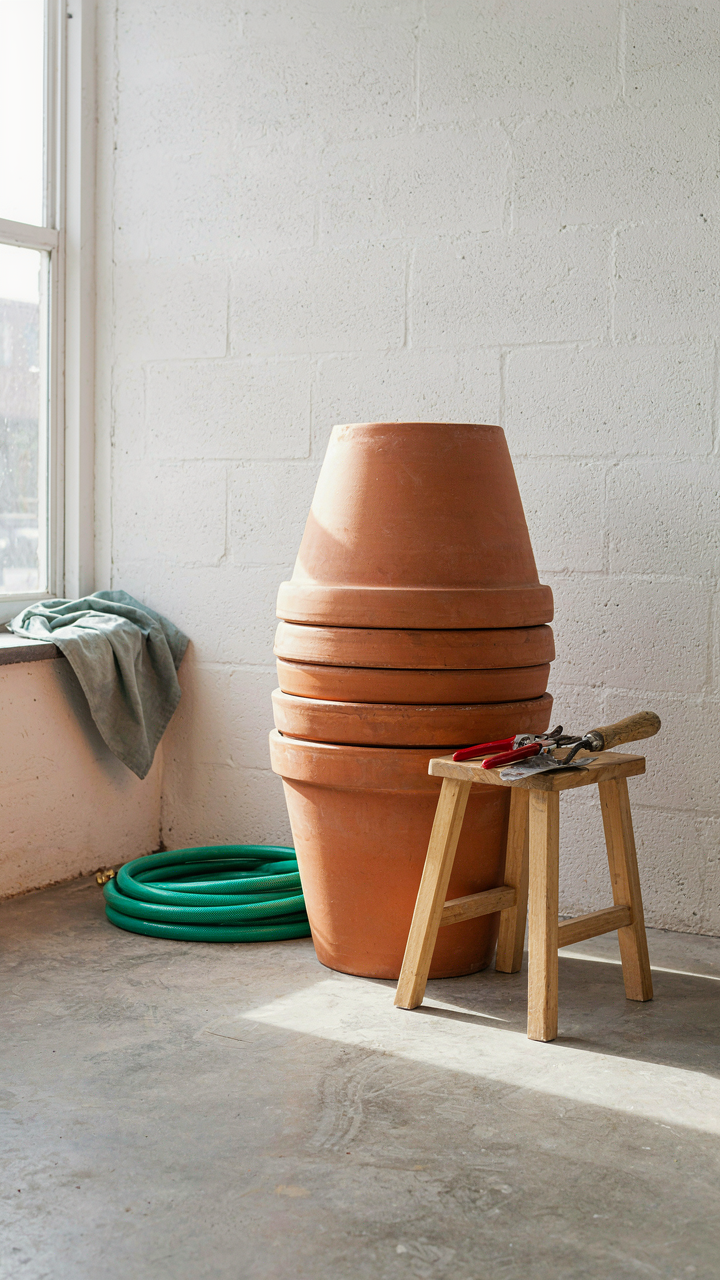
Move tender containers indoors before the first hard frost hits your region. If relocation isn’t possible, drain containers completely and stack them in a garage or shed. For permanent fixtures you can’t move, wrap the exterior with burlap or frost cloth, but that only delays the damage. Empty containers survive freezing. Full ones don’t.
Building Dormancy Into Your Timeline
Strategic dormancy is borrowed from agricultural soil management. Think of your container like a field entering fallow season: you’re not abandoning it, you’re preparing it for regeneration. Most gardeners wrongly assume they need to keep plants alive through winter. That wastes energy and money.
- Remove Dead Plant Matter: Cut back hardy perennials to soil level and remove all decaying foliage that invites rot and fungal colonization during dormancy.
- Drain Standing Water Completely: Stagnant water freezes unevenly and creates pockets of expansion that crack containers; drain systems at the lowest point weekly through late fall.
- Relocate Hardy Specimens to Sheltered Spots: Move containers against south-facing walls or under eaves to reduce exposure to wind and temperature swings that stress dormant plants.
- Add Mulch Layer Over Soil: A 2-3 inch layer of bark or straw insulates roots from freeze-thaw cycles that heave soil and rupture root systems.
- Document Plant Placement and Labels: Photograph container positions and mark hardy perennials with waterproof labels so you don’t disturb roots when cleaning in spring.
Spring revival depends on what you preserve now, not what you save in the moment. Hardy plants need cold exposure to trigger dormancy properly. Skip the artificial heating or wrapping that forces them to stay active. Dormancy works. Fighting it wastes resources and weakens plants for spring growth.
Pest & Algae Control: The Integrated Management Method For Pot Pond
Let Predators Do The Work
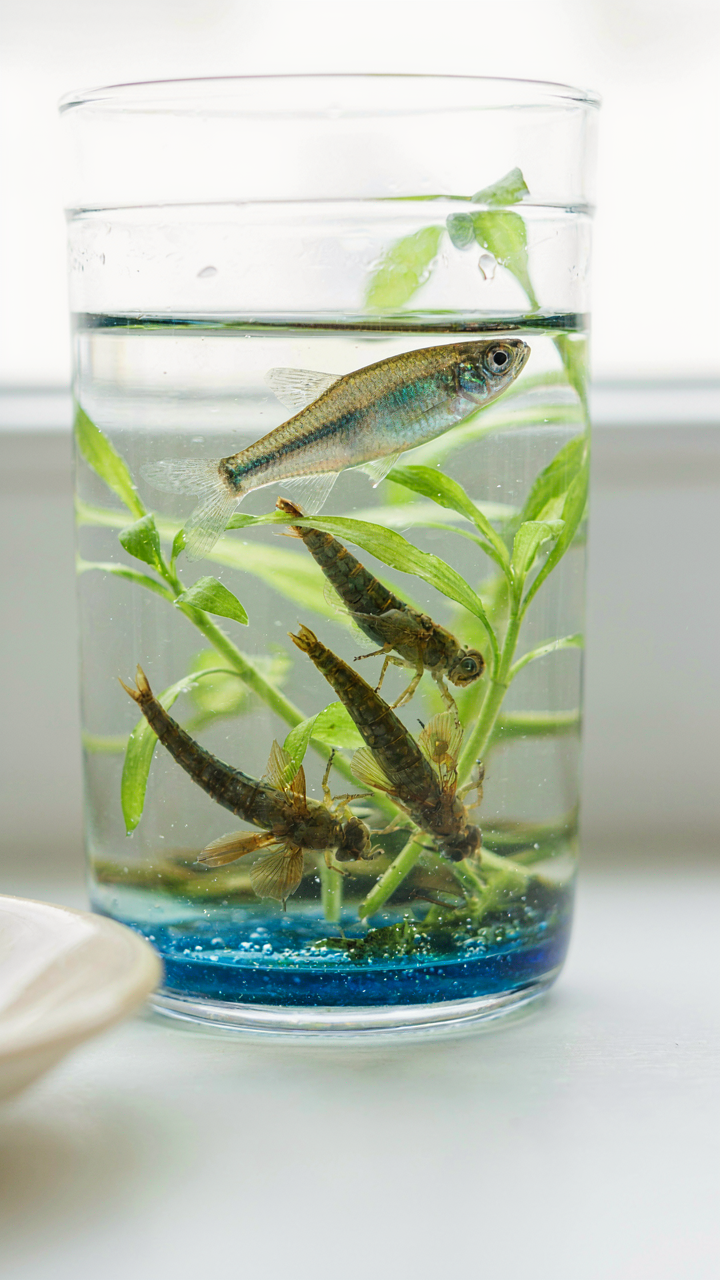
You want a clean container without lifting a finger. That’s the real reason you’re reading this section. The mechanism is predation: introducing organisms that eat the problem faster than it reproduces. In ecology, this is called biological control, and it works in pot ponds because you’re creating a closed system where predators can’t escape and prey can’t hide indefinitely. Mosquito fish consume larvae. Dragonfly nymphs hunt smaller insects. Freshwater snails graze algae directly off surfaces without chemicals or effort.
Stock conservatively. A single mosquito fish in a 20-gallon container handles hundreds of larvae. Add too many organisms and you’ve created competition for oxygen and food, which collapses the system. The goal isn’t abundance of life. It’s balance. Start with one predator species per container, wait two weeks, observe the outcome, then adjust. This approach works because you’re replacing the labor of constant monitoring with the automation of a food chain.
Remove By Hand, Not By Poison
The advice to use algaecide or insecticide in a container water garden is incomplete thinking. These chemicals kill indiscriminately, decimate your beneficial organisms, and create resistance in surviving pests. Manual removal is targeted intervention. You eliminate the problem without collateral damage to the ecosystem you’re building.
Use a soft brush or cloth to scrub algae from container walls and plant stems twice weekly. Skim floating debris and dead plant matter with a net every three days. These actions interrupt the algae bloom cycle before it establishes dominance. For larger pests like water boatmen or unwanted snail populations, remove them by hand or trap them with a submerged container baited with plant matter, then discard. The protocol works because you’re addressing the symptom at source without disrupting the biological balance that keeps your pot pond stable.
Beyond The Trend: Sustaining Your Container Water Gardens For Years

Design For Succession, Not Perfection
You want your container water garden to stay magazine-worthy without constant intervention. That’s the real fear underneath. Here’s what actually matters: borrowed from ecology, your system needs redundancy, not balance. Redundancy means multiple species performing the same function. If one plant dies, another covers the role. If one filtration pathway clogs, water still moves. Most people chase “balance” and build brittle systems that collapse when one variable shifts. A mature container garden survives neglect because multiple organisms share the load, not because conditions stayed perfect.
Design for succession by planting species in layers that fill niches as earlier colonizers establish. Root structures stabilize sediment. Biofilm on surfaces processes nitrogen. Snails control algae while decomposers break down decaying matter. When you stack functions across multiple organisms, losing one doesn’t cascade into failure. Add more filtration capacity than you think you need. Use media with high surface area for beneficial bacteria. Don’t fight the system toward stagnation; engineer redundancy into it from the start.
The Mature System Rewrites Its Own Rules
A two-year-old container garden operates differently than month one. Sediment accumulates. Plant roots establish. Microbial populations stabilize. Amateur gardeners expect this to mean “easier maintenance,” then get frustrated when new problems emerge. The real shift: your job changes from controlling outcomes to reading signals. Early systems need corrective action. Mature systems need adjustment based on what’s already happening. Algae blooms signal excess nutrients, not system failure. Cloudiness means biofilm is establishing, not that water quality tanked.
Stop trying to recreate last month’s conditions. Your evolved system now hosts established food webs, established plant competition, and established bacterial colonies. Intervene less frequently but more precisely. If you’re adjusting pH, fertilizing, or replacing water weekly, you haven’t let the system mature yet. Give a three-year-old container garden one water top-off per month in moderate climates, periodic snail additions, and seasonal plant pruning. The mechanism that keeps it alive shifts from your inputs to the internal cycles you’ve allowed to develop.
The Real Obstacle Isn’t Your Green Thumb, It’s Your Inability To Trust Simple Systems

Most people sabotage their container water gardens before they start by overthinking the setup. You don’t need expensive filters or rare plants or perfect conditions. You need to commit to one small container, fill it, add one plant, and watch it work for thirty days without touching it. Stop waiting for permission to begin. Buy a pot today.



