

The Myth Of ‘Plug And Play’ Solar Powered Fountain

Solar Panels Alone Don’t Guarantee Water Flow
You want to believe a solar panel just works—that you mount it and water moves forever. It won’t. The real problem is that a basic photovoltaic panel produces power only when the sun is present, and that power output fluctuates constantly based on cloud cover, time of day, and season. A fountain motor needs consistent voltage to operate. Inconsistent power means the pump stutters, stops, or fails to start at all. You’re left with stagnant water and a dead product.
The mechanism is simple physics: solar panels generate voltage proportional to light intensity, not a stable, usable current. A five-watt panel on a cloudy day might produce two watts. On a clear day at noon, five watts. The fountain pump doesn’t care about the average—it needs minimum voltage right now to turn on. Without that threshold met, nothing happens. Most people blame the equipment. The real culprit is undersized solar capacity paired with zero power regulation.
Battery Storage Enables Reliable Operation
Energy storage transforms solar fountains from intermittent spectacles into dependable features. Think of a battery like a financial reserve account: it collects surplus during peak solar hours and disburses during low-light periods. Without it, your fountain only runs when conditions are optimal—maybe three to four hours daily in temperate climates, less in winter.
A rechargeable lithium or lead-acid battery buffers the panel output and maintains consistent voltage to the pump motor. Size matters directly here. A small battery depletes fast and forces the pump to stop by mid-afternoon. A properly sized battery keeps the fountain running from dawn through dusk, sometimes into early evening depending on capacity and season. The trade-off is cost and physical space—larger batteries mean higher upfront expense and more cabinet or housing room. The protocol is straightforward: calculate total daily water flow time you want, work backward to determine battery capacity in amp-hours, then match that to a solar panel large enough to recharge it fully by day’s end.
The 3 Tiered Solar Fountain Protocol
How Much Sun Your Fountain Actually Needs
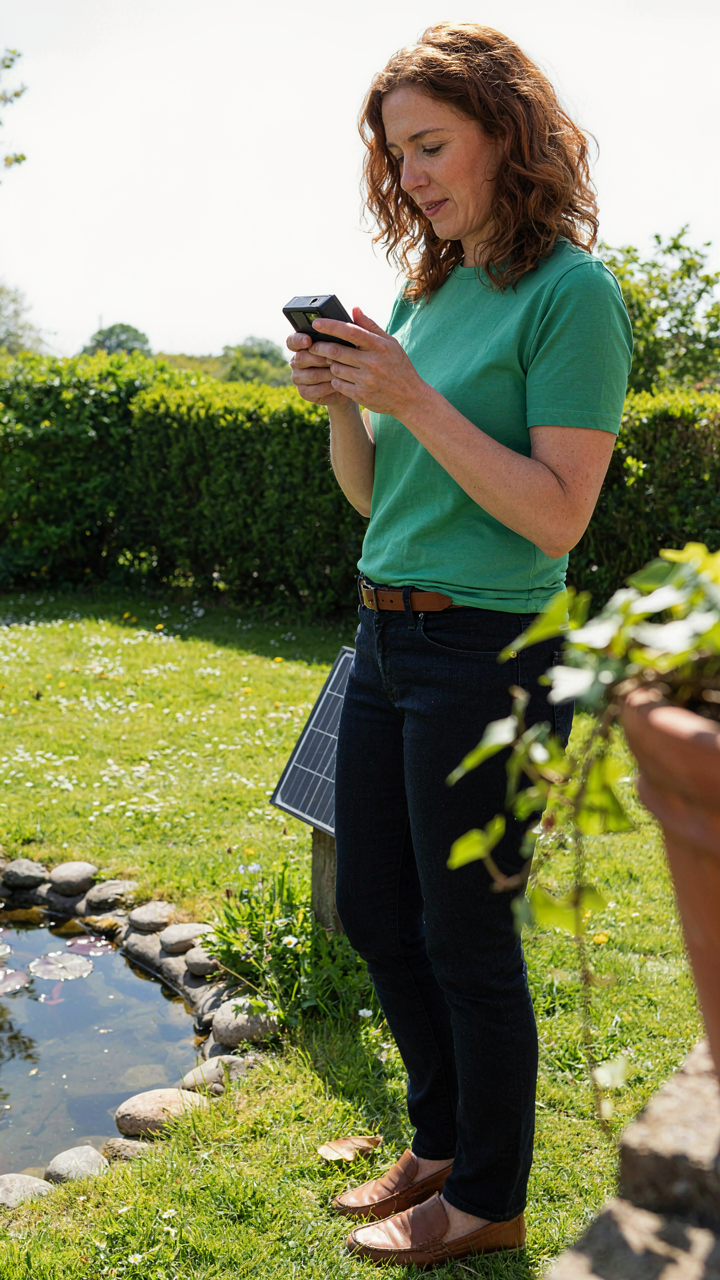
You want the fountain to run all day without admitting you picked the wrong spot. Here’s what actually determines whether it runs: solar panels need direct, unobstructed sunlight to generate voltage. Think of it like electrical load matching in power systems—your panel’s output must exceed your pump’s minimum operating voltage. A 5-watt panel in full sun produces roughly 17-20 volts, but that voltage drops sharply in shade, cloud cover, or afternoon angle shifts. Most fountain pumps need 4-6 volts minimum to turn on.
The real mechanism is that sunlight intensity follows a predictable arc. At solar noon, you get peak irradiance around 1000 watts per square meter in clear conditions. By 9 AM and 3 PM, you’re down to roughly 600-700 watts per square meter. Morning and evening light barely moves the pump. Place your fountain where it gets unobstructed sun between 10 AM and 2 PM at minimum, and measure that spot for at least two days before buying. Seasonal angle shifts matter too—winter sun sits lower, so a spot that works in July may fail in December.
Matching Pump Power To Panel Capacity
Everyone says “just pick a bigger panel.” Wrong. The constraint isn’t the panel size—it’s matching the pump’s water flow rate to the solar panel’s actual output under real conditions, not lab conditions. A 10-watt panel doesn’t produce 10 watts all day. It produces 10 watts at peak angle in full sun for maybe four hours, then degrades hourly before and after. If your pump draws 5 watts at rated flow, you’ve designed a system that runs at full capacity for only a fraction of the day.
The protocol is simple: buy a pump with a lower rated wattage than your panel’s maximum output, then verify the match using the pump’s performance curve at your expected operating voltage. A 5-watt solar panel paired with a 2-watt pump runs all sunlit hours. A 5-watt panel paired with a 4-watt pump runs only at peak sun. Choose the pairing based on whether you want consistent flow or maximum flow during limited hours—then install the pump and panel, set it running, and observe actual water height for a full day before declaring success.
DIY Solar Water Fountain: Beyond Assembly

Picking Parts That Actually Work Together
You want to build this yourself because you think it’ll save money. That’s not the real reason. You want control, and control requires knowing which components fail first and why. Solar fountains work on hydraulic load principles borrowed from pump engineering: the pump’s output capacity must match the fountain head’s flow rate requirements, or you get either dead water or system strain that kills longevity.
Most DIY builders grab a solar panel and pump separately, then wonder why the fountain dies after two seasons. The mechanism is simple: panel wattage, pump voltage rating, and head height must align. A 5-watt panel feeding a 12-volt pump designed for 6-foot lift won’t perform at that height on cloudy days. You need the panel to exceed the pump’s rated power by at least 20 percent to account for real-world conditions and dust accumulation.
Building Systems That Run Without Intervention
Integration means every component talks to every other component without drama. The real error in common advice is treating the solar panel, pump, battery, and fountain head as independent choices. They’re not. A solar fountain without a battery controller floods during peak sun and dies at dusk. A battery without proper charge regulation overheats and fails in one season.
Start here: your panel charges a small lithium or lead-acid battery through a charge controller that regulates voltage, the battery powers the pump through a simple on-off timer or light sensor, and the pump moves water through the fountain head back into the reservoir. Test each stage independently first, then integrate them. This sequence prevents the cascade failure that kills most DIY projects after month three.
Solar Fountain Ideas: Function Over Aesthetics

Where Your Fountain Actually Works
You want the fountain to look good from inside your house. That’s not a crime, but it’s not the real problem you’re solving. The real problem is that a solar fountain in the wrong spot becomes a decorative brick that occasionally spits water. Think of placement like solar panel orientation in renewable energy systems: angle and exposure determine output, not the panel itself. A fountain in partial shade delivers half the runtime. A fountain facing north in the northern hemisphere gets worse. South-facing locations with six to eight hours of direct sun are non-negotiable.
Distance from the house matters operationally, not aesthetically. Install fountains within ten to fifteen feet of a viewing window if you care about noticing when the pump clogs or the basin empties. Fountains against far garden walls look good in photos but become invisible problems. You stop checking them. Algae blooms. Mosquitoes breed in stagnant water. The pump dies quietly. Proximity forces maintenance, which keeps the system running.
Stopping Water Waste Before It Starts
The common advice says solar fountains lose water to evaporation and wind, then tells you to top it off occasionally. That’s not a strategy, that’s laziness. Evaporation isn’t random. It increases with air temperature, decreases with humidity, and accelerates with fountain height and splash distance. A two-foot tall fountain in seventy-degree weather loses roughly half an inch per week to evaporation alone. Lower basin designs with gentle recirculation patterns cut that loss by forty percent because they reduce surface area and impact velocity.
Wind multiplies water loss through spray dispersion. Surround the basin with landscape elements that block lateral airflow without blocking sunlight. Low hedges, rocks, or planted borders act as windbreaks. The pump runs on solar power during the day, so evening wind doesn’t matter operationally, but afternoon wind does steal water your pump needs to cycle. Basin depth matters too. Fountains with eighteen-inch basins maintain water levels longer than shallow six-inch designs, giving you more margin before the pump sucks air and fails.
Outdoor Fountain DIY: Durability By Design
Materials For Longevity
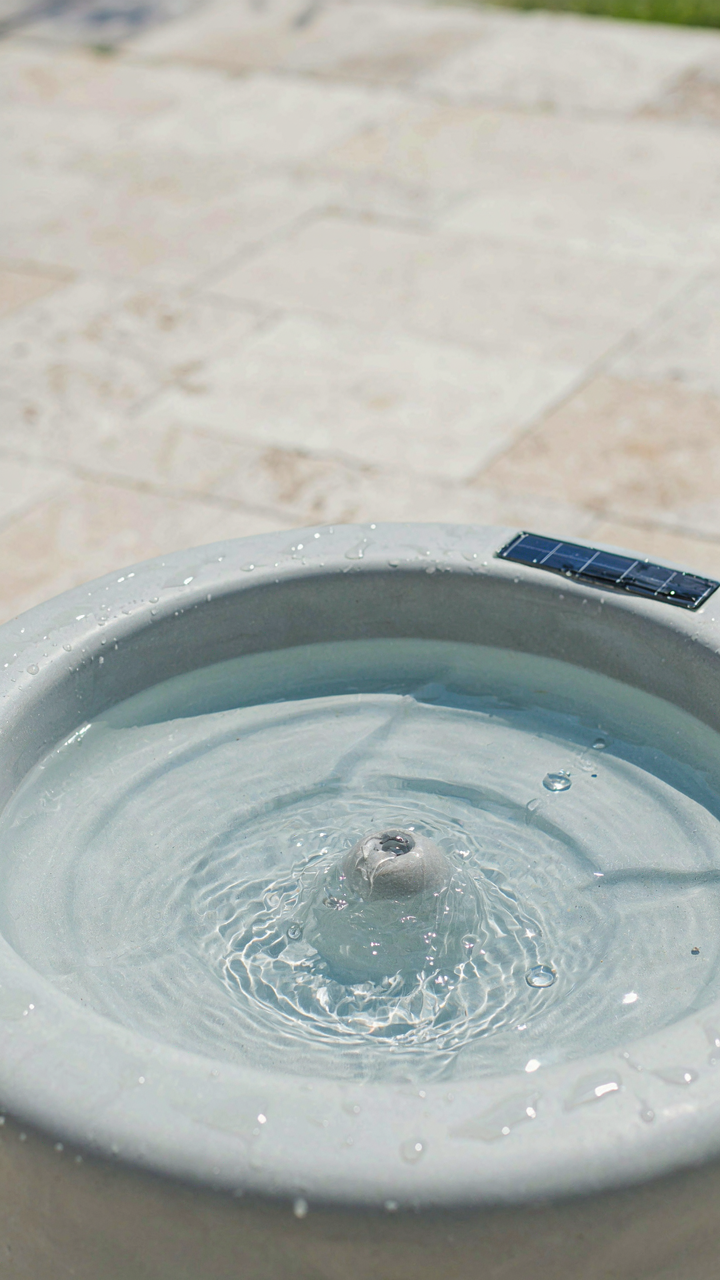
You want this thing to look intentional in five years instead of weathered. The real mechanic here is tensile strength—how much force a material can handle before it breaks—and it’s the difference between a fountain that degrades and one that simply ages. Resin composite basins win because they resist freeze-thaw cycles better than concrete. Stainless steel or brass pumps outlast plastic impellers because metal doesn’t become brittle when UV light hits it repeatedly. The material choice determines failure mode, not just timeline.
Ceramic and glazed stone handle moisture better than untreated concrete or cheap plastic reservoirs. Glazing creates a barrier layer that stops water absorption and prevents mineral salt buildup inside pores. Acrylic and certain polyurethane resins resist UV degradation longer than standard plastics. The mechanism is simple: use materials that block water entry rather than materials that absorb it. Materials that absorb water expand and contract seasonally, which creates structural stress and cracks.
Structural Integrity Against Elements
Most people assume wind is the main threat to fountain stability, but water weight against uneven ground settlement does more damage. Engineering calls this differential loading, and solar garden fountains sit in one spot through multiple seasons of ground freeze and thaw. A fountain basin that isn’t level distributes weight unevenly across its base, creating stress points where cracks initiate. Proper foundation means a level, compacted gravel bed under a rigid base plate that spreads load across a wider area.
Drainage prevents the single biggest failure point: standing water around the basin perimeter that freezes and expands. A basin with internal drainage channels or a sloped floor toward a pump intake keeps water moving instead of pooling. Seams and joints should use silicone sealant rated for outdoor temperatures, not standard caulk that shrinks and splits in cold weather. Position the fountain where it won’t collect runoff from roofs or downspouts, which adds unplanned water volume and creates imbalance.
Simple Water Feature Ideas: The Power Grid Analogy

Why A Solar Panel Doesn’t Need A Battery To Work
You want your fountain running all day without thinking about it. That’s the real ask here. The mechanism nobody states: a solar garden fountain works exactly like a power grid distributes electricity. In electrical systems, power flows directly from source to load when demand matches supply. Your panel generates current. Your pump draws current. When sunlight hits the panel, water moves immediately. No battery required for basic operation. This is distributed power, not centralized storage.
Most fountains sit idle for half the day waiting for peak sun. Wrong setup. A properly sized solar panel paired directly to the pump operates during all usable daylight hours, not just noon. The panel voltage and pump voltage must align. A 12-volt pump needs a 12-volt panel rated for the pump’s wattage draw. The system self-regulates: stronger sun equals faster water flow. Weaker sun equals slower flow. The fountain never fully stops during daylight because the panel adjusts output in real time instead of depending on stored energy.
Matching Flow Rate To Sunlight Cycles
Continuous operation requires you to stop thinking about peak hours and start thinking about load balancing. In electrical engineering, load balancing means distributing demand across available supply to prevent collapse. Your solar fountain’s flow rate should match the panel’s actual output across the entire day, not just midday peaks. A 20-watt panel generates full power for maybe four to six hours. It generates partial power for the remaining daylight. Your pump should match the lowest common denominator, not the best-case scenario.
This is why small pumps outperform large ones in solar setups. A 5-watt pump runs all day on a 20-watt panel. A 15-watt pump runs three hours then stops. The real choice isn’t between powerful and weak. It’s between consistent performance and broken promises. Measure your panel’s output at 9 AM and 3 PM, not noon. Size your pump to handle that average output, not peak output. This is the only way to guarantee the fountain actually operates when you’re home to see it.
DIY Garden Fountains: Optimizing The Microclimate
The Sun And Shade Trade Off
You want your fountain to look good in photos and feel magical at night, but you’re avoiding the real problem: solar panels need direct sun to charge, and constant sun kills most plants around the fountain. Here’s the physics. Photovoltaic systems operate on voltage degradation. When clouds or shade block the panel for even part of the day, output drops nonlinearly, not proportionally. A fountain in partial shade doesn’t run at half power. It runs at 30 percent power.
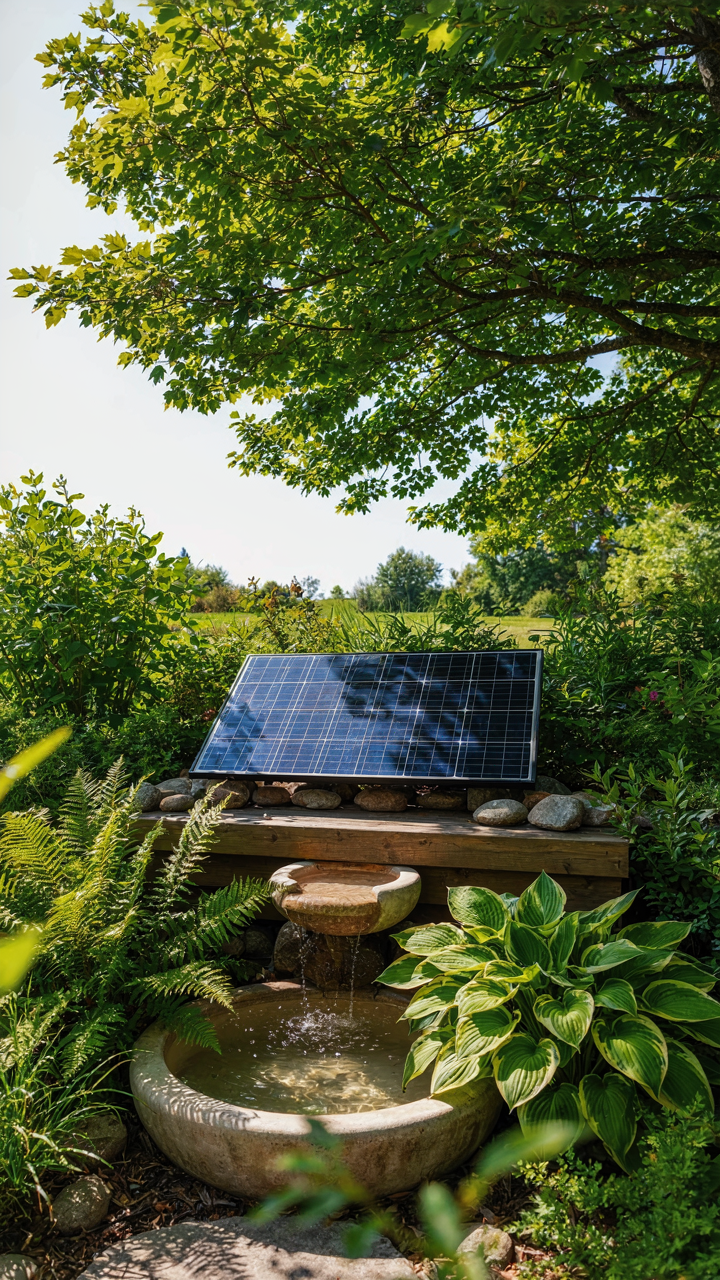
Most fountains sit in full sun to maximize panel efficiency, which creates a dead zone around the fountain where only heat-tolerant plants survive. The mechanism is simple: water evaporates faster in direct heat, the soil dries quicker, and delicate plants wilt. Place your solar panel in direct morning or afternoon sun for 4 to 6 hours minimum. Position the fountain basin itself in dappled shade if possible, using nearby trees or structures as filters. This keeps the water cooler and reduces evaporation loss while your panel still charges.
Water Movement Shapes Plant Health
Fountains change the immediate environment in ways most people miss. The falling water increases humidity locally, which benefits shade plants and reduces stress on nearby foliage during dry spells. Air movement from the fountain also disrupts stagnant microclimates that attract pests and fungal problems.
Humidity spreads roughly 3 to 5 feet from an active fountain, depending on water volume and spray pattern. Position plants that prefer moisture within this radius. Hostas, ferns, and Japanese maples thrive in the humid microclimate fountains create. Conversely, place drought-tolerant plants like sedums and ornamental grasses outside this zone where they won’t sit in constant moisture. The water circulation itself prevents mosquito breeding in the basin by denying them still water, which cuts pest pressure on surrounding plants by disrupting their breeding cycle.
Solar Outdoor Fountain: The Real ROI

Beyond Electricity Bills, Silent Value
You’re calculating whether a solar fountain pays for itself in energy savings. It won’t. That’s not the actual mechanism at play, and pretending it is means you’ll miss what solar fountains genuinely deliver. The real ROI operates in economics terms: you’re buying a capital asset that appreciates your property’s perceived value while eliminating a recurring operational cost. That’s the leverage.
A solar fountain removes the dependency chain. No electrical trenching. No monthly utility draw. No timer programming or outlet maintenance. You install it once, and the system generates its own power indefinitely. This isn’t romantic thinking, it’s systems architecture. Your property operates with less friction. Buyers, renters, and visitors notice reduced infrastructure complexity even if they can’t name why the space feels more intentional. The fountain paid for itself the moment you stopped writing checks to the power company.
Future Proofing Your Water Feature
Solar fountains hedge against rising energy costs and grid instability without requiring you to predict either one. Think of it in reliability terms from engineering: redundancy. A traditional fountain is a single point of failure tied to the electrical grid. A solar fountain is a closed loop. When energy prices spike or power fluctuates, your fountain operates unchanged. You’ve decoupled from external volatility.
- Panel degradation rates: Quality solar panels lose 0.5% efficiency annually. A fountain panel maintains 80% output after 25 years, making it a 25-year asset with predictable performance decline.
- Battery evolution: Solar fountain batteries improve every 3-5 years. Upgrading the battery later costs less than replacing the entire fountain, so your water feature infrastructure stays current with technology.
- Weather independence: Unlike grid power vulnerable to weather-related outages, solar fountains continue operating during blackouts. Your system’s resilience actually increases as grid stress grows.
- Component modularity: Most solar fountains use standard pump and panel connections. Replacing a dead pump doesn’t require replacing the solar array, extending the useful life of your entire investment.
- Regulatory drift: Electrical codes change. Solar-powered systems avoid future compliance costs tied to new outdoor electrical standards or updated permit requirements.
The math flips when you extend the timeline. A fountain operating 10+ years means your cost per year drops below grid-powered alternatives by year five. After that, you’re accumulating value while traditional fountains accumulate repair invoices. Lock in your solar fountain now and watch grid-dependent fountains become increasingly expensive to operate.
The Hidden Cost Of Convenience In Solar Powered Fountains

Why The Quick Fix Fails You
You want to install a fountain, see it work immediately, and never think about it again. That’s not how physics works. Most solar fountain buyers pick the cheapest option because the marketing makes it sound identical to expensive ones. Both have panels. Both have pumps. But cheap units cut corners on charge controller quality, battery capacity, and motor efficiency. You get three weeks of performance before the pump sputters through weak afternoon water flow.
The mechanism is simple: solar fountains depend on consistent voltage delivery. A weak charge controller lets voltage fluctuate with cloud cover. The pump struggles. Sediment enters the motor. Within a month, you’re replacing parts or the whole unit. Convenience thinking creates false economy. You save 40 dollars upfront and spend 80 dollars fixing it by mid-summer.
Buying For The System, Not The Piece
Engineering disciplines teach us about redundancy and tolerance stacking, and solar fountains demand you think the same way. Redundancy here means oversizing the solar panel relative to what the pump technically needs. A fountain rated for 10 watts should get a 15 or 20 watt panel. This builds margin into your system. Clouds, dust, and seasonal angle changes all reduce panel output. Engineers call this derating. You call it not being disappointed in July.
The real decision point happens before purchase: ask about battery type and capacity, controller response time, and panel wattage versus pump rating. Budget models skip documentation entirely. Mid-range and quality units publish these specs. Match the panel size to worst-case scenarios in your region’s winter months, not summer peak. Then the fountain runs reliably year-round, not just when conditions are perfect. This is the only protocol that survives contact with reality.
Your True Obstacle Isn’t The Fountain; It’s Your Addiction To Convenience Over Competence

Most people won’t buy a solar fountain because they want convenience. They want to outsource the decision. They want the perfect fountain to exist already assembled, already proven, already safe. But that’s backward. The real win lives in the competence you build choosing materials, understanding water flow, and solving your specific yard’s problems. Stop waiting for permission from a review. Pick one fountain today. Research its pump wattage. Measure your space. Move forward incomplete. The fountain doesn’t matter. Your willingness to learn by doing does.



