
The Pollinator’s Paradox: Why More Flowers Aren’t Enough

The Gap Between Blooms
You want a garden that looks intentional and proves you know something most people don’t. Here’s what actually matters: pollinators don’t care about your flower count. They starve in gaps. Ecology calls this the “resource availability window”—the period when food is present and accessible. Season long pollinator blooms isn’t about quantity spread randomly across twelve months. It’s about eliminating the weeks when nothing feeds. A pollinator entering your garden in July finds an empty table because you planted spring bulbs and fall asters with nothing in between. That’s the real failure.
Most gardeners plant for visual peaks. Nurseries train them to. You buy what’s blooming the day you visit, then wonder why insects vanish by August. The mechanism is simple: pollinators need consistent nectar and pollen flow. When you have a two week gap in June followed by a four week gap in September, you’ve created a starvation schedule. Gaps kill populations faster than a single bad season. Map your calendar backwards from bloom time data, then fill the holes with species that flower during those dead weeks.
Beyond Display Value
True ecological value isn’t about Instagram appeal or what neighbors think of your yard. It’s about whether your garden sustains actual populations or just provides entertainment for passing insects. Bees measure success differently than you do. They measure it in larvae raised and colonies that survive winter. If your blooms end in September and pollinators need forage through October, your garden failed its function the moment you stopped flowering.
The design choice that matters: plant for pollinator need, not human preference. Many native plants flower during unfashionable times because that timing solves a real problem in their ecosystem. A species flowering in November isn’t ugly to a bee searching for resources before winter dormancy. Stop designing for visual hierarchy. Build a bloom calendar that guarantees nectar and pollen availability every week from the earliest emergence through the final hard frost.
The Staggered Bloom Protocol For Season Long Pollinator Blooms

Early, Mid, And Late Season Champions
You want the visual payoff without admitting you’re afraid of an empty garden in July. The real mechanism here comes from phenology—the timing of life cycles in plants. Early, mid, and late bloomers aren’t aesthetic choices. They’re survival strategies that, when stacked, eliminate the gaps pollinators actually experience as dead seasons.
Early season bloomers emerge when soil temperature rises consistently above 50°F. Mid-season plants peak during peak pollinator activity in summer heat. Late bloomers capitalize on fall pollinator desperation when forage drops sharply. Each group solves a specific availability problem. You’re not decorating. You’re engineering continuous food supply.
- Hellebores and Crocus: Trigger pollinator emergence in late winter and early spring when few other nectar sources exist. These frost-hardy plants establish the first food corridor.
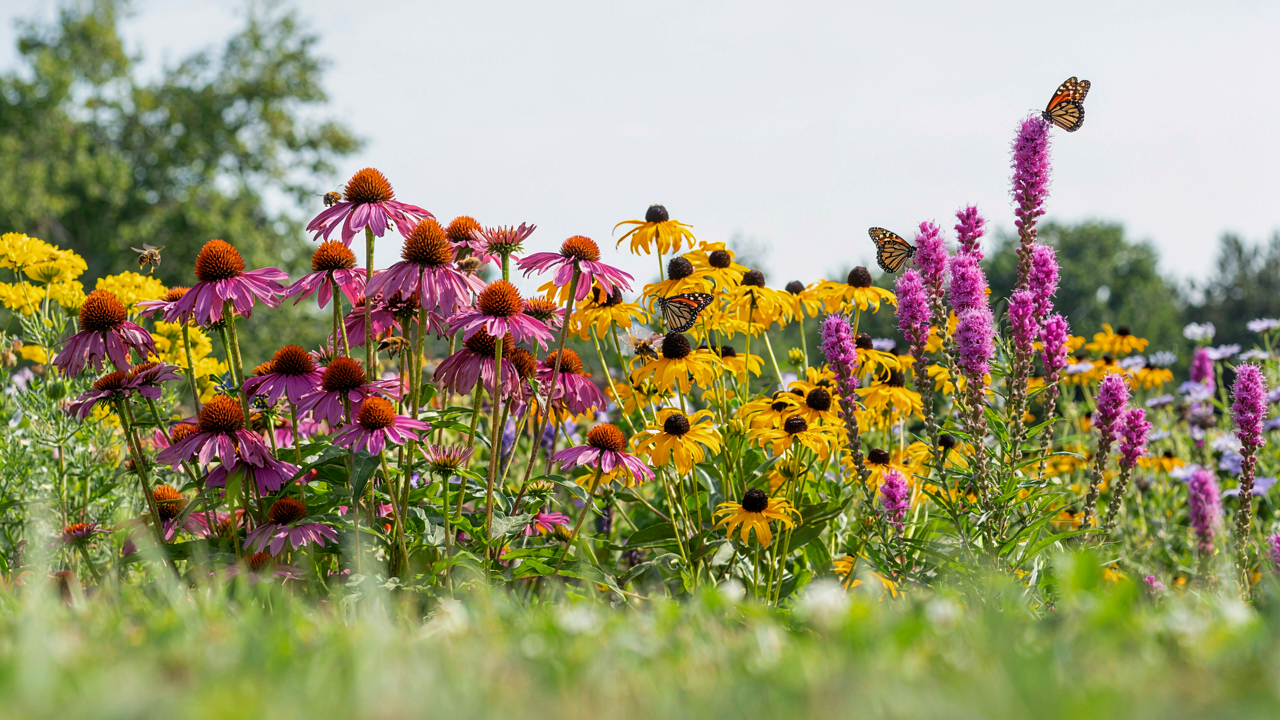
- Coneflowers and Black-eyed Susans: Dominate mid-summer blooming windows when heat stress reduces flowering in spring-only plants. They anchor the peak season supply.
- Asters and Goldenrod: Flower aggressively in fall when most perennials have stopped. Late bloomers sustain pollinators preparing for migration or dormancy.
- Alliums and Tulips: Bridge early and mid-season, extending spring forage into early summer months. Their overlap creates continuity rather than sharp transitions.
- Zinnias and Cosmos: Annual options that extend mid-season depth through first frost. These fill gaps other perennials miss through replanting flexibility.
The practical move is to divide your bed into three bloom cohorts by actual bloom window data, not guesses. Plant each cohort at the density required to sustain pollinator populations during their specific season. Overlap matters more than variety. Two dense stands overlapping beats five sparse stands scattered randomly.
Layering Bloom Times Effectively
Most gardeners think layering means mixing different plant heights. That’s surface-level thinking that produces visual chaos and pollinator starvation. Real layering means stacking bloom duration so that as one plant’s nectar production drops, another’s ramps up seamlessly.
The mechanism is resource continuity. Pollinators need predictable food availability, not surprise gaps. You achieve this by mapping individual plant bloom windows—not just their color or height—then identifying the actual weeks each plant produces nectar and pollen. If Coneflower blooms weeks 12 through 22, and Black-eyed Susan blooms weeks 15 through 26, their overlap is weeks 15 to 22. Build your entire design so that every two-week window has at least one plant in heavy bloom. Plant density increases during transition weeks where coverage drops. This isn’t decoration. This is load balancing for pollinator survival.
Beyond Nectar: Designing For The Full Pollinator Life Cycle

Host Plants For Larval Development
You want pollinators to show up all season. What you’re really after is a garden that sustains their entire biology, not just feeds the adults. Here’s the mechanism: pollinators only exist as adults for weeks or months. They spend months as eggs, larvae, or caterpillars in a dormant state. No host plants, no larvae. No larvae, no adults. The garden dies after bloom.
Most gardeners stop at nectar plants. That’s incomplete. Monarch caterpillars eat milkweed exclusively. Swallowtail larvae need citrus, parsley, or dill. Native bees lay eggs in hollow stems and mud. Each species has specific larval food sources that adult plants won’t provide. Build a two-tier system: flowering plants for adult nectar and pollen, host plants for reproduction and juvenile survival. The host plants are unglamorous and often homely. They’re also non-negotiable.
Shelter, Water, And Nesting Infrastructure
Pollinators need to survive between foraging trips. Most garden designs ignore this entirely, treating the space like a gas station instead of a habitat. Bees need bare ground or hollow stems for nesting. Butterflies need dense vegetation to hide from wind and predators. All pollinators need water within reach, not just moisture in soil. Standing water becomes stagnant fast, so use shallow basins with sand or pebbles inside so insects don’t drown.
Dead wood and leaf litter aren’t neglect. They’re infrastructure. Native bees tunnel into dead branches and soft wood to lay eggs. Ground-nesting bees need exposed soil free from mulch. Leave sections of your garden deliberately unmulched. Stack branches in corners. This looks rough, but it’s the actual mechanism that turns a flower bed into a pollinator breeding ground. Without nesting sites and shelter, you’re cycling through migrants each season, never building resident populations.
The Biome Blueprint: Native Pollinator Plants For Local Success

Match Your Zone To Native Species
You want a garden that looks effortless and sustains itself, which means you’re avoiding the work of fighting your own climate. Here’s the mechanism: native plants evolved under your region’s specific temperature, precipitation, and soil conditions. They don’t need constant intervention because they’re already adapted to survive what your land throws at them. A plant native to your zone flowers when local pollinators emerge hungry, not on some generic calendar.
Most gardeners ignore this and buy whatever blooms pretty at the nursery. They end up with plants that flower at the wrong time, demand constant water, and attract nothing. Your region has a pollinator emergence timeline. Match your plants to it, and you get season-long blooms that actually work. Check your USDA hardiness zone, then source plants specifically native to your ecoregion, not just your state.
Stop Planting What Doesn’t Belong
The common advice is “plant natives,” which sounds simple until you realize native to your state doesn’t mean native to your yard’s actual conditions. Invasive species get pushed hard by nurseries because they’re profitable and aggressive growers. They outcompete natives, provide zero nutritional value to local pollinators, and hijack bloom timing by flowering when insects need different food sources. An invasive plant might look productive but it’s ecological dead weight.
Your job is identifying what’s actually invasive in your region and refusing it outright, even when it’s available and cheap. Many ornamentals sold as “low maintenance” are invaders in disguise. Contact your local cooperative extension office for a list of invasive plants to avoid in your specific area. Then commit: do not buy them, period. Your season-long bloom depends on eliminating competition for resources that native plants and their pollinators need to function.
The Strategic Allocation Of Pollinator Garden Resources

Plant Units For Seasonal Campaigns
You want to feel like you’ve “done” gardening without actually thinking about timing. That’s the real block here. Military strategy calls this “force allocation”—deploying assets across time and space to maintain pressure. Your garden is the battlefield. Flowers are your combat units. Without a deployment calendar, you get a May explosion followed by August surrender.
Stop treating your garden as one thing that blooms. Treat it as a series of campaigns. Each plant variety holds territory for a specific window. Zinnias dominate June through August. Black-eyed Susans peak July to September. Early crocuses own March and April. Map what blooms when, then fill the gaps intentionally. You’re not planting randomly—you’re positioning units to hold continuous line coverage from spring through frost.
Succession Planting For Unbroken Supply
The common advice is “plant in waves.” That’s incomplete. Succession planting works only if you stagger both the varieties AND their maturity dates through the season. Biology calls this “phenological overlap”—the principle that species peak at different times to avoid competition. Apply it here: you’re preventing a pollinator food shortage through deliberate temporal stacking.
Pick a core flowering species. Plant it every two weeks from late spring through mid-summer. Cosmos works here. So do zinnias. Each sowing matures 60-70 days later, creating overlapping bloom windows. Meanwhile, perennials already in the ground handle spring and fall anchoring. The result: no dead zones. Pollinators find food when they need it. Track your sowing dates in writing—not memory. Set reminders for succession plantings on your calendar now.
Microclimates And Macro Impact: Optimizing Pollinator Garden Design
Sun, Soil, And Water Alignment
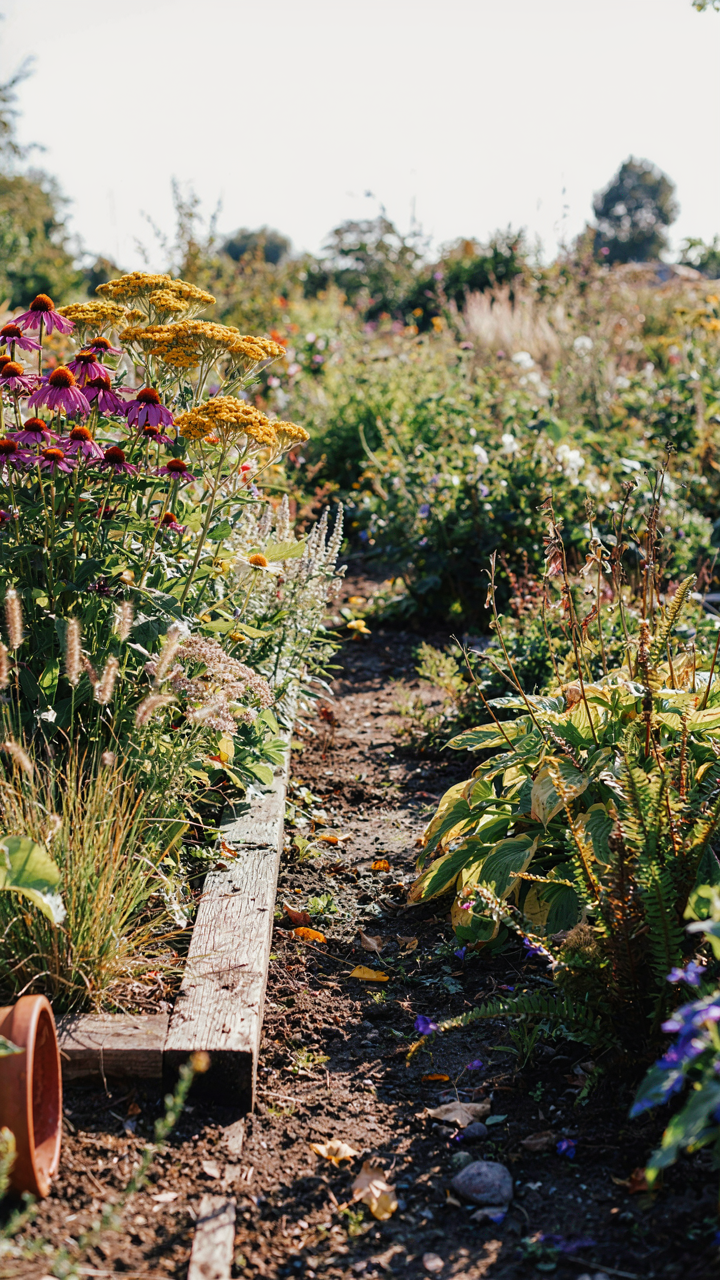
You want this section to prove you’re doing something sophisticated. The real mechanism is simpler: most pollinator gardens fail because the designer stacks incompatible plants into one zone and hopes. Think of your garden as a lighting design problem from cinematography. Just as a director controls where light falls to direct attention, you control where sun, moisture, and soil chemistry fall to determine which plants thrive and which limp along. Misalignment kills consistency.
Full sun means six to eight hours of direct light. Most nectar and pollen plants demand this range. Part shade means two to four hours, typically morning sun with afternoon protection. Soil pH matters because certain plants absorb nutrients only in specific ranges. Acidic-loving plants like blueberries fail in alkaline soil, period. Water frequency depends on soil structure, not arbitrary watering schedules. Sandy soil drains fast and needs frequent watering. Clay holds moisture and causes root rot if overwatered. Map these three variables separately before placing a single plant.
Plant Grouping For Continuous Nectar Flow
The common advice says mix bloom times. That’s incomplete. What actually matters is grouping plants that share the same environmental demands so you stop fighting the site. A plant stressed by wrong sun or moisture stops blooming early, crushing your season-long strategy. Cluster shade-tolerant bloomers together in one zone. Stack full-sun plants in another. Within each zone, stagger bloom times by selecting early, mid, and late-season varieties of plants that want identical conditions. This eliminates the management chaos of babysitting incompatible plants.
Species diversity matters less than ecological fit. A garden with twelve plant types in hostile microclimates produces erratic blooms. A garden with six types, all correctly placed, delivers reliable pollination from spring through frost. The mechanism is resource stability. When a plant’s environment matches its requirements, it allocates energy to flowering instead of survival. Soil preparation before planting determines whether your grouping strategy works or collapses within two seasons.
The Cut Flower Garden’s Secret: Dual Purpose Pollinator Power

Which Flowers Actually Work For Cut And Pollinator Use
You want to look productive without actually changing your garden layout. Here’s what you’re missing: pollinator value and cut-flower quality aren’t aligned by accident—they’re determined by bloom morphology, the structural arrangement of flower parts. Flowers that expose nectar and pollen easily for insect access also have sturdy stems and long vase lives. Zinnias, cosmos, and sunflowers aren’t popular because they’re trendy. They work because their open-faced structure lets bees feed while their architecture survives harvest and water stress intact.
The common mistake is treating cut flowers and pollinator plants as separate categories. They’re not. Many florists’ go-to crops—dahlias, roses, ranunculus—were bred for appearance alone, which often means reduced pollen and nectar. Choose species where the breeding goal included both structure and pollinator reward. Rudbeckia, liatris, and celosia deliver pollen to insects while staying hydrated in a vase for two weeks or longer. The mechanism is simple: flowers engineered for visual impact without pollinator feeding are evolutionary dead ends in your garden.
Timing The Cut To Keep Blooms Coming
The biology here is straightforward: every flower you cut removes a seed-production goal, which signals the plant to generate more blooms. This isn’t sentiment—it’s survival strategy. Cut stems at the bud stage or early bloom, not at peak flower. Early cutting triggers the plant’s reproduction drive before it exhausts itself. Late-stage cuts from plants that have already started setting seed don’t send the same regeneration signal, so bloom production stalls.
Harvest in early morning when stems hold maximum water. Use sharp pruners, not scissors, to avoid crushing vascular tissue. Remove no more than one-third of the plant’s total stem length at once. The plant needs enough foliage to photosynthesize and fund new flower production. Cut just above a leaf node facing outward. The mechanism: consistent light harvesting from multiple points on the plant creates distributed bloom sites instead of single exhausted stems, extending pollinator activity across the entire season.
Maintenance Myths: The Less Is More Approach To Pollinator Garden Management

Stop Obsessing Over Control
You want permission to do less work and still look competent. Here’s the mechanism: pollinator gardens fail because gardeners treat them like ornamental beds, fighting entropy instead of working with it. Ecology runs on succession, not stasis. Your job is not to maintain a frozen state but to manage the rate of change. Remove deadwood and invasive species. Leave everything else alone.
Most gardeners overthink seasonal cleanup. You don’t need to rake every fallen leaf or trim every brown stem in fall. Those structures shelter overwintering insects, provide food sources, and stabilize soil. Dead plant material is infrastructure, not mess. Cut back only what genuinely blocks new growth or harbors disease. Let the garden breathe.
Know When Intervention Breaks The System
Pruning at the wrong time kills next season’s bloom. The mechanism here mirrors resource allocation theory in biology: energy stored in root systems and stems over winter becomes spring growth. Cut too aggressively in fall and you delete that stored energy. Cut in late spring and you remove the scaffold for flowering branches.
Prune late summer bloomers like asters and goldenrod only after they finish flowering, typically mid to late fall. Spring bloomers like hellebores need pruning in early spring, right as new growth emerges. Most perennials need zero pruning until they’re done flowering. Deadheading extends bloom on some species like coreopsis and black-eyed Susan, but not on others like bee balm or Joe-Pye weed. Check the specific plant, not the calendar.
The Real Obstacle Isn’t Your Green Thumb; It’s Your Linear Thinking About Ecological Systems

You’re treating your garden like a machine when it’s actually a network. Season long pollinator blooms don’t happen because you planted the right flowers. They happen because you stopped thinking in isolated actions and started thinking in overlapping cycles. Today, map your garden’s bloom timeline on paper. Write down what flowers your existing plants produce and when. That single shift from “what should I plant” to “what’s already blooming and where” rewires how you see the whole system. Gardens don’t need perfection; they need rhythm.



