
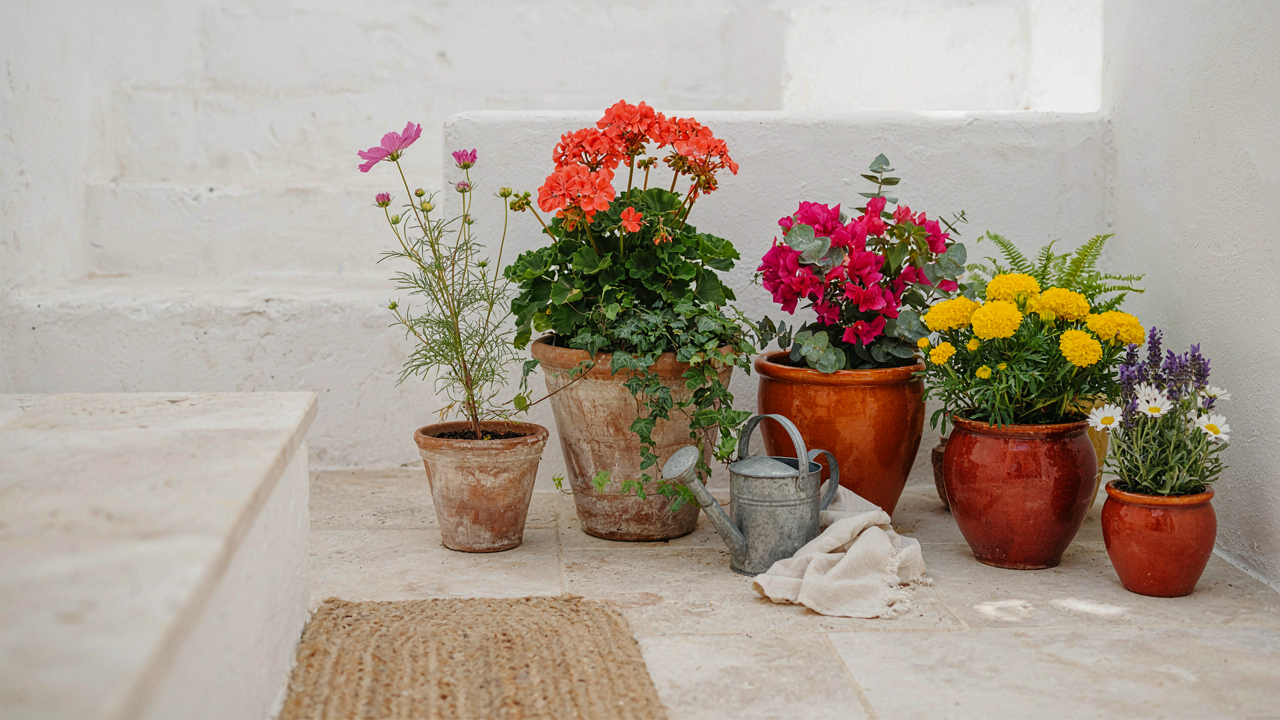
The Evaporation Myth: Why Terracotta Isn’t Always Your Friend (Terra Cotta Pots Garden)
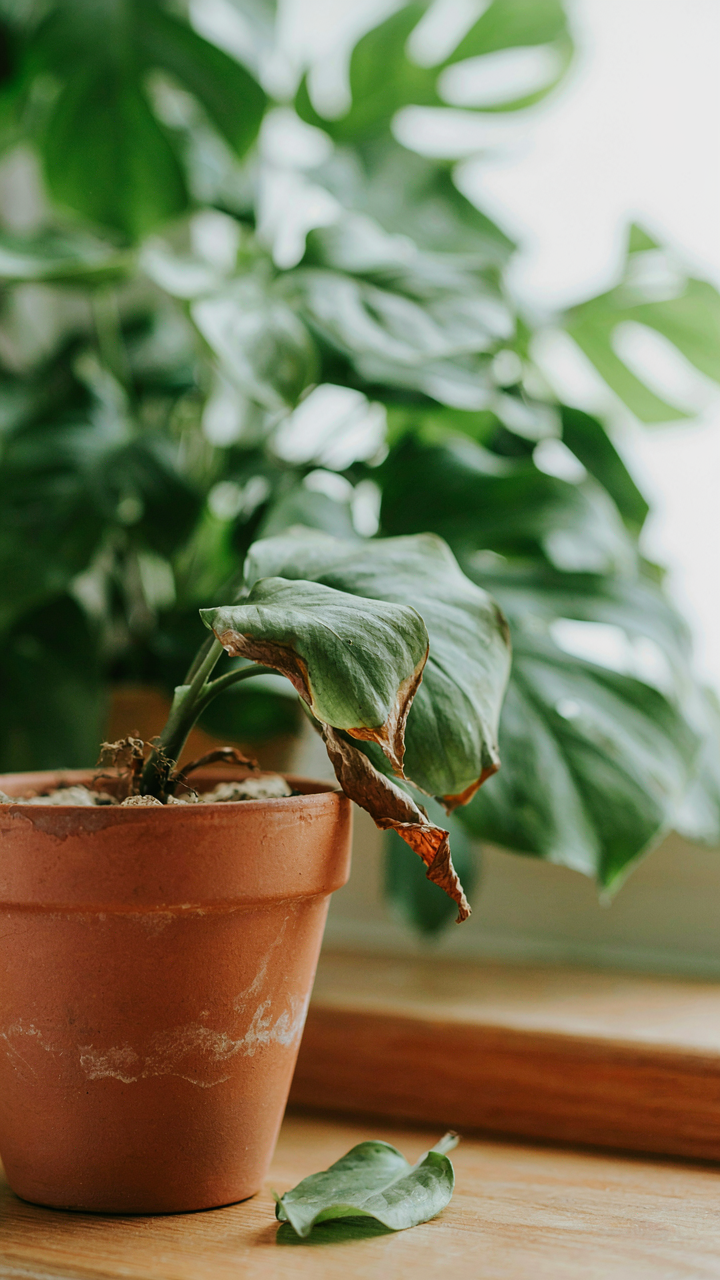
How Water Actually Moves Through Clay
You want terracotta because it looks intentional. You think the porous material solves problems. Here’s the mechanism: terracotta’s porosity works like capillary action in soil science, where water moves against gravity through tiny passages. The clay body contains microscopic pores that pull moisture outward and upward, creating constant evaporation from all sides, not just the top. This is real. It happens.
But evaporation rate depends on humidity, air movement, and soil moisture content. In dry climates with low humidity, terracotta becomes a liability. Plants in these pots dry out faster than their root systems can handle. In coastal or humid regions, that same porosity becomes neutral or even problematic because evaporation slows while root rot risk climbs. The material doesn’t solve drainage. It just accelerates water loss.
When Porosity Works Against Your Flowers
The standard advice says terracotta promotes root health through airflow. That’s incomplete. Terracotta accelerates drying cycles, which forces plants to work harder to find water between waterings. Shallow-rooted plants like petunias and calibrachoa suffer under this stress. Tender foliage combinations wilt faster, period.
Terracotta works only when your plant needs frequent moisture cycling and your climate supports it. Mediterranean herbs in hot, dry regions thrive. Shade-loving shade combinations in humid zones fail because the pot dries slower than the plant expects, creating stagnant moisture at the root zone. Test combinations by watering and checking soil moisture daily for two weeks. If the surface dries in under three days, terracotta matches your plant’s need. If it stays moist longer, switch to plastic or glazed ceramic to prevent stress.
Root Realities: Matching Plants To Pot Permeability

The Drainage Demand
You want your combinations to look intentional, not like you guessed. The real mechanism here is capillary action from soil science: terracotta wicks moisture upward through its porous walls, which means plants sensitive to root rot need fast drainage or they suffocate from below. Succulents, cacti, and Mediterranean herbs exploit this property. Terracotta’s porosity becomes an asset, not a liability, when you match it to species that evolved in arid conditions.
The setup is straightforward. Layer the pot bottom with broken terracotta shards or coarse gravel to one inch depth. Mix your soil with perlite or coarse sand at a 2:1 ratio. This combination forces water through the medium faster than standard potting soil allows. Check soil moisture daily in heat. If the top inch stays dry within two days of watering, your drainage is working correctly.
Moisture Tolerant Plants Need Different Logic
Ferns, hostas, and tropical foliage plants don’t survive fast drainage because their roots expect consistent humidity. The common advice that terracotta works for everything is incomplete. These plants need moisture retention, which terracotta’s permeability actively prevents. Use them in terracotta only if you’re willing to water more frequently or nest a plastic pot inside the terracotta vessel to trap moisture against the roots.
The nest method works because it isolates the plant from the pot’s evaporative pull. Place a slightly smaller plastic nursery pot inside the terracotta container, leaving a one-inch gap around the sides. Fill that gap with mulch or moss. This buffers moisture while keeping the terracotta visible. Water the inner pot normally. The outer terracotta stays decorative without forcing you into a daily watering schedule you’ll abandon by week three.
The Climate Calibration Protocol: Where You Live, What You Grow (Summer Flowers Garden)
Heat Stress Demands Specific Root Systems
You want your terracotta combinations to survive without constant fussing. That’s the real driver here. In horticulture, we call this “drought tolerance,” but the mechanism is simpler: plants with shallow, fibrous roots die in heat. Plants with deep taproots or succulent tissues survive it. Terracotta accelerates evaporation, which means hot climates need species that thrive when soil dries fast between waterings. This isn’t a limitation. It’s a filter that removes weak candidates.
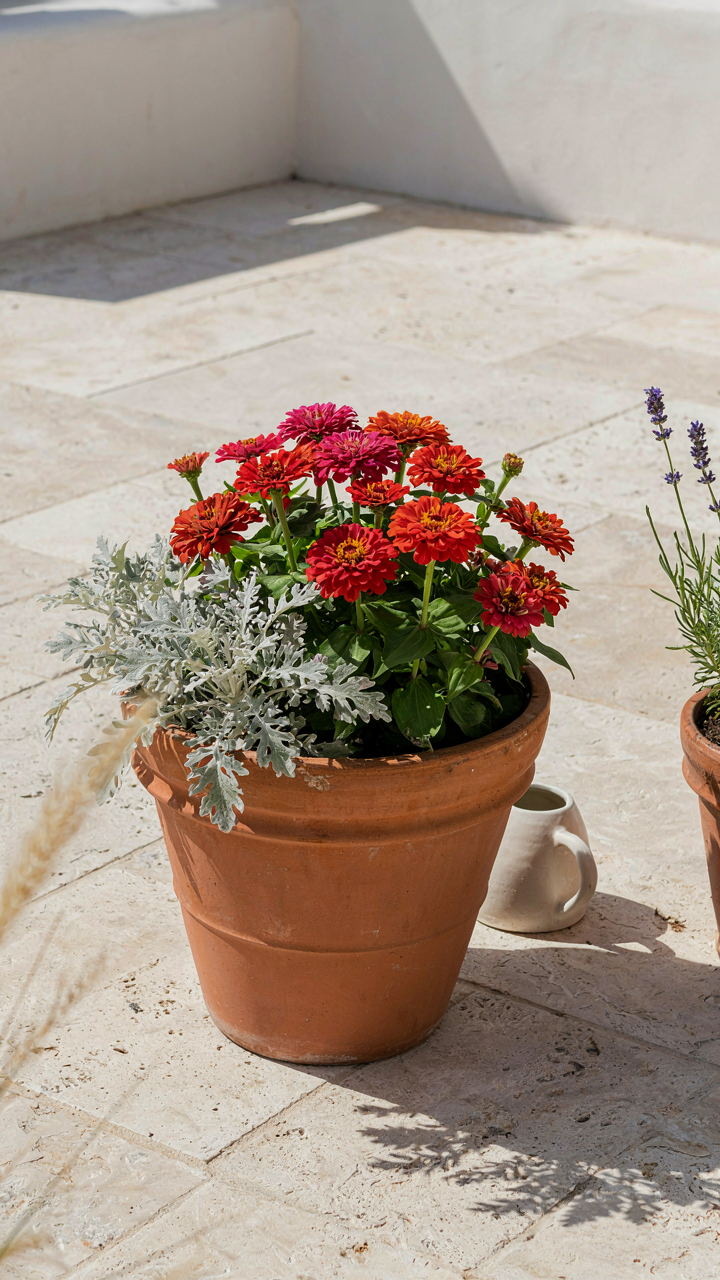
For hot zones, calibrate toward salvias, zinnias, portulaca, and desert marigold. These handle terracotta’s moisture loss without stress. Pair them with fine-textured foliage plants like dusty miller to regulate microclimate temperature around the root zone. The terracotta itself radiates heat back into the soil, so you’re stacking two heat sources. Your plant selection either accommodates this or fails. Water deeply but less frequently, allowing roots to search downward rather than clustering near the surface where surface evaporation kills them.
Shade Positioning Changes Everything
Cool climates face the opposite pressure: limited sun means limited photosynthesis. Standard advice says “put pots in full sun.” Wrong. In cooler zones, full sun exposure matters more, but placement inside a reflected heat zone amplifies effective warmth. Position terracotta pots against south-facing walls or near light-colored hardscaping that bounces radiation. The terracotta absorbs and radiates this heat back into the root system, extending the growing season for heat-loving annuals like cosmos, dahlias, and begonias that would otherwise stall.
Terracotta pot flower combinations perform best when you treat the pot itself as a thermal asset, not just a container. In cooler regions, prioritize tall pots over shallow ones. Deeper soil masses retain warmth longer and buffer temperature swings that trigger plant dormancy. Water in early morning so the pot has the full day to absorb and radiate heat. This single protocol change lets you grow tender varieties in zones where they’d normally fail.
Soil Science: The Unseen Foundation Of Flower Power

Customizing Potting Mixes
You want the soil to do the work so you don’t have to fuss with your containers every week. The real mechanism is this: terracotta pots drain fast because the clay is porous, so your soil mix must retain moisture longer than ground soil while still breathing. Generic potting soil doesn’t account for this trade-off.
Start with a base of coconut coir or peat moss at 40 percent. Add 30 percent perlite or pumice for aeration. Mix in 20 percent compost for nutrient density, then 10 percent worm castings. This ratio holds water without compacting, which terracotta demands. Adjust the coir-to-perlite split based on your climate: drier regions need more coir, humid regions need more perlite. Test by squeezing a handful after watering. It should clump slightly but crumble when poked.
Nutrient Retention In Porous Pots
Terracotta behaves like a semi-permeable membrane in biology, allowing water to move through its walls while nutrients stay behind. The consequence is salt accumulation on the pot’s surface and in the root zone, which kills fine feeder roots over time. Most people ignore this until their flowers decline halfway through the season.
Add mycorrhizal fungi to your potting mix at planting. These organisms form networks around roots and increase nutrient uptake efficiency by 40 percent, directly counteracting terracotta’s nutrient-leaching tendency. Top-dress containers every three weeks with a light compost layer instead of relying on synthetic fertilizers. Compost introduces slow-release nutrients while supporting soil biology. Flush terracotta pots with plain water once monthly to break the salt cycle and reset the root environment.
The Container Crop Rotation Method
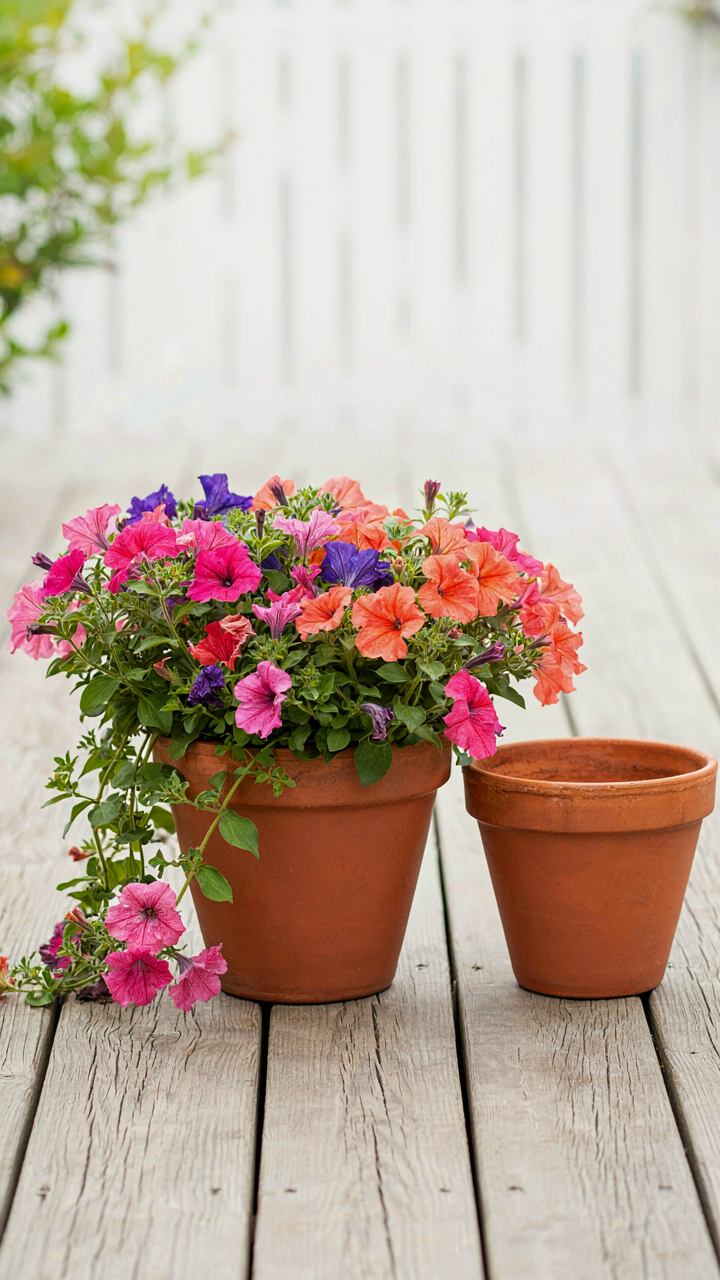
Swap Plants With The Seasons
You want your terracotta pots to look intentional year-round without buying new containers constantly. The mechanism is simple: terracotta’s thermal properties make it ideal for rotating plants based on what thrives in each season’s temperature swings. The pot itself becomes the constant. You change what lives inside it.
Spring and summer demand shallow-rooted, heat-tolerant plants. Fall and winter need cold-hardy perennials or dormant bulbs that won’t rot in wet soil. This isn’t decoration advice. It’s crop rotation applied to ornamental containers, borrowed directly from agricultural biology.
- Spring Annuals: Petunias, marigolds, and impatiens thrive in warming soil. Plant after last frost when terracotta soil temperature stabilizes above 60 degrees Fahrenheit.
- Summer Performers: Zinnias, salvias, and calibrachoa handle intense heat. Terracotta’s porosity prevents waterlogging despite daily watering in peak heat.
- Fall Transitions: Ornamental kale, pansies, and mums tolerate cooling nights. Switch in late August before summer heat stress weakens spring plantings.
- Winter Evergreens: Boxwood, hellebores, and sedums survive frozen soil. These require minimal water since terracotta doesn’t retain moisture in dormancy.
- Bulb Staging: Tulips and daffodils planted in autumn bloom through spring. Force bulbs indoors in terracotta pots starting December for controlled timing.
The rotation cycle prevents soil depletion and pest buildup in single containers. You reuse the same terracotta pot five to six times annually while keeping plant health high and visual interest constant.
Refresh Soil Without Replacing The Pot
Common advice says replace all soil yearly. That wastes money and ignores terracotta’s actual function. The pot regulates moisture and temperature. The soil needs strategic amendment, not replacement.
Remove the top 2 to 3 inches of spent soil each rotation cycle. This eliminates pest eggs and fungal spores living in the surface layer. Mix fresh compost into the remaining soil at a 1-to-3 ratio. This replenishes nutrients without the labor of complete extraction. For heavy feeders like petunias, add slow-release fertilizer pellets into the refreshed layer. The terracotta’s breathability means water drains predictably around amended soil, preventing the compaction that happens in plastic containers.
Deep cleaning happens once yearly, typically in late fall before winter planting. Empty the entire pot. Scrub the interior walls with a stiff brush to remove salt deposits and algae buildup. Rinse thoroughly. This takes fifteen minutes per pot and extends terracotta life indefinitely. Reuse the old soil in garden beds or compost piles rather than discarding it. When you refresh soil strategically between rotations instead of replacing it completely, you reduce material cost by sixty percent while maintaining better drainage than fresh potting mix alone provides.
Microclimate Mastery: Balcony To Backyard
Where Your Plants Actually Get Light
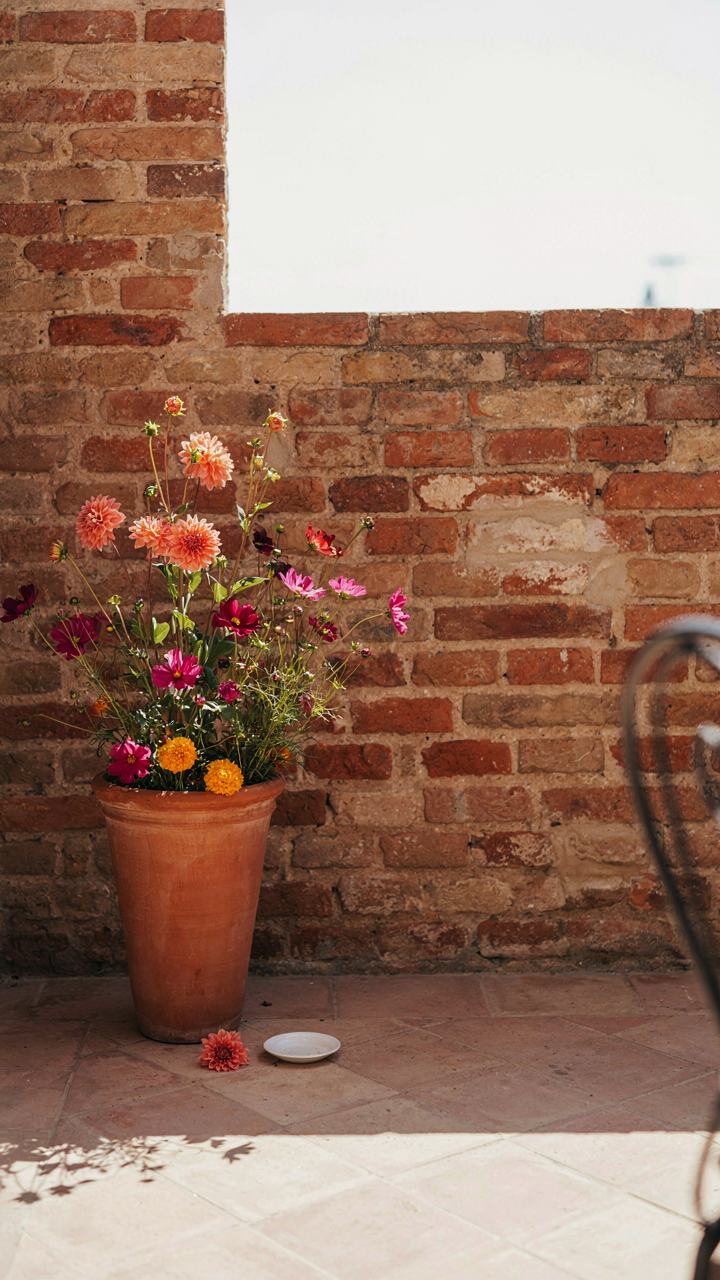
You want your combinations to look intentional, not like you guessed. The real mechanism here is that terracotta absorbs and radiates heat, which means your soil temperature depends entirely on how many direct hours hit the pot’s surface, not just the plants. Most people ignore this and wonder why their shade-tolerant flowers wilt in afternoon heat.
Map your space using one rule: track where the sun hits the pot itself between 9 AM and 4 PM for one week. North-facing balconies get 2-4 diffuse hours. East-facing gets 4-6 hard morning hours then shade. West-facing gets brutal 4-6 afternoon hours that cook terracotta. South-facing gets 6-8 hours year-round. Document what you see, then match flower needs to that exact window, not to vague ideas about “partial shade.”
Blocking Wind Before It Breaks Stems
Wind doesn’t just bend flowers; it accelerates water loss from soil and leaves, which terracotta amplifies because it’s porous and already drying fast. Think of exposure like physics: resistance determines outcome. A pot on a 10th-floor balcony in open air faces completely different stress than one tucked in a courtyard corner.
Identify wind patterns by observing dust, leaf movement, and which direction feels harsh when you stand outside. Position tall or delicate flowers behind structures, shorter anchors toward wind exposure. Terracotta pots themselves provide minimal wind break, so your structure placement is the actual defense. Place combinations on the lee side of walls, railings, or existing plantings. This single choice determines whether flowers stay upright or snap off mid-season.
The “Survival Of The Fittest” Pairing Principle (Flower Pot Inspo Outdoor)

When Plants Compete Instead Of Collaborate
You want a pot that looks intentional, not like you just grabbed whatever was on sale. Here’s what nobody admits: you’re actually terrified of it looking chaotic. The mechanism is borrowed from evolutionary biology. In nature, species either compete for the same resources or fill different niches. In a terracotta pot, root competition becomes your enemy. Two plants with identical water needs and shallow root systems will strangle each other’s growth. One dominates. One dies. Your pot becomes a graveyard disguised as design.
The real work happens before you plant anything. Map the root depth of each species you’re considering. Pair shallow-rooted annuals like lobelia or alyssum with deeper-rooted plants like dracaena or sweet potato vine. When plants occupy different vertical zones in soil, they stop fighting for moisture and nutrients. This isn’t aesthetic advice. It’s structural biology applied to container gardening. Terracotta’s porous walls compound competition stress by drying soil faster than plastic, so pairing matters more here than anywhere else.
Symbiosis Works When Species Separate Demands
Most advice about “complementary” plantings is vague nonsense that avoids the actual principle. Stop thinking about colors matching. Start thinking about water cycles and nutrient consumption rates. Two plants in one pot thrive together only when they want different things at different times. Vinca and sweet potato vine pair well because vinca tolerates drier conditions between waterings. Sweet potato vine pulls water from deeper soil. They exist on different schedules.
Test this deliberately: pair a drought-tolerant succulent with a moderate-moisture plant like begonia only if the succulent sits higher in the pot where soil dries first. Terracotta accelerates this separation by design. The edges of a terracotta pot dry faster than the center, creating microclimates you can engineer. Place your drought-tolerant specimen at the rim. Position your moderate-moisture plant toward the center. You’ve built a system where neither plant’s needs conflict. Execution stops being guesswork and becomes protocol.
Strategic Plant Selection: Beyond The Pink Geranium

Plants That Survive Terracotta’s Water Tax
You want the arrangement to look effortless. That’s the real reason you’re reading this. The mechanism is simple: terracotta breathes. Its porous walls evaporate water from soil faster than glazed or plastic containers. Plants adapted to water scarcity thrive here. Plants that need constant moisture die. Stop fighting the material’s nature by choosing thirsty species.
Mediterranean flora evolved in terracotta’s exact environment. Santorini didn’t invent the pot—the climate invented the need. Lavender, rosemary, and sedums perform because their root systems tolerate dry cycles. Calibrachoa and diascia handle the evaporation without wilting daily. Select species with waxy or silver foliage, which signals drought tolerance. This isn’t preference. It’s survival matching.
Match The Plant To The Pot’s Strength
Terracotta’s porosity is an asset in plant biology. The soil breathes at the same rate the walls do, creating a balanced gas exchange system that prevents root rot. You pair fast-draining soil with fast-evaporating walls. Many gardeners reverse this logic and use dense soil, then wonder why their combinations fail.
- Shallow-rooted combinations: Echeveria, sempervivum, and sedum require minimal depth. Terracotta’s warmth in summer accelerates growth in these compact species without stress.
- Medium-depth plantings: Trailing petunias and nemesia use terracotta’s natural drainage to prevent waterlogging during rain cycles common in Mediterranean climates.
- Vertical water movement: Terracotta allows capillary action to pull moisture upward through soil layers, benefiting plants in the pot’s center more than those at the edge.
- Mineral absorption: Terracotta’s porous surface mineralizes over seasons, creating a subtle nutrient reserve that complements sparse watering schedules typical of drought-tolerant combinations.
- Temperature regulation: Terracotta walls moderate soil temperature swings, keeping roots cooler in peak heat than plastic but warmer than stone containers in cooler months.
Build your combination around what terracotta actually does. Don’t add bark mulch to slow evaporation or use heavy amended soil. Use fast-draining cactus mix. Space plants farther apart than you would in other containers. Water less frequently, deeper. The pot does half the work if you stop fighting it.
The Minimalist Maintenance Mandate

Terracotta’s Water Physics Demand
You want combinations that look effortless because you’re afraid high-maintenance arrangements will expose you as a dilettante. Here’s the mechanism: terracotta is porous. It wicks moisture from soil to air constantly, meaning your watering cadence isn’t about plant preference alone—it’s about material physics. A terracotta pot dries faster than plastic or ceramic by 30 to 40 percent, which forces a specific watering protocol.
Water when the top inch of soil feels dry to touch. In summer, this means every two to three days for most combinations. In winter, stretch to five to seven days. The real move is checking soil directly instead of following a calendar. Terracotta combinations fail because people establish a fixed schedule, then conditions change and nobody adjusts. Temperature swings, humidity levels, pot size, and soil composition all shift the drying rate. Stick your finger in the soil, make a decision based on what you feel, repeat.
Feeding On Intervals That Matter
The common advice says fertilize monthly during growing season. That’s incomplete. Most terracotta combinations contain mixed perennials and annuals with different nutrient demands, and terracotta’s porous structure leaches nutrients faster than other materials through regular watering. Use a balanced, water-soluble fertilizer at half strength every ten to fourteen days during peak growth months, tapering to once monthly in fall. Nutrient deficiency shows up as faded foliage and sparse blooms before you notice the problem is real.
Fertilizer frequency tracks directly to watering frequency—the more you water, the more nutrients escape. High-drainage terracotta combinations need feeding more often than the same flowers in heavy soil or glazed pots. Apply fertilizer only to moist soil, never dry soil. This prevents salt burn on roots and ensures even distribution through the root zone. Stop feeding entirely once growth slows in late fall, then resume in early spring when new shoots emerge.
Designing For Decay: Embracing Patina, Not Perfection

The Aesthetic Value Of Aging Terracotta
You want your pots to look intentional, not neglected, so you’re drawn to this section hoping patina covers your mistakes. But here’s the mechanism: terracotta ages through mineral oxidation and salt deposits, the same electrochemical process that ruins metal. The difference is timing. Terracotta’s porous structure traps minerals from water and soil, creating a weathered surface that reads as intentional curation instead of abandonment. This takes seasons, not weeks.
The patina communicates stability. Collectors recognize aged terracotta as proof of sustained care through multiple growing cycles. Mediterranean gardens thrive on this visual language because the pots themselves become artifacts of time. You don’t earn patina by neglect. You earn it by consistent watering, exposure, and seasonal cycles that deposit minerals unevenly across the pot’s surface. The result signals that your combination thrives, not that you forgot about it.
When To Clean, When To Leave Alone
The standard advice says clean your pots regularly to keep them looking fresh. That’s incomplete and misses the point entirely. Cleaning removes the patina layer that actually increases the pot’s value and the planting’s perceived longevity. You clean only when mineral deposits block drainage, when white salt crusts threaten root health, or when algae growth indicates stagnant conditions. Otherwise, you leave the surface untouched.
A light brush to remove loose debris keeps pots functional without destroying the aged surface. If mineral buildup accumulates at the soil line, scrub only that zone with a soft brush and diluted white vinegar. Do this once per season, maximum. Heavy pressure washing or aggressive cleaning erases years of character development and signals the opposite of what you intend. Protect the patina as part of your terracotta pot flower combination strategy, not as evidence of poor maintenance.
Your Biggest Obstacle Isn’t Design Ignorance, But The Refusal To See A Pot As A Micro-ecosystem, Not A Canvas
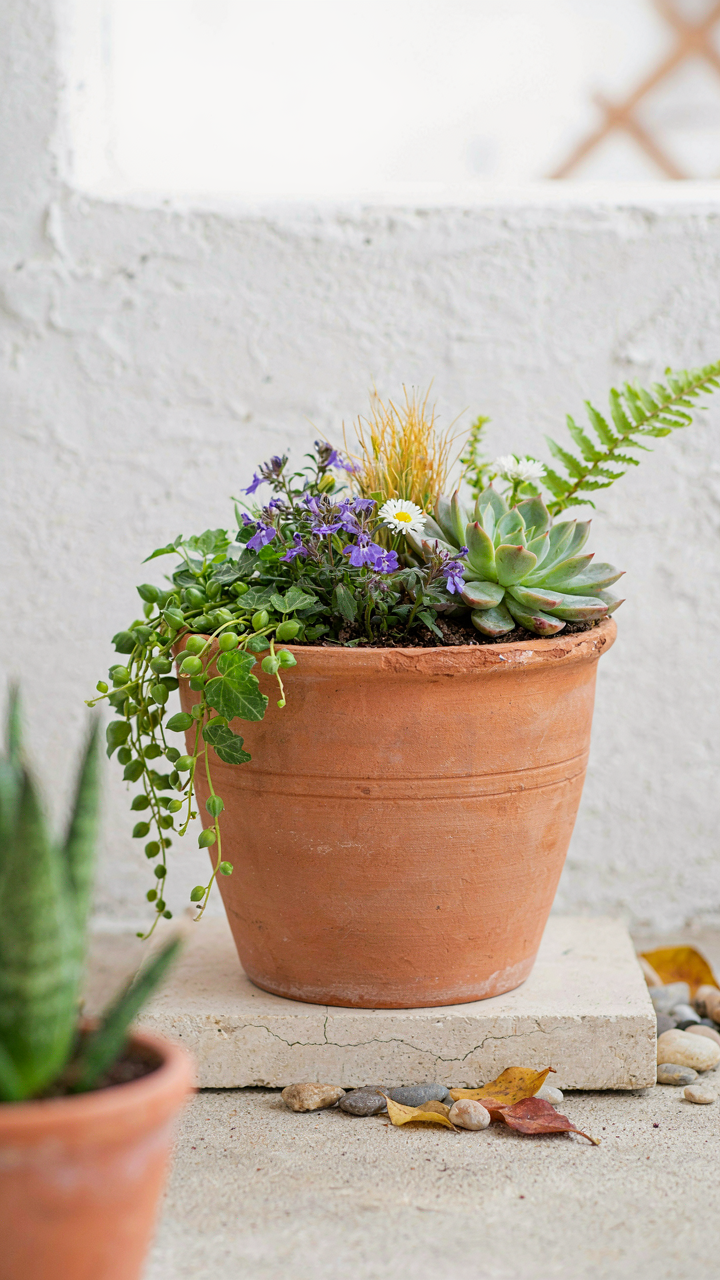
Most people treat terracotta pots like blank walls waiting for decoration. They don’t. A pot is a living system where soil, roots, water, and air compete for space. You either design with this reality or watch your combinations wilt. Stop asking what looks good together. Start asking what thrives together. Pick one combination that matches your climate and soil type, plant it today, and observe what actually survives. The plants that live will teach you more than any article ever could. Your eye for design means nothing if everything dies by August.



