

Beyond The Buzz: The Unspoken Truth Of Terracotta Pots Garden

Where Terracotta Actually Came From
You’re reading this because you want to feel like you’re ahead of some design curve, but the real mechanism is simpler: terracotta works, and nothing you buy today will work better. Potters in the Mediterranean shaped clay into vessels over three thousand years ago because water management mattered more than aesthetics. Clay fired at low temperatures created porous walls that let roots breathe and soil dry predictably. This wasn’t a design choice. It was physics solving a problem.
The Etruscans and Romans refined these pots into the forms we recognize now. Amphoras, urns, shallow bowls, drainage vessels with feet. Each shape solved a specific growing condition or transport need. The form followed the function so precisely that design stayed static for centuries. Modern terracotta still uses nearly identical methods because the problem hasn’t changed. You bury a seed in soil. You need water to move through clay walls. Everything else is decoration.
Why Terracotta Outlasts Every Material Trend
Every gardening trend cycle produces the same pattern: plastics promise durability, composites promise durability, resin promises durability. None of them age well. Terracotta cracks. Terracotta chips. Terracotta doesn’t promise immortality, and that’s exactly why it survives. Think in terms of industrial resilience: a system designed to fail predictably lasts longer than a system designed never to fail. When terracotta breaks, you replace one pot. When plastic degrades, you’ve embedded toxins in soil and have no clear replacement path.
Terracotta’s persistence isn’t romantic nostalgia. Nurseries still use terracotta because the material tells you immediately when something is wrong. Cracks signal salt buildup. Algae growth signals moisture patterns. Color shifts tell you about drainage changes. You can’t hide problems in terracotta the way plastic lets you ignore them until collapse. The arrangement trend that matters isn’t the aesthetic arrangement. It’s the arrangement of pots in positions where you can actually see what your plants need.
The Myth Of “New”: How Trends Recycle Mediocrity

Spotting Manufactured Novelty Vs. Genuine Innovation
You want to feel ahead of the curve without admitting you’re actually afraid of being invisible. That’s the real engine behind trend chasing. The mechanism is borrowed from evolutionary biology: organisms adapt to survive in their environment, and social environments reward novelty signals. In terracotta pot arrangements, this plays out as the constant reshuffling of the same variables—pot height, clustering patterns, plant placement—marketed as breakthrough design when it’s just recombination. A tall arrangement with trailing ivy becomes “statement height.” A tripled grouping gets called “sculptural layering.” The variables don’t change. The naming does.
Real innovation in terracotta arrangements solves a friction point nobody articulated. The Arts and Crafts movement proved this: potters didn’t invent hand-thrown clay vessels; they reframed handwork as resistance to industrial production. That solved a real problem: people felt disconnected from their objects. Genuine trends in terracotta address something concrete—drainage efficiency, space optimization in small rooms, seasonal rotation systems—not aesthetic repackaging. Manufactured trends distract you from asking whether an arrangement actually functions better or just looks different from last year.
The Hidden Cost Of Chasing Fleeting Styles
Trend hopping bleeds money and attention in ways designers don’t admit. Every style shift demands new pots, new plants, new spatial logic. You buy into a “minimalist pod arrangement” aesthetic, invest in three matching cylindrical vessels, commit to the spare look for a season. Then the trend engine pivots to “wild abundance” or “Victorian eclecticism,” and your investment becomes dated overnight. The real cost isn’t the pots. It’s the cognitive load of constant reorientation and the reinforcement of consumer anxiety that your current setup is already stale.
A stable arrangement system requires you to stop accepting external validation cycles. Build arrangements around principles that don’t expire: plant health requirements, light availability in your actual space, the specific humidity in your home, how you actually move through the room. These factors remain constant. Trends don’t. When you anchor arrangements to function instead of fashion, you stop bleeding resources into replacements and stop mentally aging out your work every eighteen months. The protocol is simple: identify what works in your specific environment, then iterate on that system rather than abandoning it for the next signal.
Terracotta Pot Planting Ideas: The Biology Of The Vessel

Why Porous Clay Works For Roots
You want terracotta because it signals taste and permanence, but that’s not why you should use it. The real mechanism is gas exchange. Terracotta operates like a lung for soil. The clay body is porous enough to allow oxygen and carbon dioxide to move through the walls, not just at the drainage hole. Roots don’t just need water. They need oxygen to respire and convert nutrients into usable form.
Compare this to plastic or glazed ceramic. Both trap soil atmosphere inside the pot, creating anaerobic conditions where roots suffocate and pathogens multiply. Terracotta’s capillary structure pulls air directly into the root zone through the pot walls. This is basic soil biology, not marketing. The porous walls do the work that expensive potting mixes and fertilizer schedules try to compensate for when you use the wrong vessel.
Evaporation Creates The Temperature Buffer
Everyone says terracotta dries fast. That’s incomplete. Terracotta dries fast because water evaporates through the walls, and that evaporation pulls heat from the soil. This is the cooling mechanism that keeps roots in their ideal temperature range during heat stress. Physics calls this latent heat of evaporation. In terracotta arrangements, it means your soil stays 5 to 15 degrees cooler than it would in an insulated pot on the same hot day.
Dark soil in a black plastic pot bakes. The same soil in terracotta stays regulated. During winter or cool nights, the porous walls allow soil moisture to equilibrate with ambient humidity instead of trapping condensation that rots roots. You manage this by matching pot size to plant type and watering frequency to season, not by hoping your plant tolerates whatever temperature swings the vessel creates. The vessel is the control system.
The Mediterranean Garden Blueprint: Design Beyond Decoration

Thermal Regulation Through Clay Structure
You want your arrangement to look intentional, not thrown together. That requires understanding how terracotta actually works in dry climates. Borrowing from thermodynamics: terracotta functions as a thermal mass. Clay absorbs heat during the day and releases it slowly at night, creating a microclimate that buffers soil temperature swings. This isn’t decoration. It’s a physical property you leverage by grouping pots strategically to amplify the effect.
The Mediterranean region didn’t adopt terracotta because it looked good. Gardeners used it because clay’s porosity allows soil to breathe while its mass stabilizes moisture and temperature. When you arrange multiple pots close together without touching, you create air pockets that trap warm air. A single isolated pot loses this advantage entirely. Cluster your arrangement so pots sit within two to three inches of each other, allowing airflow while maintaining thermal coupling.
Matching Plants To Clay’s Water Behavior
Everyone says plant what grows in your zone. That’s incomplete advice. Terracotta drains faster than plastic or ceramic, so your plant selection must account for that water loss. Plants adapted to arid Mediterranean regions like lavender, rosemary, and santolina have shallow, fibrous roots that tolerate rapid drainage and heat stress. Plants with deep taproots or moisture-dependent systems fail in terracotta arrangements because the pot dries too quickly between waterings.
The mechanism is root architecture meeting clay porosity. Terracotta’s breathability means less water stress on roots but more frequent watering requirements. Select specimens with evolved drought tolerance, not just ones that survive drought. Olive trees, pittosporum, and prostrate sedums thrive because their root systems evolved to extract water efficiently from well-draining soil. Place moisture-demanding plants like ferns or begonias in shadier spots where clay dries slower, or don’t use them at all in terracotta.
Container Garden Design: The Permaculture Principle For Pots

Stacking Functions Into Tight Spaces
You want your terracotta arrangement to look intentional without requiring constant maintenance. That’s the real appeal. The mechanism is borrowed from permaculture: stacking functions. In ecology, this means one organism serves multiple roles in the system. In a pot arrangement, it means each plant pulls double duty—one stabilizes soil, another fixes nitrogen, another attracts pollinators while creating visual depth.
Most people treat container plants as standalone decorations. Wrong. A terracotta pot is a closed system where every plant either contributes to the whole or competes for resources. Stack plants by function first, aesthetics second. A trailing succulent stabilizes substrate and adds visual weight. A upright grass feeds pollinators and creates structure. A ground cover suppresses evaporation and blocks weeds. Design the arrangement around what each plant does, not what it looks like alone.
Rooting Arrangement For Cascading Benefits
Soil depth and root competition matter more than most arrangements acknowledge. Terracotta itself adds a layer—it breathes, releases minerals, and creates micro-climates through its porous walls. Layer plants by root depth: deep-rooting specimens at the center, mid-range around the perimeter, shallow fibrous roots at the edges. This prevents competition and maximizes nutrient extraction from the substrate.
The second layer is temporal. Plant spring bloomers near the surface where they catch early light and heat. Place heat-tolerant plants deeper or toward the pot’s interior where soil temperature stays cooler. Drought-tolerant plants go on the rim; water-demanding ones near the center where moisture pools. Each layer compounds the previous one’s survival advantage. The result is an arrangement that requires less intervention because the plants are optimized for their exact microhabitat within the pot.
Garden Pot Inspiration: The Anti Trend Rule Of Three

How Weight Moves Your Eye
You want your arrangement to look intentional instead of random. That’s the real fear underneath. The mechanism is visual weight: the perceived mass of an object determines where your eye lands first and how long it stays. In terracotta arrangements, weight comes from pot size, color intensity, and plant density, not actual mass. A large dark pot with trailing vegetation pulls attention harder than a small pale pot with sparse foliage.
The Rule of Three works because it forces asymmetry. Two pots feel unresolved. Four pots blur into a collection. Three pots create a hierarchy: a dominant focal point, a secondary weight, and a tertiary accent. Place your heaviest pot slightly off-center. The eye lands there, feels satisfied, then moves to the next two pots in sequence. This is not decorating advice. This is how human perception processes visual information.
Structure Over Symmetry
Physics teaches us about equilibrium and counterbalance. In arrangement design, counterbalance means offsetting visual weight across space, not mirroring it. A large pot on the left needs two smaller pots on the right to feel stable, not one medium pot dead center. The eye reads this as intentional composition rather than accident.
Arrange pots in a triangle formation, with the largest pot as your base point. The second pot goes roughly two-thirds of the way toward the opposite corner. The third pot fills the remaining space. This isn’t arbitrary. Triangular composition in terracotta works because it creates tension without looking accidental. Shift one pot slightly forward or backward to break the flatness. The depth change adds dimension and signals control.
Small Garden Design: Maximizing Impact In Minimal Spaces
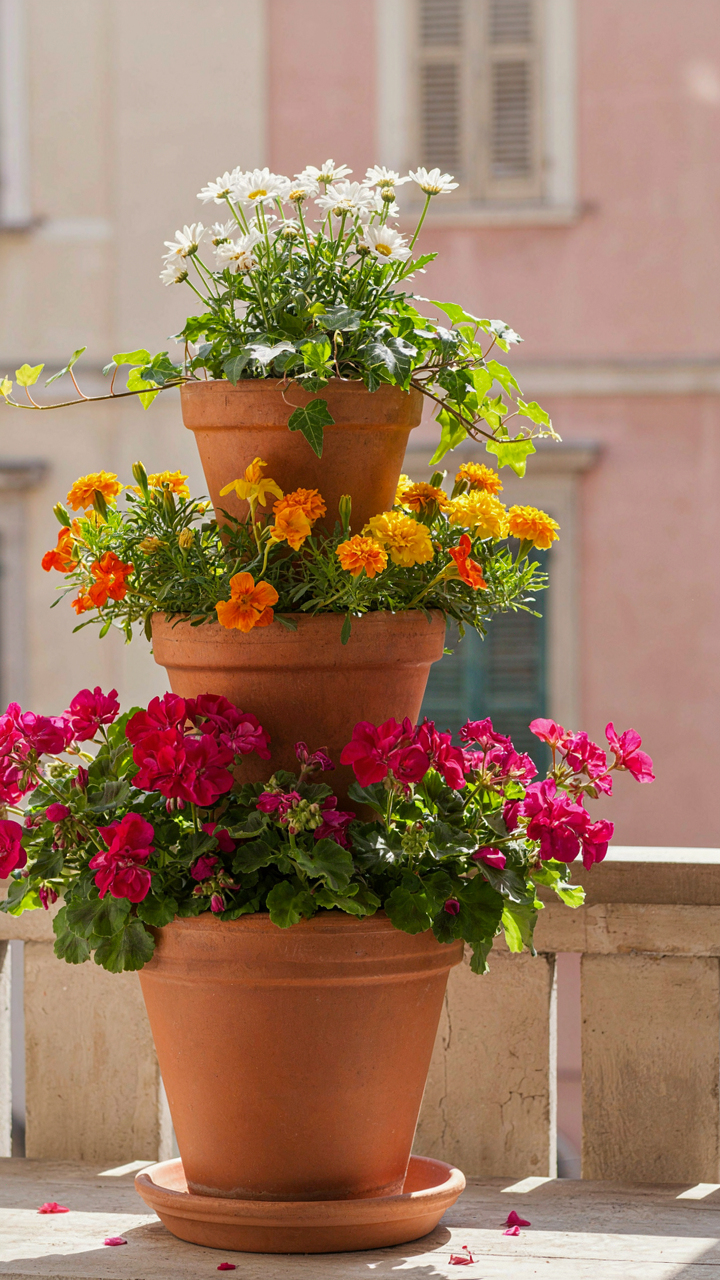
Stack Height, Not Square Footage
You want people to think you have more space than you do. That’s the real reason you’re reading this. Here’s the mechanism: terracotta pot arrangements follow the same principle as military fortification—vertical stacking creates defensible territory without lateral expansion. When you arrange pots in ascending heights rather than spreading them across ground level, you multiply your usable garden footprint without buying more land. The tiered effect compresses depth perception and makes confined areas feel layered and intentional rather than cramped.
- Three-tier pyramid stacks: Place largest pots at base, medium in middle, smallest on top. This distributes visual weight and prevents toppling while maximizing plant density in tight corners.
- Staggered wall arrangements: Mount terracotta pots directly on walls at varying heights using secured brackets. This eliminates ground footprint entirely while creating a living tapestry effect.
- Cascading shelf systems: Use wooden or metal shelving at 12, 24, and 36 inches high. Terracotta absorbs and radiates stored heat from shelving structures, benefiting root systems.
- Leaning tower clusters: Angle pots slightly outward in grouped arrangements. The offset creates visual rhythm and allows air circulation between vessels that tight stacking blocks.
- Windowsill-to-trellis progression: Graduate pot sizes from smallest at window ledge to largest at ground base. This draws the eye upward and makes narrow spaces appear taller.
Stacking terracotta requires understanding weight distribution and drainage paths. Larger base pots must remain stable under top-loaded arrangements, and water from upper tiers must drain away from lower vessels to prevent root rot. Position your stacks near edges rather than center pathways so you preserve walking space while capturing vertical real estate.
Light Paths And Airflow Geometry
Forget the generic “put shade plants in shade” advice. That misses the actual problem: terracotta pots create microenvironments that shift throughout the day. A pot receiving morning eastern exposure and afternoon shadow operates in two separate light zones. You need to map this, not guess it. Place arrangements so morning sun hits the east side of your terracotta cluster while afternoon heat targets west-facing surfaces. This prevents thermal shock on the soil inside and extends growing seasons in transitional spaces.
Airflow matters equally. Terracotta breathes—it’s porous—but only when air actually moves around it. Cluster pots too densely and you create stagnant pockets where moisture accumulates and fungal issues breed. Space arrangements at least three inches apart if they’re stacked, or six inches if they’re ground-level clusters. Position your densest arrangements perpendicular to prevailing wind direction so air funnels through rather than around your garden. This single tactical choice eliminates most common pest and disease problems before they start.
Garden Containers: The Longevity Protocol For Your Investment

Proper Curing And Sealing Techniques
You want your pots to last because replacing them costs money and time. The real mechanism is porosity. Terracotta is fired clay with capillaries running through it like highways for water and salt. Uncured pots absorb moisture from soil, then freeze and crack in cold cycles. Curing seals those highways.
New terracotta needs to dry fully before use—typically two to four weeks in dry conditions. This lets water evaporate from the clay body itself. Then apply a breathable sealer, not a plastic coat. Breathable sealers let vapor escape while blocking water penetration. One coat covers the exterior and the interior rim where soil contact happens. This stops salt accumulation and frost damage at the source.
Winter Storage And Freeze Protection
Winterizing terracotta is an engineering problem, not a seasonal habit.
- Empty soil completely: Damp soil inside pots freezes, expands, and splits walls from within. Remove all growing medium before temperatures drop.
- Elevate containers off ground: Standing pots directly on frozen earth traps moisture underneath. Use pot feet or concrete blocks to create airflow and drainage.
- Stack with protection between layers: If storing stacked pots, place cardboard or cloth between each pot to absorb condensation and prevent water pooling in crevices.
- Apply hydrophobic sealant in fall: A second coat of breathable sealer before winter hardens the surface against repeated freeze-thaw cycles that crack unsealed clay.
- Store in unheated spaces: Heated garages create temperature swings that damage terracotta faster than consistent cold. Unheated sheds or covered outdoor areas work better.
Move pots to covered locations before the first hard freeze. Group them together to reduce air exposure on all sides. Check stored arrangements monthly for moisture accumulation, especially in lower pots where water pools. Terracotta that survives winters intact outlasts three seasons of poor storage.
Have Inspiration: Cultivating Your Unique Aesthetic

Nature Is Your Real Reference Point
You’re looking for permission to have taste without looking like you’re trying. That’s the real mechanism at work here. Nature doesn’t arrange terracotta the way algorithm feeds do. Go outside and observe how clay vessels sit in actual gardens, how weathering creates patina, how light hits grouped pots at different times of day. Instagram flattens these things into two-dimensional images that strip away texture and shadow. Real observation requires you to notice what doesn’t photograph well.
The distinction matters because terracotta has physical properties that change with time and light. Photographs capture a moment. Living arrangement captures a process. Spend time in botanical gardens, nurseries, and old estate properties where pots have aged naturally. Watch how soil staining develops on vessel walls. Notice which arrangements survive seasons and which get rearranged constantly. This teaches you what works across time, not just what looks good in a single shot.
Building An Eye For What Actually Works
Everyone says to “follow your instincts.” That’s incomplete advice and it wastes your time. Your instincts are trained by what you’ve seen repeatedly. The mechanism here is signal versus noise. Most Instagram terracotta content is noise because it optimizes for engagement, not durability or function. Real beauty in pot arrangements comes from understanding proportion, drainage implications, and material compatibility.
Develop your eye by studying how professional nurseries and heritage gardens arrange terracotta. Notice the reasoning behind pot size progression, spacing that prevents root disease, and clustering that creates visual weight without looking cluttered. Sketch arrangements you encounter. Document how they weather over seasons. This builds a reference library in your mind that replaces generic inspiration with specific knowledge. Your aesthetic becomes an expression of understanding, not imitation.
The Unignorable Imperative: Your Garden, Your Rules

Stop Seeking Permission From Design Trends
You’re reading this because you want confirmation that what you already want to do is acceptable. The mechanism is simple: you’ve absorbed the rule that trends validate choices, so you’re outsourcing your judgment to what’s popular. But terracotta pot arrangements aren’t dictated by Instagram cycles or design magazines. They’re defined by the specific conditions of your space, the plants you actually grow, and the maintenance you’ll actually do. The trend isn’t the authority. Your constraints are.
Terracotta itself is the antithesis of trend. The material has survived five thousand years because it functions, not because it photographs well. Clay breathes. It regulates moisture. It’s cheap enough to experiment with and heavy enough to stay put. This is physics, not fashion. When you stop hunting for permission in trend lists, you start noticing what terracotta arrangements actually solve: drainage problems, root rot patterns, plant spacing that prevents disease. Those are the real rules. Everything else is decoration.
The Confidence That Comes From Repetition
The common advice says find inspiration and adapt it to your space. That’s incomplete. Confidence in terracotta arrangements comes from building the same arrangement multiple times until you understand why it works or fails. Repetition reveals the mechanism. You place three pots in a triangle formation, observe how water pools in the corner, see which plant gets too much shade, and adjust. The second time, you get it right. The third time, you own it.
This isn’t about conforming to what works for others. It’s about running your own experiments until your hands know the answer before your brain does. Take a specific arrangement type you’re drawn to. Build it the same way five times across different seasons. Document what changes. That’s how you move from copying trends to making decisions. When someone asks why you arranged your pots that way, you won’t reference an article. You’ll reference what you’ve tested and proven in your own garden.
The Only Trend Worth Following: Mastering The Timeless Dance Between Plant And Pot
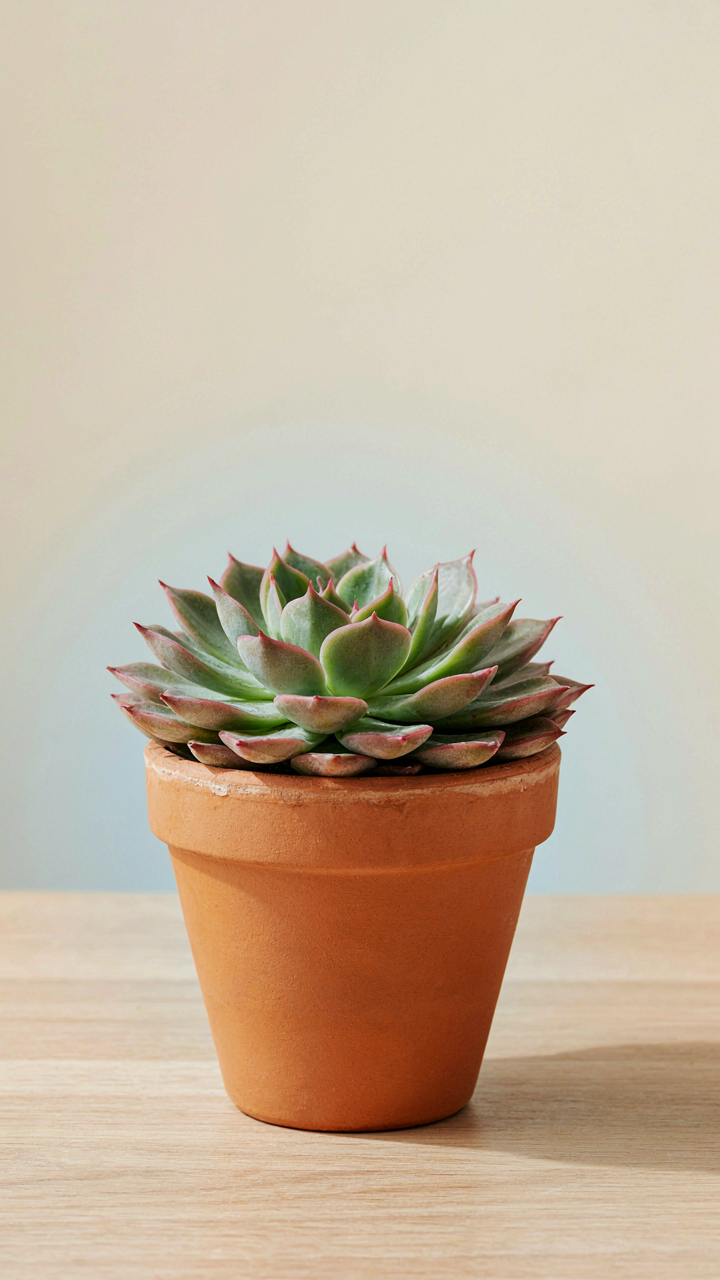
Stop chasing trends. Every terracotta pot arrangement that actually moves people breaks the same rule: it respects the plant first, the aesthetics second. The shift you need isn’t about what’s popular. It’s about seeing your pot as a collaborator, not a stage. Open your phone right now. Take a photo of one plant in your home. Study how light hits it. That’s your starting point. The best arrangement isn’t what Instagram validates. It’s what makes you want to keep looking.



