

The Illusion Of Simple: Why Your First Terracotta Pot Herb Garden Failed

You’re Chasing The Wrong Problem
You want to believe a terracotta pot herb garden is simple because admitting it requires actual decisions feels like failure. Here’s the mechanism: terracotta is porous. Water evaporates through the walls constantly, not just the soil surface. Most people water by feel or schedule, which works for ceramic or plastic. Terracotta demands a different protocol. You either adjust watering frequency or you watch basil wilt while mint drowns in the same setup.
The consensus advice says “just add drainage holes and you’re done.” This is incomplete. Drainage holes matter, but they don’t address the evaporation rate terracotta creates. A pot sitting in morning sun loses moisture three times faster than an identical pot made of plastic holding the same soil. You need to know your specific pot’s water loss before you plant anything, or you’re running blind.
Design Precedes Planting
The myth of “easy” hides a basic truth: container gardening is applied physics, not intuition. You’re managing a closed system where soil composition, pot material, drainage, sunlight exposure, and watering intervals are variables that compound. Get one wrong and the others fail downstream.
Most people grab whatever pot and soil they find, then blame the herbs when nothing thrives. The real work happens before planting: matching pot size to the herb’s root depth, selecting soil that drains but retains enough moisture for terracotta’s evaporation rate, positioning pots where light exposure matches the herb’s needs. Terracotta pots need intentional placement because they dry faster in direct sun and slower in shade. Your watering schedule must account for this. Start with one pot, one herb, and track daily moisture for two weeks. That data point becomes your baseline for every pot you add.
Beyond Aesthetics: Terracotta Pot Herb Garden As A Micro Ecosystem

The Soil Is Breathing Whether You Know It Or Not
You want to believe dirt is just inert medium you fill and forget. It’s not. Soil is a living organism. Bacteria, fungi, and microbes colonize every grain. They break down organic matter, release nutrients, and create the chemical signals your herbs actually feed on. Dead soil grows dead plants. You’re not growing herbs in terracotta pots. You’re culturing a micro-biome that happens to produce basil.
Terracotta’s porous structure accelerates this process. Water passes through the walls, oxygen reaches the root zone faster than in plastic, and microbial populations establish quicker. This is why terracotta pots outperform sealed containers over time. The medium isn’t passive. It’s the engine. Feed it with compost or aged organic matter, and the biology does the work your hands can’t. Starve it with pure potting mix alone, and your herbs plateau regardless of how much sun they get.
The Three Forces That Actually Matter
Physics governs a terracotta pot herb garden the way it governs any closed system. Energy input, mass balance, and equilibrium determine output. Water moves through the soil by capillary action and gravity. Light drives photosynthesis at specific wavelengths. Air diffuses oxygen to roots and carbon dioxide to leaves. These three don’t work independently. They intersect. Too much water and light suffocates the roots. Too little air and the soil becomes anaerobic.
Terracotta mediates all three. Its porosity lets water drain faster than plastic, preventing root rot. Its color reflects some light while absorbing heat, moderating temperature swings. Its breathability allows gas exchange that sealed containers block. Most advice says water when the top inch feels dry. That’s lazy. Check the pot weight instead. A light pot means the soil dried past the capillary zone where roots pull water. A heavy pot means water sits stagnant. Establish that weight baseline early, then water by feel. This one protocol eliminates 80 percent of herb garden failures.
The “Root Control” Protocol: Mastering Your Terracotta Pot Selection

Match Pot Size To Growth Rate
You want to believe one pot works for everything because shopping once feels like a win. It doesn’t. This is a biology problem: root systems expand predictably, and terracotta’s porous nature means the soil-to-container ratio directly controls water retention and nutrient availability. Basil needs 6 to 8 inches of depth. Oregano needs 8 to 10 inches. Rosemary needs 10 to 12 inches minimum. Undersizing forces water to evaporate faster than roots can absorb it. Oversizing waterloggs the soil because water pools where roots don’t yet exist. Match pot depth to the herb’s mature root depth, not its visible foliage.
Terracotta’s breathability makes this less forgiving than plastic, which is why pot selection matters here specifically. A 4-inch pot works for shallow-rooted herbs like thyme for exactly one season before the root ball becomes root-bound and growth plateaus. A 10-inch pot filled with moist soil kills deep-rooted herbs in weeks because the lower half never dries. Measure your herb’s expected root depth before buying. Size your pot to match it. This prevents the two failure states: early drought stress or delayed root rot.
Drainage Holes Are The Single Point Of Failure
The generic advice says “drainage is important.” That’s incomplete. Drainage holes don’t just remove excess water, they create an air gap at the pot bottom that prevents anaerobic decay in the root zone. Without holes, water pools and compacts soil particles, starving roots of oxygen. Terracotta’s porosity means water exits through the sides and bottom simultaneously, which speeds drying but requires that bottom hole to function. One hole is the minimum. Two or more is safer for herbs that need fast drainage like rosemary or thyme.
Pot manufacturers sometimes sell terracotta without drainage holes, marketed as “decorative.” Don’t buy these for growing herbs. If you inherit a pot without drainage, drill one yourself using a masonry bit at low speed, or use it as a cache pot around a draining terracotta inside. The drainage hole isn’t optional. It’s the mechanism that separates a growing herb from a rotting root system. Place the pot on a saucer to catch excess water, then empty the saucer after watering.
Strategic Plant Pairing: Cultivating The Unsung Small Herb Gardens

Roots That Don’t Fight For Space
You want to feel like you’re doing something smart with your terracotta pot setup. Here’s the mechanism: companion planting works because plants compete for water, nutrients, and root territory in soil. In ecology, this is called resource partitioning. Your pot is a closed system, so you partition by planting herbs with different root depths and feeding schedules. Basil and parsley go together because basil’s shallow roots don’t strangle parsley’s deeper system. Dill and chives work the same way. The pot size determines how many herbs survive without strangling each other.
Most advice says “companion planting brings magical synergies.” That’s wrong. It’s just root separation. Choose herbs that don’t occupy the same soil layer at the same time. A six-inch pot holds maybe two herbs maximum without one suffocating the other. A ten-inch pot gives you three. Measure your pot’s depth first, then match it to herb root profiles. Basil, parsley, and sage in a terracotta pot means success. Basil, cilantro, and dill in the same pot means one dies while you watch.
Spacing Rules That Stop Plant Murder
Terracotta pots dry faster than plastic, which changes the competition entirely. Your herbs aren’t just fighting roots; they’re fighting for the moisture window. When a pot dries out faster, plants need more distance between them or one will pull moisture before the other gets its share. This isn’t poetic. It’s hydrology. Space plants so the wet zone around one root system doesn’t touch another’s dry zone when watering intervals slip by a day.
Two herbs per six-inch pot means four inches of separation minimum. Three herbs per eight-inch pot means three inches between each plant’s center point. One herb per four-inch pot removes competition entirely. Oregano spreads wide and shallow, so it pairs with one deep-rooted herb like rosemary. Mint destroys everything near it, so plant mint alone or accept losing neighbors. The spacing protocol: measure your pot’s width, divide by the number of herbs, place each seedling at that distance from the pot’s edge, and water the entire pot evenly to eliminate dry zones.
The Sun’s Tyranny: Optimizing Light For Your Herb Garden Pots
How Much Light Actually Matters
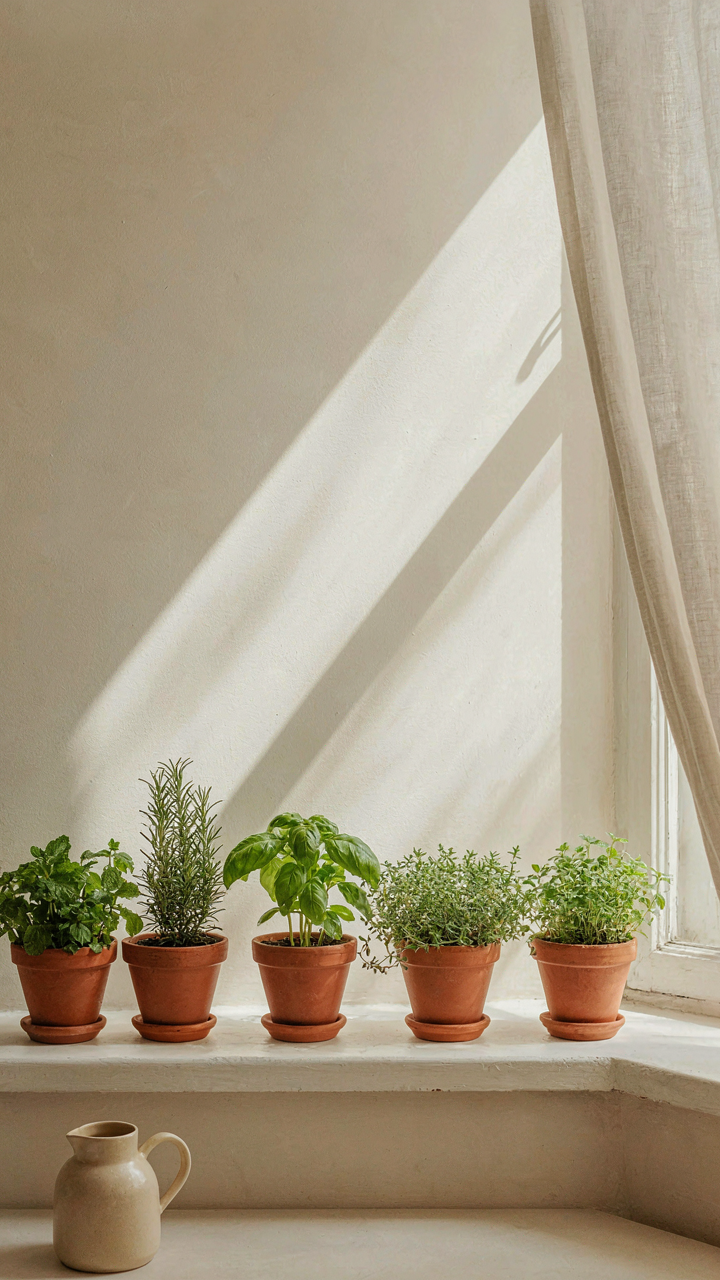
You want to know if your windowsill setup will work because you’re afraid of wasting money on dead plants. Here’s the mechanism: herbs don’t care about your intentions. They care about photosynthetically active radiation, measured in PAR. Most culinary herbs require 12 to 16 hours of direct sunlight daily to thrive. Basil needs it most. Parsley tolerates partial shade. Terracotta pots amplify this problem because they dry faster than plastic, so water stress compounds light stress before you realize what happened.
Track your light by noting which window gets sun at different times. South-facing windows in the Northern Hemisphere deliver consistent midday intensity. East-facing windows give morning light without afternoon heat stress. West-facing windows create afternoon intensity that can scorch tender growth. Document this for two weeks before placing pots. Most growers guess their light and lose herbs in week three because the guess was wrong.
Rotation Without Ritual Theater
The advice says rotate your pots every few days for even growth. That’s incomplete. Rotation only works if you’re solving an actual problem: one side of your pot receives more light than the other, creating lean growth toward the light source. This is phototropism, borrowed from plant biology. But here’s what most people miss: rotating a pot that’s already getting 16 hours of direct sunlight does nothing. You’re rotating for nothing.
Rotate only when you see uneven growth or when your pot sits in partial light. In those cases, turn it 90 degrees every three to four days. If your herbs are growing straight and strong, leave them alone. The stress of moving a pot repeatedly in optimal conditions causes more damage than it prevents. Stop moving things for the sake of a system. Move them when growth tells you the light is unbalanced.
Water Management: The Scarcity Principle For Herb Pots
Underwatering Versus Overwatering: Find The True Threshold
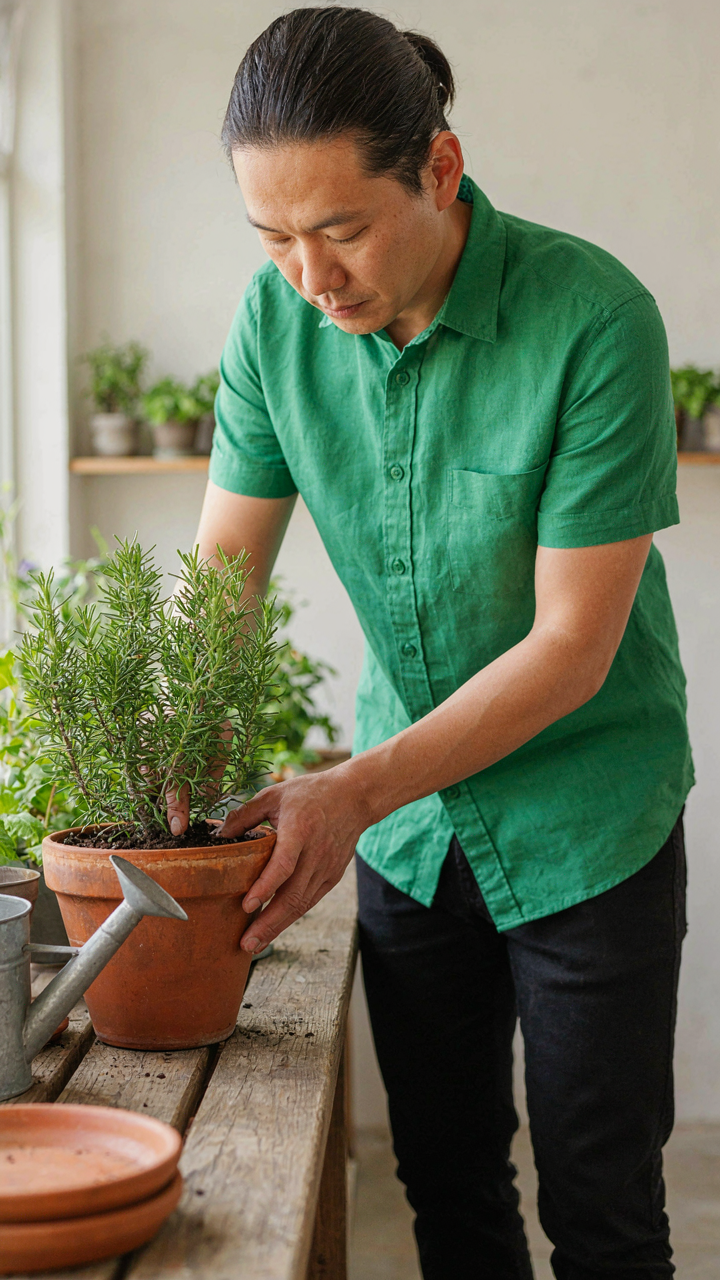
You want your herbs to survive so you feel like you didn’t waste money. Here’s what actually kills herbs in terracotta: overwatering suffocates roots faster than drought does. Terracotta’s porous nature creates a false sense of safety. The soil stays wet longer than you think because the pot’s thick walls insulate moisture. Most growers water on a schedule instead of reading the plant’s actual state. This kills more herbs than any other single mistake.
The mechanism is simple. Terracotta wicks water through its walls, which sounds beneficial until you realize it means soil dries unevenly. The bottom stays saturated while the surface appears dry. You water again. Roots sit in standing water. Fungal rot and root disease follow. Herbs need oxygen at their roots more than they need constant moisture. One deep watering followed by a full dry cycle beats daily shallow watering every time.
The Finger Test For Soil Moisture
Press your index finger one inch into the soil. If it feels moist, stop watering. If it feels dry and pulls back with slight resistance, water until it drains from the bottom. This tactile method bypasses the emotional guesswork that kills most herb gardens. You’re not relying on appearance or calendar dates. You’re reading the actual moisture content where roots live.
- One-inch depth check: Insert your finger to the first knuckle, not the tip. This measures the root zone accurately, not just the surface crust that dries fastest.
- The resistance test: Dry soil resists your finger. Moist soil yields easily. This tactile difference trains your hand to recognize the threshold without overthinking.
- Full drainage cycle: Water until liquid exits the drainage hole. Then let the pot sit completely dry before checking again. This prevents the stagnant wet layer that breeds disease.
- Morning checks beat evening checks: Soil moisture peaks at dawn after overnight settling. Testing at night gives false wet readings and leads to overwatering the next day.
- Temperature matters: Warm seasons dry pots faster than cool seasons. Your finger test frequency changes with weather, not with a fixed watering day.
Stop treating terracotta herb pots like decoration that needs consistent moisture. Treat them like organisms that need cycles of availability and scarcity. The finger test is your only reliable tool because it measures the actual state of the medium, not your anxiety about plant care.
Pest As Indicator: When Your Growing Basil Signals Deeper Issues

What Your Bugs Actually Mean
You want pest-free herbs so you look like you know what you’re doing. Here’s the reality: pests don’t attack healthy plants. They colonize weak ones. A spider mite on your basil isn’t the problem. It’s the symptom. Your plant is already stressed—poor drainage, wrong light, inconsistent watering, or weak soil. The mite is just the visible proof you missed the actual failure upstream.
Terracotta pots actually expose this mechanism faster than plastic. The material breathes. Water evaporates through the walls. If your soil dries too fast between waterings, your basil weakens. If it stays too wet because you’re overcompensating, root rot starts. Pests arrive when the plant can’t defend itself. Stop spraying. Fix the conditions.
The Feedback Loop That Fixes Itself
Cybernetics teaches us that systems self-regulate through feedback. Your terracotta herb garden is a closed-loop feedback system: observe, adjust, measure, repeat. Integrated pest management mirrors this exactly. You don’t eliminate pests. You monitor them as data points about your environment, then tune the variables until the system rebalances.
Weekly inspection reveals the signal. Yellowing leaves tell you nitrogen is depleting or drainage failed. Sticky residue means aphids thrived because humidity stayed high. Webbing signals low water stress. Each pest type maps to a specific environmental failure. Your job is to read the signal, change one variable, then wait and observe. When you stop fighting pests and start reading them as instruments, your herb garden runs itself.
Harvesting For Growth: The Pruning Paradox Of Your Herbal Tea Garden
When Cutting Actually Means More
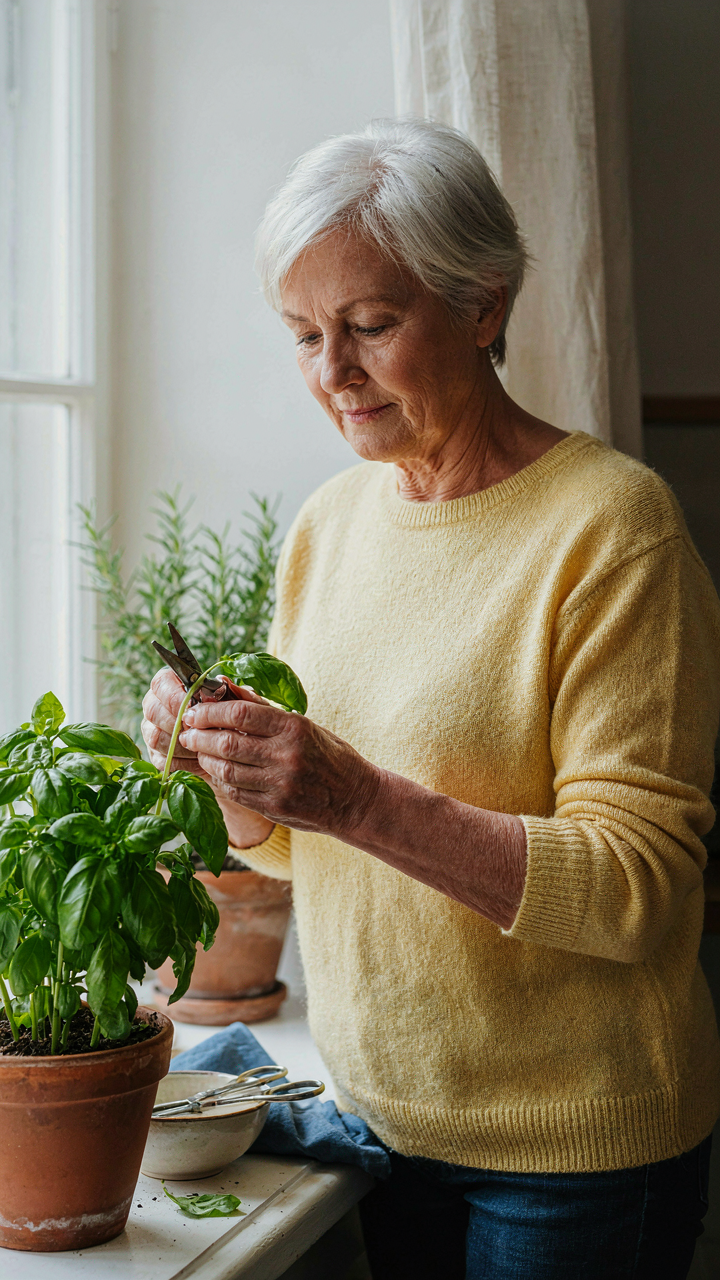
You want permission to mess with your plants without guilt. Here’s the mechanism: pruning removes the plant’s apical dominance, the biological priority that funnels all growth energy to the main stem. Break that dominance by cutting, and the plant redirects resources into lateral branches. More branches equal more leaf surface for photosynthesis and more harvestable material per plant.
Terracotta’s porous walls work with this perfectly. The material breathes, preventing root suffocation during aggressive growth spurts that follow pruning. Cut your basil, oregano, or mint back by one-third when stems reach six inches, and watch the plant fork into two or three new growth points. The common advice to “pinch gently” is incomplete. You need actual cuts with clean shears, not timid finger work, to trigger the hormonal shift.
The Extraction Without Collapse Protocol
Taking leaves without destroying the plant isn’t art. It’s inventory management. Most growers make the same error: they harvest from random spots and wonder why plants go sparse. The real rule is anatomical. Always harvest from the top third of the plant downward. This preserves the lower leaf nodes that regenerate the whole structure and keeps the plant’s shape compact in the terracotta pot.
Never strip more than one-third of the plant’s total leaf mass in a single week. The remaining two-thirds continue photosynthesis and fund the regrowth you triggered by pruning. Start harvesting when plants stabilize at the four-to-six-week mark, not before. Early harvests stunt establishment. Harvest before flowering on most culinary herbs. Once a plant bolts, it redirects energy away from leaves and into seed production, collapsing your yield.
Beyond The Pot: Expanding Your Terra Cotta Pots Garden Influence
Staggered Planting For Unbroken Supply
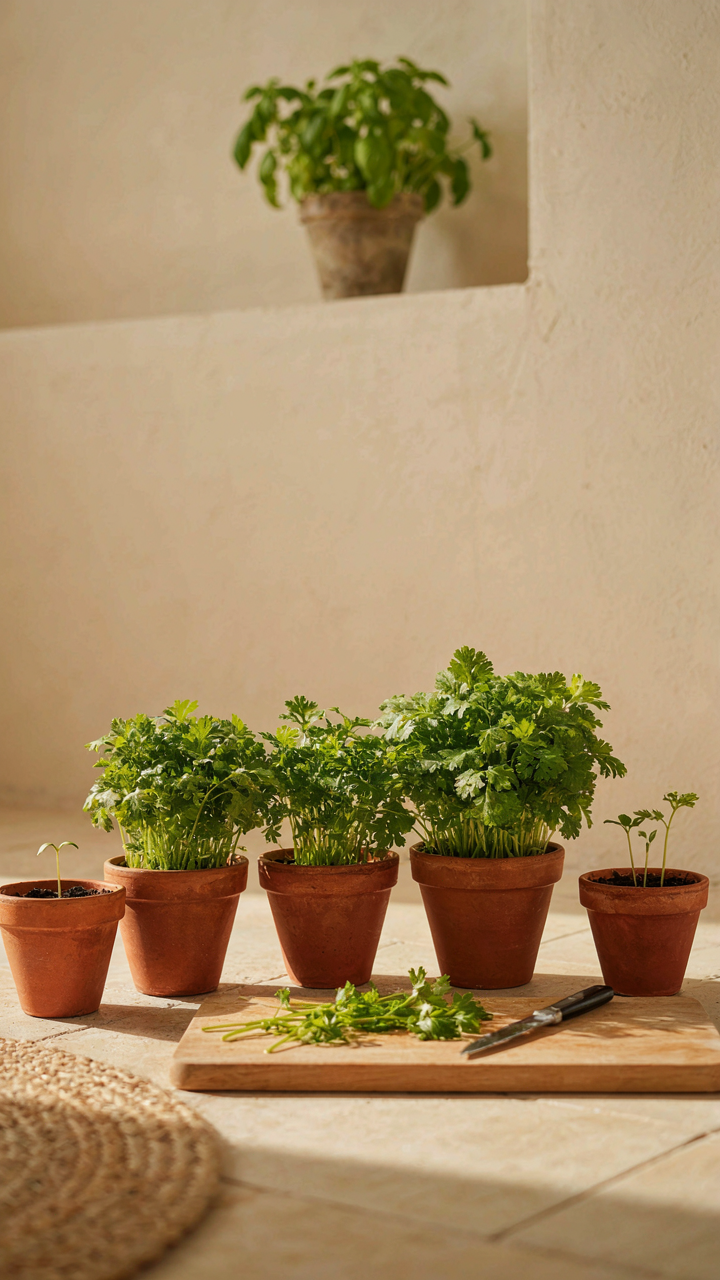
You want to look like someone who always has fresh herbs, not someone scrounging for basil in March. The mechanism is simple: succession planting borrows from agricultural production cycles. You plant the same herb every two to three weeks instead of all at once, so harvesting overlaps instead of stopping cold. This isn’t complicated—it’s just refusing to let supply collapse into the gaps you create.
Start with fast growers like cilantro, dill, and parsley. These cycle in 30 to 40 days from seed to harvestable size. Plant your first pot, then plant a second pot two weeks later while the first still produces. By the time the first pot slows, the second peaks, then the third arrives. Rotate which pots you plant in, not which herbs. This keeps your system running without reinventing it each season.
Moving Through Cold Months
Winterizing terra cotta isn’t mystical—it’s material science. Clay is porous. Soil holds water. Freezing water expands. Your pot breaks from the inside out if you leave it exposed to freeze-thaw cycles with wet soil inside. The real work happens before winter hits, not during it.
Bring tender perennials like rosemary indoors to a south-facing window or grow light. For annuals like basil, accept they’re done and clear them out. Move your terra cotta pots to shelter against a south-facing wall where they dry between waterings and catch passive heat. If you must leave pots outside, empty them completely and store them upside down. Refill them in spring. This single protocol prevents most failures.
The Real Obstacle Isn’t Your Ability To Garden, But Your Unwillingness To Understand Its True, Brutal Logic

You don’t fail at a terracotta pot herb garden because you lack green thumbs. You fail because you expect results without showing up consistently. Plants don’t negotiate. They demand water on schedule, light without excuses, and soil that actually drains. Today, buy three terracotta pots, fill them with basil, oregano, and thyme, then water them tomorrow morning. The obstacle reveals itself only when you stop theorizing and start doing. The people who grow herbs aren’t smarter than you, they’re just less willing to let excuses win.



