

Beyond The Hype: The Minimalist Petunia Hanging Basket Blueprint

Varieties That Actually Survive Your Neglect
You want something that looks effortless because admitting you need a fussy plant threatens your image as someone who has their life together. The real mechanism here is stress tolerance, which biology calls “drought resistance” but gardeners should call “will this die if I forget to water it for five days.” Petunias bred for hanging baskets fall into two categories: the Wave and Surfinia types, which spread horizontally and handle irregular watering better, and the Grandiflora types, which produce larger flowers but demand consistent moisture. The Wave varieties were developed specifically for this use case in the 1990s and are engineered to cascade without pinching. Surfinia petunias tolerate neglect longer because they evolved smaller leaves and deeper root systems.
Choose Wave or Surfinia over Grandiflora if you want a hanging basket that survives your actual behavior rather than your aspirational behavior. The spreading habit these varieties possess means fewer gaps in coverage when one plant section gets less water than another. Multiflora petunias split the difference: compact enough to fill a basket quickly, more forgiving than Grandifloras, but not quite as bulletproof as Wave types. Your selection determines whether the basket looks sparse by mid-July or maintains density through fall. Start with Surfinia or Wave, then graduate to other types once you’ve proven you’ll actually maintain the watering schedule.
The Container And Drainage Real Talk
Stop buying hanging baskets designed to look good in a store. Most come with cheap plastic, shallow root depth, and drainage holes positioned where water pools instead of flowing. Drainage isn’t just about preventing rot, it’s about whether roots can breathe during watering. A petunia needs oxygen in the root zone immediately after you water, and standing water steals that. Terra cotta baskets dry too fast in hot climates and crack in freezing temps, but they do drain instantly. Fabric grow pots and rigid plastic baskets with multiple basal drainage holes work better because water exits from the bottom, not the sides.
Size matters more than aesthetics here. A 12-inch basket minimum gives petunias enough soil volume to hold moisture without becoming waterlogged between waterings. Smaller baskets dry out in hours on hot days, forcing you to water twice daily during peak summer. Line rigid plastic baskets with landscape fabric to prevent soil from washing through drainage holes while allowing water through. The fabric also extends soil moisture duration slightly without creating the waterlogging that kills petunias faster than drought. Use a basket that drains from the bottom, fill it to the rim with soil, and you’ve eliminated the primary failure point most people encounter.
The Strategic Placement Of Hanging Petunias For Maximum Impact

Six Hours Of Direct Sun Beats Theory
You want your petunias to look Instagram-worthy without actually understanding why. Here’s the mechanism: petunias are facultative long-day plants that trigger flowering proliferation under extended light exposure. This isn’t a preference—it’s photobiology. Six to eight hours of direct sunlight daily produces dense blooms. Less than that, and you get leggy growth with sparse flowers because the plant redirects energy to finding light rather than reproducing.
The distinction matters because “bright indirect light” is a trap. Garden centers repeat it endlessly. Petunias tolerate partial shade, yes, but tolerate is the operative word. They survive. They don’t flourish. East-facing or south-facing placement in most climates delivers the intensity petunias demand. Morning sun is gentler on flowers during heat waves, but afternoon sun produces more total photosynthetic output. Position hanging baskets where they receive unobstructed light from 9 AM to 3 PM minimum.
Wind Protection Without Stagnation
Wind damages petunia flowers mechanically—petals tear, stems snap, buds strip before opening. This is obvious. What’s not obvious is that zero wind creates a different problem: fungal disease thrives in still, humid air around dense foliage. You need wind reduction, not wind elimination. There’s a threshold. Borrowing from aerodynamics, you’re aiming for a velocity break, not a dead zone. Basket placement near a wall or fence that blocks gusts but allows air circulation prevents both physical damage and moisture accumulation on leaves.
Place baskets where they experience gentle air movement but are shielded from sustained wind that exceeds 15 miles per hour. A pergola, eave overhang, or open lattice structure creates this buffer. Avoid enclosed corners or tight alcoves where air stagnates completely. The goal is reducing environmental stress while maintaining the airflow that keeps fungal spores from settling on foliage. Inspect placement by holding a lightweight ribbon near the basket—it should move subtly, not flap violently or hang motionless.
Water: The Overlooked Variable In Petunia Flower Basket Success
The Precise Watering Schedule
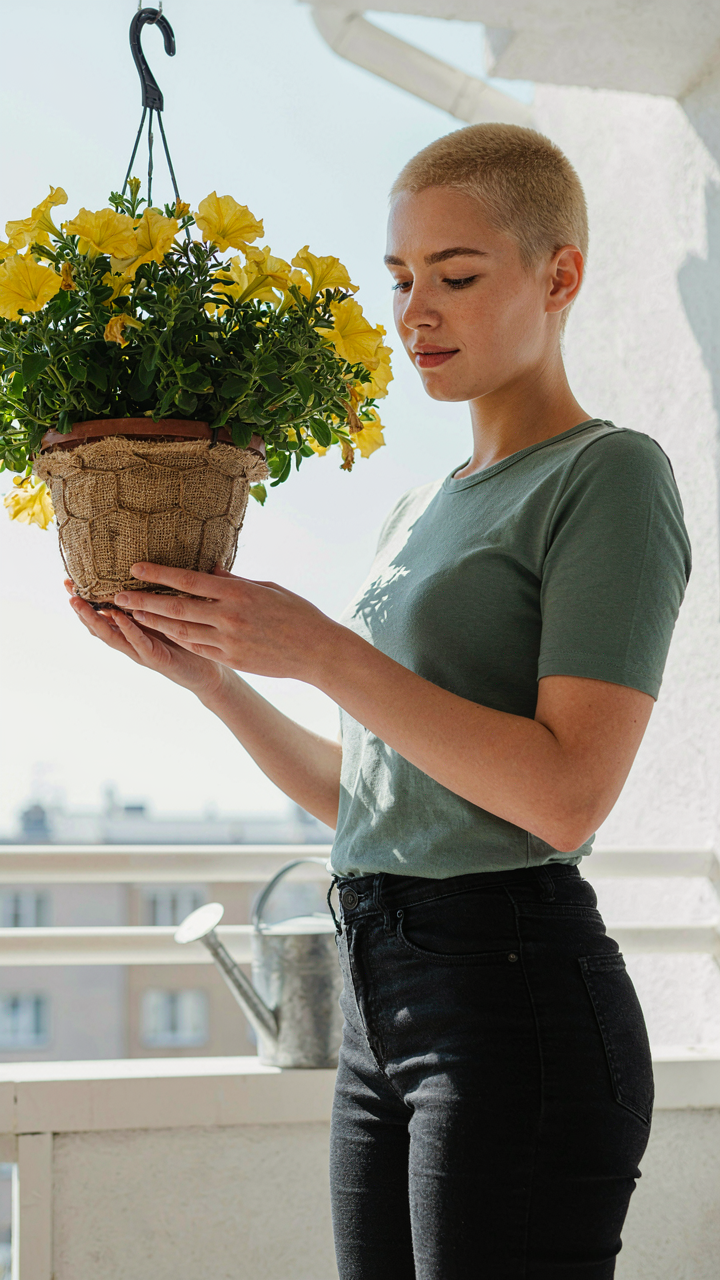
You want your hanging baskets to look effortless. That’s why you’re here. But the truth is most people underwater petunias or drown them through inconsistency. Think of watering frequency like a supply chain problem: petunias need steady input, not crisis management followed by drought. The real mechanism is soil moisture, not calendar dates. Check the top inch of soil daily. When it feels dry to your touch, water until liquid drains from the basket bottom. This removes the guesswork that kills baskets.
Petunias in hanging baskets dry faster than ground plantings because soil volume is smaller and air exposure is higher. Summer heat accelerates this. Water in early morning to reduce evaporation loss and prevent fungal issues from wet foliage at night. Inconsistent watering destroys flower production. The plant shifts energy to root survival instead of blooms. Your watering protocol is this: check soil moisture first, water deeply when dry, never water on a fixed schedule.
Drainage System Critical Analysis
Bad drainage kills more petunias than underwatering does. Most people assume a few holes in a basket are enough. They’re not. Petunias need fast water movement, not standing water. Use baskets with multiple drainage holes across the bottom, not just a center opening. Layer the interior with landscape fabric or a coir liner to prevent soil from washing through while allowing water passage. Soil quality matters equally. Standard potting mix holds too much moisture for hanging baskets. Mix equal parts potting soil and perlite to increase drainage speed and air pore space.
The physics here is capillary action: soil holds water against gravity based on particle size and composition. Petunias tolerate moist soil poorly and need the opposite dynamic. Your drainage setup determines whether water moves through soil or pools around roots. Install baskets with mesh bottoms and pre-made liner systems whenever possible. Add one inch of perlite at the basket base before filling with amended soil. This creates an air gap that prevents the basket bottom from becoming a water trap where roots rot.
Nutrient Delivery: Fueling Vibrant Hanging Petunias, Not Just Feeding
The Soil Foundation That Actually Holds Water
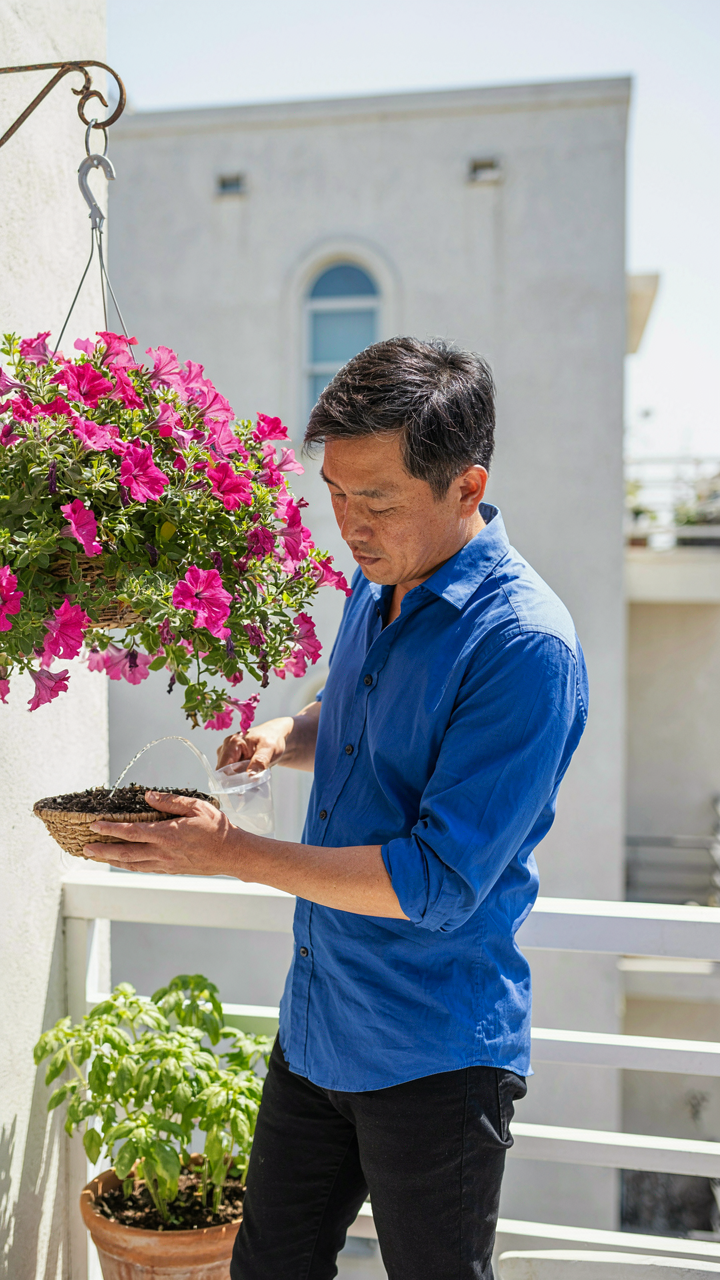
You want hanging petunias to look Instagram-worthy without checking them daily, but you’re afraid of killing them through neglect. The real mechanism is water retention paired with drainage—a contradiction most growers never resolve. Think of soil composition as a hydraulic system in engineering: you need channels for excess water to move through, but also capacity to hold available moisture and nutrients where roots can access them between waterings.
Standard potting soil fails hanging baskets. Petunias in containers need a blend that drains fast enough to prevent root rot yet holds enough moisture to sustain the plant through heat cycles. Mix one part quality potting soil with one part perlite and one part coconut coir or aged bark. This combination creates air pockets that prevent compaction while coir buffers moisture availability. The perlite prevents the basket from becoming waterlogged in humid conditions or after rain, which kills petunias faster than drought does.
Targeted Feeding On A Schedule, Not By Feeling
The common advice says “feed petunias every week or two,” which is lazy guidance that ignores what actually drives bloom production. Petunias are heavy feeders in containers because they’re confined—roots can’t extend to find nutrients—so you’re replacing what soil biology would normally provide. Use a balanced fertilizer with a slight phosphorus boost during bloom stage: a 10-10-10 formula works for establishment, then switch to 5-10-10 once flowering starts to push blooms rather than foliage.
Feed every 10 to 14 days starting two weeks after planting, not before. Early fertilization stalls root development by creating nutrient abundance that eliminates the plant’s drive to establish. Water with diluted fertilizer rather than dry granules, which concentrate salt and burn shallow container roots. This delivery method also ensures immediate nutrient uptake without the lag time of granule breakdown, accelerating the visible response you’re paying for. Apply fertilizer only when soil is already moist to reduce burn risk.
The Pruning Protocol: Sculpting Your Petunia Hanging Plant For Abundance
Deadheading Removes Spent Flowers
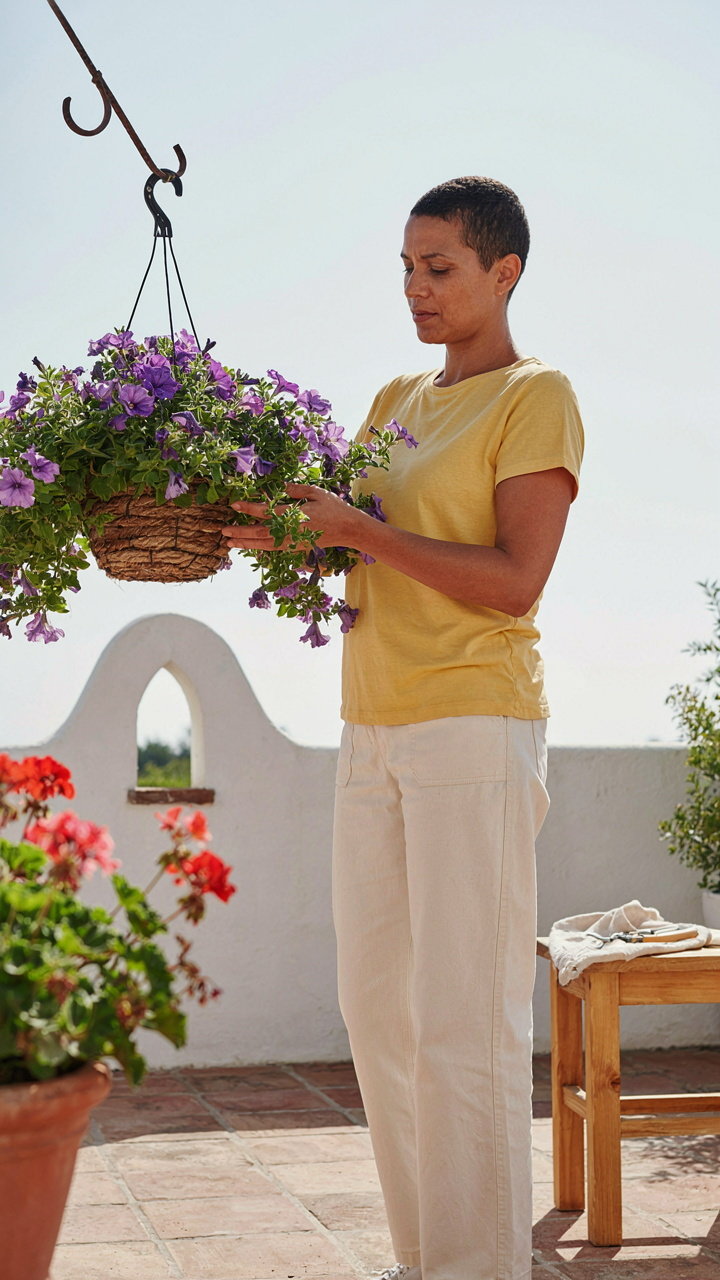
You want the basket to look full without actually doing the work. That’s the real tension here. The mechanism is simple: petunias stop blooming when they set seed. Remove the flower before it becomes a seed pod, and the plant interprets this as failure. It doubles down on reproduction, producing more blooms to complete the cycle.
Deadheading isn’t optional maintenance. It’s the difference between a petunia that blooms for six weeks and one that blooms until frost. Pinch off spent flowers every two to three days during peak season. The plant responds within days with new flower buds forming at branch tips. Skip this step and you’ll watch blooms taper off by mid-July regardless of water or fertilizer.
Cut Back Hard For More Branches
Biology calls this apical dominance, and petunias operate under it ruthlessly. When you remove the terminal bud at a stem’s tip, the plant stops sending all its resources to one leader and instead activates dormant lateral buds lower down. One stem becomes three or four within two weeks.
Most people trim conservatively because they fear hurting the plant. That’s wrong. Cut petunias back by one-third to one-half their length around mid-June, before heat stress sets in. Remove everything above a leaf node. The plant responds by producing branches at multiple points, creating the dense, full basket people actually want. This single cut multiplies your bloom sites exponentially without adding water or fertilizer.
Pest & Disease: The Unseen Threats To Colorful Petunia Flowers In Basket
Spot Threats Before They Multiply
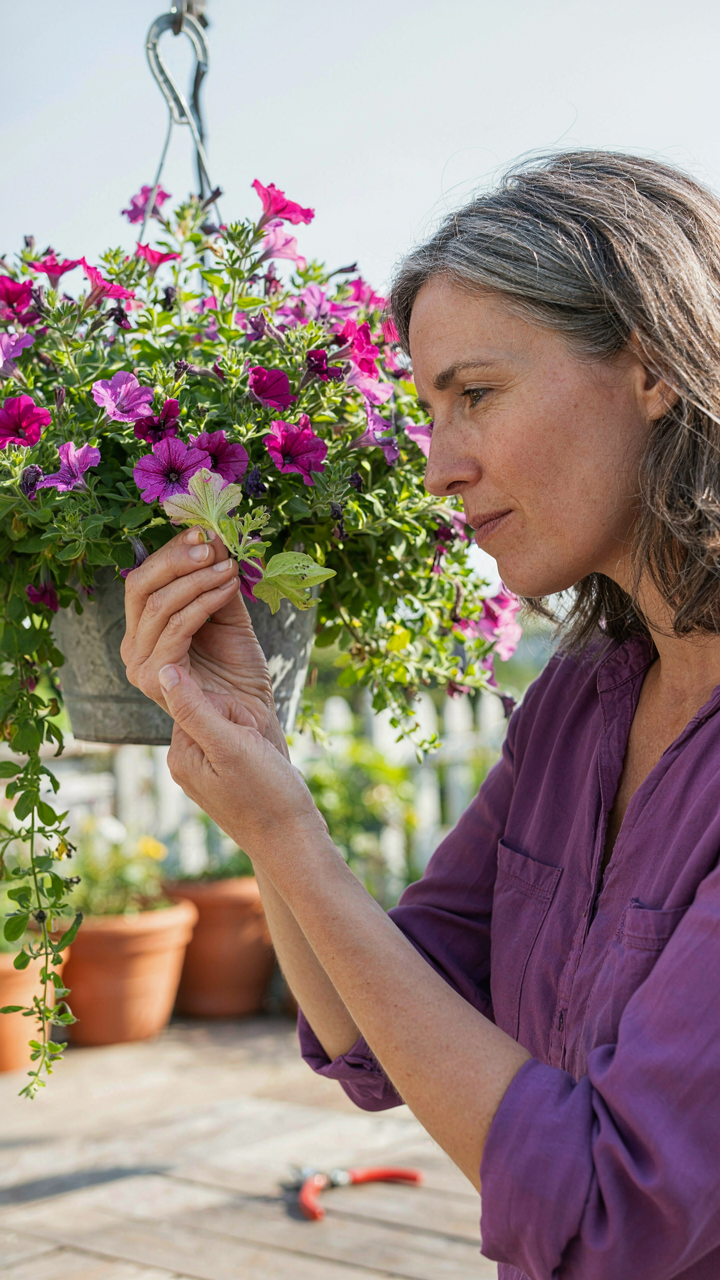
You want your baskets to stay picture-perfect without actually doing the work of checking them. That’s the real problem. Here’s what matters: petunias in baskets face surveillance failure because hanging placement puts them at eye level where you stop noticing them. Use military reconnaissance logic—establish zones of observation. Scout the underside of leaves where spider mites and whiteflies hide. Check soil moisture daily; wet soil breeds fungal problems faster than dry. Most damage starts invisible. By the time you see wilting, the infection has already won.
Early detection beats every rescue attempt. Inspect hanging baskets every two to three days, focusing on leaf undersides and new growth where pests colonize first. Pinch off affected leaves immediately. Fungal spores spread through water splash and high humidity, so check after rain or overhead watering. If you catch powdery mildew as a white film rather than a brown creeping mass, removal and airflow solve it. Wait until it’s systemic and you’re spraying fungicides that barely work. Early action removes the choice entirely.
Stop Problems With Precision Timing
Throwing preventive spray at petunias every week is theater, not strategy. Most growers oversaturate with fungicides when the real mechanism is environmental control. Space baskets eighteen inches apart minimum to allow air circulation. Water soil only, never foliage, and water early morning so leaves dry fast. These steps eliminate sixty percent of fungal and bacterial disease before it appears. Powdery mildew, botrytis, and leaf spot all require moisture on the leaf surface to establish. Remove that condition and the pathogen has nowhere to land.
When you spot aphids, whiteflies, or spider mites, use insecticidal soap first, not broad-spectrum pesticides. Soap kills soft-bodied insects on contact and leaves no residue. Spray undersides thoroughly. Repeat every seven to ten days for three cycles. If populations explode despite this, the real problem is usually nutrient imbalance, not pest resistance. Weak plants in poor soil attract pests like weakness attracts predators. Before you escalate to harsher chemicals, fix the soil structure and feeding schedule, then reapply soap. The pest pressure drops because the plant stops broadcasting vulnerability.
Winterizing Petunia Flowers In Basket: Preserving Your Investment

Getting Your Baskets Ready For Cold
You’re winterizing because you don’t want to admit you spent real money on something that dies. Here’s the mechanism: petunias are frost-sensitive annuals in most climates, meaning cold kills the plant tissue directly. Temperature drops below 32°F rupture cell walls. Your goal isn’t to make petunias survive winter outdoors—it’s to either move them indoors or accept the loss and plan differently next season.
Stop the typical advice about “protecting” outdoor baskets with blankets. That doesn’t work. Petunias need active relocation or strategic timing. If your region freezes hard, bring containers inside 2-3 weeks before the first frost date. Place baskets in a cool garage, basement, or unheated room where temps stay between 45-55°F. Reduce watering by 60%. The plant enters dormancy, not death.
- Stop fertilizing: Nitrogen pushes new growth that cold kills immediately. Cut feeding six weeks before frost.
- Prune dead material: Remove spent flowers and yellowed leaves. Dead tissue invites rot in dormant storage conditions.
- Check soil moisture: Soggy soil during dormancy breeds fungal rot. Let soil dry between waterings, not bone dry.
- Inspect for pests: Mites and whiteflies hide in petunias and thrive indoors. Treat infestations before moving baskets inside.
- Harden off gradually: If moving from outdoor heat to indoor cool, transition over 5-7 days to avoid shock stress.
Indoor dormancy works because you control the variables. Light drops to 12 hours or less. Air circulation matters—stagnant air around sleeping plants causes mold. Position baskets on shelves with 2-3 feet between them. Check soil every 10 days. Water only when the top inch feels bone dry. This passive state preserves the root system for spring regeneration.
Bringing Baskets Back To Life
Winter dormancy isn’t death—it’s a pause that requires reversal timing. Around 6-8 weeks before your area’s last frost date, move baskets back to bright light. A south-facing window works. Increase watering gradually. The soil should feel lightly moist, not wet. You’ll see new leaf nodes emerging within two weeks if the plant survived dormancy intact.
Once growth restarts, resume light fertilizing at half strength. Petunias in baskets emerge from dormancy hungry for nitrogen and phosphorus. Feed every two weeks. Around 10-14 days before your last frost date, introduce baskets outdoors for 2-3 hours daily in dappled shade. Extend outdoor exposure by an hour each day. This hardens the plant tissue against direct sun and temperature swings. When nighttime temps stay above 50°F consistently, place baskets in full sun permanently. Water daily during active growth.
Petunias Hanging Baskets: Beyond The Season

Grow New Plants From Cuttings
You want your baskets to look expensive and abundant without replacing them every season. The real mechanism is this: petunias root easily from stem cuttings, which means you can clone your best performers and have backup plants ready before the originals decline. This is basic plant biology applied to economics—you’re compounding your genetic investment instead of starting from seed or buying new plants annually.
Take four-inch cuttings from healthy stems in late summer. Remove the lower leaves, dip the cut end in rooting hormone, and stick them into moist seed-starting mix. Keep them under humidity for two to three weeks until roots develop. You’ll have established plants by early spring, ready to fill baskets before the season starts. This eliminates the lag time and guesswork of seed germination.
Rebuild Baskets On A Fixed Cycle
Petunias decline predictably. Rather than letting them fail randomly, use a rotation schedule to replace tired baskets before they become visible problems. Most petunias peak in their second month, then lose density and vigor by month four or five. The tactic here is inventory management applied to ornamentals—you rotate stock before it hits zero, not after.
In early July, plant new baskets with your propagated cuttings or fresh purchases. Let them establish for three weeks while your first-round baskets finish their peak. By August, swap out the originals and keep the newer baskets running through fall. This keeps your display consistently full and forces you to plan propagation in advance instead of scrambling in June. The protocol is simple: mark a calendar date in June to take cuttings, July to plant fresh baskets, and August to execute the swap.
The Obstacle Isn’t The Basket; It’s Your Addiction To Complexity. Simplify

You don’t need rare varieties or expensive soil mixes. You need to stop overthinking and plant something today. Buy one basket, three petunias, basic potting mix, and water it when the soil feels dry. That’s it. Most people kill their petunias through neglect disguised as perfectionism. Stop researching and start growing. A simple basket with one color blooms louder than a complicated setup collecting dust in your garage.



