

The Micronutrient Myth: Why NPK Ratios Are For Amateurs

Beyond The Big Three: Trace Elements Matter
You’re reading this because you want to look like you know what you’re doing with hanging baskets at dinner parties. Here’s the mechanism: NPK ratios get 90 percent of the marketing spend because nitrogen, phosphorus, and potassium move product volume. They’re the visible nutrients. But trace elements—iron, manganese, zinc, boron, molybdenum, copper—control whether your plants convert those macronutrients into actual growth. A 10-10-10 fertilizer with zero iron is a useless bottle of marketing copy.
The real problem isn’t choosing between fertilizers. It’s that hanging baskets leach water constantly, which means trace elements wash out faster than macronutrients. Petunias and fuchsias in containers need boron for flower set and iron for chlorophyll production. Without them, you get stunted blooms and yellowing leaves despite perfect NPK numbers. A single application of chelated micronutrients every three weeks during the growing season stops this completely. Stop chasing ratios. Start addressing what actually limits flowering in constrained root systems.
Testing Your Soil: What Your Plants Actually Need
Soil testing isn’t optional if you’re running special occasion displays. You’re fertilizing blind otherwise. A basic soil test reveals pH, macronutrient levels, and whether trace element deficiencies already exist in your potting mix. Most commercial potting soils include some micronutrients, but quality varies wildly by brand and batch age. Testing tells you what’s actually missing instead of guessing based on leaf color.
Send a sample to your local extension office or use a private lab. The results give you specific deficiency data: iron ppm, manganese levels, boron availability. This transforms fertilizer selection from opinion into decision. You’ll know if you need a broad-spectrum micronutrient spray or a targeted iron chelate. Once you have baseline data, you adjust your feeding schedule to match what the soil analysis recommends, not what the label suggests. This eliminates waste and prevents toxicity from over-correcting imaginary problems.
The Bio Activation Protocol: Unleashing Microbe Power
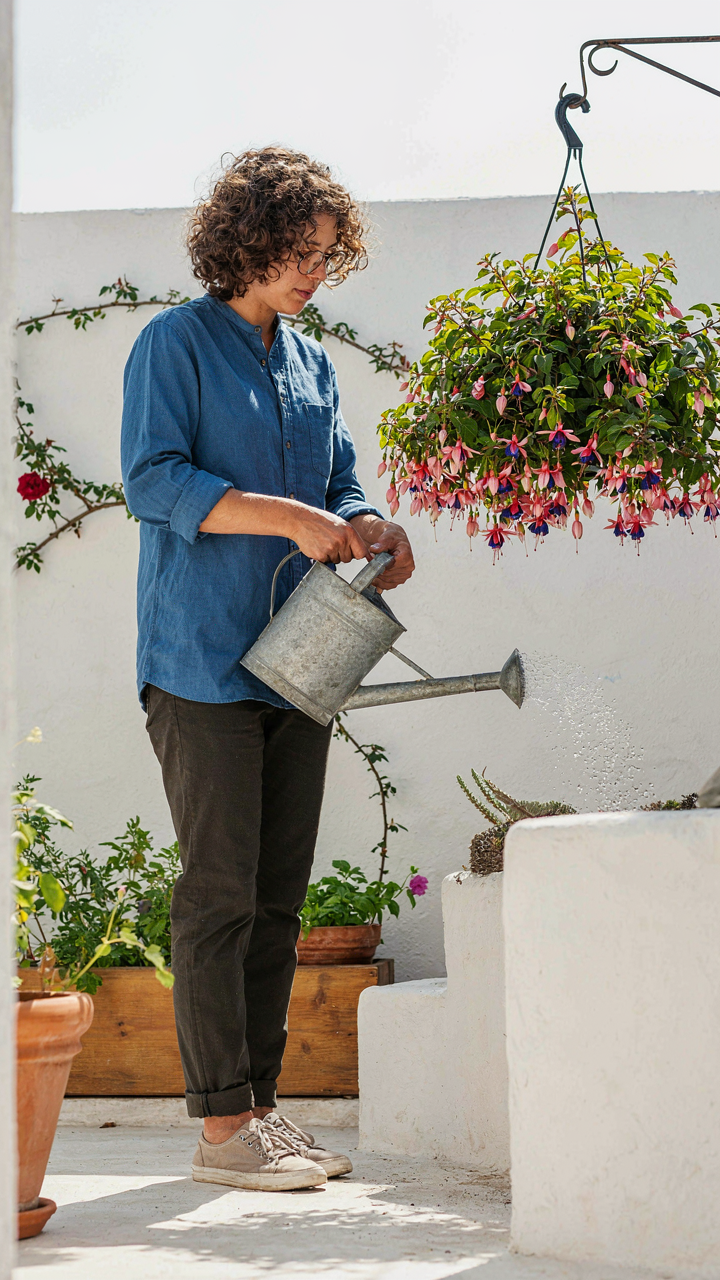
Compost Tea Extraction And Application
You want your hanging baskets to look expensive without the work. That’s the real reason you’re reading this. The mechanism is simple: compost tea suspends beneficial microorganisms in water and delivers them directly to roots. Biology calls this inoculation. In hanging baskets, it’s acceleration. You’re not just feeding the plant. You’re colonizing the soil with organisms that break down nutrients the plant can’t access alone.
Brew compost tea by steeping finished compost in dechlorinated water for 24 to 48 hours. The ratio is one part compost to four parts water. Aerate throughout brewing if possible, though it’s not mandatory. Apply the strained liquid every 7 to 10 days during the growing season. Skip the synthetic fertilizer on application days or cut the rate in half. The microbes do the nutrient cycling work you were paying chemical fertilizers to fake.
Worm Castings Tea: The Nutrient Delivery System
Most people treat worm castings as a one time soil amendment and miss the leverage. You can steep them repeatedly for a renewable nutrient source. Worm castings contain humic acids and active microbes that stay viable in solution. This is biology’s version of a delivery system: you’re extracting and redistributing the biological assets already present in the castings.
Mix one part worm castings in five parts water and let sit for 24 hours. Strain through cheesecloth and apply directly to basket soil. You get microbial activity plus readily available nitrogen without the salt burn that comes with synthetic fertilizers. Use this every two weeks as a maintenance feed. The microbes establish permanent populations in your basket soil, so each application strengthens the foundation rather than just feeding the plant once.
Liquid Fertilizer: Precision Dosing, Not Blind Pouring
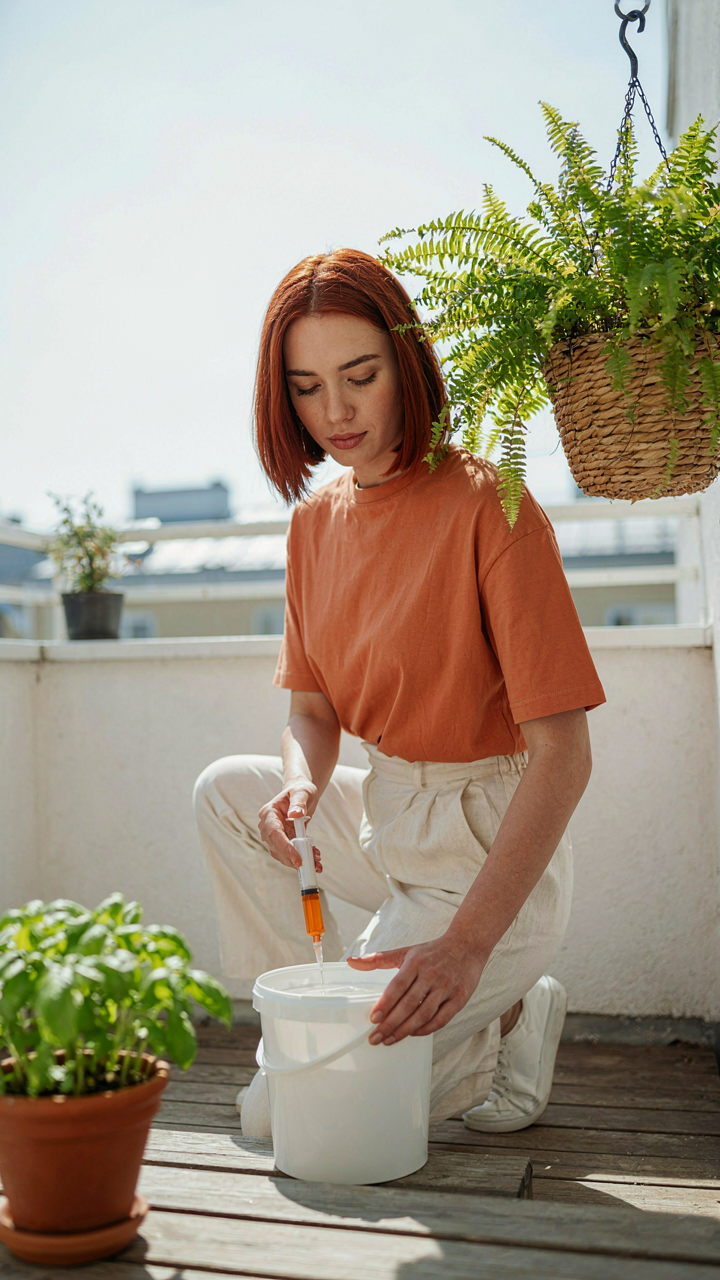
Calculating Optimal Dilution For Various Plants
You want hanging baskets that impress at events because weak plants signal neglect. Here’s what matters: dilution ratios follow plant demand, not the bottle label’s one-size-fits-all recommendation. Think in terms of osmotic pressure from biology. Water moves across plant cell membranes based on dissolved nutrient concentration. Too concentrated and you burn roots. Too dilute and you starve them. The mechanism is dose-dependent response, not dose-independent safety.
Most growers ignore plant-specific dilution because it requires tracking. Ferns need half-strength solutions compared to petunias. Trailing ivy tolerates stronger mixes. Calibrate by reading NPK ratios on your fertilizer bottle, then divide the recommended dose by your plant type’s tolerance level. For special events, start dilutions two weeks prior at 50% strength, then move to full strength one week out. This prevents salt accumulation that causes leaf burn right when guests arrive.
Application Techniques For Maximum Absorption
Skip the casual pour. Absorption depends on soil moisture state and root zone contact time. Dry soil repels water initially. Saturated soil prevents nutrient uptake because roots need oxygen. The sweet spot is moist but draining soil. Apply liquid fertilizer to pre-watered baskets only. Pour slowly at the soil line, never on foliage. Fast pouring creates runoff channels that bypass the root zone entirely. Nutrients exit the basket before roots capture them.
Frequency matters more than volume for hanging baskets. Weekly half-strength applications beat monthly full-strength dosing. Liquid fertilizer disperses quickly through container soil. Plants absorb available nutrients within 24 to 48 hours, then need replenishment. For event preparation, shift to twice-weekly applications two weeks before the date. This sustains consistent nutrient availability during the visual peak period. Stop fertilizing three days before the event to avoid excess salts on leaf surfaces that dull appearance.
The Symbiotic System: Pairing Plants For Hanging Baskets
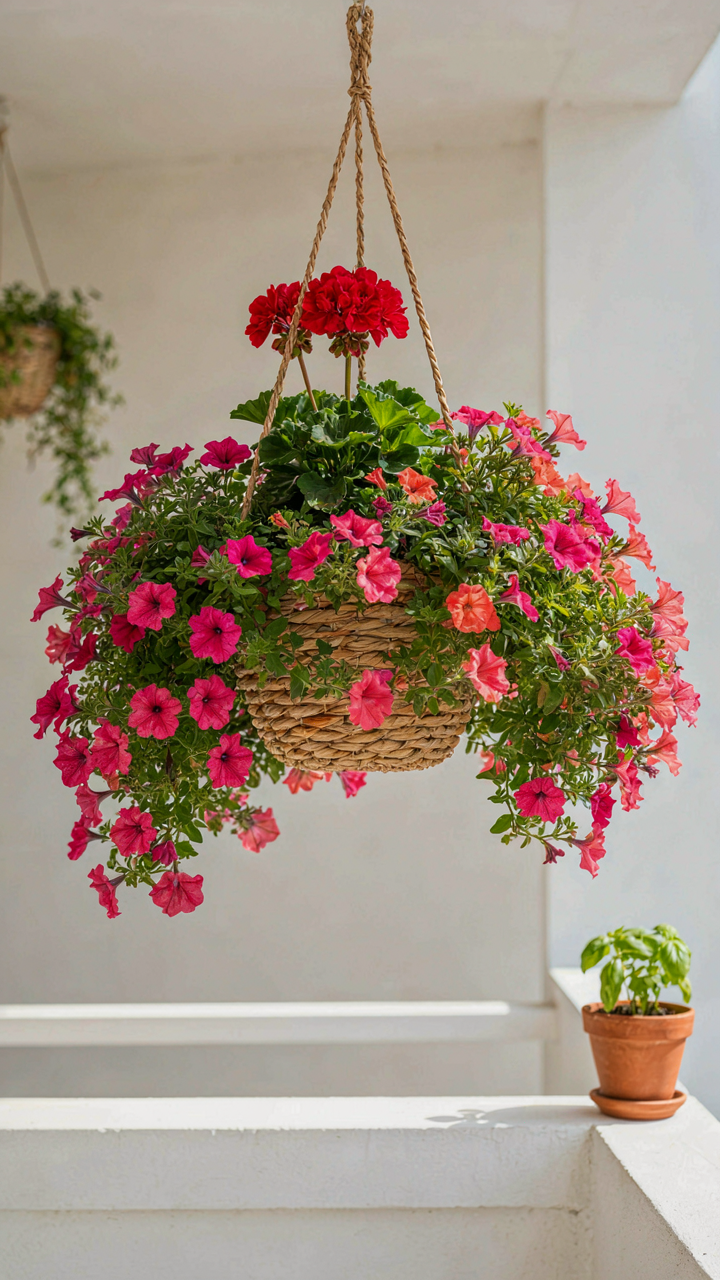
When Plants Compete For Nitrogen
You want your hanging basket to look abundant on special occasions without constantly buying fertilizer. Here’s what nobody says: most people overcomplicate this by treating each plant as an isolated unit when they should treat the basket as a closed nutrient economy. Ecology calls this “resource partitioning”—different organisms occupy the same space by using resources at different depths or times. In hanging baskets, plants with shallow roots and those with deeper root systems don’t actually compete for the same nitrogen pools if you structure them right.
Plants that feed at different soil depths create natural separation in nutrient uptake. Trailing plants like petunias have fine, shallow fibrous roots that absorb fast-release nutrients near the surface. Upright centerpieces like geraniums develop deeper root systems that access slower-release compounds lower in the soil. By pairing these root architectures, you reduce the fertilizer dose each plant needs while keeping both fed. The mechanism is simple: stagger your root zones, and you halve nutrient demand without sacrificing bloom density.
Root Communication Happens Below The Surface
Plants don’t communicate through soil like farmers pretend they do, but their root exudates absolutely change how fertilizer behaves in the medium. When roots release organic compounds, they shift pH and activate microbial populations that break down nutrients differently depending on depth and moisture. This means a single fertilizer application behaves differently at the top of your basket versus the bottom—a fact most guides skip entirely. High-water-use plants like impatiens create wetter conditions that favor different microbial activity than drought-tolerant calibrachoa in the same basket.
Design your hanging basket with this stratification in mind. Place high-moisture plants that need constant nutrient availability in upper positions where they dry faster and trigger more frequent root feeding cycles. Position drought-tolerant species lower, where soil stays wetter longer and slow-release fertilizer compounds have time to break down gradually. This creates a self-regulating nutrient delivery system that requires fewer manual fertilizer applications during special events. Feed the root zone patterns first, and the plants handle nutrient uptake on their own schedule.
Annual Plants: The High Yield, High Demand Equation

Why Annual Plants Demand Different Nutrient Management
You want hanging baskets that stop people mid conversation. That requires understanding the real constraint: annuals don’t have root reserves like perennials do, so they live or die on what you feed them weekly. Think of nitrogen cycling in soil biology, where the nutrient availability window closes fast. With annuals in containers, that window never opens wide enough unless you force it. The plant germinates, grows, flowers, and exits in 120 days. Every missed feeding reduces bloom count permanently.
Annual flowers in hanging baskets consume nutrients at rates most gardeners underestimate. A petunia or impatiens in six inches of soil exhausts available phosphorus and potassium within three weeks. Nitrogen depletes faster. The plant doesn’t wait for you to notice. It stops flowering first, then stops growing. You’re left with sparse, weak stems and scattered blooms. Standard granular fertilizers release too slow for this demand cycle. The mismatch between supply timing and plant need is where most people fail without knowing why.
Heavy Feeding Windows During Peak Growth
Aggressive feeding isn’t reckless, it’s calibrated to biology. From transplant until first flower, feed every five to seven days with a balanced formula at half strength. This period lasts two to three weeks and determines final plant structure. Skip this window and you get a sparse framework that no later feeding fixes. Once flowering starts, shift to a higher phosphorus ratio. Potassium and phosphorus drive bloom production and petal density. Continue weekly feeding without interruption through the season.
Weekly liquid fertilizer application works because nutrients move into roots immediately, not over weeks. Hanging baskets drain faster than ground soil, so leaching removes what you don’t replace regularly. The mechanism is simple: diluted nutrients applied often match the plant’s constant demand better than concentrated applications spread far apart. Use a 15-30-15 or similar phosphorus-heavy ratio once buds appear. Water the basket thoroughly before feeding to prevent salt burn. The feeding schedule itself becomes your bloom insurance.
The Environmental Feedback Loop: Reading Your Hanging Flower Baskets
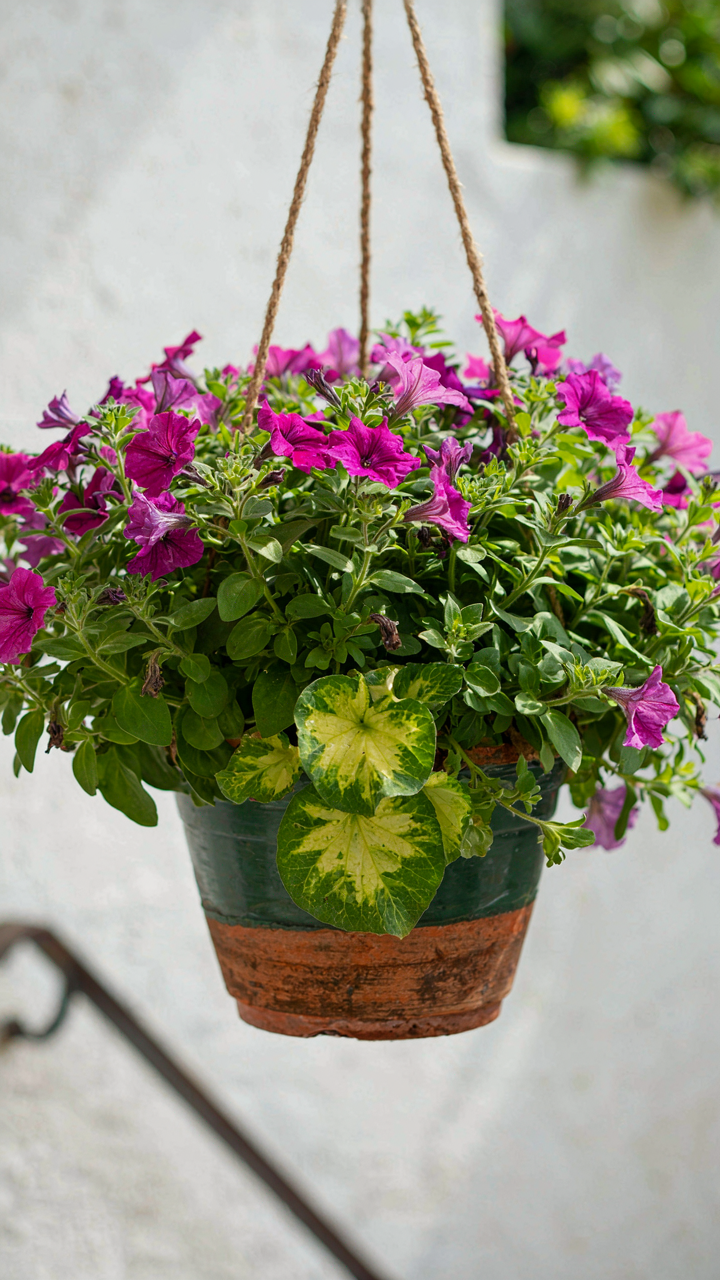
What Yellowing Leaves Actually Tell You
You want to know what’s wrong so you can fix it fast and not waste money on the wrong fertilizer. The truth is most growers mistake deficiency for excess and kill plants by adding more nutrients when the real problem is saturation or pH lockout.
Leaf discoloration isn’t random noise. Magnesium deficiency starts between leaf veins while they stay green. Nitrogen deficiency yellows the oldest leaves first. Iron deficiency yellows new growth while veins stay dark. The location and pattern tell you which nutrient is locked out or depleted. Excess fertilizer burns leaf edges brown and crispy, not the interior. This distinction matters because the fix for each is opposite.
When Growth Stalls, Your Nutrient System Failed
In plant biology, the term “limiting factor” means one shortage stops all growth regardless of abundance elsewhere. A hanging basket with perfect nitrogen but zero phosphorus grows nowhere because phosphorus limits the entire system.
Slow growth signals nutrient imbalance before visible deficiency appears. If stems thicken but blooms don’t form, phosphorus is the bottleneck. If new leaves unfurl small and pale, nitrogen or magnesium is constraining development. Stunted root development shows calcium or boron deficiency weeks before you see it topside. Weekly measurement of growth rate catches nutrient drift early. Track stem length and leaf count. When the rate drops 25 percent week over week, adjust your feeding schedule before visual symptoms demand corrective action.
The “Less Is More” Paradox: Over Fertilization Is Sabotage

Salt Buildup: Silently Killing Your Plants
You’re worried your baskets look weak because you’re not feeding them enough. The real problem is the opposite. When you overfeed, salts accumulate in the soil faster than water can flush them out, and those salts burn roots by drawing moisture away from plant cells. This is osmosis in action: the mechanism that governs nutrient transport has turned against you.
Most growers miss this because damage appears gradual. Leaf edges brown first. Then growth stalls. You interpret this as hunger and feed more, which accelerates the salt spike and guarantees failure. The soil isn’t exhausted. It’s toxic. Stop adding fertilizer and start measuring what’s already there, or watch the basket die slowly while you chase a phantom deficiency.
Flushing Techniques To Reset Soil Chemistry
Common advice says water your baskets until it drains out the bottom. That’s incomplete. You need volume and frequency to actually move accumulated salts down and out of the root zone. Run water through until drainage volume equals at least three times the pot’s total volume, then wait 30 minutes and repeat. One pass doesn’t cut it.
The timing matters more than the method. Flush baskets every two to three weeks during heavy feeding seasons, even if the soil looks fine. This removes salt accumulation before it triggers visible damage. Use room-temperature water, not cold. Stop fertilizing for three to five days after flushing to let the plant rebalance. This resets the soil chemistry and prevents the cycle from restarting the moment you feed again.
The “How To Grow Hanging Baskets” Blueprint: Beyond Generic Dirt
Soil Physics: Why Your Basket Drains Like A Sieve
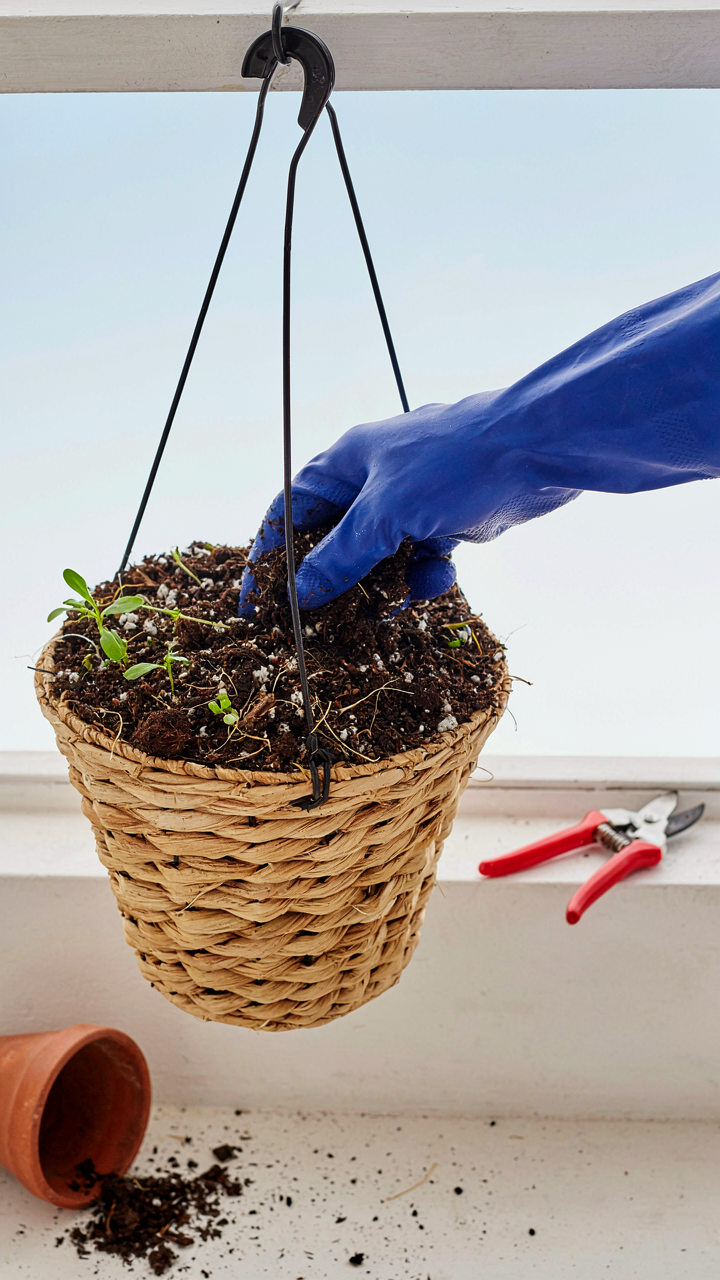
You want hanging baskets that look full and healthy without constant fussing, but the real problem is you’re fighting gravity and physics simultaneously. Soil physics reveals the mechanism: porosity determines how fast water moves through the medium, and drainage rate directly controls root respiration. Roots need oxygen, not soggy soil. Most people treat soil as inert filler. It’s not. Pore space is where gas exchange happens.
A hanging basket needs a soil mix with 40 to 50 percent pore space by volume to balance water retention and air movement. Coconut coir, perlite, and composted bark create this ratio. Dense mixes suffocate roots and cause nutrient lockup because roots can’t absorb minerals without oxygen. Test your mix by watering a sample and timing how long it takes to drain completely. If water sits for more than 30 seconds, add perlite until drainage clears in under 10 seconds.
Nutrient Uptake: How Plants Actually Eat
The hydroponics field teaches us that nutrient uptake is not about how much fertilizer you apply, but about how efficiently roots access ions in solution. A hanging basket is a constrained hydroponic system operating on a smaller budget than a commercial setup. Your goal is maximum nutrient availability per unit of fertilizer input.
Roots absorb nutrients only when soil moisture and oxygen levels allow active transport to occur. Fertilizer applied to dry or waterlogged soil sits inert until conditions shift. Water your basket until drainage appears, then wait until the top inch feels dry before watering again. This cycle keeps roots in the uptake window. Use a balanced NPK ratio for hanging baskets during bloom, then shift to higher potassium for flowering. Check soil moisture with your finger before fertilizing, not after.
What Plants Are Good For Hanging Baskets? Matching Feed To Species

The Nutrient Demand Spectrum
You want your hanging basket to look Instagram-worthy without actually understanding why some plants drain fertilizer while others barely touch it. Here’s the mechanism: plants transpire water at different rates based on leaf surface area, growth speed, and root volume. That transpiration rate determines how fast they pull nutrients from the soil. Faster transpiration equals faster nutrient depletion. This is basic plant physiology, not opinion.
High-feeders and low-feeders aren’t labels based on preference. They’re categories defined by how aggressively a plant grows and how much nitrogen, phosphorus, and potassium it burns through per growing season. Petunias, fuchsias, and impatiens are high-feeders. Sedums, ivy, and trailing philodendrons are low-feeders. Feed a high-feeder like a low-feeder and you starve it. Feed a low-feeder like a high-feeder and you burn the roots with salt accumulation. Most people mix both types in one basket, then wonder why half dies.
- Petunias and Calibrachoa: Heavy nitrogen users that flower continuously. Require fertilizer every 7-10 days during bloom season. Deplete hanging basket soil faster than nearly any other ornamental.
- Fuchsias: Aggressive growers with constant flowering. Need consistent feeding every 10-14 days. Sensitive to nutrient deficiency, showing yellowing leaves within weeks of starvation.
- Impatiens: Moderate to high feeders in shade environments. Need feeding every 2-3 weeks. Less demanding than petunias but will lose vigor without regular nutrient replenishment.
- Trailing Ivy and Philodendrons: Low-feeders that grow steadily without heavy nutrient demand. Require feeding every 4-6 weeks. Over-fertilizing causes salt burn on leaf edges and stunted growth.
- Sedums and Succulents: Minimal feeders adapted to poor soil. Feed only every 6-8 weeks or less. Excess nutrients trigger soft, weak growth vulnerable to rot and pest damage.
The mistake is assuming all hanging basket plants want the same feeding schedule. They don’t. A single basket with mixed species requires a tiered approach: feed every 7 days at half-strength, which sustains high-feeders adequately while keeping low-feeders from nutrient toxicity. This is the only protocol that prevents the classic scenario where one type thrives while the other withers in the same container.
Nutrient Ratios For Plant Families
The common advice is to use a balanced fertilizer like 10-10-10 for everything. That’s incomplete. Plant families evolved different nutrient priorities based on their reproductive strategy and growth pattern. Flowering plants (legumes, solanaceae, compositae) prioritize phosphorus and potassium for bloom production. Foliage plants (araceae, acanthaceae) prioritize nitrogen for leaf expansion. Succulents (crassulaceae) need minimal nitrogen to avoid soft tissue. Fertilizer formulation isn’t generic because plant families aren’t interchangeable.
Petunias and calibrachoa need a phosphorus-heavy ratio like 5-10-5 during flowering to maximize bud set and bloom duration. Trailing ivy and pothos need a nitrogen-lean blend like 3-2-2 to sustain structure without explosive growth that weakens vines. Fuchsias perform best at 6-6-6 through early growth, then shift to 3-12-6 once flowering begins. Most gardeners use one fertilizer for eight weeks straight, then complain about sparse blooms or leggy growth. The adjustment takes 60 seconds but requires intentionality. Switch your formula when the plant’s growth phase changes, not when the calendar tells you to.
The Unseen Network: Cultivating A Living Soil Ecosystem
Mycorrhizal Fungi: Building Underground Superhighways
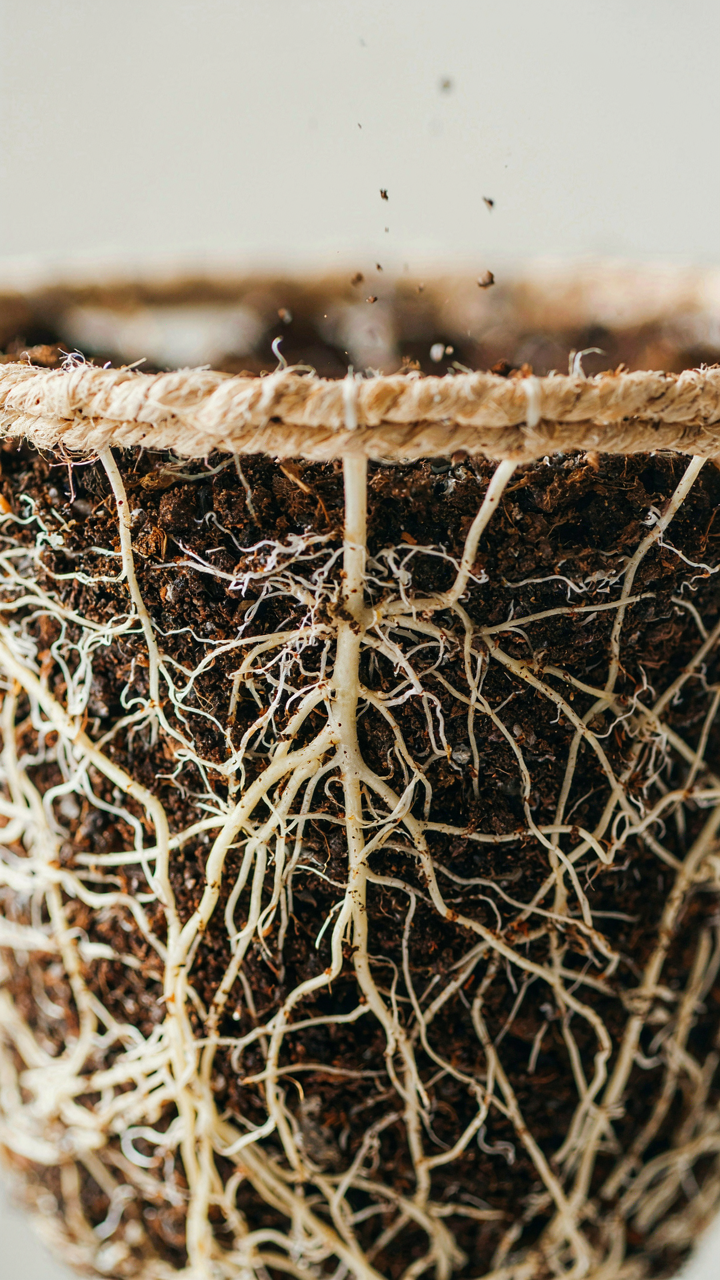
You want to believe that expensive fertilizer is doing the work. It isn’t. In biology, systems use networks to move resources efficiently, and your hanging basket soil works the same way. Mycorrhizal fungi form symbiotic relationships with plant roots, extending the root system’s reach by orders of magnitude. The plant feeds the fungus sugars. The fungus feeds the plant water and nutrients it couldn’t access alone. This is a transaction, not charity.
Most hanging basket soil ships sterile or nearly sterile. The fungal network doesn’t exist yet. You can inoculate it by adding mycorrhizal products before planting or mixing in compost from established gardens. The fungi colonize roots within weeks. Once established, they become the actual delivery mechanism for everything you fertilize with. Skip this step and you’re throwing money at a disconnected system.
Beneficial Bacteria: The Soil’s Chemical Engineers
Bacteria don’t make plants look better. They make nutrients available. Nitrogen fixation, phosphorus solubilization, and potassium weathering all happen through bacterial action, not because of NPK ratios on bottles. A living bacterial population transforms locked up minerals into plant-usable forms. Without it, your fertilizer sits inert.
Add bacterial colonies through quality compost, aged manure, or bacterial inoculants designed for container gardens. These organisms work year-round in hanging baskets, breaking down organic matter and converting it into accessible nutrients. For special occasion baskets on tight blooming schedules, establish the bacterial foundation two to three weeks before planting to maximize nutrient cycling during the display period.
The Real Obstacle Isn’t A Lack Of Fertilizer; It’s A Lack Of Understanding The Hidden Life Beneath The Surface
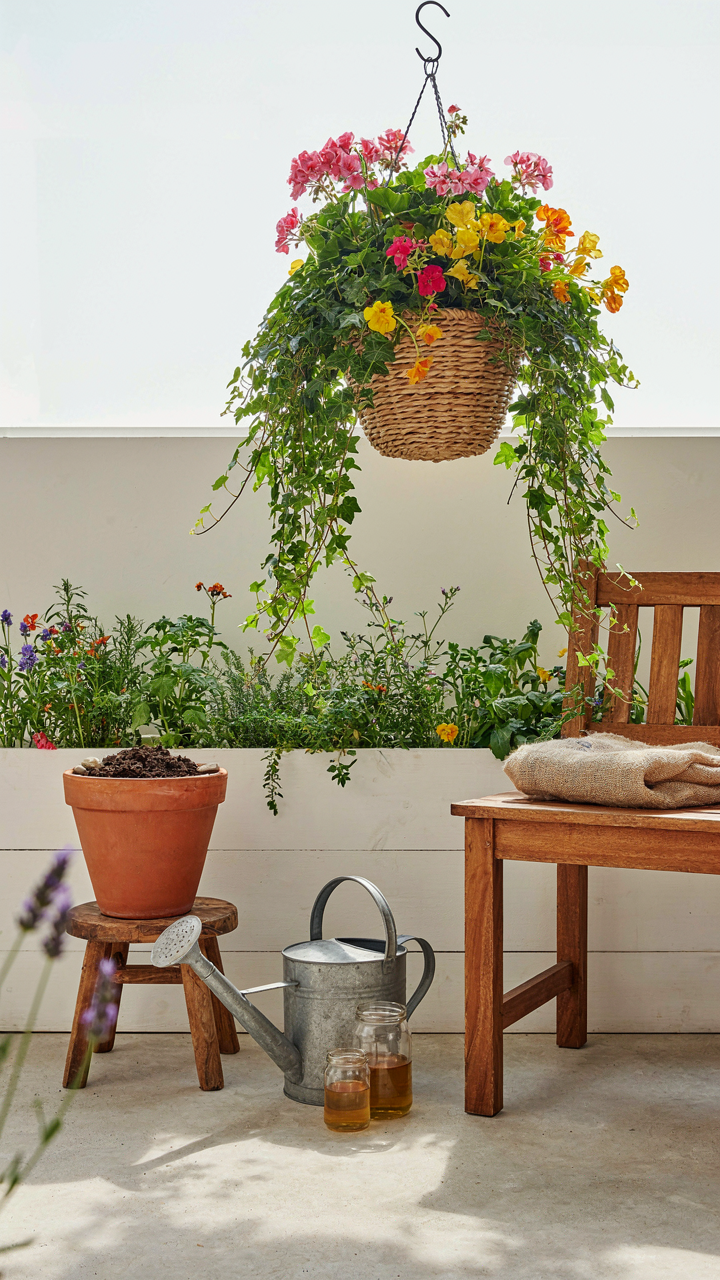
Most people treat hanging baskets like decorations instead of living systems. They dump fertilizer on top and hope. You need to think like the soil thinks. Microbes, nutrients, and root density work together in invisible ways. Start today by digging your finger two inches down and actually feeling what’s happening. If it’s rock hard or bone dry, your fertilizer strategy fails before it starts. Fix the foundation first. Everything else follows.



