
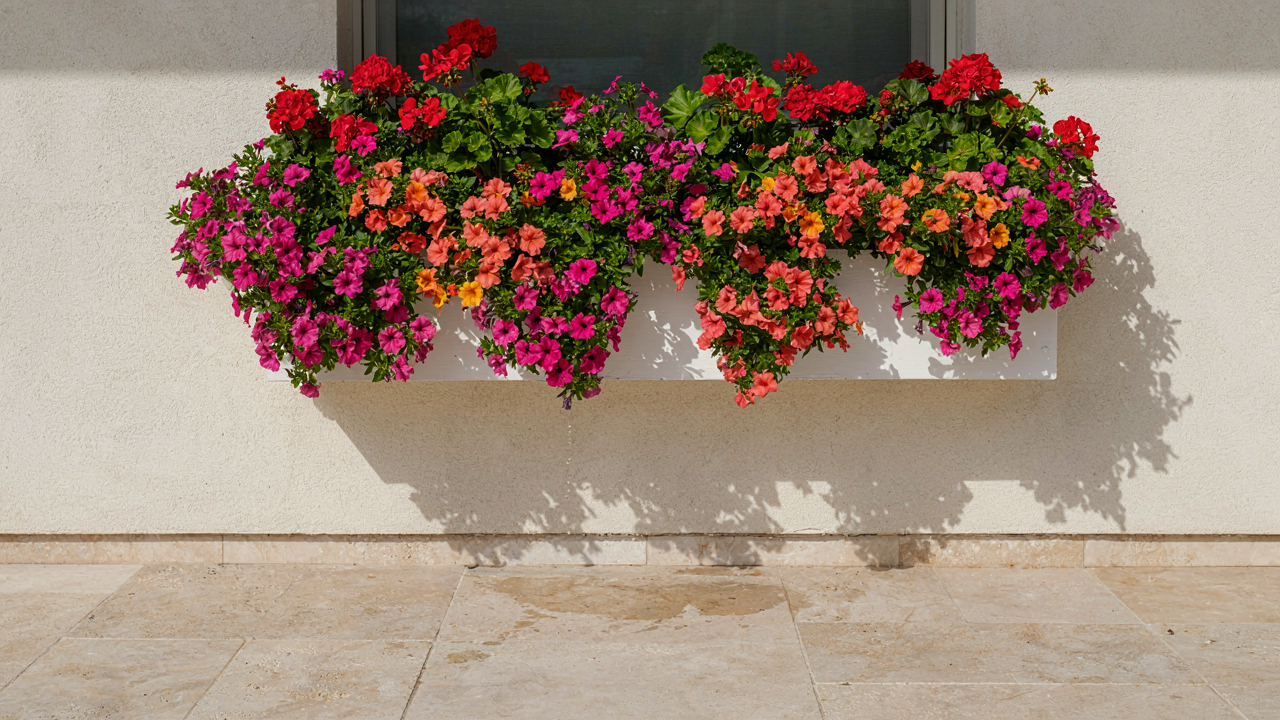
Beyond The Spritzer: Why Most Window Box Watering Fails

Plants Don’t Signal Thirst The Way You Think
You want a simple rule because complexity feels like failure. Here’s the mechanism: plants don’t ask for water when they need it. They ask when they’re already stressed. By then, you’ve already lost. Most people water based on soil appearance, but soil color lies. Dry-looking soil can still hold enough moisture. Wet-looking soil can suffocate roots. The gap between what you see and what the plant needs is where window boxes die.
Soil moisture exists on a spectrum, not a binary. A window box dries faster than ground soil because it has less thermal mass and more air exposure. Petunias and geraniums tolerate drought better than impatiens or begonias. The mistake isn’t underwatering or overwatering individually. The mistake is treating all plants and all conditions the same. You need a protocol, not intuition. Check soil one inch below the surface with your finger. If it feels damp, stop. If it crumbles dry, water until water drains from the bottom.
Consistency Breaks More Than Neglect Does
Hydration cycles operate like load management in engineering. Roots adapt to patterns. A plant that receives water every three days adjusts its root system differently than one watered sporadically. Irregular watering stresses plants more than predictable drought. Most people water heavily after three days of neglect, then skip two days, then water again. This boom-bust cycle triggers root rot, fungal disease, and wilting even when total water volume is adequate.
Window boxes on south-facing walls dry faster than north-facing ones. Morning sun accelerates soil temperature and evaporation. Wind exposure accelerates it more. You need to match your watering frequency to your specific box’s microclimate, not to a generic schedule. Check soil moisture at the same time each morning before temperature peaks. Water when the top inch feels dry but the second inch stays moist. This prevents the guessing. Establish the rhythm your specific box needs, then hold it.
The Subterranean Strategy: Mastering Root Level Saturation

Deep Watering Reaches Where Surface Moisture Cannot
You want your window box to look full and thriving without the constant maintenance. Here’s what nobody tells you: surface watering is theater. It wets the top inch while roots below stay parched. Think of this like soil infiltration in civil engineering. Water penetrates soil in layers, and capillary action only moves moisture upward a few inches. Your roots live deeper than that spray reaches.
The mechanism is simple. Water applied slowly at the base of the soil column absorbs downward by gravity and capillary pull, saturating the entire root zone. This takes longer than a quick spritz, but it happens once, completely. Use a watering can with a narrow spout or drip line directed at the soil surface. Pour until water drains from the bottom. Stop when drainage flows freely. This single action prevents both drought stress and the false confidence of wet foliage with dry roots.
Stop Losing Nutrients To Surface Runoff
Most people water window boxes like they’re rinsing a dish. Water hits the soil, bounces off compacted surfaces, and streams down the sides into the gutter. Nutrients dissolved in that runoff leave your plants immediately. The common advice to “water more often” actually makes this worse by creating more runoff events throughout the week.
Water slowly enough that soil absorbs it instead of rejecting it. Compacted window box soil sheds water because it lacks structure. Break the surface gently with a small fork before watering to open capillaries. Pour water in stages: a small amount, wait thirty seconds, then pour again. This gives soil time to absorb rather than shed. Slow watering also allows dissolved nutrients to move into the root zone instead of running off as waste. When water enters soil gradually, roots access what stays behind.
The Window Box Drip Irrigation Deception: Automation Vs. Autonomy

When Convenience Replaces Attention
You want the system to do the thinking for you because you’re busy and tired of failing plants. Here’s what actually happens: drip irrigation on window boxes creates a false sense of control that masks the real problem, which is that you’ve outsourced observation. Automation works in agriculture at scale because conditions are predictable. Your window box lives in a microclimate that changes daily based on sun angle, wind exposure, humidity, and season. A timer knows none of this.
Most drip systems either overwater or underwater because they operate on fixed schedules that ignore your box’s actual demand. Soil moisture isn’t static. A system that worked in May will drown roots in September when evaporation slows. You end up with root rot or wilting because you trusted the machine instead of reading the environment. The mechanism is simple: automation removes feedback. Removed feedback breeds dead plants dressed up as solved problems.
Building Intuitive Watering Habits Without Tech Dependence
Forget the advice that you need discipline or a routine. You need a signal system that makes watering obvious without thought. Lift the box every two to three days. Feel the weight. Soil density changes when water content drops. Your hand knows this faster than your brain processes rules. Within two weeks, you’ll calibrate what “dry” feels like for your specific box, soil type, and location.
The real protocol: water when the top inch of soil feels dry to your touch, not when a calendar says to. Check before work. Check before rain. Check before you leave town and arrange coverage. This isn’t inspiration or willpower. It’s a physical habit loop where the sensory input (weight, soil texture) triggers the action (water or skip). That loop beats any timer because it forces you to stay present to actual conditions.
The Planter Box Watering System Protocol: Engineered Hydration, Not Haphazard Hosing

Drainage Holes Are Not Optional Details
You want your window box to look full and thriving without checking it daily because that would mean you’re obsessing over plants. Here’s the mechanism: water needs an exit strategy or it suffocates roots by displacing oxygen in the soil. Plants die from waterlogging far more often than drought. Drainage holes at the bottom of your planter box are the foundation. Without them, water pools, soil becomes anaerobic, and roots rot regardless of how carefully you water.
The hole size matters. Aim for holes between one-quarter and one-half inch in diameter, spaced three to four inches apart along the bottom. This spacing prevents soil from washing out while allowing water to exit freely. If your box sits on a windowsill or ledge, place a tray underneath to catch runoff and protect the surface. The tray also lets you monitor how much water drains, which tells you about soil moisture depth.
Soil Mix Controls Water Movement
Physics governs how water behaves in soil, and the principle is capillary action: water moves through small pores against gravity, but only if those pores exist. Most generic potting soil compacts over time and loses its pore structure, turning into a dense brick that either floods or dries unevenly. Window boxes demand a soil mix with intentional structure. Use a blend of potting soil, perlite, and coconut coir in roughly equal parts. Perlite creates large air pockets that allow water to drain quickly while still holding some moisture. Coir retains water longer than peat and won’t compress as fast.
The texture of your mix determines how often you water and how predictable that schedule becomes. A dense soil requires light, frequent watering to avoid saturation. An airy mix with high perlite content dries faster and forgives occasional skipped days. Check your mix by pressing it between your fingers when dry. You should see visible particles and feel resistance, not a smooth paste. Refresh your window box soil every spring instead of reusing it year to year. Compacted soil from the previous season will repeat its drainage failures.
Plastic Window Box Ideas: Dispelling The Material Myths Of Moisture Retention
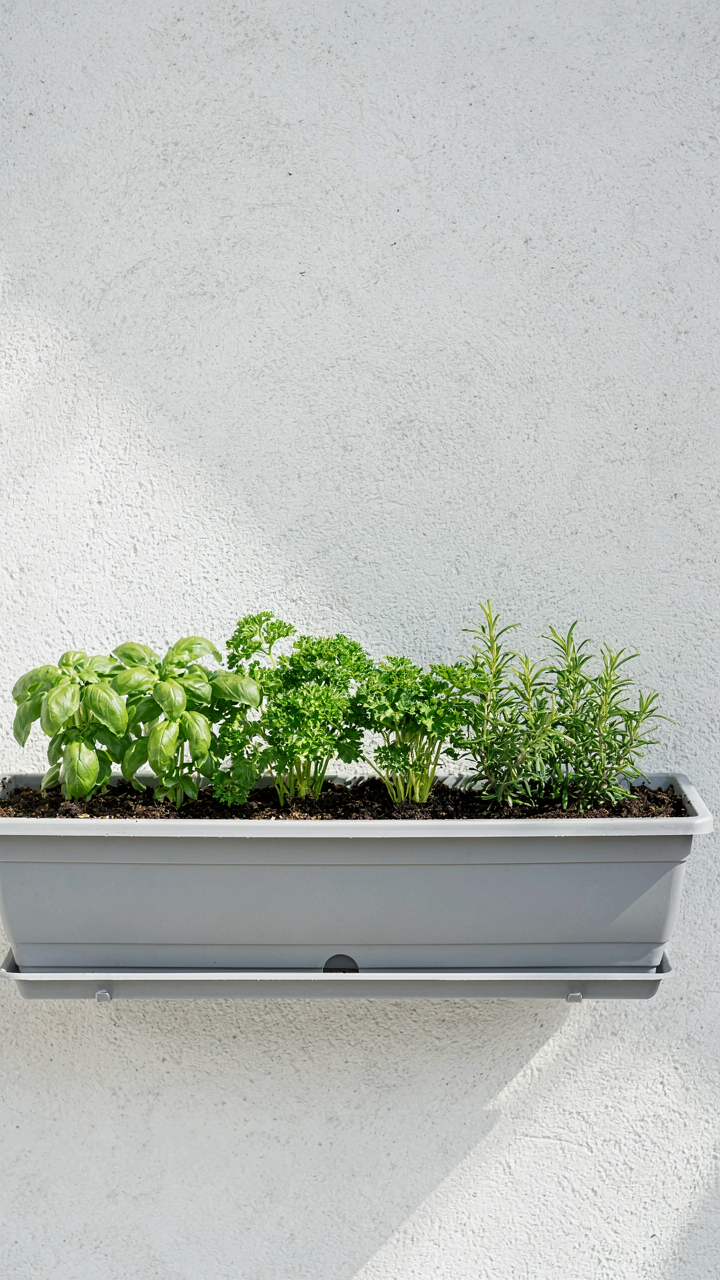
How Plastic Affects Water Temperature
You care about this because you’ve heard plastic is “bad” for plants and want permission to buy expensive alternatives. That’s not the real issue. Thermal dynamics determine how fast water evaporates from soil, and plastic boxes behave like insulators in ways terracotta never does. Plastic slows heat transfer to the soil. This means water stays cooler longer and evaporates slower than in natural materials, which is a measurable advantage in hot climates, not a liability.
Terracotta wicks moisture out through its porous walls and accelerates evaporation through direct solar absorption. Plastic blocks this mechanism entirely. In direct sun, plastic-contained soil stays 5 to 10 degrees cooler than terracotta-contained soil over the same period. For window boxes receiving six or more hours of sunlight daily, this thermal lag actually reduces watering frequency because the soil loses less moisture to atmospheric evaporation. The trade-off is that plastic traps heat during cold snaps, which matters if you’re overwintering tender plants.
Drainage Modifications That Actually Work
Most people drill extra holes in plastic boxes and call it solved. That misses the real problem: plastic boxes retain water at the bottom because they don’t breathe like terracotta does. You need to add a false bottom layer using gravel or broken terracotta shards, creating an air gap that lets water drain away from roots without pooling. Without this step, you’re fighting root rot despite perfect watering technique.
Install a quarter-inch drainage layer before adding soil. This forces excess water to move laterally rather than collect under the root ball. Combine this with one drainage hole per six inches of box width, positioned slightly higher than the box floor. Seal any seams where water can trap using aquarium-grade silicone. These modifications transform plastic’s water-retention liability into an asset by controlling exactly where moisture sits instead of letting it accumulate randomly.
The Self Watering System Fallacy: True Independence Or Hidden Dependence?

How Reservoirs Actually Fail You
You want to buy a self-watering system because you’re terrified of killing plants while traveling or working long hours. Here’s what matters: these systems don’t work independently—they shift your neglect from watering frequency to reservoir maintenance. The mechanism is borrowed from hydraulics. In hydraulics, a closed system only functions if all components remain sealed and operational. A window box reservoir operates the same way. The wicking material draws water up through capillary action only when the soil above stays moist enough to trigger the draw. Most people ignore the reservoir entirely after installation, assuming the work is done. The system then fails silently because algae clogs the wick, mineral deposits block water movement, or the reservoir empties unnoticed.
The real problem isn’t the design—it’s that passive systems create permission to stop paying attention. You install one, feel relief, then six weeks pass before you realize the soil is concrete and the reservoir is bone dry. Self-watering boxes demand more oversight than hand-watering, not less. You must check the reservoir level weekly, clean the wick monthly, and monitor soil moisture independent of the system’s promise. The system only works if you treat it as a tool requiring active management, not as an excuse to disappear.
When Automation Becomes Abdication
Nobody warns you that passive systems encourage the exact behavior that kills plants. You set the box up in spring, forget about it entirely, and assume summer rain will keep the reservoir topped off. Rain doesn’t work that way in a closed system. Window box reservoirs collect almost no rainwater because boxes sit elevated and overhang prevents water from entering the reservoir chamber. The soil above may get wet from rain, but the reserve stays empty. By mid-summer, the wick dries out completely and stops functioning. The plant then suffers acute drought while you believe the system is protecting it. This gap between perceived and actual function is where most window boxes fail.
The fix requires abandoning the autonomy myth entirely. Check your reservoir every seven days without exception. Refill when it drops below halfway full, regardless of recent weather. Inspect the wick for blockages and replace it annually at season start. Document these dates on a calendar or phone reminder—make it a system within the system. This removes the guesswork and replaces false confidence with actual data about what’s happening inside the box.
DIY Window Box Planting: Crafting The Optimal Water Reservoir

Build A Drainage Base Layer First
You want your plants to look healthy without actually checking on them constantly. That’s the real reason you care about this. The mechanism is simple: gravity moves water down, but you need something to catch it before it pools around roots and kills them. A drainage layer isn’t decoration. It’s hydraulic infrastructure that separates saturated soil from root systems.
Create a physical barrier using inert materials at the box bottom. This layer sits below your potting mix and channels excess water toward drainage holes. Without it, water stagnates and triggers root rot within days. The depth depends on box size, but aim for one to two inches minimum. Compact the material lightly so it stays in place when you add soil above it.
- Pea gravel: Small stones allow water to move freely while blocking soil particles from escaping through drainage holes. Cost-effective and reusable across multiple boxes.
- Broken terracotta shards: Repurpose cracked pots as a drainage layer. Irregular surfaces create air pockets that prevent compaction over time.
- Coconut coir chunks: Coarse fibers retain some moisture while maintaining permeability. Degrades slowly, so replace every two to three seasons.
- Landscape fabric with gravel: Layer perforated fabric first, then gravel on top. Fabric prevents soil migration without blocking water movement.
- Expanded clay pellets: Lightweight and reusable indefinitely. Create consistent air gaps that don’t compress under soil weight.
The drainage layer works only if your box has actual holes. Drill them if they don’t exist. Position them at the lowest corners where water naturally pools. The number matters less than placement. Two holes in the right spots outperform six holes in the middle.
Soil Amendment For Water Stability
Most advice treats soil as static. It isn’t. Soil is a living matrix that changes its water-holding capacity based on what you add to it. Think in terms of capillary action from soil science: your amendment strategy determines whether water moves up to roots or stays trapped below them, inaccessible.
Amend potting mix with materials that increase pore space without degrading quickly. Standard bagged potting soil compacts over weeks, squeezing out air and trapping water. You’re counteracting that. Mix in compost, perlite, or bark to maintain structure. Start with a ratio of seventy percent base potting mix to thirty percent amendment. This percentage preserves moisture while preventing saturation.
Peat moss holds water aggressively and works against you in window boxes. Swap it for coir or compost-based mixes that drain faster. Sand sounds like it helps but doesn’t. Fine sand creates a concrete-like cap that blocks water movement entirely. Use coarse amendments only. Replace soil annually if you’re in a humid climate. Soil density increases year over year, and your watering precision can’t compensate for structural failure. Check the soil before planting. If it balls up in your hand and doesn’t break apart easily, it’s already compacted. Don’t use it.
Watering Window Planters: The Climate Combat Doctrine

Your Microclimate Is Not Your Neighbor’s Microclimate
You want a formula that works everywhere because formulas feel safe. They don’t. Microclimates are the real variable—borrowing from ecology, think of your window box as a distinct ecosystem with its own temperature, humidity, and drainage patterns that shift daily. A south-facing box bakes differently than a north-facing one. An east window catches morning sun and dries faster than a west window that absorbs afternoon heat. Soil temperature, not just air temperature, determines how fast water moves through the medium and how quickly roots access it.
The mechanism is simple: soil exposed to direct sun heats faster, water evaporates quicker, and roots near the surface dry out within hours. A shaded box in the same building might stay moist for two days. Stop watering on a schedule. Start watering based on what that specific box demands. Check soil moisture by inserting your finger one inch deep. If it feels dry, water. If it feels moist, wait. This observation loop replaces guesswork and prevents both drought and rot.
Wind, Sun, And Humidity Shape Everything
Wind is the silent killer that every generic watering guide ignores. Exposed window boxes on balconies or high floors experience wind velocity that accelerates water loss from soil and leaves. A breezy location demands more frequent watering than a sheltered alcove. Sun exposure multiplies this effect—direct afternoon sun combined with wind can dry a box in eight hours. Humidity plays the inverse role. In dry climates or heated indoor spaces near a window, water evaporates faster. In humid coastal areas or during rainy seasons, soil stays wet longer and roots need less frequent watering.
The real protocol: measure these forces, don’t assume them. On hot, windy days, water your exposed boxes in early morning and again in late afternoon if the soil surface dries completely. In cool, humid conditions, water once and wait three days before checking again. Watch the plant, not the calendar. Wilting leaves mean you’re behind. Yellow leaves with soggy soil mean you’re ahead. Your box will tell you which force is winning—wind, sun, or humidity—if you actually look at the soil state and plant response instead of defaulting to “every two days.”
Beyond The Surface: Reading Your Plants’ Real Hydration Signals

Visual Cues: Wilting Isn’t The First Sign
You want a simple rule so you stop second-guessing yourself. The problem is that wilting is already the plant’s distress call, not its water request. Soil biology works like a buffer system: roots access moisture through capillary action and osmotic pressure before visible stress appears. A drooping leaf means dehydration has already progressed past the point where recovery is guaranteed. The plant signals trouble through leaf color shift, slower growth, and reduced turgor pressure days before wilting shows up.
Watch for dull leaf texture and subtle color fading before any droop occurs. These changes happen because the plant redirects energy inward when water becomes scarce. By catching this earlier stage, you water before damage compounds. Wilting recovery takes energy the plant should spend on growth. Early intervention means the plant never enters crisis mode, and your window box stays productive instead of just surviving.
The Finger Test Works Because Physics
Soil compaction and moisture distribution follow predictable rules from hydrology: water moves downward through gravity and horizontally through capillary rise depending on soil particle size. Your finger measures actual conditions at the root zone, not assumptions. Push your index finger into the soil two inches deep, directly beside the stem where roots concentrate. If soil feels like damp sand that holds shape without sticking, you have adequate moisture. If it crumbles instantly and dust releases, you need water now.
Temperature affects this reading too, so test in the cooler morning before sun heats the pot. Warm soil dries faster and can mislead you into watering too soon. The finger test bypasses guesswork because you’re sampling the exact location where roots absorb water. Do this before every watering cycle, and you eliminate the need for moisture meters or watering schedules that ignore weather and season changes.
Window Box Ideas For PVC Windows: Integrating Structure With Sustenance

Securing Boxes For Stability And Wind Resistance
You want your window box to look effortless. What you’re actually afraid of is it falling and destroying what’s below, plus the embarrassment of poor installation. The mechanism is simple: wind creates lateral force, gravity pulls down, and mounting hardware distributes load. PVC window frames are rigid but not load-bearing walls. Most people undersecure boxes because they overestimate frame strength.
Use L-brackets rated for at least twice the combined weight of soil, water, and plants. Attach directly into the window frame’s structural PVC channels, not the glass tracks where operators slide. Space brackets 16 to 24 inches apart for boxes longer than 36 inches. A secured box doesn’t shift when wind hits it, which means soil stays compact and watering distribution stays consistent.
Heat Absorption And Sun Exposure Dynamics
Think of your window box like a thermal reservoir, borrowing the physics term for systems that store and release energy. Dark materials absorb more solar radiation and raise soil temperature faster. Lighter colored boxes stay cooler. This matters because soil temperature controls moisture availability to roots, independent of how much water you apply.
South and west-facing PVC windows create high-heat zones where soil dries 30 to 40 percent faster than north-facing boxes. Position lighter-colored boxes on these exposures. In high-heat situations, soil needs water more often, but only because evaporation increases, not because plants suddenly demand more. Check soil moisture by inserting your finger two inches deep. Adjust watering frequency based on how fast that soil dries, not on a calendar schedule.
The Real Obstacle Isn’t Your Window Box, It’s Your Impulse For Overcomplication Masking Inaction

You don’t need a watering schedule app or a moisture meter or perfect soil ratios. You need to touch your soil once a day and water when the top inch feels dry. That’s it. Most people won’t do this because action feels too simple to matter. Today, skip the research rabbit hole and water one window box by hand. Feel the soil. Notice what happens. The complexity you crave is just procrastination wearing a thinking cap.



