
Beyond “Pretty”: The Ecological Imperative Of Window Box Plants

Your Microclimate Isn’t Your Neighbor’s
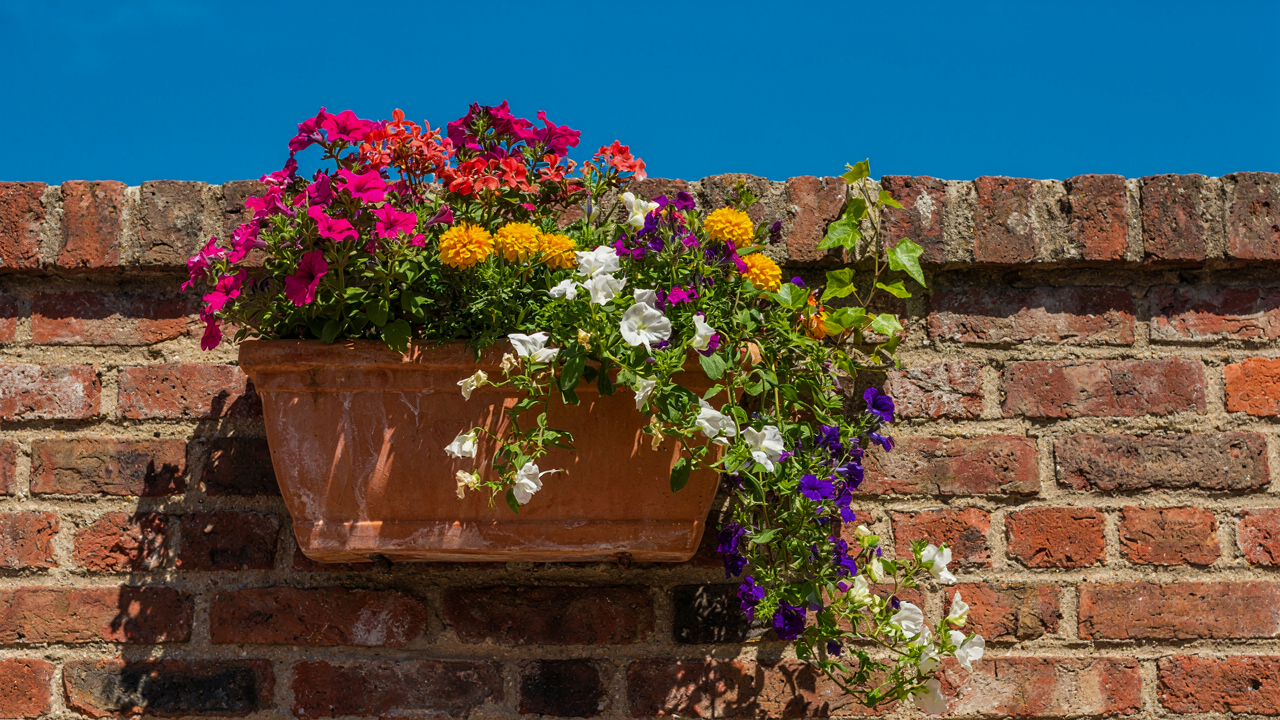
You want window box trailing flowers to look effortless. That’s the real tell. But effortlessness comes from matching plant physiology to the exact conditions your window creates, not from buying whatever Instagram says works. Borrow from microclimate ecology: your window box operates as a distinct thermal and moisture zone. A south-facing box in full sun heats to 15 degrees hotter than ambient temperature. North-facing boxes stay cool and dry. East-facing boxes get morning intensity without afternoon scorch. The plant must match the zone, not the other way around.
Trailing petunias thrive in heat and drought. Dichondra prefers dappled light and consistent moisture. Bacopa wants humidity and partial shade. Ivy geranium handles reflected heat off brick or stone. This isn’t preference. This is the plant’s operating system. Stop adjusting water schedules to force incompatible plants into your window. Instead, observe your box’s light hours, temperature swing, and wind exposure for one week. Document it. Then select trailing flowers bred or naturally suited to those exact conditions. That single protocol shift eliminates 80 percent of window box failures.
Soil Isn’t A Container For Roots
Common advice treats soil like decorative packing material. Wrong. Window box soil is a living ecosystem that either enables or strangles root function. Soil in a contained space doesn’t self-regulate like ground soil. It compacts. Drainage channels form. Salt accumulates. Microbes die under poor aeration. The mechanism matters: trailing flowers need oxygen at the root zone. Compacted soil suffocates roots before water even enters the equation.
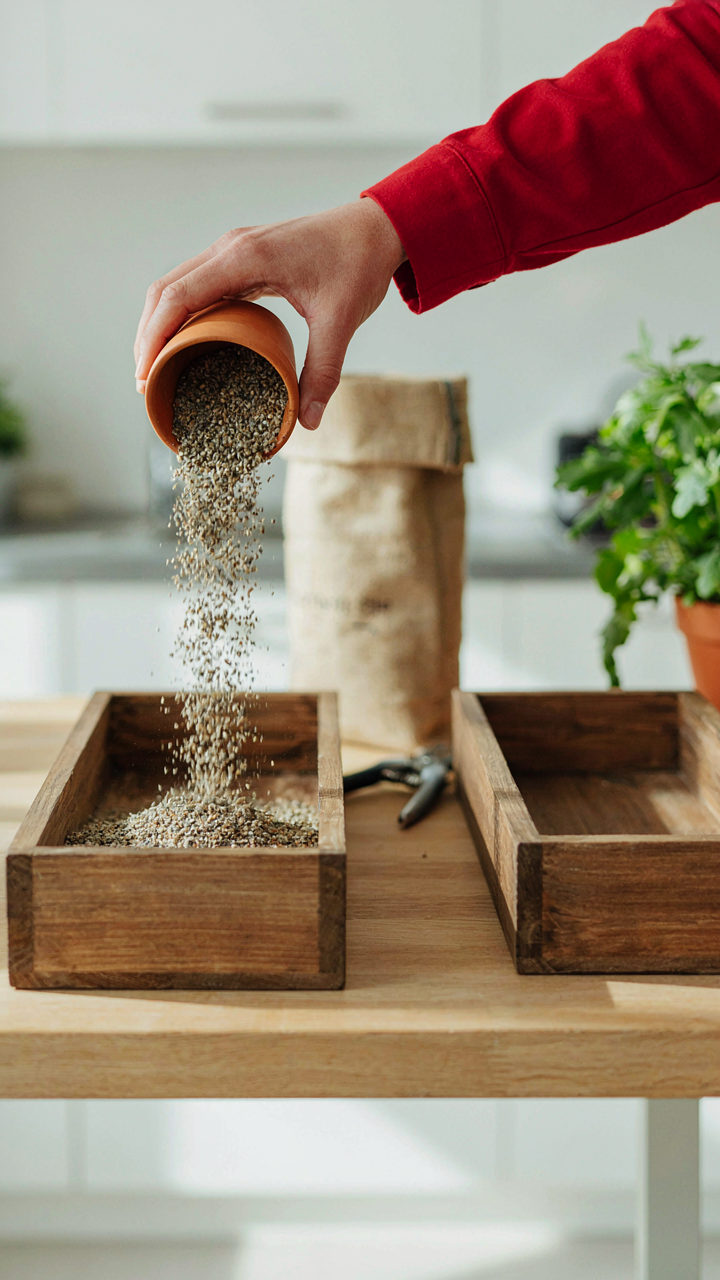
Quality window box soil must have structure that doesn’t collapse. Use a mix of 40 percent quality compost, 30 percent coconut coir or peat, 20 percent perlite, and 10 percent worm castings. Replace the top inch every spring. The worm castings aren’t luxury. They introduce beneficial microbes that prevent pathogenic fungal colonization in the confined space. Check drainage by watering and observing how quickly the box empties. If water pools after five minutes, the soil is dead. If it drains in under thirty seconds, roots lose water faster than they absorb it. Aim for the middle range. Water should fully drain within two to three minutes, leaving soil moist but not waterlogged.
The “Window Box Flowers Full Sun” Fallacy: Light As A Spectrum, Not A Switch

Measuring Actual Light Exposure, Not Just Assumptions
You want to believe your south-facing window is “full sun” because that’s easier than admitting you might kill the plant anyway. The real issue: “full sun” is marketing language, not measurement. Light exists on a spectrum measured in foot-candles or lux, and trailing flowers respond to specific ranges, not categories. A south-facing window at noon delivers 5,000 to 10,000 foot-candles. The same window at 8 AM delivers 500. Most trailing flowers—petunias, calibrachoa, dichondra—need 3,000 to 6,000 foot-candles minimum to flower heavily. Guessing kills more plants than ignorance.
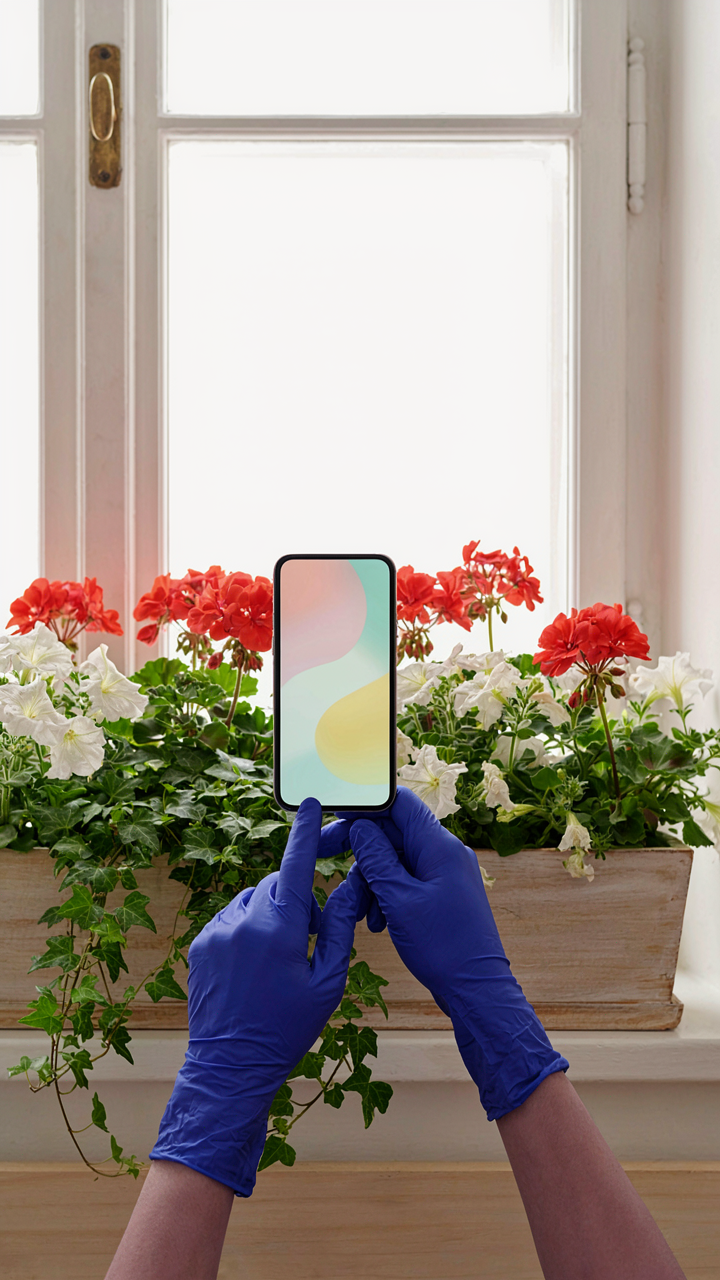
Measure light with a smartphone app calibrated to foot-candles or lux, or buy a cheap light meter for twenty dollars. Test your window box location at three times: early morning, midday, and late afternoon. Record the numbers for seven days across different seasons. You now know your actual conditions. Most people skip this step and plant shade-tolerant trailing flowers in a spot that gets four hours of weak morning light, then blame genetics when nothing blooms. The plant isn’t failing. Your data collection was.
Optimizing Plant Placement For Directional Light
East-facing light hits hard and fast early, then disappears by 2 PM. West-facing light starts weak, peaks violently in afternoon heat, and stresses shallow-rooted trailing plants. North-facing light stays consistent but weak year-round. South-facing light varies by latitude and season. Most gardeners plant based on visual preference, not light direction physics. Here’s the mechanism: trailing flowers need sustained, moderate light, not intensity spikes. This means east or southeast exposure beats west-facing for trailing flowers in most climates because the afternoon heat spike won’t desiccate shallow root systems as fast.
Place heat-sensitive trailers like impatiens or begonias on east or north faces where afternoon sun won’t roast them by July. Position heat-loving trailers like petunias and calibrachoa on south or west faces, but add afternoon shade cloth in zones 8 and hotter. Rotate your window box weekly if it’s moveable, shifting it one foot east or west to even light exposure across all stems. This prevents the common problem of one side flowering heavily while the shaded side drops buds. Light consistency beats light intensity for sustained trailing flower performance.
The Root System Protocol: Engineering Subterranean Success For Window Box Garden
How Deep Your Box Actually Needs To Be
You want your window box to look effortless from the street. That’s the real reason you’re reading this. Here’s what most people miss: trailing flowers don’t need as much vertical depth as you think, but they need consistent depth. Borrowed from soil science, root “anchorage” isn’t about depth alone—it’s about the volume of substrate available for water and nutrient uptake. A window box six to eight inches deep works. Anything shallower than six inches creates a moisture crisis in heat.
Width matters more than depth for trailing varieties. Ten to twelve inches wide gives roots lateral expansion room without suffocation. The soil volume compounds: a 36-inch box at eight inches deep holds roughly 24 liters of growing medium. That’s enough for three to five trailing specimens depending on the cultivar. Don’t overthink it beyond those parameters. The limiting factor isn’t how deep you go—it’s how fast the substrate dries out relative to surface area.
Drainage That Actually Works
The standard advice about drainage holes is incomplete. Everyone says “add drainage holes.” Nobody explains why poor drainage kills trailing flowers faster than drought does. In hydrology terms, “saturation” is your enemy—when water fills all soil pores with no air gaps, roots enter anaerobic conditions and die within days. Petunias, ivy geraniums, and verbena have shallow fibrous roots that suffocate instantly in waterlogged substrate.
Drill or punch holes along the bottom and lower sides of your box—not just the bottom. A single row of quarter-inch holes every two inches prevents water from pooling in dead zones. Layer two inches of coarse gravel or broken terracotta pieces beneath your potting mix. This creates an air gap that lets excess water move down and out instead of sitting. Check drainage by watering heavily, then tilting the box slightly fifteen minutes later. Water should still drip. If it pools, add more side holes immediately.
The “Window Boxes” Nutrient Flux Method: Applying Economic Principles To Plant Feeding

Doing More With Less Space And Resources
You want your window box to look effortless while secretly knowing you’re winning at plant care. The real mechanism is resource allocation efficiency, borrowed from economics. In economics, efficiency means maximum output per unit of input. In window boxes, it means maximum growth and bloom density per milliliter of water and gram of fertilizer you actually deploy. Most growers overfeed or underfeed because they treat fertilization like a fixed ritual instead of a variable response to what the box actually demands week to week.
Trailing flowers in confined spaces need consistent nutrient availability without waste. A window box’s soil volume is small, so excess fertilizer either burns roots or leaches away. The method is simple: water-soluble fertilizers applied at half strength every seven to ten days beats monthly granular dumps or daily guessing. This keeps nutrient concentration stable without the feast-famine cycle that stresses trailing varieties like petunias, calibrachoa, and bacopa. Measure your box volume in liters, calculate fertilizer dose precisely, and adjust based on growth rate and blooming output, not calendar dates.
Picking The Right Nutrient Profile Over Generic Blends
Generic balanced fertilizers waste your money because they assume all plants want the same ratio. Trailing flowers prioritize bloom production over root or leaf development once established. An economy-minded grower spots the opportunity cost immediately: a 10-10-10 formula gives you unnecessary nitrogen that pushes foliage instead of flowers, while a 5-10-10 or 7-9-5 preserves bloom energy and keeps the trailing structure compact.
Check the fertilizer label for NPK ratio, micronutrient content, and whether it contains chelated minerals. Trailing petunias and bacopa respond to phosphorus and potassium faster than nitrogen. Buy a targeted bloom formula rather than universal stock. Water-soluble options let you adjust strength per watering event without committing to granular slow-release that you cannot dial back if plants respond too aggressively. The concrete action is this: select one fertilizer, measure it by weight or volume marker, apply every ten days at specified strength, and increase or decrease only the concentration, never the frequency, based on visible growth over four weeks.
Architectural Integration: Window Planters As Extensions Of Structure, Not Afterthoughts
Material Selection For Durability And Thermal Performance
You want your window box to look intentional, not like something you grabbed at a garden center. The real issue is that most people treat material choice as cosmetic when it’s actually structural. Thermal mass matters here. Wood, composite, and metal each absorb and release heat differently, which directly affects soil temperature and root stress in trailing flowers. Lighter-colored materials reflect heat. Darker ones absorb it. This isn’t preference. It’s physics applied to keeping soil stable.
Composite materials win for longevity because they resist rot and temperature cycling better than wood, but they retain heat longer in summer, which can cook shallow-rooted trailing varieties like bacopa and dichondra. Galvanized metal cools faster but corrodes over time in wet climates. Fiberglass resists both issues but costs more upfront. Cedar holds up better than pressure-treated pine but requires maintenance. Pick based on your climate’s extremes, not appearance alone.
Securing Mature Plants Against Weight And Weather
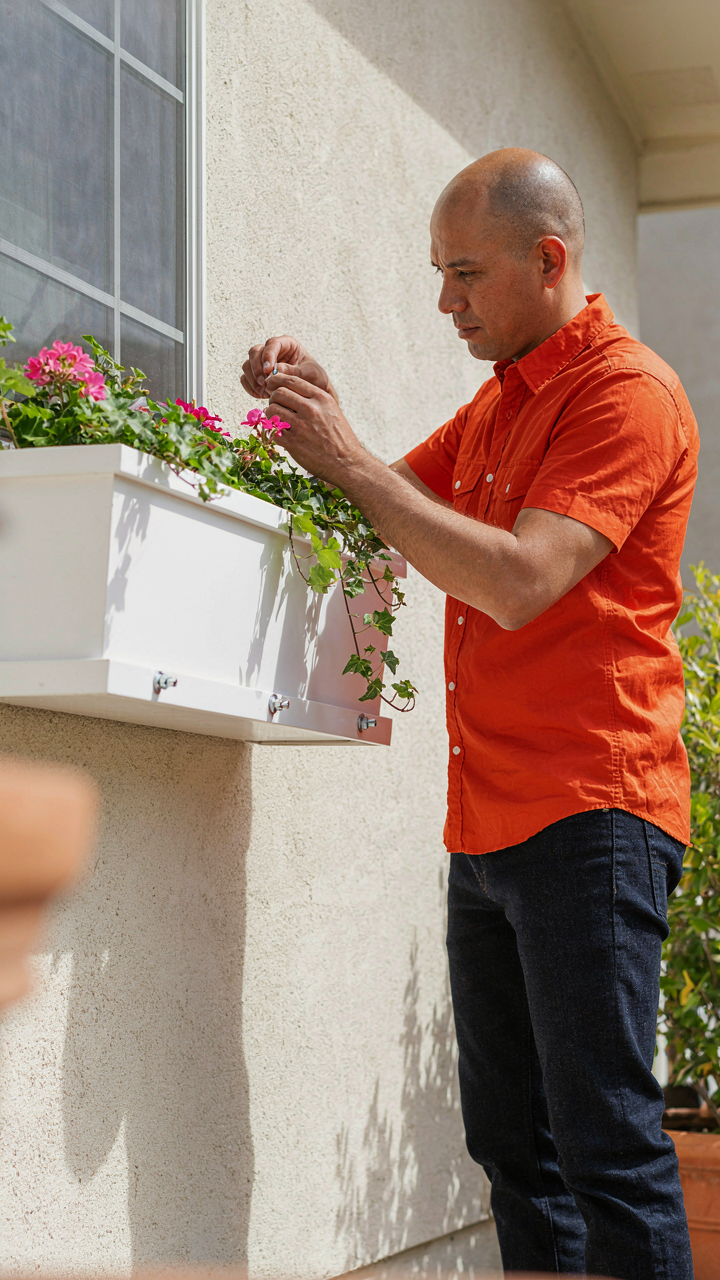
Most people bolt a window box to the wall and assume it’s done. Wrong. The real problem isn’t installation. It’s load calculation. A fully mature trailing petunias or ivy trailing specimen holds water weight that exceeds its dry mass by 300 to 400 percent when saturated. Add wind pressure, and you’ve got forces that shift leverage points daily.
Anchoring requires multiple fastening points distributed across the box length, not just two end bolts. Use lag bolts or through-bolts into solid structure, never drywall anchors alone. Reinforce with metal brackets underneath if the box spans more than 24 inches. Check fasteners every spring because freeze-thaw cycles loosen them. The mechanism is simple: distributed load, solid substrate, regular verification. Skip any of these and you install a liability that will damage walls or injure people below.
Water Dynamics: The Unspoken Variable In Summer Window Box Flower Ideas

How Soil Composition Controls Water Movement
You want your trailing flowers to look effortless. That’s the real motive here. But effortless means invisible infrastructure. Borrow the term from soil physics: capillary rise is the upward movement of water through soil against gravity. In window boxes, this mechanism determines whether water reaches roots or pools uselessly at the drainage hole. Most people blame the watering schedule when the real culprit is soil structure.
Standard potting mixes lack the density needed for reliable capillary action in shallow containers. Add perlite for drainage and you break the capillary chain entirely. The answer is mixing medium-grade bark, coconut coir, and peat in ratios that hold moisture without compacting. Test this: fill a box with your mix, water it, then wait 48 hours. If the top two inches dry but the middle stays moist, you’ve nailed capillary action. If it dries uniformly top to bottom, your mix is too porous for trailing flowers.
Peak Demand Timing And Real Watering Protocols
The generic advice says water when soil feels dry. This is wrong for window boxes. The real variable is evapotranspiration rate, which combines soil evaporation and plant water loss into one number that changes hourly. On an 85-degree day with direct sun and 30 percent humidity, your trailing petunias or calibrachoa demand water twice. On a 65-degree cloudy day, once or none.
Stop guessing. Measure soil moisture at the container’s center, not the surface. Water when that middle layer drops to 60 percent saturation, not 0 percent. For most trailing varieties in summer, this means checking every other day and watering two to three times weekly. The mechanism is straightforward: soil at 60 percent saturation still delivers nutrients and oxygen to roots while staying moist enough that capillary action works. Wait until bone dry and you break that capillary chain for the next watering cycle.
The Trailing Plant Paradox: Why More Isn’t Always Better For Window Box Flowers

Crowding Kills Your Box Before Neglect Does
You want to pack the box full because empty space feels like failure. Here’s the mechanism: trailing flowers need airflow to dry leaf surfaces after rain or watering. When you cram plants together, moisture lingers on foliage. Fungal spores germinate in wet, stagnant air. The box looks lush for two weeks, then powdery mildew or botrytis colonizes the center where you can’t see it until damage spreads.
Density in window boxes mirrors airflow dynamics from HVAC design. Think of your trailing plants as obstructions in a ductwork system: too many obstacles, and air stagnates. Space plants so you can see daylight between cascading stems. This creates convection paths that allow moisture to evaporate rather than accumulate. Most growers ignore this and wonder why their petunias or ivy geraniums decline mid-season despite perfect watering schedules.
Cut Stems To Trigger Lateral Growth
Pruning trailing flowers seems counterintuitive when you want length and volume. The real goal isn’t visual appeal from day one. It’s forcing the plant to branch lower and wider, creating a denser structure that actually fills the box better over time without overcrowding at planting.
- Pinch seedlings at 2-3 inches: Remove the growing tip before planting. This delays immediate trailing but doubles branching points within two weeks.
- Remove flower buds in week one: Cut early blooms off. The plant redirects energy to stem elongation and branching instead of flowering.
- Prune trailing stems to half-length mid-season: When stems reach 8-12 inches, cut them back to 4-6 inches. New shoots emerge from leaf nodes along the cut stem.
- Target nodes just above leaf clusters: Cut directly above a node or leaf pair. Shoots emerge from that exact point, not randomly along the stem.
- Prune asymmetrically: Remove more from one side if growth favors that direction. This corrects the natural imbalance most trailing plants develop.
Strategic pruning early and mid-season produces fuller boxes in July and August than hands-off planting ever will. The window box that looks sparse in June outperforms the overstuffed one by August because the pruned box has structural integrity. Start pruning one week after planting, not after the plant fails.
Beyond The Season: Cultivating Perpetual Window Box Beauty

Staggered Planting For Year Round Blooms
You want the Instagram version of a window box, the one that never looks tired. Here’s what actually works: succession planting isn’t about rotating plants randomly. It’s about timing bloom cycles so one wave finishes as the next begins. This is basic agricultural scheduling applied to a box six inches deep.
Plant trailing varieties in three-week intervals from spring through early summer. Petunias, calibrachoa, and diascia all hit their peak between 6 to 10 weeks after planting. Stagger your sowings and transplants so maturity cycles overlap. By the time your May planting starts fading in August, your June plantings are at full density. The box stays full because you’ve engineered it that way, not because you got lucky.
Keeping Perennials Alive Between Seasons
Everyone says “just bring them inside.” That’s incomplete. The real problem is that most trailing perennials (like ivy-leaf geraniums) survive winter dormancy but lose vigor if stored in low light or warm indoor conditions. You need cold, controlled dormancy, not random garage storage.
Move established perennial trailing plants to an unheated greenhouse, cold frame, or sheltered outdoor location before the first hard frost. They’ll go dormant but stay alive. Water sparingly, maybe once monthly. In spring, before new growth starts, cut back dead growth and gradually reintroduce them to full light and warmth. This controlled reset prevents the leggy, weak growth that kills window boxes in year two.
The Real Obstacle Isn’t Plant Choice; It’s Your Refusal To Understand The Ecosystem You’re Building
You pick a trailing flower and expect it to thrive. It doesn’t. You blame the plant. Wrong. You ignored sunlight, airflow, soil drainage, and watering rhythm. Your window box fails because you treat it like decoration instead of a system. Stop shopping for plants. Start observing your actual conditions. Spend tomorrow mapping your window’s light at three different times. The best trailing flower isn’t the one that looks good in photos. It’s the one that matches the life you actually give it.



