
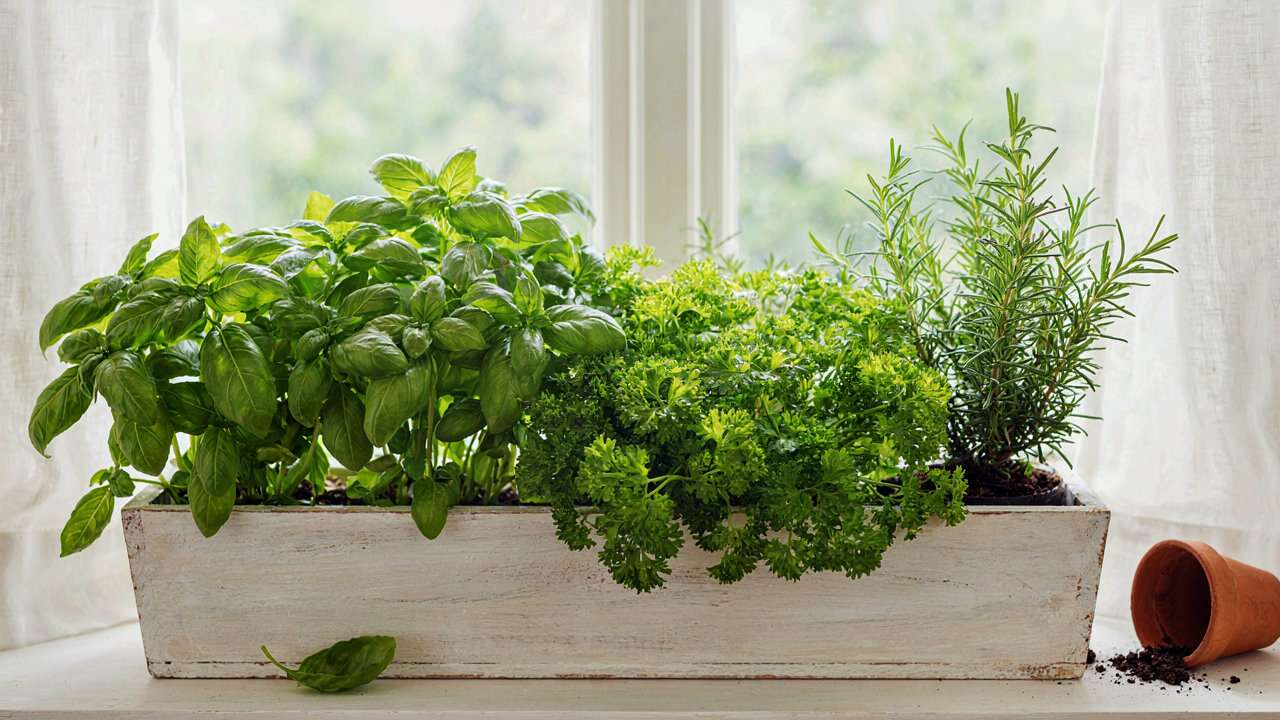
The Myth Of The Easy Window Box Herb Garden

Why Beginners Fail Before They Start
You want this to work because you’re tired of buying dead herbs at the grocery store and throwing money away. Here’s what nobody says plainly: “easy” is marketing language that replaces decision-making with hope. The real mechanism is that most people confuse low barrier to entry with low maintenance. A window box looks simple. You put soil in it, add seeds, water them. That’s not horticulture. That’s guess work. The plants don’t care about your optimism.
Dead herbs aren’t the result of bad luck or a brown thumb. They’re the result of skipping the fundamentals that make growth possible. Most guides tell you to stick a box on a window and call it done. They skip the part where light, drainage, and soil composition determine whether your basil lives or dies in week two. You’re not paying attention to what the plant actually needs because the marketing told you this was effortless.
The Fundamentals You Cannot Skip
This is where systems thinking applies to gardening. In systems theory, you can’t remove a constraint without understanding how it connects to the whole structure. Your window box lives or dies based on three non-negotiable constraints: light hours, water retention, and root space. Common advice skips this. It suggests you “just pick a sunny spot” and “water when dry.” That’s incomplete because it doesn’t account for microclimates, seasonal light shifts, or the specific drainage needs of different herbs.
Skip these fundamentals and you don’t get a slower garden. You get a coffin for plants. Basil needs six to eight hours of direct sunlight daily. Mint needs consistent moisture but hates waterlogged roots. Rosemary needs drought conditions relative to basil. You cannot apply one watering schedule to all three and expect survival. The mechanism is this: identify your window’s actual light hours using a simple observation across three days, measure your box’s drainage rate by filling it with water and timing how long it takes to drain, then select herbs that match those two constraints. Skip that step and you’re operating on assumption, not data.
Beyond Aesthetics: Your Window Box Herb Garden As A Micro Farm

The Math On Growing Versus Buying
You want to believe growing herbs saves money. It doesn’t, not at first, and admitting that matters more than the lie that it does. Economics calls this “unit cost analysis,” and your window box operates on the same principle: total invested resources divided by usable output. A packet of basil seeds costs two dollars. One grocery store basil plant costs four dollars. A single grocery store cut of fresh basil costs six to eight dollars for what amounts to a handful. The math only tips toward growing when you harvest repeatedly from the same plant over months, extracting twenty to thirty dollars of retail herb value before the plant declines.
The real cost lies in infrastructure you don’t calculate. A window box runs fifty to one hundred dollars. Quality potting soil, drainage materials, and fertilizer add another twenty to forty dollars in year one. Your time watering, pruning, and managing pests has a value you pretend doesn’t exist. Basil from a grocery store took seconds to acquire. Basil from your window requires daily attention or it bolts. Break even happens around month four or five of consistent harvest and use. Before that point, you’re not saving money. You’re buying the system itself.
Edible Density Over Visual Filler
Every inch of your window box must produce something you eat. This is resource allocation thinking: maximize output per square foot, minimize ornamental drag. The common advice tells you to mix heights and textures for visual interest. Wrong. That’s garden design advice applied to food production. A mixed planting with trailing ivy, upright rosemary, and cascading thyme looks nice and generates almost no harvestable volume. Your window box isn’t a display case.
Concentrate on high-turnover herbs. Basil, parsley, and cilantro regrow after cutting, producing fifteen to twenty harvests per season from a single plant. Rosemary and thyme are slower. Plant them only if you use them constantly or have excess space. Mint belongs in a separate container, never in a shared box, because it dominates and strangles everything else. Your window box calculates success in harvestable leaves per week, not visual appeal per observer.
Sunlight: The Non Negotiable Input For Window Herb Garden Success

Know Your Window’s Actual Light Profile
You want to believe your window gets enough sun because admitting otherwise means rearranging your whole setup, and that feels like failure. Here’s the mechanism: light intensity drops exponentially with distance and angle, not linearly. A south-facing window at noon delivers three to four times the photosynthetically useful photons as a north-facing one. Measure your actual hours of direct sun, not the direction alone. Most culinary herbs need six to eight hours minimum. Track it for three days during your target growing season.
The common advice stops at “put it on a sunny windowsill.” That’s incomplete. You need to know intensity, not just duration. East-facing windows deliver morning sun at low angles. West-facing windows bring intense afternoon heat that can actually scald tender seedlings if the box has no airflow. North-facing windows are functionally unusable for basil, oregano, or thyme without supplementation. Measure with your phone’s light meter app or observe shadow length at your intended planting time.
Work With What You Actually Have
Low light isn’t a problem you solve with positivity. You solve it with physics. If your window delivers fewer than six hours of direct sun, you either change your plant selection or add artificial light. Reflectors are the cheapest intervention: aluminum foil or white paint on adjacent walls bounces existing light back into the box. This increases effective intensity by 20 to 30 percent without power input. Grow lights are the reliable option for north-facing or interior windows.
LED grow lights have dropped in price enough that the cost barrier is gone. Position them four to six inches above seedlings, run them twelve to fourteen hours daily, and herbs respond. The mechanism is straightforward: chlorophyll absorbs specific wavelengths. Full-spectrum LEDs cover those ranges efficiently. If you refuse artificial light, pivot to shade-tolerant herbs like parsley, chives, and mint. These tolerate four to five hours of sun. Accept the trade-off rather than fight it.
The Substrate Strategy: Potting Mix For Herbs In Window Boxes

Drainage Over Nutrients
You want your herbs to look lush fast, so you think richer soil means better results. Wrong. The real mechanism here is hydraulic: water moves through soil based on pore size, not fertility. Window boxes sit in direct sun, evaporate faster than ground soil, and trap moisture when drainage fails. Root rot kills more herbs than nutrient deficiency ever will.
Standard garden soil compacts in containers and holds water against gravity. You need a mix that lets excess water move through in minutes. Peat moss, coco coir, or composted bark create the pore structure that keeps roots alive. A 60/40 ratio of drainage material to nutrient source works across all herb types. This is non-negotiable before you add anything else.
Soil Amendments When They Matter
Most growers add amendments randomly, hoping something sticks. Amendments only change behavior when you solve a specific problem first. Start with basic drainage mix, then diagnose whether your herbs actually need the add-on.
Herbs in window boxes don’t need rich soil. They need consistent moisture and air. If your plants yellow early and drainage is clean, you might add a light compost layer. If leaves curl despite water, add perlite or pumice to increase air space. If growth stalls after month three, scratch in a balanced slow-release fertilizer. Never front-load amendments into the mix at planting time. Add them only when symptoms demand it, then measure the response before adjusting again.
The “Minimum Viable System” For Your Small Window Herb Garden

The Tools That Actually Matter
You want permission to skip the $200 starter kit because you’re afraid you’ll fail anyway, so having fewer tools feels safer. Here’s the mechanism: constraint forces intentionality. Economics calls this opportunity cost—every dollar and tool slot you allocate here can’t go elsewhere. With herbs, you’re not building a laboratory. You’re building a system that sustains itself with minimal friction.
- 6-inch terracotta or plastic pots with drainage holes: Terracotta breathes, plastic retains moisture longer. Size matters because root-bound herbs stagnate. One hole minimum at the bottom, non-negotiable.
- Potting mix designed for containers: Not garden soil. Container mix drains faster and prevents root rot, which kills more window box herbs than anything else.
- Watering can or spray bottle: Volume control prevents overwatering. A spray bottle forces you to check soil moisture before each application, creating a feedback loop.
- Kitchen scissors or small pruners: Dull tools bruise stems and invite disease. Sharp cuts heal faster and trigger bushier growth.
- Optional: simple moisture meter or your thumb: Soil two inches down tells you what the surface hides. Your thumb works if you’re disciplined about checking depth.
Skip the grow lights, fertilizer stakes, and moisture alarms until your system breaks. They add complexity that masks the real problem: inconsistent watering and poor drainage. You don’t troubleshoot with gadgets. You troubleshoot by removing variables.
Seeds Versus Starts: The Time Cost Equation
Starting from seed looks cheaper until you measure what you’re actually trading. Time economics reveals the hidden tax: seeds take three to four weeks to germinate and reach usable size, meaning you wait a month before harvesting anything. Starts skip that lag. You harvest within days.
The decision hinges on one question: do you need herbs now or are you building a system you’ll refill twice yearly? If you’re testing whether window box gardening sticks, buy starts. You’ll harvest, taste results, and stay motivated. If this becomes routine, seeds make sense for refill cycles. A single basil or parsley start costs two to four dollars. A seed packet costs one dollar but demands patience most beginners lack. Buy your confidence first.
Water Dynamics: Precision Hydration For Herb Garden Window Planter

How Soil Actually Holds Water
You want to feel like you’re doing this right without actually understanding what’s happening in the soil. Here’s the mechanism: capillary action moves water upward through soil particles against gravity. In window boxes, this means water doesn’t distribute evenly. The bottom stays saturated while the top dries faster. Soil physics determines where roots actually access moisture, not your watering schedule.
Container soil differs from garden soil because it lacks depth. Water moves vertically through a shallow medium, creating zones. The top inch dries in direct sun while lower sections stay wet. Most beginners water the surface, thinking they’re hydrating the whole box. They’re actually creating uneven moisture pockets where roots either rot or search for water that isn’t there.
When And How Much To Actually Water
The common advice is to water when soil feels dry to the touch. That’s incomplete. Environmental factors override plant need. A window box in full sun loses water three times faster than one in partial shade. Temperature swings, wind exposure, pot material, and soil composition all change your watering frequency week to week.
Check soil moisture two inches down, not at the surface. That’s where roots live. Water until it drains from the bottom, then stop. Drainage from the base signals the entire profile is hydrated. In summer growth phase, most herbs need water every two to three days in direct sun. In cooler months or cloudy weeks, stretch to five to seven days. Your protocol is this: test soil depth, water to drainage, observe the pattern, adjust for season.
Balcony Herb Gardens: Maximizing Limited Vertical Space
Stack Your Plants, Not Your Excuses
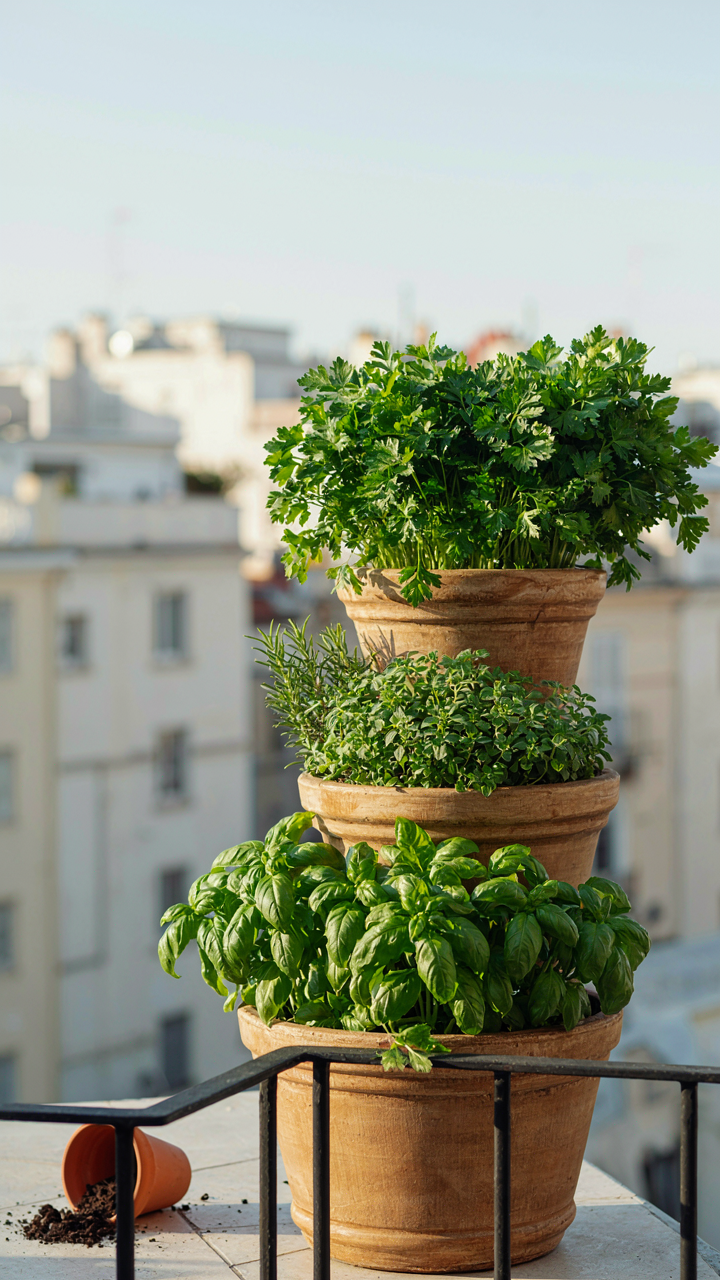
You want to feel productive without actually committing to real garden space, so you’re hoping vertical systems solve the problem for you. They don’t. They just change which problem you’re solving. Vertical gardening borrows from architecture’s load-bearing principle: distribute weight across multiple planes instead of concentrating it on one surface. A window box becomes viable when you stop thinking horizontally and start thinking about the Z-axis. Stacking planters, hanging baskets from rails, and tiered stands all work because they compress growing surface into cubic inches instead of square feet.
The mechanism is simple: three shallow planters stacked vertically give you triple the herbs in the same footprint as one wide box. Hanging baskets solve the real constraint, which is rail space, not total capacity. Tiered planters work best on balconies with direct south or west exposure because upper tiers don’t shade lower ones. The trade off is water management. Stacked systems drain downward, so your top-tier plants water the ones below whether you intend that or not. Use this deliberately. Plant drought-tolerant herbs on top, thirstier ones below. Position hanging baskets to drip onto nothing expensive.
Compact Growers That Actually Stay Compact
Most beginner guides tell you to just pick “smaller” varieties and call it done. That’s incomplete. You need herbs that have genetic limitations on size, not herbs that merely grow slowly. Dwarf basil, creeping thyme, and cascading oregano have been bred or selected to stay under twelve inches. Parsley stays upright and columnar. Chives grow in tight clumps. These aren’t just smaller versions of regular herbs. They’re structurally different plants with different root systems and light demands.
Light tolerance matters more than most people admit. Mint thrives in partial shade and actually bolts faster in full sun on a hot balcony. Chives tolerate four hours of direct light and still produce. Rosemary demands full sun but handles container stress better than basil does. Oregano and thyme need six hours minimum. Match your balcony’s actual light hours to the herb’s tolerance range, then buy the variety rated for that exposure. Don’t guess. A mislabeled variety in poor light will sprawl sideways looking for sun, destroying your vertical system before July.
The “Harvest Protocol” For Continuous Yield From Window Box Herbs

Pruning As Propagation
You want your herbs to feel infinite without replanting constantly. That’s the real reason you care about this section. Here’s the mechanism: pruning triggers lateral branching in herbs. In botany, this response is called apical dominance—when you remove the main growing tip, the plant shifts resources to side shoots instead of vertical growth. Remove the top third of basil, oregano, or mint, and you don’t just get a trimmed plant. You get two to four new growing points where one existed. This is multiplication disguised as maintenance.
Most people treat pruning and propagation as separate tasks. They’re not. Every cut you make is either harvesting dead growth or activating dormant nodes. The distinction matters tactically. Prune basil before it flowers to keep leaves tender and force branching. Prune mint aggressively every two weeks to prevent woody stems and maximize harvestable material. The plant wants to grow outward once you remove the top. Use that instinct. Cut just above a node, leave two sets of leaves on the stem, and the plant responds with multiplication, not stress.
Staggered Planting Ensures Supply Gaps Close
Planting all your herbs on the same day creates a feast-famine cycle. You’ll harvest everything ripe at once, then watch bare stems for weeks. Stagger instead. Plant basil seeds every two weeks during the growing season. This creates a rolling harvest schedule where fresh plants reach peak productivity as older ones decline. It sounds obvious until you actually implement it and realize you never run out of usable material.
The math is simple: if a basil plant produces harvestable leaves for eight weeks before it bolts, and you plant every two weeks, you maintain continuous supply with three rotations running in parallel. Some window boxes support only one plant per herb. Use smaller containers or separate boxes. Label them by planting date so you know which generation you’re harvesting. Rotate harvesting priority toward the oldest plant first, then move to younger plants as the old one exhausts. This prevents waste and keeps the protocol clean.
Pest & Disease Management: Defending Your Kitchen Window Box Ideas

The Daily Scan That Stops Problems Before They Start
You want this to work without becoming a second job. That fear of failure is why most people skip pest management until their basil looks like lace. The mechanism is simple: pests and disease move fast in confined spaces. A window box is dense plant matter with poor air circulation. Insects multiply every seven to ten days. You catch them on day two or you spend the next month fighting an infestation. Daily inspection takes ninety seconds. Look underneath leaves where spider mites hide. Check stem joints where aphids cluster. Early detection is not about paranoia. It is about stopping exponential growth before it compounds.
Disease spreads the same way. Fungal issues start invisible on one leaf. By week two, half your box is compromised. You scan for yellowing that spreads fast, dark spots on stems, white powder on foliage. Catch these on day one and remove the leaf. Ignore them and you lose the plant. The protocol is non-negotiable: scan every single day, always the same time, always checking leaf undersides and soil surface first. Record what you see. Patterns emerge that tell you what pressure you are actually facing.
Companion Planting And The Real Deterrent That Works
Pest management borrows from systems biology. In biology, a system resists invasion through density and diversity, not isolation. Your window box should operate the same way. Single-herb boxes fail because monoculture attracts specialized pests. Basil alone draws spider mites. Mint alone draws whiteflies. Mix them deliberately and pest pressure drops because no single predator finds an ideal food source at scale.
- Basil with Parsley: Parsley attracts beneficial insects like parasitic wasps that prey on basil pests. The combination creates predator-prey balance that keeps infestations from establishing.
- Thyme with Oregano: Both release volatile compounds that deter common herb box insects. Proximity amplifies the effect beyond what either plant produces alone.
- Cilantro with Dill: These attract hoverflies whose larvae consume aphids. The flowering stage of dill is critical, so include it deliberately for pest control, not just harvest.
- Mint with Chives: Mint’s menthol repels spider mites. Chives attract pollinators that create incidental pest pressure on mites through their movement through foliage.
- Rosemary as Anchor: Rosemary’s strong volatile profile deters whiteflies and spider mites. Position it at the back where air flows through, maximizing its defensive perimeter.
Neem oil works as a systemic solution, but most people apply it wrong. You spray once and expect results. Effective use requires weekly application for three weeks minimum to break the pest cycle at every life stage. Better option: keep companion plantings dense enough that pest pressure stays below threshold, never sprays. The moment you stop spraying, populations resurge. Density and diversity work all season without your intervention.
Beyond The Season: Winterizing Your Herb Window Boxes Outdoor
Gradual Exposure Builds Cold Tolerance
You want your herbs to survive winter so you don’t feel like you wasted the whole season. The mechanism is simple: plants harden off through repeated stress exposure, not sudden shock. Start moving your boxes outside during warm days three weeks before your first frost date, then bring them back inside at night. This cycle triggers the plant to thicken cell walls and concentrate sugars, which act as natural antifreeze. Do this for seven to ten days, gradually extending outdoor time until plants stay out overnight. Stop the process when nighttime temperatures drop below fifty degrees Fahrenheit consistently.
Most people skip hardening off entirely and wonder why their herbs die the moment cold hits. That’s backwards. The transition period isn’t optional—it’s the difference between a plant that survives and one that collapses from temperature shock. By the time you stop bringing boxes inside, your basil, oregano, and thyme have already adapted to cold stress. This prepares them psychologically and physiologically for indoor life where conditions shift dramatically again.
Controlled Environment Replaces Natural Conditions
Indoor survival depends on replacing three outdoor variables: light hours, moisture cycling, and temperature stability. Most indoor spaces fail on light first. Herbs need twelve to sixteen hours of direct light daily. A south-facing window works if you have one, but honestly, you’re better off adding a basic LED grow light positioned six inches above the foliage. This single move eliminates the most common failure point for overwintered herbs.
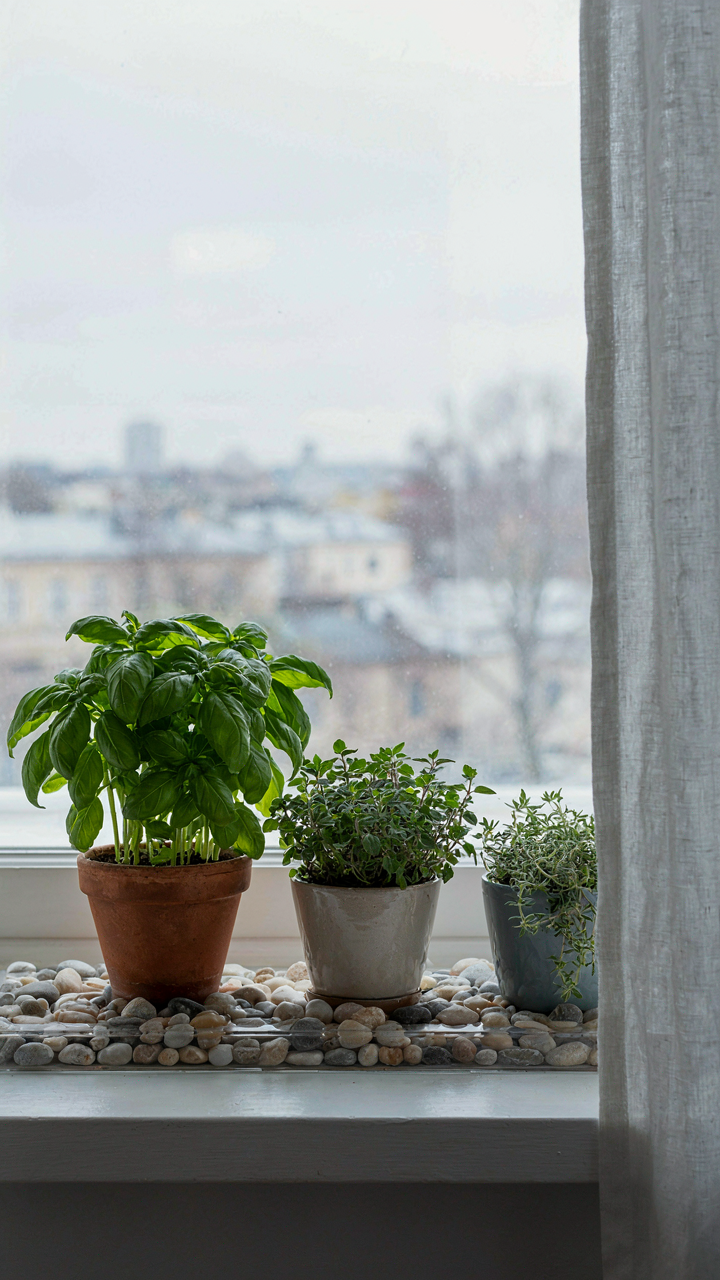
Humidity indoors drops to twenty to thirty percent in heated spaces while herbs prefer forty to fifty percent. Set boxes on a tray filled with pebbles and water, keeping the water line below the pot bottom so roots don’t rot. Temperature should stay between sixty and seventy degrees Fahrenheit at night, slightly warmer during the day. Reduce watering frequency by thirty to forty percent since indoor plants evaporate water slower. Check soil moisture before watering every time—never on a schedule.
The Real Obstacle Isn’t Your Window; It’s Your Unwillingness To Treat Nature Like A System To Be Mastered

Most people fail at window box herb gardens because they treat plants like decorations instead of systems with inputs and outputs. You don’t need perfect conditions. You need consistency. Pick one herb today. One. Get soil, a pot, seeds. Commit to watering it the same time every morning for thirty days. That’s not gardening. That’s building a habit that compounds into abundance. Your window box succeeds the moment you stop hoping and start deciding.



