
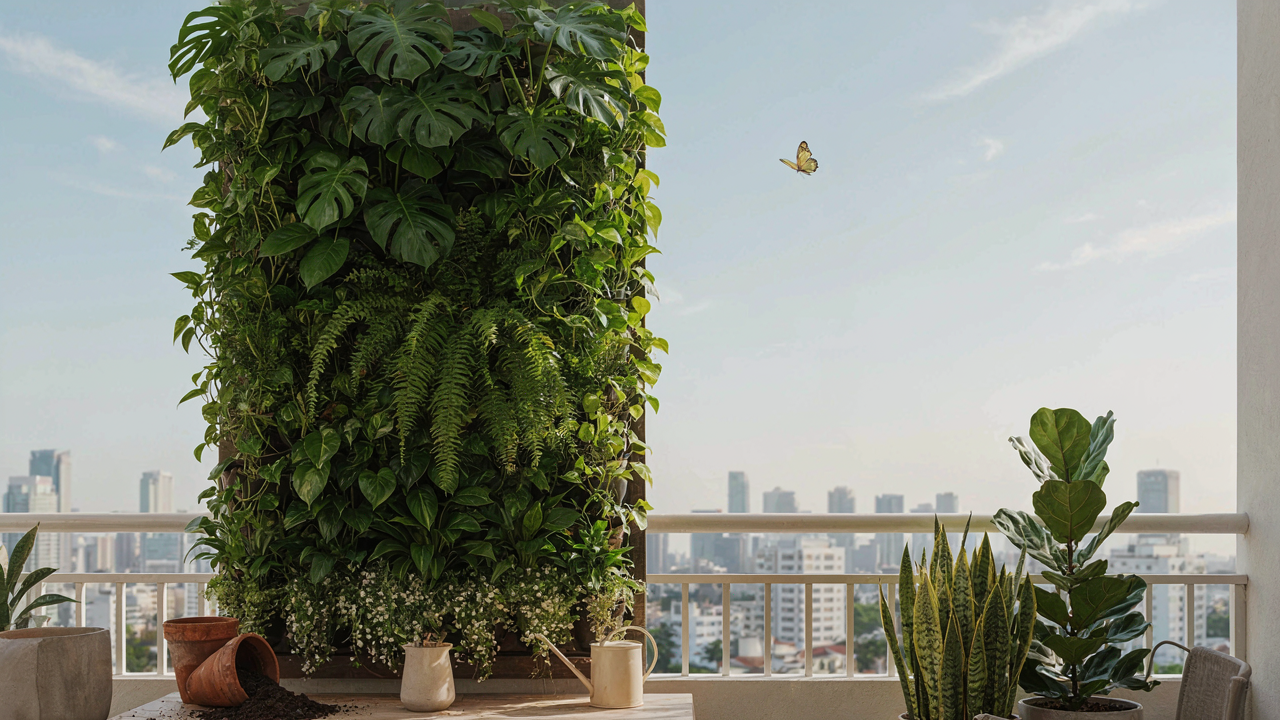
The Unseen Opportunity: Why Vertical Is The Only Real Way To Grow In Small Spaces

The Dimension Everyone Forgets
You want to feel like you’re doing something with your space without actually changing your life. Most people ignore vertical gardening because it forces them to think differently about a room they’ve already accepted as fixed. Here’s the mechanism: horizontal space is finite and claimed. Vertical space is abundant and invisible. In biology, this concept mirrors niche expansion. When a species colonizes a new vertical zone in an ecosystem, it doesn’t compete for the same resources as neighbors below. Your walls are the unclaimed zone. A 4×8 foot wall in an apartment holds ten times the growing capacity of a 4×8 foot floor.
Horizontal growing demands you sacrifice floor real estate, furniture placement, and foot traffic patterns. Vertical growing uses what you were never going to use anyway. The difference isn’t semantic. It determines whether you garden or whether you clutter. Start measuring your walls, not your floorboards.
Density Beats Footprint Every Time
Forget the decorator advice about “living walls” and “green installations.” That’s aspiration language masking a production problem. The real question is output per square foot, and vertical systems produce more of it because they stack. A single wall-mounted trellis, shelf system, or pocket garden multiplies your growing area without multiplying your footprint. Two shelves in a vertical stack give you double the plant capacity in the same floor space a single shelf requires.
Plant density on vertical surfaces follows the principle of layering. Herbs on the bottom shelf get full light. Shade-tolerant species on upper tiers use reflected light. Trailing plants cascade down between levels, using air space nothing else claims. This isn’t decoration optimization. This is yield engineering. Install your first vertical system in a corner that receives at least four hours of direct or bright indirect light.
The Vertical Gardening Fallacy: Debunking “Simple” And Embracing Strategic Design

Why Most Vertical Gardens Fail
You want to believe a vertical garden is plug-and-play because admitting otherwise means you’ve wasted money and time before you even started. Here’s the mechanism: vertical gardens fight gravity and physics simultaneously. Water runs down. Soil dries faster at the top. Roots need consistent moisture but also air. Most people buy a wall planter, throw in soil, and watch plants die within weeks because they’re treating a vertical system like a horizontal one scaled up. That’s not gardening. That’s decoration with a failure timeline.
The real issue is substrate selection and drainage design. Soil in a vertical pocket or tower doesn’t behave like soil in a pot. It compacts differently. Water retention changes because gravity pulls moisture downward unevenly. Most commercial vertical systems use poor-quality coco coir or standard potting mix, which either holds too much water (root rot) or drains too fast (constant watering). You need engineered substrates that balance moisture and aeration specifically for vertical application. This is non-negotiable. Skip this step and your garden fails before you learn anything useful.
Designing For Structural Success
System design in vertical gardening borrows from civil engineering’s load-bearing principle: weight distribution determines failure points, and most setups ignore this entirely. Your wall or mounting surface has a weight limit. A fully hydrated vertical garden with soil and plants can exceed 50 pounds per square foot. Renters screw hooks into drywall. Homeowners mount systems on inadequate studs. The structure collapses. Before you choose plants, know your surface’s load capacity and mount accordingly with proper anchors rated for wet weight, not just hardware store assumptions.
The second design layer is water movement. You cannot water a vertical garden uniformly without a system. Hand-watering wastes time and creates dry pockets. Drip irrigation or wicking systems solve this, but they require intentional layout. Position plants so water flows top-to-bottom efficiently. Allow for drainage exit points that don’t damage walls or floors. Test your setup dry first, then with water, before planting. This removes surprises and establishes your actual maintenance workload upfront.
The Bio Mimicry Protocol: Learning From Nature For Your Vertical Vegetable Garden

Plant Placement For Synergy
You want permission to skip the research and just jam plants wherever they fit. Here’s the mechanism: ecology calls this “guild theory,” and it means certain plants amplify each other’s resource uptake when positioned correctly. In vertical systems, this matters because plants share the same water column and root zone below them.
Tall plants go top. They block less light for mid-tier crops. Nitrogen-fixing plants like beans climb alongside heavy feeders like tomatoes, creating a metabolic handoff rather than competition. Plants with shallow roots occupy different soil depth than deep-rooted crops below them. Stack plants by their actual root systems, not by what looks balanced. This isn’t decoration. It’s resource allocation.
Water And Nutrient Recycling
Most vertical garden setups waste water because they don’t mimic what forests do naturally. In nature, nothing exits the system unused. Your vertical garden leaks nutrients out the bottom or evaporates them into the air unless you build circulation.
Capture drainage water and recycle it upward. Decomposing plant matter from upper tiers feeds microbes in lower soil. This isn’t composting in place, it’s active nutrient cycling. Store liquid runoff in a reservoir below, then pump it back up. Dead leaves and fruit scraps from one level become food for the next. Your garden becomes a closed loop. The moment water leaves the system, you’re fighting entropy instead of working with it.
The Minimalist Vertical Wall Garden: Less Input, More Output

Only What Works
You want permission to skip the complicated setup because you’re afraid you’ll fail anyway. Here’s the real mechanism: vertical gardens fail not from missing features but from carrying unnecessary weight. Think of it as load-bearing efficiency in architecture. Every component you add increases failure points. A wall, growing medium, water delivery, and plants. That’s it. Everything else is theater.
Most vertical garden advice piles on timers, sensors, drainage systems, and custom brackets. You don’t need them yet. The core system works without automation. Use a basic frame mounted to studs or posts, fill pockets with soil, plant shallow-rooted herbs or sedums, water by hand. The constraint forces you to notice what actually dies and why. That feedback loop teaches you faster than any gadget.
Water On A Schedule, Not By Guessing
Skip the drip irrigation talk for now. The common advice says automate everything immediately. That’s wrong. Hand watering a small vertical garden takes four minutes twice weekly. You learn the soil moisture by touching it. You catch pests before they spread. You know which plants struggle before they vanish.
When your system stabilizes after two months, then add a basic soaker hose and a mechanical timer set to run fifteen minutes in early morning. Start simple because starting complex kills momentum. The protocol: water thoroughly until it drains from the bottom, check soil dryness with your finger between waterings, adjust timer settings based on season and rainfall. Automate only the repetition, not the thinking.
The Balcony Herb Gardens Gambit: Turning Neglected Spaces Into Productive Zones
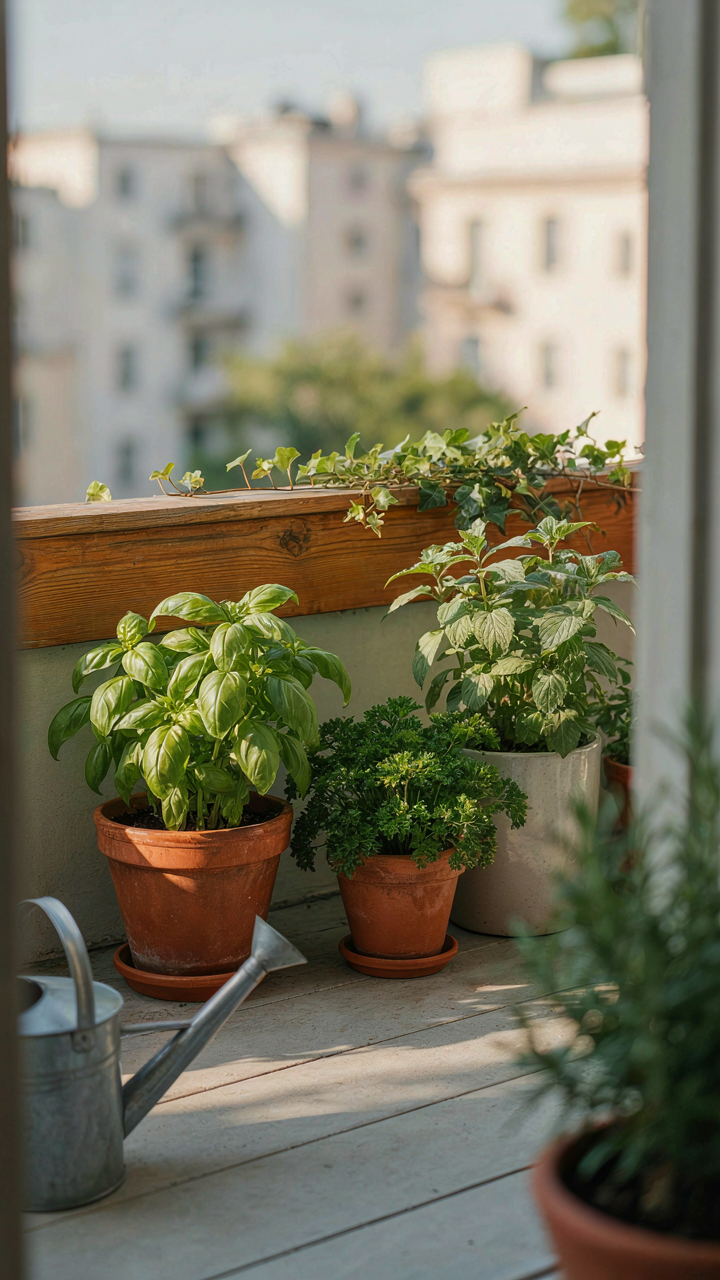
Which Herbs Actually Pay Their Rent
You want to feel productive without doing the work. That’s the real reason you’re reading this. The mechanism is simple: most people plant herbs they think they should grow instead of herbs they actually use. You end up with dead basil and wasted shelf space. The fix is brutal honesty about your cooking patterns.
Select herbs based on your actual kitchen behavior, not aspirational cooking. Basil, parsley, and mint thrive in containers and get harvested weekly in most households. Cilantro bolts fast but produces heavily before it does. Oregano and thyme tolerate neglect and repay minimal attention. Chives survive almost any condition. Start with these. Specialty herbs like tarragon require consistent watering schedules most small-space gardeners don’t maintain.
Positioning For Light And Movement
Think in terms of solar geometry. A south-facing balcony receives direct afternoon heat. East-facing gets morning sun without the intensity that stresses herbs midday. You need both to avoid stunted growth or leaf scorch. Most advice ignores that balconies trap heat and create dead air pockets—which kills plants faster than cold.
Place containers where afternoon shade hits between 1 and 4 PM if you’re in a hot climate. Basil tolerates six hours of direct sun daily. Mint and parsley actually perform better with partial afternoon shade. Create air gaps between pots so wind circulates. Stagnant air breeds mold and pest problems. Space containers at least three inches apart and rotate their position every two weeks so no single side faces constant wind. This prevents one-sided drying and structural weakness in the plant.
The Gutter Garden Advantage: Repurposing Waste For Abundant Vertical Vegetable Garden Design
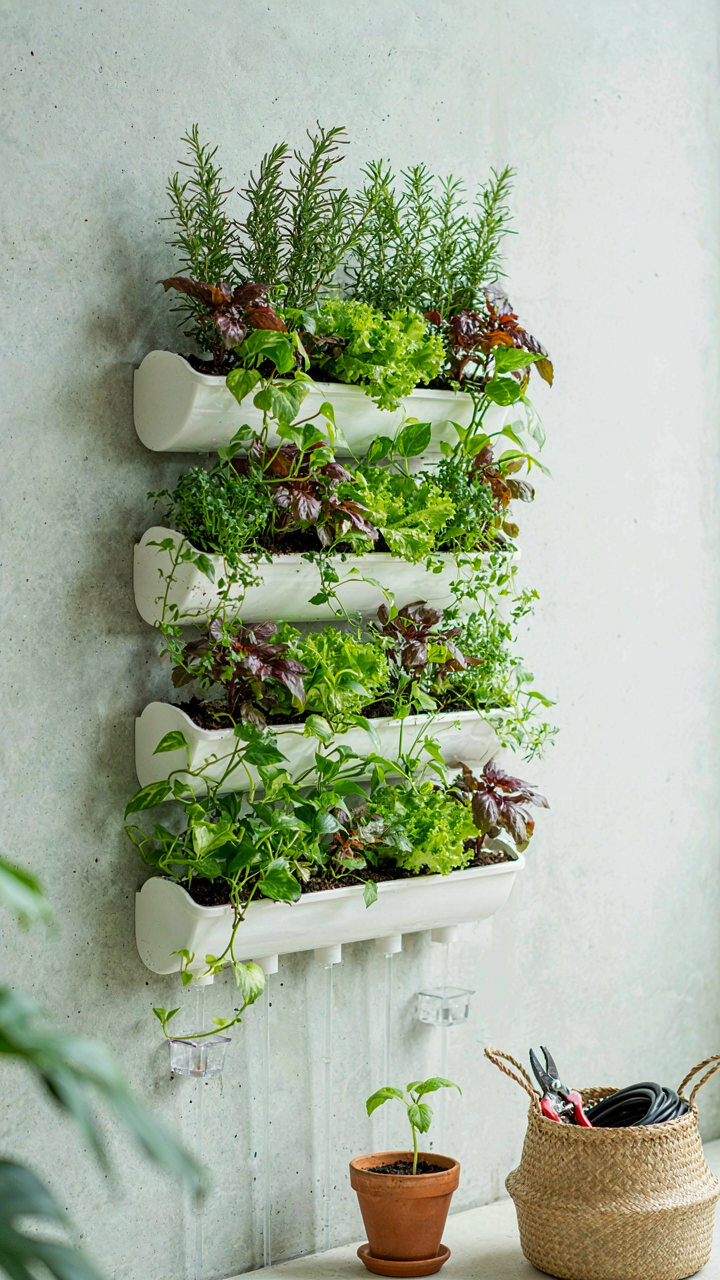
Why Gutters Work Better Than Purpose Built Systems
You want to feel resourceful without actually spending money or effort. That’s the real pitch here. Gutters work because they solve the actual problem: drainage. Most vertical garden failures happen because water pools and roots rot. Gutters are engineered to move water downward by design. You’re not fighting physics. You’re using it.
Standard gutters cost between two and eight dollars per linear foot depending on material. Vinyl lasts longer than aluminum in direct sun. The angle of a gutter naturally creates the drainage slope your plants need. Install them at a slight downward pitch, fill with soil, and water moves through instead of sitting. That mechanism is why gutter gardens outperform flat surfaces or containers stacked without flow consideration.
Stacking Systems That Actually Scale
Think of your gutter garden as a supply chain problem. In logistics, modularity means you add units without redesigning the whole operation. Each gutter is one unit. You stack them vertically, connect water input at the top, and let gravity do the routing downward. More gutters means more production without complexity overhead.
- Mounting brackets: Space them sixteen to twenty-four inches apart to handle soil weight. Standard L-brackets work. Ensure they anchor into studs or use heavy-duty wall anchors rated for forty pounds minimum per bracket.
- Water delivery: Install drip line or soaker hose along the top gutter only. Water cascades down through each tier naturally. One timer controls the entire system instead of managing multiple zones.
- Soil depth: Use four to six inches of quality garden soil per gutter. Shallow root crops like lettuce and chard work here. Deeper soils create weight problems on upper tiers.
- Vertical spacing: Leave six to eight inches between gutter levels so you can harvest without bending into the tier above. Crowding tiers creates shade and blocks airflow.
- End caps and transitions: Close all gutter ends properly to prevent soil spillage. Use corner pieces to turn corners on walls. Misaligned transitions cause water bypass and dry spots mid-system.
Add gutters incrementally as you confirm the system works on your wall. Three or four tiers is the practical maximum without structural concerns on standard drywall. If you need more production, build a second wall section instead of stacking higher. This keeps each unit stable and manageable.
The DIY Herb Garden Manifesto: Building A Vertical Herb Garden That Actually Works

What You Actually Need To Start
You want to feel like you’ve got your act together without spending money on things you don’t need. The real mechanism here is constraint. Most people fail at vertical herb gardens because they buy too much before understanding what the system demands. You need three categories: structure, medium, and delivery. The structure holds weight and doesn’t rot. The medium feeds roots without compacting. The delivery gets water to every plant without pooling at the bottom. Everything else is noise.
Wood, metal, or plastic frames work equally well if they handle moisture. Two-by-fours, PVC pipe, or repurposed ladder shelves all function identically structurally. Soil matters more than container aesthetics. Use a fast-draining mix: equal parts compost, perlite, and coconut coir or peat moss. For delivery, either drip irrigation with a timer or a simple soaker hose beats hand-watering every time because it removes the daily friction that kills projects. Start there. Nothing else moves the needle.
Assembling Your System In One Afternoon
Construction isn’t complex because it shouldn’t be. Borrowing from systems engineering, think of your vertical garden as a series of stacked pressure points: weight load, water distribution, and access. Each layer must solve all three simultaneously or the whole thing fails. Build vertically with the heaviest plants at the bottom and lightest at the top. Basil and mint go low. Thyme and oregano go high. This prevents water cascading on delicate herbs and keeps structural stress manageable on cheap materials.
Mount your structure to a wall or sturdy frame first. Fill containers from bottom to top as a unit before mounting to avoid filling them in place, which wastes motion. Run your water line before planting. Position it so gravity does the work downward, not sideways. Plant herbs after the infrastructure is locked in. This order prevents replanting when you realize your water flow is backwards. Water immediately and let it drain completely. If water pools anywhere after thirty minutes, you’ve built a rot factory. Adjust drainage holes or media density before adding the next tier.
Beyond The Buzzwords: Real Vertical Gardening Ideas For Real Yields

What Actually Works At Scale
You’re reading this section because you want permission to skip the trial and error. Here’s the mechanism: vertical gardening only produces real yields when you reverse-engineer from your site’s actual light hours, not from inspiration photos. The difference between “looks nice” and “feeds you” is constraint-based design. Most people build vertically first, then wonder why nothing grows. The real approach measures your space’s light exposure, calculates how many hours direct sun you get, then selects crops that match that reality. A north-facing wall with four hours of filtered light demands different crops than an east-facing surface with six hours of morning sun. Lettuce, spinach, and herbs tolerate lower light. Tomatoes and peppers require eight-plus hours of direct sun and won’t negotiate.
Your growing medium matters more than your structure. Soil-based systems hold water and nutrients but weigh more per square foot, forcing you to reinforce your mounting surface. Hydroponics and soilless mixes like coconut coir reduce weight by sixty to seventy percent while improving drainage and preventing root rot. The trade-off is higher maintenance—you’re monitoring pH and nutrient concentration rather than just watering. Start with what you can actually maintain. A lightweight soilless system on a rented apartment wall beats an abandoned soil-based tower you couldn’t support properly.
Match The System To Your Constraints
This isn’t about choosing the system that looks best on Instagram. Systems engineering teaches us that form must serve function. Your vertical garden system is a delivery mechanism, and the right mechanism depends on three variables: available light, weight capacity of your mounting surface, and how much active maintenance you’ll tolerate. Pocket planters, trellises, and stacked containers serve different yields and demands. A pocket planter system uses vertical space efficiently but dries out fast in hot, dry climates. Trellising works for vining crops like beans and cucumbers, which climb naturally and reduce disease pressure by improving air circulation. Stacked containers let you grow independently at each level but create uneven water distribution if you’re hand-watering from the top.
Your actual choice comes down to answering one question before you buy anything: are you growing for supplement or replacement? If you want fresh herbs and salad greens to reduce grocery trips, pocket planters or small containers on a trellis frame work. If you’re trying to produce serious volume from a small footprint, you need a system that allows drip irrigation or capillary action to move water consistently across all levels. Install your watering mechanism first, then build your vertical structure around it. This prevents the common failure of hand-watering the top tier only while the bottom dries out completely.
The Vertical Gardening System: Optimizing For Growth, Not Just Survival

Water Delivery Without Waste
You want this to work without effort or guilt about wasted resources. Here’s the mechanism: vertical systems expose more leaf surface to air, which increases evaporation. That’s physics. Traditional watering methods don’t account for this, so you either overwater and kill roots or underwater and stunt growth. Drip irrigation solves this by delivering water directly to soil at the base of each plant, eliminating runoff and foliar wetness that breeds disease.
The system itself is simple. PVC tubing or soaker hoses run vertically alongside your plants, with small emitters punched at each planting pocket. Water moves slowly through soil, allowing roots to absorb what they need before excess drains. Set a timer so the system runs early morning or late evening when evaporation is lowest. This cuts water use by 50 percent compared to hand watering, and your plants stay hydrated without guessing.
Nutrient Cycling For Sustained Output
Vertical gardens are constrained systems, borrowing terminology from closed-loop agriculture. A closed loop means nutrients stay in the system instead of leaching away through drainage. In small vertical setups, this means you’re working with limited soil volume, so nutrient depletion happens faster than in ground beds. You can’t ignore this without watching yields collapse after the first season.
Feed on a schedule tied to growth stage, not intuition. Use a balanced liquid fertilizer every two weeks during active growth, then taper frequency as plants mature. Better strategy: mix a slow-release granular fertilizer directly into your potting soil at setup. It dissolves gradually, feeding plants for months without daily management. Test your soil pH once monthly. Most vegetables prefer 6.0 to 7.0 pH. If your water is too alkaline or acidic, nutrients lock up and plants starve even when food is present. Adjust before the problem becomes visible.
The Long Game: Sustaining Your Vertical Vegetable Garden For Permanent Production

Prevention Beats Treatment Every Time
You want this to work without constant firefighting. The real mechanism here comes from ecology: your vertical garden is a closed system with density. High plant density plus limited airflow creates what ecologists call a “stress concentration zone” where pests and disease thrive. You prevent problems by controlling the variables that invite them, not by reacting after they arrive.
Air movement matters first. Stagnant air in tight vertical spaces breeds fungal issues and mites faster than you can spray. Position a small oscillating fan to push air through the garden two to three hours daily. Remove leaves touching soil or growing media. Lower foliage traps moisture and becomes the entry point for every fungal pathogen. Inspect undersides of leaves weekly before infestation spreads. Isolation works: if one plant shows spider mites or powdery mildew, remove it immediately before it spreads horizontally and vertically through your system.
Harvest Protocol For Year Round Output
Most people harvest wrong and then blame the plant. The mechanism is physiological: when you remove a leaf or fruit at the right growth stage, the plant responds by producing more growth to compensate. Remove too early and you waste plant energy on immature biomass. Remove too late and the plant signals completion and slows production.
Harvest leafy greens when outer leaves reach full size but before the plant bolts. For fruiting crops like peppers and tomatoes, pick fruit at mature color but before it fully softens on the stem. This triggers continued flowering. Stagger your planting so harvests rotate every two weeks rather than happening all at once. This prevents the psychological moment where you think your garden is finished when you’re really just between cycles. Set a calendar reminder to assess each plant’s stage every seven days and make one harvest decision per plant per week.
The Real Obstacle Isn’t Your Limited Space, It’s Your Limited Imagination Of What A Garden Can Truly Be

Most people fail at vertical gardens because they wait for perfect conditions that never arrive. They don’t start. You already have a wall, a window, or a corner. Pick one today. Drill a hole. Mount something. Grow something. The garden doesn’t care about your excuses, and neither should you. Your space was never the problem. Your action was.



