
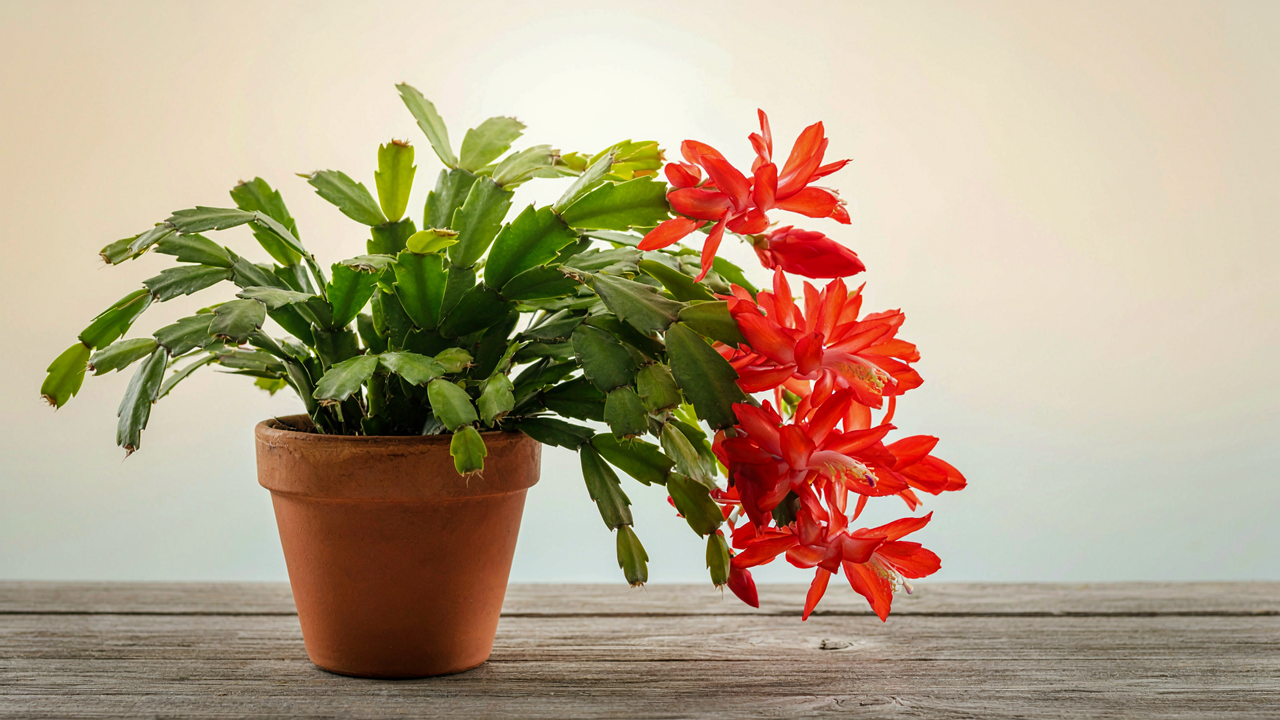
The Neglect Protocol: Rethinking Christmas Cactus Care

Stop Watering Like It’s A Houseplant
You want proof your plant thrives. That’s the real motive here—visible results that signal competence. The mechanism is simple: Christmas cactus evolved in tropical rainforests as an epiphyte, meaning it clings to trees rather than rooting in soil. It stores water in its segmented stems. Overwatering kills it faster than neglect ever will. The plant enters dormancy in fall and winter, its natural blooming season. During this period, it needs minimal water.
Most care guides tell you to keep soil moist. That’s incomplete advice for a plant with a dormancy requirement. Water only when the top inch of soil is completely dry. In winter months, this might mean watering once every three weeks. The stems should feel firm, never squishy. Soggy roots cause rot within days. Err toward dry. The plant’s survival depends on respecting its cycle, not on your watering schedule.
The Watering And Light Mistakes Everyone Makes
People treat Christmas cactus like a typical succulent and wonder why it fails. It’s not a desert plant—it’s a rainforest plant that prefers shade and humidity. The real mistake isn’t one action but a misreading of its environment. You don’t force a tropical plant into arid conditions and expect flowering. Full sun actually bleaches the stems and reduces blooms. Bright, indirect light is what triggers flowering, especially during the short days of fall and early winter.
The second mistake compounds the first: watering on a calendar instead of reading the plant’s state. December doesn’t automatically mean “water day.” Temperature, pot size, soil composition, and humidity all shift water needs. A plant in a clay pot dries faster than one in plastic. A plant in a warm room dries faster than one in a cool one. Check soil moisture before you water. One action determines everything: only water when soil is truly dry to the touch.
Light Leverage: Mastering The Photosynthesis Equation For Your Holiday Cactus
The Spectrum That Triggers Flowering
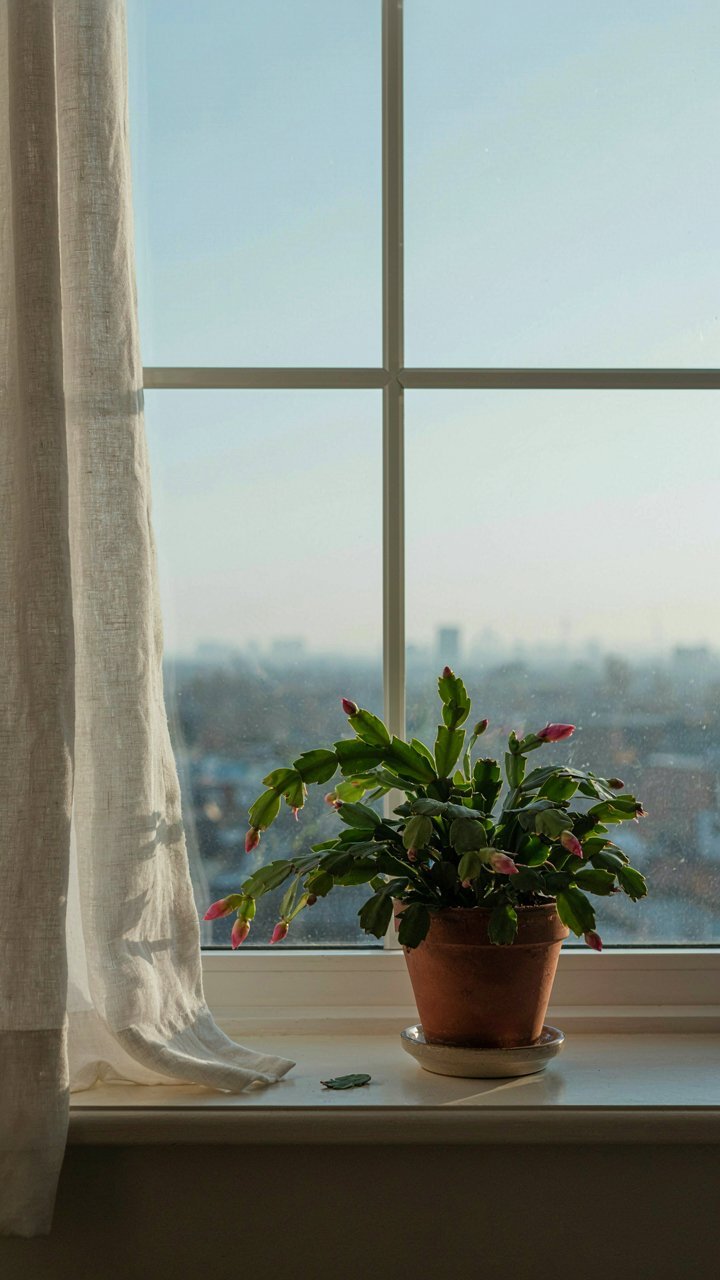
You want your Christmas cactus to bloom on schedule because it proves you didn’t kill it. Here’s what actually matters: light wavelength determines whether your plant flowers or just grows green. Biology calls this photoperiodism, and it’s the mechanism that controls bud initiation in Christmas cacti. The plant measures day length through red and far-red light ratios in its tissues, not through your eyes. Get the spectrum wrong and you’ll have a healthy green plant that never flowers.
Christmas cacti evolved in Brazilian rainforest understory, where they receive dappled light filtered through tree canopy. This means bright indirect light between 1,000 and 2,000 foot-candles triggers optimal growth and prepares the plant for blooming. Direct afternoon sun through a south or west-facing window works. East-facing morning light also works. The plant needs this intensity for at least six hours daily during its growing season to build the energy reserves flowering demands.
Darkness Cycles Create The Bloom Signal
Most care guides skip the real mechanism here, and that’s why your plant sits dormant. Photoperiod is the trigger, not temperature. Christmas cacti require uninterrupted darkness for 12 to 14 hours nightly for six to eight weeks before their bloom cycle activates. This darkness period signals the plant’s internal clock that winter has arrived, which is when it naturally flowers in its native habitat. You can’t fake this with ambient room light or stray light from hallways.
Start enforcing strict darkness in late September if you want December blooms. Move the plant to a room where you turn off all lights after sunset, or place it in a closet for those dark hours. Any light break during the darkness window resets the count. This isn’t negotiable. Without uninterrupted darkness, buds don’t form, and you’ll waste the plant’s energy on leaf growth alone. Maintain consistent darkness for six weeks straight, and blooming becomes mechanical.
The Thirst Trap: Watering Your Christmas Cactus Plant
The Soil Moisture Reality
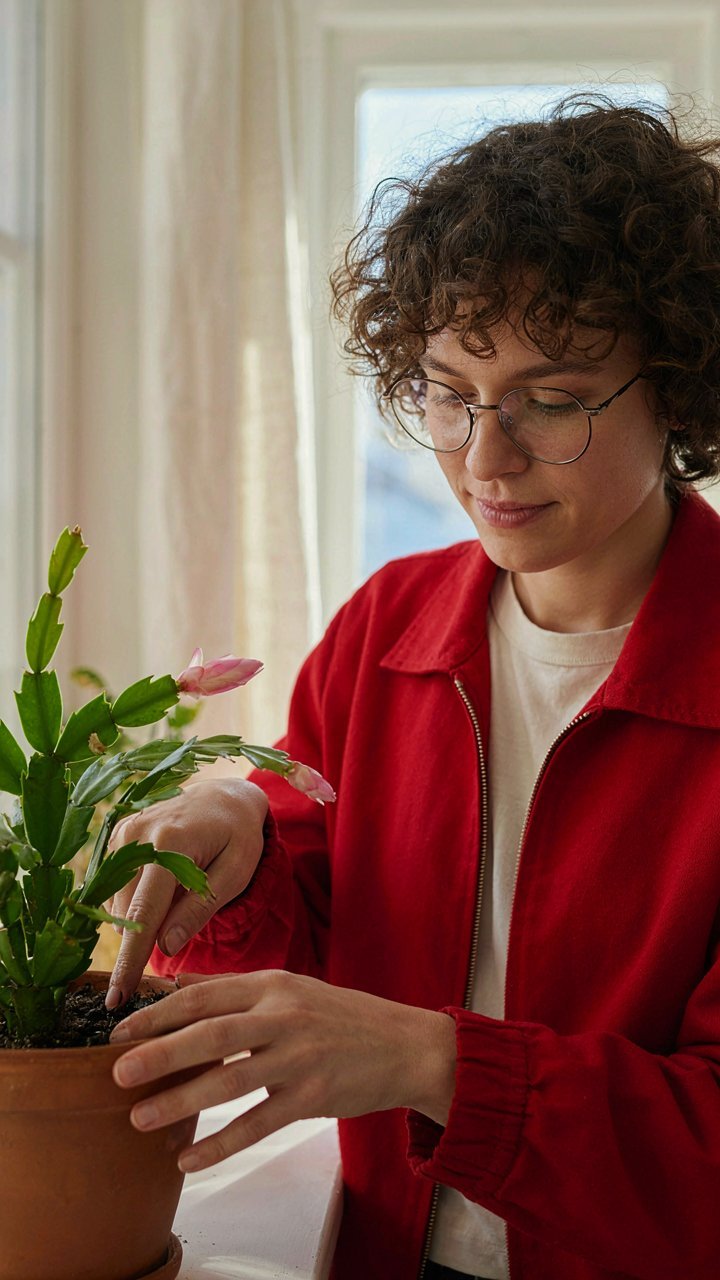
You want a plant that survives without thinking about it. Here’s what actually matters: Christmas cactus isn’t a desert cactus, so the common advice to “let it dry out completely” will kill it. Think of soil moisture in thermodynamic terms—equilibrium. The plant needs consistent access to water without saturation that blocks oxygen from reaching roots. The mechanism is simple: water fills soil pores, displacing air. Too much air displacement and roots suffocate. Too little water and the plant can’t move nutrients.
Christmas cactus thrives in soil that stays slightly moist but never waterlogged. The distinction matters operationally. Check soil moisture by inserting your finger one inch deep. If it feels dry at that depth, water thoroughly until it drains from the bottom. If it’s still moist, wait another two to three days. Most failures happen because people water on a calendar instead of checking soil state first.
Stress Signals You’re Reading Wrong
Most guides list overwatering and underwatering symptoms without explaining how to distinguish them, which makes the advice useless. Overwatered Christmas cactus develops soft, translucent stems that feel mushy when pressed. The plant may drop segments. Roots rot, and the decay spreads upward. You’ll notice a foul smell from the soil. Underwatered plants show shriveled, wrinkled stems and may drop buds before flowering. The entire plant looks deflated, not mushy.
The real diagnostic is time and texture together. Mushy segments plus soggy soil equals overwatering. Wrinkled segments plus bone-dry soil equals underwatering. If you catch overwatering early, repot the plant into fresh, dry soil immediately. Remove any blackened or translucent roots during repotting. For underwatering, soak the pot in water for thirty minutes, then return to normal watering. The recovery protocol depends entirely on identifying the actual problem, not guessing.
Potting Principles: Beyond The Pretty Container For Cactus House Plants

Where Water Actually Goes
You want a container that makes your shelf look intentional. That’s not the mechanism that keeps your plant alive. Drainage is a physics problem, not a design choice. Christmas cactus roots sit in wet soil and rot because water has nowhere to exit. The gap between the soil surface and pot rim matters. Drainage holes at the base matter more. Soil composition matters most because it determines how fast water moves through the medium and reaches those holes.
Christmas cactus needs soil that drains within hours, not days. Standard potting mix holds too much moisture. Add perlite or orchid bark to increase air gaps. The root system evolved in tropical rainforests where water moves through the canopy constantly but never pools. Recreate that condition or accept root death as inevitable. Use a 2:1 ratio of potting soil to perlite. Test drainage by watering fully and observing how quickly the surface dries. If it takes more than a few hours, your mix is wrong.
Container Size And The Repotting Timeline
Most growers repot too often because they confuse pot size with growth speed. Larger containers hold more water. More water means longer dry times between waterings. Longer dry times create root rot in Christmas cactus. The plant prefers a snug fit. Only move to a new pot when roots circle the soil mass completely and emerge from drainage holes. This happens roughly every two to three years, not annually. The container should be one to two inches larger in diameter than the previous one, maximum.
Repotting serves one function: refresh depleted soil and accommodate root expansion. Don’t do it to stimulate growth or refresh energy. Spring is the ideal window, just as the plant enters active growth. Use fresh potting mix every time. Old soil compacts, blocks drainage, and harbors pathogens. Inspect roots during repotting for soft, brown tissue indicating rot. Trim those sections cleanly before placing the plant in its new container with dry soil. Wait five to seven days before watering to allow cut roots to callus over and prevent infection.
Feeding The Beast: Fertilizing Your Christmas Cactus
Understanding Energy Demands
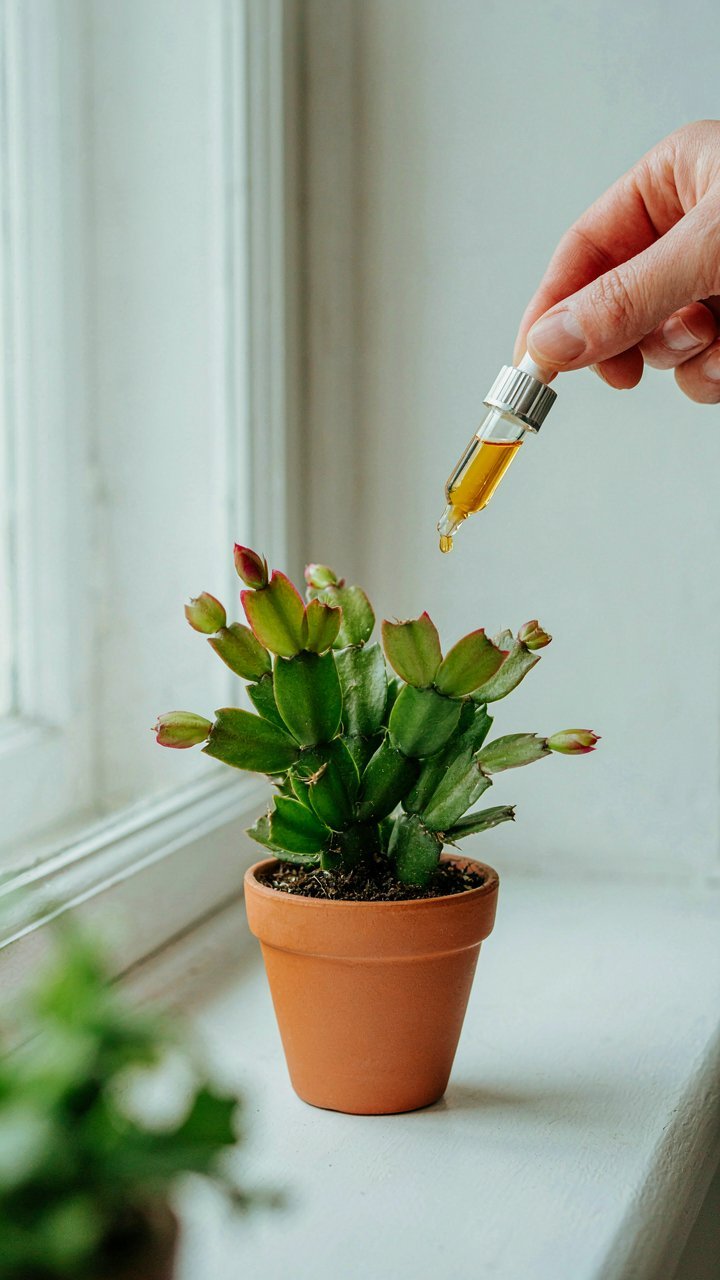
You want your Christmas cactus to flower reliably because inconsistent blooms feel like a personal failure. Here’s the mechanism: this plant cycles between growth and dormancy, and each phase demands different nutrient ratios. Think in terms of supply and demand economics. During active growth, the plant consumes nitrogen heavily. During dormancy and bloom preparation, phosphorus and potassium matter more. Most people fertilize on a flat schedule and wonder why their plant stays green but doesn’t flower.
The Christmas cactus isn’t a heavy feeder. It evolved in rainforest canopies where nutrients arrived sporadically through decomposing debris, not through consistent soil availability. Overfeeding actually suppresses blooming by pushing the plant into perpetual vegetative growth. The real lever is matching nutrient timing to the plant’s natural cycle, not guessing based on generic houseplant schedules.
When To Feed And What Actually Works
Here’s the common advice that fails: fertilize monthly year-round. Wrong. Constant feeding masks the plant’s real signal, which is that dormancy triggers blooming.
- Spring through early summer: Feed monthly with balanced fertilizer (10-10-10 or similar) during active growth phase when new segments emerge.
- Late summer: Switch to lower nitrogen, higher phosphorus formula (like 0-10-10) to encourage bud formation without excess foliage.
- Fall dormancy period: Stop feeding entirely once temperatures cool or day length shortens naturally in your region.
- After blooming through late winter: Resume light feeding only if new growth appears, otherwise leave it dormant.
- Fertilizer type option: Dilute liquid fertilizer works faster than granular, giving you tighter control over nutrient delivery and timing adjustments.
Skip fertilizer during true dormancy. The plant doesn’t need it and you’re wasting money. Fertilize only when you observe active growth. Use half-strength fertilizer even during the growth phase because Christmas cactus tolerates weak feeding better than strong feeding. Test this: miss a feeding and nothing dies. Over-fertilize once and watch salt buildup damage roots.
The Propagation Protocol: Expanding Your Christmas Cactus Collection
How To Root Cactus Segments Successfully
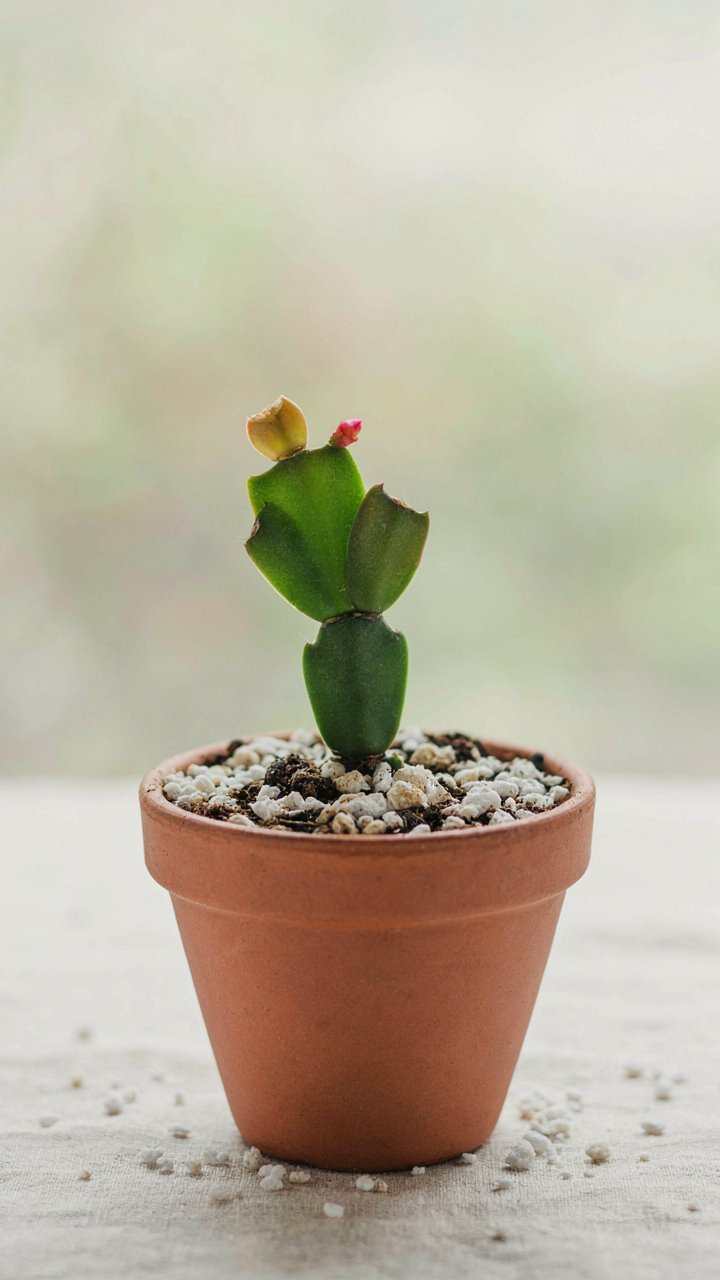
You want free plants. That’s the real reason you’re reading this. The mechanism is simple: Christmas cactus segments root through cellular response to moisture and darkness, not mystical timing. Take a mature segment, let it callus for one to three days in dry air, then place it in moist soil. Roots emerge from the cut end because that’s where the plant concentrates growth hormones in response to injury.
Use a soil mix of equal parts perlite and potting soil or cactus mix. Keep the medium consistently moist but not waterlogged for the first two to three weeks. Place the pot in indirect light and temperatures between 65 and 75 degrees Fahrenheit. Roots establish in three to four weeks. Once you see new growth at the segment’s tip, treat the propagated plant like an established Christmas cactus and reduce watering frequency.
What Actually Kills Propagations
Most advice on propagation fails because it ignores the timing trap. People wait for blooming season to harvest segments, but that’s when the plant’s energy is committed to flowers, not root development. Cut segments during late spring or early summer when the plant is in growth mode. Mature, healthy segments from previous years’ growth root faster than new soft growth.
The real killer is overwatering during callusing. A callus forms as a protective layer at the cut end. Wet conditions prevent this layer from forming, opening the door to rot. Let segments sit dry for one to three days before planting. Once planted, resist the urge to drench the soil daily. Water when the top half inch feels dry.
Seasonal Shifts: Triggering Blooms In Your Christmas Plants
The Light And Cold Reset
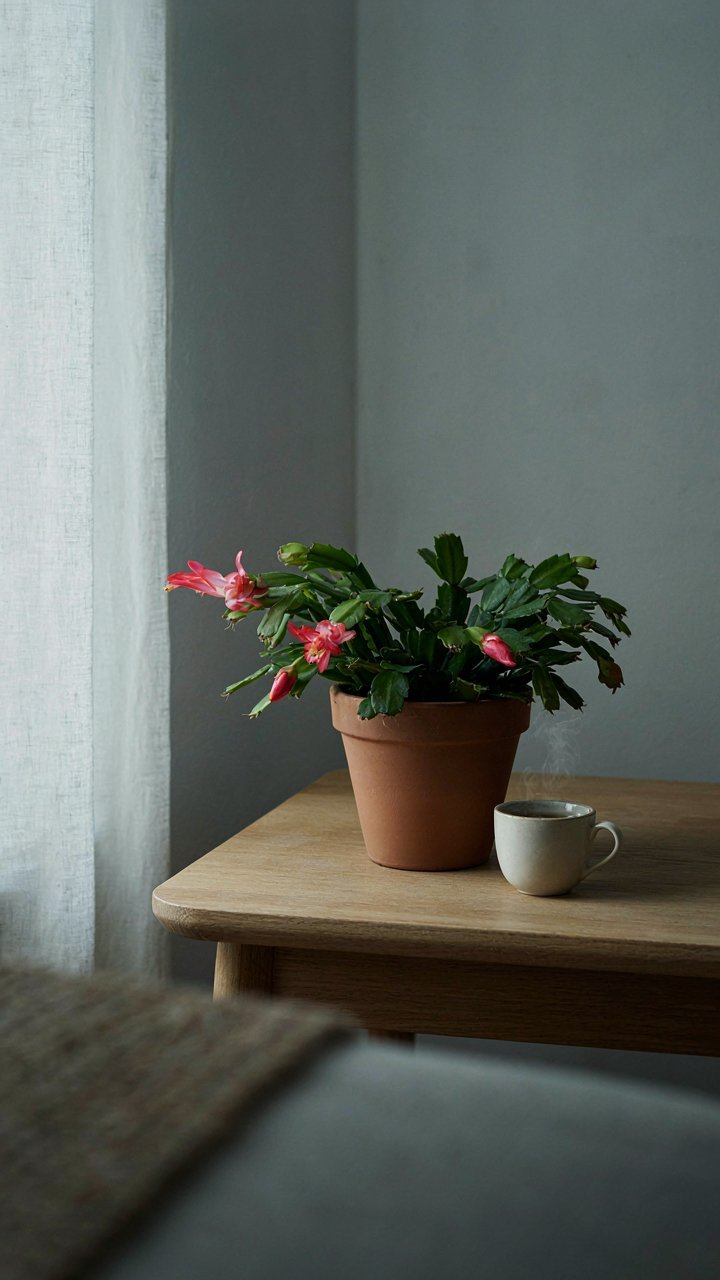
You want blooms because you want proof your plant responds to you. Here’s the mechanism: Christmas cactus flowers form as a photoperiodic response, the same biology that governs seasonal timing in most temperate plants. The plant needs 12 to 14 hours of uninterrupted darkness daily for 6 to 8 weeks before flowering. This isn’t preference—it’s the trigger that signals the plant to shift resources into reproductive growth instead of leaf expansion.
Temperature drops amplify this signal. Expose your plant to nights between 50 and 55 degrees Fahrenheit during the dark period. This combination of reduced light and cooler temps mimics autumn conditions in the plant’s native habitat, the Brazilian cloud forests. Most people fail here because they keep the plant in heated rooms under ambient light. The plant receives mixed signals and blooms sparse or not at all. Start the cycle in September to align with late fall and winter flowering.
Dormancy As A Demand, Not A Suggestion
The common advice says to give your Christmas cactus a “rest period.” That’s vague and wrong. What you need is enforced dormancy—a deliberate temporary halt to growth. During dormancy, reduce watering drastically. Water only when soil is completely dry, then wait another week. This stops vegetative growth and forces the plant to redirect energy into bud formation rather than maintaining leaves.
Hold this dormancy protocol for the full 6 to 8 weeks. Skip fertilizing entirely during this window. Resume normal watering and light only after buds visibly swell on stem tips. If you break dormancy early by watering normally or moving the plant to warmth, you abort the bloom cycle and restart from zero. The strictness of this protocol determines whether you get scattered flowers or a full canopy of blooms.
Pest Patrol: Protecting Your Investment In Plant Care Houseplant

What Actually Eats Your Christmas Cactus
You’re worried about losing the plant because you’ve already invested time into it, and that sunk cost makes you protective. Here’s what matters: Christmas cactus attracts only a handful of pests, and you identify them by their damage pattern, not by hunting for the bug itself. Mealybugs leave white cottony clusters in leaf joints. Spider mites cause stippled, yellowing segments. Scale insects attach as brown bumps on stems. Fungus gnats swarm the soil surface when overwatering creates the damp they need to breed.
The real mechanism is environmental vulnerability. Pests don’t randomly attack healthy plants kept in proper conditions. They exploit weakness. A Christmas cactus stressed by cold drafts, inconsistent watering, or poor air circulation becomes an open target. Inspect new plants before bringing them home. Check the undersides of segments and soil surface first. Most infestations start small enough to stop with one intervention if you catch them early. Waiting until you see obvious damage means the population already established itself.
Kill Pests Without Chemicals That Linger
The common advice to spray neem oil works, but most people apply it wrong and then abandon the approach. Borrowed from pest management protocol: you must interrupt the reproduction cycle, not just kill visible adults. One spray kills current populations but misses eggs. You need sequential applications spaced seven to ten days apart to catch newly hatched generations before they mature.
Start with isolation. Move the infected plant away from your other plants immediately. Spray the entire plant, including undersides of all segments and the soil surface, with diluted neem oil or insecticidal soap mixed to label strength. Let it dry completely. Reapply every seven days for three weeks minimum. For mealybugs specifically, dab colonies directly with a cotton swab soaked in rubbing alcohol between spray cycles. This combination approach works because it attacks pests at multiple life stages simultaneously, preventing resistance buildup and ensuring complete elimination before you integrate the plant back into your collection.
Pruning For Power: Shaping Your Cactus Care For Vigorous Growth

When To Cut For Density
You want people to see a full, impressive plant on your shelf instead of a sparse twig. Here’s the mechanism: Christmas cactus grows from branching points, and removing segments above a node forces that node to split into two growth sites. Apply this botanical fact directly: each cut creates two new branches where one existed. This compounds density exponentially over one growing season if you time it right.
Prune between late winter and early spring, before the plant enters its growth phase. Cut segments cleanly at joints using sharp shears, removing no more than one-third of total plant mass per session. The plant redirects energy into lateral branching instead of vertical extension, filling gaps and creating a mounded shape. Wait until after flowering ends to avoid removing buds that haven’t opened yet.
Rescue Through Radical Reset
The common advice says trim leggy plants gently and gradually. That’s wrong. A bare, stretched specimen needs aggressive cutting to rewire its growth pattern. Think of it like military strategy: you’re not managing the current position, you’re executing a retreat to rebuild from fortified ground. Old Christmas cactus plants lose vigor and flower production precisely because they’ve prioritized height over structure, and half-measures won’t reverse that.
Cut back leggy stems to within two to three inches of the soil line in early spring. The plant will look skeletal for weeks. That’s the reset working. New growth emerges from dormant nodes along the remaining stem and from the base, creating a compact framework. Within two months of active growth, you’ll see branching resume. Keep the plant in bright, indirect light during recovery and hold fertilizer until new growth appears visibly.
The Holiday Cactus Resilience Blueprint
Stop Rewarding Neglect With Attention
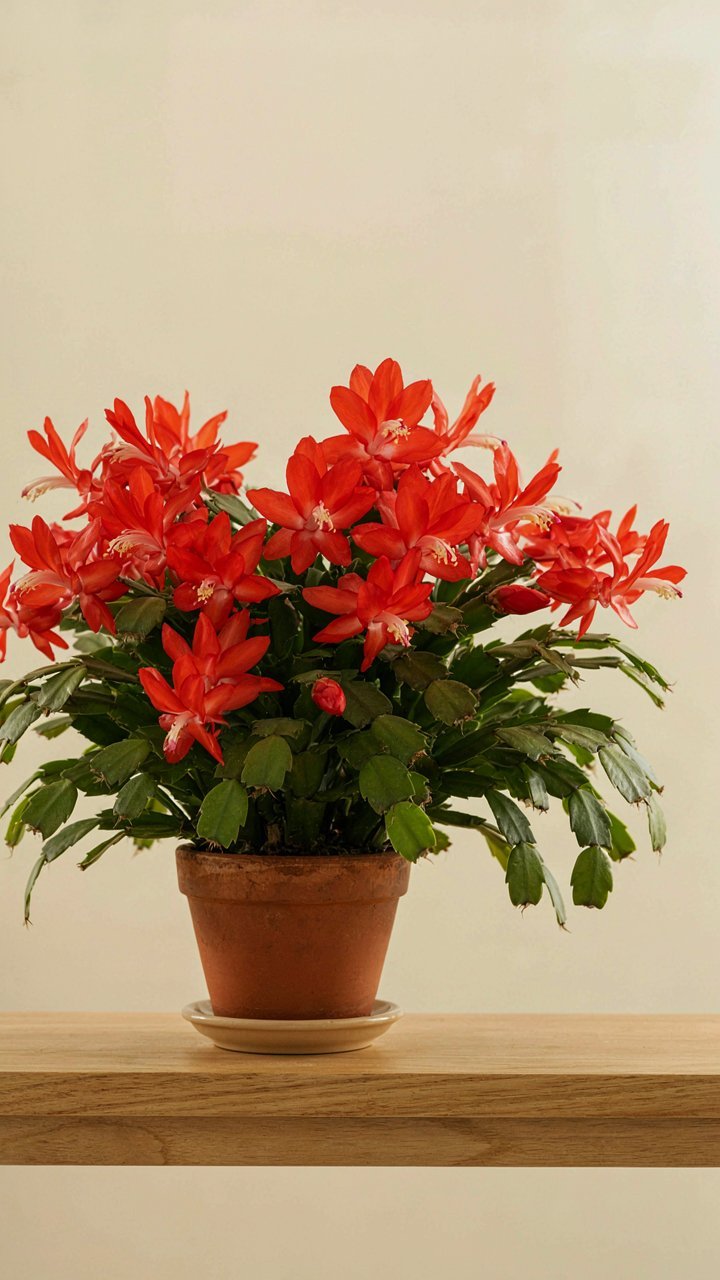
You want permission to ignore your plant and still have it look impressive. Here’s the mechanism: Christmas cactus evolved in tropical rainforests as epiphytes, not desert dwellers. That means it doesn’t need the drought cycles you’ve been told about. It needs consistent moisture, indirect light, and nothing else. The plant thrives on consistency, not crisis management.
Most care advice treats Christmas cactus like a prickly pear. Wrong plant, wrong environment, wrong approach. It wants humidity and regular water during growth cycles, then a cool dry period before flowering. The difference between a plant that blooms and one that doesn’t isn’t luck. It’s whether you matched its actual biology to your care routine.
The System That Outlasts One Season
Long-term health starts with understanding that your Christmas cactus will outlive your interest in it if you stop treating it like a seasonal decoration. Move it to a stable location after the holidays end. Maintain 50 to 70 percent humidity year-round using a pebble tray or grouping it with other plants. Feed it monthly during spring and summer with a balanced fertilizer, then stop completely from September through November.
The plant doesn’t need you to do more. It needs you to do the same thing consistently. Water when the top inch of soil is dry. Keep it between 60 and 70 degrees Fahrenheit outside the dormancy period. In late fall, expose it to cooler temperatures around 50 degrees and reduce watering for six weeks to trigger bud formation. This protocol replaces guesswork with a repeatable system that works across years.
The Only Thing Killing Your Holiday Cactus Is Your Anxious Over-involvement. Step Back And Let It Thrive

You don’t have a Christmas cactus problem. You have a control problem. Stop watering it on a schedule. Stop adjusting the light every week. Stop treating it like a needy pet that demands your constant attention. Your cactus survives in harsh climates because it’s built for neglect. Today, water it once, then disappear for two weeks. The plant doesn’t need you. It needs space. Mastery looks like doing less, not more.