
The Market First Protocol: Identifying Profitable Niches (Not Just “Pretty” Ones)
Search Volume Before Aesthetics
You want to launch something beautiful because beauty feels safer than the admission that you don’t know what sells. Here’s the mechanism: demand mapping is borrowing from economics the principle of revealed preference—what people already search for, buy, and compete to own. In resin flowers, this means tracking search intent before you spend time perfecting a design that nobody’s looking for.
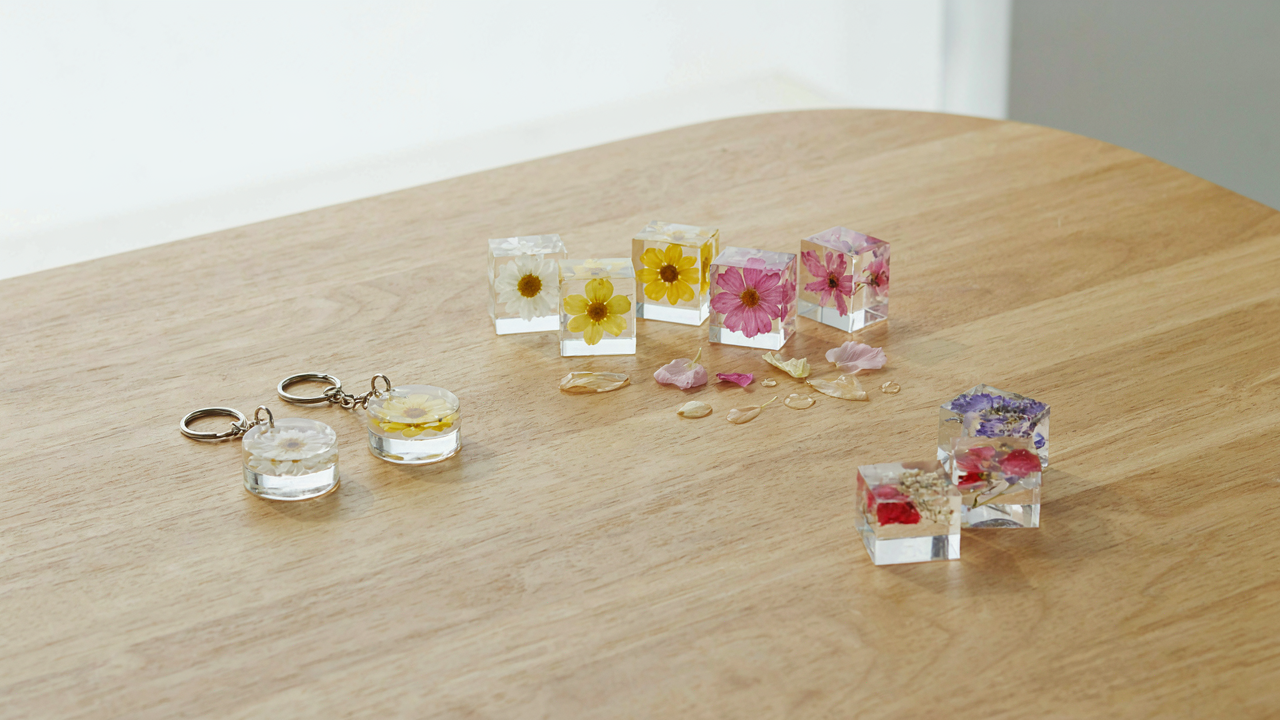
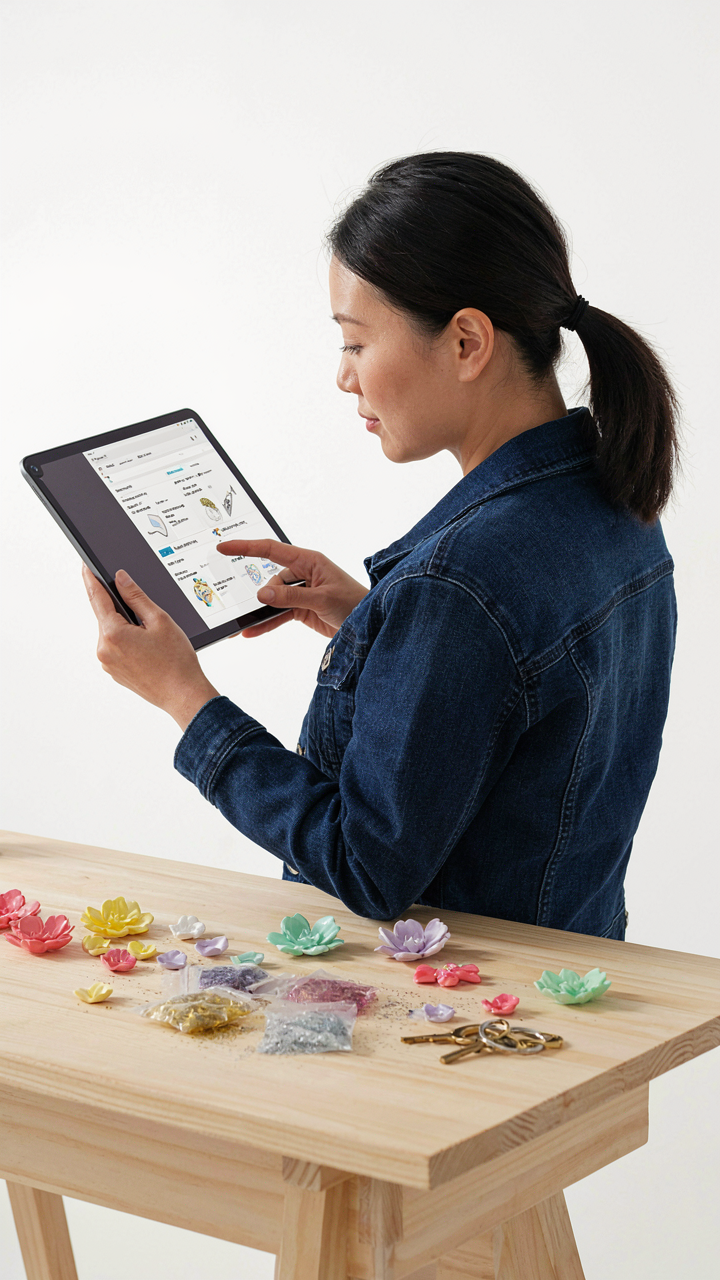
Start with Google Trends and Etsy search data. Type “resin flowers” and its variants into both platforms. Note which specific applications appear in real searches: resin flower keychains, resin flowers in clear resin blocks, resin flowers for jewelry, resin flowers wedding favors. The volume tells you where actual money moves. Ignore what looks impressive in your Instagram feed and map to what strangers type when they have cash.
Gaps In Pricing, Not Just Aesthetics
Most resin creators compete on visual refinement in a market already flooded with visual refinement. The real edge sits in categories where attention costs less than the product deserves. Resin flower hair clips, for example, receive minimal creator attention compared to jewelry, yet generate consistent searches from a customer base that values utility over Instagram appeal.
Scan Etsy seller data for products with low review counts and moderate pricing. This signals underserved demand. A resin flower bookmark with 12 reviews at 16 dollars indicates room to enter. The mechanism is simple: you’re not building a brand on beauty alone. You’re capturing a niche where supply hasn’t caught up to search volume. Start production in the gap you identify, not the niche you love most.
Beyond Hobbyist: The Commercial Resin Crafts Tutorial You Actually Need
Batching Your Way To Margin
You want to know if you can actually make money at this without burning out. Here’s the mechanism: production economics borrows from manufacturing—you don’t scale revenue, you scale throughput per labor hour. Most resin flower makers produce one piece at a time, treating each order like a custom build. That’s craft pricing, not business pricing. Batching flips this. You create five identical pieces in the time a hobbyist makes one.
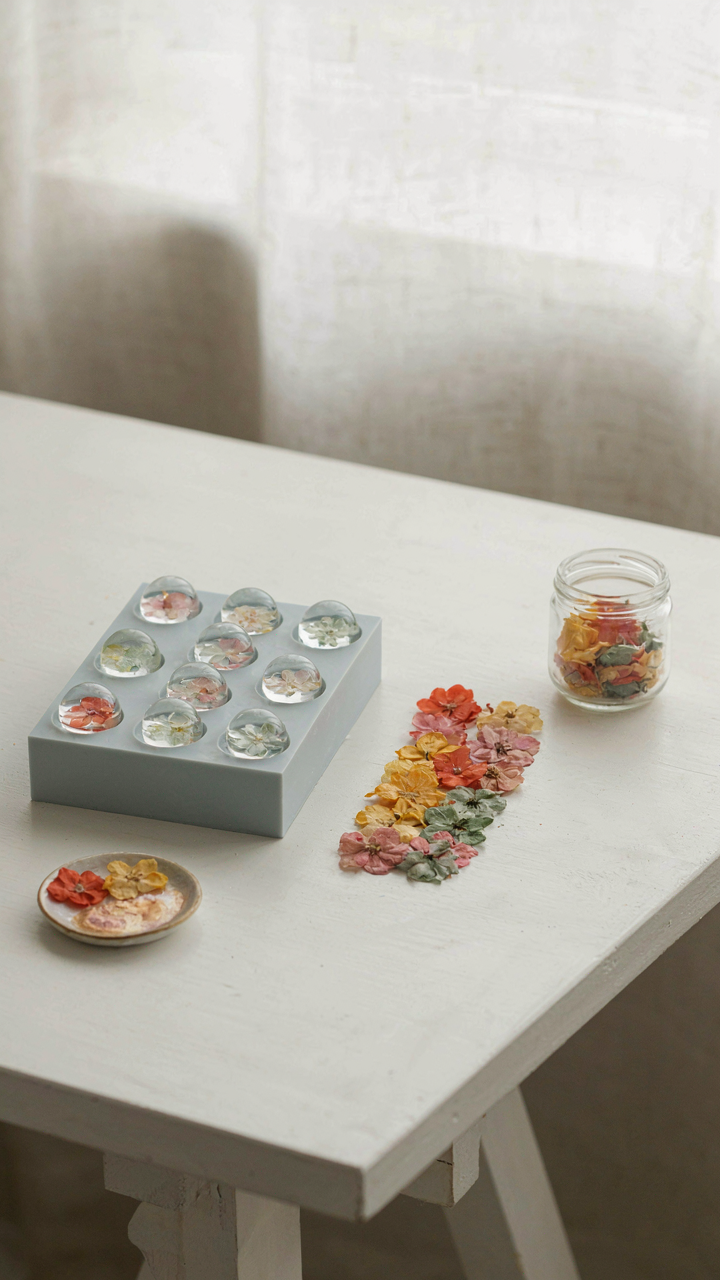
The shift requires you to standardize everything before you pour a single drop. Choose three to five core designs. Build a mold system for each. Pre-measure resin and hardener for batch quantities. Pre-cut stems and secure dried flowers in identical positions. Run production in cycles: prep phase, pour phase, cure phase, finishing phase. You’re not faster at one piece. You’re exponentially faster at ten. That’s where margin lives.
Where Your Costs Actually Leak
Most resin flower sellers price by guessing what competitors charge, then panic when they realize materials ate the profit. Control material cost first, or nothing else matters.
- Bulk Resin Purchasing: Buy epoxy resin in 5-gallon containers from industrial suppliers, not craft retailers. Cost per ounce drops 40-50 percent. Storage requires proper conditions, but the math wins immediately.
- Silicone Mold Reusability: One quality two-part silicone mold runs 30-50 pours before degradation. Amortize that mold cost across all units. Cheap single-use molds spike per-unit expense and lock you into constant replacement spending.
- Flower Sourcing Contracts: Dried flower wholesalers offer 30-40 percent discounts on standing orders versus retail. Lock in seasonal pricing before peak demand drives costs up. Bulk storage requires humidity control but eliminates supply-chain panic pricing.
- Pigment and Dye Concentration: Professional colorants are more expensive per bottle but require 1-3 percent of resin volume to achieve color saturation. Craft-grade alternatives need 5-15 percent, destroying margins on colored pieces.
- Packaging Efficiency: Standardize box sizes to your three core designs. Negotiate with packaging suppliers on unit minimums. Custom boxes at 100 units cost 60-70 percent less per box than ordering 20 at a time.
Your cost baseline defines your minimum viable price—not competitor pricing or what feels right. Calculate material cost plus 15 percent waste factor. If that number exceeds 35 percent of your target retail price, the design doesn’t scale profitably. Redesign or abandon it before you build inventory.
The “Minimum Viable Product” For DIY Resin Art Entrepreneurs

Start With Designs That Sell, Not Impress
You want permission to make something perfect before you sell it. That’s the fear talking, and it costs you months. The mechanism here borrows from product development: treat your resin flowers like a startup MVP—minimal viable product. You’re not building the final version. You’re building the version that proves someone will pay.
Start with one design. Not a collection. One resin flower pendant or keychain using basic casting techniques you can execute in a weekend. Strip away complexity. Forget custom molds or rare pigments. Use standard silicone molds, premade flowers suspended in clear resin, basic color. The design doesn’t need to be original yet. It needs to move inventory and give you data about what customers actually buy versus what you think they’ll buy.
Adjust Based On What Customers Tell You With Money
Most resin creators ignore sales patterns and keep making what they like. That’s not iteration. That’s spinning wheels. Real iteration means tracking which pieces sell fast, which sit, which get returned, which customers ask you to modify. Money is the only honest feedback mechanism you have.
After your first fifty sales or three months selling, you’ll see the pattern. Maybe pendant sales outpace wall art by 3 to 1. Maybe customers want specific color combinations you didn’t predict. Maybe they ask for custom sizing. That data becomes your next MVP iteration. You add one variable, test it, measure, then decide. The protocol is simple: sell, collect data, adjust one element, repeat. Your business compounds on feedback, not guesswork.
Deconstructing “Originality”: Why Most Resin Jewelry DIY Fails

Copy The Winners, Then Change One Variable
You want to feel like the first person to think of something. That’s the real block here. But originality in resin flowers isn’t about inventing from nothing—it’s about remixing constraints. Think of it like genetic recombination in biology: you take proven DNA sequences and recombine them into new organisms. In resin jewelry, you take proven sellers and change one mechanical variable—material, size, color palette, or mounting method.
The designers making money aren’t staring at blank screens waiting for genius. They’re buying bestselling resin flower pieces, reverse engineering why they sell, then producing their own version with a single constraint removed or altered. A popular seller uses clear resin with dried flowers. You use translucent tinted resin with the same flowers. Same mechanism, different execution. Your version isn’t “original” in the pretentious sense. It’s viable because you removed friction from an already-working system.
Think Before You Build Anything
The common advice says “just start” and “iterate.” That’s incomplete. Starting without a decision framework wastes materials, time, and money on directions that don’t scale. Before you mix a single batch of resin, identify which variable you’re actually testing—resin type, flower source, market segment, or price point. Pick one. Change only that one. Everything else stays constant so you can measure what actually moved the needle.
Most DIY resin makers build a dozen pieces, feel stuck, then abandon the project because they changed too many variables at once. They switched resin brands, flower suppliers, mold sizes, and pricing simultaneously. Now they don’t know which change mattered. Map your test narrowly. Build five identical pieces except for the single variable you’re measuring. Sell them. Measure the response. Move to the next variable only after you have data, not feelings.
The Scarcity Principle In Pressed Flower Crafts: Pricing For Profit
Making Exclusivity Work Against Commodity Pricing
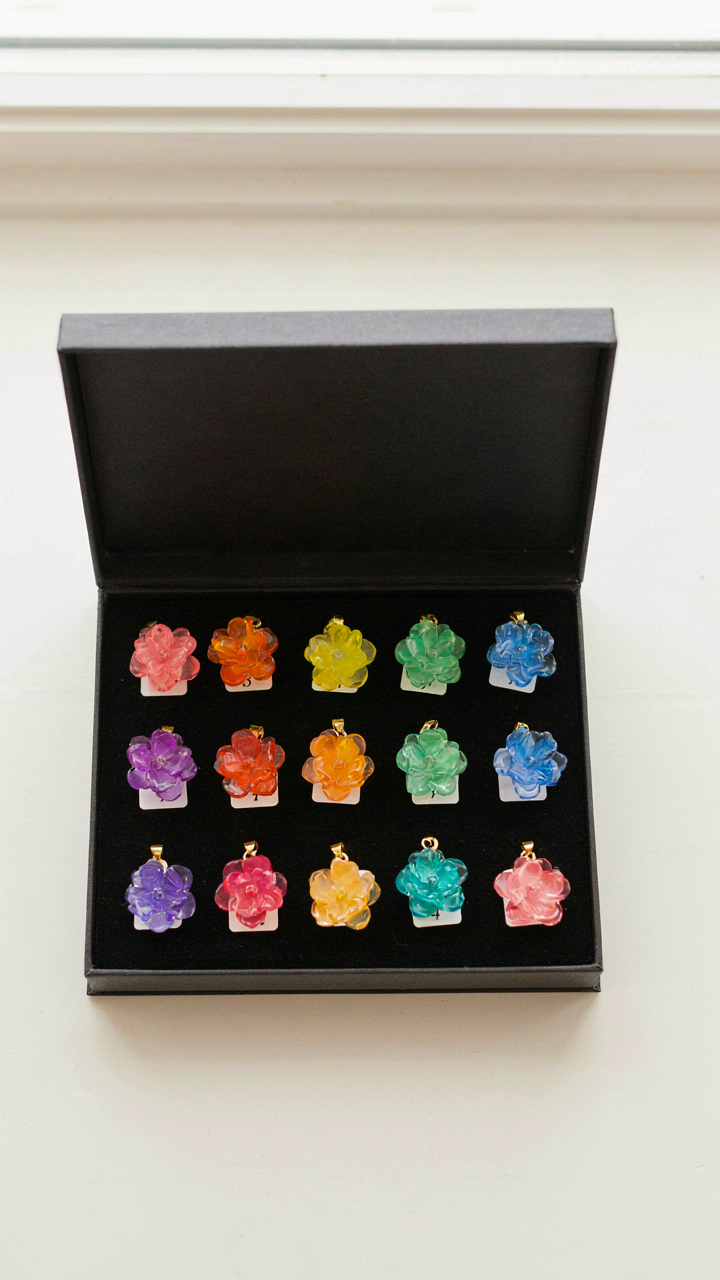
You want permission to charge more without feeling like a fraud. That’s the real thing here. The mechanism is borrowed from economics: scarcity creates demand elasticity. In resin flower work, artificial scarcity means you control the supply narrative, not the market. You don’t make a hundred identical pieces and hope. You make ten numbered editions, then stop. The buyer perceives finality, not abundance.
Limited editions work because they trigger loss aversion. A customer will pay 40 percent more for item number 3 of 10 than for an identical unstamped version. The resin itself costs the same. The labor is identical. The difference is psychological real estate you’ve rented in their mind. You stake that territory by declaring the run closed after a fixed number. No exceptions, no restocks of “the same design.”
Price Like You Have Alternatives
The common advice says start low and raise prices gradually. This is wrong. It trains your market to expect cheap goods and builds a customer base that resents increases. Instead, price like you’re turning work away. Premium positioning is not arrogance; it’s information architecture. You’re signaling that your process, materials, or time have a floor.
Resin flower work justifies higher pricing tiers immediately if you name the reason clearly. Vintage pressed specimens cost more than common garden flowers. Hand-selected resin with UV inhibitors costs more than basics. Custom sizing takes more setup. Each tier needs a named difference, not a vague “handmade premium” story. You hit your margin target by refusing to compete on price, then backing that refusal with a specific trade-off the buyer can see and evaluate themselves.
Leveraging Biology: The “Adaptive Radiation” Strategy For Resin Jewelry Making

Where One Product Line Becomes Many
You want permission to make more without starting from scratch. Biology calls this adaptive radiation: when one ancestor species diversifies rapidly into multiple forms to fill different ecological niches. In resin jewelry, this means taking one core product and systematically branching it into variations that address different customer segments, price points, and use cases. You don’t need ten unrelated product ideas. You need one idea fractured strategically.
Start with a single resin flower pendant. That’s your ancestor species. From there, you develop variants by changing only one variable at a time: size, color palette, backing material, thickness, or encasement style. A small clear pendant with pressed baby’s breath becomes your baseline. Then you create a larger version for statement wear, a keychain version for impulse buyers, a brooch version for older demographics, and a phone charm version for younger ones. Each variant solves a real customer problem without requiring you to learn a new technique or source completely different materials. The barrier between products collapses.
Building Branches From Your Core
Most people launch five random products and wonder why nothing gains traction. That’s noise, not strategy. Real leverage comes from variants that share your core competency but reach different markets. Take your base resin casting skill and your flower sourcing network. Don’t abandon them to chase unrelated ideas.
Your first branch targets price sensitivity: smaller pendants at lower price points capture budget-conscious buyers who want the aesthetic without the investment. Your second branch targets occasion specificity: wedding-themed collections, gift sets, seasonal editions. Your third targets format diversity: the same flower designs work in earrings, rings, bookmarks, and coasters. You’re not inventing new skills. You’re replicating what works across formats that already exist in retail. Each branch uses the same suppliers, the same curing process, and the same marketing angle. Track which variant sells fastest, then double down on that branch while maintaining the others as revenue streams.
Beyond Etsy: Distribution Channels For Epoxy Resin Crafts That Actually Move Product
Selling Direct Without The Platform Tax
You want to believe Etsy is neutral ground, but it’s not. The real motive here is avoiding the 6.5% transaction fee plus payment processing while keeping customer data. Direct-to-consumer means you own the relationship and the margins. Use Shopify or Square Online to build a storefront where repeat customers find you first, not buried under algorithm changes. Email capture matters more than social followers because email converts at 3-5x the rate of cold traffic. Set up a simple email sequence that goes to buyers 30 days after purchase offering custom orders or new designs. The mechanism is friction reduction: make buying again easier than finding a competitor.
Instagram Shopping and TikTok Shop tap into where resin flower buyers already spend time. Post process videos, finished product shots, and close-ups of detail work. Don’t sell in captions. Use the platform’s native shopping feature so buyers checkout without leaving the app. Run product-specific ads to audiences interested in home decor, wedding planning, and craft supplies. Track which product photos drive clicks and which drive purchases, then repeat the winners. Link your email list to these platforms so you can retarget people who watched but didn’t buy.
Brick And Mortar Partnerships That Scale Without You
Consignment is how resin flowers move volume while you keep making inventory. The split is typically 60/40 or 70/30 in your favor, and the store handles foot traffic. Target local gift shops, home decor boutiques, wedding planners, and florists who want premium offerings but don’t make their own. Create a consignment agreement specifying payment terms, price points, and how often you restock. Most stores expect restocking every 2-4 weeks. Your job is to ensure the display looks intentional, not neglected.
- Local gift boutiques: Mid-range price point, traffic from tourists and locals buying occasions gifts. Average consignment margin allows for 2-3 pieces per shop.
- Wedding and event planners: Need centerpieces, favors, ceremony arrangements. They buy in bulk and reorder seasonally. Higher average order value than retail.
- Florists and flower shops: Complement fresh arrangements with preserved resin versions. They have existing customer relationships and can upsell to wedding clients.
- Corporate gift services: B2B buyers sourcing items for client appreciation, holiday gifts. They need bulk pricing and consistent inventory. Orders ship directly to them.
- High end garden centers: Position resin flowers as premium home and outdoor decor. These locations attract affluent buyers willing to pay full retail without discount shopping.
Wholesale requires minimum order quantities, typically 10-25 pieces per design. Price wholesale at 40-50% below retail so shops can mark up 100% and still compete. Provide mock-ups or sample photos showing how pieces display in real spaces. Set payment terms as net 30 or net 60, not upfront. Track which designs sell fastest at each location and adjust future orders to match demand, not your preference.
The Unsexy Side Of Epoxy Resin Art: Inventory Management And Logistics

When Your Stock Becomes Your Ceiling
You want to believe scaling a resin flower business is about better designs and prettier Instagram posts. It’s not. Your actual ceiling is inventory turnover rate. Most makers don’t track this metric, so they drown in slow-moving pieces while running out of fast sellers. You need a system that tells you exactly which products convert and which sit dead weight on your shelf. Track cost per unit, production time, and sell-through rate by SKU. When you know that resin flower keychains move twice as fast as resin flower coasters at the same margin, you stop making coasters. Stop guessing about demand. Count it.
Most resin businesses fail not because they can’t make the product, but because they make the wrong product in the wrong quantities. You’ll tie up cash in resin, hardener, molds, and flowers that don’t sell. Spreadsheets matter more than creativity here. Record every piece you make, when it sold, and how long it sat. After three months of data, patterns emerge. You’ll see seasonal shifts, which designs customers actually want versus which ones you thought were clever, and which price points move volume. This data is your business engine. Run without it and you’re operating blind.
Packaging Physics And The Profit Leak
Shipping protection isn’t logistics, it’s physics. When a resin flower piece breaks in transit, the customer doesn’t blame the carrier. They blame you. And the refund or replacement eats directly into margin. Most makers underspend on packaging because they see it as cost. Wrong frame. It’s insurance against margin destruction. Use rigid boxes, not padded mailers. Use cushioning material inside that actually absorbs impact, not decorative filler. Calculate the cost: if a resin flower necklace retails for forty dollars with a twenty dollar margin, and one in twenty shipments results in breakage and replacement, that’s one dollar of every twenty dollars in margin vanishing to logistics failure.
The math kills most resin businesses in their second month. Carrier selection matters less than box construction. USPS flat-rate boxes look cheap but add dead weight you pay for. UPS ground costs more but handles bulk better. Test three shipments to your own address before you ship to customers. Drop boxes, don’t just place them gently. If they break in your test, they’ll break in real transit. Once you find packaging that survives, lock that system in. Change suppliers only if cost drops materially and protection stays identical. Track damage claims by shipping method for six months so you know which carrier actually minimizes breakage versus which one just has the best marketing.
Resin Jewelry Display Ideas: Attracting Buyers, Not Just Admirers
The Display That Stops Scrolling
You want people to stop and buy, not pause and compliment. That’s the real friction point—admirers don’t convert to customers. Retail psychology calls this visual merchandising, and the mechanism is constraint. You’re borrowing from scarcity economics: limited display space forces the buyer’s eye to land on one piece at a time instead of wandering across clutter. A crowded table kills urgency. A curated arrangement creates it.
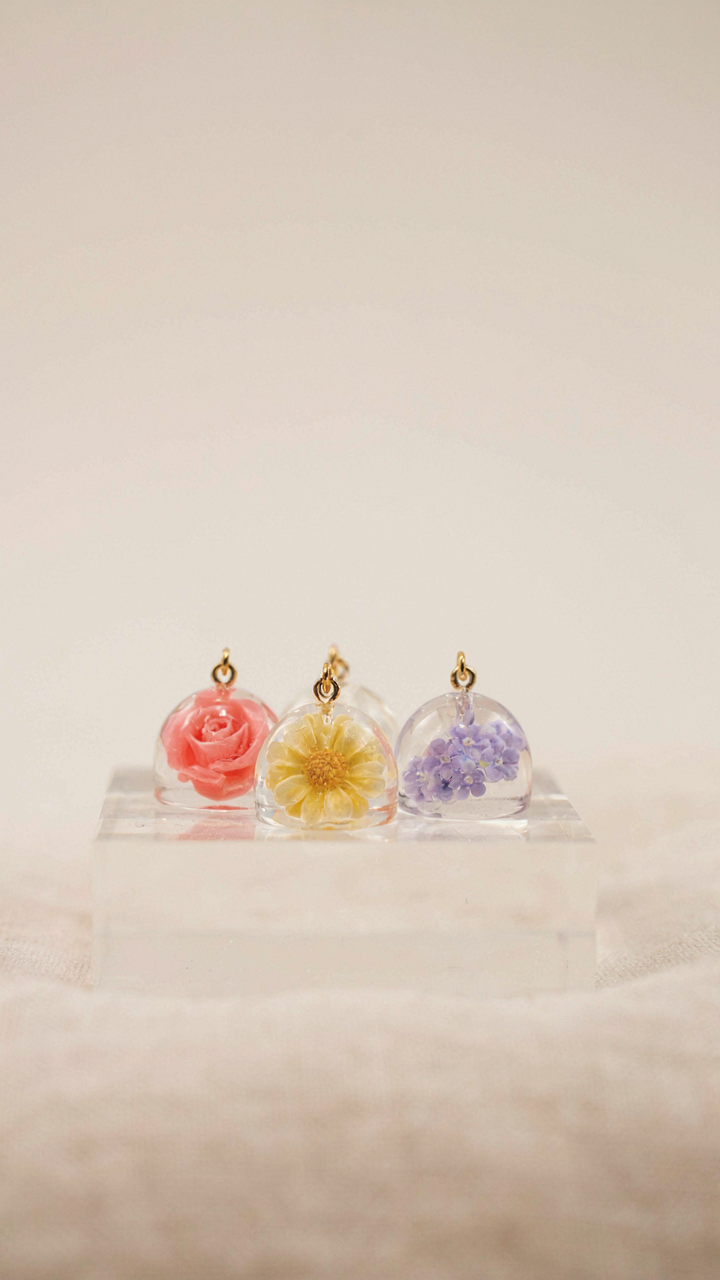
The setup matters more than the product. Group three to five similar resin flower pieces together on a small stand or acrylic block rather than spreading ten pieces across a table. Light them from above or the side to catch the resin’s depth and the flower’s detail. The human eye responds to isolation and light before it responds to quality. People buy what they can focus on, not what they have to search for.
Photography That Moves Inventory
Most resin flower photos fail because they treat the product like documentation instead of proof of value. The real converter isn’t the macro shot of the flower detail—it’s the lifestyle context that tells the buyer who they become when they own it. Show the ring on a hand, the pendant against skin, the earrings catching actual light. One clear, well-lit photo of a product in use outsells ten gallery shots.
Shoot in natural window light or invest in a cheap ring light. White or neutral background keeps focus on the piece. Close-ups of the flower are secondary—lead with the full product in context. Include one photo showing scale by pairing the jewelry with a recognizable object like a coin or fingertip. Buyers need to know what they’re actually getting before they commit. Update photos weekly to create algorithmic freshness if you’re posting to social platforms or marketplaces.
Automating Resin Arr: Freeing Your Time For Growth, Not Grunt Work

Standardize Your Pour And Cure Cycle
You want to scale without burning out, which means you need to stop treating every piece like a custom art project. The mechanism here comes from manufacturing: standardization reduces variables, which reduces decision fatigue and error rates. When you pour resin flowers, each temperature variance, cure time deviation, and mold swap creates friction. Lock down your process. Use the same resin brand and hardener ratio every time. Cure at one consistent temperature. Pour at the same time of day when ambient conditions are predictable. This removes the cognitive load that kills momentum.
Document exactly what works. Write down your pour temperature, cure duration, humidity range, and demolding time. Test one variable at a time, then lock it. This is not creativity dying, it’s creativity scaling. The faster your piece moves from pour to finish, the more pieces you move in a month. The math is simple: fewer variables means fewer failed batches, which means more saleable inventory with less wasted material and time.
Outsource Finishing, Keep The Pour
Most resin flower makers get this backwards. They hand off the pouring and try to do finishing themselves because pouring feels like “the real work.” Wrong. Pouring is the highest-leverage activity. Finishing is sanding, painting details, applying coatings, packaging, and labeling. Hire someone for finishing. Even at 15 to 20 dollars per hour, the math favors you because finishing takes 30 to 45 minutes per piece while you could pour five pieces in that window. A pourer generates more revenue per hour than a finisher. Your role is to pour and quality-check. The outsourced worker handles the rest of the pipeline. Start with one piece type, train someone, and measure output before scaling to new designs. You keep doing what only you know how to do. Everything else gets delegated or it becomes your ceiling.
The Only Real Obstacle Isn’t Creativity; It’s Your Refusal To Treat This As A Business, Not A Hobby

Most people quit resin flower businesses before they start because they never actually commit to selling. They make beautiful pieces, post them once, then disappear when nobody buys immediately. You need to pick one platform today, set a price that doesn’t insult your time, and commit to posting three times a week for the next month. Not perfection. Just consistency. The market doesn’t reward hobbyists. It rewards people who show up.



