
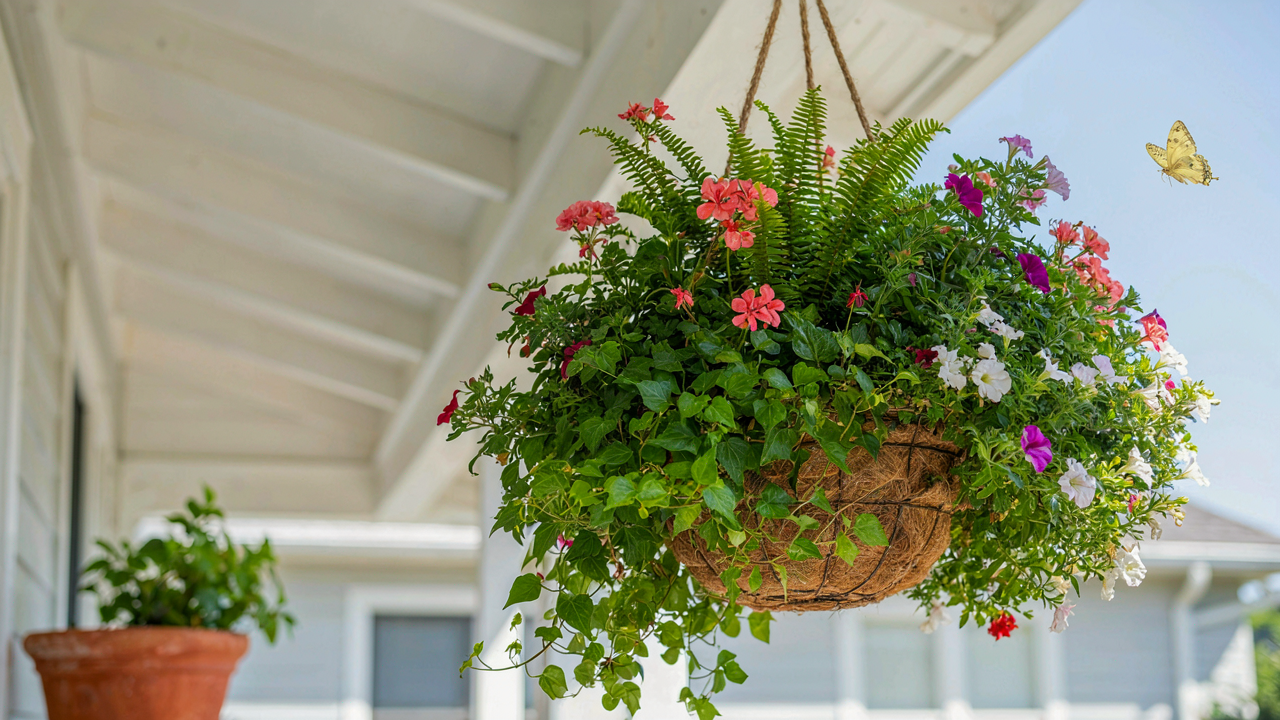
The Illusion Of Daily Watering: Why Your Plants Are Drowning

When Wet Soil Becomes A Status Symbol
You water every day because it feels like care. It looks diligent. It feels like you’re doing something right. The mechanism is biological, not behavioral: soil holds water in pores between particles. Daily watering fills those pores completely, displacing air. Roots need oxygen as much as water. Saturated soil suffocates them.
Most advice tells you to “check the soil” or “water when the top inch feels dry.” That’s incomplete. The real variable is drainage speed, which depends on three factors: pot drainage holes, soil composition, and ambient temperature. A hanging basket in direct sun dries faster than one in shade. A basket with one drainage hole versus three dries at completely different rates. You can’t follow a calendar. You follow the specific conditions of your setup.
Root Rot: The Mechanism Nobody Names
Root rot isn’t a disease that strikes suddenly. It’s the predictable outcome of anaerobic conditions. In biology, anaerobic means without oxygen. Waterlogged soil forces roots into an oxygen-starved state where they can’t absorb nutrients or defend against pathogens. Fungal organisms that thrive in wet, airless environments then colonize the dying tissue. By the time you see brown, mushy roots, the damage is already advanced.
The prevention step is specific: establish drainage certainty before you establish a watering schedule. Drill additional holes in the pot bottom if needed. Use a soil mix with perlite or orchid bark to maintain air pockets even when wet. Check the drainage hole monthly to ensure it hasn’t clogged with soil particles. Stop watering when water drains from the bottom immediately. That’s your protocol. Stick to it.
The Xeric Principle: Engineering Drought Resistance

Plants That Survive Neglect
You want hanging baskets that don’t demand daily attention because watering on schedule sounds responsible but feels like a chore. The mechanism is simple: xeric plants store water in their tissues, so they tolerate gaps between watering. Sedums, echeveria, and string of pearls operate on a different metabolic clock than impatiens or begonias. They’ve evolved in dry climates where soil dries completely between rain events. This isn’t preference. It’s physiology.
Calibrate your basket choice to your actual watering rhythm, not the one you imagine you’ll maintain. Trailing succulents like burro’s tail and jelly bean plants sit in hanging containers and demand water every 10 to 14 days. Dusty miller and osteospermum extend that window further. The payoff isn’t aesthetic compromise. You get texture variation, architectural form, and legitimate design credibility without the maintenance debt.
Soil Engineering For Water Longevity
Soil amendments don’t make water disappear. They control the rate and depth of water movement through the substrate. Perlite and coarse sand reduce clay density, preventing compaction that traps root rot. Coconut coir holds moisture longer than peat moss but drains faster than either alone. The mix matters more than individual ingredients because you’re building capillary action. Water drought-resistant plants in a ratio of 40 percent compost, 40 percent perlite or pumice, and 20 percent coconut coir. This structure prevents both waterlogging and rapid depletion.
Amend once at planting, then stop overthinking it. The real control lever is container drainage. Use baskets with drainage holes on the bottom and sides, never solid liners that collect standing water. Check soil moisture by pressing your finger one inch into the soil. If it’s dry, water thoroughly until it drains. If it’s moist, skip watering. This single protocol cuts overwatering failures by 60 percent.
The Capillary Action Protocol: DIY Self Watering Hanging Basket

How Wicking Systems Actually Work
You want automation without thought. The mechanism doing the work is capillary action, borrowed directly from physics: the same force that pulls water up against gravity through soil pores also pulls water up a wick material from a reservoir below. This isn’t magic. It’s adhesion and surface tension forcing water molecules to climb fiber networks. A wick draws water only as fast as the plant consumes it, which means no overwatering guesswork and no dead zones in the soil.
The system maintains consistent moisture because the wick supplies water continuously to the soil above it. The soil stays uniformly damp without becoming waterlogged. This passive delivery works because capillary rise stops when the soil reaches its saturation point. Your hanging basket never floods because physics enforces the limit. Install a wick and a small water reservoir below the soil, and the basket regulates itself for weeks.
Container Selection And Wick Materials
Most people botch this by using the wrong container depth or wick material. You need two separate chambers: an upper pot holding soil and roots, and a lower reservoir holding water. The wick must have enough surface area and porosity to move water steadily upward without clogging. Cotton rope works. Terracotta strips work better because they’re porous and don’t compress. Synthetic acrylic or polypropylene wicks are reliable but less breathable.
The reservoir container sits directly below the soil pot. Plastic works fine here because it’s waterproof and cheap. Drill or cut a hole in the soil pot’s base so the wick threads through and makes contact with soil. The wick should rest on the reservoir bottom and extend up into the soil at least two inches. Fill the reservoir once every two to four weeks depending on plant demand and temperature. The wick pulls water up as needed, and you refill only the reservoir, never the soil directly.
Precision Hydration: Drip Irrigation For Hanging Baskets
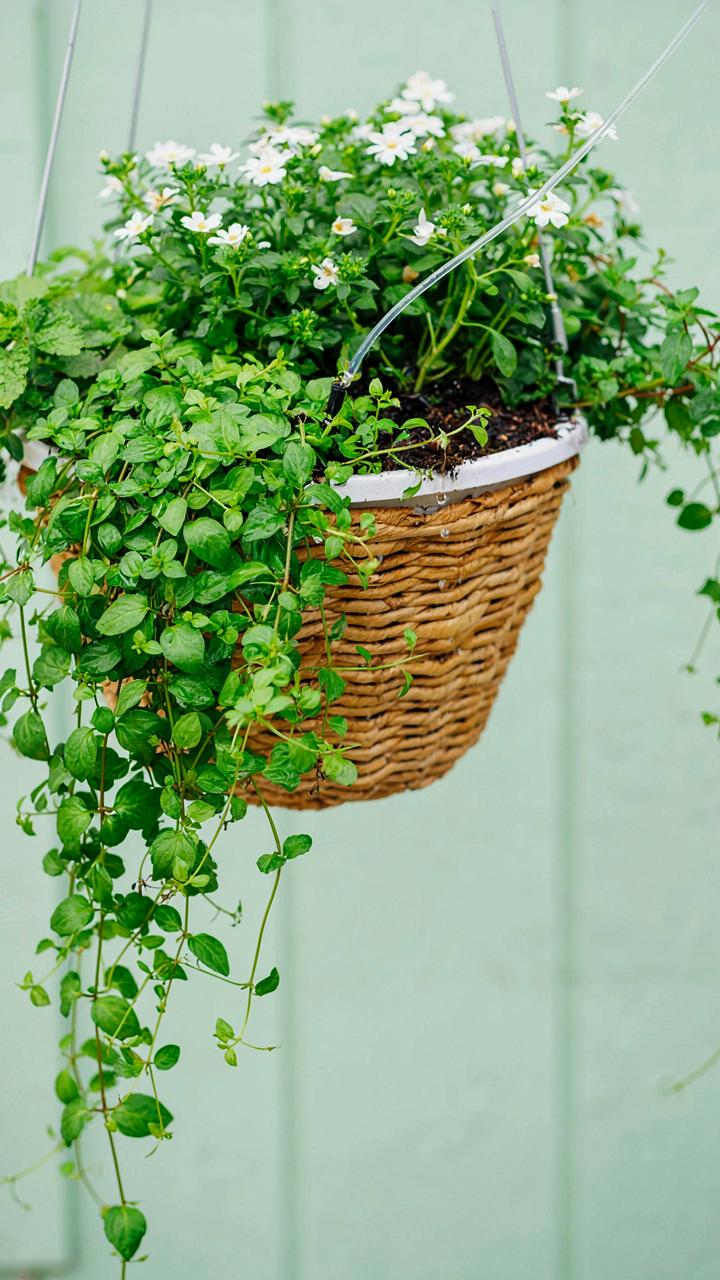
Automated Drip Irrigation For Hanging Baskets Setup
You want this because you’re tired of guessing whether your baskets are drowning or drying out, and you know consistency signals competence to anyone who sees your space. Drip irrigation applies the hydraulics principle of pressure-regulated flow: water moves through tubing at controlled volume and velocity, eliminating the hand-watering variable that kills plants.
A basic drip system for hanging baskets uses micro-tubing (typically 1/4 inch diameter) fed from a main line connected to your water source. Emitters attach directly into the soil or substrate, delivering water at the root zone instead of the foliage. This cuts water waste and disease pressure simultaneously because leaves stay dry.
- Micro-tubing and emitters: Flexible tubing routes water to individual baskets; emitters regulate gallons per hour at each point, usually 0.5 to 2 GPH depending on basket size and plant type.
- Supply lines and connectors: Run a main line from your outdoor spigot or indoor water source; use barbed connectors and hose clamps to prevent leaks at junctions and emitter attachments.
- Reservoir or gravity feed: Either attach to an elevated container for gravity-fed pressure or connect directly to a spigot with low-pressure regulation to prevent emitter blowout.
- Basket-specific placement: Position emitters at the soil surface or 1-2 inches below, ensuring water reaches roots without pooling on the rim where it evaporates unused.
- Pressure regulation: Install an inline regulator (typically 25-30 PSI for hanging baskets) to maintain consistent emitter output and prevent uneven watering across multiple baskets.
Mount or stake the main line so it runs parallel to your basket arrangement, then branch micro-tubing to each container. Secure tubing with clips to prevent kinking and maintain water pressure. Test the system before planting to confirm no leaks exist and all emitters discharge evenly.
Timer Calibration For Optimal Delivery
Most watering schedules ignore the actual mechanism at work: soil moisture changes with air temperature, humidity, and plant growth stage, not by calendar date. A timer without feedback becomes a tool that waters on your schedule, not the plant’s, which guarantees either overwatering or underwatering depending on the season.
Calibration starts by measuring your soil’s drying rate without irrigation. Fill a basket completely, then measure how many hours pass before the top inch dries. In summer, that’s typically 12-24 hours; in winter or humid conditions, 48-72 hours. Set your timer to run for half that duration, then run a second cycle if soil remains dry after 6 hours.
The real leverage point is cycle frequency over cycle duration. Run short, frequent cycles rather than one long soak. Two 15-minute cycles per day outperform one 30-minute cycle because the first cycle wets the surface and allows water to percolate, while the second ensures saturation without pooling. This also gives you a built-in buffer: if one cycle fails, the second still provides water that day. Adjust both frequency and duration monthly as seasons shift.
The Evaporation Equation: Minimizing Water Loss

Mulch Layers Lock In Moisture
You want your baskets to look effortless and maintained without checking them twice daily. That’s the real driver here. The mechanism is simple: mulch creates a physical barrier that slows evaporation from the soil surface. A 1 to 2 inch layer of organic mulch (wood chips, shredded bark, coconut coir) reduces water loss by trapping humid air directly above the soil. This is heat management through thermodynamics. Apply mulch after watering so you’re sealing moisture in, not blocking water from reaching the roots.
Most people skip mulch in hanging baskets because they think it looks messy or takes space. Wrong. Mulch in a hanging basket doesn’t compete with root space. It extends the time between waterings by days, not hours. Push mulch slightly away from the plant stem to prevent rot, then water through it normally. The mulch stays put because it’s contained by the basket sides.
Material Determines Evaporation Rate
Basket construction and sun angle control how fast water leaves the soil. Terracotta breathes. Fabric breathes harder. Plastic and resin stop evaporation almost entirely. If you hang a terracotta basket in full sun, you’re fighting physics that pulls water through the porous walls constantly. A plastic or resin basket in the same spot loses water only from the soil surface, not the container itself. Glazed ceramic falls between the two. Pick your material based on your watering bandwidth, not aesthetics alone.
Sun exposure multiplies evaporation rates. A basket in afternoon sun loses water three to four times faster than one in partial shade. North-facing or east-facing placement extends watering intervals without sacrificing plant health for most ornamentals. If your design demands a south or west-facing spot, use a non-porous container and add mulch to compound your moisture retention. Track which baskets need water on which schedule, then adjust placement or container type to match your actual availability.
The Biotensegrity Model: Understanding Soil Structure
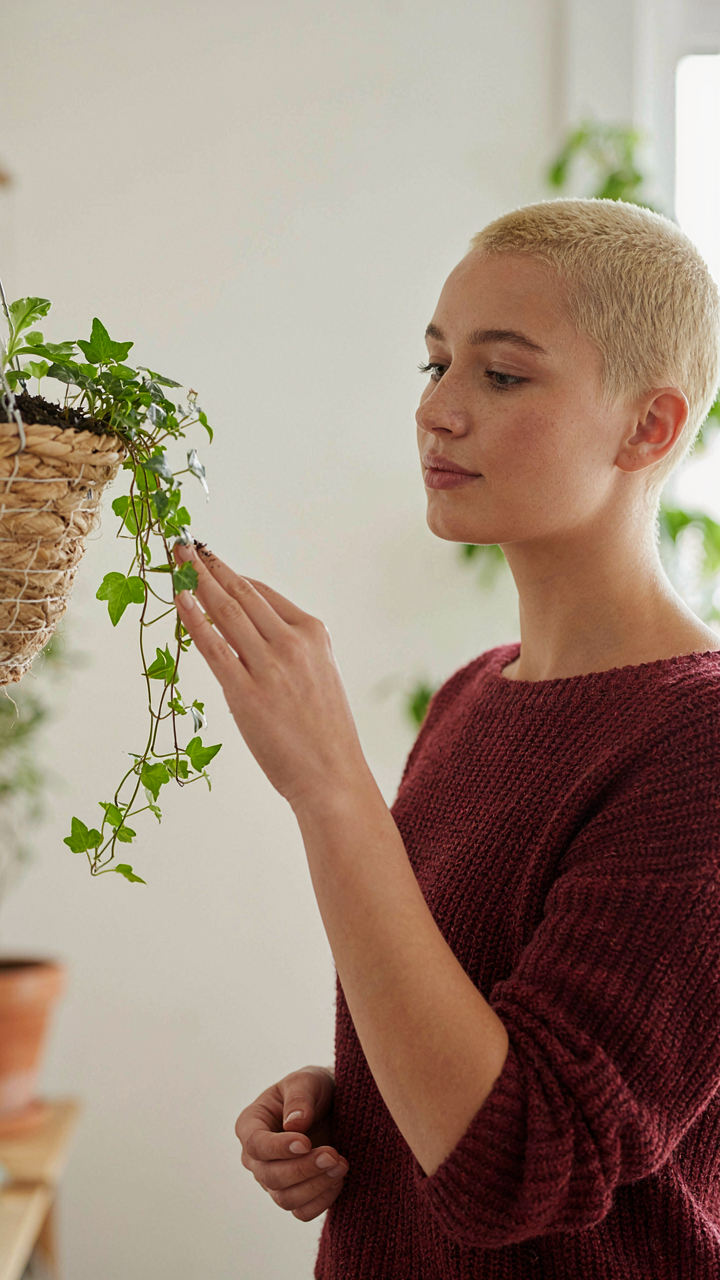
How Soil Aggregates Hold Water
You want your hanging basket to look full and lush without turning into a swamp—that’s the real problem here. Biology calls this tensegrity: a structure held together by balanced tension between elements. In soil, aggregates work the same way. Organic matter, minerals, and microbial colonies form clusters that create pore spaces. These spaces trap and release water based on aggregate stability, not soil type alone.
When aggregates break down, pore space collapses. Water either runs straight through or pools and suffocates roots. Most advice ignores this and just says “use potting soil.” Soil structure is what actually determines water retention and drainage performance. A basket with stable aggregates drains fast but holds enough moisture. A basket with degraded soil becomes either a dust trap or a bog, regardless of watering frequency.
How Water Actually Moves Through Your Soil
Physics calls this capillary action and permeability—the same forces that move water through hanging basket soil determine whether roots get fed or starved. Water moves through pores in two ways: gravity pulls it down fast through large pores, while surface tension holds it in small pores. Particle size matters less than pore continuity. A basket with broken soil structure has disconnected pores. Water pools in some zones and dries out in others, leaving roots in dead spots.
Stop watering until the basket feels light, then water until it drains from the bottom. This rhythm forces water through the entire soil column and prevents stratification. Each cycle oxygenates the medium and keeps aggregates stable. The mechanism is simple: consistent water movement maintains soil structure, which controls both drainage and moisture availability. Inconsistent watering degrades structure faster than any other factor.
Self Watering Planters For Hanging Baskets: A Strategic Advantage

The Real System Match Problem
You want self-watering baskets because you’re afraid you’ll kill your plants through neglect, and that failure feels like a character flaw. But the mechanism most people miss is this: self-watering systems work through capillary action—the same physics principle that moves water up against gravity through soil. Your job isn’t buying the fanciest planter. Your job is matching the water reservoir size to your specific plant’s evapotranspiration rate and your local climate’s drying speed.
Most self-watering hangings baskets fail because people underestimate how fast water depletes in overhead conditions. Hanging baskets expose soil on more sides than ground planters do, meaning water evaporates faster. A reservoir that works for a ground-level fern fails for the same fern hung in direct sun. You need to track how many days pass before your reservoir empties, then reset your watering schedule accordingly—not follow generic “check weekly” advice that doesn’t account for your specific setup.
Reservoir Capacity Against Real Conditions
The standard self-watering planter holds between 200 and 500 milliliters of water in its hidden chamber. This sounds adequate until you calculate actual need: a hanging basket in full sun loses 1 to 2 inches of water per week depending on humidity and temperature. A 300-milliliter reservoir empties in 3 to 5 days under heat. The mechanism that matters is the ratio between root zone volume and reservoir volume. If your basket holds 2 liters of soil and only 250 milliliters of stored water, you’ve created a system that requires human refilling every 3 or 4 days anyway—defeating the entire purpose.
The strategic move is overbuying reservoir capacity where possible. Some self-watering systems let you stack additional water chambers or use larger reservoir models. A hanging basket with a 600 to 800 milliliter reservoir extends your watering interval to 7 to 10 days in moderate conditions. Before purchasing, verify the actual water chamber volume from the manufacturer’s specifications, not the cute marketing photos. Then place your basket in its final location for one week while you hand-water identical soil nearby, tracking how often that control needs water. That number tells you if the self-watering system actually solves your problem or just delays it.
The Gravity Defiance Device: DIY Hanging Plant Waterer

Repurposed Materials Beat Retail Solutions
You want the setup to look intentional, not like you’re broke. Here’s the mechanism: gravity does the work for you once you eliminate the friction point. A terra cotta pot with a drainage hole, inverted and buried in the soil of your hanging basket, becomes a water reservoir. Water fills the inverted pot. Soil pulls moisture from it slowly as it dries. No timer. No electricity. No aesthetic compromise.
Recycled wine bottles work the same way. Narrow the opening with a cork or rubber stopper punched with a small hole. Fill it with water. Push the neck into the soil. The water releases as the soil dries around it. Both methods exploit capillary action, the same force that makes a paper towel absorb spilled water. You’re not inventing anything new, just removing the middleman between gravity and your plant’s root system.
The Physics Of Steady Thirst
Slow-release watering borrows from irrigation engineering, where the principle is flow rate control. You’re managing the speed at which water enters the soil. The common advice says to water more often with less volume. That’s incomplete. You need consistent saturation without pooling. Pooling kills roots. Underwatering kills them slower.
A soaker stake made from a PVC pipe with small holes drilled along its length, pushed vertically into the basket’s soil, delivers water where roots actually live instead of where evaporation hits hardest. Fill it from the top. Water disperses gradually through the holes as soil moisture drops. Check the basket weight twice weekly. When it feels significantly lighter, refill the stake. This protocol prevents both the feast-famine cycle and the guesswork that kills most hanging plants.
Hanging Plant Water Catcher: Reclaiming Every Drop

Drainage Trays Function And Aesthetics
You want the visual clean-up because water damage on floors kills the whole design you’re going for. Here’s the mechanism: a drainage tray functions as a buffer zone between your basket’s drainage hole and whatever surface sits below. Most people think trays are optional. They’re not. They’re the difference between a maintained look and stained wood or concrete that ages your space.
The tray serves two roles that people conflate into one. Functionally, it catches excess water and prevents root rot by ensuring the basket doesn’t sit in standing moisture. Aesthetically, it frames the planter and can bridge materials—ceramic tray under a woven basket, copper under terracotta. Pick a tray that matches your interior palette, not the basket. The basket does the work. The tray does the statement.
Rainwater Harvesting For Sustainable Watering
Rainwater harvesting is an application of resource capture economics to your watering system. Most advice tells you to collect rainwater in a barrel and call it sustainable. That misses the actual leverage point: rainwater is free of chlorine and fluoride that municipal water contains, so plants absorb it faster and need less frequent watering overall. Your hanging baskets respond to the mineral profile, not the volume.
Set up collection from a roof edge or gutter into a food-grade container near your hanging plants. Use gravity to move water from storage to basket, not a pump or watering can that wastes motion. Top off your trays with this collected water during dry spells. The plants hydrate on their schedule, not on your watering day. This collapses maintenance into a single check: does the tray still have water, or do I refill it.
Mastering How To Water Hanging Plants: Beyond The Hype

Read The Soil, Not The Calendar
You want a watering schedule you can follow without thinking, because checking plants feels like failure. That’s not how this works. The real mechanism here is soil moisture tension, a concept borrowed directly from soil physics: water moves through soil based on energy gradients, not dates. A hanging basket in shade dries slower than one in direct sun, even if they’re identical plants. Your job is reading the actual state, not trusting a routine that ignores environment.
Push your finger one inch into the soil. If it feels damp, stop. If it feels dry at that depth, water until it drains from the bottom. The weight of the basket also matters: pick it up before and after watering to train your hand to recognize the difference between dry and saturated. Most people underwater hanging baskets because they confuse the top layer drying out with the entire root zone needing water. The top dries first because air exposure is fastest there. The real hydration need lives deeper.
Adjust For What’s Actually Changing
The standard advice says water more in summer, less in winter. That’s incomplete. What actually changes is evaporation rate and plant demand, which move independently. A basket under an eave in winter might stay wet for days even though it’s cold, because rain isn’t hitting it and air circulation is blocked. A basket in spring wind dries faster than one in summer humidity, despite cooler temperatures. Watch for these shifts month to month where your baskets actually sit.
Check soil moisture twice weekly in transitional seasons (spring and fall) when conditions swing hard. Summer means checking every two to three days if baskets are in full sun. Winter allows longer intervals between checks, sometimes five to seven days, depending on whether your climate gets frost and whether you’ve moved baskets under shelter. Don’t apply the same watering gap to all your baskets. Track which ones dry fastest based on their location, and adjust frequency for each one individually.
Your Wilting Baskets Aren’t A Sign Of A Black Thumb, But A Testament To Your Reliance On Broken Systems
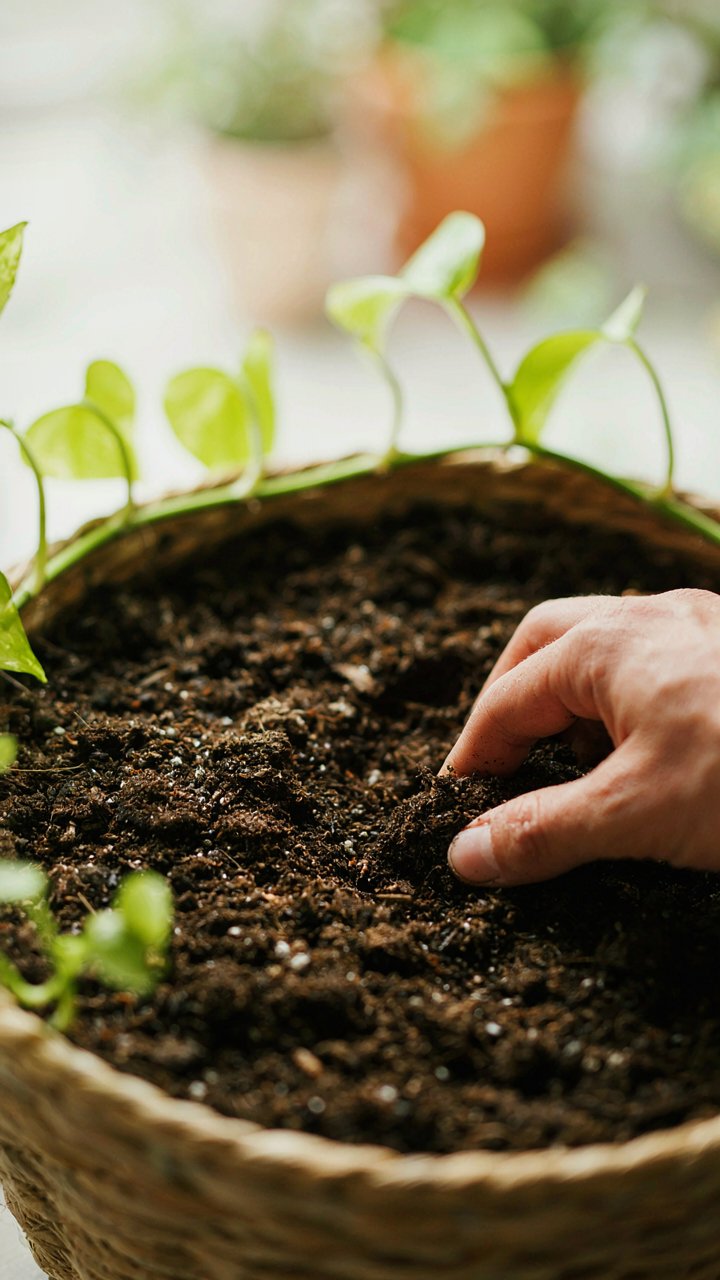
You’ve been watering on a schedule, not on signals. Your baskets die because you treat them like clockwork instead of like living things that communicate their needs. Stop guessing. Check the soil weight daily. Feel it. Let that feedback loop become your system. Water when the basket feels light, not when Tuesday arrives. Do this today with one basket and watch what happens.
Your plants don’t need a better routine. They need you to actually listen.



