

The Illusion Of “Easy”: Why Your Baskets Die

You’re Ignoring Drainage Like It Doesn’t Matter
You want the basket to look full and lush without effort. That’s why you skip this part. But drainage is not optional—it’s the load-bearing wall of hanging basket survival. Most beginners treat it as a checkbox. They poke holes in the bottom, add soil, plant something, and wonder why roots rot in a week. The mechanism is simple: water has nowhere to go, anaerobic bacteria colonize the root zone, and the plant suffocates from the bottom up.
The real problem starts before you plant. Cheap baskets come with inadequate drainage holes or plastic liners that trap moisture against the roots. You need to either drill additional quarter-inch holes around the bottom third of the basket or line it with landscape fabric that still allows water through—not plastic wrap. The soil matters too. Standard potting mix holds too much water in hanging conditions. Use a blend with perlite or orchid bark mixed in to create air pockets. Without this, your basket becomes a slow-motion drowning machine.
Light And Air Movement Are The Invisible Killers
Everyone talks about watering. Nobody talks about what actually kills baskets in weeks. Taking biology terms seriously: your hanging basket needs convection. Stagnant air around wet leaves creates a microclimate where fungal spores thrive. Powdery mildew, root rot, and stem blight move fast in dead air. You can hang a basket on a porch, but if it’s in a corner without wind or airflow, you’re just creating a terrarium for disease.
Light positioning is equally brutal to overlook. A north-facing porch might look nice, but most trailing plants and flowers need four to six hours of direct sun. Without it, they weaken, stretch toward the light, and become susceptible to every pest and fungus waiting. The solution is simple: hang baskets where air moves and sunlight actually hits them, even if it means repositioning from the aesthetically “perfect” spot. Check the porch at different times of day before committing to a location.
The Anti Generic Porch Protocol For Summer Front Porches

Plants Nobody Else Considers
You want a porch that signals taste without effort, which is why you’re tempted to buy whatever’s at the garden center. Stop. The mechanism is scarcity: plants everyone grows become invisible. Your eye skips them.
Swap the standard petunias and impatiens for specimen plants with structural weight. Diascia produces delicate flowers but trails aggressively, filling dead space fast. Scaevola tolerates heat and drought better than conventional hangers. Helichrysum petiolare grows silver-gray, a color choice that makes people pause. These aren’t rare—they’re just uncommonly selected. The difference between a porch that blends and one that registers is one deliberate plant swap per basket.
Curate Your Vision Not A Copy Paste
Most people scroll Instagram, screenshot a basket, and buy the exact plants. This fails because Instagram photos flatten dimension, hide maintenance, and don’t account for your light exposure or climate zone. Your porch is not someone else’s porch.
Start with one constraint: light. Full sun demands heat-tolerant plants like lantana, calibrachoa, or vinca. Partial shade requires impatiens alternatives like begonias or fuchsia. Next, choose a color story, not a random mix. Two complementary colors outperform five scattered ones. Monochromatic baskets read expensive. Then fill around that framework. The protocol is constraint first, then composition. This takes thirty minutes instead of zero thinking and produces something worth looking at for three months.
Outdoor Hanging Baskets: The Neglected Microclimate

Sun Exposure: Micro Zones For Maximum Growth
You think you’re buying a plant. You’re actually buying a light problem. Most beginners fail because they treat their porch like one zone when it’s actually three. Borrowing from horticulture’s concept of “light saturation points,” your hanging basket doesn’t live in your porch’s sunlight—it lives in a specific light band that determines whether it thrives or starves. The mechanism is simple: direct sun, dappled sun, and shade each create different survival conditions for different species. A basket hanging two feet from your south-facing wall gets twice the intensity of one hanging three feet inward.
Test your zones before you buy plants. Spend three days observing where shadows fall at 9am, noon, and 3pm. This tells you whether you have high-light (six-plus hours direct sun), medium-light (three to five hours), or low-light (under three hours) real estate. Most porches have mixed zones because of roof overhangs, siding angles, and neighboring structures. Place sun-hungry plants like petunias and trailing verbena in the brightest spot. Reserve shade-tolerant plants like fuchsias and begonias for edges. The basket location determines the plant species, not the other way around.
Wind Resistance: Structural Integrity For Survival
Wind load engineering applies directly to hanging baskets—the same principle that keeps bridges from collapsing keeps your basket from becoming a projectile. The real failure mode isn’t the bracket or the soil. It’s the combined force of a wet basket, wind gusts, and a mounting system that wasn’t stress-tested for the actual conditions your porch faces. A basket full of wet potting mix weighs eight to twelve pounds. Add a thirty-mile-per-hour wind gust and you’re managing forces that pull down with the impact of a falling object.
Secure your baskets to structural elements, not decorative elements. Your porch beam, fascia board, or column handles load differently than a rail or soffit trim. Use heavy-duty hooks rated for at least triple the basket’s weight when saturated. If your porch lacks solid mounting points, add a galvanized bracket bolted into framing. The basket itself needs drainage—wet soil multiplies stress on the entire system. Inspect all hardware monthly and tighten connections before storm season.
Porch Plants: Beyond Petunias

Plants That Earn Their Space
You want your porch to look intentional, not like you grabbed whatever Home Depot had in stock. That’s the real reason you’re here. The mechanism is simple: most beginners default to petunias and marigolds because they’re visible and cheap, not because they solve the actual problem of a porch that works year-round with minimal fuss. The consensus choice guarantees a forgettable result.
- Heuchera (Coral Bells): Foliage plants that deliver color through leaves, not flowers. They tolerate part shade better than flowering annuals and maintain visual interest across seasons.
- Diascia (Twinspur): Produces dense flower coverage in heat without constant deadheading. Tolerates drought better than petunias and recovers from neglect faster.
- Calibrachoa (Million Bells): Similar to petunias but smaller blooms on trailing stems. More resilient to rain damage and pests than traditional petunias in humid climates.
- Scaevola (Fan Flower): Handles full sun and heat without wilting. One of the few trailing plants that doesn’t require daily watering in moderate climates.
- Nemesia: Performs in cooler porches where petunias fade. Gives you a strategic option for north-facing or shaded exposures.
These plants don’t need your constant attention, and they don’t look generic. They force you to think about what your porch actually gets in terms of light and weather instead of just planting what everyone else plants. That shift in thinking changes your entire approach to the space.
Match Your Porch To Plant Requirements
Forget the phrase “low maintenance.” What matters is ecological fit. Your porch has specific conditions: exact hours of direct sun, humidity levels, temperature swings, and wind exposure. Most beginners ignore this and wonder why plants die. The real work is matching plant biology to your porch’s microclimate, not fighting it with water and fertilizer.
Start by observing your porch for one week before buying anything. Track where sun hits at 9am, noon, and 3pm. Note whether wind funnels through a gap between buildings or if your porch sits sheltered. Check if water pools during rain or drains immediately. Once you have this data, you choose plants that evolved to handle those exact conditions instead of betting on a plant’s tolerance. This eliminates the guesswork and the dead plants.
The 3 Tiered Basket System For Year Round Appeal
Rotate Baskets By Season
You want your porch to look intentional year-round without neighbors noticing you’ve given up. The real mechanism here is commodity switching: treating your hanging basket real estate like a crop rotation system. You’re not replacing baskets constantly. You’re cycling three distinct compositions through the same hooks, timing each swap to peak plant performance windows.
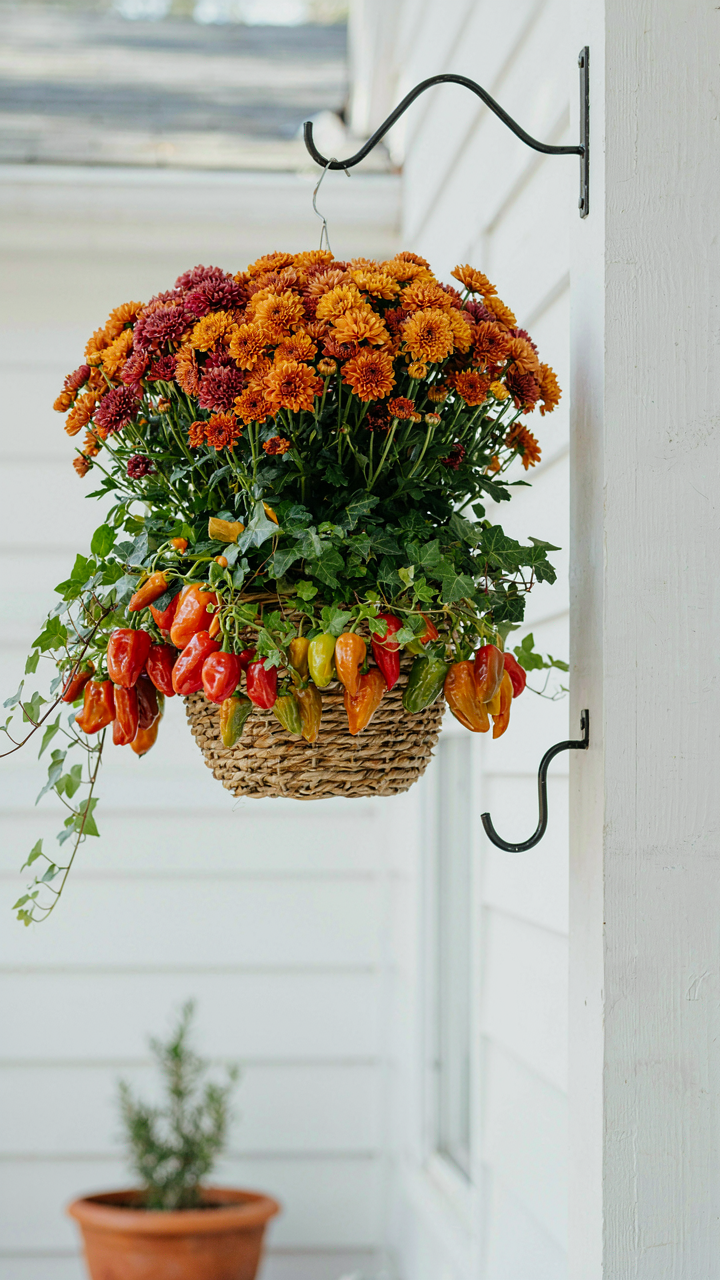
Spring composition peaks April through May. Summer heat-tolerant plants (impatiens, begonias, trailing ivy) own June through August. Fall bloomers (mums, ornamental peppers, trailing sedums) work September through November. Winter hangers need woody structure and evergreen foliage to avoid looking skeletal. Each basket stays planted for its seasonal window, then moves to storage while the next one takes the hook.
Transition Summer Into Fall Baskets
The common advice is to swap everything at once on some arbitrary calendar date. Wrong. You transition when your summer plants stop performing, not when the calendar says so. This timing depends on your climate zone, heat patterns, and whether you’ve neglected watering. Most summers fail in late August when heat stress peaks and baskets dry faster than you water them.
Start your fall basket prep in mid-August by checking summer plant condition. If they’re still thriving with compact growth and solid blooms, keep them through early September. The moment you notice leggy stems, dropped buds, or stressed foliage, pull them. Install fall baskets immediately after removal. Store the summer baskets in a shaded, dry area. This stagger prevents your porch from looking barren during transition and lets you handle one or two baskets at a time instead of five at once.
Modern Front Door Meets Minimalist Hanging Flower Baskets

Sleek Designs That Amplify, Not Distract
You want people to notice your house first, not your flowers. That’s the real tension here. Design constrains choices. Think of it like signal-to-noise ratio in engineering: every visual element competes for attention. A minimalist hanging basket porch doesn’t remove plants; it removes everything that fights for dominance. You keep the architecture sharp and let one or two baskets breathe around it.
Modern porches work best with single-material baskets in matte black, charcoal, or natural wood. Pair them with monochromatic plantings: white flowers, silvery foliage, or deep greens. The basket itself becomes part of the structure, not decoration. Mount them symmetrically on either side of the door or off-center depending on your porch width. The goal is visual rest. Everything else fades into the background.
When Restraint Actually Works
Most people fill hanging baskets like they’re afraid of empty space. That’s backward. Fewer plants per basket mean each one performs better. Better air circulation, simpler watering, cleaner sightlines. You’re not building a jungle; you’re establishing a threshold. One trailing plant plus one upright element per basket is the functional limit before you sacrifice aesthetics and plant health.
Container size matters here too. A 10-inch basket works better than a 14-inch for minimalist design because it forces you to edit. Single specimens like pothos, jasmine, or ornamental grasses communicate intentionality. The porch becomes a statement about what you chose to keep, not what you managed to cram in. Edit your hanging baskets until removing anything else would leave them empty.
Porch Flowers: The Bio Rhythm Method

Stagger Bloom Times For Continuous Color
You want your porch to look intentional year-round without maintenance spikes. That’s the real driver here. Bloom synchronization works like a production schedule: stagger your plantings so flowers open in sequence rather than all at once, then die off together. Biology calls this phenological timing. Apply it to baskets by mixing early, mid, and late-season bloomers in the same container or across adjacent baskets.
Early bloomers like pansies and snapdragons peak in cool weather. Mid-season plants like petunias and marigolds dominate spring through early summer. Late bloomers like zinnias and ornamental kale take over as heat arrives. Plant them together deliberately, not randomly. The result is consistent visual interest without replanting every six weeks. You go from either overstuffed or empty to constantly present.
Attract Allies, Repel Threats
Most advice here is backward. People say to plant fragrant flowers to “bring beauty to your porch.” Wrong frame. Plants bloom to recruit pollinators and ward off herbivores. Evolutionary strategy shapes which flowers thrive in baskets. Choose plants with nectar and pollen that bees and butterflies actually need. Avoid novelty hybrids bred for color alone with zero nectar production.
Strong-scented plants like verbena and sweet alyssum signal food availability to pollinators from distance. Flowers with exposed stamens attract more beneficial insects than doubled varieties. These same characteristics that recruit allies also deter soft-bodied pests: thrips, aphids, and spider mites avoid high-traffic pollinator zones. The mechanism is simple: build a functional ecosystem in your basket and pest pressure collapses on its own.
The Investment Mindset: True Cost Of Easy Plants

Cheap Plants, Expensive Mistakes
You want to believe that “easy” plants mean you’ll skip the failure part. That’s not how this works. The mechanism is simple: a five-dollar plant that dies in two weeks costs you fifty dollars when you factor in the basket, soil, bracket, and your time replacing it. Beginners confuse low price with low risk. They’re opposites.
Most cheap hanging plants come root-bound, already stressed before you hang them. Petunias and impatiens sold at big-box stores often arrive dehydrated. You’re not saving money by buying the cheapest option. You’re buying a plant that needs emergency rehabilitation the moment you get it home. The real cost isn’t the sticker price. It’s the replacement cycle.
Plants That Earn Their Space
Long-term value in hanging baskets works like compound interest in finance. A plant that thrives for an entire season and produces cuttings gives you multiple seasons of free plants. Ivy, pothos, and calibrachoa don’t just survive on your porch. They multiply. One plant becomes three. Three becomes nine. This is leverage applied to your porch.
Invest upfront in quality soil, a proper basket with drainage, and one robust plant rather than five struggling ones. A healthy trailing petunia or scaevola costs slightly more as a specimen but blooms for four months straight without replacement. Your actual investment per day of color drops significantly. The protocol: spend forty percent more on the initial plant and soil, skip the cheap replacement cycle, and you’ll save money while getting better results.
Optimizing Porch Styles With Purpose
When Your Porch Becomes An Extension
You want your porch to feel intentional, not like you grabbed whatever was on sale. Architectural harmony works like load-bearing walls in construction: every element carries weight. Hanging baskets aren’t decoration bolted onto your house. They’re structural participants in how your porch communicates visually to anyone who sees it.
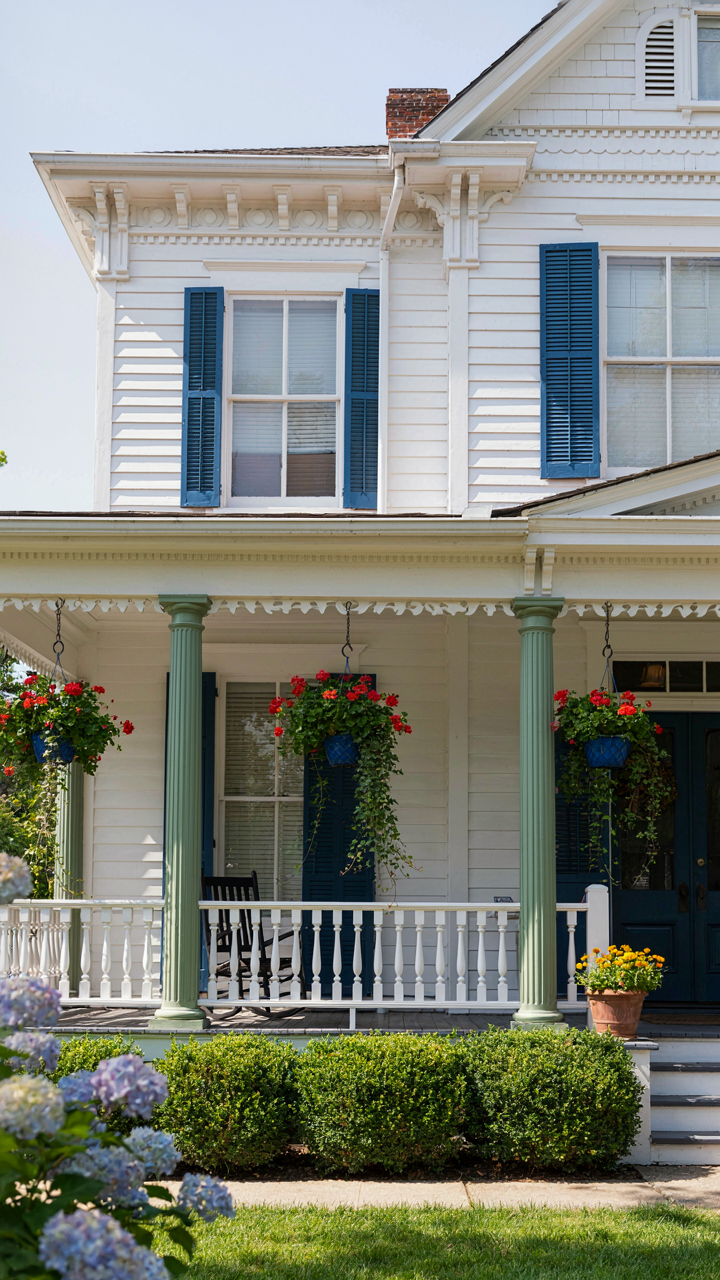
Your porch already has proportions, materials, and a visual story. The baskets either amplify that story or contradict it. Victorian porches with turned railings and pitched roofs demand baskets with classic shapes and symmetrical placement. Modern minimalist porches need restraint: fewer baskets, cleaner lines, materials that echo the home’s existing palette. Match the basket style to what your porch is already saying, not what you wish it said.
Solve The Real Problem First
Most people choose baskets by how they look in photos, then wonder why they fail. The real constraint is sunlight exposure and wind patterns specific to your porch. A north-facing porch gets morning light only. A west-facing porch gets brutal afternoon heat. Trailing petunias thrive in one, wilt in the other. Function determines which plants survive in your baskets. Aesthetics follow after you’ve solved for survival.
Before you buy a single basket, spend three days observing your porch at different times. Where does shade fall at 2 PM? Where does wind channel between structures? How much rain actually reaches the baskets during storms? Then choose baskets and plants based on those conditions, not based on color trends or what your neighbor did. This step takes discipline because it’s boring. Doing it anyway is what separates baskets that thrive from baskets that become brown failures by July.
Mastering The Hanging Basket Micro Ecosystem
Soil Science The Unseen Foundation
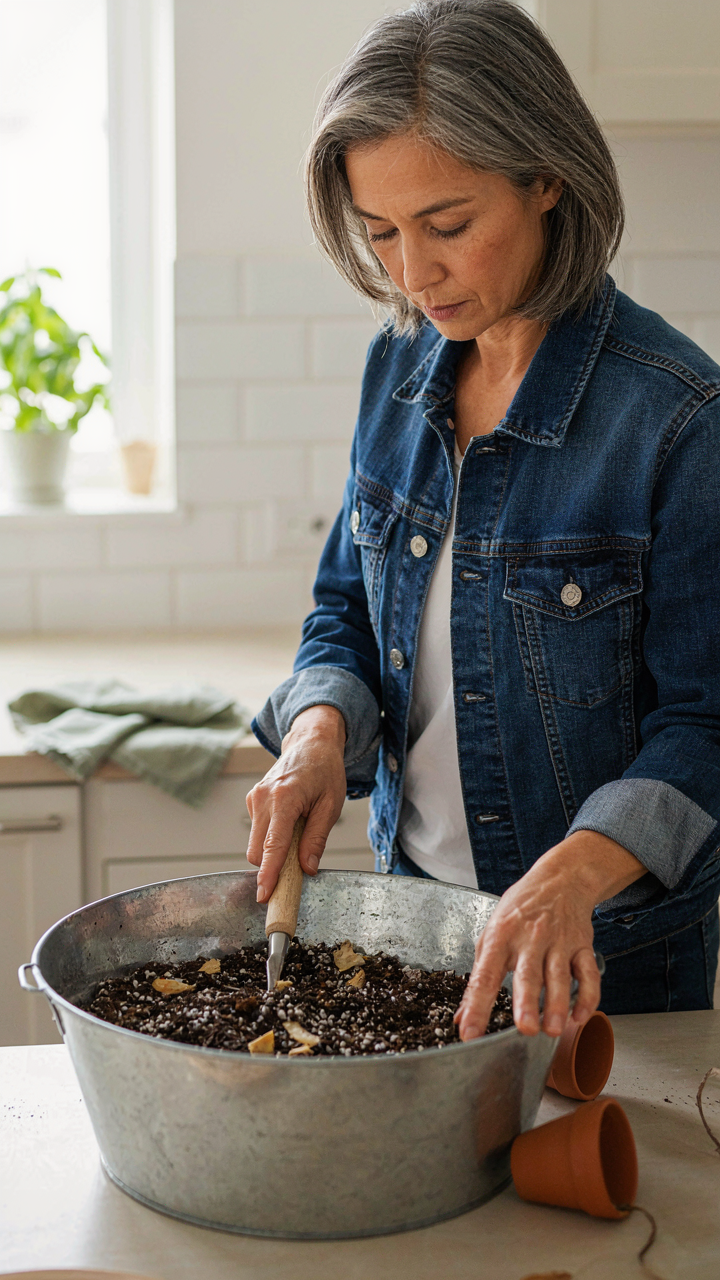
You want your baskets to look full and effortless. That requires soil that works, not soil that fails silently while you blame yourself. Think of soil chemistry like an engine: wrong fuel and the whole system misfires. Most hanging basket soil fails because it’s too dense. Standard garden soil compacts, traps water, and strangles roots. Baskets need aggressive drainage paired with moisture retention, which sounds contradictory until you understand soil structure.
- Peat moss or coconut coir: Holds water while maintaining air pockets. Coir is more sustainable and performs identically in practice.
- Perlite or vermiculite: Creates channels for drainage and root penetration. Use 20-30% of your mix to prevent waterlogging.
- Compost: Supplies slow-release nutrients and beneficial microbes. Add 10-20% to activate biological activity in the container.
- Bark chips: Adds structure and prevents compaction over the season. Include 1-2 inches at the base for sustained drainage.
- Wetting agent: Reduces hydrophobic behavior in peat-based mixes. Apply on initial watering to ensure water penetrates uniformly.
The goal is a mix that drains within 10 seconds of heavy watering yet stays moist between waterings. Test this before planting. Pour water through a handful of your mix into a cup. If it drains in seconds and the soil feels damp (not wet) for 3-4 hours, you’re aligned. If water pools or runs straight through, adjust your ratios immediately.
Nutrient Cycling For Sustained Vitality
Here’s what gets skipped in most beginner guides: baskets are nutrient traps. Water drains fast, so soluble nutrients leave with it. You can’t outrun this through watering alone. Hanging baskets exist in a closed system where you control everything, so nutrient depletion is entirely preventable through protocol. Plants in baskets exhaust their soil faster than ground plants because water movement is faster and the soil volume is tiny.
Feed hanging baskets every 7-10 days with liquid fertilizer diluted to half strength once plants establish. Solid, slow-release fertilizers mixed into the soil at planting reduce your workload but don’t adjust for mid-season demands as reliably. Watch for yellowing leaves or stunted growth starting around week 4 of the season. This signals nutrient burnout. Shift to stronger feeding or increase frequency. The real mechanism is this: consistent dilute feeding outperforms occasional heavy feeding because plants absorb what they need when it’s available, not what you dump on them at once.
Your Hanging Basket Isn’t Failing; Your Strategy Is. Stop Buying Plants; Start Cultivating Ecosystems
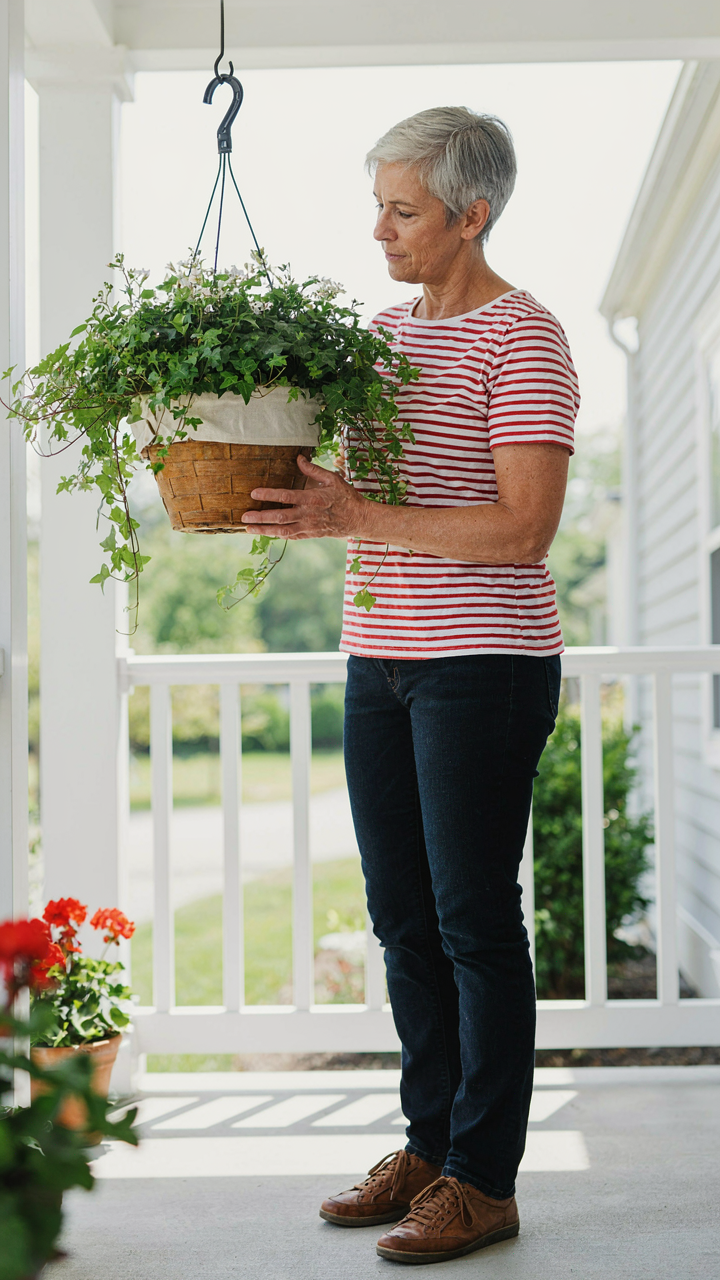
Most people treat hanging baskets like decorations you swap out when they die. That’s backwards. The shift happens when you stop seeing them as individual plants and start seeing them as microclimates you control. Pick one basket this week. Observe its light, humidity, and drainage for three days. Then choose plants that actually thrive in those exact conditions instead of plants you think look good. You’re not decorating your porch anymore, you’re engineering it.



