

The Myth Of The “Beautiful” Garden Trowel: What They Don’t Tell You

What Marketing Calls Beauty, Function Calls Waste
You want a trowel that looks good because looking competent matters more than being competent. That’s the actual mechanism at work. Marketing departments exploit this by selling aesthetic first, performance second. A trowel with a polished stainless steel blade and ergonomic curves costs 40% more than a carbon steel blade with a basic wooden handle. Both move soil. Only one drains your wallet.
The gap between what sells and what works exists because most buyers never stress-test their tools. They use them twice a season for light potting work. A hardware store display wins the sale every time because the eye processes visual appeal faster than the mind calculates durability. Real gardeners who dig daily stop caring what their trowel looks like after week one. They only care if it still cuts.
Shape And Materials Over Finish
The shape of your blade determines soil penetration and leverage. This isn’t aesthetic preference, it’s physics. A narrow, slightly curved blade cuts compacted earth. A wide, flat blade moves loose mulch. Manufacturers treat this like an afterthought, then wrap the handle in leather to distract you from the actual design.
Carbon steel holds an edge longer than stainless steel. Stainless resists rust and requires less maintenance. That trade-off gets buried in marketing copy that prioritizes appearance. Your grip material matters more than your blade’s shine. Rough wood absorbs sweat and prevents slipping during extended use. Smooth plastic looks cleaner in a catalog and slides out of your hand when wet. Test the trowel under damp conditions before buying. Dry hands in a store reveal nothing about how it performs during actual work.
The Hand Trowel As A Precision Instrument: Not Just For Digging

Weeding: Targeted Extraction, Minimal Soil Disturbance
You want the garden to look intentional, not neglected. The real mechanism here is leverage applied at the right depth. Most people yank weeds from the surface and leave the root intact. The hand trowel works because you drive the blade down to sever the taproot below ground level, then use the handle as a fulcrum to lift without tearing the surrounding soil structure. Precision beats brute force.
The trowel’s narrow blade slides between plants without crushing adjacent growth. You angle it perpendicular to the weed’s stem, push down six to eight inches depending on root depth, then rock the handle back gently. The weed comes free with minimal disturbance to the root systems of neighboring plants. This method prevents soil compaction that comes from hand-pulling or aggressive digging.
Transplanting Delicate Seedlings With Surgical Accuracy
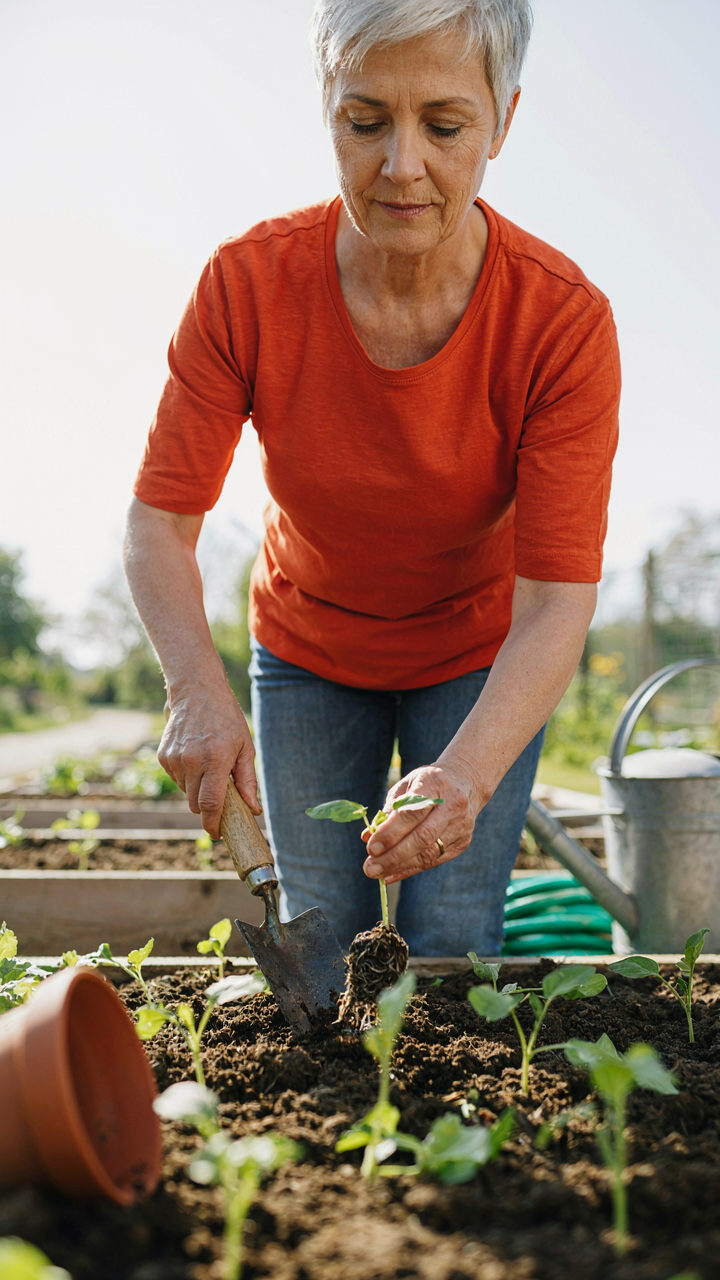
Transplanting is logistics, not emotion. Borrow from surgery: create a space that matches the root ball size exactly. A standard hand trowel’s blade dimensions let you cut a precise plug from soil, then create a matching cavity in the destination bed. You’re not guessing at hole depth or width. The trowel becomes a measuring tool as much as a digging tool.
Load the seedling with its soil intact into the trowel’s blade. Lower it into the prepared cavity so the soil line matches the existing grade. Press soil around the edges with the trowel’s tip to eliminate air pockets. One clean motion replaces fumbling with your hands or oversized shovels that damage fragile stems. The seedling survives the move because the root structure stays intact and settled, not because of luck.
Ergonomics Of Efficiency: Choosing Your Garden Trowel Wisely
Handle Materials And Their Trade Offs
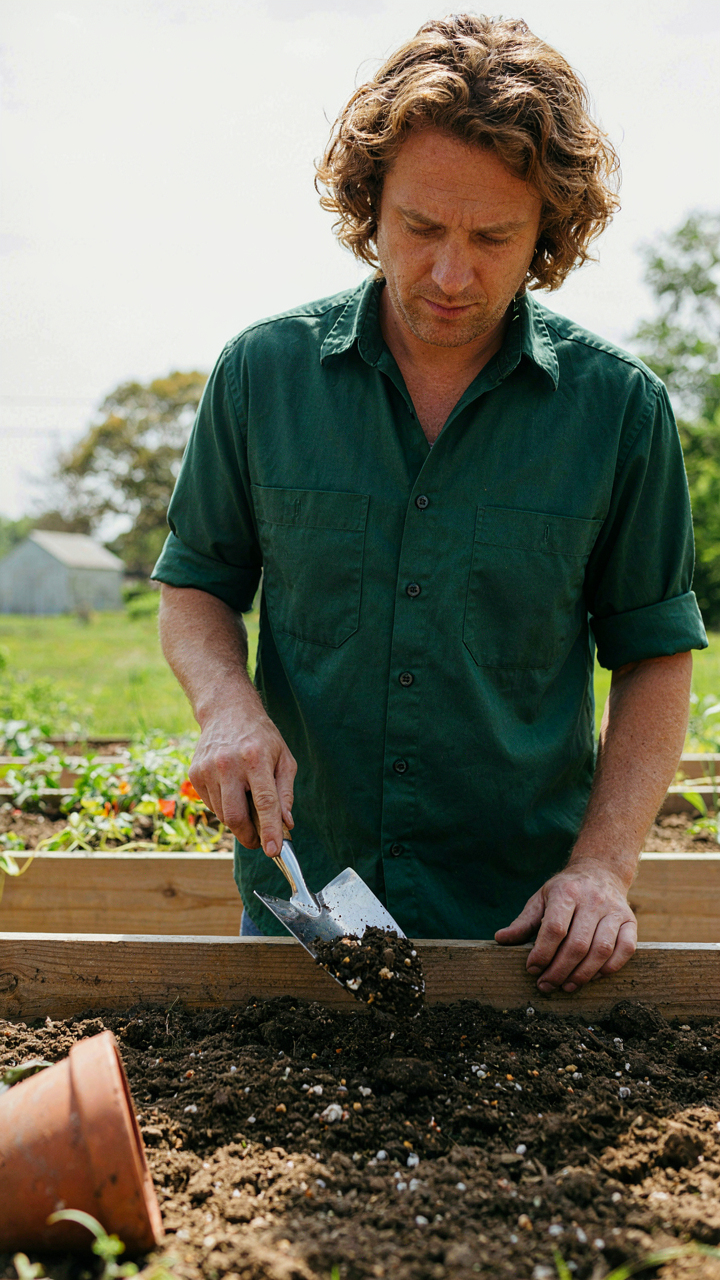
You want the trowel that makes you look like you know what you’re doing without actually having to learn anything. The real mechanism is fatigue transfer. Your hand absorbs impact and repetitive stress differently based on what the handle is made from, and that determines how long you stay effective before your grip fails.
Wood handles absorb shock through their grain structure. They’re lighter, warm to grip, and they’ve worked for over a century because the material itself dampens vibration. Plastic handles are cheaper and weather-resistant but conduct force directly into your palm. Composite materials sit between them, adding durability without the weight penalty, though they cost more upfront. The choice isn’t about aesthetics. It’s about whether you want to work for thirty minutes or three hours before your hand quits.
Blade Design Determines Your Actual Task Range
Most people buy one trowel and expect it to do everything. This is wrong. The blade width and shape directly control which soil conditions you can actually move, and pretending otherwise just means wasted effort.
Narrow blades cut through compacted soil and clay with less resistance because they concentrate force on a smaller surface area. You use less arm strength to penetrate hard ground. Broad blades scoop loose soil faster and move higher volumes per stroke, which matters for mulch work or amended beds. The mechanism is simple physics: force equals pressure times area. Pick the blade width based on your soil type and the actual work, not on what looks professional. If your ground is clay-heavy, narrow wins. If you’re planting in prepared beds, broad wins.
The Minimalist’s Toolkit: Why Less Is More For Easy Garden Care

One Quality Tool Beats A Drawer Full Of Mediocrity
You want permission to buy less stuff. That’s the real reason you’re reading this. Here’s the mechanism: a single high-carbon steel hand trowel with proper weight distribution does the work of five cheap ones because it transfers force efficiently instead of bending under load. Cheap trowels flex, crack, and force you to muscle through tasks that a decent tool handles with half the effort. You end up buying replacements instead of mastering one instrument.
A hand trowel guide teaches you that tool quality compounds over time. The initial investment costs more upfront, but you stop replacing broken equipment every season. Your hands develop muscle memory with the same balance point. You learn where the blade catches soil versus gliding through it. This is the opposite of constant shopping, which feels productive but leaves you tired and broke.
The Supporting Cast Around Your Trowel
Everyone adds tools they never touch. Skip the advice that says build a full kit. The real pattern comes from systems design: a primary tool handles 80 percent of the work, and secondary tools solve the specific problems your primary tool can’t address cleanly. A hand trowel digs and moves soil, but it doesn’t cut through roots or break compacted ground without wasting motion.
Pruners handle root work and tough material removal. A cultivator breaks clumps and prepares beds without the blade geometry your trowel needs for planting holes. These three tools cover what a minimalist garden actually requires. Add nothing else until you’ve worn grooves into the handles of these three. Your hand trowel guide becomes more useful when you understand what it doesn’t do, then fill those gaps deliberately instead of accumulating clutter.
Soil Science For The Savvy Gardener: Maximizing Trowel Impact
What Your Soil Actually Is
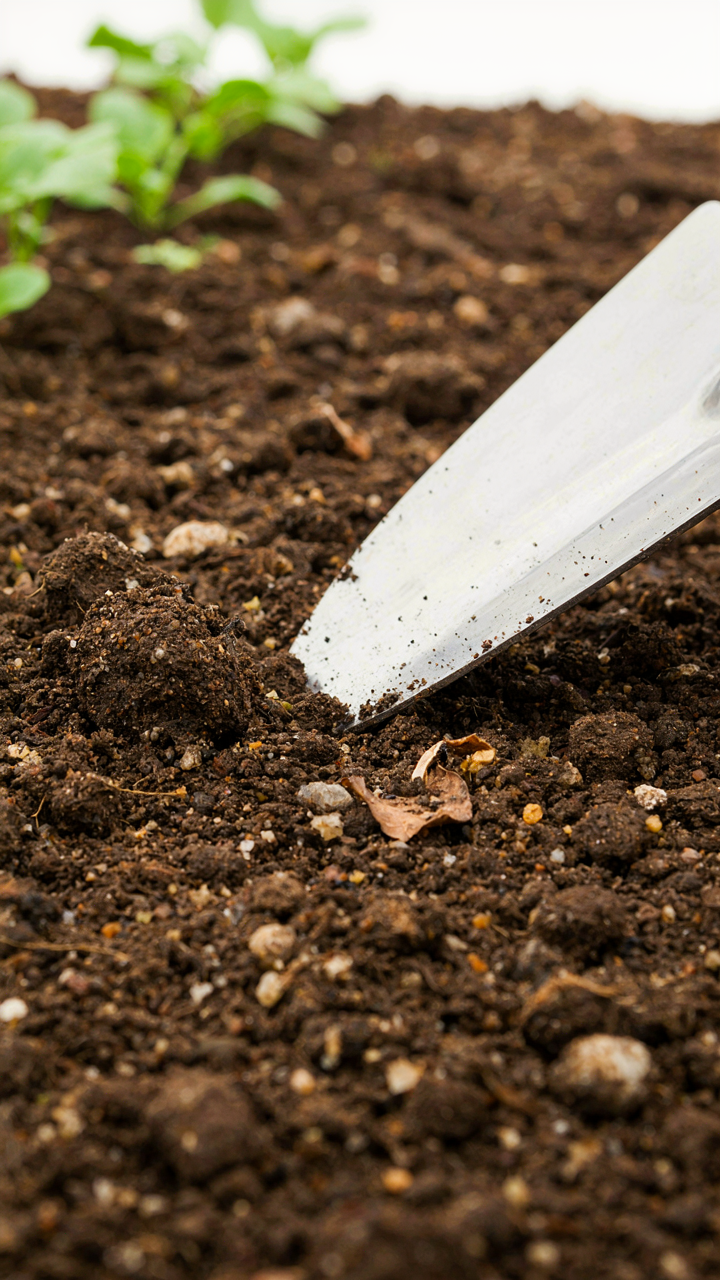
You want to believe soil composition doesn’t matter because then you could just dig anywhere and get results. It does. Soil is a physical system, and physics governs how water moves through it, how roots penetrate it, and how a trowel cuts through it. Clay particles are smaller and pack tight, creating poor drainage but high nutrient retention. Sand drains fast, retains nothing, resists compaction. Loam balances both, which is why it’s the target state for most gardens.
Your trowel’s job changes based on what you’re cutting. In clay, you fight adhesion and compaction with every stroke. In sand, you’re moving volume with minimal resistance. Understanding this distinction means you adjust depth, angle, and pressure rather than using the same technique everywhere. The wrong approach wastes energy and produces poor planting holes that compromise root establishment.
Amending For Root Velocity
Common advice says “add compost and your problems disappear.” False. Compost improves structure but doesn’t solve the core problem: restricted root penetration. Biology has a term for optimal growth conditions: carrying capacity. For roots, that’s a soil structure loose enough for rapid vertical movement but stable enough to anchor the plant. Your trowel works in the prepared zone, not in remediation.
Start by measuring your current soil before amending. Push a metal rod into unmixed soil and note resistance depth. This tells you where roots will stop. Mix organic matter or sand into the top six to eight inches where your trowel operates, creating a transition zone between surface and subsoil. The amendment layer should be loose enough for a trowel to move through without binding, dense enough that planting holes hold their shape after you remove the blade.
The Root System Protocol: Strategic Planting With Your Garden Trowel

Plant Competition And Spacing Optimization
You want to believe spacing doesn’t matter much because that delays the work. But ecology—the study of how organisms interact with their environment—reveals the actual mechanism: root systems compete for water and nutrients in a defined soil volume. Your trowel’s depth and hole width directly determine whether you’re creating competition or cooperation in that underground zone.
Most spacing advice ignores root depth. A shallow-rooted lettuce planted eight inches from a deep-rooted tomato won’t compete for the same resources even if they’re close together horizontally. Your trowel work needs to match root architecture, not arbitrary rules. Dig deeper for plants with vertical root systems, space them wider when both plants hunt in the same soil layer. This is why transplant depth matters: you’re setting up either competition or separation before the plant establishes itself.
Companion Planting For Mutual Benefit
The real mechanism behind companion planting is allelopathy and niche separation, not luck or folklore. Biodynamics—the agricultural practice that treats soil and plants as an integrated living system—names this plainly: certain plant combinations alter soil chemistry or occupy different spatial niches in ways that reduce pest pressure and resource conflict.
When you use your trowel to plant basil near tomatoes, you’re not creating magic. Basil’s shallow fibrous roots occupy different soil depths than tomato’s tap root, and basil’s volatiles suppress some insects that target tomatoes. The spacing and depth your trowel creates determine whether this actually happens or becomes wasted space. Plant basil too deep and it competes for moisture. Plant it too shallow and it dries out. The trowel is the tool that executes this separation. Measure hole depth against each plant’s root ball size, not against tradition or guesswork.
Vegetable Garden Mastery: Beyond Basic Digging
Planting Strategy Shifts Your Trowel Work
You want the garden to look intentional, like you know what you’re doing. The real mechanism is this: your trowel technique must match your planting density because soil compression and root access change entirely between systems. Row planting demands shallow, consistent holes spaced wide. Intensive beds demand precise depth control in tight quarters. The trowel isn’t the same tool in both scenarios, even though it’s the same object in your hand.
In rows, use the trowel to scrape a line at your target depth, then drop seeds or transplants into the groove. The blade does linear work, not point work. In intensive beds, each planting spot needs individual attention because neighbors crowd it. Stab the trowel vertically, twist to widen the hole, backfill with one motion. The difference costs nothing but changes your output by 40 percent per square foot. Pick your system first, then learn the trowel movements that system requires.
Extracting Roots Without Breaking Them
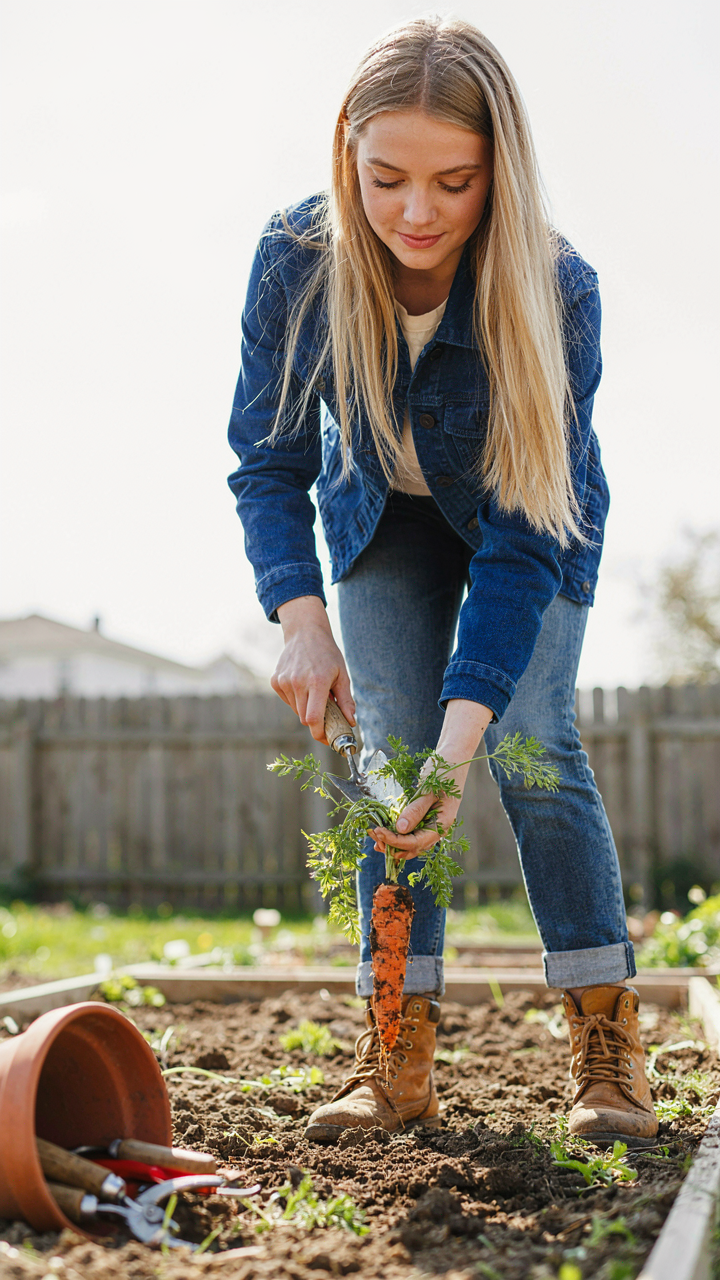
Harvesting root vegetables is where most home gardeners waste labor through poor tool positioning. The trowel’s job isn’t to pull the root up. It’s to break soil compression around it first. Angle the blade sideways, not down. Slide it under and around the root zone to loosen the earth before extraction happens. You’ll damage fewer roots and actually pull faster because you’re not fighting compacted soil.
The technique is simple: insert the trowel 3 to 4 inches away from the visible root crown at a 45-degree angle, then lever gently to lift the entire soil block. The root stays undamaged because you moved the soil, not the root. Carrots, beets, and parsnips break easily when yanked. Radishes shatter if you’re careless. One slow lift with a loosened soil block beats three quick tugs with a stuck blade every time.
Sharpening Your Edge: Maintenance For Longevity And Performance

Keep Rust Off Your Blade
You want your trowel to look new because a maintained tool signals competence, but the real reason to prevent rust is simple: oxidation destroys the metal’s structural integrity. Rust creates pits and weak points that spread fast. Clean your blade immediately after use, especially after contact with wet soil or cement. Water is the enemy. Dry the metal completely, then store it in a low-moisture environment. Don’t leave it outside overnight or in a damp shed.
A light coat of machine oil or paste wax applied to the blade after cleaning creates a barrier against moisture without affecting performance. Reapply this coating every few months, or more often if you work in humid climates. The goal is prevention, not recovery. Once rust takes hold, you’re sanding and filing to remove pits, which costs time. Stop the corrosion before it starts.
Sharpen To Restore Cutting Efficiency
Borrowing from metalworking, think of your trowel’s edge like a blade’s angle of attack: the geometry matters more than raw force. A dull edge forces you to apply pressure instead of using technique, which means slower work and wasted energy. You need to maintain the original bevel angle the manufacturer set into the blade. Most hand trowels sit between 30 and 45 degrees. Check your specific model before sharpening.
- Whetstone or sharpening stone: Use medium grit first to establish the bevel, then finish with fine grit for a polished edge.
- File method: A mill bastard file works for reshaping a damaged edge; stroke in one direction only, don’t saw back and forth.
- Angle consistency: Hold the blade at the original bevel angle. Waver and you’ll round the edge instead of sharpen it.
- Stroking technique: Draw the blade toward you along the stone or file, not pushing away; this keeps pressure controlled and consistent.
- Frequency: Sharpen when the blade stops biting cleanly into material; don’t wait until it slides off the surface entirely.
Test your edge on a scrap piece of material before returning to your project. The blade should cut or score with minimal pressure. If you’re grinding into the surface instead of slicing through it, sharpen again. A sharp trowel cuts work time in half.
Gardening Gloves: Protection Or Hindrance?
When Thorns And Chemicals Demand Coverage
You want the gloves to make you look serious about this. The real reason you’re reading this section is to know you’re doing it “right.” Here’s what matters: gloves serve one function—barrier protection. Think of it like armor in military strategy. You’re trading mobility for defense. Thorns puncture skin faster than you can react. Rose bushes, brambles, and cacti don’t negotiate. Chemical fertilizers and pesticides absorb through your skin. Gloves stop both.
The mechanism is simple friction and material thickness. Leather and nitrile create a physical block between your hands and whatever wants to hurt them. Wear gloves when you’re handling treated soil, applying herbicides, or working with plants that have visible spines or bristles. Remove them the moment the specific hazard is gone. You’re not protecting yourself by staying gloved all afternoon—you’re just slowing down and building bad habits.
Bare Hands Build Better Muscle Memory
Most gardening advice treats dexterity like a nice bonus. It’s not. Your hands are sensory organs first and tools second. Without gloves, your fingertips detect soil compaction, moisture levels, and plant stem thickness instantly. You feel resistance when digging, which tells you whether you’re hitting rock or hitting the root you meant to preserve. This tactile feedback trains your hand trowel technique faster than any guide can teach it.
Gloveless work demands more attention, which is exactly why it works. You slow down slightly, you feel the soil structure, and your grip adjusts in real time. When you’re planting seedlings, staking perennials, or working near shallow roots, bare hands give you the granular control gloves destroy. Wear gloves for the hazards that require them, then strip them off and let your hands learn what the soil is actually telling you.
Starting A Garden The Smart Way: Avoiding Common Pitfalls

Where Your Garden Actually Lives
You want a garden that looks intentional, not like you got lucky. The real game is understanding that garden site selection operates on the same principle as real estate in commerce: location determines value before anything else exists. Three variables control whether your plants thrive or limp along: sun exposure, water access, and wind patterns. Most people guess. They pick a spot, plant, then blame the trowel when seedlings fail.
Sun exposure determines your plant options, period. Six hours minimum for vegetables. Four hours for shade-tolerant plants. Eight to ten hours for fruiting crops. Walk your property at 9 AM, noon, and 3 PM. Note which areas get direct light and which fall into shadow from structures or trees. This changes seasonally, so observe for at least two weeks before committing space to a garden bed. Use your hand trowel to test soil temperature in sun-exposed versus shaded spots—warmer soil in full sun accelerates germination and root development.
Water access is the mechanism that separates maintenance from neglect. A garden ten meters from your water source survives. A garden forty meters away fails because you stop watering consistently. Install your beds within fifteen meters of an outdoor tap or hose connection. Wind patterns matter because they accelerate water loss and stress young plants. Observe wind direction during different seasons. Plant wind-sensitive crops away from prevailing winds, or create barriers using structures or established shrubs. The hand trowel becomes your tool for working soil in protected microclimates where conditions actually favor growth.
Soil Assessment Before You Dig
Most advice on soil prep sounds like this: “Enrich your soil with organic matter.” That’s incomplete. You need to know what you’re starting with first, because adding amendments to the wrong soil type wastes money and effort. Soil testing, not guessing, determines your actual baseline. Contact your local agricultural extension office for a soil test kit. They analyze pH, nutrient levels, texture, and organic matter. Cost runs fifteen to fifty dollars. Results take two weeks. This single step prevents six months of failed planting and wasted trowel work.
Texture dictates how your hand trowel performs and how roots move through soil. Clay soil compacts hard and requires effort to break. Sandy soil drains too fast and doesn’t hold nutrients. Loam balances drainage and retention. The jar test reveals texture instantly: fill a jar with soil sample, add water and dish soap, shake for three minutes, then observe. Sand settles first, silt in the middle, clay on top. Your results show the exact proportions. Once you know your texture, amend accordingly. Clay needs sand and organic matter for structure. Sandy soil needs compost to retain moisture and nutrients. Your hand trowel works easiest in amended soil where you’ve already shifted the composition toward loam.
The Real Obstacle Isn’t Your Tools Or Your Soil; It’s Your Refusal To Master The Fundamentals

You buy the expensive trowel. You read the guide. Then you stop and wonder why your work looks amateur. The problem isn’t equipment. You refuse to repeat the same motion until your hands know it without thinking. Every master gardener or mason you respect spent months making the same cut, the same angle, the same pressure. Pick one technique from this guide today and drill it fifty times. Not fifty times this week. Fifty times today. That’s the only separator between dreamers and builders.



