

Beyond The Buzz: Real Ergonomics Vs. Marketing Gimmicks

Biomechanics Over Brand Names
You want to believe the expensive handle is solving something real because admitting you’ve been gripping wrong for years stings. The actual mechanism: ergonomics is applied biomechanics, which means tool design must match how your skeletal system transfers force. A handle angled at 10 degrees reduces wrist deviation during repetitive motion. A grip diameter between 1.25 and 1.5 inches minimizes forearm muscle fatigue by allowing optimal hand closure. Marketing adds cushioning and calls it ergonomic. Real ergonomics changes the angle and diameter because that’s where physics lives.
Most ergonomic tools fail because manufacturers optimize for aesthetics instead of load path. The handle matters less than where the tool’s weight sits relative to your wrist. A shovel with the blade weight positioned closer to your body reduces the moment arm, meaning your shoulder does less work per stroke. Padded grips feel better but don’t change force distribution. The tool that hurts less is the one engineered so force travels through your skeleton, not around it. Test this by comparing a conventional spade to one with a bent shaft: the biomechanics shift immediately, pain drops within minutes.
The Difference Between New And Renamed
Every trend cycles through the same pattern: someone resurrects a technique from 30 years ago, photographs it well, and calls it innovation. The Scandinavian gardening movement of the 1980s emphasized bent-shaft tools and lightweight materials because physics doesn’t change. Modern brands now sell the same bent-shaft design as a discovery. The real innovation isn’t the bend. It’s the material science: fiberglass shafts and composite handles today absorb shock better than aluminum or wood from that era. That’s the only genuine advancement worth tracking.
Identify rebranded ideas by checking the core mechanism against historical precedent. Offset handles existed in Japanese garden tools from centuries ago. Long-handled pruners designed to reduce hand fatigue show up in Victorian gardening catalogs. What actually changed: manufacturing precision, material durability, and weight reduction. If a tool’s selling point is “comfort technology” or “advanced grip system” with no specification of angle, diameter, or material composition, it’s marketing. The tools worth buying specify shaft angle in degrees, grip circumference in inches, and material weight per unit length. Demand the specs. They reveal whether someone engineered something or repackaged nostalgia.
The Minimalist’s Edge: One Ergonomic Garden Tool Set To Rule Them All

Do More With Less
You want permission to buy fewer tools. That’s the real driver here. The mechanism is this: every tool you own demands maintenance, storage space, and decision-making overhead. Economics calls this inventory cost. In gardening, it translates directly to tools sitting unused while you reach for the same three implements repeatedly. Multi-functional tools eliminate this waste by collapsing tasks into single handles.
A quality adjustable-head tool with interchangeable heads outperforms ten specialized implements gathering rust. You make one decision about quality upfront, then stop shopping. The ergonomic benefit compounds because you learn one grip, one weight distribution, and one tool’s feel deeply. Muscle memory forms faster. Your hands adapt to what’s actually in your hand, not what marketing promised would be in it.
Build Quality Into Your Foundation
Most people reverse-engineer tool purchases backward: they buy cheap, break it, replace it three times, then finally invest in quality. That’s not frugality. That’s waste wearing a disguise. A premium ergonomic tool costs more upfront because the handle geometry, material density, and balance point reflect actual human anatomy, not cost-cutting.
Quality tools fail less, which means fewer replacement purchases, fewer trips to replace them, and fewer interruptions mid-project. The real savings lie in continuity. A well-made tool with proper grip diameter and weight distribution also reduces hand fatigue and repetitive strain, lowering medical costs that nobody tracks in their garden budget. When you own fewer, better tools, you actually use them instead of abandoning them halfway through the season.
The Unseen Advantage: Mastering Leverage With Ergonomic Shovel Handles

How Physics Multiplies Your Force
You want this section because you’re tired of feeling weak doing manual work. Physics calls it mechanical advantage. A broadfork is a lever system that trades handle length for force multiplication at the tines. When you push down on a long handle, the fulcrum (the soil contact point) amplifies that downward pressure into upward soil displacement. A standard shovel forces you to generate all the breaking power yourself. A broadfork’s geometry does half the work.
The mechanism is simple: longer handle plus wider tine spread equals less muscular effort required per cubic inch of soil moved. A 48-inch broadfork handle generates roughly 3 to 1 mechanical advantage compared to a traditional 42-inch spade. This isn’t theoretical. Soil displacement happens with less strain because the tool’s geometry absorbs the work. The physics doesn’t care about your fitness level. Longer leverage wins.
Stance First, Tools Second
Most garden advice skips the actual body position and jumps straight to “buy an ergonomic tool.” Wrong move. Your stance determines whether the tool’s leverage works or fights you. A neutral spine means zero compression on your lower vertebrae. Feet shoulder-width apart, one foot forward, knees slightly bent, weight balanced on the balls of your feet. This position anchors your body so the tool’s mechanical advantage actually transfers to soil, not to your joints.
The second foot forward position matters because it positions your hips to drive force through your legs, not your lower back. When you stand square-on to a shovel, you rotate at the spine and waste the handle’s leverage. Your core stabilizers never engage. Rotate your hips toward the tool direction, keep your shoulders stacked over your hips, and let your legs provide the power source. This protocol prevents the tool from becoming a liability regardless of how ergonomic its handle claims to be.
The Folding Cathole Trowel: A Case Study In Specificity
When One Tool Actually Solves One Problem
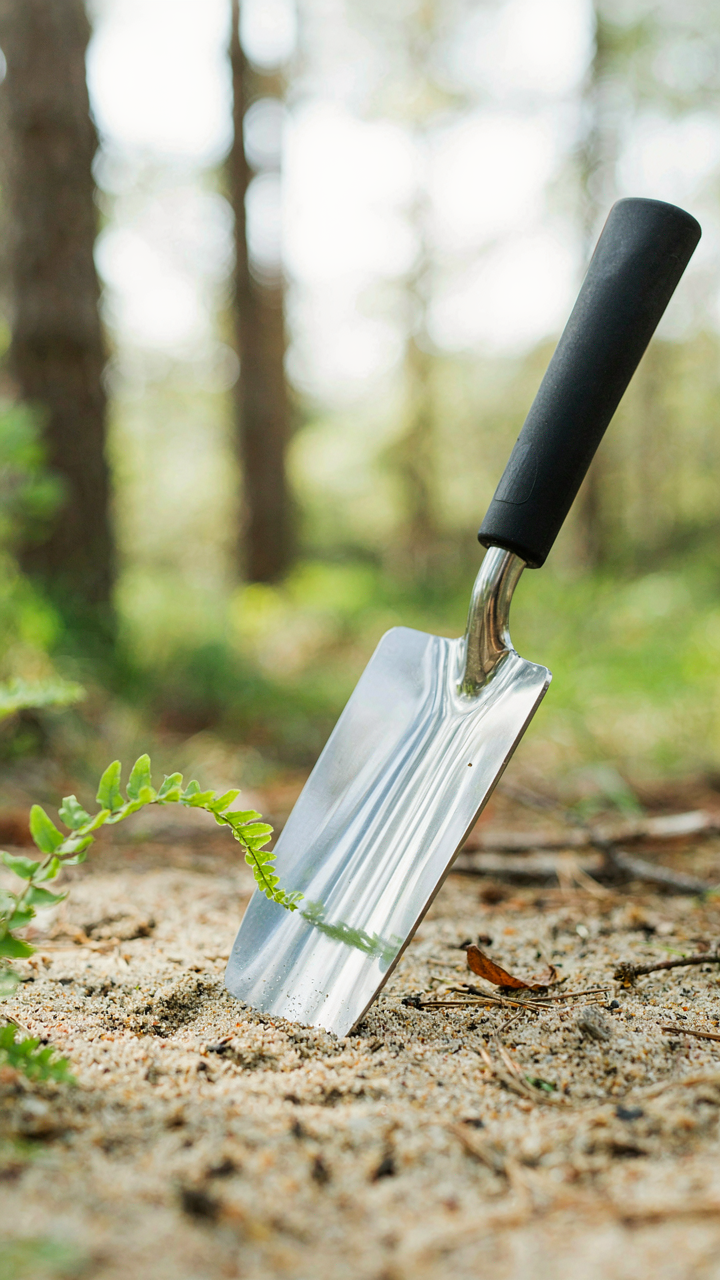
You want to believe a single tool works everywhere because buying one thing feels efficient. The folding cathole trowel demolishes that fantasy by design. This tool emerged from military and backcountry contexts where digging a cathole (shallow waste pit) required speed, portability, and precise depth control on variable soil. The mechanism is ruthless: a short, angled blade paired with a folding handle eliminates wasted motion. The blade angle forces your wrist into a biomechanically efficient position for repetitive shallow digging. Compactness means you actually carry it, which is where 90 percent of ergonomic tools fail in the real world.
The folding cathole trowel works because it stops pretending to be something it isn’t. Standard garden trowels flop around in loose soil and demand wrist torque for deep work. Cathole trowels sacrifice depth capacity entirely to gain precision and speed in their actual domain. This is economics applied to tool design: extreme specialization reduces friction in exchange for narrowed scope. When your task is shallow, repetitive digging in varied terrain without a second thought, this tool moves faster and leaves your hand fresher than a generalist alternative ever will.
The Real Cost Of Tools That Do Everything
Nobody talks about this plainly: a generalist tool performing a niche task slowly poisons your hands. Wrist strain accumulates across thousands of micro-adjustments your body makes to compensate for poor blade angle, handle length, or weight distribution in that specific job. A standard trowel forced into shallow rapid digging creates grinding tension in the radial and ulnar bones of your forearm. Ergonomic damage compounds. You feel minor discomfort today and accept it as normal. After months of regular use, you’ve normalized a repetitive strain pattern that a specialized tool would have prevented entirely by changing the mechanical input at the source.
The hidden cost isn’t the pain you notice. It’s the permanent reduction in hand capacity you don’t. Your grip strength and endurance on future tasks shrink because you’ve trained your forearm into compensation patterns. This is why gardeners who use the wrong tool for one task end up limited across all tasks. Specialization prevents this. A cathole trowel forces your wrist into one position repeatedly, yes, but that position distributes force across your entire palm and forearm instead of concentrating it in one axis. Switch tools for different tasks. Your hands will outlast your garden.
The Ergonomic Garden Hand Tools Protocol: A Hand Operated Planting Tool Masterclass

Grip Design Mechanics That Actually Work
You want this section because you’re tired of hand pain after two hours of planting. The real mechanism is leverage distribution: a curved handle doesn’t reduce force, it redirects where that force concentrates across your palm and fingers. A Curved Durasoft handle works because the curve matches the natural arc of your hand when it closes, spreading pressure across a larger surface area instead of concentrating it on your inner palm or fingertips.
Most grips fail because they ignore biomechanics entirely. They’re either too thin, forcing your fingers into constant flex, or too wide, creating dead zones where your hand contacts nothing. The Durasoft material compounds this by adding grip friction without adding rigidity. Your hand doesn’t have to squeeze as hard to maintain control, which means forearm muscles fatigue slower. The diameter matters more than the softness: aim for 1.2 to 1.5 inches for most hand sizes, measured at the widest point where your fingers wrap around.
Preventing Strain Before It Becomes Chronic
Repetitive stress injury prevention isn’t about stretching afterward. It’s about tool selection during the work itself, borrowed from occupational medicine’s concept of force distribution. When you grip the same tool the same way for hours, specific tendons and nerve clusters in your forearm accumulate micro-tears faster than your body repairs them. The tool you choose determines which structures absorb that repetitive load.
Select tools that match your hand size and grip strength, not the other way around. A long-handled transplanter with a narrow grip makes your wrist stabilize the entire tool, concentrating force on your carpal tunnel. A shorter transplanter with a wider, curved grip distributes the work across your whole hand and up into your forearm muscles, which can sustain load longer without injury. The mechanism is simple: smaller contact area equals faster fatigue and earlier injury. Swap tools every 30 minutes during heavy planting. Different grips engage different muscle groups, distributing the cumulative strain across multiple structures instead of isolating one tendon to failure.
Gardening Tool Handles: The Overlooked Core Of Efficiency

Material Science Beats Marketing
You want to believe a padded grip is enough. It isn’t. Handle composition determines whether your tool lasts three seasons or ten, and material science proves this through stress distribution and fatigue resistance. Wood handles fail predictably at the grain boundary. Aluminum corrodes under moisture and salt. Fiberglass composites distribute load across fiber matrices instead of concentrating stress at weak points. The mechanism is simple: better materials don’t just feel better, they defer failure by spreading force across a larger surface area instead of allowing micro-fractures to accumulate.
- Ash wood: High shock absorption and natural flex, traditional choice that still outperforms many modern materials for hand tools, though vulnerable to moisture and splits.
- Fiberglass reinforced nylon: Consistent strength across all grain directions, resists moisture absorption better than wood, and maintains structural integrity in temperature swings.
- Aluminum alloy cores: Lightweight and won’t rot, but transfers vibration directly to hands and corrodes in salty or acidic soil over time without protective coating.
- Cork or rubber sleeves: Reduce vibration transmission and improve grip friction, but degrade faster than the tool itself and require periodic replacement.
- Titanium reinforced composites: Premium option combining low weight with high impact resistance, though cost prohibits adoption in budget tools where it matters most.
The real win isn’t buying expensive handles. It’s understanding that handle failure happens first, long before the tool head wears out. Most gardeners replace tools because the handle breaks or splinters, not because the blade dulls. Choose materials that match your soil type and climate, not the marketing copy.
Angle And Arc Beat Padding Alone
Padding is theater. What actually prevents injury is handle geometry that positions your wrist in neutral extension instead of forced flexion. Ergonomic geometry doesn’t mean soft, it means angled. A 15-degree offset on a shovel handle shifts loading from your wrist tendons to your shoulder stabilizers, which can handle sustained force. A pistol-grip pruner with the blade axis aligned to your knuckles reduces torque on your thumb joint. This comes from biomechanics, the field that measures where force concentrates on bone and tendon. When handle geometry mirrors your skeletal structure, you’re no longer fighting physics.
Most handles are straight for manufacturing simplicity, not function. Curved handles cost more to produce. Offset angles require custom molds. But a gardener using a straight handle for six hours accumulates microtrauma in the same joints daily. The solution is testing your grip before you buy. Grip the tool in your working position for thirty seconds. If your wrist bends or your thumb flexes unnaturally, the geometry is wrong regardless of padding thickness. Buy the tool with the geometry that lets your hand stay neutral, and your work capacity increases immediately.
The “Gardening Tools Close Up” Fallacy: Details That Don’t Matter

What Actually Matters In Tool Design
You want to believe the expensive ones are better because you’ve already spent money on the wrong ones. The mechanism is simple: most gardeners confuse material prestige with functional output. Ergonomics is about force transfer and repetition tolerance, not aesthetic details. A $180 pruner with a titanium label performs identically to a $60 pruner with the same blade geometry and handle angle. The difference between tools lives in three measurable places: grip diameter, weight distribution, and blade sharpness retention. Everything else is noise designed to justify markup.
Manufacturers stack features because consumers scan spec sheets instead of testing in soil. Rubberized handles, contoured grips, and anti-slip coatings look like upgrades. They’re mostly theater. What matters is whether the handle fills your actual hand without gaps, whether the tool balances at the pivot point, and whether you can generate force without wrist deviation. Test this by holding a tool for five minutes of actual work, not thirty seconds in a showroom. Your forearm will tell you the truth your eyes cannot see.
Performance Data Beats Visual Confidence
Economics calls this “information asymmetry” – you cannot observe quality before purchase, so you rely on signals. Gardening tools trigger this hard. A matte-black composite handle signals “serious” while a bright plastic one signals “toy,” but the signal lies. Both materials transfer heat identically, both resist splitting, and neither affects your output unless the grip diameter is wrong. Ignore color, finish, and branding weight. Track only metrics: blade angle, handle diameter in millimeters, weight in grams, and grip length. These determine whether a tool prevents tendon strain or accelerates it.
Real performance data comes from extended use, not manufacturer claims. Spend two weeks with a tool before deciding. Your hand will fatigue at different rates based on handle angle alone, independent of every other feature. A slightly offset handle (typically 10 to 15 degrees from the blade line) reduces wrist extension strain significantly compared to a straight design. Check this by noting wrist angle during a full digging session. If your wrist bends backward past neutral, the tool’s geometry is wrong regardless of its price or materials.
The Real Trend: Adapting Your Body, Not Chasing Tools
Posture Optimization: Small Changes, Massive Long Term Gains
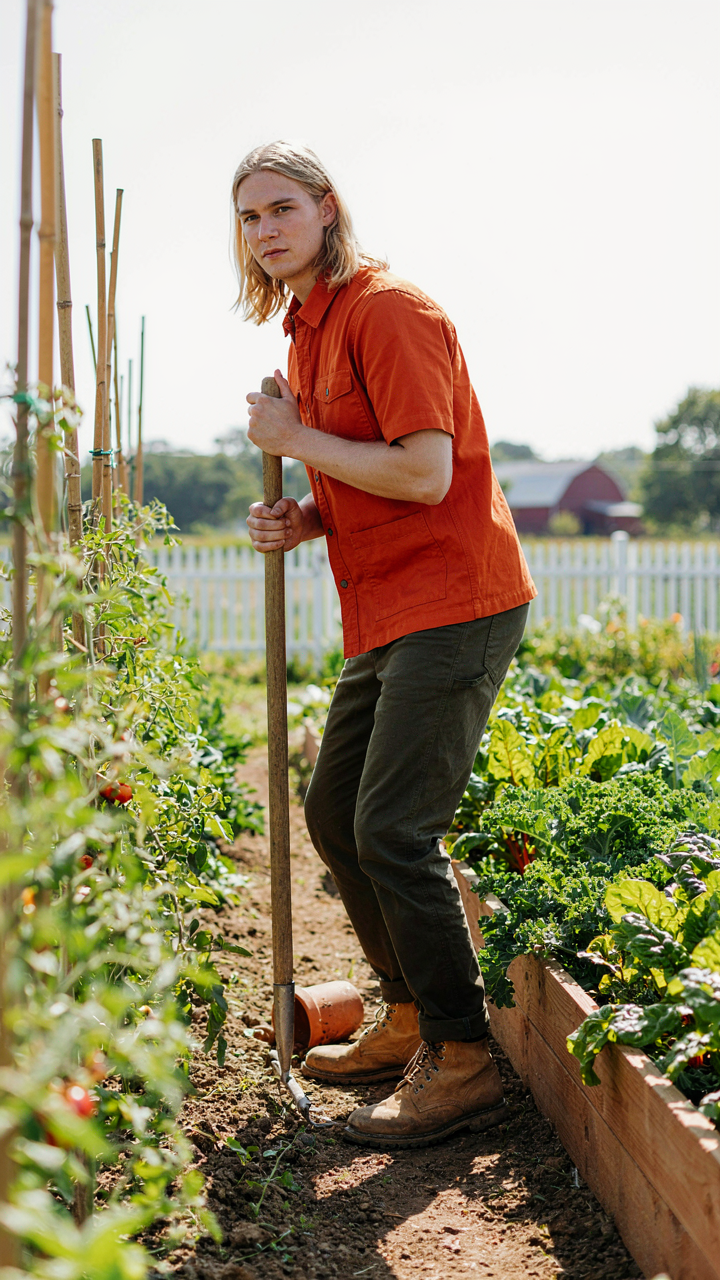
You want the ergonomic tool to fix your back so you don’t have to change how you move. That’s the real reason you’re here. But the tool is just a mirror. Posture determines tool effectiveness, not the reverse. Biomechanics shows us that spinal alignment during repetitive motion directly controls load distribution across discs and joints. A $300 ergonomic spade does nothing if your lumbar spine rounds forward during the dig.
The mechanism is simple: neutral spine during garden work reduces disc pressure by up to 40 percent compared to flexed positions. This isn’t theory. It’s structural reality. You adjust spine angle first, then select tools that match that angle. Long-handled tools work only if your shoulders stay packed and your pelvis stays level. Most gardeners buy the tool, keep their broken posture, and wonder why their back still hurts.
Movement Patterns: Working With Your Body, Not Against It
Kinesiology teaches us force transfer. Apply that here: the power in any garden tool comes from ground contact through your legs and core, not your arms. Your shoulders are just steering. The moment you pull force from your shoulders instead of your legs, the ergonomic design becomes irrelevant. Your body is now fighting the tool instead of partnering with it.
The real work happens in how you coordinate hip hinge, knee bend, and neutral spine during the stroke. Digging with straight legs and arm force creates repetitive strain. Hip hinging with engaged glutes and a stiff core makes the same motion sustainable for hours. This is why tool handle length matters: it should match your arm reach at full hip hinge position. Measure this distance before you buy anything. The tool adapts to your mechanics, never the other way around.
Your Weakest Link Isn’t The Tool; It’s Your Method

Most gardeners buy ergonomic tools then use them wrong. You grip too hard. You bend at the waist instead of the knees. You fight the tool’s design instead of working with it. Today, film yourself using one tool for five minutes. Watch it back. Notice where you tense up or compensate. That friction point reveals everything. The best ergonomic garden tool in the world fails in the hands of someone who never learned to move differently. Master the motion before you master the equipment.



