
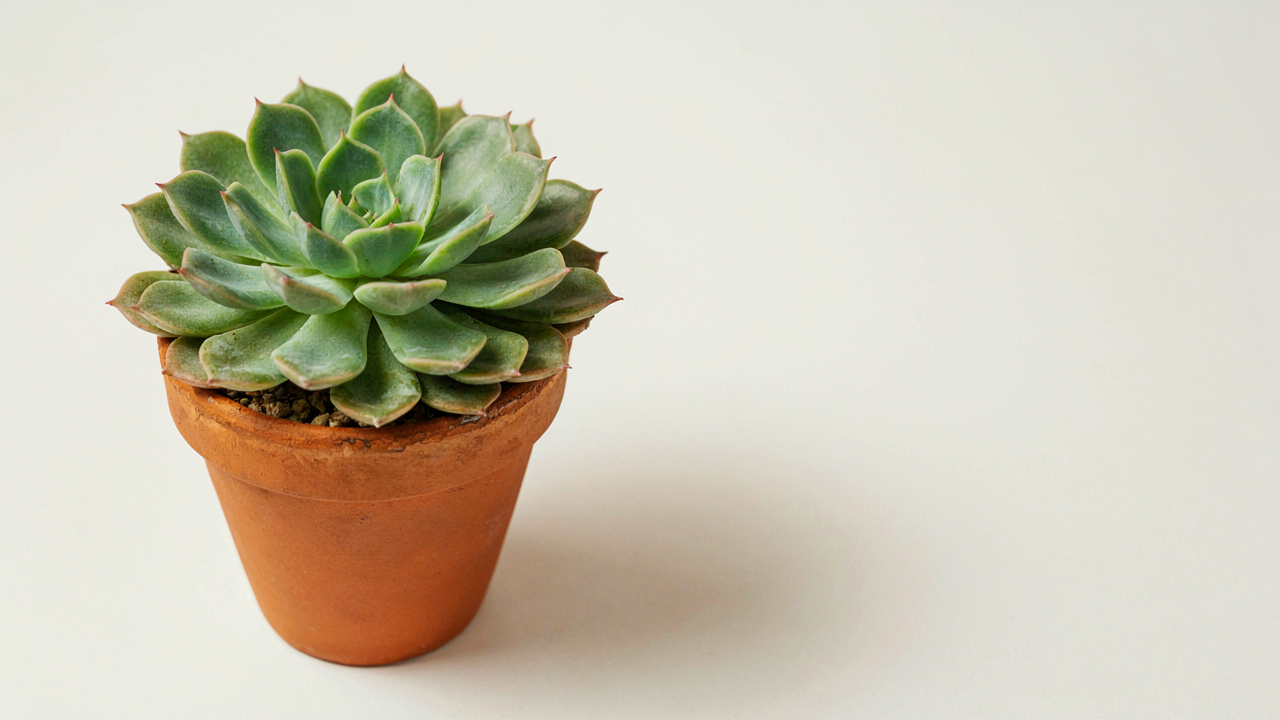
The Myth Of The Easy Echeveria Succulent

What Everyone Gets Wrong About Echeveria Care
You want to believe Echeveria succulents are bulletproof because admitting they need actual attention feels like failure. The mechanism is simple: Echeveria are desert plants, but deserts aren’t static. They experience seasonal temperature swings, occasional rain followed by months of drought, and intense direct sun. The “easy succulent” narrative ignores this rhythm entirely. Most people treat them like decorative objects that photosynthesize themselves into survival.
Echeveria rosea, Echeveria elegans, and Echeveria agavoides don’t die because they’re finicky. They die because their owners apply one static watering schedule year-round and assume low light is acceptable. The plant adapts to neglect for months, then rots suddenly when someone waters it “like they read online.” That’s not the plant failing. That’s the owner mistaking dormancy for thriving.
Why Standard Advice Collapses Under Real Conditions
The generic guidance is incomplete. Most care guides say “water when soil is dry” and “provide bright light.” This is lazy. It doesn’t account for pot material, soil composition, seasonal growth patterns, or the actual light intensity in your space. Terracotta drains faster than plastic. A north-facing window provides different light than a south-facing one. Summer growth demands more water than winter dormancy. A single rule handles none of these variables.
The real failure point: people treat watering frequency as the primary variable when drainage is the load-bearing wall. Echeveria succulents survive aggressive neglect only because water exits the soil quickly. Switch to dense, moisture-retaining soil in an undrilled decorative pot, and the plant dies not from underwatering but from the system itself. Control soil composition and drainage first. Adjust water volume second. Everything else is noise.
Echeveria’s Ecological Blueprint: Survival, Not Pampering
Where Echeveria Actually Lives
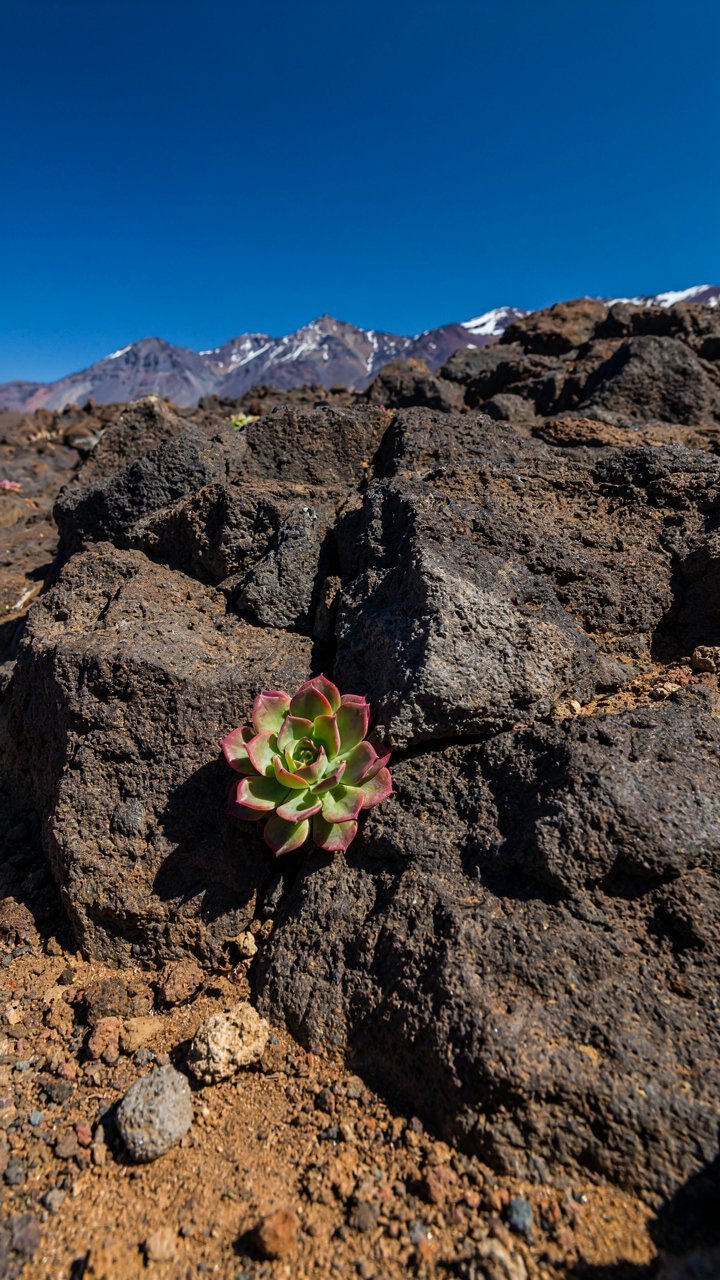
You want to feel competent by following a system, but the real issue is that most succulent care advice reverses cause and effect. Echeveria didn’t evolve in controlled environments, it evolved in the high-altitude volcanic plateaus of Mexico where soil drains instantly, water arrives rarely, and sun exposure is relentless. The mechanism is simple: stress from these conditions shaped the plant’s physiology. Reproduce that stress indoors and the plant thrives.
Echeveria grows in rocky, volcanic soil at elevations between 5,000 and 9,000 feet where rainfall concentrates in specific seasons. The plants experience prolonged dry periods followed by intense sun and temperature swings. Pot soil dries in days, not weeks. Light intensity is high. Night temperatures drop sharply. These aren’t obstacles the plant tolerates, they’re the signals that tell it to survive. Replicate this exact pressure gradient in your home and you stop fighting the plant’s nature.
Stress As Signal, Not Damage
The biology is clear: moderate stress triggers adaptive responses in Echeveria. When water becomes scarce, the plant concentrates pigments in its leaves, producing reds, purples, and oranges. When light is abundant, it develops denser leaf formations and tighter rosettes. When temperature drops at night, it hardens cell walls. These aren’t cosmetic changes, they’re survival mechanisms. The color deepens because anthocyanin production increases as a UV shield. The form compacts because loose growth wastes stored water.
Beginners mistake stress signals for distress. A red-tinged Echeveria isn’t dying, it’s performing exactly as designed. The distinction matters because it changes your entire intervention strategy. Instead of watering more when leaves shift color, you maintain the stress level that produced it. Instead of moving the plant to softer light, you keep it exposed. The protocol is counterintuitive but non-negotiable: withhold water until soil is bone dry, expose to direct sun for at least four hours daily, allow nighttime temperatures to drop to the low 50s Fahrenheit when possible.
The Soil Protocol: Engineered Drainage For Echeveria Succulent Health
Why Standard Potting Mix Kills Echeveria
You want your plants to survive so you look competent. That’s the real reason you clicked this. Here’s the mechanism: standard potting mix retains water by design. It’s engineered for plants that need consistent moisture. Echeveria evolved in arid climates where soil dries fast. When you use standard mix, roots sit in moisture for days. Fungal and bacterial rot follows. The plant dies not from neglect but from the substrate itself suffocating the roots through constant saturation.
Most beginner advice says “water less.” That’s incomplete. The problem isn’t watering frequency alone. It’s that standard potting mix prevents water from ever leaving the root zone efficiently. Wet soil around Echeveria is a guaranteed failure state. You can’t fix this by adjusting your watering schedule if the medium itself won’t drain. The substrate is the foundation. Get it wrong and no adjustment upstream saves you.
Building The Right Substrate Mix
Drainage operates under a physics principle called capillary action, which describes how liquids move through porous materials. In Echeveria substrate, your job is to break capillary action so water moves through and out, not up and around the roots.
- Coarse Perlite: Comprises 40-50% of the mix. Creates air pockets and prevents soil compaction. Remains inert and won’t decompose over time like organic matter does.
- Pumice: Add 20-30% by volume. Lighter than perlite with sharper edges that hold air better. Slightly absorbs then releases moisture without becoming waterlogged.
- Gritty Sand (Horticultural Grade): Include 10-20%. Use coarse sand, not play sand. Adds weight for pot stability and keeps substrate loose permanently.
- High Quality Potting Soil Base: Use 10-20% maximum. Choose mixes designed for succulents or cacti. Standard all-purpose soil negates all other ingredients through its water retention.
- Activated Charcoal (Optional): Add 5% if available. Absorbs excess moisture and impurities. Prevents soil from becoming stale in containers without drainage holes.
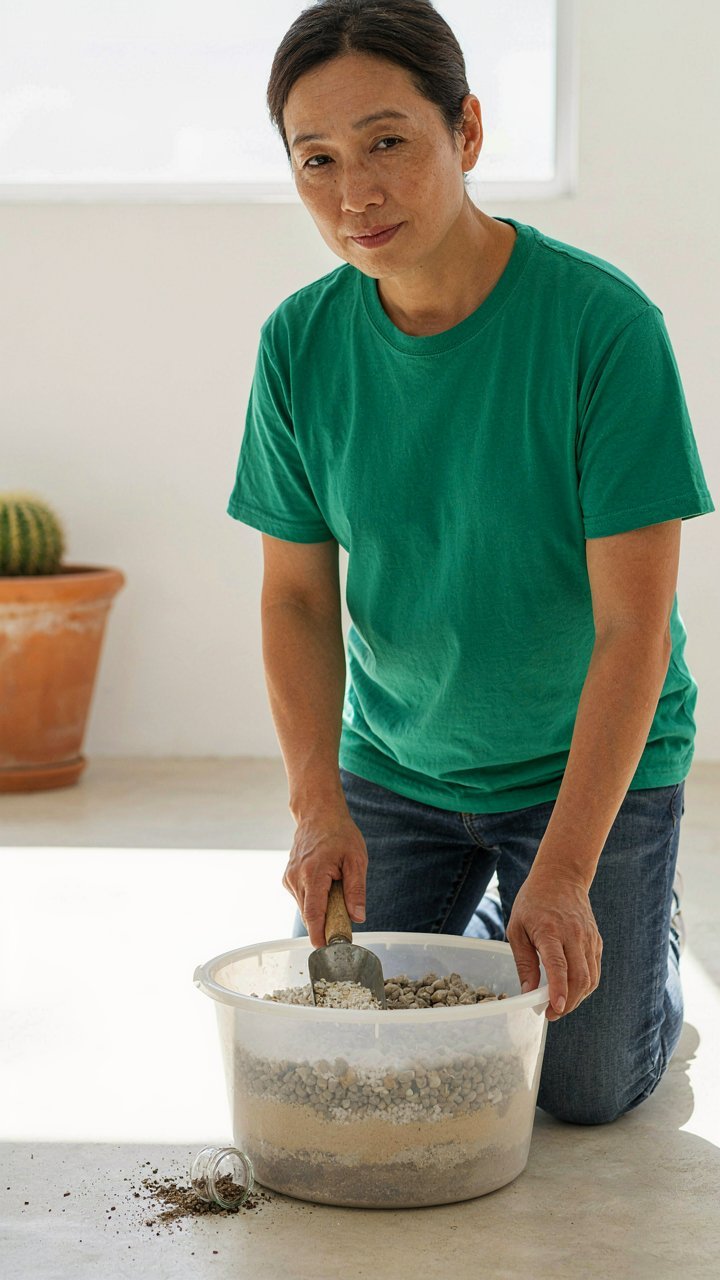
Mix these components by volume, not weight. A ratio of 40% perlite, 25% pumice, 15% sand, and 20% cactus-specific potting soil works. Use a bucket and scoop to measure. Pour and stir thoroughly to distribute particle sizes evenly. This substrate dries completely within 24-48 hours after watering. Water passes through in minutes, not hours. Roots access oxygen immediately. This is the protocol that prevents rot before it starts.
Watering With Precision: The Scarcity Principle For Succulent Care
How Echeveria Signals Water Need
You want a foolproof system so you never kill another plant and look competent to people who notice these things. Here’s the actual mechanism: Echeveria leaves store water in their cells. When those cells deplete, the leaf tissue loses turgor pressure and the plant physically changes. This isn’t mysterious. It’s hydraulics.
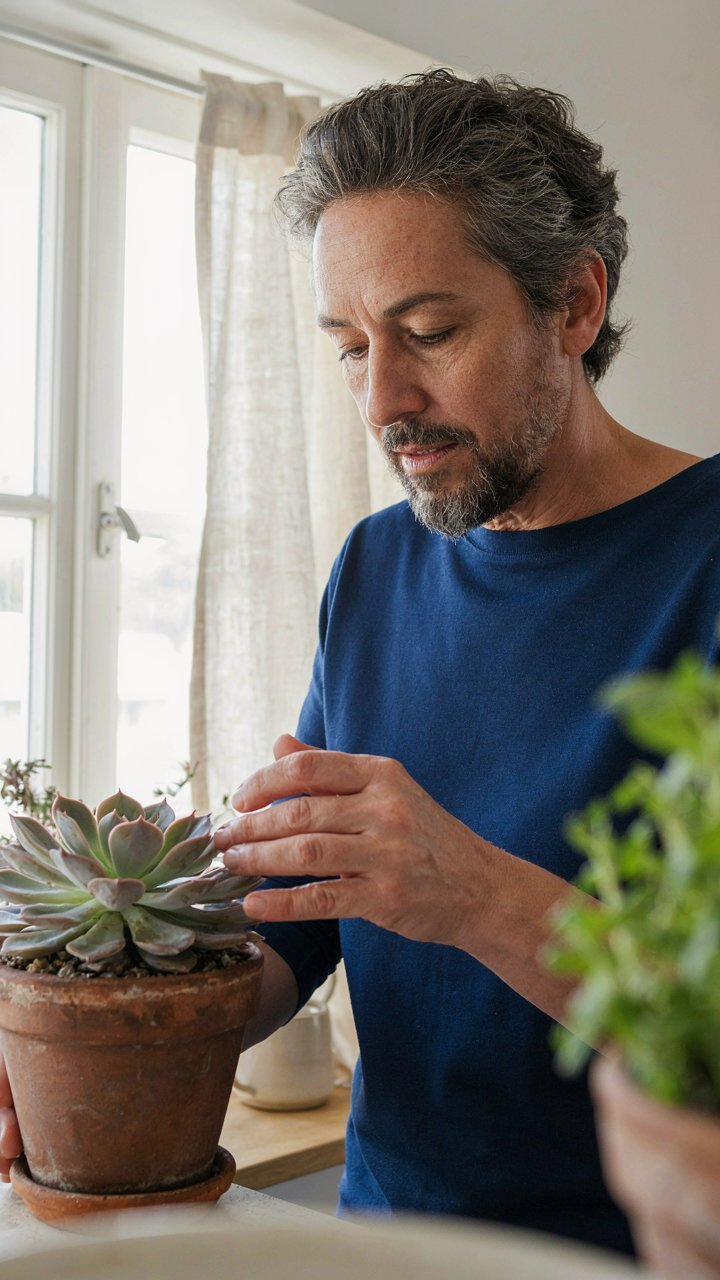
Press the leaves between your thumb and forefinger. Firm leaves mean full cells. Soft or slightly wrinkled leaves mean water reserves dropped. Don’t wait for dramatic shriveling. The moment leaves feel less rigid than they did days before, water is needed within days. Soil moisture is secondary. The plant’s physical state tells you everything.
Adjusting For Season And Temperature
The common advice to water on a fixed schedule is wrong. It ignores the single factor that matters most: how fast water evaporates from soil and is used by the plant. Echeveria enters dormancy or slows growth during cool months and winter. Evaporation and uptake both drop. This means longer intervals between watering.
Spring and summer demand more frequent watering because heat accelerates evaporation and the plant actively grows. Fall transitions gradually. Winter stops growth almost entirely. Water every 10 to 14 days during active growth if soil is porous. Extend intervals to every 3 to 4 weeks during winter dormancy. Check leaf firmness first before each watering session. Temperature and daylight control the schedule, not the calendar.
Light: The Non Negotiable Echeveria Elegans Requirement
What Happens When Light Runs Out
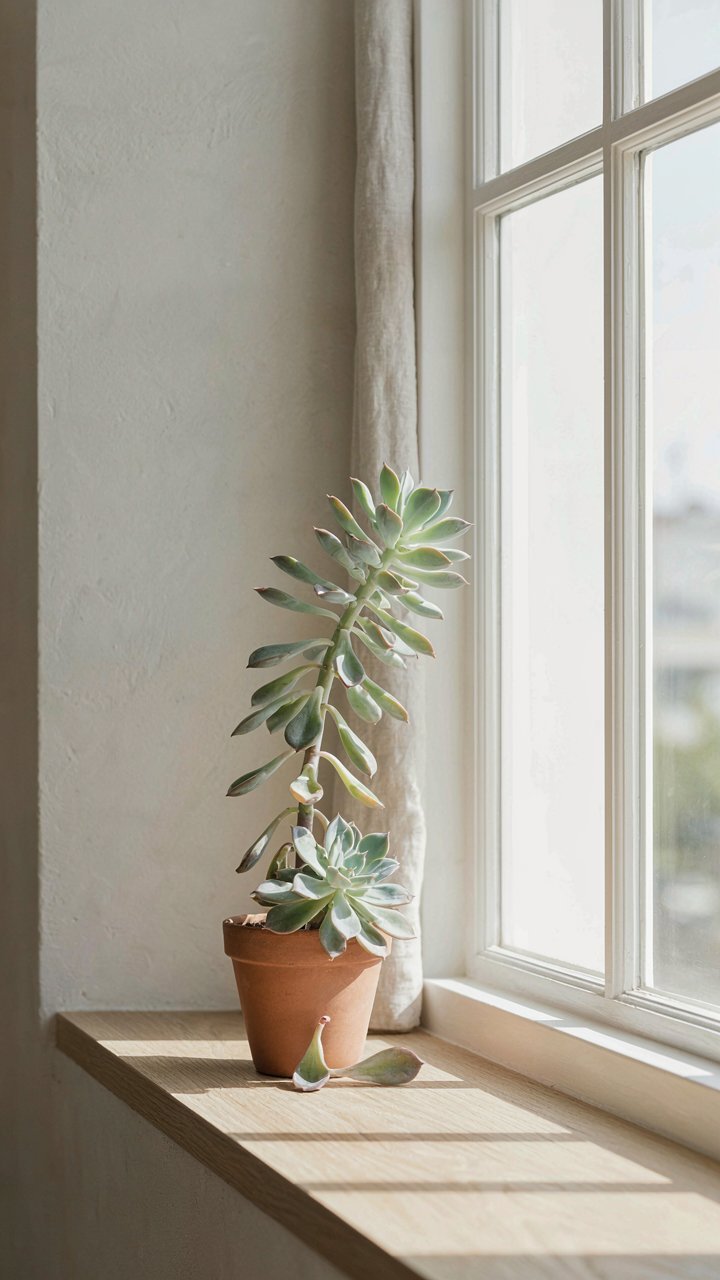
You want Echeveria to survive on your shelf because you like the idea of plants without the work. Here’s the mechanism: Echeveria loses the ability to photosynthesize efficiently below 3,000 lux, which means your plant stops converting light into energy and starts consuming its stored reserves. This is a biology problem, not a preference. Etiolation follows within weeks, where the rosette stretches upward and thins out, abandoning its compact form to chase a light source that isn’t there. The plant doesn’t recover from this shape once it happens.
Low light also triggers delayed water absorption and weak root development. Echeveria in shade retains soil moisture longer because it demands less water to function, creating rot conditions in standard potting soil. The leaves lose their color saturation and become pale. Most beginners mistake this for underwatering and add more water, accelerating the collapse. Prevention is the only solution: insufficient light isn’t a challenge to work around, it’s a death sentence you execute slowly.
Stacking Light Sources For Real Results
Most advice says “bright, indirect light,” which is useless because it doesn’t tell you what to do on a cloudy Tuesday. Echeveria needs minimum 6 hours of direct sun daily to maintain structure and color. If your window doesn’t deliver this, artificial grow lights become non-optional. A standard 20-40 watt LED grow light positioned 6-12 inches above the rosette replaces natural sun effectively. Place the light on a 12-14 hour timer and position plants beneath it.
South and west-facing windows deliver the most intense light in most climates. Rotate pots every two weeks to prevent directional stretching toward the light source. If using grow lights indoors, keep the fixture low enough to create shadow under the rosette, not silhouette. Test your setup by checking the plant’s response after four weeks: tight, compact growth with vibrant coloration means the light level is sufficient. Loose, pale growth means you need more hours or lower the fixture.
The Minimalist’s Guide To Echeveria Types And Selection
Pick Varieties Built For Neglect, Not Instagram
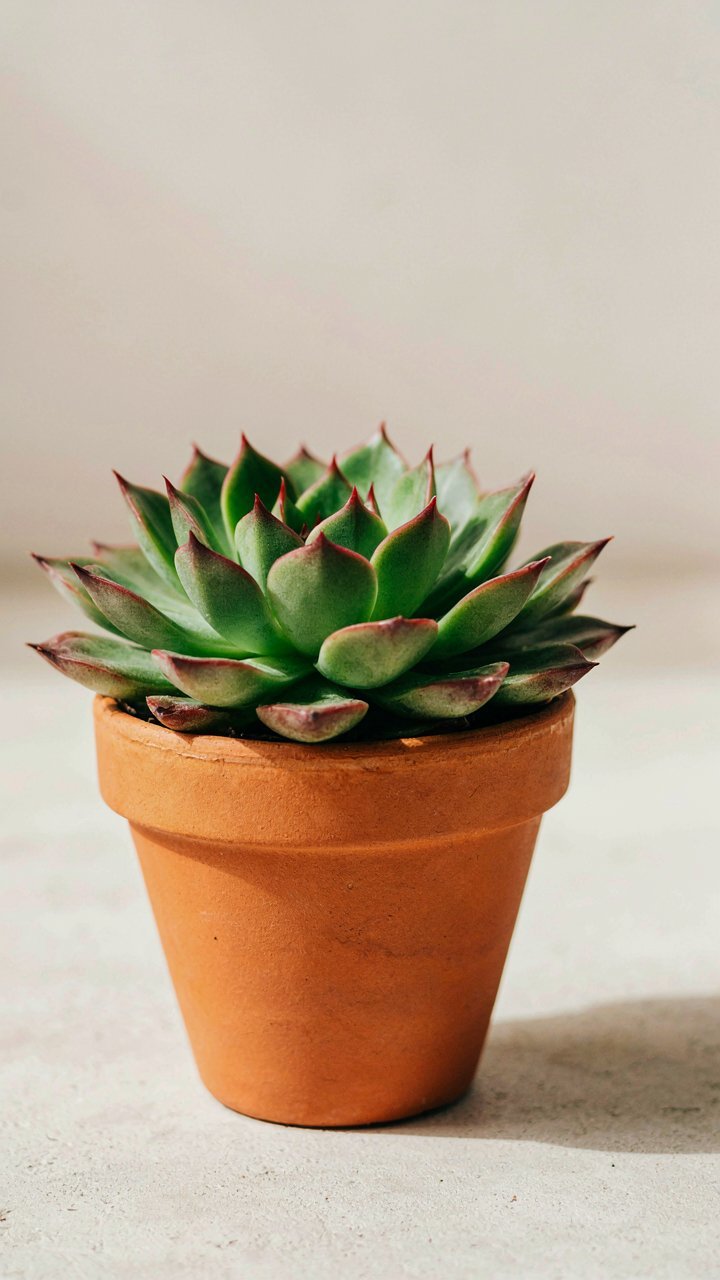
You want the variety that makes you look like you know what you’re doing without requiring you to actually know what you’re doing. The real mechanism is stress tolerance. In biology, stress tolerance measures an organism’s ability to survive adverse conditions without dying. Echeveria comes in two camps: those bred for looks that demand precision, and those that tolerate chaos. Echeveria elegans and Echeveria pulidonis survive irregular watering, temperature swings, and mediocre light. They don’t need perfect conditions to stay alive. They don’t photograph as explosively as the rare cultivars, but they won’t collapse the moment you miss a watering cycle.
The beginner move is chasing the cultivar with the most saturated color or the most unusual leaf shape. Stop. Start with Echeveria agavoides or Echeveria prolifica instead. Both handle neglect. Both stay compact. Both offset readily if you actually want propagation material later. The mechanism you’re actually buying is redundancy. These varieties have built-in forgiveness. They give you time to learn the basics before you move to the high-maintenance cultivars that look better but demand everything.
Stop Believing The Size Myth
The common advice says start small with Echeveria to avoid overwhelming yourself. That’s incomplete. Size doesn’t determine difficulty, growth rate does. A mature Echeveria elegans can sit in the same pot for two years barely changing. A young Echeveria pulverulenta doubles in width in one season and then demands repotting or it rots from stagnant soil. You’re not choosing based on current size. You’re choosing based on how fast the plant outgrows its conditions.
A beginner should pick slow growers first. Echeveria lilacina grows so slowly you won’t face a repotting decision for a year. That delays one of the highest-failure points for new succulent keepers: repotting into bad soil or compacting the medium. Watch the growth rate, not the tag size. This is your actual constraint. Fast growers like Echeveria peruviana and Echeveria subrigida force your hand faster than you can build competence with basic watering and light assessment.
Pest & Disease Management: Applying Military Doctrine To Succulent Gardening

Stop Problems Before They Start
You want to avoid the shame of killing a plant that’s supposed to be unkillable. Here’s what actually works: in biology, defense systems operate on layers. Think of Echeveria’s natural defenses like border security—the plant’s waxy cuticle and thick leaves form the first perimeter. Pests breach this only when conditions weaken it. Most growers skip the real work and jump to spraying, which misses the point entirely.
The mechanism is simple. Overwatering creates soft tissue that invites mealybugs and root rot fungi. Poor air circulation concentrates humidity around the rosette, where spider mites establish colonies. Contaminated soil introduces fungus gnats before you even plant. Prevention means controlling the environment that makes the plant vulnerable, not treating the symptom after it arrives.
Intervention Only When Math Favors Action
You’ll waste money and time treating problems that cost less to replace. In pest economics, intervention makes sense only when the value of what you’re saving exceeds treatment cost plus labor time. A single Echeveria costs five to fifteen dollars. Neem oil, insecticidal soap, and application time add up fast.
For commercial-scale collections or rare specimens, targeted sprays work. For a beginner with standard Echeveria varieties, remove infested plants and start fresh. If you choose to treat, spray the undersides of leaves where pests hide, repeat every seven to ten days for two cycles to break the reproductive cycle, and inspect surrounding plants immediately. The protocol matters more than the product.
Propagation As Strategic Investment: Scaling Your Succulent Art
How Leaves Become Plants
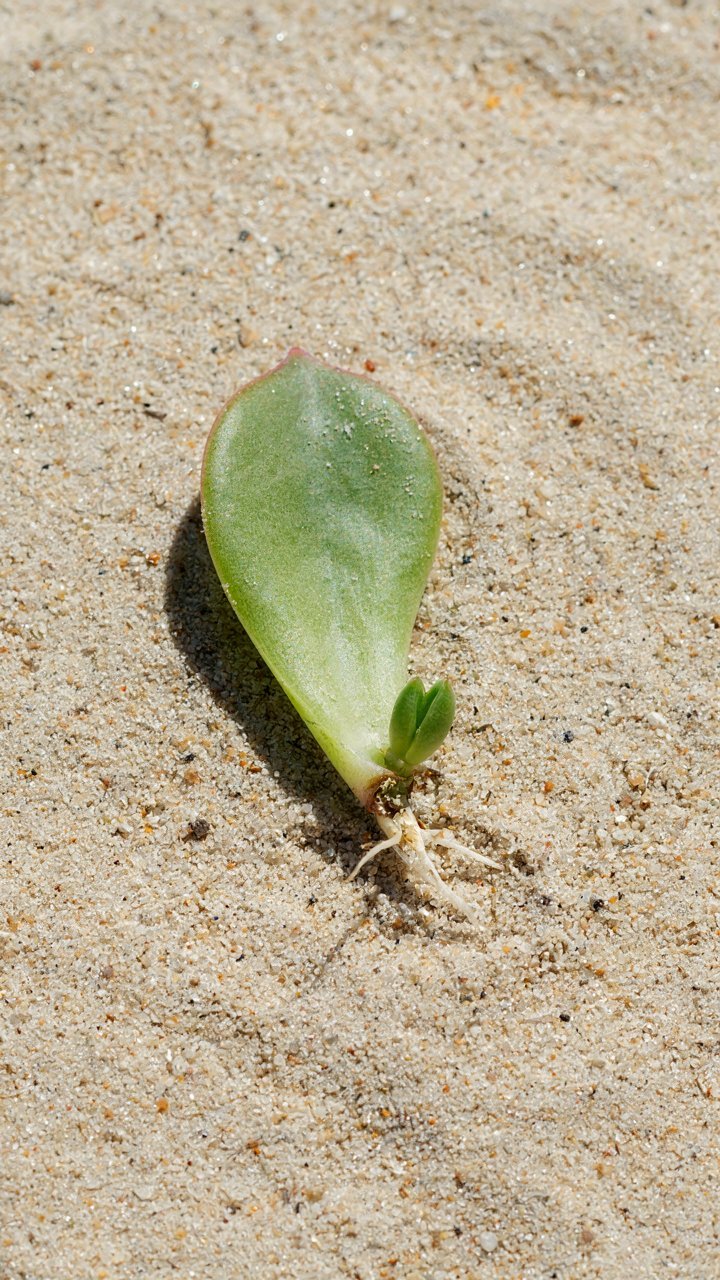
You want free plants. That’s the real reason you’re reading this. Propagation from leaves works because Echeveria store energy in their fleshy leaves, and that stored energy funds new root and stem development without soil input. This is pure biology: the leaf is a self-contained resource bank. Detach a healthy leaf by twisting it at the base until it separates cleanly. The leaf must come away intact with no stem tissue left behind, or it fails. Place it on dry soil or sand and wait.
New roots emerge from the leaf’s base within two to four weeks. Resist watering during this phase. The leaf is shedding moisture intentionally to trigger root initiation. Once roots appear as visible white threads, introduce minimal water once weekly. A new rosette forms at the base of the leaf over the next month. The original leaf will eventually shrivel and fall away as the plantlet becomes independent. This is not failure. It’s the leaf transferring all remaining resources to the offspring.
The Conditions That Actually Work
Timing matters less than environment. Echeveria propagation succeeds in spring and early summer because light intensity and day length align with growth hormones, not because the calendar says so. In winter, propagation stalls regardless of effort. Start propagation during months with eight or more hours of daily direct sunlight. Temperature stability also drives success more than temperature range. Fluctuations between forty and eighty degrees Fahrenheit trigger stress responses that delay rooting.
- Spring through early summer: Eight-plus hours of direct light daily activates growth hormones and accelerates root formation within the expected two-to-four week window.
- Bright, indirect light after rooting: Position newly rooted plantlets where they receive filtered sun rather than full intensity to prevent leaf scald during tender stages.
- Dry substrate: Use perlite, coarse sand, or cactus soil mix with zero peat moss. Peat retains moisture that rots emerging roots before they establish.
- Humidity below sixty percent: Low humidity forces the leaf to preserve water and triggers root emergence faster than moist air conditions allow.
- Stable fifty-five to seventy-five degree range: Maintain consistent temperatures because sudden swings from day to night stress the propagation response and extend the timeline by weeks.
Scale this process by staggering propagation batches across six-week intervals. One batch rooting in April plants another in June and a third in August. By autumn you have three generations of plantlets at different stages, each ready for potting or sale. This removes the bottleneck of waiting months between propagations. Execute propagation as a production cycle, not a one-time experiment.
Unlocking Your Inner Succulent Master
Read The Plant Instead Of The Manual
You want to skip the learning curve and feel competent immediately. That won’t happen. The real mechanism is this: Echeveria demand feedback loops. You water, you observe the stem, the leaves, the soil moisture at depth. You adjust. This isn’t mystical. It’s biology responding to stimulus. Most beginners read care sheets and ignore what the plant actually shows them.
Your Echeveria tells you everything through its body. Translucent leaves mean overwatering. Shriveled leaves mean drought stress. Pale color under strong light means adaptation, not failure. You build intuition by creating a prediction, acting on it, then comparing the outcome to your expectation. Repeat this fifty times and you stop following rules.
Experience Breaks The Rules You Learned
Generic advice says “water every two weeks” or “use well-draining soil.” Both are incomplete because they ignore variables. Your home’s humidity, light intensity, pot size, and soil composition all compress or expand watering intervals. Rules create false confidence. Experience teaches you why the rules exist and when to break them.
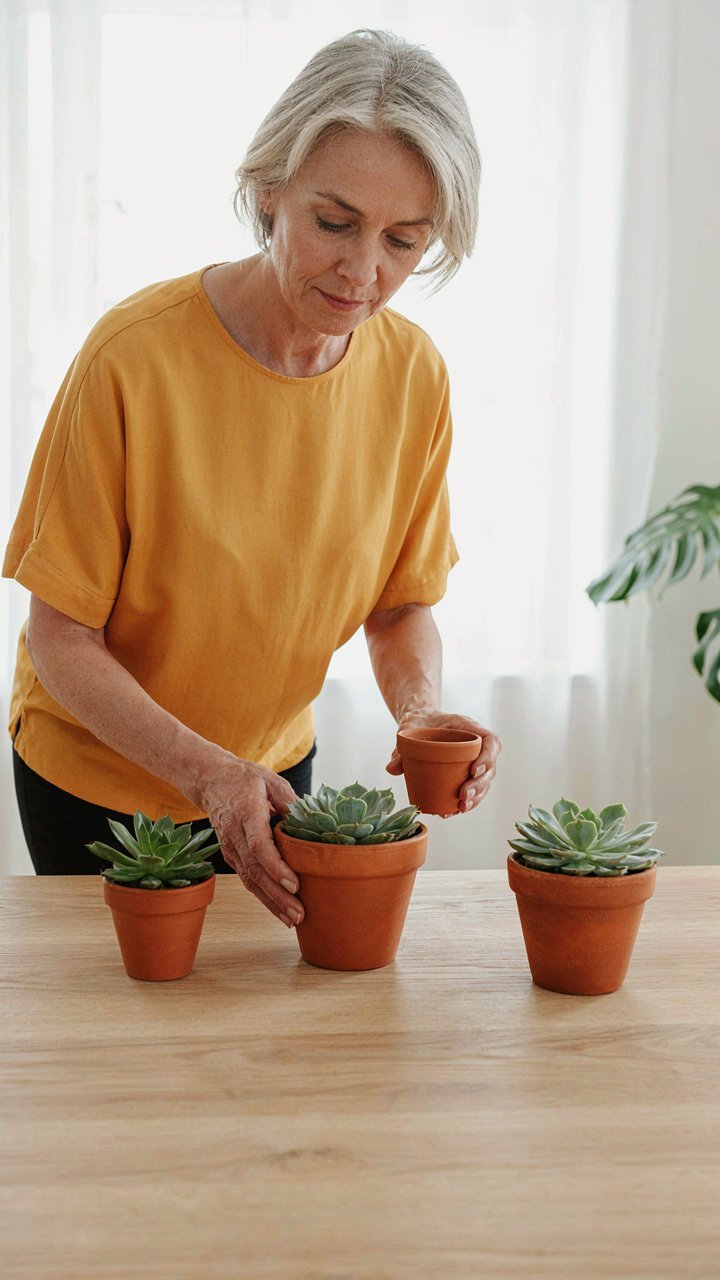
Start tracking one variable at a time on different plants. Keep one Echeveria in shade, one in bright indirect light, one in direct sun. Water them on the same schedule. Watch what happens over eight weeks. You’ll see that light exposure changes how fast the plant consumes water. This is how you move from follower to decision maker. The protocol is simple: observe, document, adjust, repeat.
Your Echeveria’s Struggles Aren’t A Plant Problem; They’re A Reflection Of Your Commitment To Observation
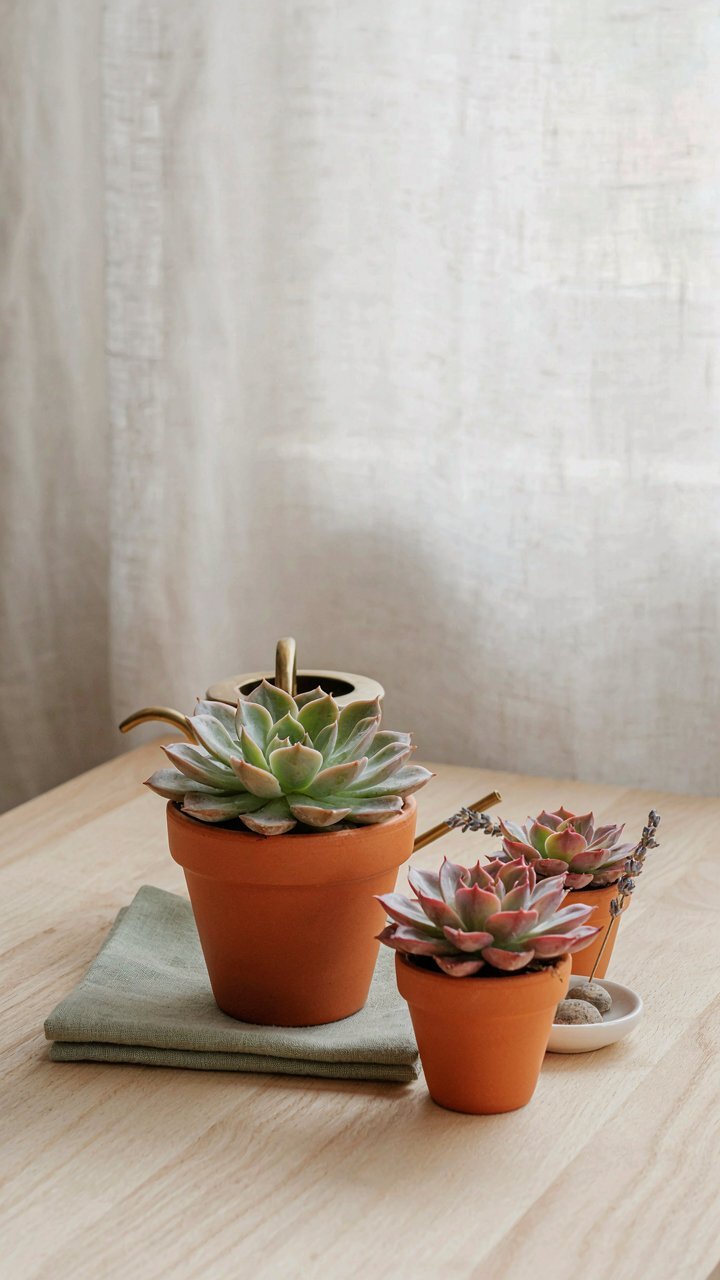
Most people kill Echeveria succulents not from ignorance but from indifference. You ignore the soil moisture until the leaves turn translucent. You skip checking drainage holes. You water on a schedule instead of reading what the plant actually needs. Stop treating Echeveria like decoration and start treating it like feedback. Pick one plant today and commit to touching its soil every three days for two weeks. You’ll learn more about growth than any article can teach you. Your plant doesn’t need a better owner. It needs an owner who actually pays attention.