

The Illusion Of Effortless Charm In English Cottage Garden Ideas

What Actually Looks Accidental
You want people to think your garden happened by accident, not design. That’s the real draw here. The mechanism is simple: English cottage gardens work through controlled density and strategic plant placement that masks intention. The style emerged from necessity in 17th and 18th century rural England, where working gardens mixed food crops, herbs, and flowers in confined spaces. What reads as charming chaos to visitors is actually layered planning disguised as natural overflow. The plants aren’t randomly scattered. They’re positioned to create sight lines, seasonal color transitions, and functional access patterns that only register as organic.
The common advice says to “just plant what you love and let it grow wild.” That’s wrong. Actual cottage gardens operate on a principle borrowed from landscape design called “visual weight distribution.” You’re not throwing plants at soil. You’re creating focal points through height variation, color blocking, and texture contrast while maintaining the appearance that nothing was considered. This distinction matters because it’s why most attempts at cottage gardens look like neglected yards instead of intentional spaces. The work is invisible because the planning happens before the first shovel enters soil.
The Hidden Labor Behind The Romance
Most people underestimate the maintenance because the style obscures it deliberately. A mature English cottage garden demands deadheading, cutting back, dividing perennials, and managing self-seeders throughout the growing season. The plants aren’t tended to stay wild. They’re tended to stay bounded. Without intervention, strong growers choke out weaker specimens, gaps open where plants fail, and disease spreads faster through dense planting. Historical cottage gardens relied on constant hands-on work from residents who lived with the consequences of neglect immediately.
The aesthetic relies on precise neglect, not actual neglect. You deadhead to extend blooms. You cut back to prevent sprawl. You divide to refresh vigor. You remove weeds to let chosen plants compete fairly. Modern cottage gardens often fail because owners expect the style to reduce maintenance. It inverts the reality entirely. The garden demands weekly attention during peak season, regular assessment of plant health, and willingness to yank out specimens that aren’t performing. Build a maintenance calendar into your design plan before planting anything, or your garden becomes a weed farm within two seasons.
The Cult Of Controlled Chaos: English Cottage Garden Design Principles

Layered Planting Creates Visual Depth
You want this garden style because it signals you’re cultured enough to reject formal geometry, but disciplined enough not to let your yard collapse into neglect. The mechanism is architectural layering borrowed from visual composition: foreground, middle ground, background. English cottage gardens work because they deploy the same depth principle, stacking plants by height and bloom time to create apparent dimensionality in finite space.
The front layer sits 12 to 18 inches tall. Think catmint, lady’s mantle, or creeping thyme. These plants frame the view and soften hardscape edges. Behind them, mid-tier plants reach 2 to 4 feet—foxgloves, delphiniums, roses. The back layer anchors everything at 5 to 8 feet or taller: shrubs, small trees, or climbing vines on structures. This vertical stacking works because your eye travels through depth rather than stopping at a flat plane. You’re not filling empty space. You’re building a visual journey.
Abundance Within Specific Boundaries
Most garden advice tells you to “just let it grow naturally” and calls that cottage style. That’s lazy and wrong. Cottage gardens aren’t random. They’re restrained wildness operating inside clear structural limits. Your plants do grow vigorously, but you choose where vigorous growth is allowed and where it gets cut back hard.
Define your beds with hardscape edges—brick, stone, or metal. This containment is non-negotiable. Inside the bed, allow overlapping and self-seeding. Prune deadwood and crossing stems, not to perfect form, but to guide energy toward density and repeated flowering. The garden reads as full because you remove diseased and weak growth, then let strong stems sprawl into neighbors. Plant on 18-inch centers instead of 24 inches. This spacing forces plants to touch by mid-season, creating that signature overstuffed look without actual chaos underneath.
The Biome Blueprint: Designing Resilient English Cottage Gardens
Plant Communities That Build On Themselves
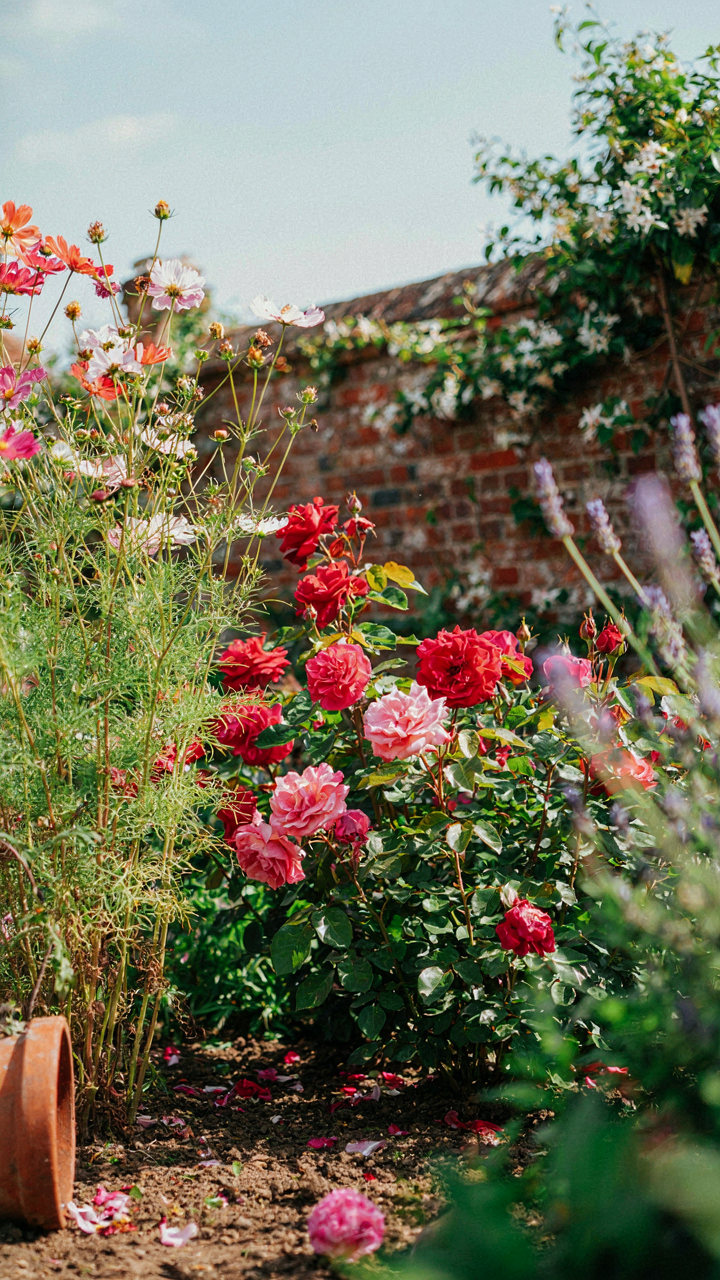
You want a garden that looks effortless because you’re afraid of the work. The mechanism is ecological succession, borrowed straight from biology: plant communities don’t arrive fully formed. They evolve. Early colonizers prepare soil for mid-stage plants, which then enable later arrivals. English cottage gardens work the same way. Fast-growing annuals and pioneer perennials like foxgloves and hollyhocks establish quickly, stabilize bare ground, and create conditions where slower-building shrubs and woody plants take root. This isn’t decoration. It’s sequencing.
The cottage garden style emerged in rural Britain precisely because this stacking worked without constant intervention. Gardeners stacked plants by growth rate and root depth, not by aesthetic preference alone. Primrose and self-seeding cosmos created a permissive environment for established roses and hawthorn. Once you map succession into your design, you stop fighting the garden. You’re working with the actual timescale plants need to establish themselves. Plant your pioneer layer first, your structural layer second.
Systems That Thrive Without You Managing Every Variable
The common advice is to design your cottage garden on paper, choose your plants, then install them. Wrong approach. Resilient English cottage garden flowers emerge when you mimic the redundancy and resource cycling of natural systems, not when you impose a predetermined layout. Study how native British woodlands organize: multiple canopy layers, competing root depths, self-seeding perennials that fill gaps before bare soil erodes. Dense plantings prevent weeds by denying them light and space. Diverse species at different heights capture more water and nutrients than monoculture. Dense plantings prevent weeds by denying them light and space.
Build your garden in layers. Tall backdrop plants like delphiniums and climbing roses. Mid-level structure from shrub roses and catmint. Ground cover from creeping thyme and ajuga. Undersow with self-seeding annuals and biennials like nigella and alchemilla mollis. This layered approach copies how natural plant communities defend territory and maintain productivity. Once established, you deadhead, prune seasonally, and let the system handle pest and disease pressure through diversity. Install this structure before worrying about color coordination.
The Unseen Architecture: Soil As Foundation For English Cottage Garden

The Living Network Underground
You want a cottage garden that looks effortless because you fear the work beneath the surface. The mechanism is biological: soil food web operates like an economy. Bacteria, fungi, protozoa, and arthropods trade nutrients the way markets trade capital. English cottage gardeners never named this system, but they built it through decades of compost layering and zero tilling. The microorganisms do the labor of breaking down organic matter into plant-available forms. Without this network active, you’re fertilizing soil, not feeding plants.
Most gardeners treat soil as inert substrate. Wrong. Soil health determines whether a cottage garden sustains itself or demands constant external input. A functioning food web means plants access nutrients on demand, disease pressure drops, and water retention improves. Victorian-era cottage gardens thrived because repeated organic additions built microbial populations over generations. Test your soil biology before amending it. You need functional decomposition happening at scale before aesthetic choices matter.
Fertility That Builds Itself
Nutrient cycling borrowed from closed-loop systems works like this: dead plant material enters the cycle, decomposers break it down, plants uptake the released nutrients, plants die and return to soil, the loop continues. No external fertilizer required if the mechanism operates at full capacity. English cottage gardens demonstrate this principle through established perennial borders where annual mulching with compost replaces the nutrient draw. The system feeds itself.
Most gardeners add compost once and expect permanent results. Insufficient. A cottage garden requires annual organic input because nutrient export happens through harvested vegetables, cut flowers, and mowed pathways. The rate of addition must match the rate of removal. Start with a baseline compost layer of two to three inches worked into planting beds, then commit to adding half an inch annually. This maintains the cycle indefinitely without purchased fertilizer.
The Time Horizon Protocol For Authentic English Cottage Garden
Years, Not Seasons
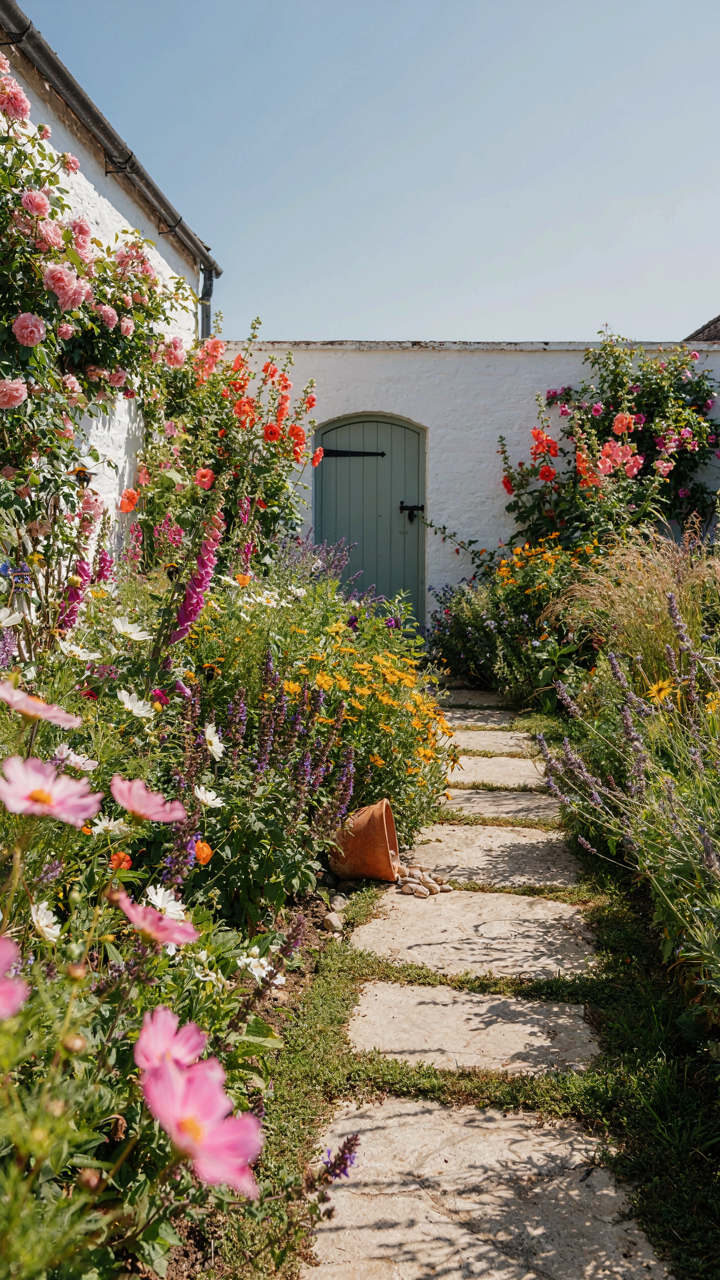
You want results fast because you’re used to buying finished things. The mechanism that separates actual English cottage gardens from Instagram fiction is patience operating at biological scale, not transaction scale. True cottage gardens take five to seven years to establish their signature layered density. Most people plant, get bored at year two when gaps still exist, then either abandon the space or franchise it to a landscaper. The plants themselves don’t care about your timeline. Cottage garden plants—roses, delphiniums, foxgloves, self-seeders—establish root systems and reach mature size on their schedule, not yours.
The design protocol here is non-negotiable: commit to the space for a minimum of five years before judging whether it works. This isn’t romantic advice. It’s a mechanical reality. The cottage garden style emerged from working gardens where people lived in the same place for decades and shaped the space incrementally. You’re not recreating sentiment. You’re respecting the actual growth rates of perennials and shrubs. Start with basic bones—pathways, structure plants like yew or box—then add layers over successive seasons. The garden reveals itself through time, not through a single installation event.
Continuous Bloom Through Calculated Decay
Seasonal rhythm in cottage gardens works like ecological succession: one phase ends, another begins, and the total biomass stays visually engaged year-round. This isn’t about planting “spring bulbs and summer flowers” like a greeting card. You’re designing for overlapping bloom windows so the garden never flattens into brown mulch. Early bulbs (snowdrops, hellebores) transition to primrose, then tulips overlap with emerging perennials, then early roses bloom while late spring flowers finish. Summer bloomers take over. Late bloomers like asters and sedums run through autumn. Winter structure plants—ornamental grasses left standing, evergreen foliage, seedheads—carry visual weight through dormancy.
The mechanism is layered succession, not simultaneous display. Each plant family exits as another enters. You’re staggering maturation and bloom cycles so something is always moving, fading, or emerging. This requires knowing actual bloom times for your cultivars and your climate zone, not generic “spring” or “fall” categories. Winter appearance matters because English cottage gardens occupy the space year-round, not just May through September. Plant evergreen shrubs for structure. Leave dried stems and seedheads standing for texture. The decay itself becomes design.
Beyond The Instagram Filter: Small English Garden Realities
When Square Footage Becomes Your Constraint
You want the abundance of an English Cottage Garden but own a postage stamp. That tension is real, and no amount of styling fixes it. The mechanism here is density, not variety. A traditional cottage garden works because plants grew close together out of necessity, not aesthetic choice. Gardeners planted heavily to maximize food and medicine production. Instagram has reversed this: it sells you sparse, curated spacing. Density is your actual tool.
The scaling principle is direct: reduce the number of plant species while increasing the individual plant count per species. A full-size cottage garden might contain thirty plant types. A small space contains five to seven types, planted in clusters of three to five specimens each. This creates rhythm and visual weight without overwhelming the footprint. You’re compressing the cottage garden’s bones into tighter quarters, not creating a diluted version.
Vertical Growth And Container Solutions
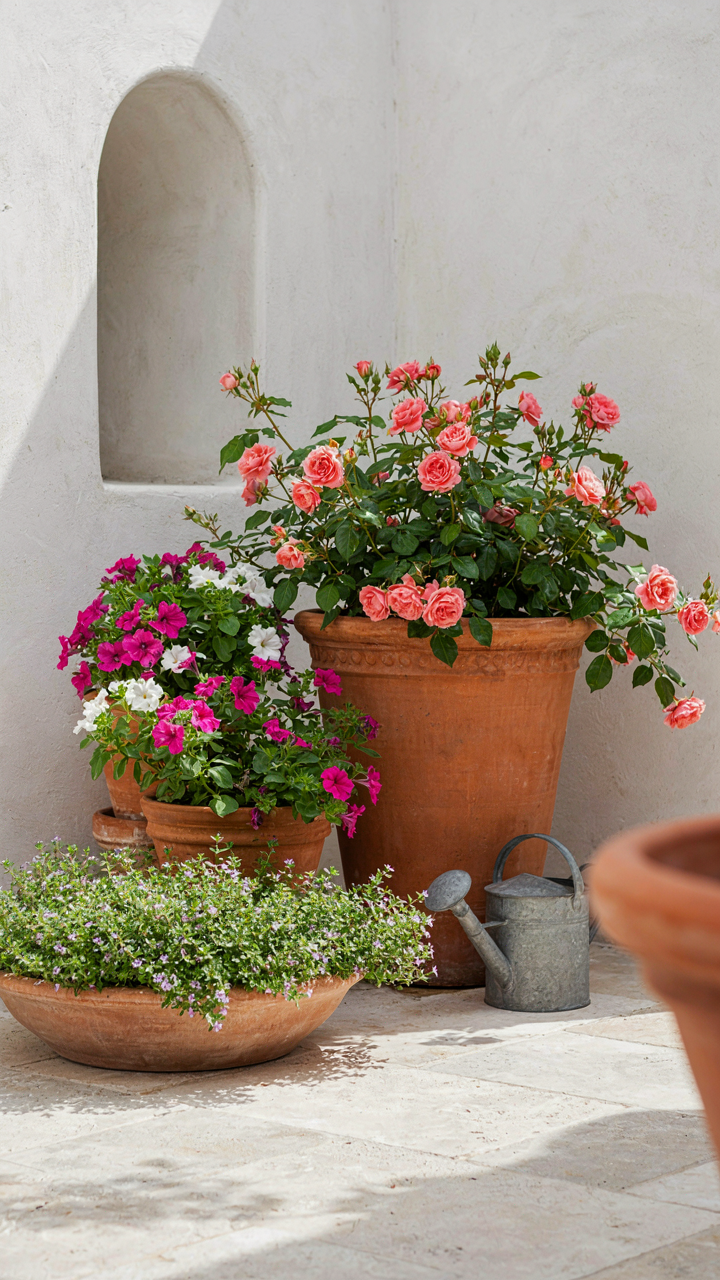
Salvage architecture teaches this lesson clearly: when ground real estate is limited, you build up. Container gardening isn’t a compromise for cottage style—it’s a primary mechanism for managing density in constrained spaces. Terra cotta, stone, and timber containers hold climbing plants, perennials, and herbs that would consume square footage if planted directly. The cottage garden aesthetic transfers fully to containers because the plants themselves create the character, not the soil medium.
Layering containers at different heights mimics the naturalistic progression you see in mature cottage gardens. Place tall terracotta pots at the back, medium containers midway, and trailing specimens forward. Climbing roses trained on trellises attached to containers gain vertical space while remaining portable. This stacking approach transforms a twelve-by-twelve-foot patio into the visual equivalent of a much larger planted area. Start by choosing three container sizes and grouping them in odd numbers to avoid symmetry.
Curating The Chaos: Essential English Garden Flowers And Plants

The Plants That Actually Survive Winter
You want a garden that looks effortless because you don’t want to spend every weekend replacing dead plants and pretending you have a green thumb. Here’s the mechanism: hardy perennials are the load-bearing walls of a cottage garden. They come back year after year without intervention, which means your garden infrastructure stays intact while annuals and tender plants come and go. This isn’t romance. It’s economics.
Perennials in an English cottage garden function like equity in a business. You invest once in establishment, then the asset compounds. Delphinium, foxglove, and salvia establish themselves in year two and three, then produce exponentially. They also establish the visual structure that makes the garden read as intentional rather than accidental. Without this backbone, the space collapses into noise. Plant perennials in drifts of three to five rather than scattered singletons. Grouping creates visual weight and makes the garden feel designed instead of planted.
- Delphinium: Tall anchor plants that provide vertical structure and hold architectural presence even when not blooming. Requires staking in windy sites but self-seeds reliably in established gardens.
- Salvia: Drought-tolerant once established, flowers across multiple seasons, attracts pollinators, and requires minimal deadheading to maintain form and continuous blooms throughout summer.
- Foxglove: Biennial or short-lived perennial that naturalizes through self-seeding. Provides dramatic height in year two and fills garden gaps with minimal maintenance after establishment.
- Paeony: Extreme longevity, establishes slowly but flowers reliably for decades with zero fertilizer or pest management needed once mature and rooted.
- Achillea: Spreads steadily, tolerates poor soil, flowers for months without deadheading, and provides texture and color continuity from early summer through frost.
The real skill is spacing these plants far enough apart that they mature into their full size without crowding each other by year three. Most gardeners plant too densely, then spend the next five years removing established perennials. Space them at their mature width, not their current container size. The garden will look sparse in year one. This is correct.
When Plants Volunteer, Let Them Work
The advice to “let nature take its course” is lazy until you understand the actual mechanism at play. Self-seeding plants operate like a distributed network. They spread seed, the seeds land in microsites with specific moisture and light conditions, germination happens where conditions permit naturally, and you end up with plants positioned exactly where they can survive without amendment.
Foxglove, hollyhock, and aquilegia will seed themselves throughout the garden in subsequent years. Your job isn’t to encourage or prevent this. Your job is to observe where they appear and decide whether the location works. If a foxglove seedling emerges in a shaded corner where you’d never have planted it intentionally, you learn something about that microsite. If it thrives there, leave it. If it looks wrong compositionally, remove it before it flowers and sets seed again. This cycle teaches you how your garden actually functions rather than how you imagined it would function. After two seasons of self-seeders establishing, you stop guessing about placement and start responding to what actually grows where.
Plants that self-seed in an English cottage garden also fill gaps faster than you can plant them. They colonize bare soil before weeds do, which reduces your weeding workload significantly. Leave some seedheads on your perennials until late winter before cutting back. Cut back the garden in late February rather than autumn. This strategy allows seeds to drop naturally and gives you maximum germination window before spring growth accelerates.
The Alchemist’s Touch: Transforming Your English Cottage

Your Garden Needs A Fingerprint
You want permission to break the rules without looking like you don’t understand them. That’s the real driver here. The mechanism is this: English Cottage Garden Style works because it appears unplanned while operating under strict constraints. The plants, the layout, the materials all follow botanical and design logic. What separates a derivative copy from an authentic garden is the deliberate violation of one or two expectations in a way that reveals your specific site, your climate, your actual use patterns.
Start by identifying what the consensus version of cottage gardening says you must do on your property, then ask which one instruction contradicts your land’s actual conditions. If the style demands dense mixed borders but your soil drains too fast, lean into that limitation. Build around it. Plant accordingly. The garden becomes yours the moment it solves your specific problem better than it solves the theoretical ideal.
Seasons Rewrite The Plan
Biological systems teach us about adaptation: organisms don’t fight environmental pressures, they shift their structure in response. Your cottage garden operates the same way. The design you execute in spring exists as scaffolding only. Summer heat, autumn decline, and winter structure will reorder your priorities and reveal what actually thrives versus what merely survives in your microclimate.
Most gardeners treat their design as permanent. Wrong. Document what performs, what fails, what self-seeds where you didn’t plant it. Rose varieties that seemed marginal five years ago may now anchor entire sections. Paths shift as you learn traffic patterns. Soil composition changes through mulching and decomposition. The garden you visit in June looks fundamentally different from the one you inherited in March. Build systems that encourage evolution rather than resist it. After each season, revise one section deliberately. This compounds into a garden that belongs to your site, not to a magazine spread.
The Garden Is Never Finished; Only Your Commitment To Its Evolution Falters
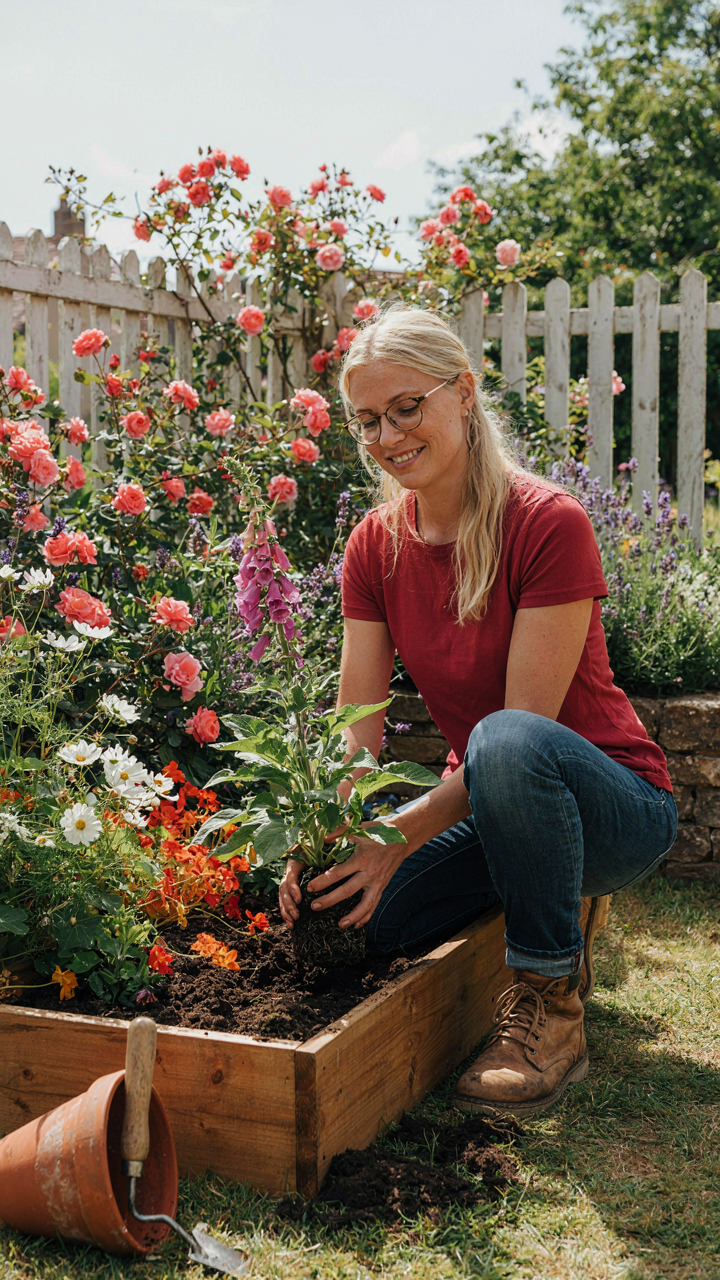
Most people abandon their English Cottage Garden Style after the first season because they waited for perfection instead of planting chaos. The real mechanism isn’t design knowledge. It’s deciding that imperfection is the point. Go buy three plants today that don’t match your plan. Put them where they feel right, not where a Pinterest board says they belong. Your garden won’t reward obedience, only conviction.



