
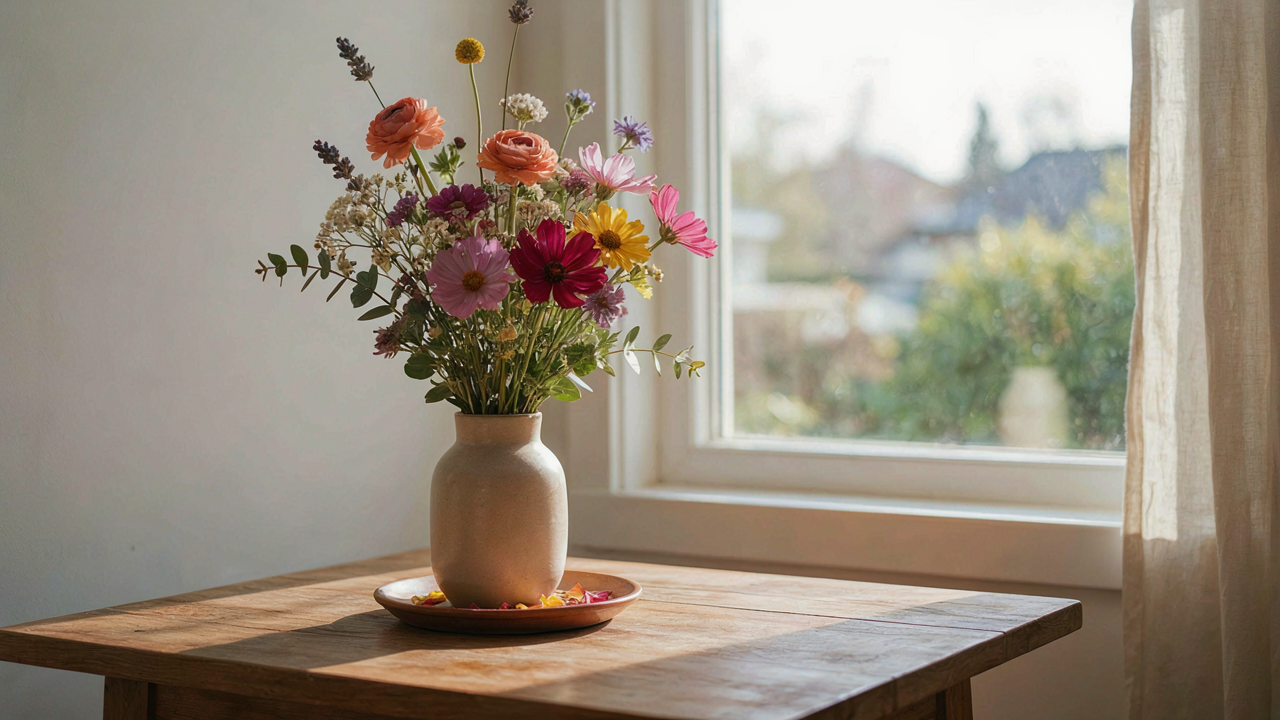
The “Accidental Garden” Protocol: Wildflower Vase Arrangements That Disarm
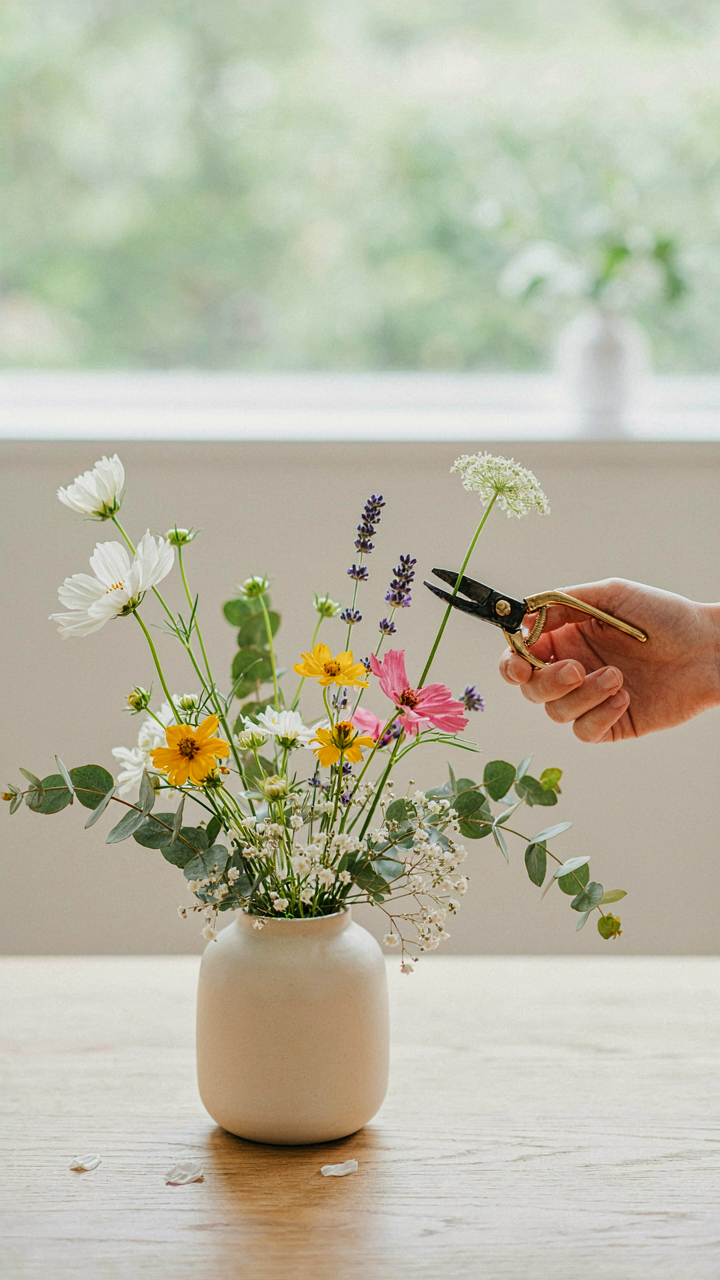
Cultivating Unexpected Beauty From Overlooked Sources
You want this to feel effortless because effortless signals taste and refinement, which signals you don’t try too hard. Here’s the mechanism: wildflower arrangements work because they reject the florist’s precision. They use ecological density—the same principle that makes wild ecosystems stable. When you pack varied stem heights, colors, and textures into one vase, you create visual complexity that reads as intentional restraint, not accident. The vase becomes a cross-section of a field, not a construction project.
The reason most wildflower arrangements fail is they follow formal rules meant for cultivated flowers. Stop doing that. Wildflowers evolved to compete for light and space. They want asymmetry. Your vase should reflect that chaos, but with one constraint: every stem must earn its place by adding either height variation, color contrast, or textural difference. Pick stems that contradict each other, then let them find their own geometry inside the container. The arrangement succeeds when no single stem dominates the composition.
Knowing What To Pick And What To Leave
Foraging for wildflower material is not about collecting everything you see—it’s about understanding which stems carry visual weight and which dilute it. Common mistakes: overloading with filler, mixing incompatible color families, cutting stems too short. The real skill is negative space. A sparse arrangement with one strong focal flower and deliberate gaps outperforms a dense one stuffed with mediocre material. Study the stem count and stem diameter before you cut anything. Thin, weak stems add visual noise without payoff. Leave them.
Your selection criteria should be ruthless: does this stem add scale, color, or form that the arrangement lacks right now? If you already have vertical height, skip the tall thin stems. If your color palette is already warm, the orange wildflower doesn’t belong, regardless of how pretty it is in isolation. Cut stems at staggered lengths—not graduated, staggered—so some bloom heads sit low in the vase and others reach up. This creates sight lines that pull the eye through the arrangement instead of stopping at one focal point. Begin with your strongest stem, then build around it by elimination.
Beyond The Crystal Prison: Rethinking Flower Vase With Wildflowers
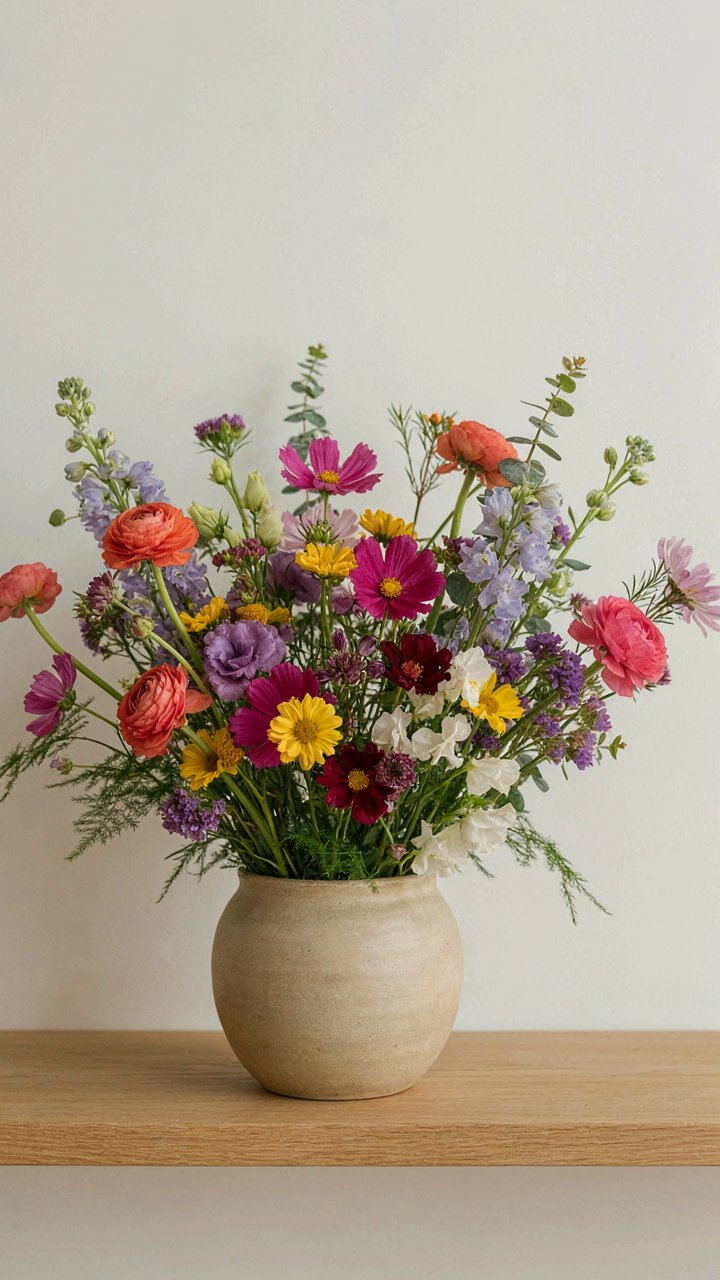
The Container Disappears
You want the vase to make you look thoughtful, like you understand beauty. Here’s what actually matters: the vase either gets out of the way or it ruins the entire arrangement. Wildflower bouquets have irregular stems, varying heights, and organic movement. A tall crystal vase with a narrow mouth fights this geometry. The container becomes a constraint instead of a vessel. Pick vases that accommodate, not dictate. Wide mouths, neutral tones, and simple geometry let the flowers do the work. This is basic signal theory applied to design: reduce noise, preserve the message.
The best vase is the one you stop noticing after ten seconds. Matte ceramics, clear glass without pattern, and weathered metal work because they recede. A vase with etching, color, or ornament competes for attention. Wildflowers already have texture, variation, and visual weight. Stacking a decorative vase on top creates cognitive overload. Test this yourself: place the same bouquet in a patterned vase, then a plain one. The plain one wins because your eye lands on the flowers first, not the container.
Proportion Over Presentation
The mechanism here comes from architecture: negative space. A vase that’s too tall or too narrow creates dead air around stems. A vase that’s too wide spreads the bouquet flat and formless. Wildflower arrangements need volume containment without restriction. The vase should hold roughly two-thirds to three-quarters of the stem length. This ratio prevents the top-heavy collapse that kills loose arrangements.
Matte surfaces perform better than glossy ones because they don’t reflect light and steal focus. Ceramic vases, concrete vessels, or frosted glass let texture live in the stems and petals. Tall narrow vases work only if your wildflower bouquet is itself tall and narrow, which defeats the purpose of using wildflowers. The real skill is matching container depth to bouquet density, then stepping back to verify the flowers lead your vision, not the vase.
The Deconstructed Bouquet: Anti Formula Flower Vase Arrangements
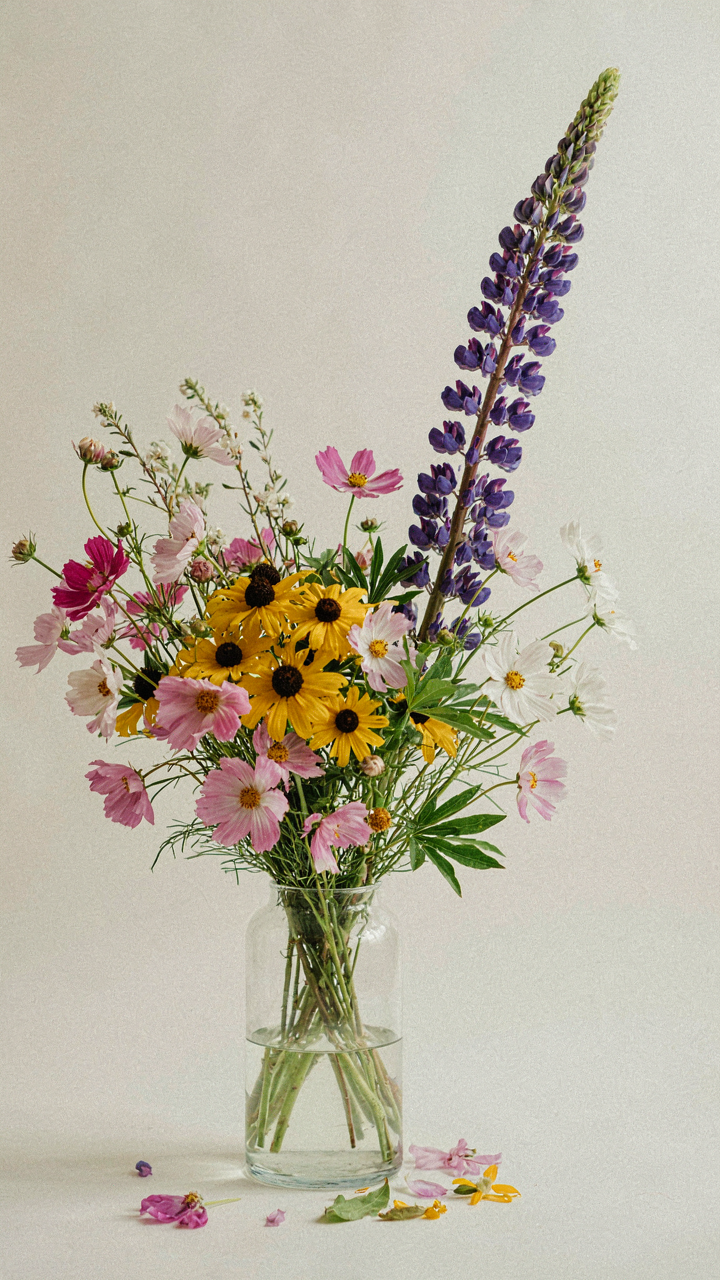
Breaking Free From Floristry Rules
You want permission to ignore what you’ve been told about flower arrangement because it feels suffocating, not liberating. Here’s the mechanism: traditional floristry doctrine treats the vase as a structural problem to solve with geometric patterns. Symmetry isn’t a design choice—it’s a default that requires zero decision-making. The real move is understanding that asymmetry forces you to actively balance visual weight instead of hiding behind a formula. Wildflower arrangements work because wildflowers grow asymmetrically in nature. Copy that directly into your vase.
The common advice says balance means equal distribution. Wrong. In sculpture and composition, balance is tension between opposing forces, not mirror images. A single tall stem with clustered low blooms creates dynamic equilibrium. You’re not filling space evenly. You’re placing each flower to create a visual pull that your eye can’t ignore but that feels intentional, not accidental. Start by anchoring one dominant stem off-center, then build weight against it with clustered smaller flowers on the opposite side.
Layering Texture And Height For Natural Depth
Depth in vase arrangements fails because people treat it like a flat problem instead of a spatial one. Florists call this “positive and negative space”—but the real mechanism is visual hierarchy through layering. Wildflowers naturally grow at different heights and densities. Reproduce this by placing your tallest stems first at the back of the vase, then stepping down toward the front. This creates actual depth, not the illusion of it. Your eye moves through the arrangement instead of reading it as a single flat plane.
Texture does the heavy lifting here. Mix delicate, airy stems like baby’s breath or Queen Anne’s lace with dense, blocky wildflowers. The airy material reveals the vase behind it, pushing that layer back visually. The dense material sits forward. You’re not decorating a vase—you’re composing layers that deceive the eye into perceiving space that doesn’t physically exist. Vary stem lengths in four-inch increments from back to front to force this layering. No two stems at the same height.
The “Wabi Sabi” Wildflower Vases: Imperfection As Design
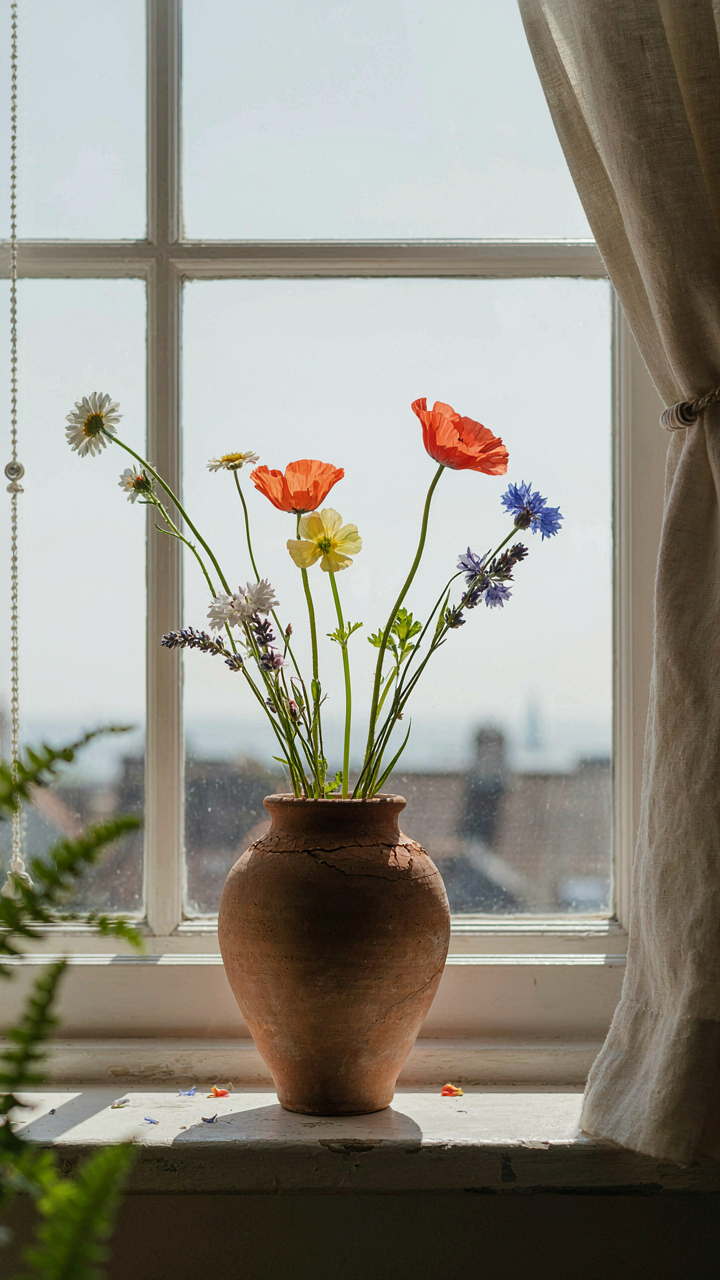
Where Broken Glass Becomes The Arrangement
You want permission to stop trying so hard. That’s what draws people to wabi-sabi. The Japanese aesthetic prizes imperfection, impermanence, and incompleteness as design features, not failures. In vase selection, this means: choose vessels with visible cracks, uneven glazing, or asymmetrical shapes. The wildflowers don’t hide these flaws. They amplify them. A chipped ceramic rim or cloudiness in glass becomes the focal point because it’s honest. Wildflowers themselves are wabi-sabi objects—they wilt, they shed, they refuse symmetry. The vase that matches this reality wins.
The mechanism here borrows from Japanese pottery tradition: the concept of “ma,” or negative space. In wildflower arrangements, ma is the empty gaps between stems, the visible interior of the vase, the way light hits a flaw. You’re not filling every inch. A sparse arrangement in a cracked vessel tells the truth: nothing lasts, and that’s the point. Select vases with unglazed sections, natural clay color variation, or structural imperfections. Pair them with loose groupings of wildflowers—no dense clusters, no forced fullness. The arrangement breathes because you let it fail.
Restraint Over Abundance
The common advice says “more flowers equal more impact.” That’s marketing language, not design. Minimalism in wildflower vases means you remove stems until the arrangement feels fragile, then remove one more. This creates tension. The viewer’s eye moves through space, not across density. A wabi-sabi arrangement uses five stems where a conventional florist uses twenty.
Deliberate minimalism demands you stop before comfort. Place wildflowers at different heights and angles—no uniform depth. Leave the bottom third of the vase visible. Let water show through clear glass. The emptiness is load-bearing; remove it and the design collapses into generic. This approach works because constraint forces intention. Every stem earns its place through placement, not population.
Wildflowers In Vase: The Ecosystemic Approach To Arrangement
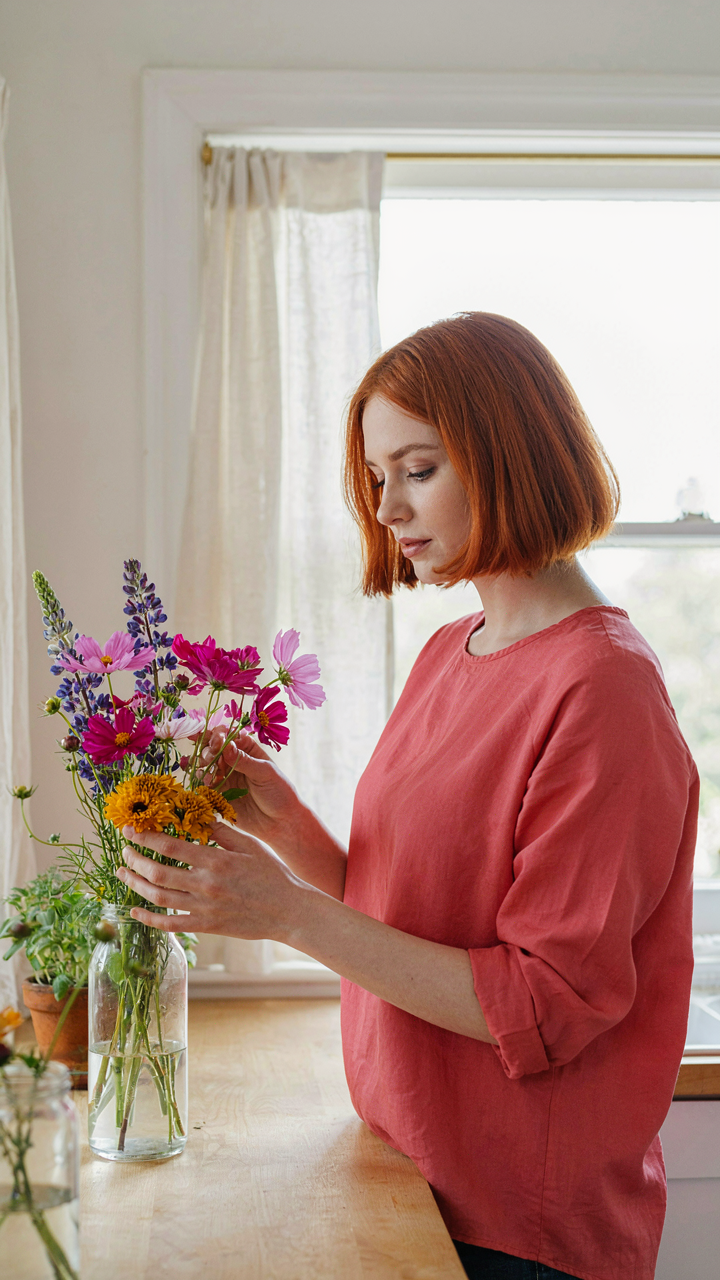
How Species Relationships Shape The Arrangement
You want this to look effortless, which means you’re actually afraid of looking like you tried too hard. Here’s the mechanism: ecology teaches us that plants don’t thrive in isolation. In forest ecology, plants occupy different niches based on height, root depth, and light requirements. A vase arrangement works the same way. Tall wildflowers anchor the top. Medium stems fill the middle. Low growers stabilize the base. Each species supports the others structurally and visually, preventing the arrangement from collapsing into chaos.
The real work happens before water touches the vase. Stop treating wildflowers like interchangeable decorative objects. Map their natural relationships first. Observe which species grow together in fields. Lupines often coexist with cosmos and coneflowers because they share similar soil and light preferences. When you replicate this pairing in a vase, the arrangement holds its form longer because the stems don’t fight for resources or space. You’re not decorating. You’re recreating a functioning system in miniature.
Layering Growth Stages For Sustained Impact
Succession in ecology describes how plant communities develop and change over time. Apply this directly to your vase by selecting flowers at different bloom stages. A fresh arrangement needs closed buds, open blooms, and flowers beginning to fade. This isn’t about hiding aging flowers. It’s about creating visible progression that keeps the eye engaged and extends the arrangement’s visual life.
The tactical step: when you source wildflowers, explicitly request mixed maturity. Tight buds open over three to five days. Fully open blooms last four to seven days. This staggered timing means your vase doesn’t peak on day two and collapse by day four. Instead, you experience continuous transformation. The arrangement refreshes itself without intervention. This is why florists deliberately mix developmental stages. They’re not being sentimental. They’re engineering longevity into the design from the start.
The “Negative Space” Doctrine: Simple Flowers In Vase For Impact
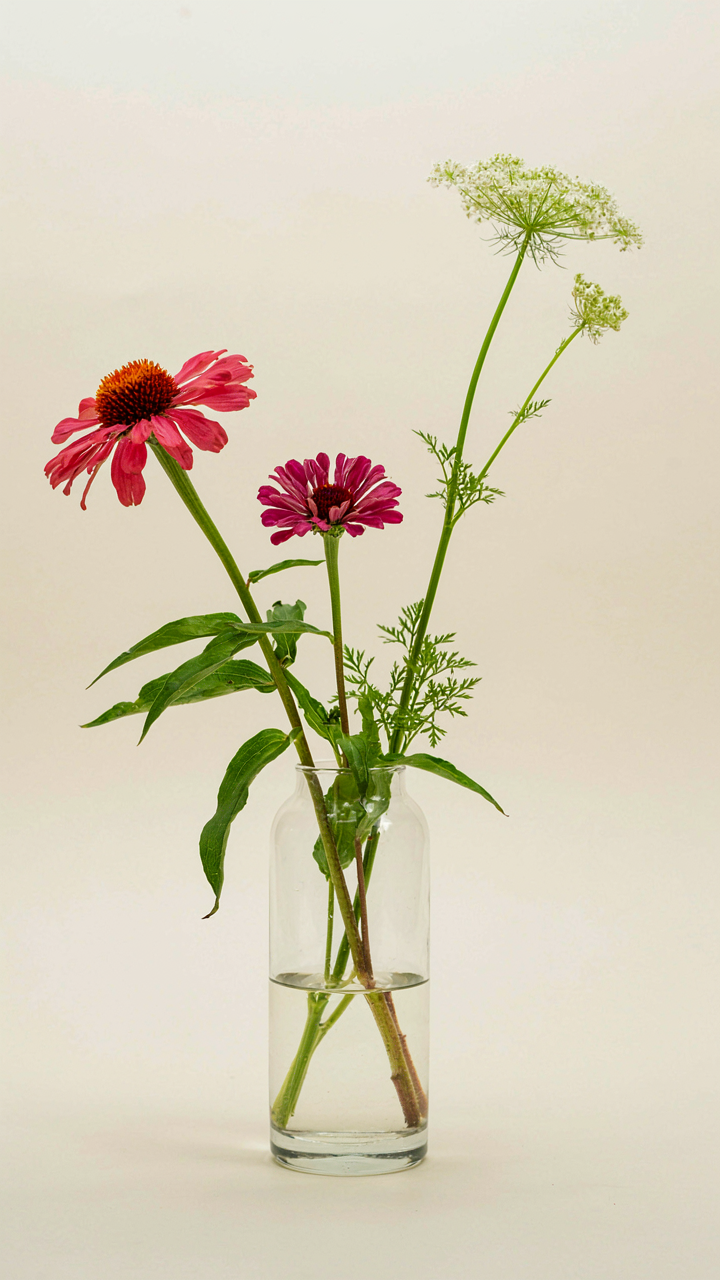
The Power Of Emptiness
You want permission to do less work and still impress people. That’s the real draw here. The mechanism is borrowed from graphic design: negative space is the unused area that makes the used area matter. In wildflower bouquets, empty vase space functions the same way. When you remove stems, you force the eye to land on what remains. The flowers gain weight through absence, not accumulation.
Most people fill vases because they equate fullness with value. That’s backwards. A vase half-filled with strategically placed wildflowers stops the viewer’s attention faster than a dense block of stems. The brain registers contrast. Empty space creates it. Start with a clean vase, add three to five stems at different heights, and let the vase interior become part of the composition.
Strategic Spacing Highlights Individual Elements
Spacing isn’t decoration. It’s information architecture for your arrangement. Each flower needs clear air around it so the viewer processes it as a separate object, not a collective blur. This changes how people perceive the bouquet’s quality and intentionality.
Place stems so they don’t touch. Use the vase width as your guide: if the vase is four inches wide, position flowers at least one to two inches apart. This creates visual rhythm. The eye travels from flower to flower instead of scanning a mass. Turn the vase as you build. If you can’t see clear daylight between stems from every angle, you’ve packed it too tight. The moment you can see through the bouquet to the vase wall behind, you’ve hit the mark.
Durability Hacking: Extending The Life Of Wild Flowers In Vase
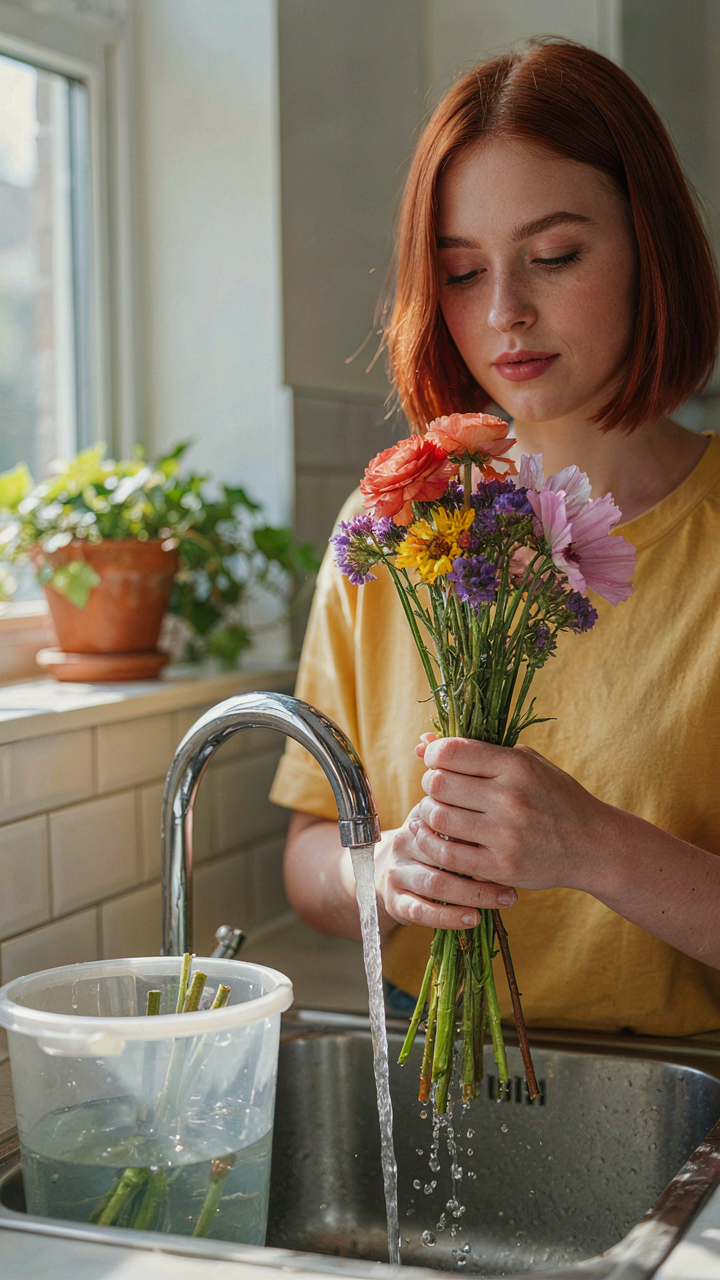
Prep Work That Actually Matters
You want your bouquet to last because throwing money at flowers that die in three days feels like waste, and it is. Think of conditioning like supply chain logistics: wildflowers arrive at your vase as products moving through a system, and each step before arrangement determines how efficiently they’ll absorb water and nutrients. Most guides skip this entirely or bury it under generic talk about “freshness.” The real mechanism is this: flowers harvested and transported lose stem integrity and accumulate air pockets that block water uptake. You reverse this through deliberate reconditioning.
Start by cutting stems at a 45-degree angle under running water, not on a dry surface. This angle increases surface area and keeps air from sealing the cut while you work. Remove all foliage below the waterline, then place stems in room-temperature water with flower food for two to four hours before arranging. The acid in flower food lowers pH, kills bacteria that clog stems, and feeds the flower with carbohydrates it no longer produces. Wildflowers are hardier than florist roses, but they still follow the same biology.
- Cut at 45 degrees under water: Prevents air from entering the stem and blocking water absorption immediately after cutting.
- Remove lower leaves completely: Leaves submerged in water rot and release bacteria that travels up the stem and clogs vessels.
- Use flower food with biocide: The preservative kills bacteria and fungi while the sugar feeds the flower’s metabolism during vase life.
- Condition in cool water for hours: This forces stems to rehydrate fully before they’re shaped and positioned, maximizing their water-holding capacity.
- Strip thorns and side branches: Reduces the plant’s surface area and competition for water while you direct resources to the main bloom.
Wildflowers respond faster to conditioning than hybrid varieties because they’ve adapted to inconsistent water access in nature. You’re giving them reliable hydration for the first time in their cycle, so they respond aggressively to the preparation phase. The two-to-four-hour window is not negotiable if you want blooms that last past the first week.
Water Habits That Keep Them Alive
Stop changing the entire vase of water. That’s the advice everyone gives, and it’s incomplete. Every time you disturb the arrangement, you reset the flower’s adaptation cycle and reintroduce air into stems. What works instead is a targeted protocol: replace one-third of the water every two days without moving the stems. This maintains nutrient concentration and removes bacterial buildup without shocking the arrangement.
Check water level daily and top off with fresh water mixed to the same concentration as your original flower food solution. Temperature matters here: tepid water moves through stem vessels faster than cold water because it reduces viscosity. Wildflowers in vases benefit from water around 100 to 110 degrees Fahrenheit, which accelerates nutrient delivery without cooking the bloom. Keep the vase away from direct sunlight, ripening fruit, and heating vents. These factors accelerate ethylene gas exposure, which signals flowers to enter their senescence phase early. The mechanism is biological, not aesthetic: ethylene is the aging hormone plants produce naturally, and external sources compress the timeline from weeks to days.
Beyond The Bunch: Curated Wildflower Vases For Specific Impact
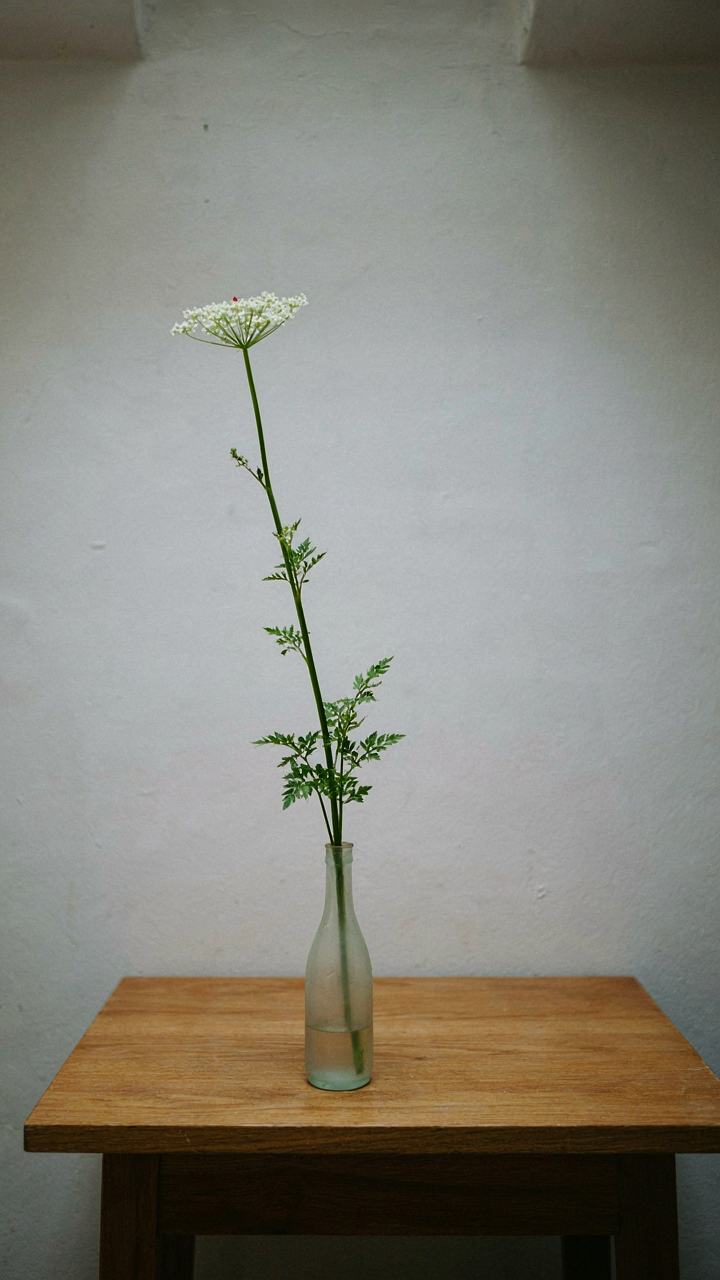
The Room Decides The Arrangement
You want the vase to look intentional, not like you grabbed flowers at a gas station. Here’s the mechanism: light and space operate like constraints in graphic design—they force your hand toward what actually works. A north-facing room with flat, cool light demands different vessel choices and stem counts than a south-facing space drowning in warm afternoon sun.
The vase isn’t decoration. It’s a tool that either amplifies or kills the room’s existing visual rhythm. Pale, translucent glass reads differently in dim corners than in bright kitchens. Dense wildflower bunches work in large, open spaces but crowd small bedside tables. Match vessel opacity, height, and opening diameter to the room’s light quality and square footage first, aesthetics second.
One Stem, Maximum Signal
Forget the advice that wildflowers need volume to matter. That’s wrong. A single tall stem with presence—like a lupine or a single branch of Queen Anne’s lace—commands attention faster than a crowded bunch because it breaks the pattern people expect. In economics, this is called scarcity pricing: the value increases when supply drops.
Place one powerful stem in a narrow vase on a desk, shelf, or nightstand where it sits at eye level. The isolation forces the viewer to register it. Change the stem weekly rather than waiting for the whole arrangement to fade. This keeps the gesture active and intentional instead of letting it become visual furniture nobody notices after three days.
The Unfinished Symphony: Fresh Flowers Arrangements As Evolution
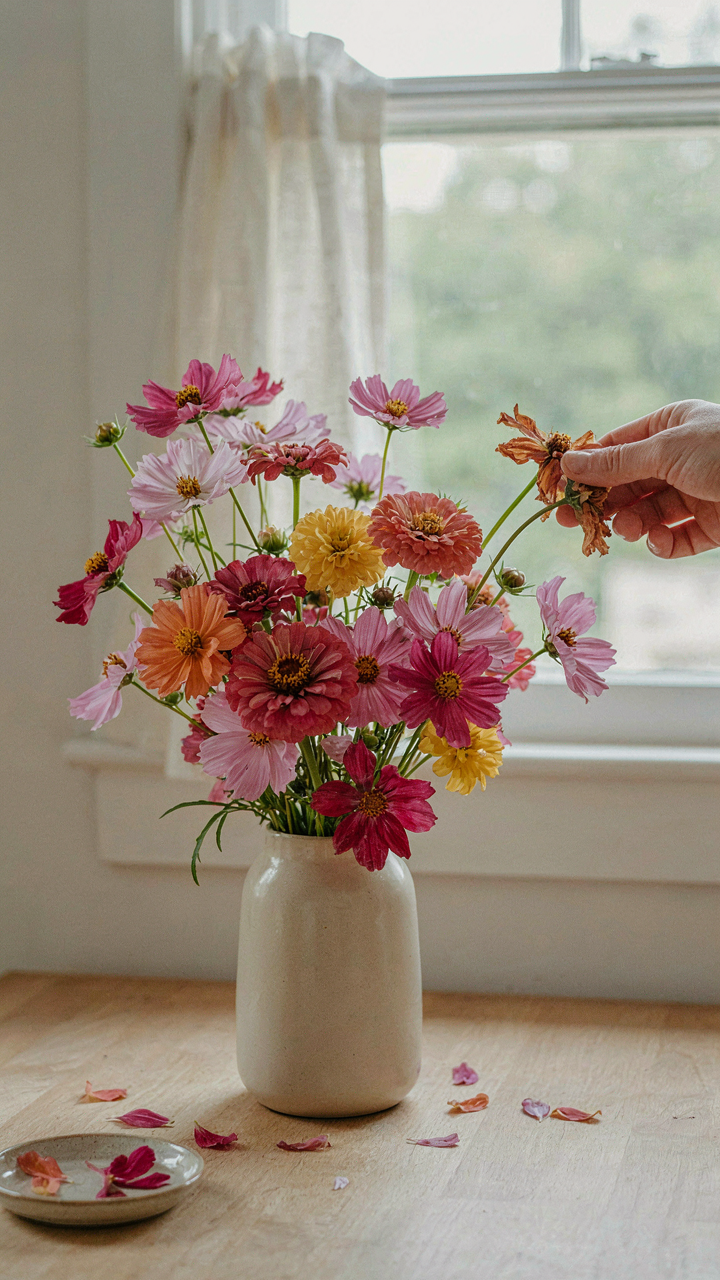
Decay Is The Real Design Element
You want wildflower bouquets to last forever because impermanence feels like failure. Here’s the mechanism: flowers aren’t static objects. They’re biological systems moving through predictable stages, and the vase arrangement changes with them. Florists treat wilting as an end state. It’s actually a transition state. Most people throw arrangements out before they peak aesthetically. The shift happens day three to day five when outer petals drop and inner blooms expand, revealing density and structure invisible on day one.
Wildflower bouquets in particular exploit this. Native species have tougher stems and slower senescence than cultivated cuts. Zinnias, cosmos, and black-eyed Susans hold form longer than roses. The arrangement improves as the arrangement contracts. You stop fighting the process and start scheduling it. Position your vase where you’ll see it during the high-value decay window. That’s when the visual weight redistributes and the composition reveals its bones.
Redesign Between Stages, Don’t Discard
Treating arrangements as fixed is wasteful. Biology offers the model: ecological succession. An ecosystem doesn’t fail when pioneer species die off. It transforms into a different, equally valuable system. Apply this to wildflower bouquets. When outer stems weaken and drop by day four, you don’t remove the vase. You rotate it 180 degrees. You pull remaining strong stems forward. You fill gaps with shorter material that was previously hidden. The arrangement becomes denser, lower, sculptural.
Most advice says “change the water and add flower food.” That delays death, not evolves the display. The real protocol: document the arrangement photographically on days one, three, five, and seven. Notice where weight shifts. Notice which stems hold color. On day three, remove anything browning and compress the remaining stems tighter into the vase. On day five, lower everything by two inches and backfill with smaller companion flowers. The same bouquet becomes four different compositions before you compost it.
Stop Chasing Contrived Perfection; Embrace The Inherent Order Of Natural Chaos For True Aesthetic Power
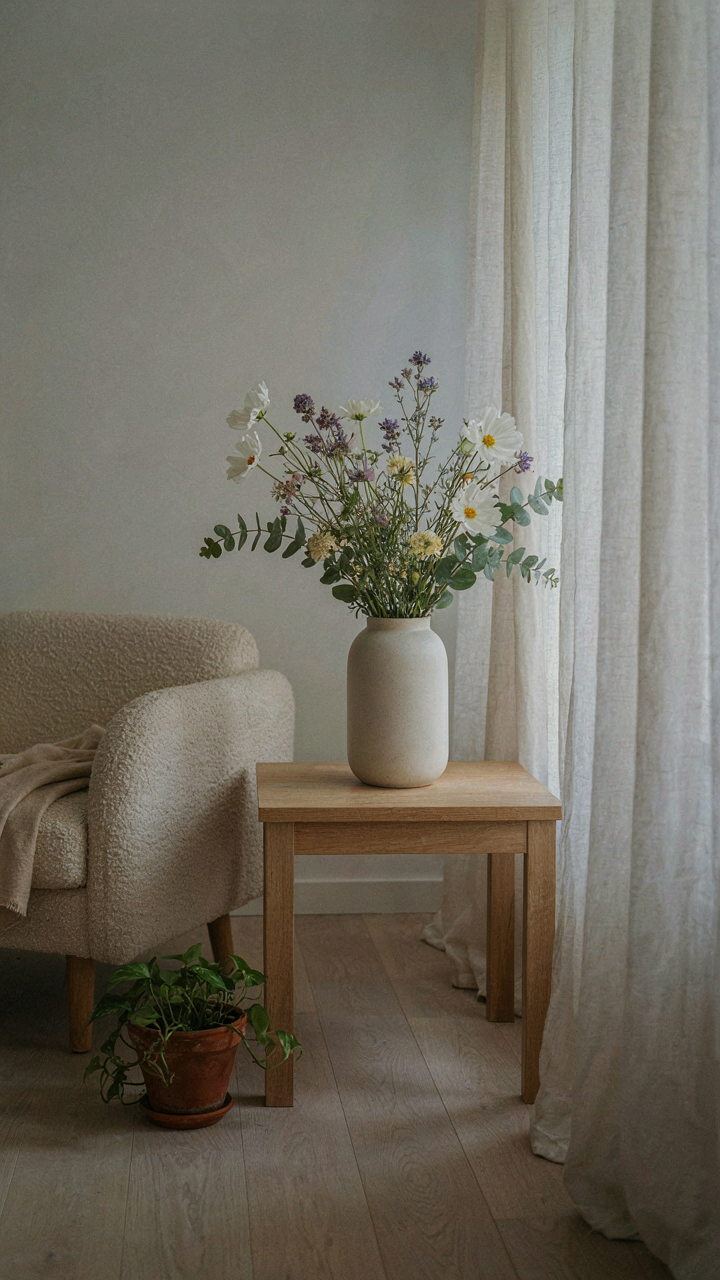
Most people kill the power of wildflowers by arranging them like corporate flower deliveries. You don’t need symmetry. You need confidence in disorder. Grab a vase today, fill it with whatever wildflowers call to you, and stop editing the arrangement before your brain hijacks your hands. The moment you stop fighting what’s already there, you’ve won.



