
Beyond Pinterest: Deconstructing The “Effortless” Flower Crown Hairstyle Myth
What Actually Takes Time
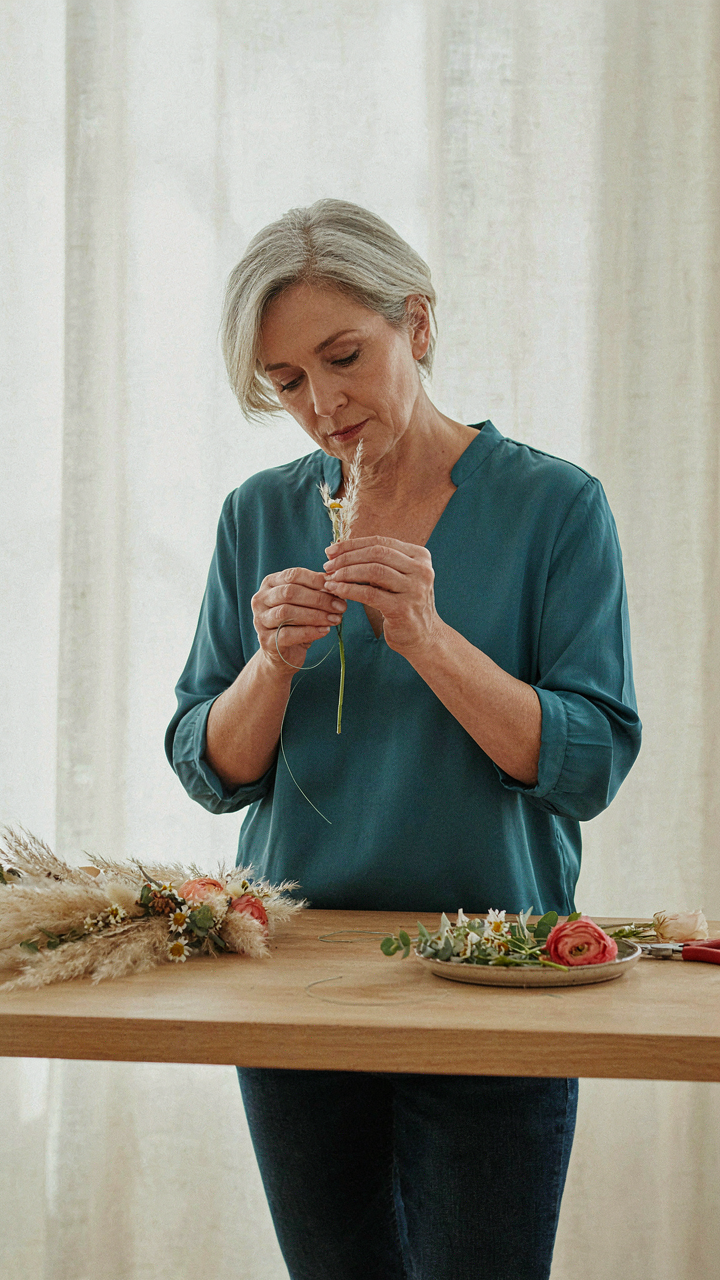
You want to believe a flower crown works because it looks thrown together. That belief saves you from admitting the real work involved. The mechanism is simple: perceived simplicity requires brutal precision in execution. Every flower placement, stem angle, and wire tension must be deliberate. Loose construction fails visibly. Tight construction looks forced. The gap between these two states is where most people fail without understanding why.
The boho flower crown emerged from 1960s counterculture aesthetics, but modern versions require technical skill that predates Instagram. Wire wrapping, floral mechanics, stem conditioning, and weight distribution aren’t intuitive. You cannot skip steps and expect the crown to hold through a ceremony or photoshoot. Professional florists spend years developing hand strength and spatial reasoning specifically for this work. Casual attempts collapse because the builder underestimated the structural demands, not because the style is inherently simple.
Why Your Version Won’t Match The Image
Authenticity in boho styling doesn’t mean replicating a Pinterest photo exactly. It means understanding the design principles behind the choices, then adapting them to your hair texture, face shape, and available materials. The image you’re copying was built for a specific person under specific conditions with specific flowers. Those flowers may not be in season where you live. Your hair may require different anchoring techniques. Your flower budget might demand substitutions. Copying the surface details while ignoring the underlying logic produces a cheap imitation that signals the effort rather than hiding it.
The real work is learning to make decisions instead of executing instructions. This requires knowing why certain flowers work together structurally and aesthetically. Why baby’s breath adds volume without weight. Why eucalyptus branches provide framework. Why stock flowers hold longer than garden roses. When you understand mechanism over appearance, you can build something authentic to your constraints and still achieve the visual effect. This is the skill that separates someone following a tutorial from someone creating a coherent style.
The Botanical Blueprint: Engineering Your Bridal Flower Crown
Flowers That Hold Their Shape Under Pressure
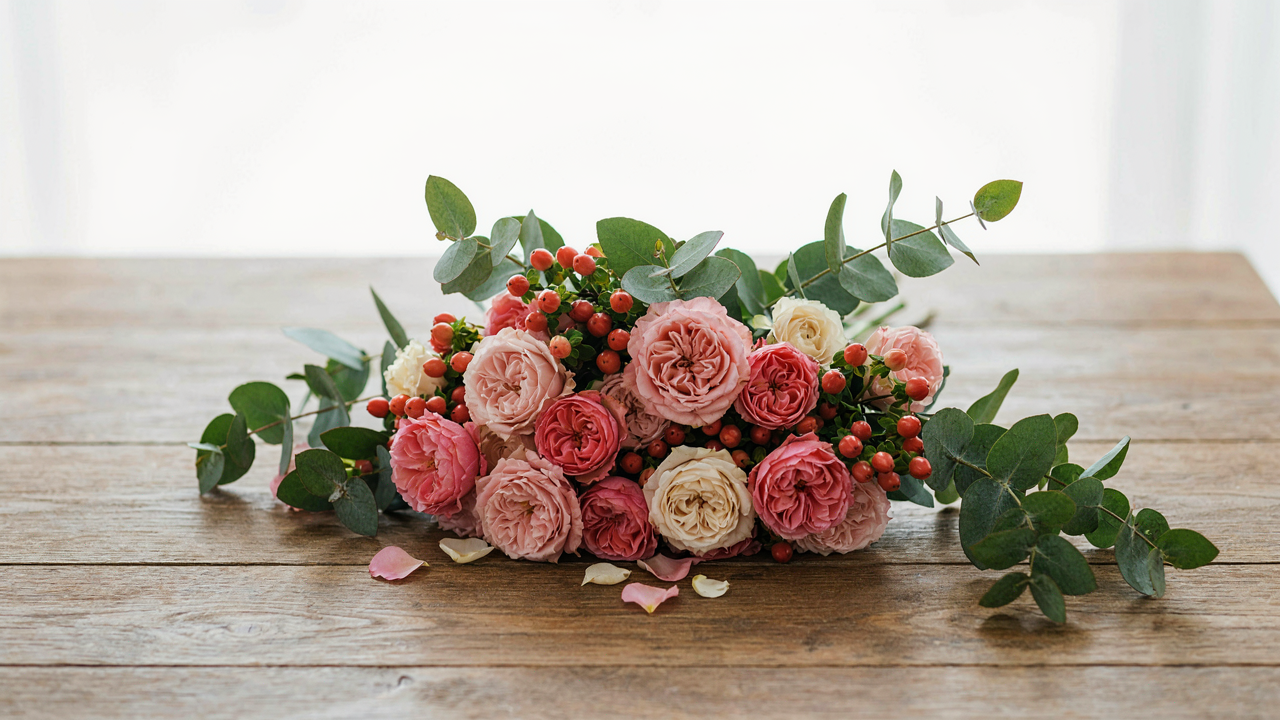
You want your crown to survive the ceremony without looking like roadkill by the reception. That’s the real constraint here, and flower choice is everything. Durability in floristry works like material science: you need specimens with high water retention and structural integrity that won’t collapse under their own weight or environmental stress.
- Garden roses: Dense petal structure holds form for 6-8 hours without wilting. Burgundy and champagne varieties resist browning better than white cultivars in humid conditions.
- Hypericum berries: Woody stems require no water absorption. They add visual weight and texture without adding actual crown weight, extending overall lifespan significantly.
- Eucalyptus and ruscus: Waxy leaf coating prevents moisture loss. These greenery staples outlast tender foliage by hours and anchor the crown’s skeleton.
- Larkspur and statice: Dried-flower durability in fresh-flower form. Both flowers maintain color and shape throughout a full day without hydration.
- Stock flowers: Thick petals and dense blooms resist bruising during wear. The flower maintains integrity even with direct contact against hair and skin.
Aesthetic flow means the crown reads as intentional, not random. Vary heights by 1-3 inches and cluster similar blooms in groups of 3-5 rather than spacing them evenly. This creates visual rhythm instead of polka dots. Repeat no more than 2-3 flower varieties to avoid visual chaos.
Wire Gauge, Tape, And The Anchor Point System
Structural integrity in crowns operates exactly like bridge engineering: load distribution determines failure or longevity. You need primary load-bearing elements (heavy gauge wire), secondary support (floral tape), and anchor points that prevent rotation and shifting during wear.
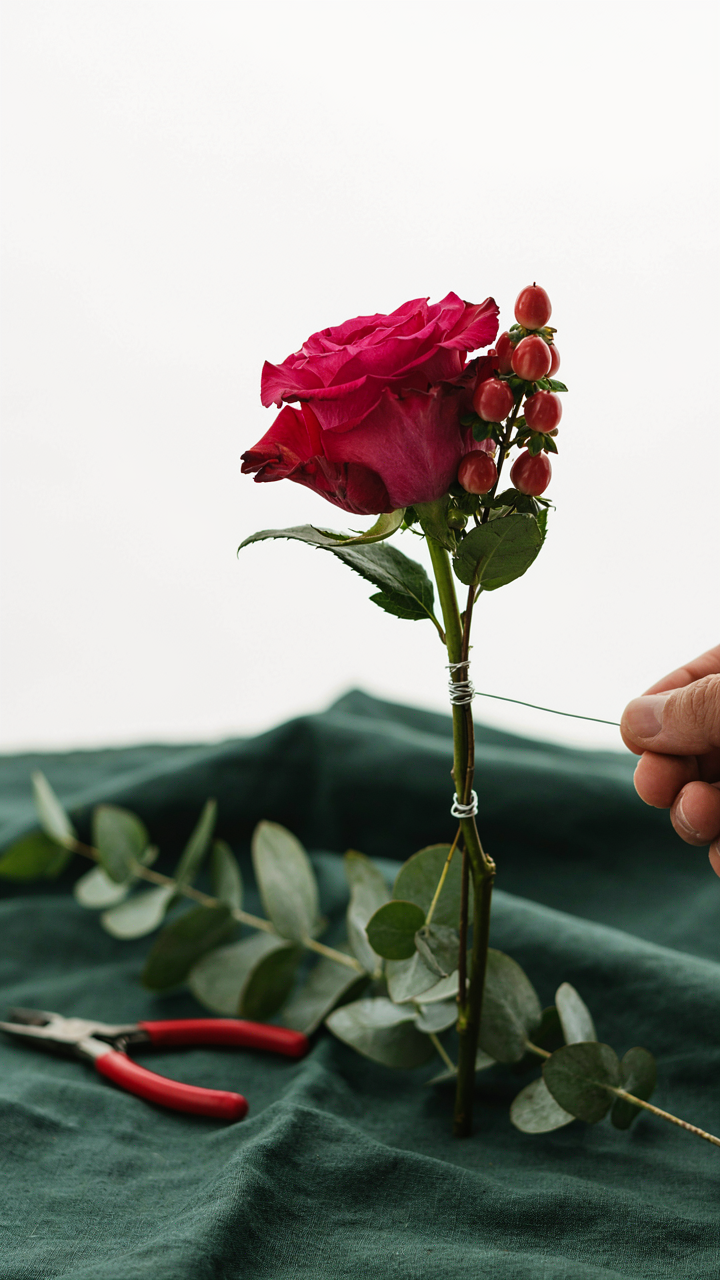
Start with 18-gauge floral wire as your base structure. This thickness supports full flower weight without bending under pressure. Wrap it with floral tape to create grip and prevent wire migration through stems. Add 24-gauge wire as secondary stems, wiring each individual flower or small cluster to the base structure at minimum two points of contact. Never attach anything with a single anchor point. Create anchor points every 2-3 inches around the entire circle. Each anchor point should have a minimum of three wire passes through the stem material. Test rotation stability before finishing: grab the crown and twist gently. If any section shifts, add another anchor point immediately.
Wedding Flower Crowns: Escaping The Generic Template
Your Story Determines What You Wear
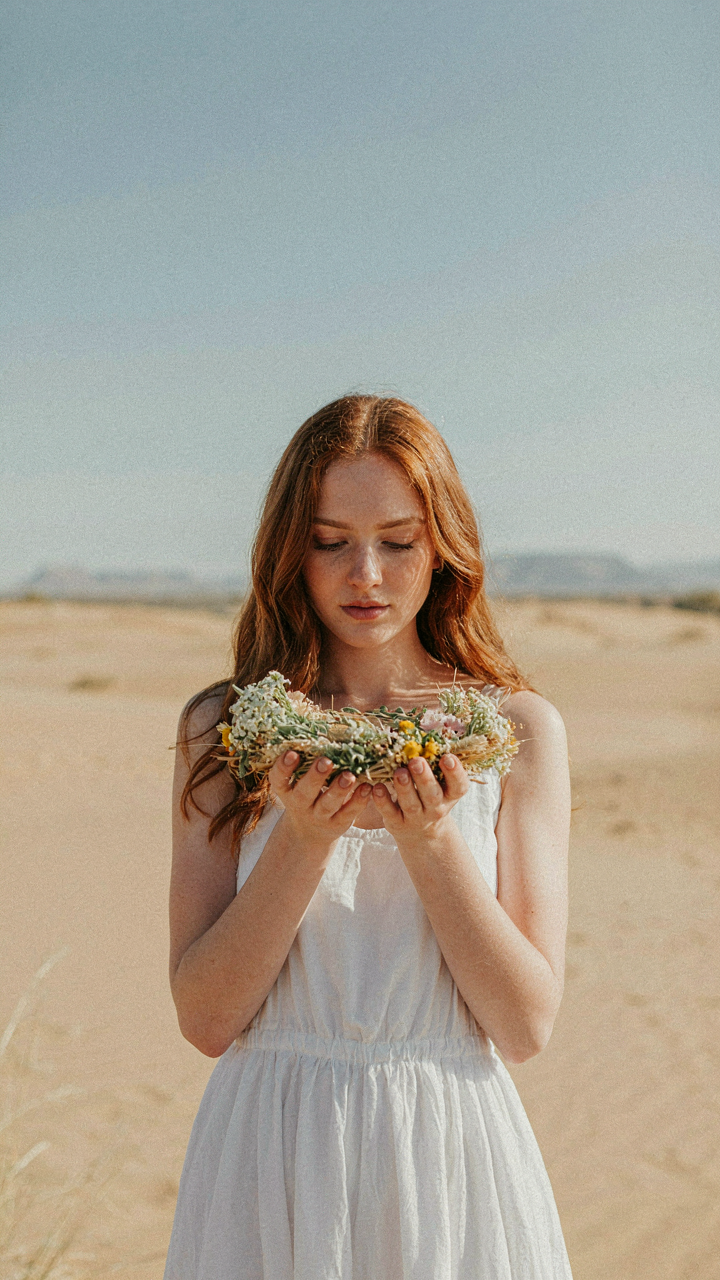
You want the crown to say something about you, not just look nice in photos. That’s the real tension here. Most brides default to whatever their florist suggests because they haven’t mapped their own narrative onto floral choices. The mechanism is simple: every flower carries cultural weight and personal history. Ranunculus means something different than wildflowers. Eucalyptus signals a different aesthetic than baby’s breath. Your crown becomes generic the moment you treat it as decoration instead of autobiography.
Start by naming three things about yourself that matter: a place you’re connected to, a season that shaped you, a color palette you’ve lived in. Then work backward into flowers. If you grew up in California scrubland, that’s yarrow and sage, not imported garden roses. If autumn defined your childhood, that’s celosia and hypericum berry, not spring tulips. The crown stops being a template the moment it reflects something true about where you’ve been.
What Lasts When Trends Rot
Everyone talks about “timeless” like it’s a feeling. It’s not. Timeless means the design doesn’t rely on the current year’s Instagram aesthetic to justify itself. A crown built on seasonal, locally-sourced flowers looks the same in 2015 and 2028 because it was never designed to match 2024’s color grading. Trends in boho crowns cycle through blush tones, dusty sage, and cream every few years. That’s not design. That’s chasing weather patterns.
Build your crown on structure, not trend. Greenery as the foundation, specific flowers placed for balance rather than density, and negative space that lets people see your face. This approach works with whatever flowers thrive in your location and season. A crown made of garden roses and eucalyptus still works. A crown made of local wildflowers and foraged branches works better because it ages into meaning instead of dated. Your florist should be able to rebuild your crown’s essence from whatever grows near you, not from a Pinterest board.
The “Wearable Art” Protocol: A Flower Crown For Bride
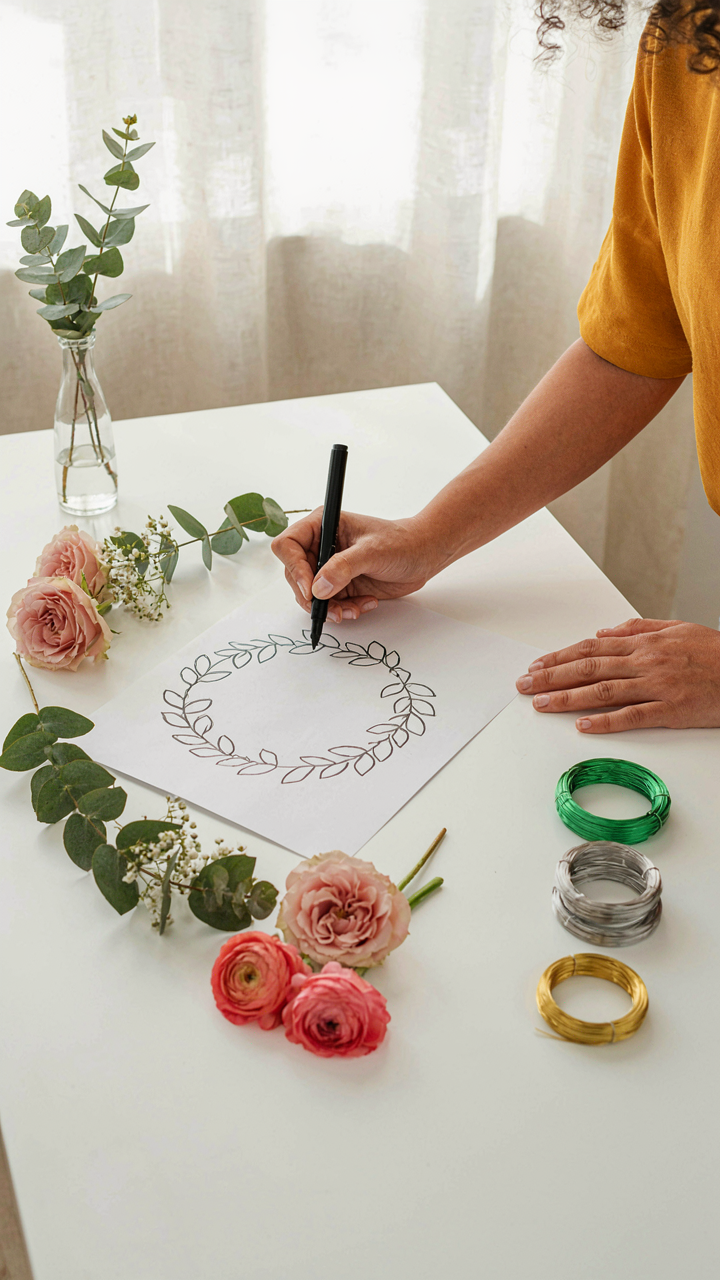
Design Principles Shape The Crown Before You Touch Wire
You want this to feel inevitable, like she was always meant to wear it. That’s the real fear underneath—that a homemade crown looks amateurish. The mechanism is constraint. In architecture, load-bearing determines form. In a bridal crown, the bride’s head shape, hair texture, and face proportions determine what actually works. Ignore these and you build on sand.
Start by mapping her skull. Crown height matters less than weight distribution. A heavy crown pulls backward. A forward-weighted one slides. A bride in motion—turning, hugging, dancing—exposes poor structure instantly. The design phase is where you solve physics, not where you add flowers. Sketch the frame path before selecting a single bloom.
Structure First, Aesthetics Second
Most advice puts flowers before framework. Wrong. You need a foundation that doesn’t require constant adjustment. Floral wire, typically 18 to 20 gauge for bridal work, forms the spine. Tape it, wrap it, make it invisible. The flowers sit on top of solved geometry, not the other way around.
Build the crown on a test head—a wig head on a stand, or borrow a similar head shape from a wig shop. This single step eliminates guesswork. You’ll catch weight problems, sight-line issues, and balance failures before the bride puts it on. When she does, the crown stays put because you eliminated the variables that make it move.
Deception Of Scale: Why Bigger Isn’t Better For Wedding Hair With Flower Crown

When More Flowers Eat Your Hair
You want the crown to read from the back of the room because you’re afraid a modest one will disappear. Here’s the mechanism: optical density matters more than total volume. Think of it as signal-to-noise ratio from photography. A dense cluster of small blooms registers faster to the eye than sparse large flowers spread across more distance. Your hair has a fixed carrying capacity. Overload it and the flowers start competing with your actual head shape instead of enhancing it.
The math is simple. A full head of hair can support 8 to 12 stems of medium-sized flowers clustered tight, or 15 to 20 stems of smaller blooms with tight grouping. Most people choose the first option and space them out, which kills the effect. The crown becomes a scattered constellation instead of a cohesive object. Density wins. Spread loses every time. Measure your hair’s thickness at the crown before you select bloom count—this is your actual constraint, not your aesthetic preference.
The Power Of Restraint In Plain Sight
This runs against what wedding media sells you. Magazines and Pinterest show oversized cascading crowns because they photograph well in isolation. But no bride wears those alone. Add a veil, add lighting, add the actual venue, and suddenly that crown competes for visual real estate instead of commanding it. Smaller crowns with precise placement read as intentional. Large crowns read as trying.
The optical illusion works backward from what most assume. A tight, well-proportioned crown makes your face appear more balanced and your hair more voluminous—the opposite of what you’d predict. The eye infers dimension from constraint, not abundance. Start with greenery that covers the base structure completely, then add no more than five focal flowers and three supporting blooms per side. This creates the anchor point your eye needs. Every stem beyond this threshold dilutes the impact rather than strengthening it.
The Unconventional Mechanics Of Flower Crown Hairstyles
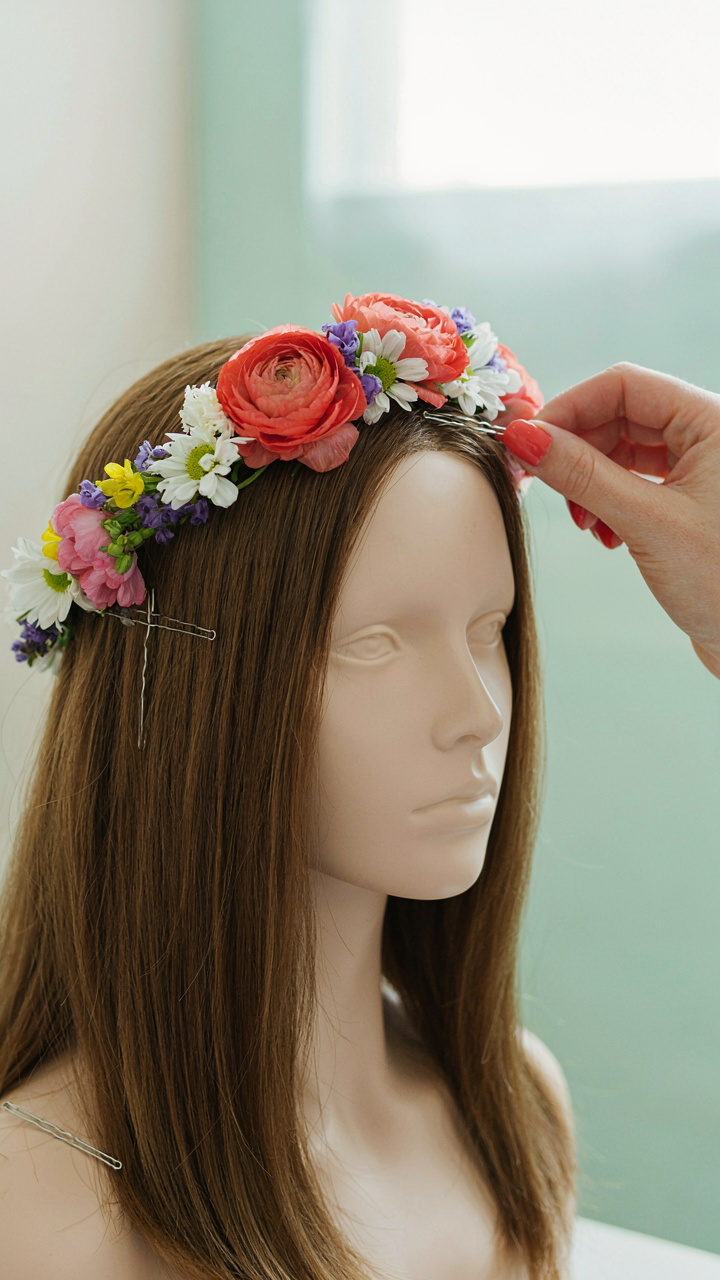
Load Bearing And Anchor Points
You want your crown to stay put without sliding into the back of your head by hour three. The real mechanism here isn’t magic or luck—it’s applied physics. Think of a flower crown like a beam under load. The base wire or foam band acts as your primary structural element, but the crown only holds because you’ve distributed weight across multiple anchor points on the scalp. Most people skip this and wonder why their crown migrates.
The scalp has natural friction zones where the crown grips: the temporal region above the ears, the occipital lobe at the back, and the crown vertex at the top. You anchor the wire or base through these zones using bobby pins or hair ties twisted tight into the base structure. The number of anchor points determines stability—two points fail, four points hold. Test this by applying gentle downward pressure on the crown before wearing it. If it shifts, you need more attachment points, not a heavier crown.
Stress Distribution Through Material Selection
Architecture teaches that stress concentration creates failure points. A flower crown works the same way. Thin wire concentrates force into narrow bands where it contacts your scalp, causing discomfort and slipping. Thicker, flatter bases distribute that same weight across a wider surface area. Floral foam wrapped in fabric spreads load better than bare wire because the material transfers pressure evenly instead of creating pressure spikes.
Weight distribution also matters for comfort and durability. A crown loaded with fresh flowers on one side creates a turning moment—it wants to rotate off your head. Balance the floral arrangement symmetrically or counterbalance heavier stems on one side with structural support on the other. Use 18 to 22-gauge wire for the base frame and wrap it with floral tape or cotton bias tape before adding any flowers. This reduces direct contact stress and prevents the wire from cutting into your hair or scalp during wear.
Bridal Flower Crown: Beyond The Single Use Mentality
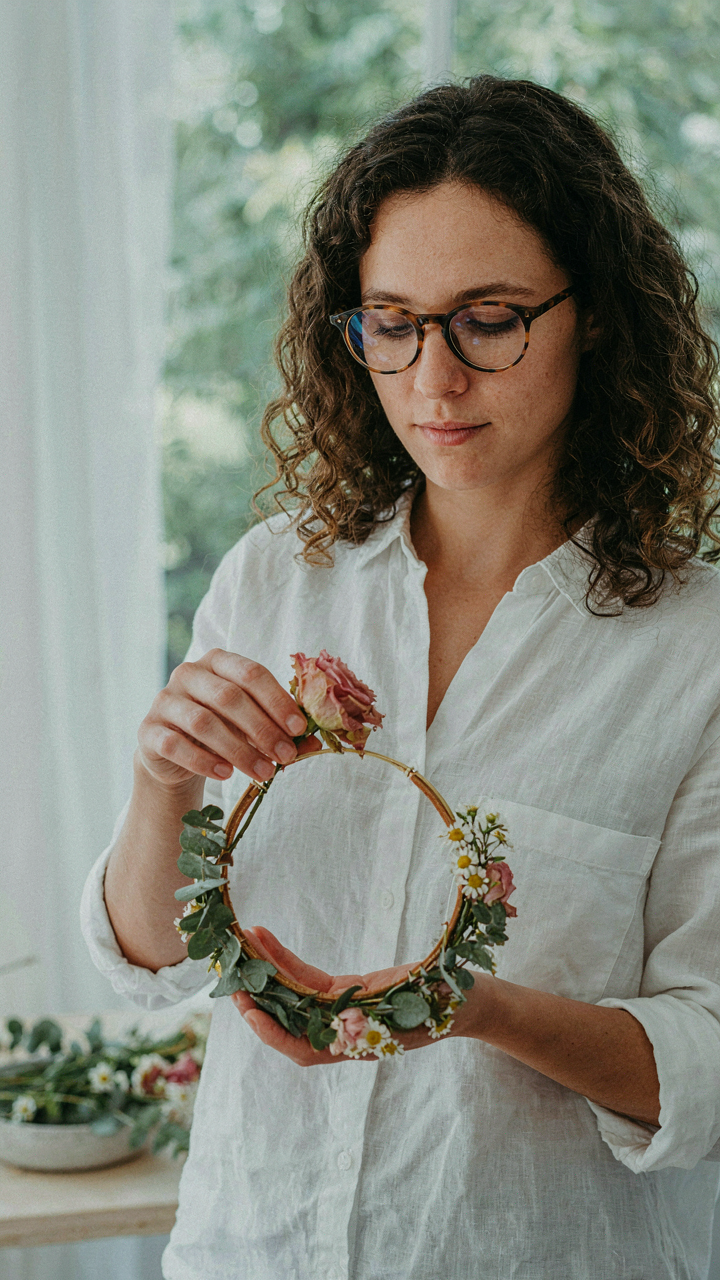
Design For Rotation, Not Disposal
You want the crown to feel special because you’re afraid one event doesn’t justify the investment. That’s the real lever here. Think of a bridal crown like an investment portfolio: you diversify across occasions to lower the per-use cost and increase actual utility. A well-designed crown works at the wedding, the rehearsal dinner, the reception farewell, and later as a photo prop or anniversary moment.
The mechanism is material and structure choice. Use a sturdy wire base wrapped in floral tape or leather instead of foam. Secure flowers with fishing line and floral adhesive rather than just tucking stems into wet foam. This setup lets you remove faded blooms and swap in fresh ones without rebuilding the entire crown. The base survives multiple uses. The flowers don’t have to.
Stabilize Before You Preserve
Most preservation advice treats a crown like a static object you seal away. Wrong. You preserve a crown by stabilizing its structure first, then protecting the flowers. Stabilization means tightening every connection, removing excess water from stems, and ensuring no loose petals or leaves remain. A crown that falls apart during drying becomes garbage.
Use silica gel or air drying depending on flower type. Roses, peonies, and ranunculus air dry well in low humidity and darkness over two to three weeks. Delicate flowers like baby’s breath need silica gel to maintain shape. Store the finished crown flat in an acid-free box with tissue paper. Check it monthly for moisture or pest damage. This protocol prevents deterioration and keeps the crown wearable for years.
The Contextual Imperative: Boho Flower Crown Wedding
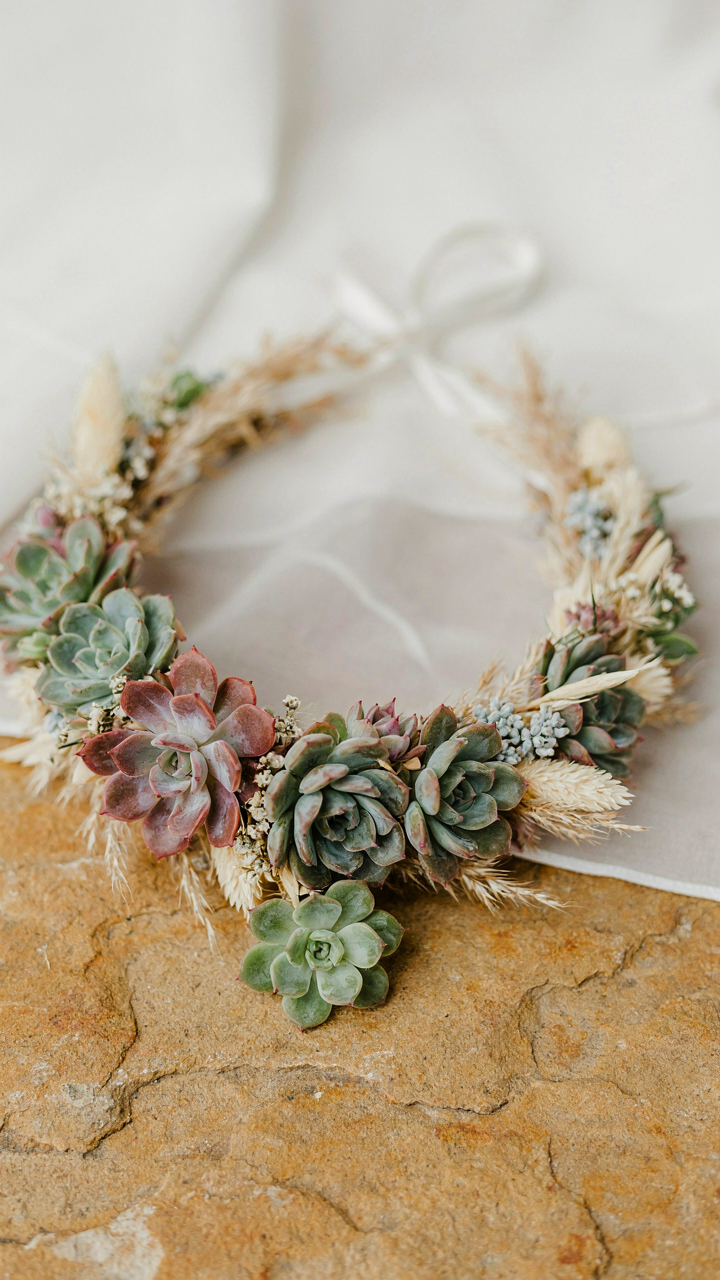
Matching The Crown To The Environment
You’re worried the crown won’t look right in the photos. That’s the real issue. The mechanism is borrowed from design systems: constraint breeds coherence. Your crown operates as a visual anchor that either harmonizes or clashes with three fixed variables: the venue’s color palette, the gown’s fabrication and silhouette, and the overall aesthetic direction you’ve already committed to.
Start by mapping your venue’s dominant colors and textures. A garden wedding with manicured greens and stone requires different flower species and wire weight than a desert ceremony with ochre earth tones. Pull three reference images of the venue in different light. Then examine your gown’s neckline depth, shoulder structure, and whether the fabric reads matte or luminous. The crown’s scale and density flow directly from these constraints, not from generic trend boards.
Visual Integration Without Friction
Most advice says “let the crown complement the gown,” which is useless. The real problem is incongruence happens at the scale of individual elements, not the macro level. If your gown features structured beading or lace work, a loose, sparse crown with three thin stems reads as unfinished. If your gown is fluid and minimal, an overcrowded crown with mixed materials creates visual noise.
Audit the gown’s line weight and material hierarchy first. Does it favor delicate or bold forms? Does it use one material or layer multiple textures? Your crown should echo that decision at the same scale. If the gown uses a single dominant flower motif in beading, limit your crown to two complementary species rather than five. Repetition of material choice, not variety, creates coherence. Test the crown against the gown in the same lighting where photos will happen.
Mastering The Imperfect: Your Signature Flower Crown Hairstyle
Asymmetry Over Symmetry
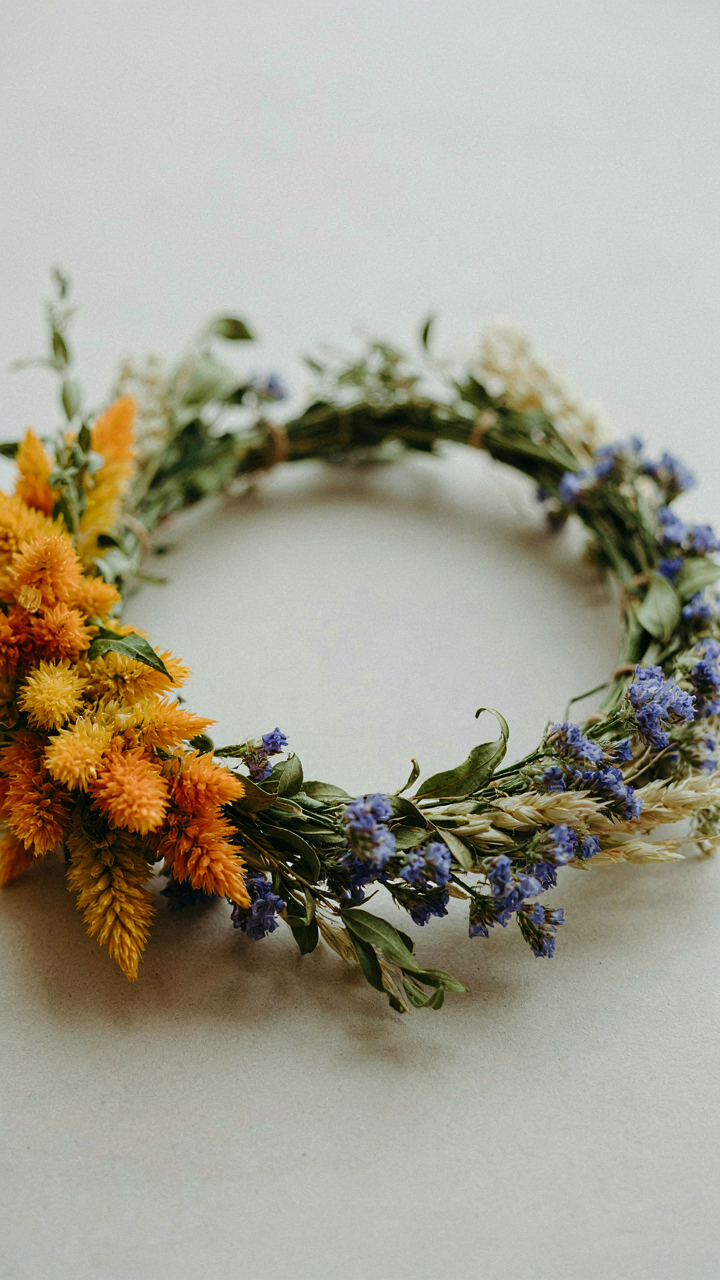
You want permission to stop chasing balance because symmetry feels safer. Here’s the mechanism: asymmetrical flower crowns work because they mirror how natural growth actually occurs. Flowers don’t arrange themselves in mirror images on plants. The boho aesthetic draws from nature, not geometry. When you anchor heavier blooms to one side and stagger smaller flowers across, you create visual movement. This reads as intentional and alive, not constructed.
Most guides tell you to “balance both sides equally.” That’s the trap. Real tension comes from deliberate imbalance. Start with your focal flowers on the left or right third of the crown, then distribute secondary blooms toward the opposite side with gaps between. Your eye fills those gaps. The crown becomes dynamic instead of static.
Building Your Design System
You need a repeatable method so every crown you make reflects your taste, not chance. Think of design systems from architecture: constraints enable coherence. Your constraint is selecting three core flowers you always use, then rotating secondary blooms around them. Peonies and eucalyptus with rotating accent flowers creates instant recognition.
Document your builds by photographing each crown before delivery. Track which flower combinations, wire gauges, and positioning methods produced your best feedback. After five crowns, patterns emerge. You’ll notice clients respond to certain color ratios or flower densities. Lock those in as your signature. This becomes your positioning in the market and the reason people request you specifically instead of a competitor. Build your system, then stop reinventing.
The Real Obstacle To Your Stunning Crown Isn’t Skill; It’s Your Addiction To External Validation
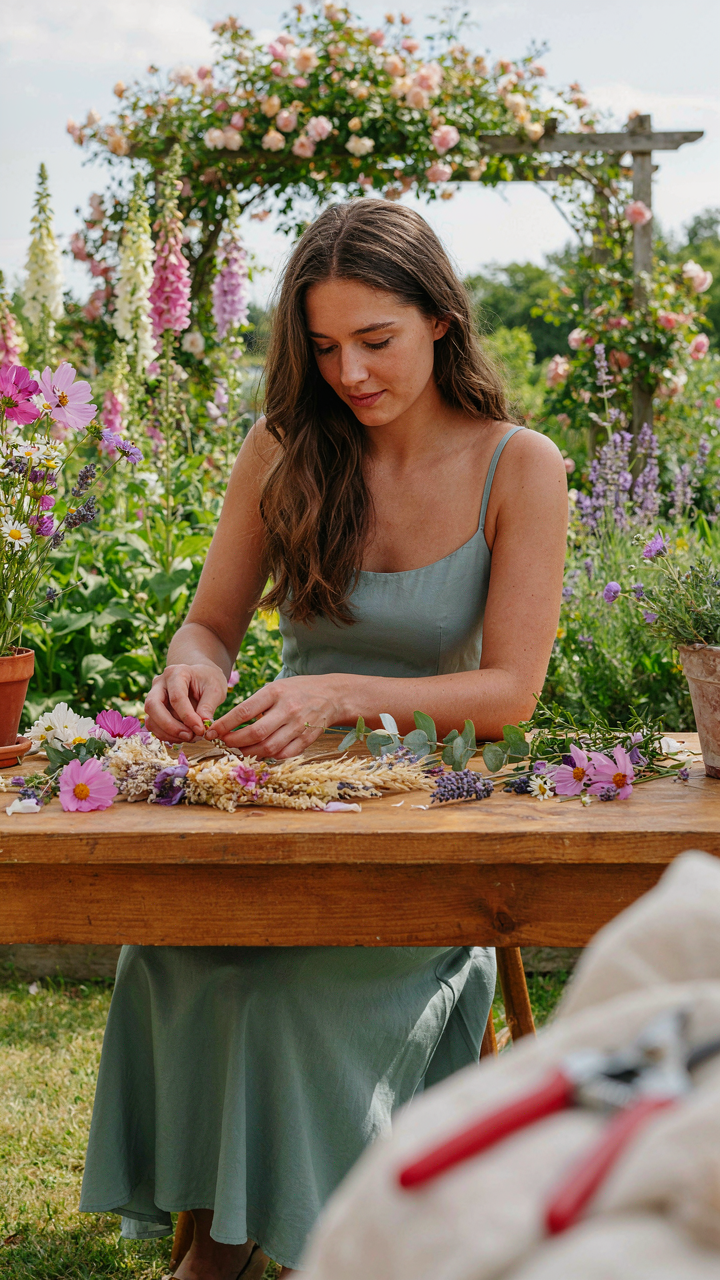
You don’t need another tutorial. You need permission to stop performing for Instagram. Every boho flower crown style that matters comes from you deciding what YOU find beautiful, then building it without checking likes first. Today, make one crown without posting it. Keep it. Let it exist for no one but you. The moment you stop designing for the algorithm is the moment your work actually becomes stunning.



