
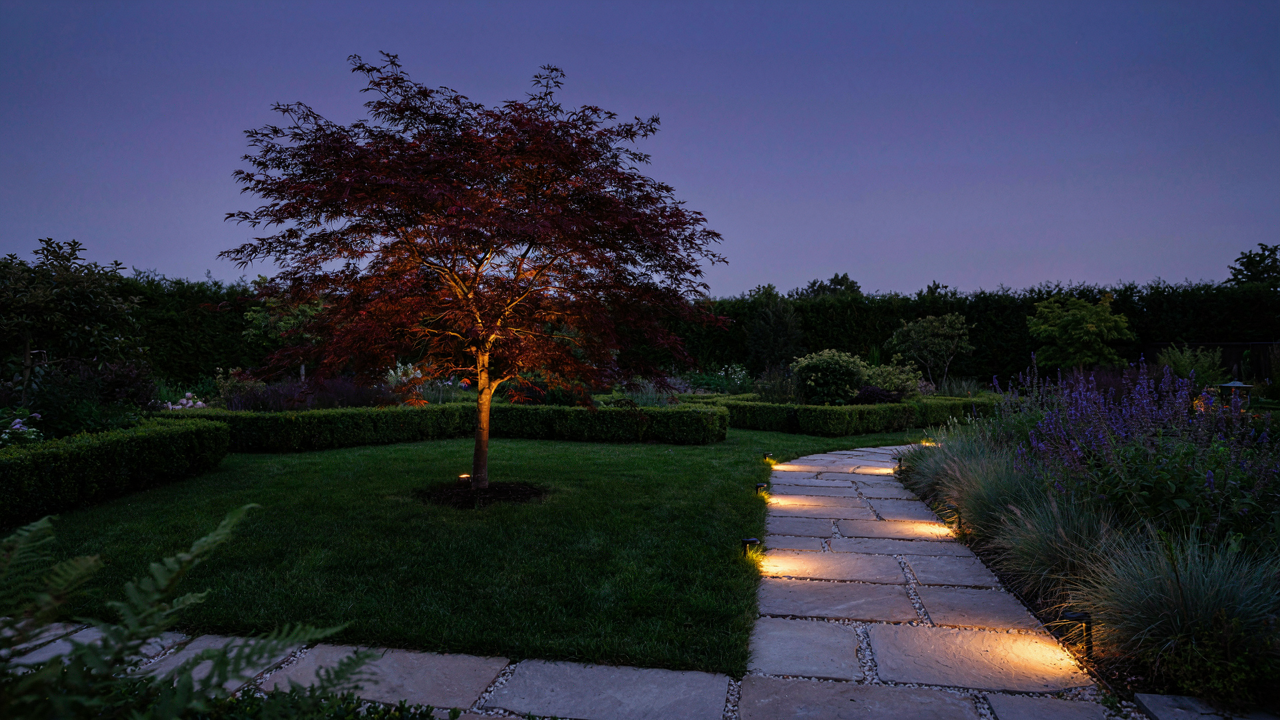
The Low Voltage Garden Lighting Fallacy: Why More Isn’t Better

Oversaturation Kills The Effect You Want
You want people to notice your space and think you have taste. The mechanism working against you is basic human perception: your eye adapts to constant light. More fixtures don’t create drama or depth. They create visual noise that your brain filters out within minutes, making the whole garden feel flat and staged rather than intentional.
Most people install low voltage lights the way they’d install overhead kitchen lighting—coverage is the goal. Wrong. Low voltage excels at selective illumination, not blanket brightness. When every path, plant, and corner receives equal light, nothing draws attention. The garden becomes a uniformly lit parking lot. Strategic darkness is what makes certain elements pop. Remove half your planned fixtures and watch the remaining ones become actually noticeable.
The Power Of Deliberate Shadow
Architectural lighting borrows from photography’s exposure principle: contrast creates interest, uniformity creates boredom. In garden lighting terms, this means areas of shadow aren’t failures—they’re compositional tools. Your eye naturally moves toward light. If light appears everywhere equally, your eye has nowhere to travel and nothing to discover.
Darkness forces hierarchy. When you light only a specimen tree, a water feature, or a pathway section, those elements command attention because the surrounding space recedes. This is why museum galleries dim ambient light before spotlighting a single piece. Your garden operates on identical principles. Place lights to reveal key features, then accept that unlighted zones enhance rather than detract from the design. This creates the perception of intentional curation, not incomplete installation.
Beyond Path Lights: Sculpting Space With Landscape Lighting

Revealing Texture And Form
You want your garden to look expensive at night because you suspect it looks ordinary. The real mechanism is contrast: low voltage lighting works by creating a difference between lit surfaces and shadow, not by flooding everything with brightness. This is borrowed from stage lighting design, where intensity is called “throw,” and in landscape work, throw determines whether a fixture reveals detail or washes it out.
A 20-watt fixture aimed at a stone wall from two feet away reveals surface texture. The same fixture from ten feet away flattens that wall into a silhouette. Trees demand uplight or sidelight to show branch structure. Downlight erases it. The goal is anatomical accuracy: light the thing in a way that exposes what makes it worth looking at in the first place.
Dividing Space Into Intention
Most people light a garden evenly, which guarantees it feels like a parking lot. Strategic placement creates separation: a lit seating area reads as distinct from a path, which reads as distinct from a planted bed. This is the military principle of concentration of force applied to photons. You allocate limited wattage where it matters most, leaving other zones intentionally dim.
A focal point requires approximately three times more light than transitional space. Mount a 12-watt fixture on a tree canopy above a seating area. Use 3-watt path lights connecting that zone to the rest of the property. The human eye follows concentration. Concentration of light creates hierarchy. Hierarchy makes the garden feel purposeful rather than accidental.
The OODA Loop Of Outdoor Garden Lighting: Observe, Orient, Decide, Act

How Your Eyes Actually Work In Darkness
You want to believe good lighting makes your yard look expensive. The real mechanism is simpler: your eyes can’t process what they can’t see, so your brain fills in threats that don’t exist. Military strategists call this the OODA loop—Observe, Orient, Decide, Act—and it applies directly to how low voltage garden lighting controls perception and safety. The first person to see wins because they act while others are still guessing.
Low voltage lighting forces your OODA loop to complete faster. Instead of your eye struggling to gather ambient light and your brain inventing shadows, 12-volt path lights and accent fixtures eliminate the observation delay entirely. You see the ground. You see the perimeter. You decide to move. This is why strategic placement matters more than brightness: you’re architecting the visual information your eye receives before your anxiety does.
Sight Lines And Silent Security
Blind spots aren’t aesthetic problems, they’re decision failures. Most homeowners light their front porch and call it done, then leave 60 percent of their property in functional darkness where an intruder operates with the same OODA advantage you lost. Low voltage garden lighting solves this by stacking fixtures along sight lines—walkways, property edges, entry points—so every zone forces completion of the visual loop.
Place uplighting at corners and downlighting on pathways. This combination eliminates the shadow zones where an observer can hide or move undetected. Your neighbor’s security system activates after the fact. Your lighting architecture prevents the fact from happening because every approach angle is illuminated before an actor can reach decision stage. The protocol: map your property perimeter, identify every approach route, then place low voltage fixtures so no segment exceeds 8 feet of darkness between lit zones.
Low Voltage Lighting: The Unseen Power Behind Visual Dominance

Efficiency Metrics Beyond Energy Consumption
You’re reading this because you want proof that low voltage lighting costs less to run. Here’s what actually matters: the real efficiency metric is light output per watt delivered to the fixture, not just wattage consumed. A 12-volt system loses power in wire resistance before it even reaches the bulb. Thicker copper wire compensates but costs more upfront. The calculation most installers skip is voltage drop over distance, which directly reduces brightness at the fixture end.
The mechanism borrowed from electrical engineering is impedance matching. Your transformer outputs 12 volts, but every foot of wire acts as a resistor. Run 50 feet of thin gauge wire and you lose 2-3 volts by the time current reaches the light. That’s a 20 percent reduction in available power. The fix is calculating wire gauge based on distance and amperage, then running thicker copper. This changes the efficiency equation entirely, because you’re no longer comparing system wattage but actual lumens delivered per dollar spent monthly.
Durability Through Staged Replacement
Most advice tells you low voltage systems last longer because the components run cooler. That’s incomplete. What actually extends lifespan is the ability to replace parts without replacing everything. A 12-volt LED transformer fails independently from the fixtures it powers. You swap the transformer and the system runs again. Compare that to integrated high voltage systems where a failure means rewiring or wholesale replacement.
The mechanism that determines real durability is modularity. Low voltage systems use standardized connectors and voltages across most manufacturers. Fixtures from different brands often interchange because they all expect 12 volts DC. This creates a secondary market for replacement parts and means you’re not locked into one manufacturer’s ecosystem. The practical protocol: photograph your system before installation, note wire gauges and transformer specs, then store that documentation. When a fixture fails in five years, you order a replacement instead of calling an electrician to troubleshoot a proprietary system.
The Hierarchy Of Landscape Pathway Lighting Needs

Function Before Aesthetics
You want your garden to look intentional. That’s the real reason you’re reading this. Here’s what matters: pathway lighting exists to solve a safety and navigation problem first, then everything else is decoration layered on top. Most homeowners reverse this. They buy fixtures because they look good in photos, then wonder why the paths feel disorienting at night.
Low voltage pathway lights work within strict constraints. You’re limited to 12 volts, which means modest light output and specific throw distances. These constraints force you to choose: light enough to walk safely, or light enough to create mood. You cannot reliably do both with the same fixture. Pick one primary function. Everything else follows from that choice.
Guiding Movement Through Space
Lighting design borrows from military strategy. In tactical operations, you move personnel through hostile terrain using a “lane” system—clear markers that channel movement in one direction. Pathway lighting does exactly this: it creates visual lanes that guide foot traffic, not just scatter light everywhere.
The mechanism is simple. Human eyes follow the path of least visual resistance. When fixtures are spaced consistently and aimed correctly, they create an invisible line your brain registers as the walkway. This is why random lighting scattered across a garden creates confusion instead of clarity. Space low voltage lights 8 to 10 feet apart along paths. Aim them down at a 15 to 20 degree angle. This creates visual continuity. The path becomes unmissable in darkness, and visitors move predictably.
Deconstructing “Beautiful”: The Psychology Of Garden Lighting

Light Changes How Your Brain Processes Space
You want your garden to feel intentional, not neglected. That matters because it reflects on you. Here’s the mechanism: low voltage lighting doesn’t illuminate space uniformly like a floodlight. Instead, it creates zones of brightness and shadow. Your brain interprets this contrast as depth and intentionality. The physics term is luminance ratios, borrowed from visual perception studies. In garden lighting, a 3-to-1 ratio between your brightest fixture and surrounding darkness signals curation. Lower ratios feel accidental. Higher ratios create visual drama without looking aggressive.
Mood follows the color temperature of light, not just its presence. Low voltage systems typically run at 2700K or 3000K, the warm spectrum. This wavelength triggers parasympathetic activation in viewers, the opposite of alertness. Your garden stops feeling like a security perimeter and starts feeling like an extension of your living space. That shift happens in the viewer’s nervous system within seconds of stepping outside. The lighting isn’t doing the feeling. It’s removing resistance to relaxation.
Restraint Reads As Intentionality
Most people light their gardens too much. They assume more visibility equals more beauty. Wrong. The actual principle is occlusion, borrowed from marketing and design. You don’t show everything. You reveal selectively. Low voltage lighting works precisely because it can’t illuminate an entire garden evenly. A single path light at ground level creates a focal point. The eye lands there, not on the unlit fence beyond it. That unlit fence becomes mysterious, not disappointing. Light the plant. Leave the background dark.
Subtle cues mean fewer fixtures, not dimmer fixtures. One well-placed 3-watt uplighter on a specimen tree creates more perceived beauty than five 1-watt path lights scattered without strategy. The viewer’s brain fills gaps. It assumes craft where there’s restraint. Most garden lighting fails because it tries to solve visibility instead of managing attention. The protocol: identify your strongest visual anchor. Light it. Leave at least 60 percent of your garden in genuine shadow. That’s where the perceived value lives.
Solar Pathway Lights: Autonomy Or Compromise?
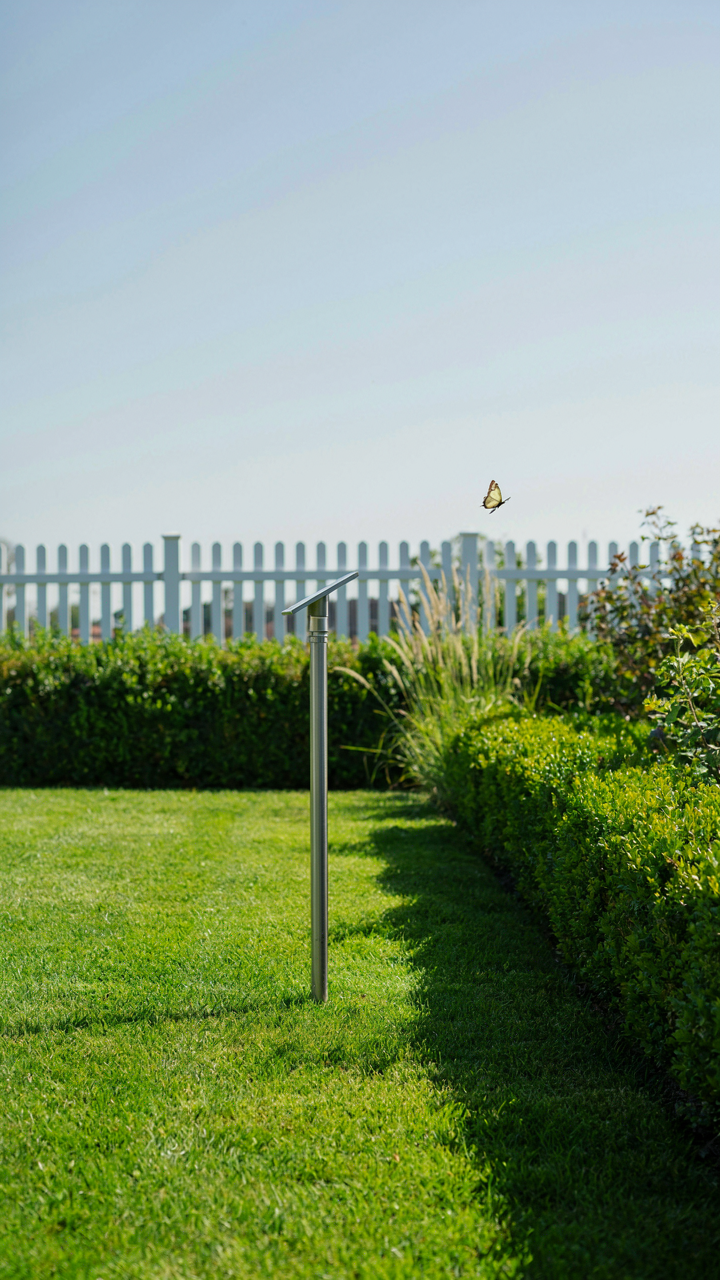
When Solar Makes Sense And When It Doesn’t
You want the zero-maintenance fantasy. That’s the real draw. Solar pathway lights promise autonomy without wiring, without electricians, without monthly bills. Here’s the mechanism that kills the dream for most people: solar lights depend on stored energy, and stored energy depletes faster than the sun recharges it in northern climates or shaded yards. In economics, we call this a cash flow problem. Your solar light has a cash flow problem. It collects during the day and burns at night. Cloudy regions, winter months, and tree cover create a deficit. The battery degrades annually. Most solar pathway lights fail within two to three years because homeowners install them in places where the math doesn’t work.
Solar pathway lights work best in open, south-facing yards in regions with consistent daylight hours and minimal tree cover. They also work acceptably along pathways that don’t need four-hour runtimes. If your garden gets blocked sunlight for six hours or more during peak charging windows, hardwired low-voltage systems outperform solar by eliminating the battery bottleneck entirely. The choice isn’t aesthetic. It’s about whether your site has enough solar income to sustain nightly discharge.
Charge Capture Trumps Placement Theory
Every solar lighting guide says to place lights in full sun. That’s incomplete. Here’s what matters: angle, surface reflection, and debris. A pathway light in direct sun but caked with pollen collects 40 percent less energy than the specs claim. A light tilted away from the sun’s angle loses effectiveness even in clear conditions. Reflection from nearby surfaces like light-colored mulch or gravel helps slightly, but dust and leaf litter hurt far more. Strategic placement means positioning lights where they’ll stay clean and where the sun hits the solar panel at the steepest angle for your latitude during the charging window, not wherever looks best in your garden design.
Install solar pathway lights with a maintenance protocol baked in. Clean the solar panel every two weeks during growing season and monthly during winter. Angle the panel to face true south in the Northern Hemisphere, tilted at your latitude plus 15 degrees for winter performance. This protocol turns a flaky system into one that delivers consistent charge. Without it, you’re watching degradation happen invisibly until the light stops turning on.
Installation As Investment: Maximizing Your Landscape Lighting ROI

Where DIY Shortcuts Actually Cost You
You want to believe you’ll save money doing this yourself. That’s the real reason you’re reading this. But the mechanism is simple: low voltage systems fail not from complexity but from decision compression. You skip steps that seem redundant, and those steps exist because voltage drop, wire gauge mismatches, and transformer overload aren’t opinions—they’re physics.
DIY projects crater when homeowners treat installation like assembly. They run undersized wire to save thirty dollars, bury connections in wet soil without proper junction boxes, or daisy-chain fixtures beyond what the transformer handles. These aren’t mistakes you notice immediately. They manifest as dimming lights, dead zones, and equipment failure eighteen months in.
- Undersized Wire Gauge: Running 12-gauge instead of 10-gauge over long runs causes voltage drop that dims fixtures progressively. The math is non-negotiable—resistance increases with distance and thinner wire.
- Transformer Overload: Connecting more than the rated wattage to a transformer doesn’t fail gracefully. It fails hot, damaging fixtures and voiding warranties silently.
- Improper Splicing: Wire connectors exposed to soil moisture corrode and create resistance points. This triggers voltage fluctuation that ages LED drivers prematurely.
- No Load Testing: Installing everything then powering on masks problems until weather stresses the system. Testing circuits before burial catches shorts and faults immediately.
- Buried Connections: Burying standard wire connectors underground accelerates failure. Direct-burial-rated splices cost more upfront but eliminate callbacks and replacements.
The actual cost of shortcuts isn’t the money you save—it’s the fixture replacement, transformer replacement, and labor you pay later to diagnose what broke. Professional installers build redundancy into specs because they carry warranty liability. You carry it too, you just don’t price it.
Design Planning Creates Compounding Returns
Landscape lighting design operates on the same principle as architecture: constraint creates clarity. When you place fixtures randomly, you’re not being spontaneous—you’re deferring decisions. You end up with overlapping pools of light, dark zones that need remediation, and fixtures positioned where they create glare or heat damage to nearby plants.
Professional planning starts with photometric analysis, not aesthetics. It maps beam angles, intensity ratings, and coverage patterns across your actual property dimensions. This isn’t theoretical. It determines whether you need four uplights or six, whether a 120-degree spread works or you need 40-degree narrower beams. It identifies which areas require warm color temperature and which tolerate cooler 5000K. The plan doesn’t generate beauty—it makes beauty predictable and replicable.
Homeowners who skip planning typically overspec fixtures or underspec them, both costly moves. Oversizing means buying more wattage than necessary, running bigger transformers, and driving up both initial expense and annual runtime costs. Undersizing means fixtures that don’t illuminate intended areas, leading to fixture additions that break budget consistency. A professional plan prevents both by sizing the transformer once to actual load, placing fixtures strategically so their beam patterns overlap without redundancy, and specifying complementary color temperature and intensity across zones.
The return compounds because a properly planned system rarely needs modification. You install it and it functions as designed for ten years. Random placement generates the conversation six months later: “We need more light over there” or “This spotlight is washing out the pathway.” Those are expensive second thoughts dressed as design evolution. Start with the plan.
Maintenance: The Unsexy Secret To Lasting Garden Lighting Impact

Stop Waiting For Failure
You skip maintenance because you think the system will announce when it breaks. It won’t. Low voltage garden lighting fails quietly—a corroded connection here, a voltage drop there—until one night half your landscape goes dark and you’re left guessing what went wrong. The mechanism is simple: oxidation and moisture compound exponentially in outdoor electrical systems. Copper oxidizes. Water creeps into connections. Voltage gradually decreases across longer runs. None of this produces obvious symptoms until the system is already damaged.
The difference between a ten-year system and a three-year system is not design quality. It’s inspection intervals. You need to establish a baseline before problems exist, then measure drift against it. This means testing voltage at transformer output and at the farthest fixture, checking for corrosion at every connection point, and logging results. Most homeowners do none of this. That’s why most systems fail prematurely.
Voltage And Season Demand Alignment
Low voltage systems operate like demand-side economics: the load changes with the season, but supply stays fixed. Winter reduces foliage density and viewing hours, lowering actual power draw. Spring and summer add vegetation and extended dusk periods, pushing demand higher. Your transformer was sized for peak load—usually summer conditions. In winter, that same transformer runs underutilized, which means you have headroom to catch voltage problems before they become failures.
Check transformer output voltage in early fall, before peak season loading. Record it. Then check again mid-summer under full load. You’ll see voltage sag of 2-3 volts on longer runs—this is normal physics, not a system failure. But if sag exceeds 5 volts between seasons, your wire gauge is undersized or connections are corroded. Inspect all buried cable runs for moisture intrusion, test each fixture’s voltage individually, and clean transformer terminals and connector points with dielectric grease before winter dormancy.
The Myth Of “Set It And Forget It” Outdoor Garden Lighting

Your Landscape Will Not Stay The Same
You want to install lights once and never think about them again. That’s not how outdoor environments work. Plants grow, shade patterns shift, and what looked balanced in year one becomes poorly lit in year three. Low voltage systems demand active calibration because the space they illuminate is constantly changing. The mechanism is simple: a static fixture in a dynamic environment produces declining results.
Growth changes everything. A shrub that stood three feet tall when you installed uplighting will reach five feet and block half the beam. Trees develop fuller canopies. Vines climb and reposition shadows. Your lighting design was built for a specific landscape moment, not a permanent state. Most people ignore this until they realize their carefully planned path lighting now gets buried under new foliage, forcing them to either relocate fixtures or live with poor illumination.
Seasonal And Temporal Shifts Demand Recalibration
Borrow a term from optics: temporal coherence. Low voltage garden lighting loses coherence as seasons pass and your landscape physically transforms. Summer shade differs radically from spring. Winter reveals sight lines completely hidden by leaves. A fixture that creates perfect accent lighting on a dormant shrub becomes useless once leaves emerge and consume the light before it bounces back to your eye.
This isn’t maintenance or troubleshooting. This is intentional redesign on a seasonal cycle. Reset your uplighting angles when major growth occurs. Reposition path lights when mature plants cast new shadows. Adjust beam width settings if your fixtures support them. The common advice to “maintain your system” misses the real work: you must actively reshape the lighting design to match the landscape’s current state. Without this active recalibration, your low voltage system slowly becomes invisible and ineffective.
Your Landscape Isn’t A Canvas; It’s A Theater Of Operations Demanding Intelligent Light Deployment
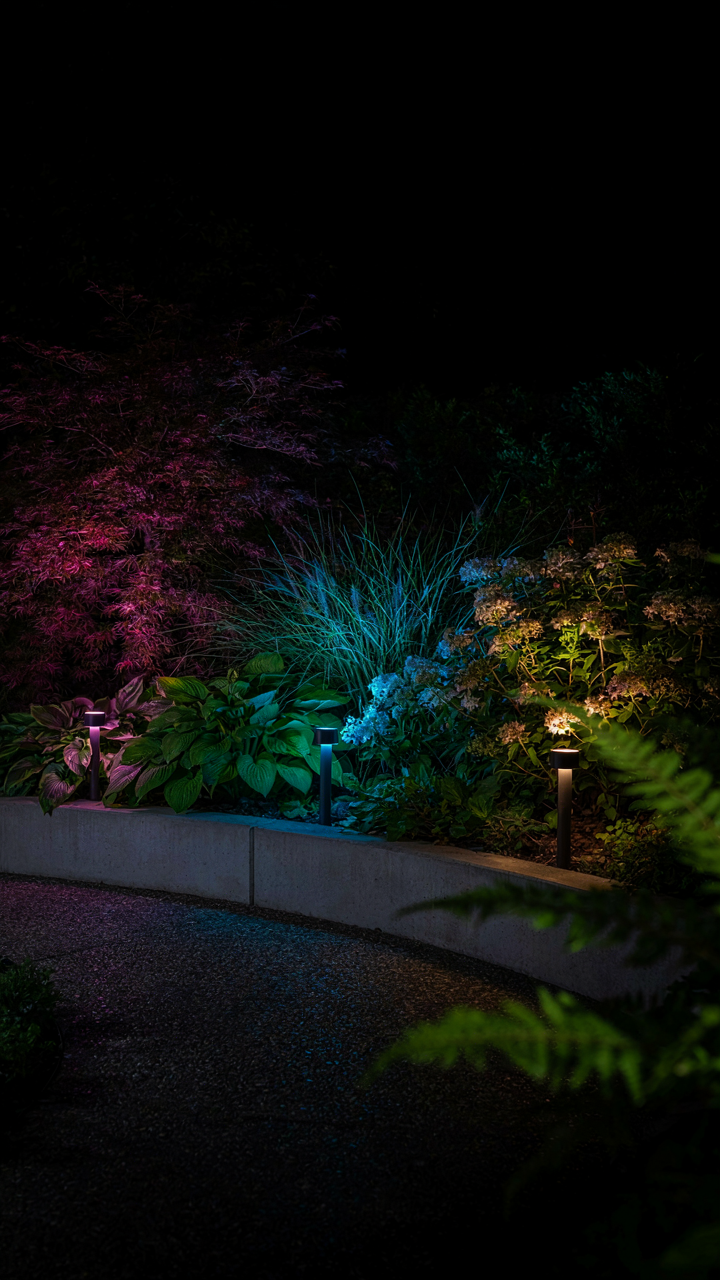
Most people light their gardens by accident. They buy fixtures, scatter them around, and call it done. Strategic lighting isn’t about making things pretty. It’s about controlling attention, creating zones, and solving actual problems on your property. Pick one dark area that bothers you daily, install three low voltage lights to frame it intentionally, and watch how it changes everything else. Your landscape transforms the moment you stop decorating and start designing.



