

The Illusion Of Constant Brightness: Why Standard Flood Lights Fail

Criminals Learn Your Light Pattern
You want to believe a bright yard means a safe yard. It doesn’t. Burglars use the economic principle of diminishing returns: once they map your static illumination, they exploit the shadows you’ve created. A constant flood light becomes a baseline. Your eyes and a criminal’s eyes both adapt to it within minutes.
The adaptation mechanism is called habituation. Your nervous system stops registering what doesn’t change. A burglar watches your property for two nights, identifies where the light ends and the shadows pool, then works in those zones untouched. Standard flood lighting doesn’t deter. It teaches.
Burning Money While Gardens Stay Exposed
Every watt of constant light costs you. Most residential flood systems run 400-1000 watts per fixture, active eight to twelve hours nightly. The common advice says “more light equals more security.” It’s incomplete. Constant brightness actually wastes energy while creating predictable dark zones where criminals operate most comfortably.
Targeted deterrence flips this equation. Motion-activated systems and variable intensity fixtures eliminate the energy drain of perpetual illumination while removing the criminal’s ability to predict your lighting pattern. A fixture that changes—in brightness, duration, or activation point—forces an attacker to treat your yard as a variable threat, not a mapped perimeter. The shift from constant to dynamic is where real protection lives.
Dynamic Deterrence: The Adaptive Led Flood Lights Protocol
Motion Sensing And Randomized Patterns
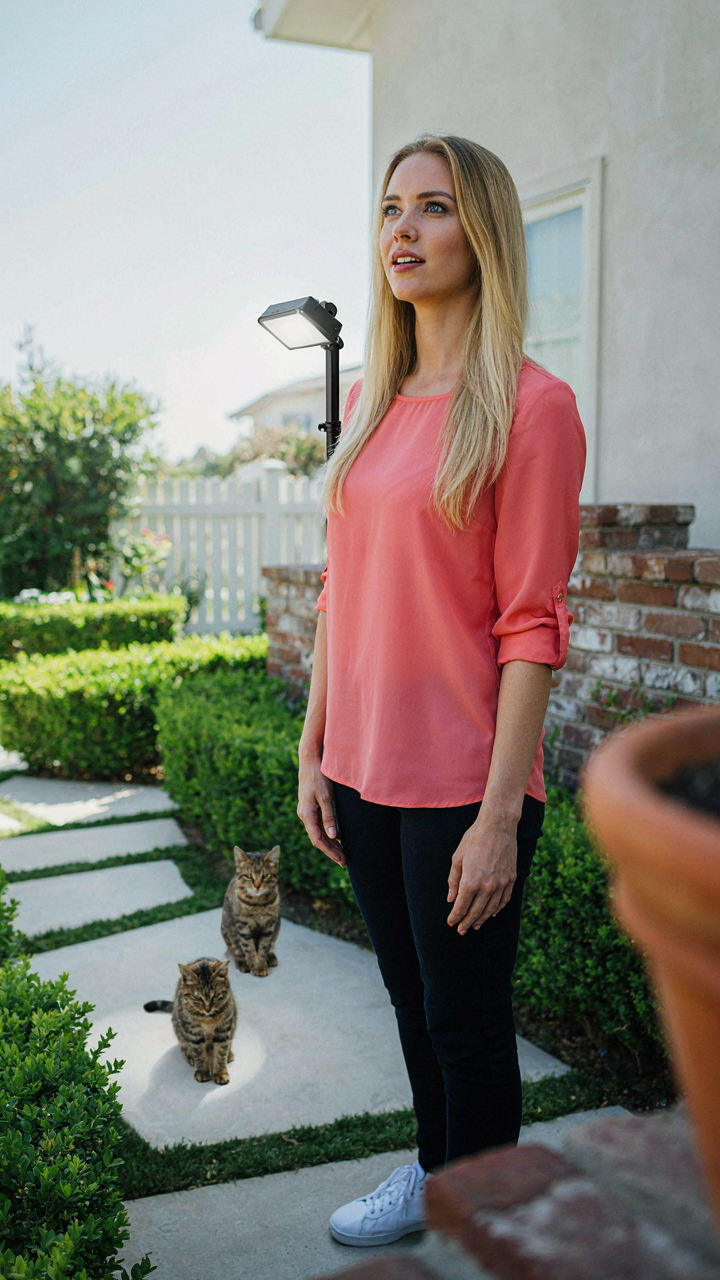
You want predictability disguised as security—a system that “just works” so you stop thinking about it. The real mechanism is unpredictability: a burglar profiles a property by watching light behavior. Static motion sensors create a pattern. Randomized patterns destroy that profile.
Borrowing from signal processing, a randomized motion-sensing protocol introduces noise into what would otherwise be a detectable signal. Instead of lights triggering at identical intervals or dwelling times, the activation duration and delay between movements vary. This forces an observer to collect more data points before reaching actionable conclusions. The cost of gathering that intelligence exceeds the target’s perceived value.
- Variable trigger delay: Lights activate 1 to 4 seconds after motion detection rather than immediately, preventing pattern recognition of your movement habits or staff schedules.
- Randomized hold time: Illumination duration shifts between 3 and 9 minutes per activation instead of fixed intervals, breaking the rhythm a surveyor uses to time your absences.
- Staggered zone activation: Multiple flood lights activate in unpredictable sequences across zones rather than all at once, creating the impression of active occupation spread across the property.
- Sensor placement redundancy: Install motion sensors on separate circuits and timers so overlapping coverage patterns shift independently, multiplying the variables an attacker must decode.
- Brightness variance: Randomize intensity levels between 50 and 100 percent output on successive activations instead of running full brightness every time, complicating surveillance of your actual presence.
Most security systems treat randomization as a luxury feature. It is the core deterrent. A system that runs the same way every night signals vulnerability through its predictability. The attacker’s timeline collapses when they cannot predict when lights will be off. Implement randomization through firmware settings on smart flood lights or programmable relay systems that cycle parameters on a non-repeating schedule lasting 30 to 90 days before resetting.
Smart Home Integration And Real Time Response
Skip the phrase “seamless integration.” What matters is response latency and command authority. A flood light system integrated into your smart home gains the ability to respond to triggers beyond motion: entry door sensors, window breach alerts, security camera motion detection, or manual override. The mechanism is layering—each trigger source adds another layer of control that makes the system harder to defeat through a single vulnerability.
Real integration means your flood lights become conditional devices. When your security camera detects unusual activity, lights respond immediately. When you arm your system remotely, flood lights can activate in a specific pattern that differs from routine. When an entry point breach is detected, lights activate at full intensity without delay, eliminating the randomization window that would otherwise apply. This removes the attacker’s assumption that they have time to act unobserved. The command must execute within 500 milliseconds of trigger detection to be operationally useful. Test your latency before trusting the system in an actual scenario.
Solar Flood Lights: The Covert Energy Advantage

When The Grid Fails You Still Have Light
You want solar flood lights because you’re afraid the power will go out during an event and you’ll look unprepared. The actual mechanism is simpler: solar lights operate independently from your home’s electrical system, which means they function during outages, brownouts, or when you’ve maxed out your circuit capacity. This isn’t redundancy. It’s insurance that costs nothing to run. A charged solar battery operates on stored energy, not grid voltage. Your security doesn’t pause when infrastructure fails.
Most people treat solar as a backup option. It’s not. For special occasions, solar flood lights eliminate the problem of extension cord management, temporary wiring, and the risk of overloading circuits with added equipment. You place them, they charge during the day, they activate at dusk. No electrician required. No permits. No load calculations on your existing service panel. The mechanism is autonomy: each light operates as its own power plant.
Eliminate Shadows Before They Create Vulnerabilities
Military doctrine on lighting calls this “illumination discipline,” and it applies directly to garden security. A shadow is a gap in your coverage, which is exactly where an intruder operates. Most people space flood lights evenly, which creates predictable dark zones between beams. The real method requires you to map your actual sightlines first, then position lights to cross-illuminate those zones instead of lighting the same area twice.
Place primary flood lights at opposing corners of your garden to create overlapping coverage. Secondary lights fill the gaps where shadows would otherwise form. The goal isn’t brightness everywhere, it’s elimination of darkness anywhere an unauthorized person could move undetected. Test this at night by walking your entire perimeter and marking where shadows appear. Position your next light to eliminate that shadow, not to match a symmetrical pattern on a diagram.
Beyond The Beam: Outdoor Solar Lights For Peripheral Defense

Pathway Lighting As An Early Warning
You want this section because you’re hoping for a magic solution that doesn’t require you to think about your property layout. The real mechanism is simpler: pathway lights force decision-making on intruders before they reach your perimeter. A lit pathway eliminates the cover of darkness that makes approach easy. It creates a binary choice: follow the lit route and be visible, or leave it and navigate blind terrain. Most people waste money on bright focal lights while ignoring the navigational pressure that pathway systems create.
Solar pathway lights work because they establish a visual boundary without announcing security presence. Place them along natural approach vectors—edges of garden beds, property lines, transitions between open and covered ground. The light doesn’t need to be intense; it needs to be consistent and predictable. When someone enters your property, they instantly know the space is managed and monitored. This psychological shift alone deters casual trespass. The light becomes a tripwire for attention, not just illumination.
Disrupting Approach Vectors With Subtle Light
Military strategy calls this “controlling key terrain,” and in garden defense, that terrain is the route an intruder naturally takes. Your job is to make every natural approach path visible before threat assessment happens. Most advice says “add more light everywhere,” which is wrong. Strategic placement beats wattage. A single solar light positioned at a corner, junction, or sight line creates an obstacle to covert movement that’s far more effective than scattered brightness.
Solar uplighting and ground-level fixtures interrupt the shadow zones where someone can move undetected. Place lights to eliminate the dead space between your house and the property edge, or between garden structures where visibility gaps exist. The goal is to remove the stealth advantage. An intruder moving through a lit zone makes a conscious choice to proceed anyway, which changes their psychological profile and increases hesitation. Install pathway lights in staggered intervals along approach vectors, not in uniform rows—this pattern disrupts rhythm and navigation planning more effectively than symmetrical layouts.
The Art Of Deception: Misdirection With Landscape Lighting

How Light Bends Perception
You want people to think your property is bigger, more secure, and harder to breach than it actually is. That’s the real reason you’re reading this. The mechanism is optics: light doesn’t just illuminate—it reshapes how the human eye estimates distance, depth, and density. Flood lighting exploits the physics principle of contrast gradation. Bright zones appear closer and more substantial. Dark zones feel infinite. A small garden lit strategically reads as expansive. An intruder scanning your perimeter can’t accurately gauge sightlines or approach routes when your lighting creates false depth cues.
The brain processes lit space faster than unlit space, so shadows cast by landscape lighting become actual architectural features. A 20-foot garden can read as 40 feet deep when you layer uplighting on distant hardscape elements and suppress mid-ground illumination. This isn’t magic—it’s how the human visual cortex evolved. It prioritizes bright objects and fills gaps with assumption. Flood lighting fills those gaps with manufactured uncertainty, forcing anyone sizing up your property to process longer, hesitate harder, and move on to easier targets.
Barriers That Aren’t There
Everyone tells you to build physical fences. That’s incomplete. Perception of a barrier stops intruders as effectively as a barrier itself—at the moment of decision. Flood lighting creates the illusion of structure and density where none exists. A lit hedge reads as a wall. A lit fence becomes a fortress. The key is layering light angles so the eye can’t find a clear path through the illuminated zone.
Position your floods at low angles across ground-level plantings or hardscape edges. This technique, called raking light in architectural visualization, creates dramatic shadows that suggest raised surfaces and depth changes that don’t exist. A flat, open garden perimeter becomes a maze of perceived obstacles. The intruder’s eye catches on the contrast edges and assumes solid structure. Your flood lights don’t need to reveal a barrier—they need to suggest one convincingly enough to trigger avoidance behavior before anyone tests the actual vulnerability.
The Dusk To Dawn Fallacy: Why Constant Light Breeds Complacency

When Your Eyes Stop Seeing
You think constant lighting equals constant protection. It doesn’t. Borrow from neurobiology: habituation is the mechanism where repeated stimuli trigger progressively weaker neural responses. Your flood lights become invisible to both human observers and intruders the moment they stop changing. A stationary light source is just furniture after two weeks.
The real vulnerability lives in assumption. You installed dusk to dawn fixtures and believed the problem was solved. But vigilance requires contrast. When light remains uniform across all hours, your brain stops processing it as information. An intruder relies on this exact blindness. They move through familiar territory knowing the scene hasn’t shifted in months.
Patterns Are Predictable Invitations
Static schedules announce themselves. If your floods activate at sunset and deactivate at sunrise every single day, anyone watching your property has already mapped the timeline. Event security demands irregular timing because consistency rewards patience. An intruder doesn’t need to breach during peak brightness. They wait for the rhythm they’ve identified.
Real protective lighting disrupts rhythm. Vary activation times by 15 to 45 minutes across different zones. Use smart controls with randomized schedules rather than fixed timers. This forces an observer to reset their mental model constantly. The cost of uncertainty becomes higher than the payoff of entry.
The Unseen Advantage: Outdoor Flood Lights As Psychological Warfare
The Real Cost Calculation
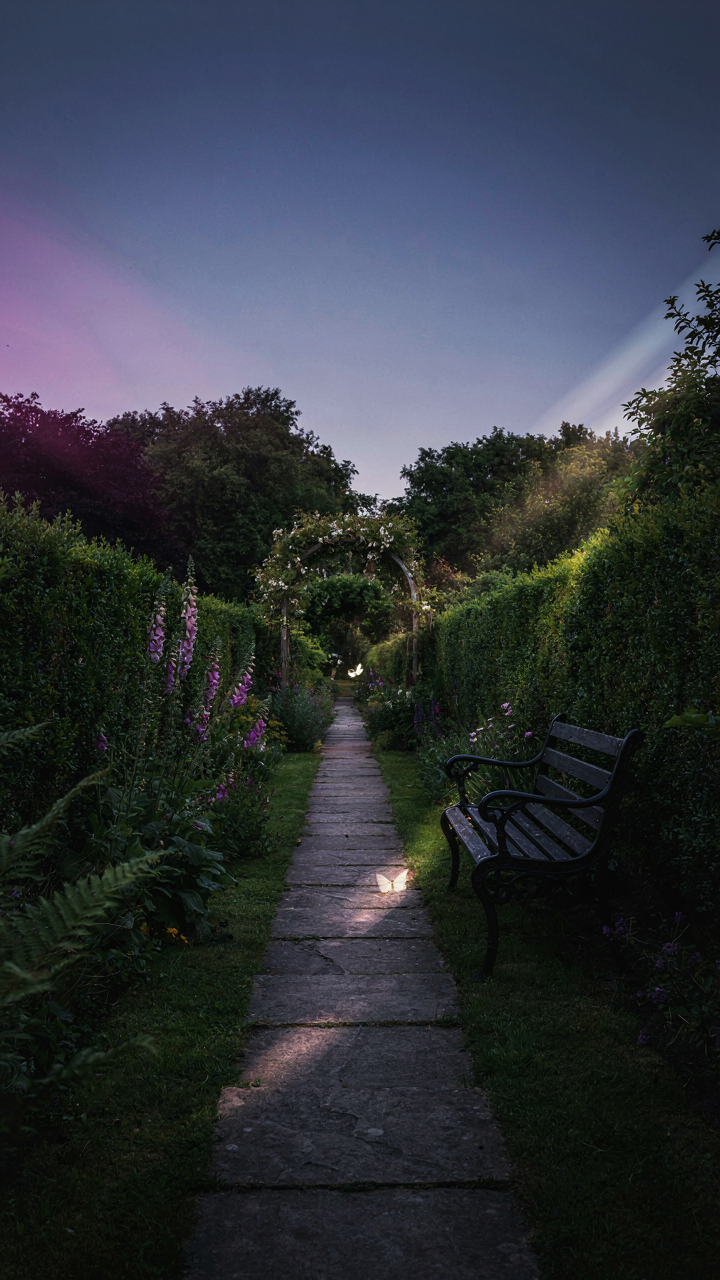
You want flood lights to work because the idea of someone breaching your property terrifies you more than you admit. Here’s what actually stops intruders: behavioral economics. A burglar runs a silent cost-benefit analysis. They weigh effort against reward. Flood lights collapse that equation by raising the effort variable dramatically. Visibility means witnesses. Witnesses mean legal exposure. A well-lit garden removes plausible deniability and forces the intruder to operate under observation.
The mechanism is simple: darkness is a burglar’s asset. It compresses perceived risk. When you eliminate darkness, you eliminate their tactical advantage without spending a dollar on additional security infrastructure. Most people think lights deter through “looking safe.” That’s wrong. Lights deter because they make the criminal’s job economically irrational. They force the intruder to choose a different target where the math works in their favor. Your garden becomes the expensive option.
Uncertainty As A Weapon
Creating uncertainty and perceived risk is a doctrine borrowed from military strategy. In that field, the term is “asymmetric defense.” You apply it here by making an intruder unsure whether detection is guaranteed. Flood lights generate this uncertainty perfectly. Motion-activated floods are the specific tool. An intruder cannot predict when or whether they’ll trigger activation. That unpredictability resets their threat assessment every few seconds.
Perception matters more than reality in this context. A burglar doesn’t need to know your system’s exact specs. They need to feel exposed. Strategically positioned floods create shadows and bright zones that force an intruder to move through unpredictable illumination patterns. They cannot plan a route with confidence. Install floods at entry points, along perimeter edges, and covering blind spots from the street. The intruder sees multiple light sources and must assume comprehensive coverage. That assumption is often enough to redirect them entirely.
The Command And Control Framework For Flood Light Systems

Zonal Control Based On Threat Assessment
You want this section because you’re afraid of looking unprepared—like you don’t have your property under control. The real mechanism comes from military doctrine: layered defense. In flood lighting, that translates to dividing your garden into perimeter, transition, and core zones, each with different light intensity and coverage patterns. This isn’t aesthetic. It’s about forcing any potential threat to move through predictable, illuminated space.
- Perimeter Zone: Brightest coverage at garden edges, gates, and entry points. Light here acts as the first deterrent—visible from outside the property line.
- Transition Zone: Medium intensity across pathways and open ground. Forces movement into visibility. Motion sensors here trigger escalation to brighter zones.
- Core Zone: Lowest intensity near structures and gathering areas. Prevents glare while maintaining sight lines. Reserved for ambient, non-security function during events.
- Dead Zones: Identify gaps between light circles where shadows form. These are liability—eliminate them through overlapping coverage or repositioning fixtures.
- Seasonal Adjustment: Shift zone intensity based on event type and season. Winter events need higher baseline lumens; summer gatherings tolerate lower settings due to retained daylight residue.
Each zone must have independent circuit control. This lets you activate only the perimeter for evening events, then scale up if you need full visibility. Never run all zones at maximum—it wastes power and creates a flat, uninviting aesthetic. The command layer sits at your breaker or smart controller, where you make real-time decisions about what gets lit and when.
Remote Management And Monitoring
Most people buy smart flood lights and treat the app like a convenience toy. It’s actually your command post. The real value isn’t turning lights on from your couch—it’s detecting pattern breaks in real time while you’re hosting an event.
A proper system logs on-off cycles, motion trigger frequency, and light duration. Abnormal patterns—like motion in your core zone at 3 AM when everyone’s asleep inside, or a fixture suddenly drawing zero power—surface before problems escalate. Cloud-based systems sync across multiple fixtures and send alerts to your phone. This creates a feedback loop: you see the alert, you assess the actual threat through your own observation, you act. No guesswork. The command structure exists in the data stream, not in the darkness.
The Unbreakable Perimeter: Integrating All Flood Light Elements

Overlapping Coverage Without Dead Zones
You want the reassurance of perfect visibility so nothing catches you off guard during an event. The real mechanism is triangulation: you’re borrowing from defensive military strategy, where overlapping fields of fire eliminate blind spots. Spacing matters. Floods at 20-foot intervals create zones where light from one fixture overlaps 30 to 40 percent with its neighbor. This redundancy means a single bulb failure doesn’t crater your perimeter. Calculate throw distance first—most LED floods reach 40 to 60 feet effectively—then place your second fixture so its beam begins where the first one starts to fade.
Fixture height compounds this effect. Ground-level floods cast harsh shadows and create escape corridors along structures. Mounting at 12 to 15 feet forces light down at a steep angle, flattening shadows and reducing hiding spots. Combine this with a second tier of lower floods angled outward at 45 degrees to catch movement at ground level. The perimeter becomes a net, not a spotlight. Every entrance, corner, and vulnerable transition point receives light from at least two sources at different angles.
Sustaining Performance Through The Season
Most people replace batteries or bulbs only when they fail. That’s reactive and guarantees dark moments during critical events. Maintenance readiness means setting a schedule three weeks before your occasion and testing every component under actual nightfall conditions. Check for corrosion at connection points, verify beam brightness hasn’t degraded, and confirm battery levels on wireless units. Weather degrades metal contacts and lens clarity faster than most assume—salt air, humidity, and temperature swings accelerate this process.
Document your setup with photos and voltage readings. Keep spare bulbs, batteries, and fuses in a labeled box near your control point. Run a full system test 48 hours before the event, not the night of. This catches failures early and gives you time to adjust placement or source replacements. Set phone reminders to clean lenses weekly during heavy-use seasons and inspect cords for damage each time you power up. Sustained readiness isn’t about perfection; it’s about catching problems before they become blackouts.
The Real Obstacle Isn’t The Technology; It’s Your Predictable Approach To Securing What You Values

Most people treat security like an afterthought. They wait until something breaks, then buy whatever’s cheapest. Flood lighting works differently. It forces you to think like a strategist, not a consumer. You stop reacting and start designing. Your garden becomes harder to ignore, harder to target, harder to mistake. Stop waiting for the perfect system and install one today. Visible security doesn’t need to be complicated to be effective.



