
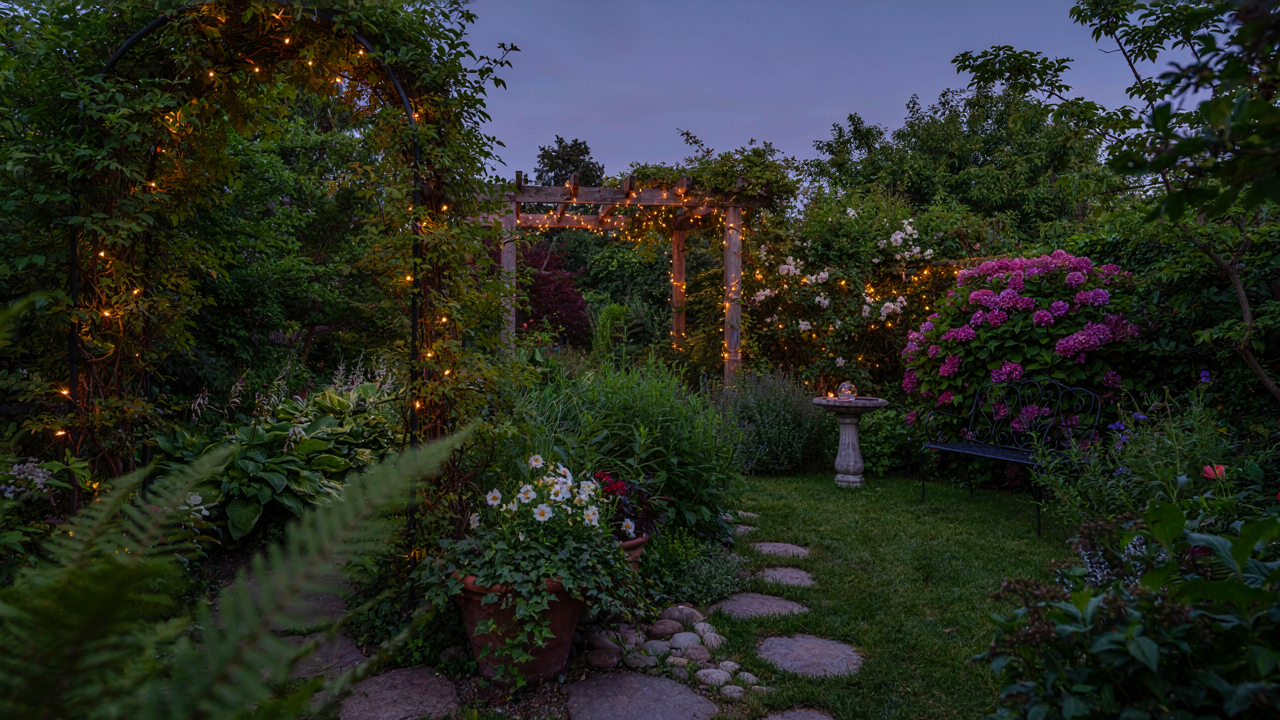
The Illusory Glow: Why Most Fairy Light Setups Fail

Placement And Density Kill The Effect
You want the setup to look effortless, which is exactly why it fails. Most people space fairy lights evenly across a garden or patio, thinking uniformity creates ambiance. It doesn’t. Uniform distribution spreads light too thin and erases the focal points that actually draw the eye.
Fairy lights work through contrast, not coverage. Cluster them densely in specific zones—around seating areas, along pergolas, or framing entryways—and leave dead space around them. This creates visual hierarchy. The human eye reads concentrated light as intentional design. Sparse, even distribution reads as incomplete or weak.
The Ambient Light Variable Nobody Mentions
Physics teaches us about signal-to-noise ratio: your message only registers when it stands out from background noise. Fairy lights function identically. A strand of warm-white LEDs at dusk creates magic. The same strand in late evening after surrounding lights kick on becomes invisible.
Most guidance skips this entirely because it’s easier to sell you more lights than teach you to read the room. You need to map your garden’s light sources first. Identify streetlights, porch fixtures, and any other ambient illumination. Then position fairy lights where they compete least and contrast most. Position them lower than ambient light sources whenever possible, which forces the eye downward and makes the glow prominent rather than drowned out.
The “Enchanted Forest Wedding” Effect: Beyond Stringing Lights
How Layering Light Creates Actual Depth
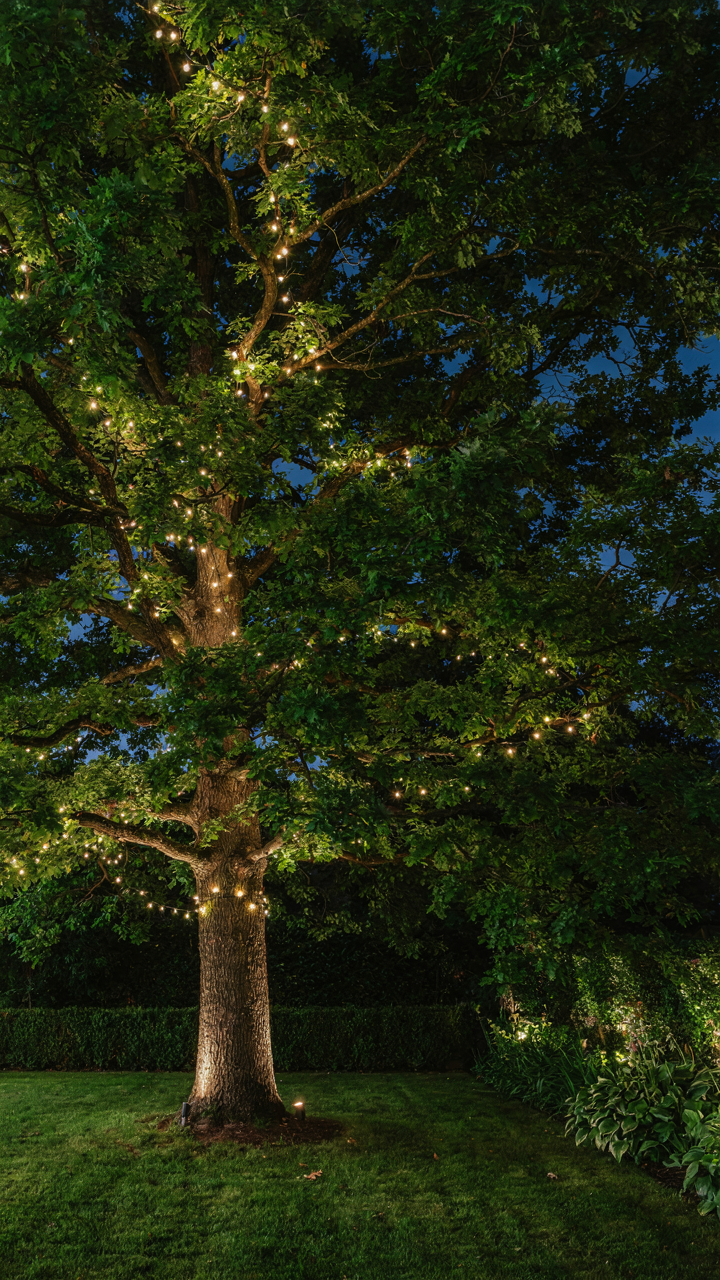
You want people to feel something when they enter your space, not just see lights hanging in a line. The mechanism here borrows from photography: key light, fill light, and backlight. Your warm string lights are the key. Add uplighting on trees or structures as fill. Then place small accent lights low and behind plantings as backlight. This three-layer system creates visual separation between foreground and background instead of flattening everything into one plane.
The mistake most people make is treating all lights as the same priority. You don’t need more lights. You need lights at different heights and angles working against each other. A single string running horizontally reads as decoration. Three strings at varying elevations, with different color temperatures and mounting points, reads as environment. The depth trick works because your eye moves through space instead of stopping at a surface.
Integration Points With What Already Exists
Don’t plan your lights first and fit plants around them. Identify existing trees, walls, and vertical elements, then use those as your anchor points. Existing structures already have character and mass. Your job is illuminating them strategically, not competing with them. Wrap lights around established tree trunks. Mount lights on fence posts you already own. Use existing pergolas or arbors as scaffolding for overhead strands.
The integration works when lights become part of the architecture, not an overlay. Wrap warm white lights around mature trees at varying heights to reveal the branch structure. Run lights along existing fence lines to define the garden’s perimeter without adding new materials. Mount lights on established structures so they read as built-in rather than temporary. This approach costs less, requires fewer new installations, and anchors the entire design to what you already have.
The Alchemist’s Protocol: Transforming Your Backyard Decor
Light And Shadow Distribution
You want your yard to look intentional instead of like you bought a bulk pack and hung them everywhere. Photography teaches us that contrast is the engine of visual interest, and fairy lights work the same way. The mechanism is simple: light needs darkness to register as light. Without shadow, there’s no definition, no depth, no reason for the eye to stop moving.
Most people make the same mistake. They string lights densely across every surface, assuming more light equals better ambiance. It doesn’t. The real play is rhythm. Concentrate your lights in zones, leave gaps between them, and let those gaps pull attention by withholding it. A cluster of warm white lights framing your seating area, then nothing for ten feet, then another cluster by the garden bed. That rhythm makes people notice both the light and what surrounds it.
Emptiness As The Foundation
Negative space in design doesn’t mean unused or wasted. It means strategic absence that makes everything else land harder. Architects and landscape designers have known this for decades. Your backyard functions the same way. When you reserve half your space as open air, the fairy lights you do place become sculptural objects instead of decoration.
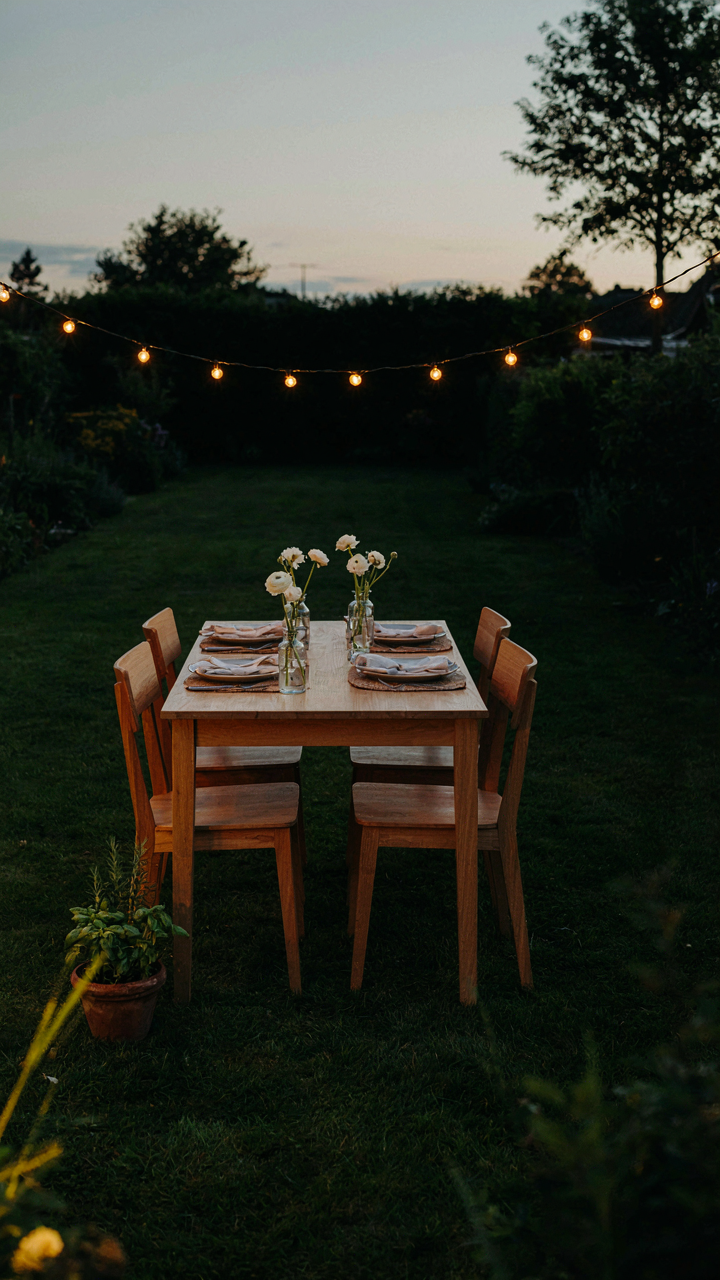
Place a single strand of lights as a canopy over a dining table or seating area. Leave the perimeter of your yard untouched. This forces the eye to compress around the lit zone, creating psychological intimacy in a large space. The actual mechanism is perceptual weight redistribution. Remove competing elements and your lighting setup becomes the primary focal point. Install lights only in deliberate clusters, leaving bare sections to do the work of making illuminated sections feel intentional.
Outdoor Fairy Lights Ideas: The Subtlety Of Scarcity
Strategic Sparse Placement For Intrigue
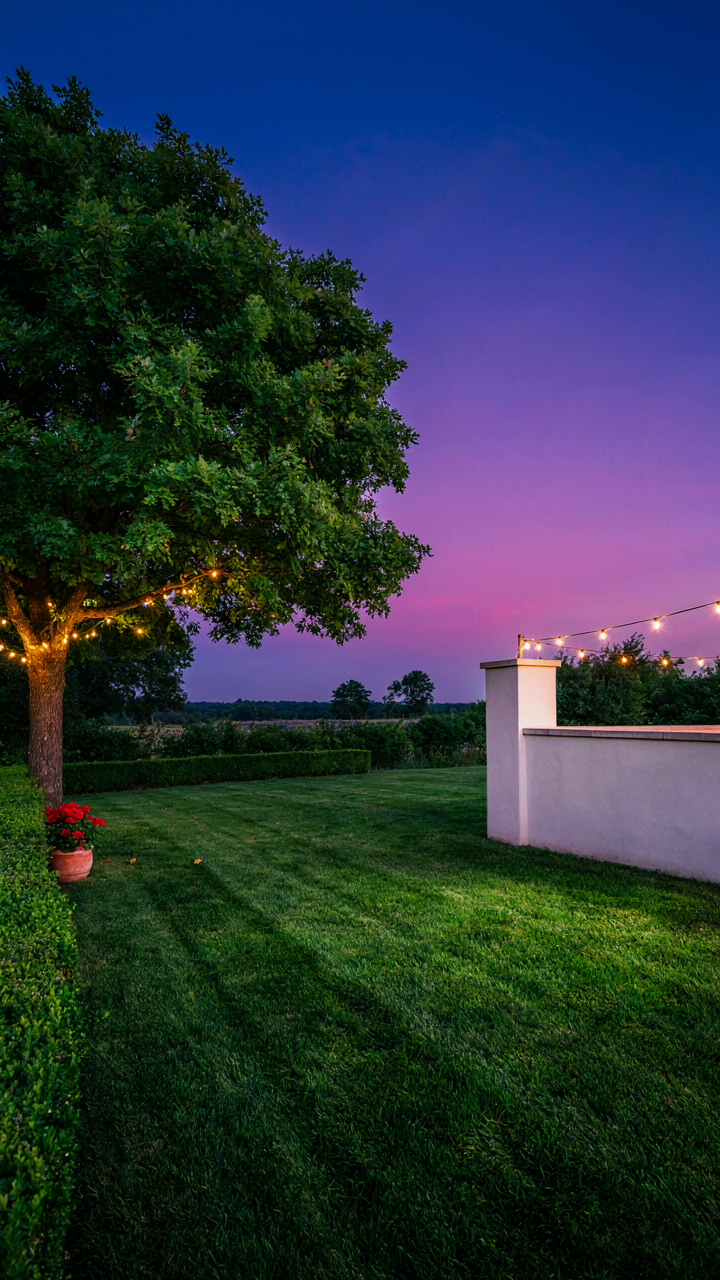
You want people to notice your garden and think you have taste. The mechanism here is scarcity, borrowed from economics: constraint creates perceived value. Most people flood their yards with lights and wonder why it looks like a parking lot. The real move is deliberate gaps. You place lights to guide the eye, not fill space. A string wound through one tree. Another suspended across a specific corner. The empty zones matter as much as the lit ones because they force attention toward what you’ve chosen to illuminate.
Sparse placement works because it respects the garden’s natural structure instead of competing with it. When lights are everywhere, none of them register. When they’re positioned at decision points, architectural features, or endpoints of sight lines, they anchor the space. This is why high-end landscape design uses restraint. You’re not decorating. You’re directing focus. Start by identifying three focal points in your garden, then place lights there only. Everything else stays dark.
When Less Becomes The Entire Design
The common advice says “string lights everywhere for ambiance.” That’s backward. Clutter kills atmosphere. You need negative space to create mood because the brain needs contrast to process what it’s seeing. Dense light coverage reads as noise. Strategic darkness reads as intentionality. This doesn’t mean your garden looks sparse or unfinished. It means every light serves a function: marking a pathway, defining a seating area, highlighting a plant structure, or framing a view. The gaps between lights become part of the design language.
The protocol is simple. Map your garden on paper. Mark where ambient light already exists from your house or street. Identify which areas should remain dark for depth perception. Place lights only where they solve a problem or create a specific effect. Test the layout at dusk before installing permanent fixtures. Adjust based on what actually catches your eye, not what the product images suggest. The result feels deliberate because it is.
The Perception Hack: Curating A “Mariage Champetre” Vibe

What You Actually Want To Feel
You’re not buying fairy lights to illuminate a garden. You’re buying permission to feel like you belong somewhere that matters. The real mechanism: emotional anchoring through controlled environment design. Mariage champetre, the French countryside wedding aesthetic, works because it signals relaxation, intentionality, and escape from the digital grind. Fairy lights execute this signal with precision. They compress a feeling into a visual language.
The French countryside movement emerged in the 1990s as a direct reaction to minimalism and urban density. It wasn’t nostalgic. It was strategic. Designers understood that people pay premium money for spaces that feel unhurried. Fairy lights became the shorthand for that feeling because they’re deliberately imprecise. They don’t illuminate a task. They create ambient permission to slow down.
Color Temperature Determines The Emotional Load
Warm light temperatures create the mariage champetre effect. Neuroscience backs this: your brain interprets warm light (2700K or lower) as evening and safety, triggering relaxation responses. Cool light (5000K and above) signals alertness and vigilance. Most people pick fairy lights without understanding this relationship. They choose based on how the string looks in the product photo, not how it will land in their nervous system. Start with 2700K warm white as your baseline for any space meant to feel restorative.
- Warm White (2700K): Gold-toned, intimate, creates the countryside-garden feeling. Best for relaxation zones, seating areas, and evening gatherings where you want people to linger.
- Extra Warm (1800K or lower): Approaches candlelight. Produces the strongest emotional anchor to mariage champetre. Use sparingly as accent layers, not primary lighting.
- Daylight (4000K-5000K): Reads as clinical. Avoids the aesthetic entirely. Only use if your space also functions as a task area during daylight.
- RGB Or Color-Changing: Creates novelty, kills consistency. Breaks the anchored emotional experience the moment someone cycles through colors. Avoid for permanent installations.
- Brightness Levels (Lumens): Lower brightness (200-400 lumens per bulb) maintains the escape feeling. Higher output (600+ lumens) turns the space functional and alert. Dim capability is mandatory.
The placement matters equally. Warm light aimed at your face signals threat. Warm light positioned above eye level or diffused through fabric signals safety. Position your fairy light strings to fall on surfaces and people, never pointing directly into sight lines. This is why bistro-style cafe strings work: the bulbs angle downward by design. Test your setup at dusk, when your eye adjusts naturally to lower light, to see what actually lands emotionally.
Beyond Lumens: The Psychology Of Garden Fairy Lights
How Your Eyes Actually Process Light
You want to know this because it makes you feel like you understand design at a level most people don’t. The real mechanism: your eyes don’t measure light in absolute terms. They measure contrast and change. A string of fairy lights at 20 lumens in darkness creates more visual impact than 200 lumens in daylight. This is called adaptation. Your pupils dilate or constrict based on surrounding brightness, not the source’s raw output. A dim light against a dark garden creates perceived brightness through contrast alone.
Most designers talk about “ambiance” without naming what actually happens in your visual cortex. Fairy lights work because they break the uniformity of your garden’s darkness. The warm color temperature of most fairy bulbs (2700K to 3000K) sits in the range your eyes evolved to recognize as safe fire light. Your brain isn’t processing numbers. It’s processing a signal: this space is controlled, intentional, and worth your attention.
Where You Place Light Controls What People See
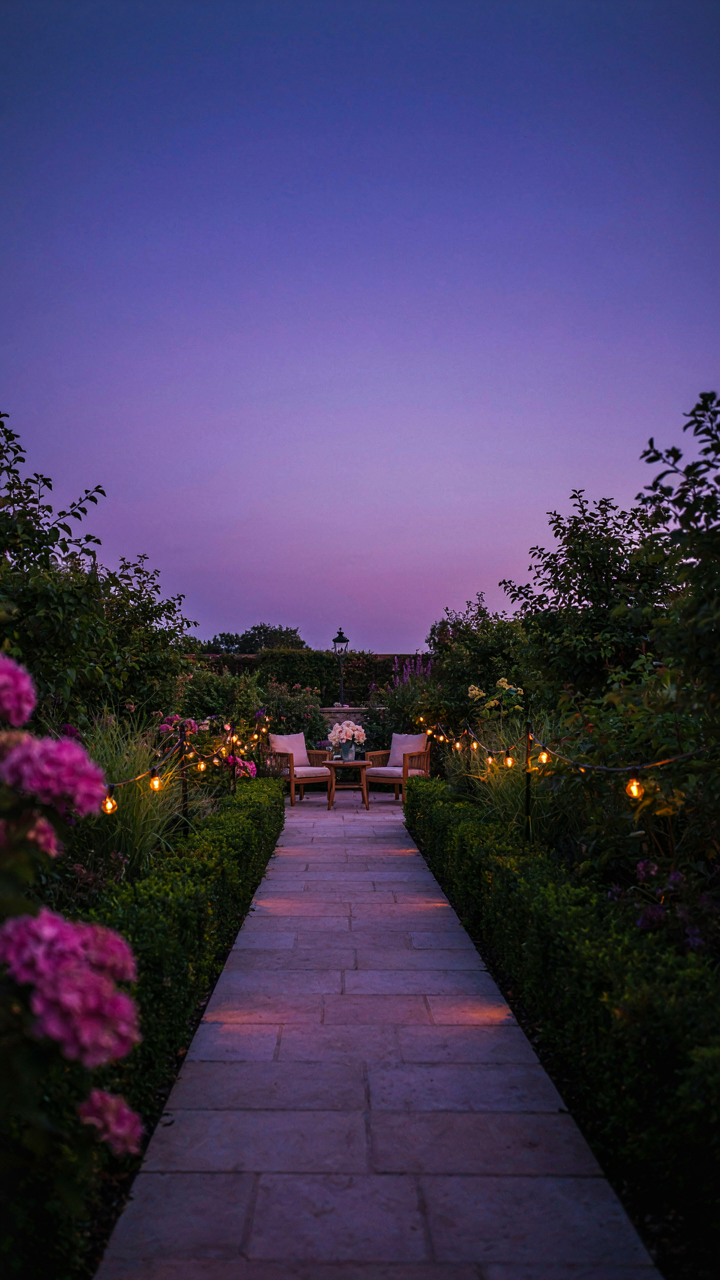
Strategic placement means you’re building sight lines, not just decorating. In architectural lighting, this is called “layering,” and it applies directly to fairy lights garden decor. You don’t scatter lights evenly. You install them along pathways, under eaves, or clustered around focal points to guide eye movement. Your guests don’t consciously notice this redirection. Their eyes simply follow the light without thinking.
The mechanism is saccadic movement: your eyes jump between points of interest, and lights become those points. Place fairy lights along a garden perimeter, and you’ve defined the boundary without a fence. Concentrate them around a seating area, and you’ve created a destination. Drape them overhead in lines, and you’ve compressed the visual space upward. Every placement decision either guides attention or wastes it. Test by standing in your garden at dusk. Your eyes naturally move toward lit areas first. That’s not random. That’s the design working.
The Unspoken Language Of Light: Wedding Outside Venue Secrets

How Light Builds Narrative Without Words
You want guests to feel something specific at your venue, and you’re hoping ambient lighting does the work for you. It won’t, not without direction. This is basic wayfinding theory borrowed from architecture and urban planning: light paths don’t just illuminate, they communicate hierarchy and flow. Fairy lights strung along walkways function as visual instructions, moving people from entry through reception toward the dance floor. The mechanism is simple: humans follow light. They interpret brightness as importance and warm glow as safety. Your job is designing the route guests take with their eyes before their feet move.
The real skill is sequencing brightness levels so no two zones feel identical. Most outdoor venues string lights everywhere equally, which erases intentionality and kills drama. Instead, dim the entry corridor slightly, brighten the cocktail space moderately, and reserve peak luminosity for the dance area. This graduated intensity tells a story: entry is threshold, middle is mingling, end is celebration. Fairy lights work here because their warm color temperature (typically 2700K) feels intimate at any brightness, so you’re controlling narrative, not fighting physics.
Lighting Layers That Actually Separate Space
Stop treating zones as aesthetic categories. Zones are behavioral containers. You need overhead canopy lights (tall trees or pergolas), mid-level accents (tables and pathways), and ground-level definition (perimeter markers). Fairy lights typically belong in the mid and perimeter layers because their scale and color make them intimate, not architectural. When you cluster them only around seating areas, you create distinct “rooms” outdoors. People unconsciously recognize the shift and their behavior changes. Conversation deepens under localized light compared to uniform brightness.
The mechanism that matters: contrast creates perceived separation. A fairy light-lit dinner table surrounded by darker landscaping reads as its own environment, even though it’s still outside. Without contrast, everything feels like one flat field. Position warm-toned fairy lights in clusters at 8 to 12 feet of stringing per seating area. Leave gaps of 10 to 15 feet between clusters with minimal ambient lighting. This forces the eye to perceive distinct zones, and the brain automatically calibrates social behavior accordingly.
The Investment Fallacy: Why Price Doesn’t Equal Panache

Design Over Budget
You’re afraid you’ll look cheap. That’s why you’re reading this section. The real mechanism at play is signal confusion: people mistake cost for taste because they haven’t learned to separate the two. Expensive fairy lights are just brighter bulbs on thicker wire. Design—the actual arrangement, color temperature matching, and spatial logic—is what creates the effect. A fifty-dollar strand placed with intention beats a three-hundred-dollar installation buried in poor positioning.
The consensus says spend more for better fixtures. That’s incomplete. A warm-white 2700K bulb from any reputable manufacturer performs identically to an expensive brand’s equivalent. What changes everything is context. Draping patterns, clustering density, and distance from viewing areas determine perceived quality. Professional gardens aren’t expensive because of fixtures; they’re expensive because someone understood sight lines and layered lighting depth. Copy the structure, not the price tag.
Build The Aesthetic Yourself
Economics calls it comparative advantage. In fairy lights, this means understanding which components you assemble versus which you buy finished. DIY doesn’t mean soldering circuits; it means sourcing bulk warm-white LED strands, building custom frames from copper pipe or reclaimed wood, and designing unique layouts that high-end retailers can’t offer at any price. A commercial outdoor string costs fifteen to thirty dollars. That same bulb count, arranged through a trellis you built, costs half as much and looks custom-made.
The real work is pattern and placement, not component quality. Source warm-white LEDs rated for outdoor use, sketch your installation zones, and treat the strands as a medium rather than a finished product. Run them through salvaged frames, along fence lines, or through existing garden structures. This approach produces results that cost three times as much when you hire a designer. The mechanism is simple: intention plus assembly beats passive consumption every time.
The Real Obstacle: Your Inability To See Beyond Pre-Packaged Charm

Most people buy fairy lights garden decor and stop thinking. They hang them, take a photo, move on. But the real game? Treating your garden like a canvas instead of a catalog. Your obstacle isn’t finding the right lights. It’s deciding what story you want them to tell. Today, sketch one specific corner of your garden and write down the feeling you want it to create. Not the look. The feeling. Everything else follows from that decision, and that’s when fairy lights stop being decoration and become conviction.



